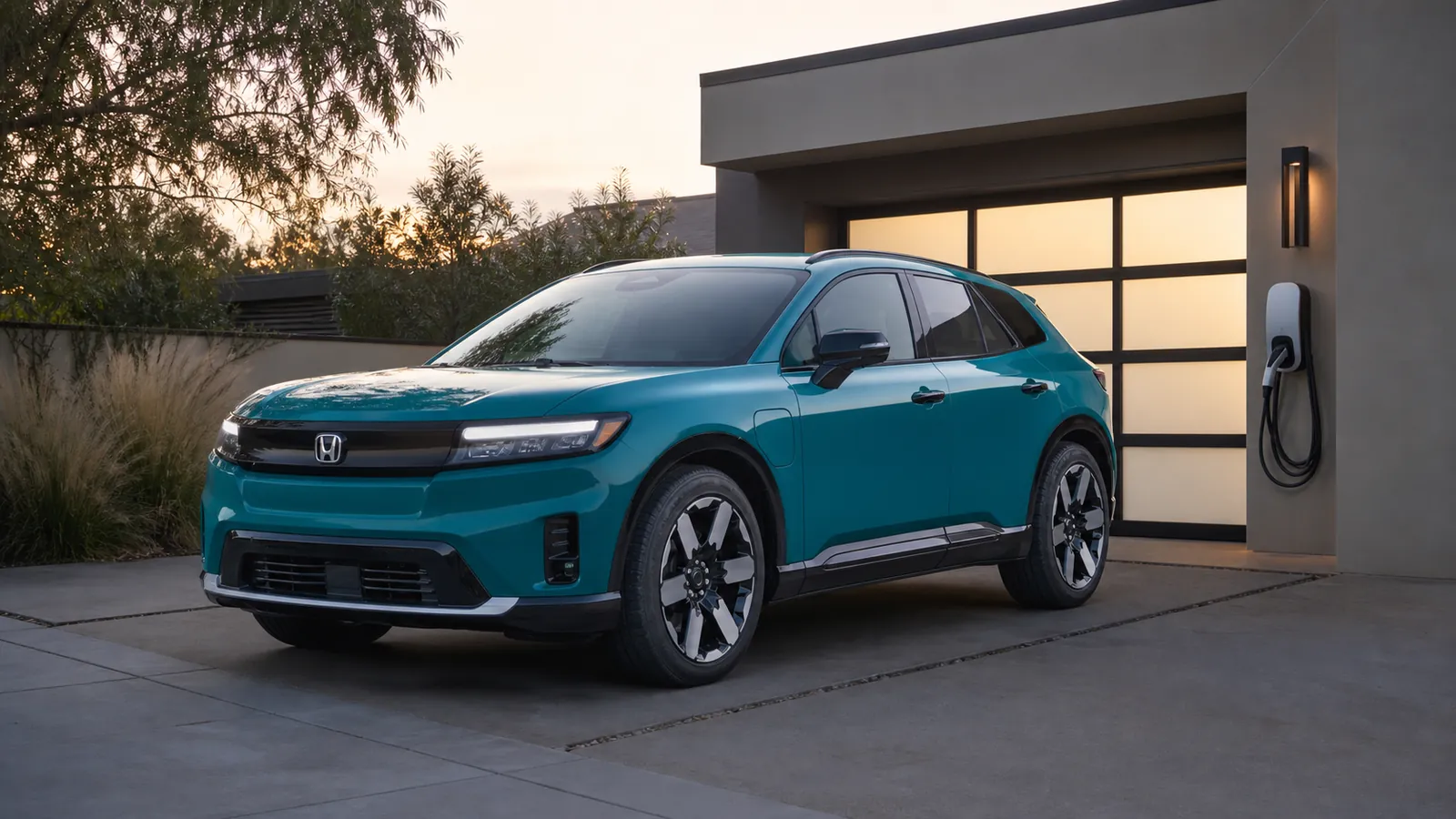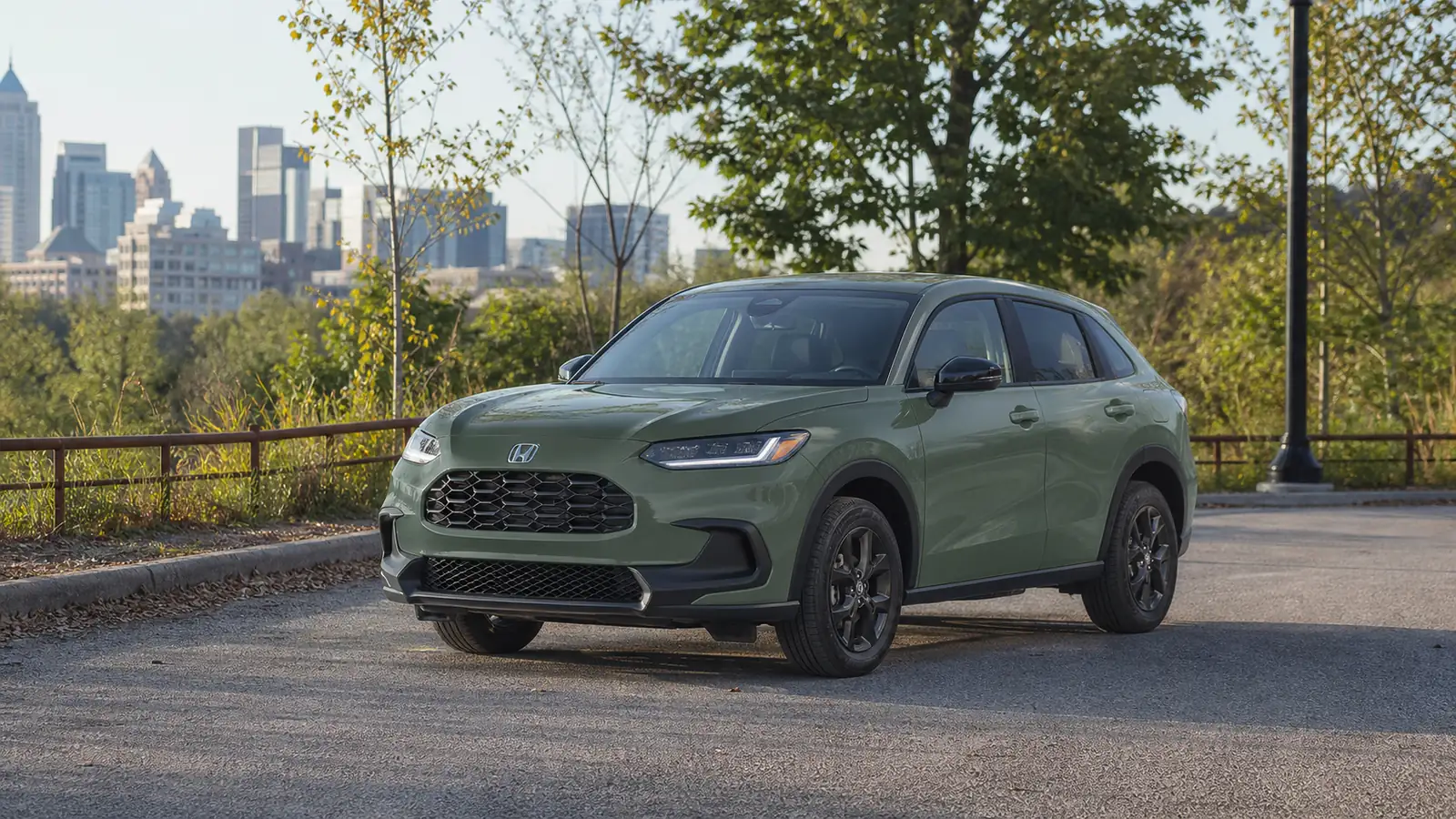
The HR-V makes its case with space, not speed
The 2026 Honda HR-V starts at $26,500 and offers 24.4 cubic feet behind the rear seat, 37.7 inches of rear legroom, and a cabin wide enough to feel closer to a compact SUV within the Honda range than a tiny city crossover. Those dimensions are the reason to consider it.
Every trim uses a 158 hp 2.0L four-cylinder with 138 lb-ft and a CVT. Acceleration is adequate around town and noticeably modest during highway passing, steep climbs, or a full passenger load.
The car asks the buyer to choose space and predictable behavior over quick response.
That trade can be reasonable. A city driver may value easy parking, low-stress controls, and a roomy back seat far more than a fast 0-to-60 time.
A mountain commuter or frequent highway traveler may find the engine works too hard.
The HR-V also has no hybrid option. Front-wheel drive earns 26 city, 32 highway, and 28 combined mpg.
AWD earns 25, 30, and 27. These are normal numbers for a gas crossover, not a fuel-saving reason to pay more than a hybrid rival.
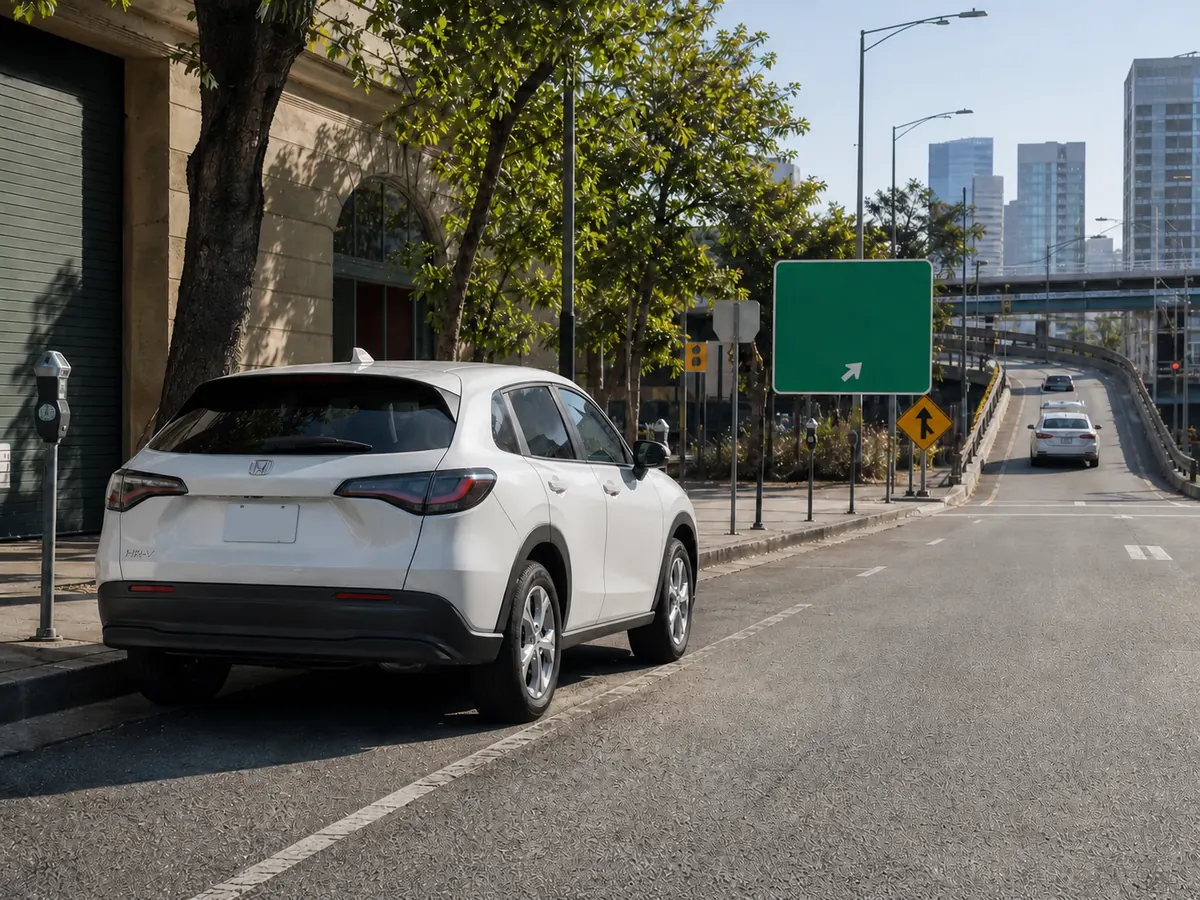
Compare it with the SUV body category and drive the Honda CR-V if the HR-V price approaches a larger vehicle. Buy the HR-V when its space solves the problem and its acceleration does not create a new one.
The 2.0L engine's modest torque arrives high in the rev range, so the HR-V asks for more rpm when joining fast traffic.
That is acceptable for a patient city driver and more noticeable with passengers, luggage, or a long grade.
The key is whether the sound and response bother you on roads you use every week.
Compare performance only after matching the practical fit. A faster rival has little value if a child seat blocks the front passenger or the hatch will not accept your stroller.
The HR-V earns its place by solving those daily space problems in a body that remains easy to park.
Use the base LX as the price reference. Add the features you truly need, insurance, and dealer charges before comparing it with the Toyota Corolla Cross.
A small gap to the larger Honda can make the CR-V the better family value.
Sport is the equipment sweet spot for many buyers
The trim range has three clear steps inside the mainstream price tier. LX keeps the $26,500 starting price, 17-inch wheels, and the lowest tire cost.
Sport costs $28,300 and adds features that matter in winter and daily access. EX-L starts at $30,350 and turns the HR-V into a comfort-focused small SUV.
Sport adds heated front seats, heated mirrors, blind-spot information with rear cross-traffic monitoring, remote start, smart entry, rear privacy glass, and 18-inch wheels. Those features solve real daily tasks for many owners.
| Trim | Best reason to buy | Main tradeoff |
|---|---|---|
| LX | Lowest price and 17-inch tires | No heated seats or blind-spot monitoring |
| Sport | Strong comfort and safety-feature balance | 18-inch tires and higher price |
| EX-L | Leather, power seat, moonroof, parking sensors | Price overlaps larger and hybrid rivals |
EX-L adds leather, an 8-way power driver's seat, dual-zone climate control, parking sensors, low-speed braking control, a moonroof, and upgraded audio. These can be worthwhile for a driver who keeps vehicles, but they do not add power or fuel economy.
The 9-inch touchscreen, wireless phone integration, and wireless charger are standard across trims for 2026.
That reduces the need to climb the range for basic technology.
Confirm the exact device charges without overheating or disconnecting.
Wheel size should break a close tie. LX's 17-inch tires have more sidewall and usually cost less.
Sport and EX-L use 18s that can transmit sharper pothole impacts and cost more to replace.
Compare an EX-L quote against a mid-trim CR-V, Subaru Forester, and hybrid alternatives. Sport is the best default because it adds frequently used equipment without paying top-trim money for a drivetrain that remains unchanged.
Sport adds visible and useful equipment without reaching the EX-L's full price, but the decision depends on the final invoice.
Check wheel replacement cost, seat comfort, phone integration, and climate controls.
Appearance alone should not justify a large monthly-payment increase.
EX-L needs a direct comparison with larger crossovers. Its cabin features may suit a buyer who wants a small footprint and plans to keep the car, yet its price can overlap entry versions with more power and cargo room.
Compare out-the-door totals, not sticker prices, because accessories and finance products can change the order.
Sit in every seating position and operate the controls before choosing. The correct trim is the least expensive one that fixes a repeated inconvenience.
Features that cannot be tied to a weekly use belong below purchase price, insurance, and tire cost.
Cargo shape and rear-seat access beat most subcompact expectations
This five-seat crossover offers 24.4 cubic feet behind the rear seat and 55.1 with the seat folded. The figures are the same across trims, and the hatch opening is broad enough for normal family, pet, and weekend gear.
The important word is shape. A boxy cargo area can accept a stroller, dog crate, or suitcase more easily than a larger number under a low hatch glass.
Bring the object that determines whether your current car works.
Rear-seat room is a major advantage over smaller crossovers. Adults can fit behind average-height front occupants, and wide-opening doors help with child-seat loading.
The center position remains narrow, so five-seat capacity does not mean three adults will enjoy a long trip.
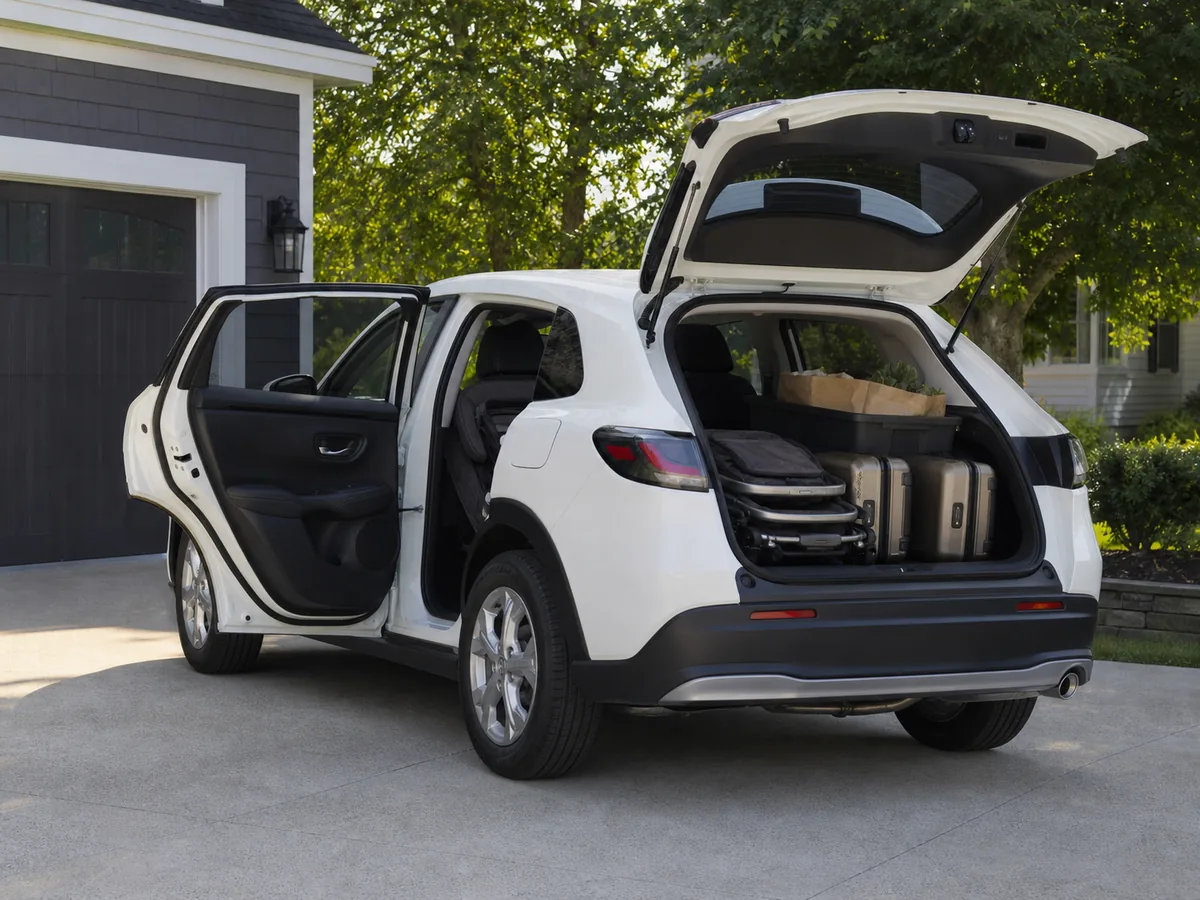
Install the actual rear-facing seat and check front-passenger space. Find the tether anchors, attach the lower connectors, and make sure upholstery does not hide them.
Load cargo with the seat in use, because folded-seat volume is irrelevant when a child occupies the second row.
Cargo tests a volume figure cannot settle
- Test the hatch under a low garage door
- Check whether the cargo floor creates a step with seats folded
- Confirm groceries remain below the rear-glass line
- Sit behind both regular front-seat positions
- Use all rear USB and reading-light features
Larger family SUVs hold more, and a small household pays for that capacity in fuel, tires and parking whether it uses it or not. The HR-V earns its footprint when passengers and bulky weekly cargo fit at the same time.
Install the actual child seat on both sides and move the front seats to normal positions. Check buckle access, roof clearance, and whether the rear door opens far enough in a narrow parking space.
Published legroom cannot show how easy a daily loading routine will be.
Bring the cargo that defines the purchase. A stroller, folding wheelchair, pet crate, or two large suitcases can reveal the hatch opening's limits.
Fold the rear seats and inspect the floor step, then close the hatch without forcing soft bags against the glass.
The HR-V is spacious for its class, but a Subaru Crosstrek may fit tall passengers and bulky gear more comfortably. Buy the smaller Honda when it passes the real load test and its easier parking size matters.
FWD is the value choice unless weather proves otherwise
Real Time AWD is available on every HR-V trim. It can send power rearward when the front tires need help, improving launch traction in snow, rain, loose surfaces, and steep driveways.
It does not increase engine output.
The system costs extra and reduces EPA estimates from 28 to 27 mpg combined.
That one-mpg difference is small. Purchase price, tire matching, and whether you need the traction are more important.
Drivetrain choice
- FWD economy
- 26 city / 32 highway / 28 combined
- AWD economy
- 25 city / 30 highway / 27 combined
- Engine output
- 158 hp with either drivetrain
- Ground clearance
- Still a small crossover, not a trail SUV
- Best AWD reason
- Repeated snow, wet hills, or slippery rural roads
FWD with four quality winter tires can be more useful for braking and cornering than AWD on mediocre all-season tires.
AWD mainly helps the car accelerate. Tires still determine much of the grip when turning or stopping.
Choose FWD for mild climates, cleared city roads, and buyers who want the lowest price. Choose AWD when weather recurs often enough that easier starts and climbs reduce stress.
Vehicles with standard all-wheel drive usually carry more ground clearance and a stronger engine, and they cost more to buy and to fuel than an HR-V does.
Compare them when traction is the first priority rather than an optional extra. The Subaru Impreza costs less than many HR-V trims and has standard AWD, while the Forester adds space and clearance at a higher price.
Check four matching tires on a used AWD HR-V. Large tread-depth differences or a mismatched replacement suggest the previous owner treated tires as individual parts.
Add AWD for a route you already drive, not for a vague feeling that every SUV should have it.
Current safety performance is a strong reason to shortlist it
The 2026 HR-V earned IIHS Top Safety Pick+ and Good results in the small-overlap, updated moderate-overlap, and updated side tests. Vehicle-to-vehicle prevention also earned Good, while pedestrian prevention was rated Good.
These results help the HR-V stand out from older used small SUVs tested under easier procedures. They are especially relevant for buyers who carry rear passengers because the updated moderate-overlap test evaluates rear protection more directly.
Standard Honda Sensing includes collision mitigation braking, road-departure mitigation, adaptive cruise control with low-speed follow, lane keeping assistance, traffic-jam assistance, and traffic-sign recognition. Blind-spot information starts on Sport rather than LX.
That trim difference matters in a city crossover where parking and lane changes are daily tasks. LX still has a rearview camera, but buyers who rely on blind-spot and cross-traffic warnings should include Sport's price in the comparison.
EX-L adds front and rear parking sensors and low-speed braking control. These help in tight spaces, though the HR-V's dimensions and windows already make it manageable.
Test the warnings around a known obstacle and confirm no sensor remains silent after bumper repair.
Windshield and camera calibration matter after glass replacement. Ask for documentation when the windshield is not original, and confirm there are no persistent driver-assist errors.
Compare safety with the current Forester and Toyota RAV4, then compare total price and size. The HR-V's strong current crash results are most valuable when the exact trim also includes the parking and visibility tools you expect.
The Top Safety Pick+ result is meaningful, but the exact car still needs functional systems. Look for windshield chips near the camera, warning messages, mismatched lamps, and signs of front-end repair.
A replaced windshield or collision repair may require calibration before assistance features work correctly.
Test adaptive cruise and lane support on a clearly marked road while keeping full control. Confirm that alerts appear consistently and that no system becomes unavailable after the car warms up.
Driver assistance reduces workload, but it cannot correct worn tires or excessive following distance.
Fit and visibility remain part of safety. Adjust the mirrors, reverse into a tight space, and look over both shoulders.
A strong crash rating does not compensate for a seating position that leaves a driver uncomfortable or unable to judge the corners.
A full-load road test reveals the engine's limits
The HR-V's gas powertrain reaches its 158 hp at 6,500 rpm and 138 lb-ft at 4,200 rpm.
Those peaks explain why the HR-V must rev for quick acceleration. The CVT can hold engine speed high while the vehicle gathers pace.
Drive with the people who normally ride with you. Air conditioning, passengers, cargo, altitude, and grades all increase the demand on the engine.
A solo flat-road test can make the car feel more relaxed than family use.
Use a repeatable loop:
A repeatable loop, driven in this order
- Pull awayInto fast traffic from a complete stop, so the hardest demand comes first.
- MergeFrom a short ramp without flooring it immediately, which is how most people drive.
- ClimbA grade at normal highway speed and hear what the engine does to hold it.
- PassA slower vehicle where legal and safe, carrying the passengers who normally ride along.
- CrawlThrough a parking lot to judge how the CVT responds at walking pace.
- Finish roughOn broken pavement, where tire and suspension noise is audible.
The engine should sound busy under load, not unhealthy. Persistent vibration, hesitation, warning lights, a burning smell, or speed that rises unevenly needs diagnosis.
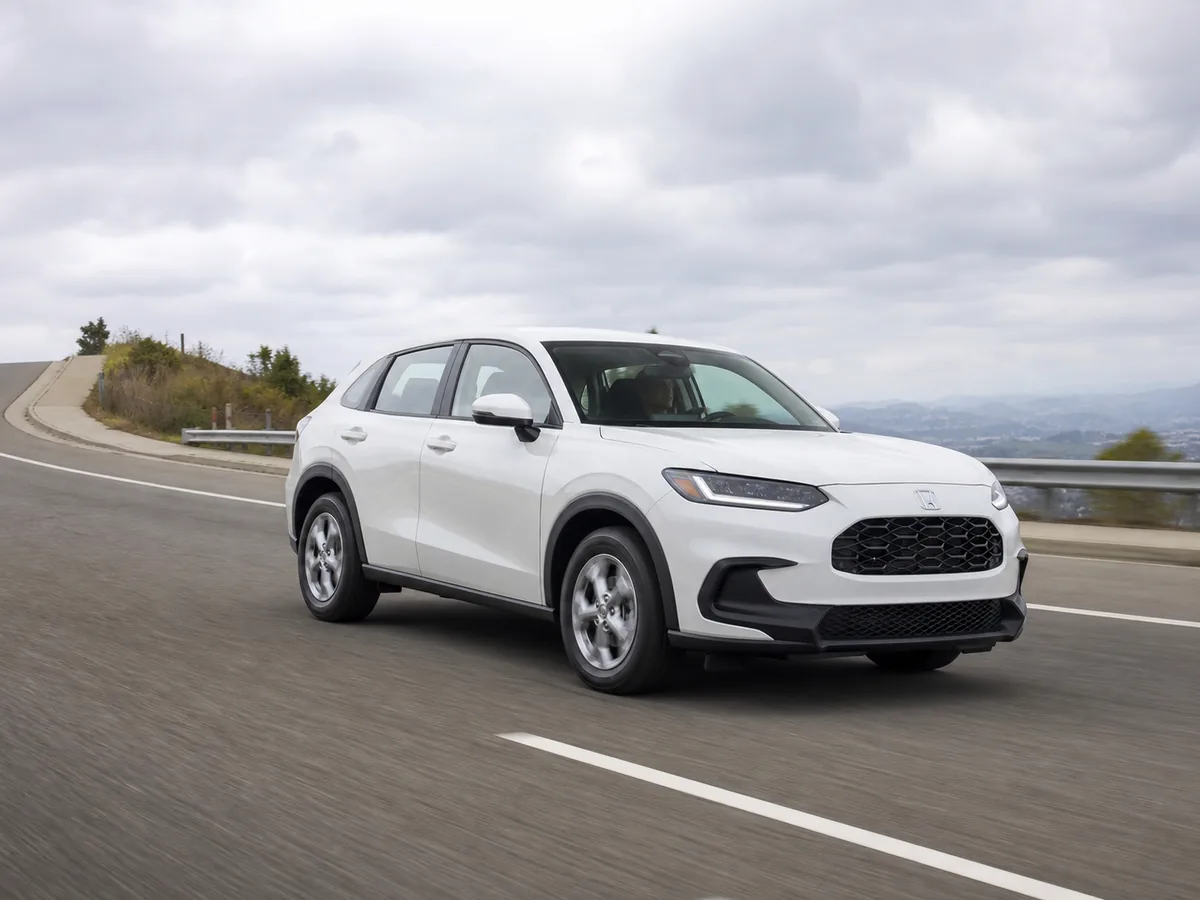
Steering is predictable, and the HR-V feels stable rather than playful. Sport's larger wheels change appearance more than performance and can add impact harshness.
Compare LX and Sport over the same broken street if ride comfort matters.
A buyer who dislikes the powertrain should not assume they will adapt.
Test a turbo or hybrid rival on the same road. The Mazda CX-5 has stronger available power, while hybrid compact SUVs use electric torque to feel easier at low speed.
The HR-V works when calm acceleration is acceptable, not when every merge becomes a compromise you promise to tolerate.
Bring the passengers who will use the vehicle and add representative cargo. Run the air conditioning, enter a highway from a short ramp, and climb the steepest grade in your routine.
The CVT may hold high rpm while the HR-V gathers speed. That sound is normal when power is requested, but the pace must still feel safe for the driver.
Repeat a 40 to 65 mph pass with enough clear road. Judge how much planning the maneuver requires, not just the stopwatch.
A driver who regularly joins fast traffic with four adults may find the powertrain tiring even when a solo city test feels fine.
Check straight-line stability, braking effort, and steering corrections after the acceleration test. Tires and alignment can make a modest-power vehicle feel busier than it should.
Compare the same route with a turbocharged Kia Seltos if passing performance is a priority.
Used examples need CVT, battery, and electronics checks
The current U.S. HR-V generation began for 2023. It uses a naturally aspirated 2.0L engine rather than the smaller first-generation HR-V's drivetrain.
Keep reliability advice separated by generation.
A simple engine reduces turbo-related questions, but it does not remove maintenance. Oil level and change history, coolant condition, battery health, CVT behavior, tires, brakes, alignment, and accident repairs still decide the exact car.
- 2016 to 2022First U.S. generation uses a different platform and packaging approach
- 2023Current larger HR-V arrives with 2.0L engine
- 2025Current platform continues with established trim pattern
- 2026Standard 9-inch screen and wireless phone features broaden equipment
Start cold. The engine should crank quickly and idle smoothly.
Shift through reverse and drive, then crawl in traffic. The CVT should respond predictably without shudder, delayed engagement, repeated surging, or warning lights.
Test the screen, camera, wireless phone connection, charger, climate controls, windows, locks, remote start, heated seats, and every driver-assist function fitted. Battery voltage should be checked when electronics behave inconsistently or the car sat for a long period.
Inspect all four tires for even wear and correct size.
On AWD cars, matching condition matters more. Look underneath for impact damage and check body gaps for accident repairs.
Verify recalls by VIN through NHTSA or Honda. The planned HR-V reliability research can cover year detail, while the HR-V recall lookup answers current campaign status.
A reliable name helps only after the exact HR-V proves its service, CVT, battery, tires, and electronics are healthy.
Arrange to see the car cold. Battery weakness can trigger several warnings, while a warm engine may hide a rough start or slow cranking.
Scan every module and confirm that emissions readiness monitors are complete. Recently cleared codes deserve an explanation and a return inspection after more driving.
At parking speed, move between reverse and drive and wait for each engagement.
On the road, accelerate gently and then firmly. The CVT should respond consistently without shuddering, repeated impacts, or rpm rising while road speed fails to follow.
Operate the camera, infotainment, USB ports, climate system, locks, windows, and driver-assistance controls.
Then inspect tires for matching size, model, date, and wear. A pre-purchase inspection should include the underbody and evidence of collision repair, even when the history report looks clean.
Ownership cost is lowest when you resist EX-L overlap
LX controls purchase price and tire cost, while Sport adds enough daily equipment to justify its increase for many buyers. EX-L becomes harder to defend when its $30,350 starting price approaches larger or more efficient SUVs.
| Cost | Lower-cost path | Higher-cost trigger |
|---|---|---|
| Purchase | LX FWD | EX-L AWD and dealer add-ons |
| Fuel | FWD at 28 combined mpg | AWD and heavy city use |
| Tires | LX 17-inch size | Sport and EX-L 18-inch size |
| Insurance | Quote exact VIN | Parking sensors and driver aids can raise repair cost |
| Depreciation | Mid trim held for years | Top trim traded quickly |
Honda resale can help long-term cost, but a strong resale reputation should not excuse a high transaction price. Compare full amounts after destination, dealer fees, accessories, tax, and financing.
Fuel economy is adequate rather than exceptional. At high annual mileage, compare the HR-V with a hybrid Toyota Prius if SUV height is optional, or a hybrid compact SUV if it is required.
The fuel gap can repay part of a higher purchase price.
Price 17- and 18-inch replacement tires before choosing trim. Larger wheels can cost more and provide less pothole cushion.
Alignment and rotation habits influence how quickly that bill returns.
A used buyer should hold a first-month reserve for tires, battery, filters, oil, brake inspection, alignment, and diagnostic work. A clean history report does not prove these items are current.
Use the lease-versus-buy framework when a low monthly number hides a long loan or top-trim price. Sport is usually the ownership sweet spot, while EX-L must beat larger and hybrid alternatives on features you will use daily.
Obtain insurance quotes for the exact VIN and tire quotes for the exact wheel size.
Add registration, financing, annual fuel, and the next scheduled service. A low monthly payment can hide a long loan and a high total interest bill.
Fuel planning should use the route and drivetrain you will own. AWD costs both purchase money and efficiency, while short trips may fall below the official combined estimate.
The planned HR-V real-world mpg report will separate conditions.
Use a conservative estimate for today's comparison.
A used example can save money only when deferred maintenance is priced before purchase.
Reserve cash for tires, battery, brakes, and fluids identified by the inspection. The cheapest HR-V is the sound car with the right equipment, not automatically the lowest advertised price.
Who should buy the HR-V and who needs more power
The HR-V fits city and suburban households that want easy parking, good rear-seat room, a useful hatch, simple controls, and strong current safety performance. It is especially sensible when a compact SUV feels unnecessarily large.
LX suits price-first buyers in mild climates. Sport suits drivers who use heated equipment, blind-spot monitoring, remote start, and smart entry.
EX-L suits buyers who value leather, power adjustment, parking sensors, and a moonroof enough to keep the car for years.
High-mile drivers should calculate hybrid alternatives. Mountain and freeway commuters should prioritize passing response.
Families should test child seats and cargo simultaneously, not one at a time.
Compare the Forester for standard AWD and visibility, the CR-V for more power and a hybrid option, and the Prius when maximum mpg matters more than seating height. Each rival exposes a different HR-V trade.
Finish with a full-load road test, cargo check, insurance quote, tire price, and out-the-door comparison. The right HR-V is roomy enough to replace a larger SUV and calm enough that its modest engine never becomes the first thing you notice.