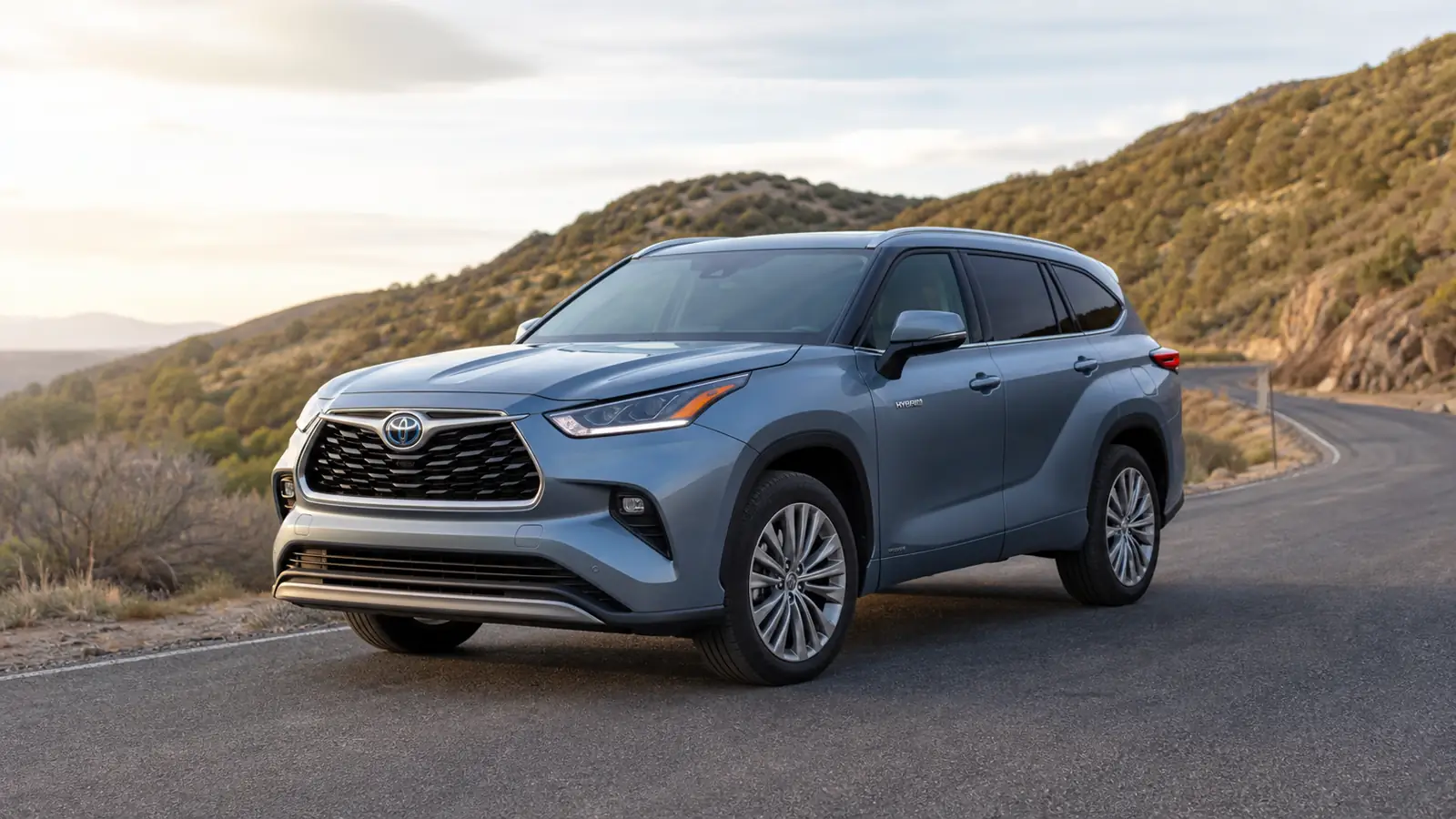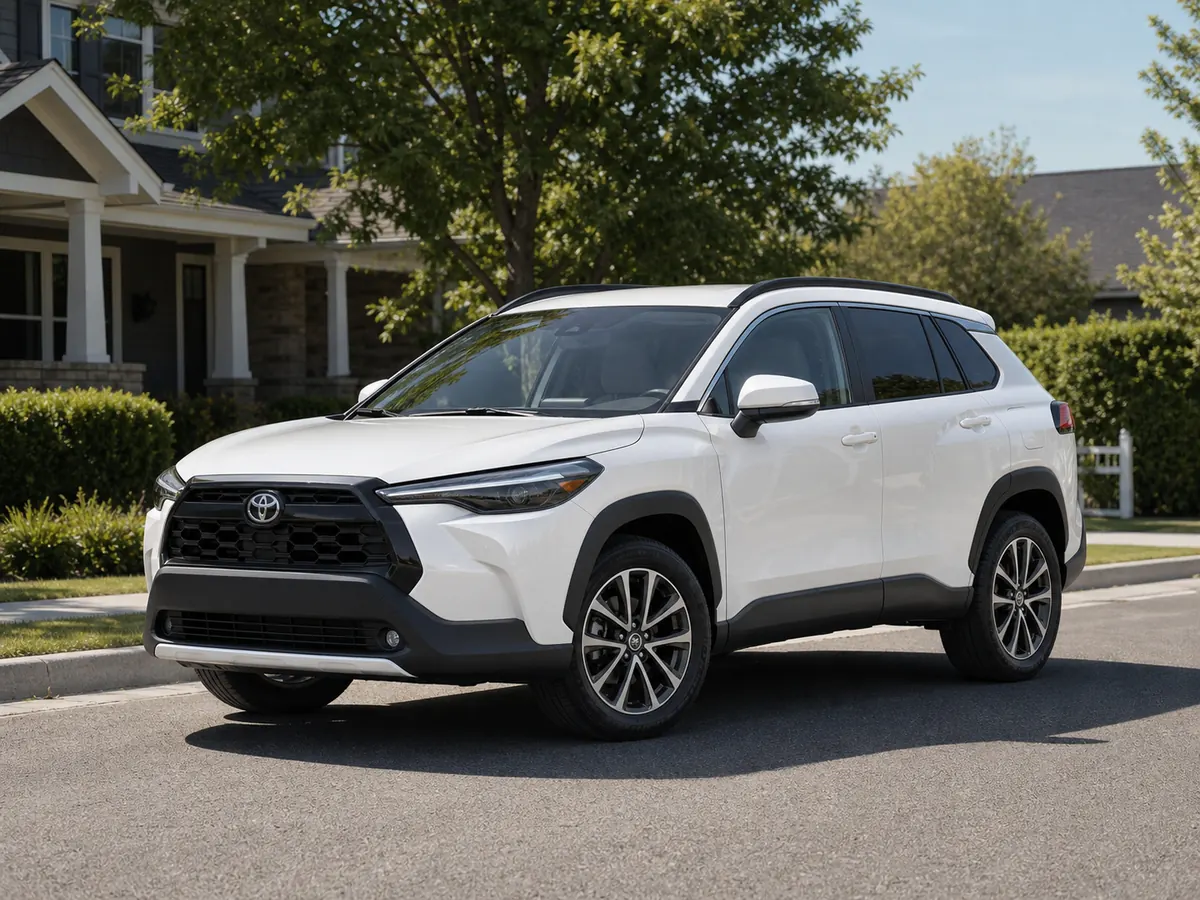
Choose gas or hybrid before looking at trim badges
The 2026 Toyota Corolla Cross offers two different ownership cases. Gas models use a 169-hp 2.0-liter engine with front-wheel drive or all-wheel drive.
Hybrids make 196 combined hp, include electronic AWD, and carry a manufacturer-estimated 42 mpg combined rating.
The correct choice depends on annual miles, city driving, traction need, and purchase price.
| Version | Output | Drivetrain | Combined MPG | Best reason |
|---|---|---|---|---|
| Gas FWD | 169 hp | Front-wheel drive | Up to 32 | Lowest starting price |
| Gas AWD | 169 hp | All-wheel drive | 30 | Conventional power with added traction |
| Hybrid | 196 hp | Electronic AWD | 42 | Higher mileage and stronger response |
| Any version | 1,500-lb tow ceiling | Configuration rules apply | Varies | Light trailer only |
Toyota lists gas LE from $24,635 and Hybrid S from $28,995 before destination.
Compare equally equipped quotes because trim content can hide the powertrain difference. Add tax and finance interest, then calculate fuel using annual miles and local prices.
A high-mile city driver can recover the hybrid premium faster than a low-mile highway driver.
Drive both systems with the regular passengers aboard. The hybrid's extra output and immediate motor assistance make merging and climbing easier.
The gas version can be adequate for a light household, but its CVT may hold higher engine speed under load.
Decide whether that sound and response remain acceptable on the steepest normal route.
Gas FWD is the value answer when price matters most and winter traction is not a recurring problem. Hybrid is the stronger all-around choice when the household drives enough to use its fuel advantage and would buy AWD anyway.
Choose the powertrain from mileage, route, and matched transaction price before spending money on appearance or convenience trims.
The 2026 refresh changes the cabin and face, not the size
Toyota refreshed Corolla Cross for 2026 with different front styling for gas and hybrid versions, updated paint choices, and cabin changes that include a redesigned center console.
Depending on grade, the vehicle can carry a larger multimedia screen and digital gauge display. These updates can improve daily use, but they do not create more rear legroom or a wider cargo opening.
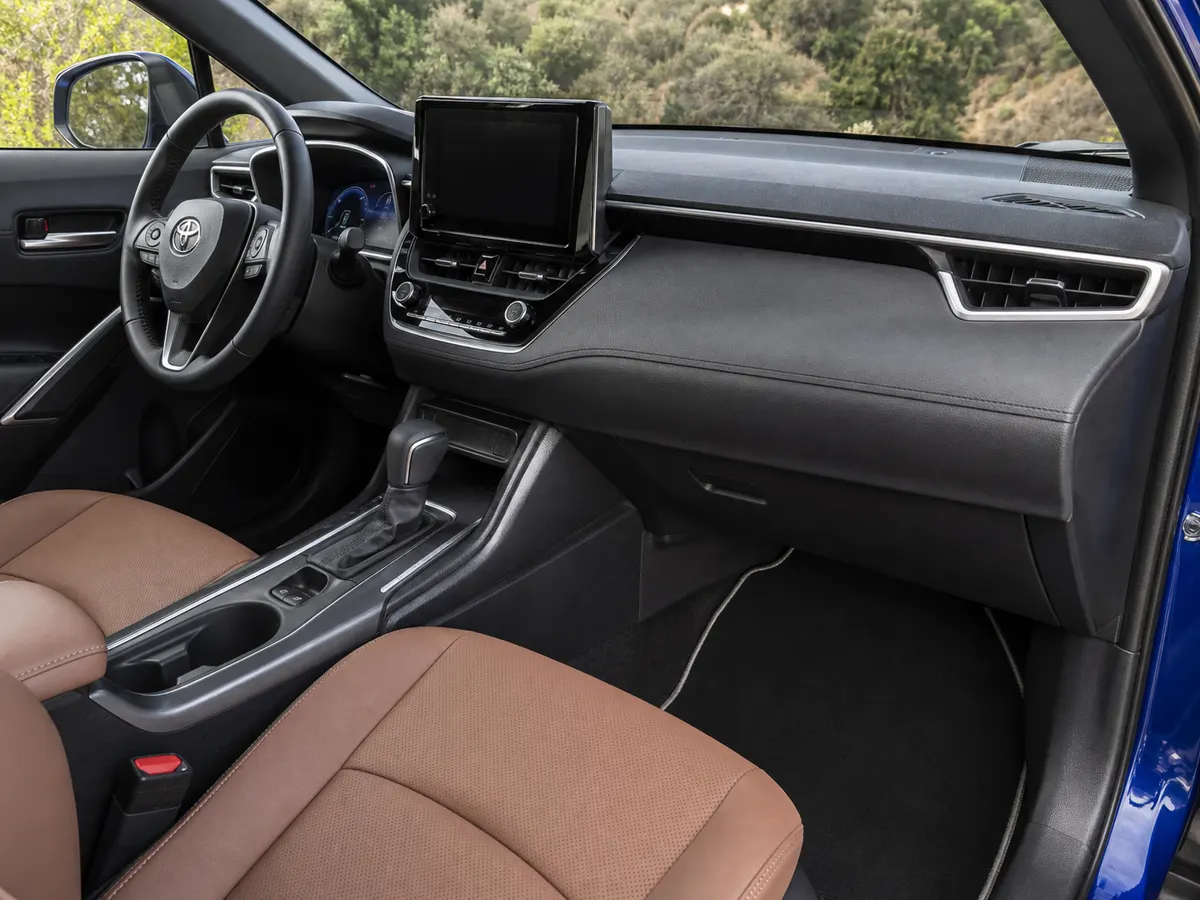
Sit in the exact grade rather than judging the refresh from photos. Test screen glare, menu response, physical climate controls, phone storage, charging position, cupholders, console interference, and the passenger's knee room.
Confirm wireless phone compatibility with the device that will actually be used.
Refresh check
- Exterior
- Gas and hybrid front designs differ
- Console
- Storage and control layout revised
- Display
- Size varies by grade
- Gauges
- Digital equipment varies by grade
- Space
- Core passenger and cargo dimensions remain the key limit
A previous-year discount can outweigh a screen or styling change when the powertrain, safety equipment, and physical fit are otherwise right. Compare insurance, finance rate, warranty start, and recall status as well as sticker price.
The updated design is useful only when it solves a repeated annoyance. A larger display does not compensate for a rear-facing child seat that pushes the front passenger forward.
Treat 2026 as a meaningful equipment refresh, then make the purchase on powertrain and physical fit rather than the new face.
Rear-seat fit can end the purchase quickly
Corolla Cross is easy to park because it is small, and the same dimensions set the rear-seat limit.
Set the front seat for the tallest regular driver before anyone evaluates the rear. A showroom seat pushed forward can make the second row look much more generous than the household will experience.
Install every child restraint according to Toyota and seat-maker instructions. Check rear-facing clearance, top-tether access, buckle reach, head restraints, door opening, and whether the remaining passenger can sit without pressing against a restraint.
Do not assume the center position will solve a width problem.
- Set both front seats before testing the rear
- Bring the actual child seats
- Place the tallest passenger behind the tallest driver
- Close the door without moving knees or feet
- Check vents and temperature on a 20-minute drive
- Rehearse school pickup entry from both sides
Adults should test head clearance, thigh support, foot room under the front seat, knee contact, and door-armrest position. Drive on broken pavement because an upright showroom check cannot show whether passengers move comfortably with the vehicle.
A Toyota RAV4 or Honda CR-V costs more but can solve a repeated passenger problem. The small SUV is not a bargain if the family replaces it early because a child seat or growing teenager no longer fits.
Complete the rear-seat test before discussing trim because one failed passenger position can make every Corolla Cross configuration the wrong purchase.
Cargo space must handle the largest weekly object
A liftgate and upright body make Corolla Cross easier to load than a small sedan, but usable cargo depends on object shape. The rear wheel housings, seatbacks, hatch angle, floor height, and opening width determine whether a stroller, crate, wheelchair, cooler, or suitcase set fits without blocking passengers.
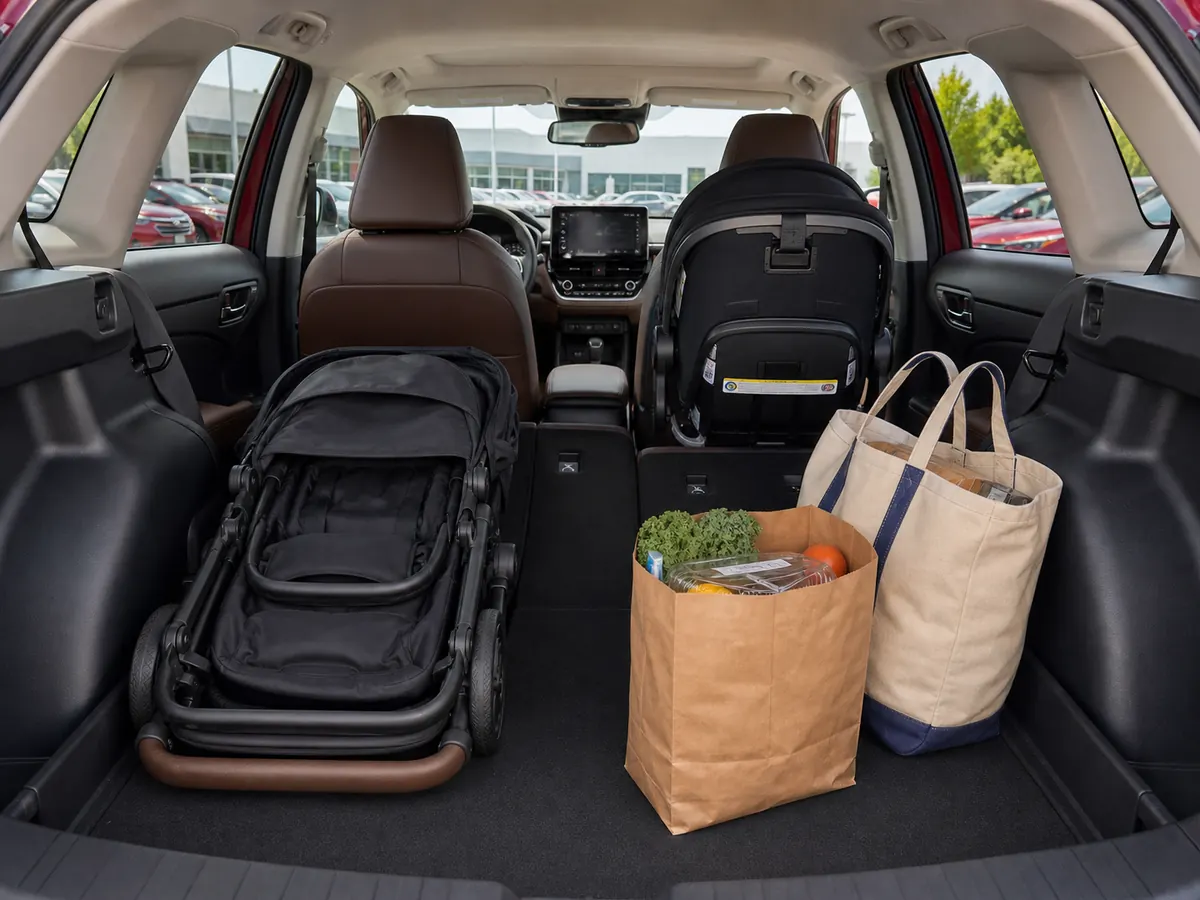
Bring the actual item or make a cardboard outline with the same width, height, and depth.
Load it while the rear seat remains in its normal passenger position. Check liftgate clearance in the home garage, rear visibility, cargo-cover interference, tie-down access, and whether groceries can stay separate from dirty equipment.
Fold the rear seat and inspect the step, gap, and front-seat position. Long objects may fit only after moving the passenger seat or leaving a rear position unusable.
Secure heavy cargo and do not place loose objects above the seatback where they can move during a crash.
- Largest stroller or mobility device
- Pet crate with ventilation space
- Two travelers' luggage
- Sports or work equipment
- Weekly groceries beside the main item
The small SUV hub provides larger alternatives, but more space also brings a larger parking footprint and price. Corolla Cross earns its SUV shape when the biggest normal object passes through the hatch with the required passenger seats still usable.
AWD helps launch traction but does not add space or clearance
Gas Corolla Cross offers FWD or AWD, while every hybrid includes electronic AWD. The systems can help distribute drive force when a wheel has less grip, especially during a launch on snow, rain, or loose surfaces.
AWD does not create more ground clearance, change the rear seat, shorten braking distance, or overcome unsuitable tires.
The gas AWD system adds purchase cost, weight, and tire obligations without improving output. The hybrid's rear electric motor is part of a more powerful and efficient package, which makes it easier to justify when the buyer already needs AWD.
Neither system turns the vehicle into a low-range trail SUV.
Price a matching replacement tire set. AWD vehicles can be sensitive to major circumference differences, so a single damaged tire may create a larger expense if the remaining tread is worn.
Rotate on schedule and check inner shoulders for alignment wear.
Prove the system on the actual route, then compare the value of quality seasonal tires. A commuter facing plowed streets may benefit more from four winter tires on FWD than all-season tires on AWD.
Buy AWD for a repeated launch-traction problem, and keep tire quality ahead of the drivetrain badge in the winter budget.
A loaded road test exposes the gas engine's limits
A short solo drive can make the 169-hp gas version feel adequate. Add passengers, cargo, air conditioning, a highway ramp, and a long grade before deciding.
The CVT may raise engine speed to produce the requested acceleration, which is normal behavior but can sound busy.
The question is whether the household accepts that response every week.
The 196-hp hybrid uses electric assistance to respond more quickly from low speed. It still needs a real test at highway speed because passing, wind, and grades change the workload.
Compare throttle response, cabin noise, brake blending, straight tracking, and the transition between regenerative and friction braking.
- Merge from the shortest regular ramp
- Hold speed on the steepest normal grade
- Pass at highway speed with passengers aboard
- Stop firmly in a safe location
- Drive patched pavement on the chosen wheel size
- Test camera clarity and headlights after dark
Check the driver's seating position, outward view, mirror coverage, rear pillars, steering reach, and pedal relationship.
Park beside a larger SUV to see whether sight lines remain clear. A surround-view feature can help in a tight garage, but it cannot replace direct observation.
Drive Toyota Corolla Hybrid if SUV access is not required and larger RAV4 if the smaller engine or cabin feels strained. Choose the gas model only after it carries the normal load comfortably, and choose hybrid when the stronger response and fuel saving improve the exact route.
Trim value changes after the powertrain choice
Gas and hybrid grades use different ladders, so trim names should not drive the first comparison. Select the powertrain and drivetrain, then identify the lowest grade with the seat material, visibility, climate, screen, and driver-assistance equipment used every week.
A larger wheel or styling package can cost more without changing space or output.
Trim filter
- Powertrain
- Gas or hybrid first
- Drivetrain
- FWD, gas AWD, or hybrid eAWD
- Visibility
- Blind-spot and camera needs
- Cabin
- Seat comfort and cleaning needs
- Technology
- Screen and gauge equipment actually used
- Wheels
- Ride quality and replacement price checked
For gas, LE often provides the practical equipment step over L without turning the vehicle into a high-priced small SUV.
For hybrid, S controls entry price and SE or XSE adds equipment and appearance. Exact content can change with packages, so compare window stickers rather than relying on the grade name.
Drive the installed wheels over a rough road and price their tires. Check insurance by VIN because hybrid equipment, sensors, wheel value, and transaction price can change premiums.
Build written quotes with the same term, down payment, destination, tax, and dealer products.
If an upper Corolla Cross approaches a roomier RAV4 or CR-V after discounts, compare the larger vehicle.
Do not accept a longer loan simply to keep the monthly payment similar.
After choosing the powertrain, buy the lowest grade that contains the visibility and comfort features used every week.
Current IIHS evidence applies carefully across 2025 and 2026
IIHS reports that its updated side-test result for the 2025 Corolla Cross applies to 2025 and 2026 models.
That test is Good. The 2025 rating page also reports Good small-overlap front, Acceptable updated moderate-overlap front, Good pedestrian front crash prevention, Good seat-belt reminders, and Good-plus LATCH ease of use.
| Area | Reported result | How to use it |
|---|---|---|
| Small-overlap front | Good | Review the tested configuration and applicability |
| Updated moderate front | Acceptable | Compare rear-passenger details |
| Updated side | Good | IIHS says it applies to 2025 to 2026 |
| Pedestrian prevention | Good | Driver still controls braking |
| Seat-belt reminders | Good | Buckle every seating position |
| LATCH ease | Good-plus | Install the actual restraints anyway |
Do not convert the 2025 award label into a blanket claim about every 2026 trim.
Headlights and equipment can vary, and IIHS updates procedures over time. Use the exact rating page, test name, and stated model-year applicability.
Toyota equips 2026 models with Safety Sense 3.0 and nine airbags. Driver-assistance features have limits related to speed, weather, markings, sensor condition, and driver attention.
Test warnings without creating a hazard and keep cameras and sensors clean.
On a used vehicle, inspect belts, airbags, seat tracks, body seams, paint edges, glass, and calibration invoices.
Install child seats to confirm real access.
The named IIHS tests provide useful evidence, but exact procedure, model-year applicability, trim equipment, and restraint fit matter more than a broad safety slogan.
Recall 25V869 makes the 2026 hybrid VIN part of the test drive
NHTSA recall 25V869 includes certain 2026 Corolla Cross Hybrid vehicles built from August 27 through November 25, 2025.
Toyota's official report lists 3,761 potentially involved Corolla Cross Hybrids. It says a bolt inside a specific inverter assembly may have been improperly torqued.
An affected bolt can create incomplete contact or come loose. NHTSA's report says this may activate a warning lamp and can lead to limp mode or loss of motive power.
A loose bolt can also create a short circuit and enough heat to damage nearby components, increasing fire risk.
The report states that the repair will be free.
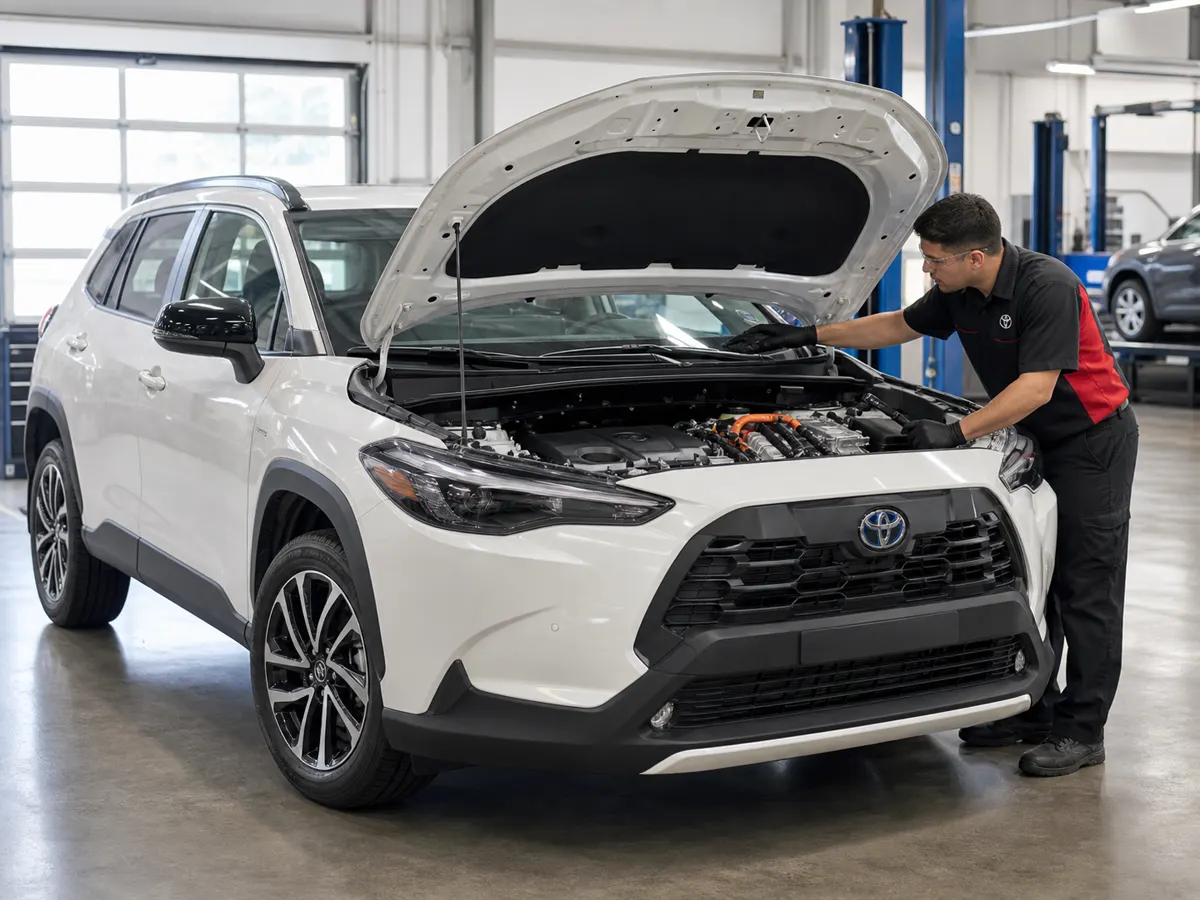
During inspection, look for hybrid warnings, reduced-power messages, no-start history, thermal damage, or undocumented inverter work.
Do not clear codes or accept a seller's statement that a warning is harmless. If an official remedy is pending, follow Toyota and NHTSA instructions and postpone delivery when safe completion cannot be documented.
The planned Corolla Cross recall guide can track campaign changes. A 2026 hybrid purchase is incomplete until the exact VIN status, owner instructions, and free remedy record are clear.
Used examples need transmission, hybrid, tire, and body checks
Corolla Cross began for 2022 and received a notable refresh for 2026. The history is long enough to find used examples but still short for strong claims about every future repair.
Inspect the exact powertrain and condition instead of assuming that the Corolla name guarantees the same record as the Corolla sedan.
Start cold and scan all modules before and after the drive. On gas versions, check oil and coolant, leaks, startup noise, CVT engagement, steady acceleration, and service records.
On hybrids, check warning history, battery cooling intake, engine transitions, brake blending, inverter campaign status, and hybrid warranty dates.
- Test the 12-volt battery and every key
- Inspect all four tires for matching size and inner wear
- Check carpet and spare area for water
- Test cameras, screens, windows, locks, and liftgate
- Review windshield and sensor-calibration invoices
- Examine seams and paint for collision repair
- Obtain an independent pre-purchase inspection
A weak 12-volt battery can cause confusing electronic symptoms.
Test it rather than replacing expensive modules by guess. Uneven tire wear can indicate alignment, impact, or suspension problems, and a fresh pair of tires can hide a history unless all four positions are inspected.
The planned Corolla Cross reliability guide can analyze years separately. A sound used Corolla Cross proves clean diagnostics, correct powertrain behavior, dry body structure, matching tires, and complete VIN records.
Buy the smallest SUV only when the full household fits
Corolla Cross offers a useful split. Gas FWD keeps the starting price low.
Hybrid adds stronger response, electronic AWD, and 42 mpg combined. The compact footprint makes both versions easy to park, while the rear seat and cargo area set a firm boundary for growing families and bulky equipment.
| Input | Gas FWD | Hybrid AWD |
|---|---|---|
| Purchase | Lowest entry price | Higher starting price |
| Fuel | Up to 32 mpg combined | 42 mpg combined |
| Traction | Front drive | Electronic AWD standard |
| Output | 169 hp | 196 hp |
| Tires | Simpler FWD obligations | Matching AWD set matters |
| Recall check | Normal VIN search | Recall 25V869 requires special attention |
Pros
- Affordable gas model
- Efficient and stronger hybrid
- Easy urban footprint
- Standard Toyota Safety Sense 3.0
Cons
- Rear seat can be tight behind tall drivers
- Gas engine works harder under load
- Cargo is modest beside larger compact SUVs
- Certain 2026 hybrids require recall action
Build the budget with purchase price, total interest, insurance, fuel, tires, service, repair reserve, and resale.
Compare a larger vehicle when an upper trim approaches its discounted price. Early replacement because the household outgrows the cabin can cost more than buying suitable space once.
Compare RAV4 alternative, Honda's CR-V, and Corolla Hybrid sedan on the same route. Corolla Cross is sensible when small exterior size is valuable and the complete passenger-and-cargo load fits without compromise.
The final verdict needs a matched fuel and space trial
The final verdict should compare a gas LE FWD and Hybrid S AWD with matched destination, tax, finance term, and dealer products.
Do not compare a discounted gas model with a loaded hybrid or use the best fuel estimate for both.
Put the same passengers and largest weekly object in each vehicle, then drive the same city loop, highway merge, grade, and rough road.
| Evidence | Gas LE FWD | Hybrid S AWD |
|---|---|---|
| Out-the-door price | Written quote | Written quote |
| Annual fuel | Gas MPG and local price | Hybrid MPG and local price |
| Cabin fit | Child seats and tallest adult | Same people and positions |
| Cargo | Largest weekly object | Same object and seats |
| Insurance | Quote by VIN | Quote by VIN |
| Recall | Official VIN search | Recall 25V869 status |
Use annual miles to calculate the hybrid payback without assuming fuel prices only rise.
Add AWD tire obligations and any insurance difference. Then ask whether the hybrid's stronger response improves the loaded route enough to matter even if fuel savings take several years.
The gas vehicle wins when the price gap is large, annual mileage is modest, and FWD covers the route.
The hybrid wins when city mileage is high, AWD would be purchased anyway, the recall status is clear, and the household accepts the purchase premium.
Choose only after the same people, cargo, route, and five-year costs are written beside both powertrains.