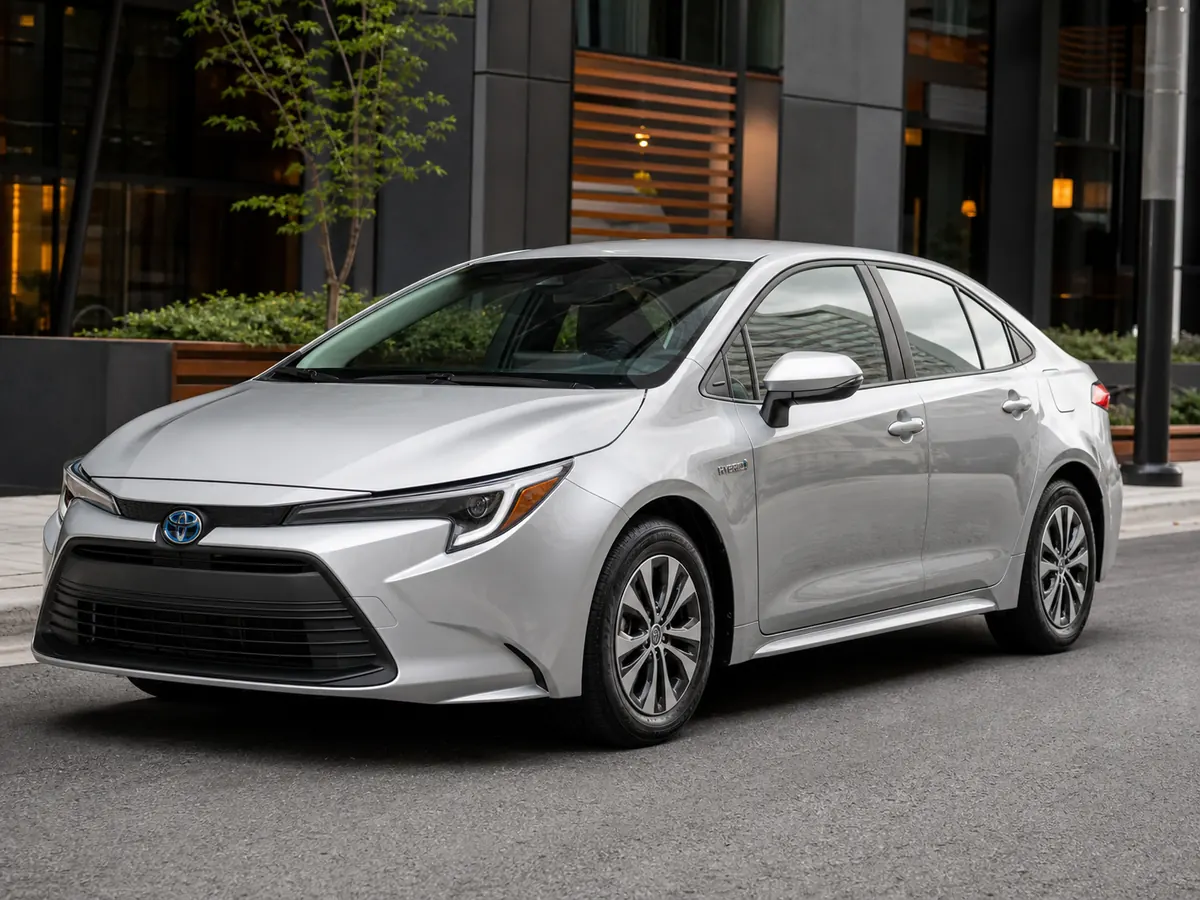
LE front-wheel drive is the efficiency baseline
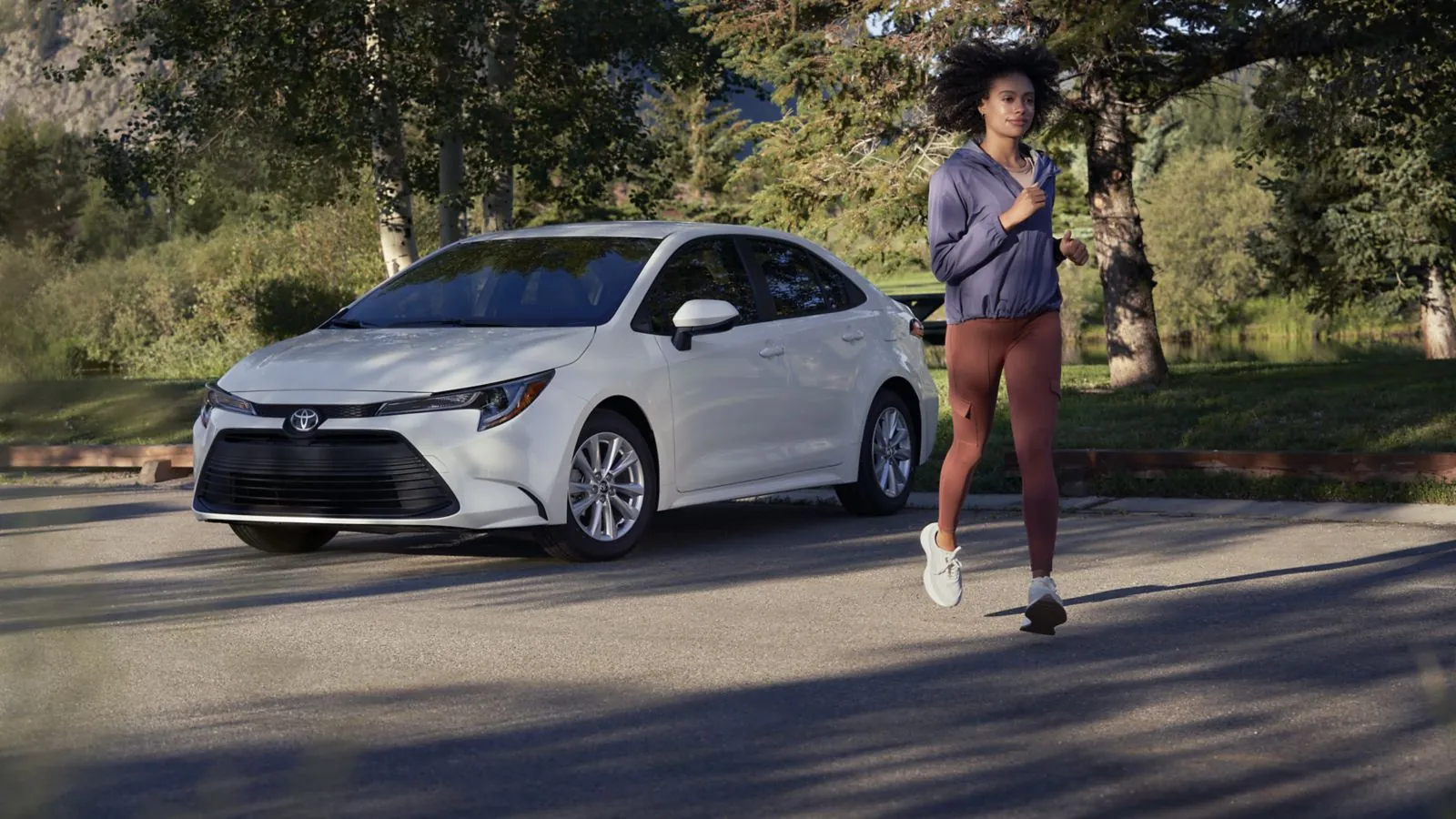
The 2026 Toyota Corolla Hybrid makes its strongest case as an LE with front-wheel drive. Toyota lists 138 combined hp and a manufacturer-estimated 53 mpg city, 46 highway, and 50 combined.
The LE starts at $24,575 before destination in Toyota's launch information, which keeps the price close to conventional compact sedans.
The fifth-generation Toyota Hybrid System pairs a 1.8-liter gasoline engine with electric motors and an electronic continuously variable transmission.
It does not plug in. The car recovers some energy during deceleration and uses the battery and motors to reduce fuel use, especially during low-speed and stop-and-go driving.
Build a matched quote against the gas Corolla and Toyota Prius. Include destination, tax, interest, insurance, annual miles, and local fuel.
A driver covering many city miles can use the hybrid advantage quickly, while a low-mile owner may never recover a large dealer markup.
LE FWD keeps the smallest wheels, lowest price, and best economy combination. Use it as the baseline and require a measurable traction, comfort, or appearance reason for every step upward.
AWD adds launch traction and subtracts MPG
Toyota offers electronic AWD on LE and SE. A rear electric motor can help move the car when the front tires have less grip, but total system output remains 138 hp.
AWD does not add ground clearance, create low range, improve braking on ice, or turn the sedan into an SUV.
| Grade | Drive | City MPG | Highway MPG | Main reason |
|---|---|---|---|---|
| LE | FWD | 53 | 46 | Maximum efficiency and value |
| LE | AWD | 51 | 44 | Added launch traction with modest penalty |
| SE | FWD | 50 | 43 | Sport appearance and tuning |
| SE | AWD | 47 | 41 | Sport trim plus traction |
| XLE | FWD | 53 | 46 | Comfort with efficient drivetrain |
Toyota's announced matching-grade price difference is $1,400 before destination and options. Add the fuel penalty, potential insurance change, and matching-tire obligations over the ownership term.
The number can be justified on a steep, frequently slick route, but it is harder to defend on plowed flat streets.
Test AWD on a normal road rather than seeking unsafe wheelspin. Check whether the route includes an unplowed hill, icy driveway, or repeated low-grip launch where suitable winter tires alone have not solved the problem.
A vague concern about weather is weaker evidence than a specific road and season.
The AWD vehicle hub includes higher-clearance choices. Choose Corolla Hybrid AWD for a documented launch-traction need and accept its price and MPG loss without expecting more power or clearance.
Winter tires can matter more than the rear motor
Every drive system depends on four tire contact patches for steering and braking. AWD can help the Corolla Hybrid start moving, but suitable winter tires can improve grip during braking and cornering as well.
A driver who spends the whole traction budget on AWD and keeps worn all-season tires may be less prepared than expected.
Buy four winter tires of the correct size, load rating, speed rating, and type when climate and local guidance support them.
Mixing seasonal types can create unbalanced behavior. Use a complete set, maintain pressure as temperatures change, and follow Toyota's rotation and replacement guidance.
- Price four tires and compatible wheels before buying AWD
- Check local winter-tire rules
- Measure tread across each tire
- Inspect inner shoulders for alignment wear
- Store the unused set correctly
- Relearn pressure monitoring as required
AWD also makes major tire circumference differences more important. A puncture late in the set's life may require more than one replacement to keep the tires appropriately matched.
Ask Toyota for the applicable limit and price the scenario before delivery.
A front-drive LE on strong winter tires can be the better value on maintained roads. Spend first on the tires that steer and stop the car, then add AWD only when the route still presents a repeated launch problem.
The 138-hp system rewards a loaded road test
Corolla Hybrid is tuned for economy rather than strong acceleration. Electric assistance helps it respond smoothly at low speed, but 138 hp must still move the car, passengers, luggage, and climate load.
A short solo loop cannot show how the system feels on a highway ramp or long grade with the household aboard.
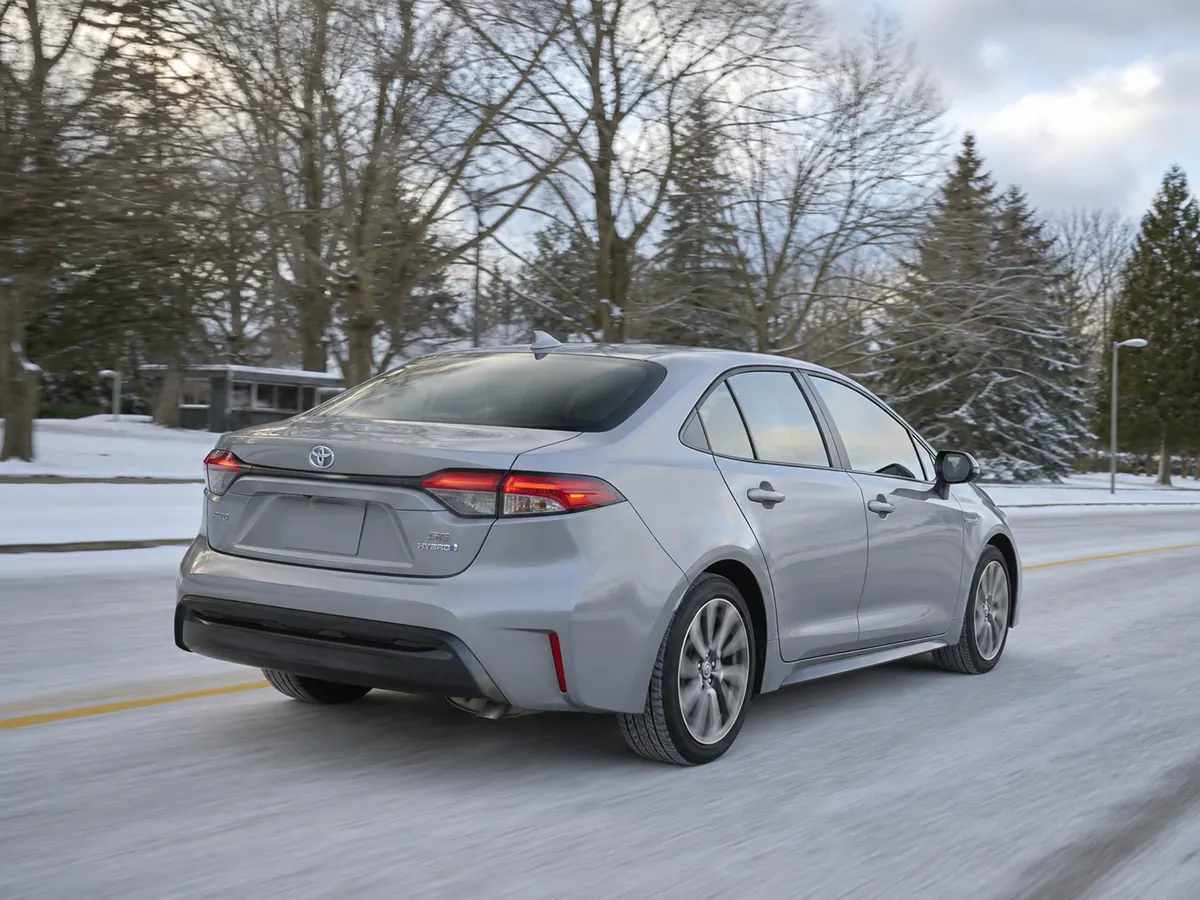
Use the shortest regular merge, a safe highway pass, the steepest normal hill, and a rough road. Listen to engine speed under sustained demand, check whether the car holds speed without constant correction, and decide whether passing reserve feels comfortable.
The eCVT can hold the engine at an efficient high speed, which may sound unfamiliar without indicating a stepped transmission fault.
Brake from low speed and then firmly from a safe higher speed.
Regenerative and friction braking should combine predictably. Check pedal consistency over bumps and at the final stop.
Tire choice, road surface, and driver input affect the result.
- Start with a cold powertrain
- Carry the regular passengers
- Run the normal air-conditioning load
- Merge and climb on the actual route
- Test low-speed and firm braking
- Repeat in FWD and AWD if undecided
A Toyota Camry Hybrid offers more power and room at a higher price. Corolla Hybrid is suitable when the full-load road test proves that its economy-focused 138-hp response is comfortable on every routine merge and grade.
LE, SE, and XLE spend money in different places
LE concentrates on value and fuel economy. SE changes appearance, wheel and tire package, and driving character while giving up some EPA-estimated mileage.
XLE keeps the efficient front-drive estimate and adds comfort and display equipment.
None increases the 138-hp combined output.
Trim choice
- LE FWD
- Lowest-cost efficiency baseline
- LE AWD
- Traction tool with modest MPG penalty
- SE FWD
- Appearance and road feel
- SE AWD
- Sport trim plus largest MPG penalty
- XLE FWD
- Comfort and digital equipment
- All grades
- Blind-spot monitoring now standard for 2026
Drive LE and SE on the same broken road. Larger wheels and lower-profile tires can sharpen response while increasing impact harshness and replacement price.
Price a complete tire set and inspect pothole exposure on the normal route before paying for styling.
Choose XLE when the seat, gauge cluster, or cabin features reduce a repeated discomfort. Toyota made a 12.3-inch digital gauge cluster standard on XLE for 2026, while LE and SE receive a 7-inch digital cluster.
Test glare, font size, and information layout rather than assuming the larger screen is easier for every driver.
Build quotes with the same down payment, term, destination, tax, and dealer products. Compare total payments, insurance, tire cost, and fuel, not only the monthly amount.
LE FWD is the value choice, SE is an appearance and road-feel purchase, and XLE needs a comfort reason rather than an efficiency claim.
The compact cabin needs a passenger and trunk rehearsal
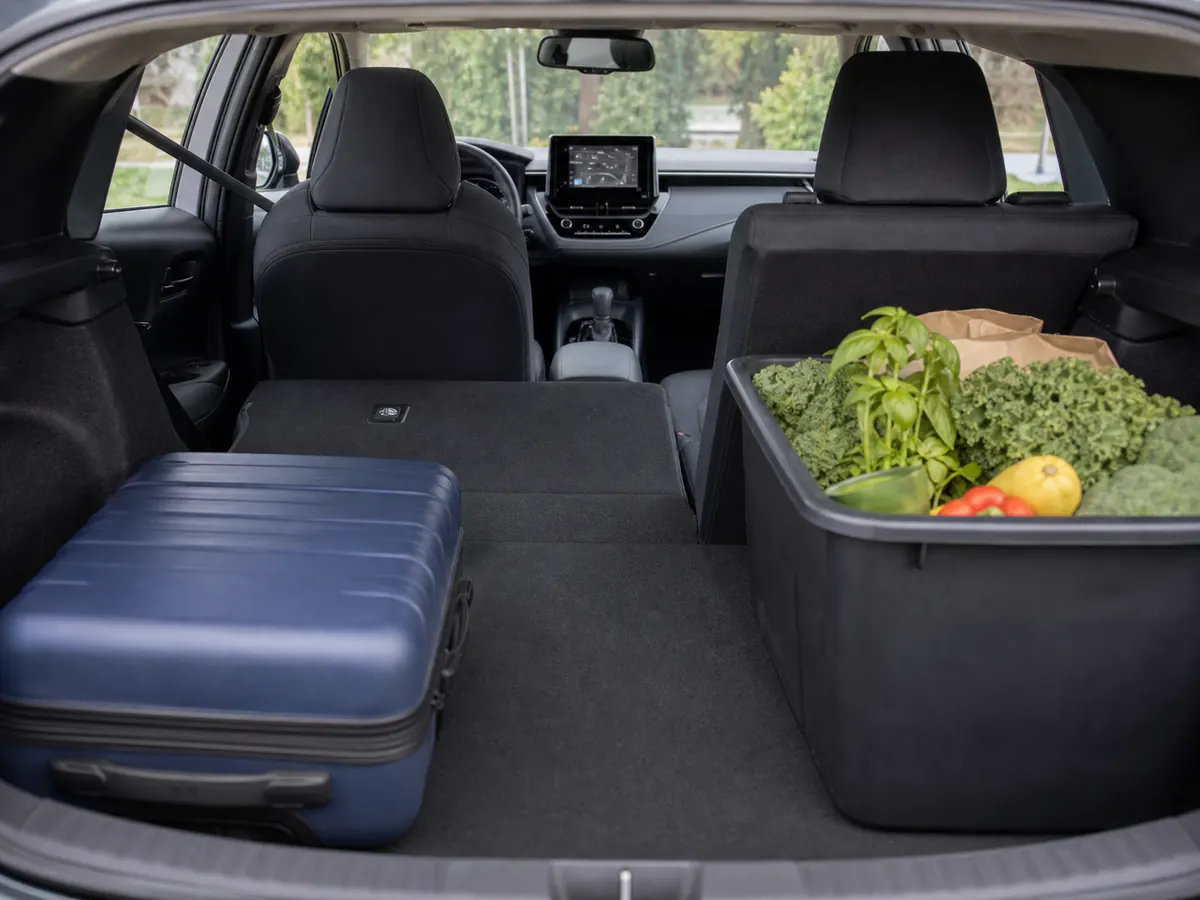
Corolla Hybrid uses the compact Corolla sedan body. The low roof and trunk can be easier to park and more efficient than an SUV, while rear-seat knee room, rear-facing child-seat clearance, and the trunk opening set limits for a growing household.
Test the space with front seats in their real positions.
Install every child restraint according to the car and seat manuals. Check front-passenger clearance, buckle access, top tether, head restraint, door opening, and whether another rear passenger can sit safely.
An adult should test headroom, thigh support, foot space, and knee contact on a 20-minute drive.
Load the stroller, suitcase set, mobility device, sports bag, or work case through the trunk opening.
A stated volume cannot show whether a tall or awkward object passes the fixed opening.
Fold the seatbacks and inspect the step, gap, and security of long cargo.
- Set both front seats before testing the rear
- Use the actual child restraints
- Load the largest weekly object
- Keep rear visibility clear
- Check hinges and arms do not crush luggage
- Confirm the spare or repair kit remains reachable
A Corolla Cross adds a liftgate and upright access, while Prius offers a hatchback shape. Choose Corolla Hybrid only when its rear seat and trunk opening handle the normal household without moving passengers into an unsafe or uncomfortable position.
Battery warranty is strong but maintenance still matters
Toyota states that the 2026 Corolla Hybrid's high-voltage battery is covered for 10 years or 150,000 miles, whichever comes first, under its warranty terms, and that coverage is transferable.
Other hybrid-related components receive 8 years or 100,000 miles.
The basic and powertrain warranties use different terms. Read the booklet for exclusions and start dates.
- DeliveryRecord in-service date and every key
- 2 years or 25,000 milesToyotaCare scheduled-service period under stated terms
- 8 years or 100,000 milesHybrid-related component warranty under stated terms
- 10 years or 150,000 milesHybrid battery warranty under stated terms
- Every servicePreserve invoices and inspect cooling intake
Warranty does not replace maintenance or prove the condition of a used car. Keep the battery cooling intake clear of lint, pet hair, bags, and covers.
Follow Toyota's schedule for fluids, filters, inspections, and severe-use conditions.
Use the specified oil, coolant, brake fluid, and parts.
The 12-volt battery starts control systems even though the high-voltage battery moves the car.
A weak 12-volt battery can create no-start conditions and confusing warnings. Test it before replacing expensive modules, especially after storage or repeated short trips.
The planned Corolla Hybrid maintenance schedule can handle interval detail. The long battery warranty is valuable evidence, but clean cooling, correct service, and documented dates still protect the car and the buyer.
Current IIHS results include a marginal updated front test
IIHS reports Good small-overlap front and updated side results for the 2026 Corolla.
The updated moderate-overlap front result is Marginal. Headlights are Good, and standard vehicle-to-vehicle and pedestrian front crash prevention are Good.
Seat-belt reminders are Good and LATCH ease of use is Good-plus. Our source methodology explains why each result stays tied to its named test.
| Area | Result | Buyer action |
|---|---|---|
| Small-overlap front | Good | Review the tested configuration |
| Updated moderate front | Marginal | Compare rear-passenger protection |
| Updated side | Good | Inspect collision history anyway |
| Headlights | Good | Confirm aim and damage |
| Front crash prevention | Good | Driver remains responsible |
| LATCH ease | Good-plus | Install the actual child seat |
Do not reduce these results to a single safe or unsafe label. The Marginal updated moderate result belongs beside the Good results, especially for a household that regularly carries rear passengers.
Test belt fit, head restraints, child-seat access, and rear-door operation.
Toyota Safety Sense 3.0 and blind-spot monitoring are standard for 2026. Assistance features operate within limits related to weather, markings, speed, sensor condition, and driver attention.
Read the manual and keep the windshield camera and exterior sensors clean.
On a used car, inspect airbags, belts, seat tracks, glass, body seams, paint edges, and calibration invoices.
A replaced windshield or repaired front corner may require documented sensor work.
The 2026 Corolla combines several Good IIHS results with a Marginal updated moderate-overlap result that rear-seat households should compare directly.
A used Corolla Hybrid should prove its economy and condition
Corolla Hybrid has been sold in the U.S. since the 2020 model year, but drivetrain options and equipment have changed.
A later AWD car, early front-drive model, and 2026 refresh should not be treated as identical.
Verify the exact year, grade, drivetrain, warranty start, and campaign history.
Start cold and scan every module before and after the drive. Check oil and coolant condition, leaks, engine transitions, hybrid warnings, brake blending, battery cooling intake, 12-volt battery, climate control, screens, cameras, windows, locks, and both keys.
Compare the trip computer with fuel receipts when available without treating one display as laboratory data.
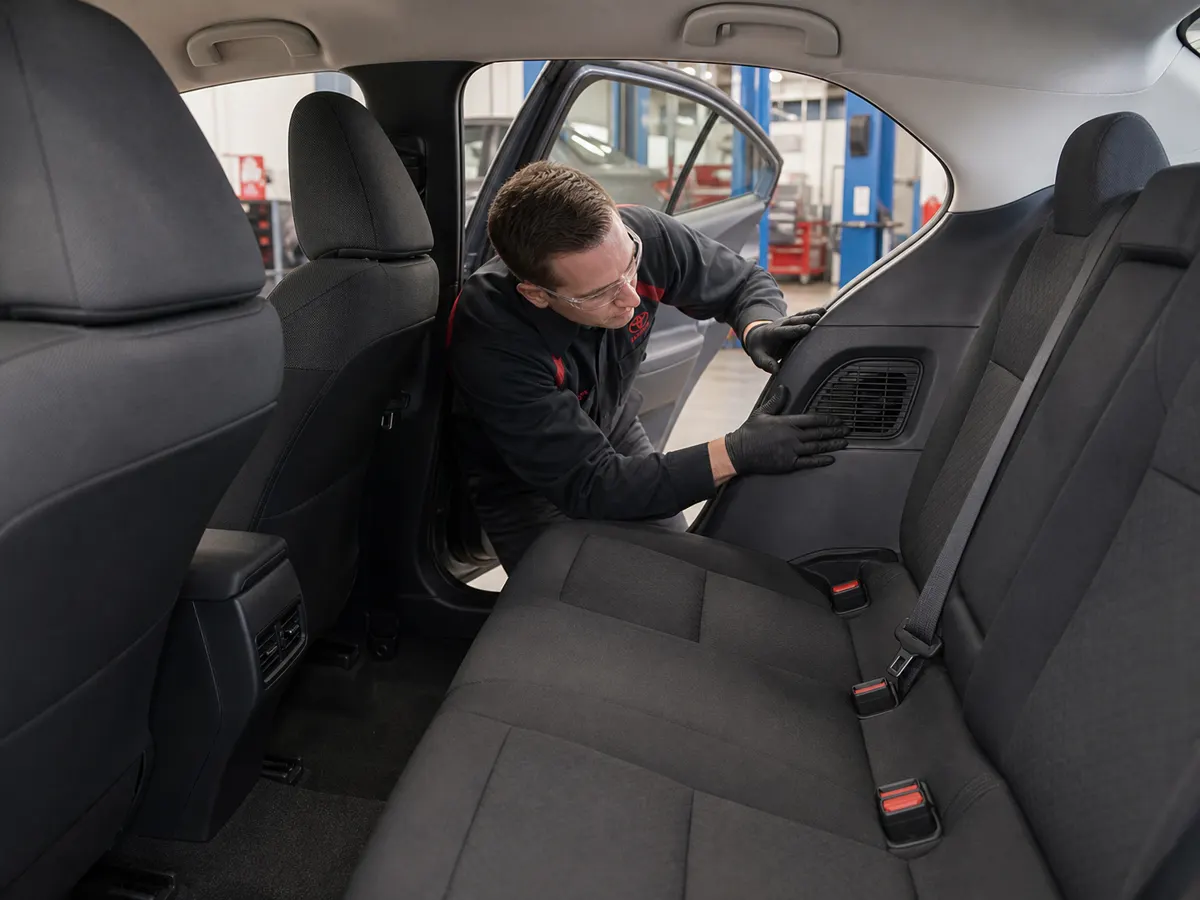
Inspect all tires for matching size, correct load rating, tread depth, inner wear, curb damage, and age.
On AWD, ask Toyota about acceptable circumference differences. Uneven wear can show alignment or impact issues, while new tires can hide the previous pattern.
- Verify Toyota and NHTSA VIN results
- Confirm in-service and warranty dates
- Require cold-start access
- Scan before and after driving
- Inspect battery cooling and 12-volt health
- Review collision and calibration invoices
- Obtain an independent pre-purchase inspection
The planned Corolla Hybrid reliability guide can handle year-specific evidence. A good used Corolla Hybrid proves normal system operation, clean diagnostics, documented service, correct tires, and an intact body rather than relying on Toyota's general reputation.
Buy AWD only when the route earns its recurring cost
Corolla Hybrid's value comes from low fuel use at a modest price.
LE FWD delivers the clearest version of that promise. AWD can solve a real winter launch problem, SE can change appearance and road feel, and XLE can improve comfort.
Each upgrade should be judged against its purchase, fuel, tire, insurance, and finance cost.
Pros
- Up to 53 city and 46 highway mpg
- Low entry price for a hybrid sedan
- Electronic AWD available on LE and SE
- 10-year or 150,000-mile hybrid battery warranty under Toyota terms
Cons
- 138 hp requires a loaded road test
- AWD and SE grades reduce fuel economy
- Compact rear seat and trunk opening
- Larger wheels can raise ride and tire costs
Build a five-year worksheet with transaction price, total interest, insurance, fuel, tires, service, repair reserve, and resale.
Use the exact grade's MPG, not the best number for every version.
Price four winter tires whether the choice is FWD or AWD.
Compare Prius hatchback, larger Camry Hybrid, and Corolla Cross SUV using the same people and route. Buy LE FWD unless a specific winter road, comfort need, or styling priority is worth the upgrade's full recurring cost.
A two-week route log can settle the AWD verdict
The final verdict becomes clearer after recording the route for two representative weeks. Note daily miles, city share, highway speed, unplowed hills, driveway grade, passenger load, and how often the car sits outside.
Mark the days when traction was genuinely difficult rather than treating every cold morning as an AWD event.
Calculate fuel with the exact grade estimates and local price. At 15,000 miles, even a few MPG changes the gallons bought each year.
Add the announced $1,400 AWD price difference, total finance interest, insurance, four winter tires, and the possibility of replacing more than one tire after a late-life puncture.
Drive the same FWD and AWD grade on a cold start, highway merge, long grade, broken road, and safe low-speed slick surface if conditions permit.
Check whether the rear motor solves a launch problem that good tires alone do not. Total output stays 138 hp, so do not expect AWD to correct an acceleration concern found during the loaded test.
- Count difficult starts, not snowy forecasts
- Price four correct winter tires for both versions
- Use the exact grade MPG
- Keep ground clearance out of the AWD case
- Confirm rear-seat and trunk fit before either quote
- Compare total cost over the planned ownership term
LE FWD remains the answer when roads are maintained and efficiency leads. LE AWD earns the extra cost on a repeated steep or unplowed route.
A written route log prevents a vague winter worry from becoming years of unnecessary purchase, fuel, and tire expense.