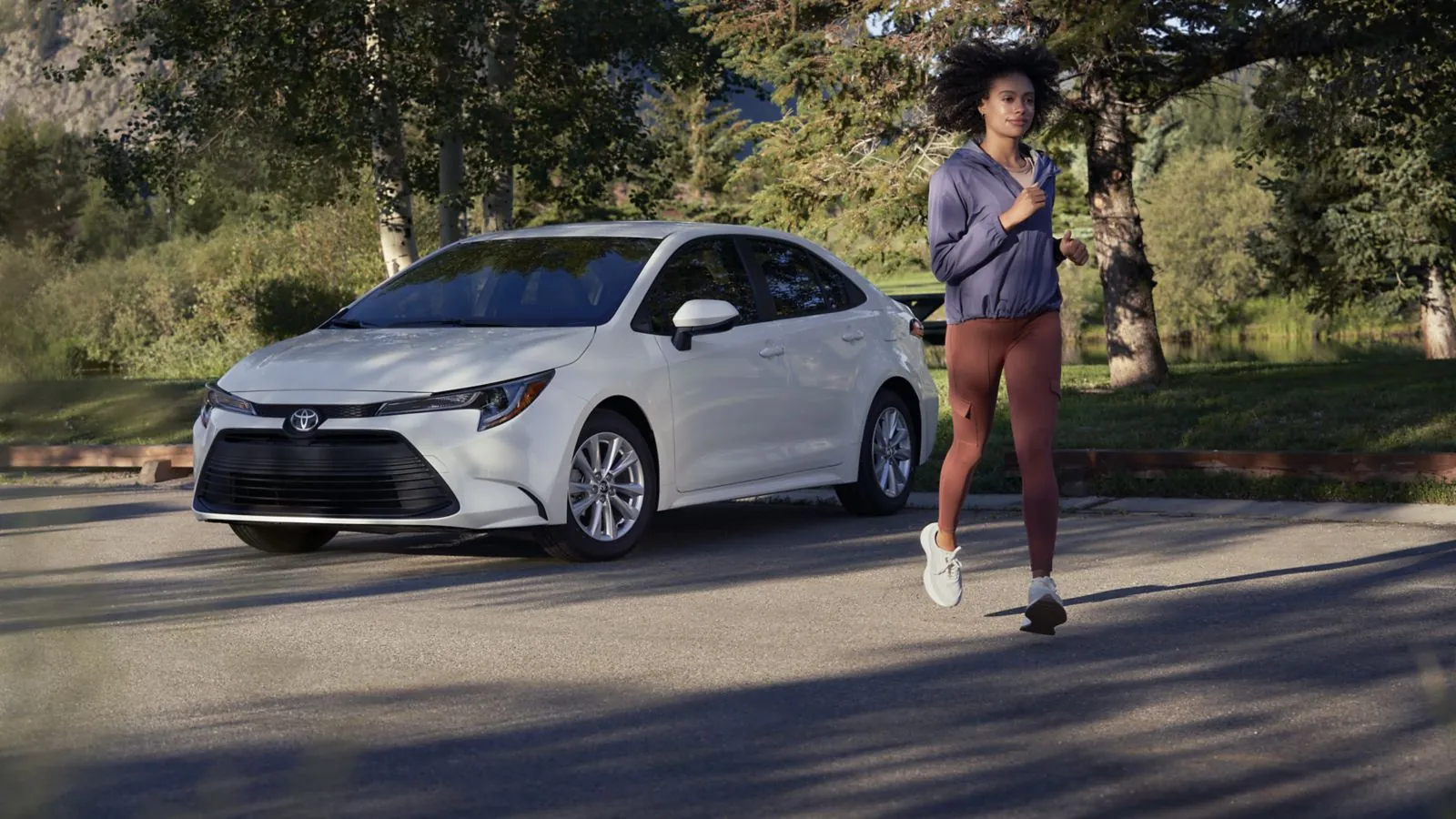
Why the Corolla is the low-risk pick most shoppers start with
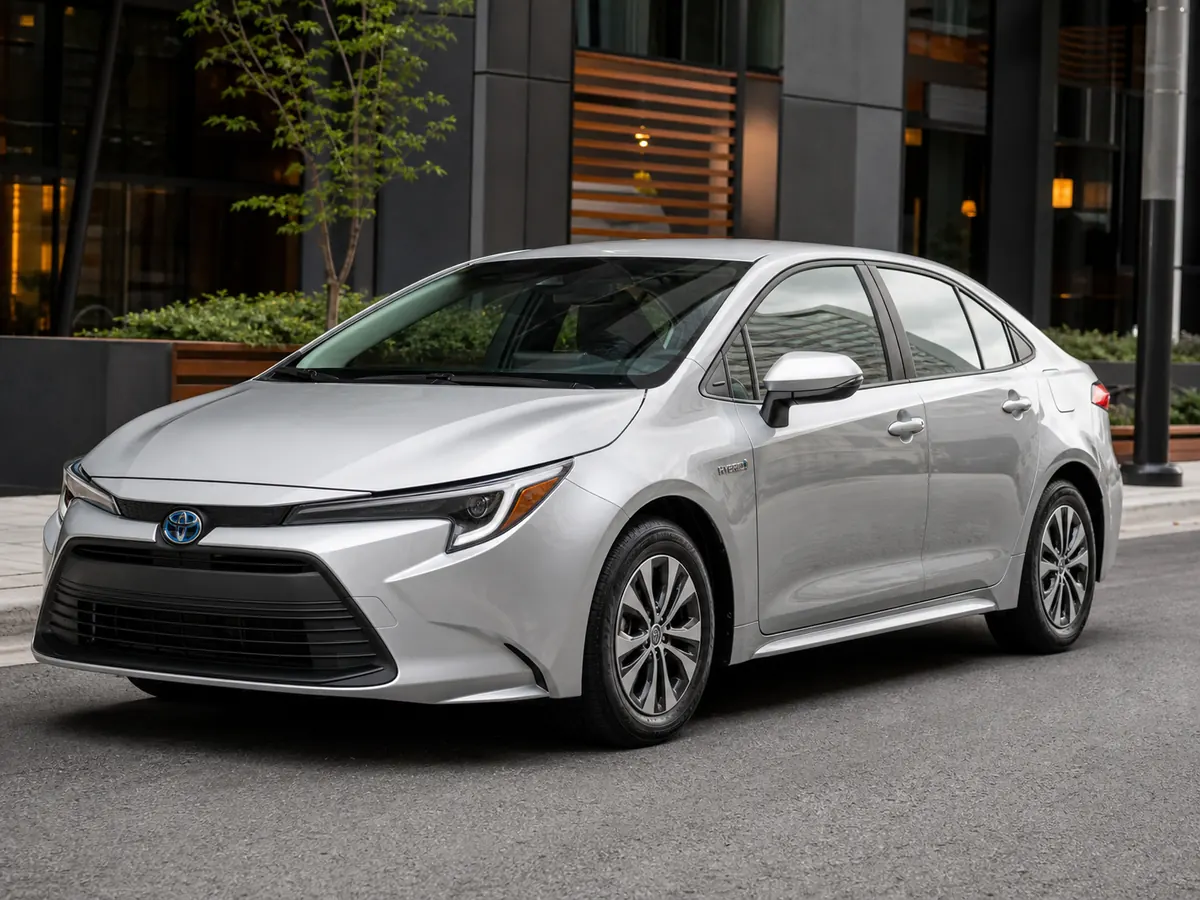
Most Corolla shoppers are not hunting for the quickest or the flashiest compact sedan. They want a small car that starts every morning, uses little fuel, and costs almost nothing to keep, and the Corolla settles that before you line up a single spec sheet.
The whole case rests on low risk. You get a small sedan footprint, standard safety tech, and strong Toyota resale without learning a charging routine or paying midsize-sedan money.
That calm reputation is earned, not handed out. The gas engine is simple, the CVT is a common design, and Toyota's hybrid system already carries a long record across Prius models, the Camry, and the RAV4 Hybrid.
Here is how the Corolla scores on the things a low-stress buyer actually cares about.
Those last two numbers are the honest catch. A Corolla trades rear-seat width and highway hush for its low running cost, so a driver who carries adults in back every week should feel that pinch on the test drive.
Toyota Safety Sense comes standard, which puts adaptive cruise and lane alerts on cheap trims instead of behind luxury pricing. Test those aids on your normal road, because a feature you never trust is a feature you did not really buy.
Students, new drivers, daily commuters, and retirees all land on the Corolla for different reasons. The shared thread is that none of them should pay for a bigger car they will not use.
The Corolla sits in the compact sedan class, where it parks easily, resells fast, and forgives the small mistakes a new driver will make.
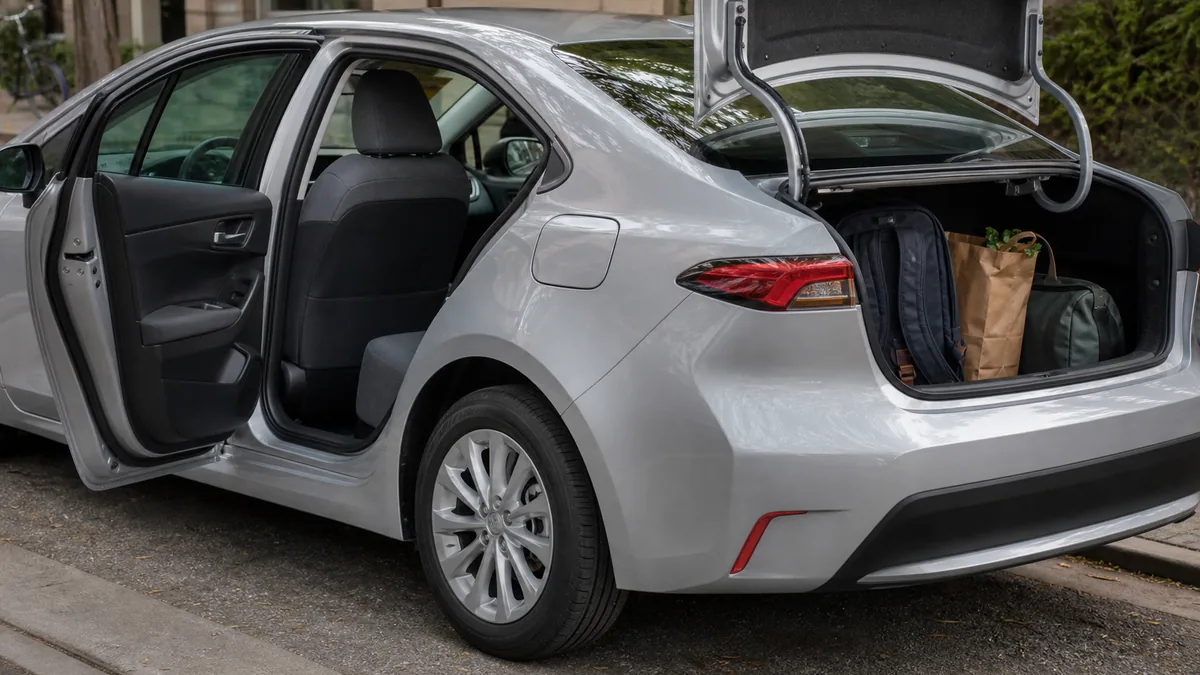
That everyday predictability is why it lands near the top of our first-car picks. If your week is commuting, parking, and a normal trunk, the safe default is often the right default.
Drive a Honda Civic on the same route before you sign, though. The Corolla wins on calm ownership math, and the Civic wins on driving feel, so the honest question is which one you will value after a year.
Gas or hybrid Corolla, and when the mpg pays back
The powertrain choice is the one that actually moves your monthly cost, so start there. The gas Corolla uses a 2.0L four-cylinder with 169 hp and a CVT, which is plenty for commuting even though it never feels quick.
The hybrid pairs a smaller engine with electric assist for 138 hp. It gives up peak power, yet it feels smoother pulling away in traffic and drinks far less fuel.
Read the mpg the way you actually drive. The hybrid earns its premium in stop-and-go city miles, where it recovers energy under braking and leans on the electric motor exactly when a small gas engine works hardest.
On steady highway trips the gap shrinks. A driver who mostly runs open road saves less with the hybrid and keeps the lower purchase price of the gas Corolla instead.
Two Corolla buyers can make opposite calls here and both be right, because the answer rides on your commute rather than the window sticker.
A quick way to match the powertrain to your week:
- Heavy city traffic and short errands, take the hybrid for the low-50s city rating
- Mostly highway miles, the gas car costs less up front for similar real economy
- Around 6,000 miles a year, the cheaper gas trim usually wins on total cost
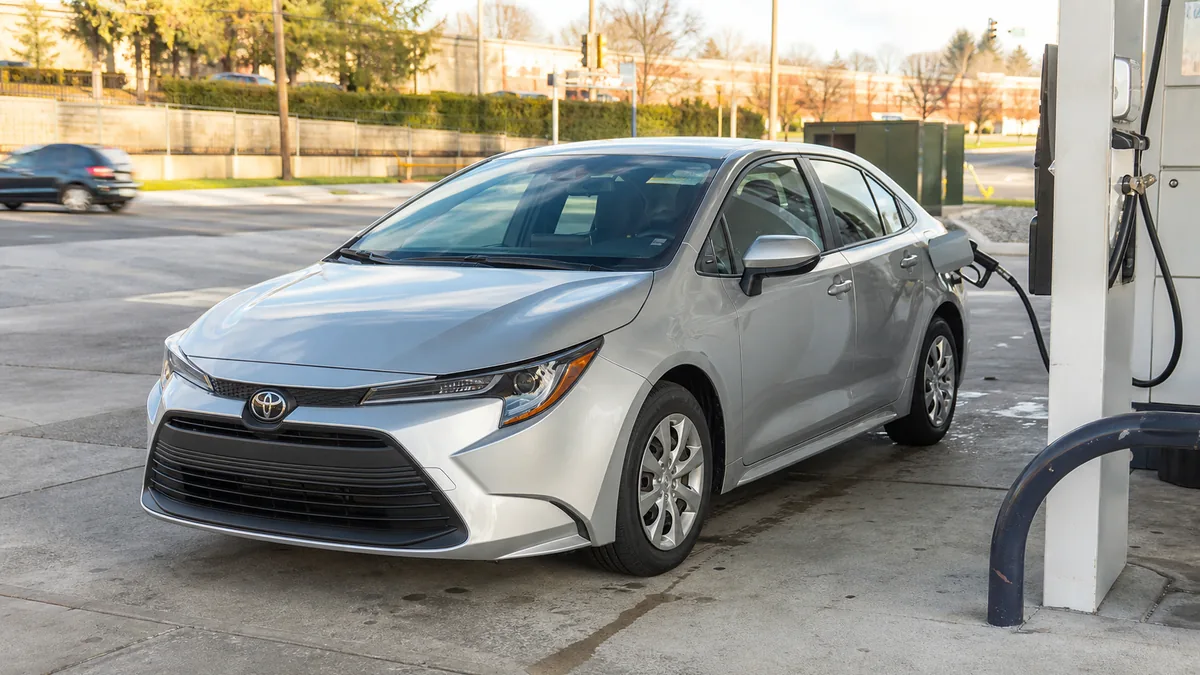
All-wheel drive shows up only on the hybrid Corolla, and it helps on snowy hills or rough winter roads. It does not turn the car into an SUV, and a front-drive Corolla on good winter tires can feel safer than an AWD one on worn all-seasons.
If a stop-and-go commute is your daily reality, the hybrid pays you back, and if your map is mostly highway, the gas car keeps more money in your pocket up front.
Picking a Corolla trim without overbuying
The Corolla trim walk is short, and the real trap is spending your way out of the reason you chose it. Every step up in trim narrows the gap between a compact sedan and a larger, roomier car.
Match the version to the job, not to the badge on the trunk.
| Version | Main reason to choose it | Watch for |
|---|---|---|
| Gas LE | Lowest price, simple commuter | Slower response than a Civic |
| Gas SE | Sportier look and more features | Larger wheels raise tire cost |
| Hybrid LE | Lowest fuel cost | Less power than the gas car |
| Hybrid AWD | Winter traction in a small sedan | Higher price, slightly lower mpg |
| XSE | More equipment and style | Payment nears a larger sedan |
The LE and Hybrid LE are the cleanest value picks, and most low-stress buyers can stop there. The SE adds looks and firmer wheels, so price its tires before you fall for the styling.
The XSE is pleasant, yet it carries the Corolla's weakest argument. Once a loaded compact drifts toward mainstream sedan money, a roomier car starts to make more sense.
That is exactly where the Toyota Camry enters the math. If an XSE Corolla and a base Camry land at a similar payment, the bigger sedan gives you a wider rear seat and a quieter highway for the same money.
All-wheel drive lives only on the hybrid side, so a gas buyer who wants winter grip is really shopping tires, not trims. Good rubber changes more about bad-weather confidence than the drivetrain badge does.
Cabin space stays honest at every trim. The front seats are easy to live with, the back seat suits kids and shorter adults, and the 13.1 cubic foot trunk handles groceries or airport bags without pretending to be a hatchback.
The current generation arrived in 2020, and the hybrid range widened from 2023 with available all-wheel drive. That gives used shoppers several model years to compare on price and condition instead of one.
Buy the lowest trim that carries the powertrain and safety features you will use every week, because a stripped, well-chosen Corolla protects the low cost that made it worth buying.
What a used Corolla actually costs to run
Cheap to buy means little if the running cost surprises you, so the Corolla's real advantage is what it saves after the purchase. The savings come from fuel, gentle depreciation, small tires, and simple repairs.
Fuel is the biggest lever, and the hybrid moves it most for city drivers. A stop-and-go commute lets the mpg gain chip away at the higher sticker, while a highway commuter often comes out ahead with the cheaper gas trim.
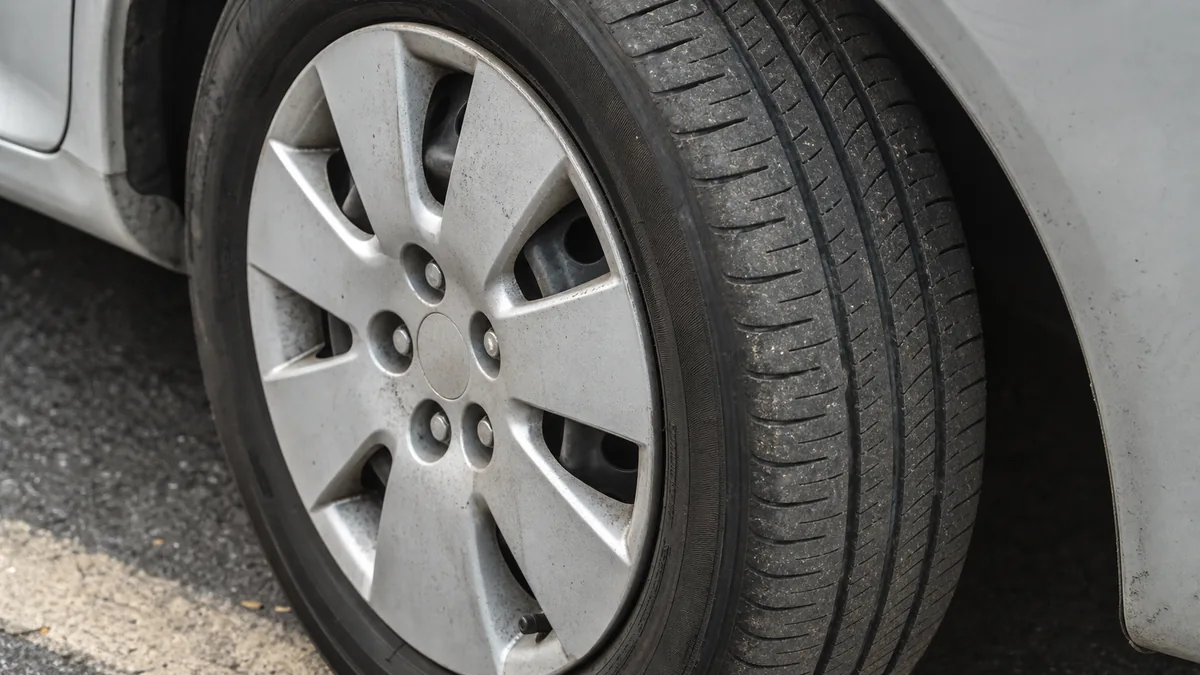
Tire cost deserves a mention that mpg-focused shoppers skip. Larger SE and XSE wheels look sharper and ride firmer, yet smaller LE tires cost less to replace and survive rough city streets better.
A five-year budget is more honest than a monthly payment. Add up purchase price, finance cost, fuel, insurance, tires, registration, oil service, brake fluid, filters, and likely resale, then compare cars on that total.
Financing can quietly distort the whole decision. A long loan makes a pricey trim feel affordable, but the Corolla's strength is low total cost, not the smallest possible monthly number.
Run the lease versus buy math if a low payment is nudging you toward a trim you would skip with cash in hand. For most drivers, a modest budget trim held for years is where the Corolla saves the most.
One cheap habit protects both mpg and tread. Keep the tire pressure correct, and you slow the fastest hidden cost on any used commuter.
Inspecting a used Corolla before you pay the Toyota premium
A clean Toyota badge is not a free pass, and the used market prices Corollas as if every one is pristine. Your job is to make sure the specific car earns that premium.
Split the inspection by powertrain. A used gas car should show smooth CVT behavior, clean oil records, and a normal cold start, while a used hybrid should show smooth gas-electric handoffs, a healthy 12-volt battery, and clean cooling vents near the battery.
A CVT that holds engine speed under hard acceleration is normal Corolla behavior. Shuddering, delayed engagement, or a warning light is not, and any of those needs a diagnosis before you buy.
Run the same short checklist on every Corolla you drive:
- Check tire brand, tread depth, and date codes before you talk price
- Test phone pairing, the backup camera, and the driver-assist alerts
- Listen for suspension noise over broken pavement
- Inspect the lower bumper, wheel lips, and rocker panels for parking scars
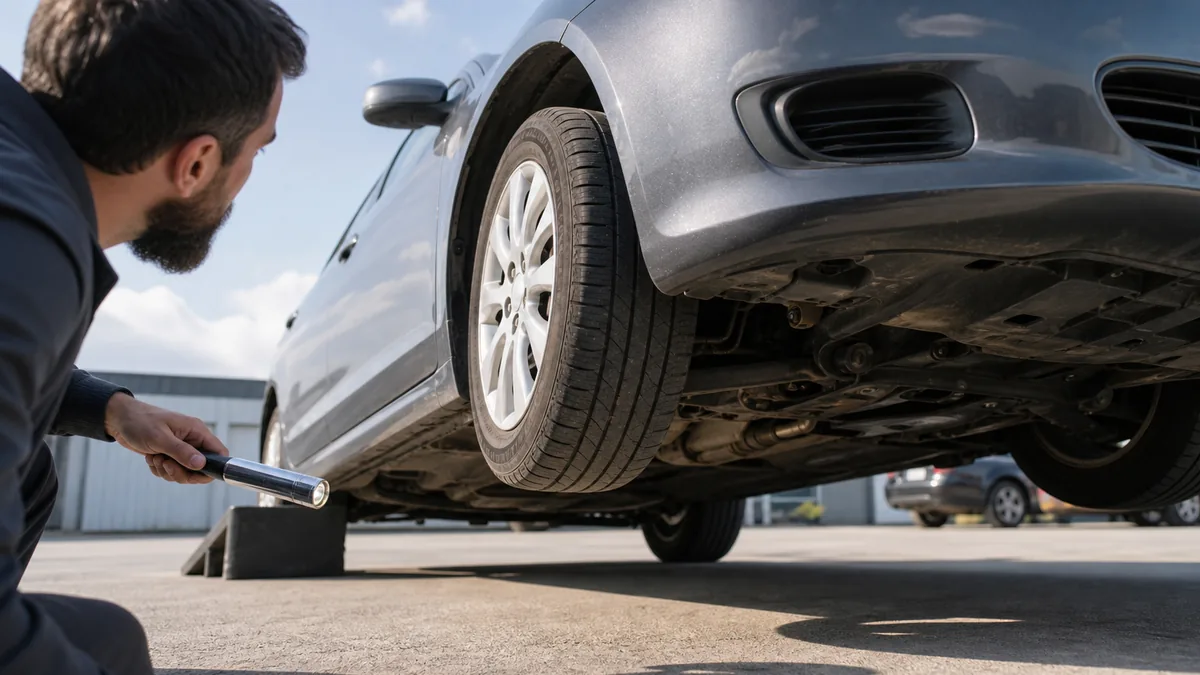
Watch for a hard rideshare or rental past. Shiny rear-seat plastics, worn seat bolsters, heavy floor-mat wear, and a scuffed trunk hint at more work than the odometer admits.
High city miles are not automatically bad, yet they can leave brake wear, tire wear, and loose suspension that the price should reflect.
The boring service history is the one you want. One owner, normal mileage, stock wheels, no accident record, and steady oil changes beat a low number on the dash every time.
Pair that inspection with the new versus used math, because remaining hybrid-battery warranty can matter as much as the odometer reading.
A pre-purchase inspection still pays on a cheap car. Tires, brakes, suspension work, and registration can erase a bargain in the first month, so price that catch-up work before you call one Corolla cheaper than another.
Confirm the car can jump start cleanly too, since an aging 12-volt battery is a common first repair the seller rarely mentions.
Corolla versus the Civic and the cheaper rivals
Two questions decide most Corolla purchases. Should you pay up for a Civic, or drop down to a cheaper rival?
The Honda Civic is the natural step across. It costs more in many trims, but it gives you sharper steering, a wider-feeling cabin, and a hatchback option the Corolla sedan cannot match.
The Corolla answers with easier ownership math, standard hybrid availability lower in the range, and a calmer buying case.
Want driving feel and space?
Lean Civic. Want the lowest-stress bill?
Lean Corolla.
Pros
- Low fuel use and low repair risk
- Hybrid and available AWD choices
- Easy to park and strong resale for the class
Cons
- Not quick or sporty to drive
- Rear seat and trunk stay compact
- Road noise shows up at highway speed
On the other side sit the value rivals. The Hyundai Elantra often packs more equipment for the money, the Nissan Sentra chases a lower payment, and the Kia Forte undercuts on sticker price.
Here is where the Corolla defends its price. Its resale and long reliability record can quietly close the gap those rivals open on day one, so the cheaper car is not always cheaper across five years.
Parts and independent-shop familiarity run wide for the Corolla, which lowers repair stress once the warranty ends. That is a quiet edge some newer rivals have not built yet.
A few honest tie-breakers when the rivals are close:
- Choose the Corolla when resale, service coverage, and repair simplicity matter most
- Choose a rival when a longer warranty or a lower payment settles the deal
- Choose the Civic when steering feel and rear-seat room outrank the fuel bill
Buy the Corolla when you value the boring certainty of low cost and easy resale, and pay up for the Civic only when you know you will use the extra space or enjoy the sharper drive.
Which Corolla should you buy
The Corolla earns the sale by getting the everyday numbers right. It parks easily, sips fuel, resists depreciation, and asks very little of you, even if it never thrills.
Start a gas-versus-hybrid choice with your commute, not the brochure. The gas LE is the payment play, the Hybrid LE is the fuel-cost play, and AWD is a winter-traction option rather than a reason to spend more in a mild climate.
Bring your real life to the test drive. Fit the child seat, load the biggest bag you carry, and take a 45-minute highway stretch, because seat comfort and road noise show their true colors well past the block around the dealer.
New drivers suit the Corolla for the reason parents do. Visibility is easy, the controls are simple, and the car does not egg anyone on toward expensive speed.
If a taller seating position keeps calling to you, test a Honda CR-V or browse the SUV body group before you decide the sedan is enough. When big cargo days are the issue, a Corolla plus a Toyota Sienna or similar hauler covers a household better than one stretched compact.
Still torn on how much size you truly need? The Civic versus Camry comparison shows what the next step up buys, and most of it applies to the Corolla too.
The final filter is simple. If you are explaining away a stretched payment, worn tires, or a trim you do not need, it is the wrong Corolla.
If the car is clean, cheap to run, and matched to your commute, buy it and stop second-guessing.