How to Check Tire Pressure and Set It for the Actual Load
Find the correct PSI, check tires cold, adjust each tire, and catch leaks early.
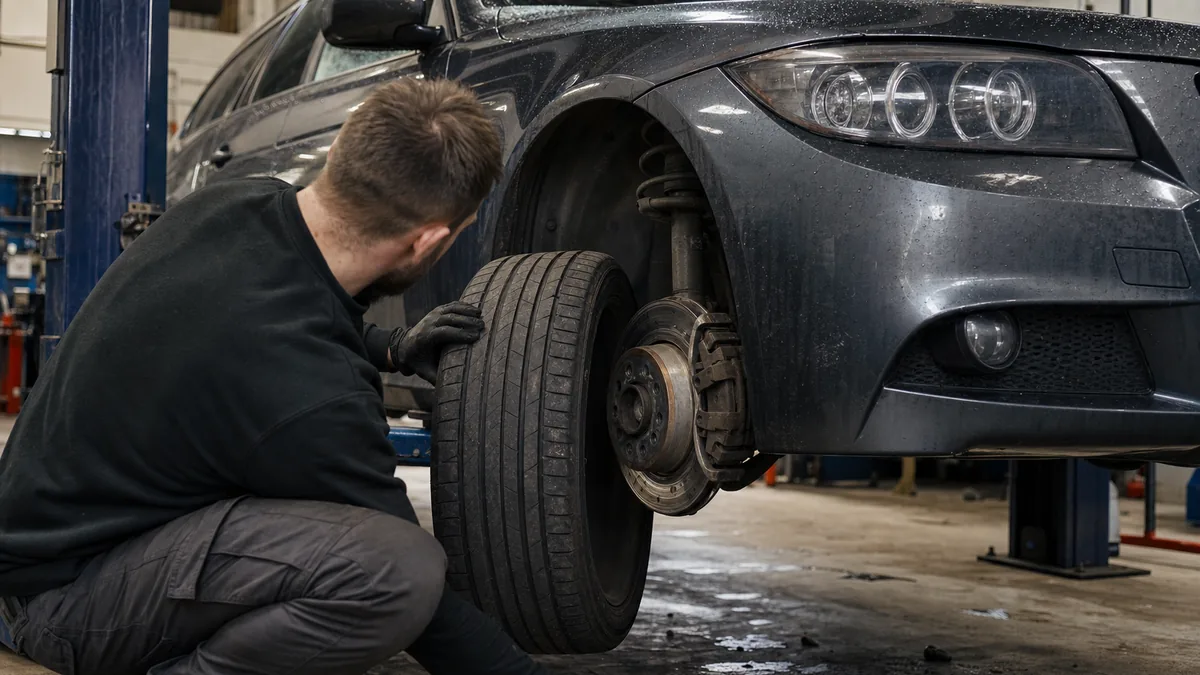
Tire pressure affects braking, steering, fuel economy, tire wear, and how stable the car feels in emergency moves. It is also one of the cheapest maintenance checks you can do.
Best practice: check tire pressure cold, use the door-jamb PSI, and recheck monthly because pressure changes with temperature and slow leaks.
Where do you find the correct PSI?
Use the sticker inside the driver's door jamb, not the number molded into the tire sidewall. The sidewall number is a maximum tire rating, not the vehicle's recommended pressure.
The door sticker is tuned for the car's weight, tire size, and handling target. A family SUV like the Honda CR-V may use a different PSI from a sedan, truck, or sports car even when the tire sidewall looks similar.
| Location | What it means | Use it? |
|---|---|---|
| Driver's door sticker | Vehicle recommended cold PSI | Yes |
| Owner's manual | Full tire and load guidance | Yes |
| Tire sidewall | Tire maximum rating | No for normal setting |
| Dashboard warning | Low-pressure alert | Check manually |
Why should tire pressure be checked cold?
Driving heats the air inside the tire and raises the reading. If you set pressure after a long drive, you may let out air that the tire needs when it cools.
Check before driving or after the car has sat for a few hours.
Temperature changes matter too. Tire pressure commonly drops as weather gets colder.
That is why the warning light often appears on the first cold morning of the season.
How do you check and adjust each tire?
Remove the valve cap, press the gauge straight onto the valve stem, and read the pressure.
A hissing sound means the gauge is not sealed. Add air in short bursts, recheck, and release air carefully if the tire is high.
Check all four tires and the spare if the car has one. Also scan tread wear, sidewall bubbles, nails, cracked rubber, and missing valve caps.
A pressure check is a quick safety inspection if you use your eyes.
Quick pressure workflow
- Gauge seal
- Press straight until the hiss stops
- Low tire
- Add short bursts and recheck
- High tire
- Release a little air, then recheck
- Spare
- Check it before you need it
- Valve cap
- Refit it to keep dirt out
What if one tire keeps losing air?
One low tire usually points to a leak, wheel damage, valve-stem issue, or puncture.
Do not keep topping it up for weeks without finding the cause. A slow leak can become a fast leak under heat, speed, or load.
If one tire is low every month and the others are stable, get it inspected.
If the tire drops quickly, do not drive far. Use the spare, roadside help, or a repair shop.
How often should you check tire pressure?
Check monthly, before long trips, before towing, and when seasons change. Also check after a hard pothole impact or when the car starts pulling, vibrating, or feeling lazy in turns.
Keep a small gauge in the glove box. Gas-station gauges can be worn or inaccurate, and dashboard tire-pressure screens should be treated as reminders, not the only proof.
Routine tire pressure also protects ownership cost. It supports mpg on efficient cars like the Toyota Camry and tire life on heavier vehicles like the Ford F-150.
What mistakes should you avoid?
Do not set all cars to the same PSI.
Do not use the tire sidewall maximum. Do not ignore a warning light after adding air once.
Do not forget the spare. Do not assume nitrogen fill changes the basic monthly check.
If you just bought a used car, make pressure part of the first-day setup along with fluids, lights, and service records. The used-car guide explains why small maintenance clues can reveal how the previous owner treated the car.
If the tire-pressure light returns after you set all four tires correctly, do not ignore it. The system may need a reset, a sensor battery may be weak, or one tire may be losing air slowly.
Recheck with a manual gauge first, then inspect the tire before assuming the warning is only electronic.
When you add air, stop a little below the target and sneak up on the final number.
Gas-station pumps can add air quickly, and small tires can overshoot faster than expected. Recheck with your own gauge after the hose comes off because the pump gauge and your handheld gauge may not agree.
If the tire is more than 5 PSI low, inspect it before driving normally. That gap is large enough to treat as a leak clue, not just a routine top-up.
A tire that drops again after a week needs repair, not another reminder in your phone.
What other tire habits protect the car?
Set pressure before judging fuel economy, steering feel, or road noise. Low tires can make a good car feel heavy and vague.
Overinflated tires can make the ride harsh and reduce grip on rough pavement.
Pair pressure checks with tire rotation and tread inspection. If the front tires wear faster, follow the rotation interval in the owner's manual.
If wear is uneven across the tread, check alignment before buying another set of tires.
This matters on everything from a Honda CR-V family SUV to a BMW 3 Series sport sedan. It also matters for EVs like the Hyundai Ioniq 5, where weight and torque can wear tires quickly.
If you are comparing efficient cars, the EV charging guide and SUV buying guide both depend on tires being set correctly.
Tools
- Accurate tire pressure gauge
- Air compressor or gas-station air pump
- Valve-cap tool if caps are tight
- Flashlight for tread and sidewall inspection
Parts
- Replacement valve caps if any are missing
Steps
- Find the vehicle PSI Read the driver's door-jamb sticker or owner's manual. Do not use the maximum PSI molded into the tire.
- Check tires cold Measure before driving or after the car has sat for a few hours so heat does not raise the reading.
- Measure each tire Press the gauge straight onto the valve stem until the hiss stops, then record each tire's pressure.
- Add or release air Add air in short bursts to low tires, release small amounts from high tires, and recheck after each adjustment.
- Inspect while you are there Look for nails, sidewall bubbles, uneven wear, cracked rubber, and missing valve caps.
- Repeat monthly Check pressure monthly, before road trips, and during major temperature swings.
Featured car: Gas Honda CR-V