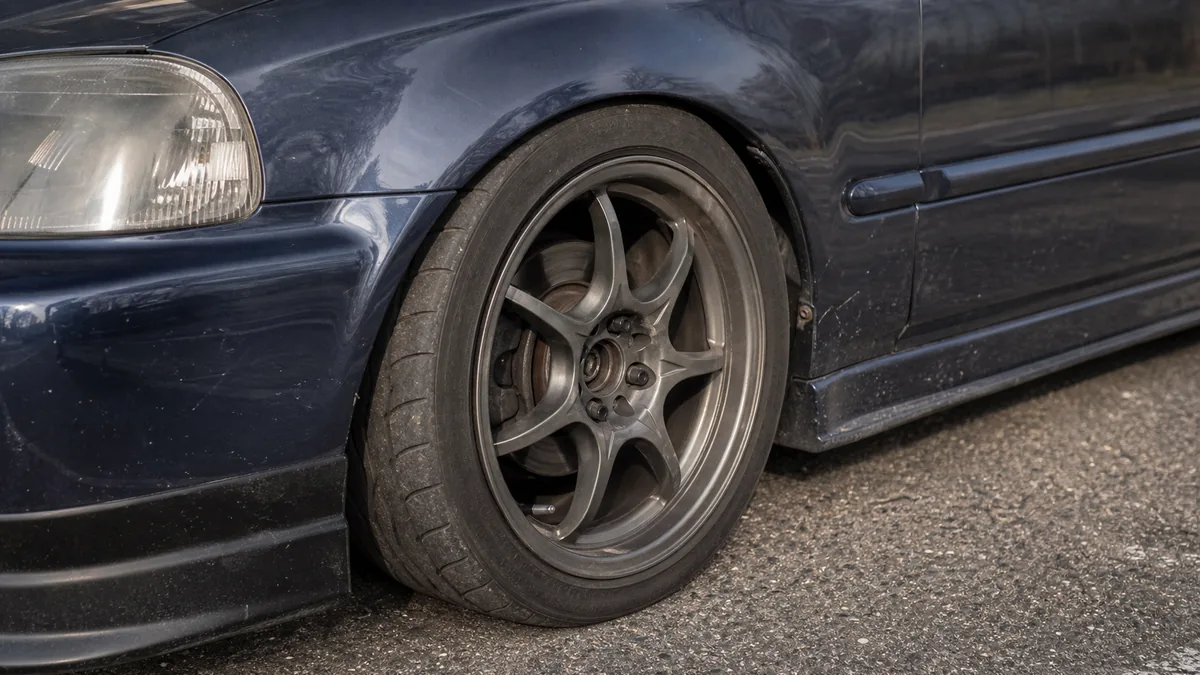
The best default for most value shoppers is a two to four-year-old used car with records, clean history, and an independent inspection. Buy new when warranty, latest safety tech, battery coverage, or low financing matters more than the first few years of depreciation.
Start with the ownership risk you can accept
Start with the money you can lose, not the car you like most. A new car gives you a clean history, full factory warranty, latest safety features, and the easiest financing.
A used car lets someone else take the first big depreciation hit, but you inherit the way the last owner treated it.
The best-practice pick for most buyers is a lightly used, reliable model. The sweet spot is usually two to four years old, still modern enough for good safety tech, old enough that the first owner paid the steepest depreciation, and common enough that parts and service are simple.
Buy new when the car is an EV, a redesigned model with major safety gains, or a vehicle you plan to keep past the loan term. New also makes sense when the brand offers a low promotional rate that a used-car loan cannot match.
Depreciation creates the biggest price gap
Depreciation is the biggest reason used cars win on value. Many new cars lose a large share of value in the first three years, and the loss is not visible in the monthly payment.
It shows up when you trade, sell, refinance, or crash the car and insurance uses market value.
Used buyers do not avoid depreciation. They buy into a slower part of the curve.
That is why a three-year-old Toyota Camry or Honda Civic can be a smart move when the condition is clean.
| Question | New car answer | Used car answer |
|---|---|---|
| Will you sell in three years? | Risky because value drops fast | Usually safer if you bought well |
| Will you keep it eight years? | Depreciation matters less over time | Still strong if repair risk stays low |
| Is the model redesigned? | New may bring better safety and efficiency | Used may mean older tech and lower price |
| Is resale strong? | Toyota, Honda, and some trucks soften the hit | Strong resale can make used prices high |
The catch is that popular reliable cars can stay expensive used. If a used Civic is only a few thousand dollars cheaper than new, compare warranty length, interest rate, tire condition, and how many years you plan to keep it.
What risk do used cars add?
The used-car risk is not age by itself.
It is unknown use. A careful owner who changed oil on time creates a very different car from a driver who skipped service, hit potholes, bought cheap tires, and sold right before a major repair.
A pre-purchase inspection by an independent mechanic is the cheapest insurance a used-car buyer can get. For the price of an oil change, it can catch a failing transmission or hidden collision damage that would cost thousands, so never skip it to save a hundred dollars on a car you will keep for years.
The single biggest used-car risk is a missing service history. A car with records tells you the oil was changed and the recalls were done; a car without them is a guess, no matter how clean it looks.
Treat a gap in the paperwork as a reason to negotiate hard or walk away, because the cheapest used car is rarely the one with no story.
Ask for the service record before you fall in love with the price. Then check tires, brakes, body gaps, glass dates, warning lights, fluid leaks, and whether every key and charging cable is included.
A pre-purchase inspection is not a formality. It is the point where the seller proves the car deserves your money.
Used risk is lower on simple, proven cars. It is higher on luxury cars, performance cars, neglected turbo engines, modified trucks, and EVs with unclear battery history.
For a family SUV, the Honda CR-V and Toyota RAV4 Hybrid are easier used bets than a rare, complex model with expensive parts.
When is buying new the smarter money move?
New is the smarter move when the warranty protects a real risk, the financing rate is much lower, or the model has changed enough that the old version no longer does the job. This comes up often with EVs, hybrids, and active safety tech.
New also wins when used prices are unusually high, which happens often now. If a two-year-old version of the car costs almost as much as a new one with a full warranty and the latest safety tech, the small extra spend on new can be the better value rather than the indulgence it once was.
An EV is the clearest example. Battery warranty, charging hardware, heat-pump availability, and software support can matter more than saving a few thousand dollars.
A new Tesla Model 3 or Hyundai Ioniq 5 may be easier to justify if you need the freshest range, charging access, and warranty coverage.
New also works for buyers who hate uncertainty.
That is not weakness. If a surprise $2,000 repair would hurt more than the extra monthly cost of new, warranty coverage has real value.
Financing and insurance can reverse the price advantage
Do not compare only monthly payments. New cars often get lower interest rates, while used cars usually cost less to insure and register.
Either one can win after you add the full bill.
Get insurance quotes before you choose the trim. A new sports trim can cost more to insure and more to repair than a plain used sedan.
Large wheels also raise tire cost, which matters on cars like the BMW 3 Series and Chevrolet Corvette.
Use one rule for both options: the car payment should not crowd out maintenance. A cheap used car with no repair fund is risky, and a new car with a payment that blocks tire money is not safe either.
Cost items to compare
- Loan rate
- New may win when promotions are strong
- Insurance
- Used often costs less, but model and trim matter
- Sales tax
- New usually costs more because the sale price is higher
- Repairs
- Used needs a reserve fund from day one
- Tires
- Wheel size can erase some savings
If you are deciding between a new compact and a used midsize sedan, the Civic and Camry split shows the size and cost tradeoff directly.
Which cars are safer to buy used?
The safest used buys are common, reliable, unmodified, and cheap to service. That usually points to mainstream sedans, compact SUVs, and simple family vehicles with broad parts support.
The Toyota Camry reliability page is a good example of why year matters. Some years are easy picks, while a few older years need extra caution.
A badge helps, but the exact model year and service record still decide the risk.
Used performance cars need a different standard. The Mazda MX-5 Miata can be a smart used buy if it is stock and dry underneath.
A modified turbo car with cheap tires is a gamble even if the listing looks clean.
Shop in an order that exposes the real price gap
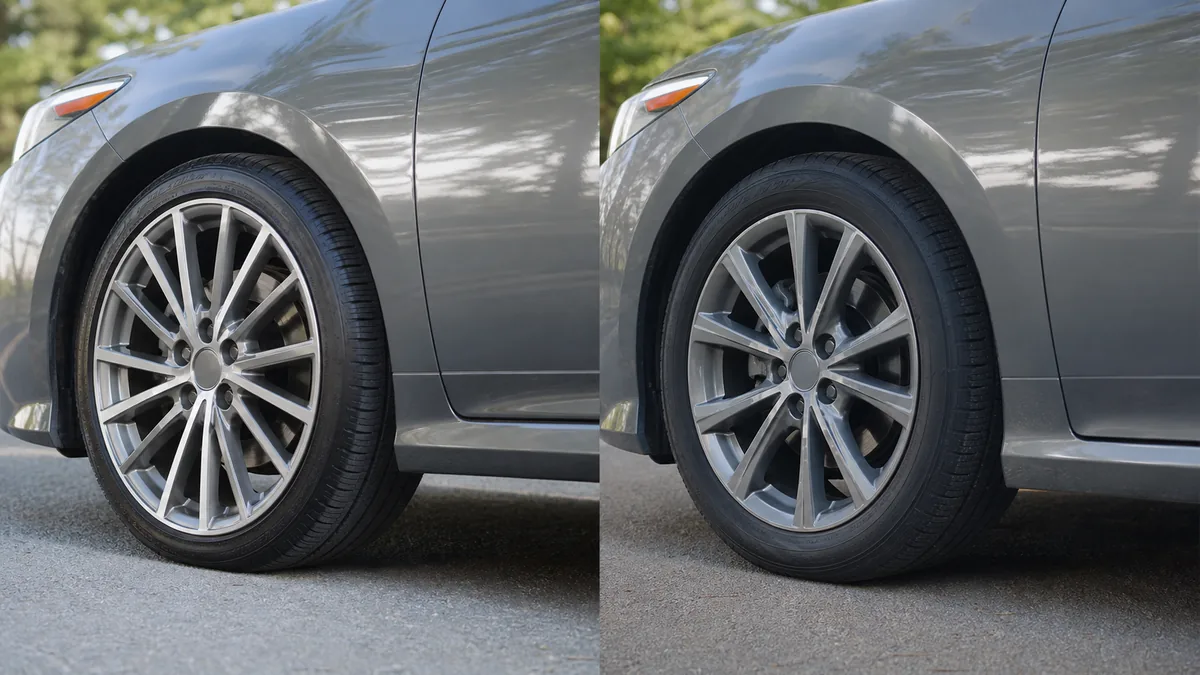
Shop used first if value is the goal. Pick three models, choose the safest years, set a mileage ceiling, and check local prices before you visit anyone.
Then compare the best used example against a new version of the same model.
Shop new first if the car is a long-term keeper, an EV, or a model where used prices are too close to new. A new Toyota Sienna can make sense for families because demand keeps used prices high and the hybrid system saves fuel for years.
- Price insurance on the exact VIN or trim
- Check tire size and replacement cost
- Ask for service records before the test drive
- Use the tire pressure routine after purchase to protect tire life
- Learn how to change engine oil if you plan to maintain a gas or hybrid car yourself
What should you inspect on the first test drive?
Use the first test drive to verify the seller's story. A used car should start cleanly, idle evenly, track straight, stop without vibration, shift without delay, and show no warning lights.
A new car should still be checked because transport damage, bad alignment, and dealer-installed accessories can create problems before delivery.
Drive at neighborhood speed, highway speed, and over rough pavement.
Listen with the stereo off. Check air conditioning, heat, windows, locks, cameras, charging ports, infotainment pairing, and every key.
On a hybrid or EV, watch whether the car changes modes smoothly and whether the displayed range makes sense for the state of charge.
| Check | New car concern | Used car concern |
|---|---|---|
| Straight tracking | Delivery alignment issue | Bent wheel, worn tires, or crash repair |
| Brake feel | Lot rust or bedding issue | Warped rotors or neglected pads |
| Cabin electronics | Software setup or accessory fault | Wear, water intrusion, or module failure |
| Tire condition | Dealer swap or storage age | Poor maintenance or hidden alignment problem |
| Cold start | Usually minor | Battery, starter, fuel, or engine clue |
If the seller will not allow a normal drive route, treat that as information. A good car should not need a controlled route to look good.
How should hybrids and EVs change the new-used answer?
Hybrids and EVs need a different filter from plain gas cars. A used hybrid can be excellent when the model has a long record, clean service history, and no warning lights.
A used EV can also be a value, but range, charging speed, battery warranty, and software support matter more than age alone.
For hybrids, ask whether the battery cooling path is clean, whether the 12-volt battery is healthy, and whether the car drives smoothly between gas and electric power. The Toyota RAV4 Hybrid is a good example of a hybrid where strong demand keeps used prices high, so new may be closer than expected.
For EVs, check battery warranty start date, remaining range, charge-port condition, included cables, tire wear, and whether the car can use the fast-charging network you need.
A used EV with poor charging access is not a bargain.
It is a daily errand you bought at a discount.
Buy new if the EV tax, warranty, range, and charging improvements matter to your use. Buy used if the price gap is large, the battery coverage is still useful, and your charging plan is already solved.
EV charging basics should be part of that decision before you chase a low used EV price.
Build an out-the-door comparison
Compare out-the-door numbers, not advertised prices. New cars can add destination, doc fees, accessories, protection packages, registration, taxes, and loan interest.
Used cars can add reconditioning fees, dealer add-ons, higher interest, immediate tires, brakes, fluids, and a paid inspection.
Ask for the out-the-door price in writing before you visit.
Then build a one-year cost view. Include insurance, expected maintenance, tires if they are near the wear bars, and the first repair reserve on a used car.
A used car that needs tires, brakes, and a battery in the first month is not the same deal as a clean used car at the same price.
Financing can erase a used car's sticker-price advantage
Financing can flip the answer. A new car with a strong promotional rate may cost less than expected over the loan term.
A used car with a higher rate can give back part of its price advantage.
Compare total interest paid, not only monthly payment.
Run both deals through the calculator to see the gap. Enter the new car at its promotional rate, then the used car at the rate you have actually been quoted, and compare the total interest line rather than the monthly one.
A used car that is $6,000 cheaper but two points more expensive to finance can hand a large part of that saving back over a five-year loan.
One-year cost view
- New car
- Price, tax, insurance, interest, and accessories
- Used car
- Price, tax, inspection, tires, repairs, and interest
- Trade-in
- Keep separate from the sale price until the final math
- Cash reserve
- Keep money aside for the first repair or deductible
If the used option still wins after that comparison, it is probably a real value. If the new option is close, the warranty and clean history may justify the extra money.
Fund the first year before you choose
A final cost check is the repair window you are entering. A used car just outside warranty should be priced with the next 12 months in mind.
Tires, brakes, battery, fluids, alignment, and registration can all arrive before the first year is over. A new car carries warranty protection, but it can still need insurance deductibles, tire replacement, and scheduled service.
This is why the cheapest listing is rarely the best used-car buy.
The better buy is the car whose next year is predictable. If you cannot get that confidence from records, inspection, and seller behavior, move on.
For a simple rule, keep at least $1,000 to $2,000 aside after buying used unless the car is still under a strong warranty. That reserve turns a surprise battery, tire, brake, or sensor repair into a nuisance instead of a missed payment.
If that reserve is impossible after the purchase, lower the price target before choosing the car. The repair fund is part of the purchase, not a nice extra.
This also protects your negotiating discipline. A seller can argue about price, but they cannot argue with your repair reserve.
If the car needs too much of that reserve on day one, the price has to move or the car has to go.
Match the choice to the risk you can absorb
Buy used if you are budget-focused, patient, and willing to inspect carefully.
The best used car is not the cheapest listing.
It is the car with the cleanest proof.
Buy new if you want warranty coverage, simple ownership, better financing, and current safety tech. This is especially true when you will keep the car long enough that the first depreciation hit matters less.
Best practice: start with lightly used for value, then move to new only when warranty, financing, EV battery coverage, or safety tech clearly earns the extra cost. If you want specific low-risk picks, compare our best first cars with the best family SUVs.