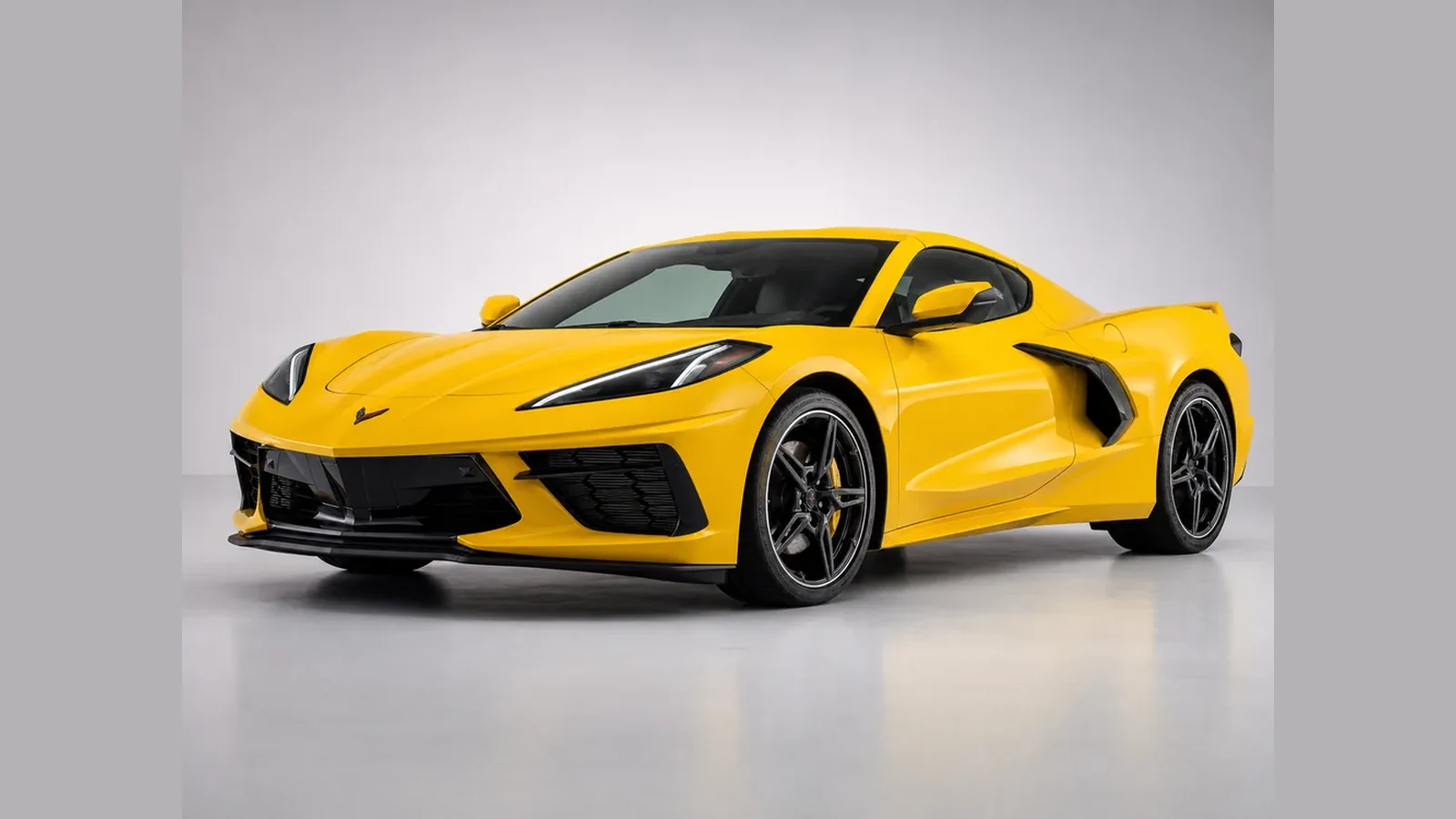
Supercar pace for the price of a loaded truck
The first question every C8 shopper asks is simple. Can a Chevrolet really run with cars that cost twice as much?
It can. The Stingray reaches 60 mph in about 2.9 seconds with the Z51 package, which is genuine supercar territory for the money.
That pace is why we rank the C8 near the top of our best fun-to-drive cars. You get exotic acceleration without an exotic badge or an exotic repair bill.
The value story is the whole reason this car matters. A mid-engine V8 that launches this hard usually starts far higher on the price list.
Here is what the base ticket buys you before you add a single option:
- A 6.2L V8 mounted behind the driver
- An 8-speed dual-clutch automatic
- Sub-3-second acceleration in the right trim
- Two usable storage areas for weekend bags
Prices run from about $68,000 for a Stingray to near $115,000 once you climb into the sharper trims. Even the top of that range undercuts the exotic cars the C8 can out-accelerate.
Price still overlaps loaded trucks, luxury sedans, and used German coupes, so the Corvette sits in the performance price tier rather than the exotic aisle.
The bargain has a catch worth saying out loud. A Corvette is cheap next to a supercar and expensive next to a normal Chevrolet.
Treat the price as a performance-car budget, not a coupe budget, and the value holds up.
What moving the engine behind you actually changed
The C8's biggest change was putting the engine behind the driver instead of up front. That one move reshaped the whole car.
It changed how the Corvette puts power down, how the steering feels, where your luggage goes, and how the car looks in a parking lot.
It also changed who shops for one. Some buyers who once dreamed about a used European exotic now cross-shop a new or lightly used C8 instead.
Before and after the mid-engine move
- Traction
- Weight over the rear tires helps the car launch harder
- Steering
- Lighter nose gives quicker, sharper turn-in
- Storage
- You gain a front trunk on top of the rear one
- Looks
- Short hood and cab-forward stance read like an exotic
The payoff shows up most in the cabin. You sit close to the front axle with the engine at your back, so the driving position feels more special than the price suggests.
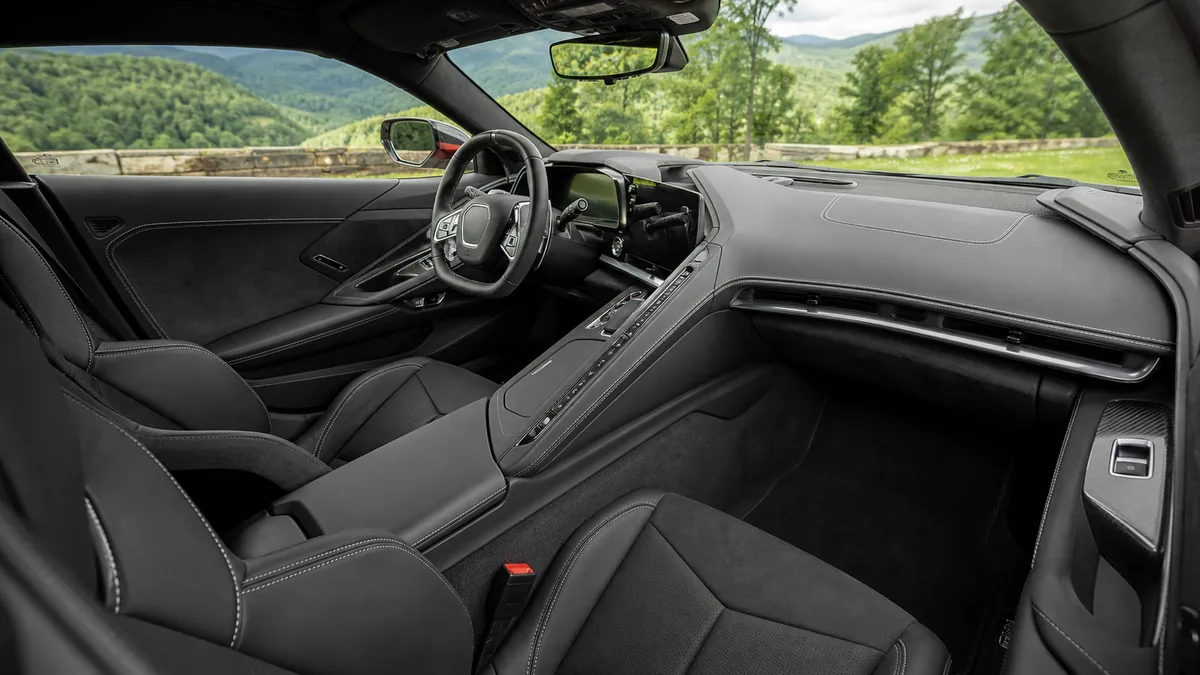
This is also why the C8 is not a normal coupe. Most cars in the coupe category trade back-seat space for style, while the Corvette trades it for a race-car layout.
Chevrolet builds practical trucks and crossovers too, so start at the Chevrolet hub if you are weighing the halo car against the rest of the badge. The Corvette shares a showroom with those models but almost nothing else.
The mid-engine switch is what turns a fast Chevy into something that feels like a small exotic.
Can you actually daily-drive a C8?
Most exotic-looking cars punish you the moment you try to use them every day. The Corvette is the rare one that mostly does not.
It rides better than its shape implies, the cabin stays comfortable on a long highway run, and the two trunks make real trips possible for two people.
The front trunk swallows soft bags while the rear area sits behind the engine, so a careful pack covers a weekend away.
Pros
- Comfortable seats and a settled highway ride
- Two cargo areas that fit weekend bags
- Easy to see out of for a mid-engine car
Cons
- The low nose scrapes on steep driveways
- Wide body makes tight parking spots stressful
- No rear seats and no room for a third passenger
Visibility is a pleasant surprise. The view forward is open for this class, though you still learn to respect the low front splitter on ramps and curbs.
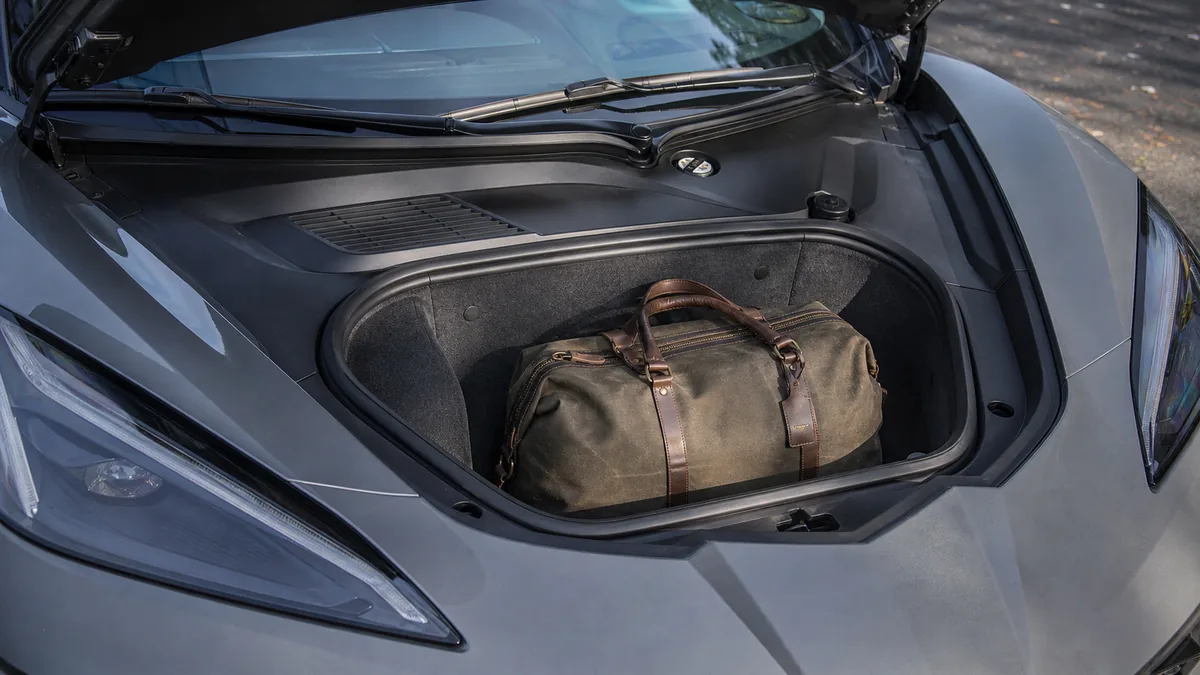
Run one honest test before you call it a daily. Line up your work bag, gym bag, and a grocery run, then see what the two trunks really hold.
A BMW 3 Series is the easier everyday car when you need doors, back seats, and simple parking. The Corvette asks you to give those up for the drive.
The two-seat layout is honest about its limits. Anything in the two-seat category forces choices about passengers, pets, and errands, and no amount of clever storage changes that.
A C8 can be your only car, but only if you have parking space, no need for rear seats, and patience for the low nose.
Stingray, Z51, E-Ray, or Z06: which C8 to pick
The trim you choose changes the price, the running cost, and the personality more than the color ever will. Start by understanding the Stingray, because it is the version most shoppers should buy.
The Stingray is the value pick and the most usable C8. Its V8 already makes the car quick enough for any public road.
The Z51 package sharpens the Stingray with better cooling, stronger brakes, and more grip for drivers who push hard. It also brings a firmer ride and more tire cost.
| Version | Best buyer | Watch out for |
|---|---|---|
| Stingray | Best value and daily usability | Still wears expensive tires |
| Z51 package | Driver who wants sharper cooling, brakes, and grip | Firmer ride and more tire wear |
| E-Ray | All-weather traction and huge launch grip | Higher price and hybrid complexity |
| Z06 | Track sound and razor response | Much higher consumable cost |
| Convertible | Open-air touring | Higher price and added complexity |
More Corvette is not always a better Corvette. The E-Ray adds hybrid assist and all-wheel-drive traction that shine in bad weather, but it is not the cheap or simple answer.
The Z06 climbs to 670 hp with a track focus, a louder character, and consumables that punish every hard lap. It is a thrill and a commitment at the same time.
Track hardware only earns its price if you drive hard enough to need it. If the car mostly cruises, commutes, and does weekend trips, tire cost and ride comfort matter far more than another tenth of a second on paper.
The convertible is the same trade in reverse. It swaps a little money and complexity for open-air touring, so choose it only when the roof-down drive is the whole point rather than an afterthought.
The plain Stingray keeps the classic rear-drive layout, which stays the cleanest value play. Treat the E-Ray separately because its all-wheel-drive traction comes through that hybrid system.
There is a plain reason to hold back. Every step up the ladder adds cost, and the base Stingray is already faster than most drivers can safely use on a public road.
Step up to E-Ray or Z06 and you are spending closer to premium-tier money, so make the extra hardware match how you actually drive.
For most buyers the right answer is a Stingray with the options you will use, not the badge with the biggest number.
The V8, the dual-clutch, and why there is no manual
Corvette fans argued about this for years, so let us settle it. The C8 does not offer a manual gearbox at all.
Every version uses an 8-speed dual-clutch automatic that fires off shifts faster than any human foot and hand could manage. It is a big part of why the car launches so hard.
The gearbox should feel crisp when you drive hard and smooth when you crawl in traffic. A used car that shifts roughly at low speed deserves a closer look before you buy.
The engine is the other half of the character. The naturally aspirated V8 gives you sound, instant response, and a fast splash-and-go fill that shapes every drive.
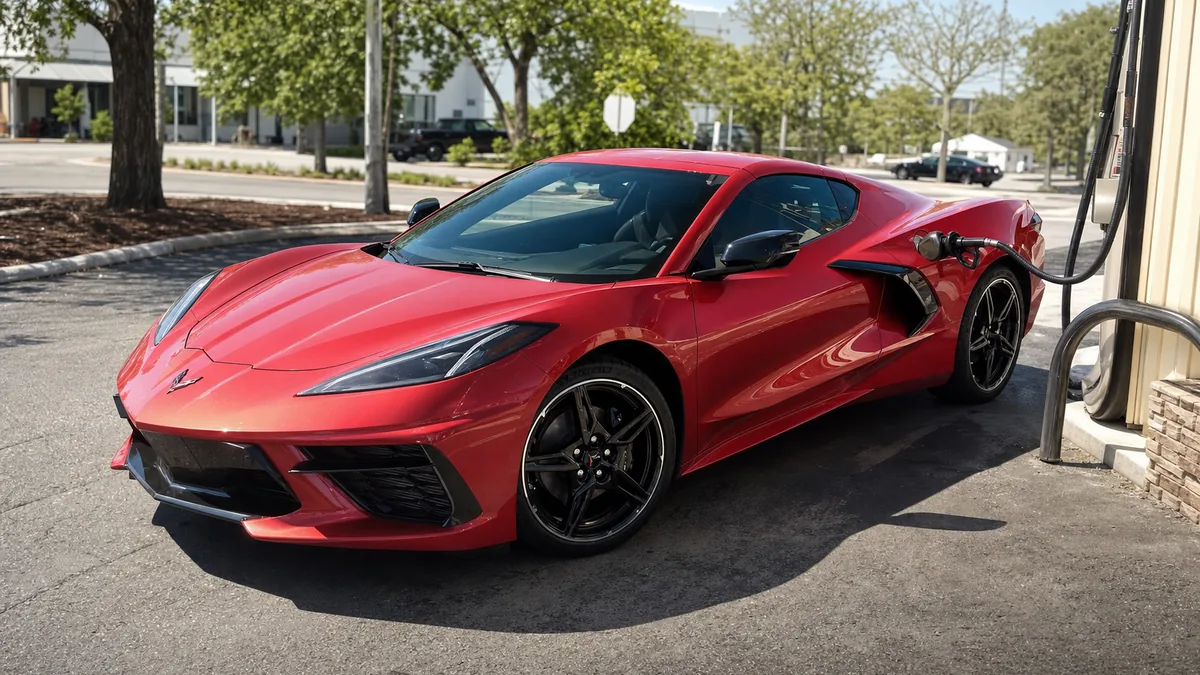
That gas character is the appeal if you are shopping the gas performance cars. The V8 asks for premium fuel and drinks it when you play, and that is a cost you sign up for on purpose.
A Tesla Model 3 can be brutally quick in a straight line, yet it feels nothing like this. The Corvette sells you engine noise, a snapping gearbox, and a low seating position that an EV trades away for silence.
If you must have a clutch pedal, the C8 is not your car, because the dual-clutch is the only gearbox offered.
How reliable is a five-year-old supercar platform?
Reliability is average for a performance car, which is actually good news at this price. The C8 rides on a high-volume American platform and, in the Stingray, a naturally aspirated V8 that is not fighting turbo heat.
That gives it a stronger case than most exotic alternatives. It does not mean you should treat it like a basic commuter.
Early cars carried the usual first-run growing pains that later production years cleaned up. The trouble clustered on the earliest builds:
- Occasional electronics bugs and warning messages
- Frunk latch and interior trim issues
- Several software updates in the first model years
The V8 and the dual-clutch gearbox have been the robust part of the car, which is why the platform earns an average rather than a fragile reputation.
The model-year history tells you which car to chase. Later builds fixed early bugs and, in some years, added real capability.
- 2020First C8 Stingray brought the mid-engine layout
- 2021 to 2022Production stabilized and early fixes reached more cars
- 2023Z06 widened the range with a high-revving track focus
- 2024E-Ray added hybrid assist and all-wheel-drive traction
- Later C8Strong value, but trim choice swings the cost sharply
A proper pre-purchase inspection should confirm software updates, fluid history, and any leaks, then check brake life, tire wear, and stored diagnostic codes. The dual-clutch should engage cleanly and throw no warning messages.
The safest move is usually the newest, cleanest C8 your budget allows rather than a stretch into a pricier trim with a foggy history. Condition tells you more than any forum legend.
New versus used is a real fork here. A new car gives you warranty, your own build, and known history, while a used one saves money but hands you the job of sorting early fixes, tire age, and how hard the last owner drove it.
Weigh that trade in our new or used guide before you assume a low-mile car is automatically the safe one.
A documented later car with boring service records beats a cheap early car with a mystery past.
Buying a used C8 without getting burned
A used Corvette rarely hides one catastrophic flaw. The real job is spotting abuse, heat, and cheap repairs before the money moves.
You are checking whether the last owner treated the car like a careful weekend toy or a disposable launch prop. Run this list before you talk price:
- Inspect the front splitter and underbody for scrapes and curb damage
- Check tire brand, tread depth, and date codes for age and uneven wear
- Test the dual-clutch gearbox at low speed and under gentle acceleration
- Work every screen, camera, drive mode, roof panel, and front lift
- Read the service records and the software update history
- Be cautious with heavily modified or repeatedly tracked cars
Cosmetic damage costs more than it looks because the car sits low and wide. A scrape that seems minor can still involve pricey panels, sensors, or paint, so check your driveway clearance before you bring one home.
A low-mile car is not automatically a safe car. Some sit on old tires, get short heat cycles, or spend their life being launched for videos, so ask how it was used and read the tire date codes.
The interior electronics deserve a full test, not a glance. Screens, drive modes, cameras, the front lift, the roof mechanism, and the seat controls should all work, because one nagging fault becomes maddening when you notice it on every drive.
Tire pressure matters more on this car than on almost anything else you can buy. Wide performance rubber is expensive and sensitive, so use the habit from our tire-pressure how-to before every spirited drive.
Leasing can suit a buyer who wants warranty and a fixed term, but mileage limits fight the way a Corvette wants to be driven. Compare the numbers in our lease versus buy guide, because a low payment can turn expensive if you actually use the car.
Pay a little more for a clean, inspected, documented C8 instead of rescuing a tired one invoice by invoice.
What a Corvette really costs to own
The Corvette is cheap only next to cars that cost far more. Measured against normal cars, the running bills sit well above mainstream levels.
Premium fuel, wide tires, performance brakes, insurance, and body repairs all cost more than a regular coupe would ask. Here is where the money actually goes:
| Cost item | Why it matters | Smart buyer move |
|---|---|---|
| Tires | Wide performance rubber wears faster | Price replacements before you choose a trim |
| Brakes | Hard driving raises cost quickly | Measure pads and rotors before you buy used |
| Fuel | Premium fuel and V8 thirst add up | Estimate it against your yearly mileage |
| Insurance | Repair cost and performance rating matter | Quote the VIN before you leave a deposit |
| Body repair | The low nose and wide panels are exposed | Check driveway and parking clearance |
Tires and brakes are where the performance turns into a real invoice. This is the bill that surprises buyers who budgeted like they were buying an ordinary car.
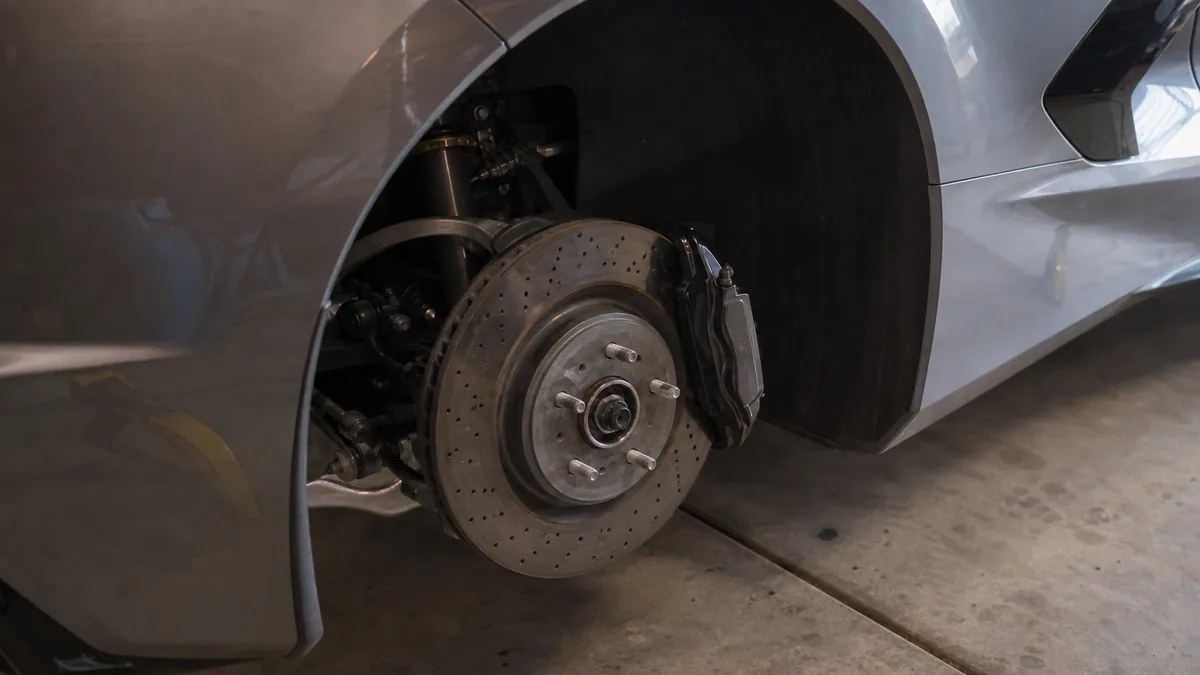
The basics still protect the car even though it is special. Oil changes, brake fluid, tire age, and storage habits decide how it ages, and the routine follows the same logic as any careful engine oil service.
Track use changes the budget again. Brake fluid, pads, rotors, tires, alignment, and cooling checks all become normal expenses, which is why a weekend cruiser and a track-focused build should carry different spending plans.
Resale is the bright spot. Demand for clean C8s has stayed strong, so a smart purchase price keeps the true cost of ownership lower than the fuel and tire bills suggest.
Resale also rewards clean, desirable cars and punishes odd damage, poor records, and cheap modifications. A stock, serviced, well-documented C8 protects its value in a way a hacked-up bargain never will.
Storage and parking belong in the plan too. A low car that sits for weeks wants a battery tender and a careful parking spot, and knowing how to jump-start a dead battery saves a bad morning after winter storage.
Compare the C8 with a Ford F-150 in only one narrow way. Both can cost loaded-SUV money, but one buys work capability and the other buys a weekend reward, so the truck never makes sense as a rival and the Corvette never does the truck's job.
Keep the car stock, serviced, clean, and documented, and you protect one of its best financial strengths.
Who should buy a C8, and who should skip it
The Corvette fits a buyer who wants performance first but still wants some real usability. It can commute, tour, and carry weekend bags for two, and it can make a plain errand feel like an event.
It is the wrong car for low-key drivers. The shape draws attention, parking takes care, and every tire and brake quote reminds you this is a serious machine.
Attention itself is a real cost some buyers forget. A few owners enjoy the questions and thumbs-up, while others grow tired of worrying about door dings, crowded lots, and where to leave the car.
The Stingray fits the widest group, since it is wild enough to thrill and usable enough to drive often. The E-Ray suits buyers who want all-weather launch confidence, and the Z06 suits drivers who value track sound and response over cost.
If you are moving from a Mazda MX-5 Miata, expect a very different kind of fun. The Corvette is faster and more dramatic but less intimate, and the Miata still gives cheaper thrills at lower speeds.
If you are stepping out of a compact sport sedan instead, expect more excitement and less everyday flexibility. The Corvette makes short trips feel planned around the car, while a sedan blends into daily life without asking for much.
The best buyer is disciplined. They decide how the car will be used, choose the trim around that use, and leave real money for tires, insurance, and service.
Before you pay for a badge you may not need, check it against the wider performance-car shortlist. The Corvette is the right buy when you want serious speed and still pick the trim with discipline.