How we ranked family SUVs
Family SUV shopping starts with real use, not showroom drama. We weighted rear-seat access, cargo shape, fuel economy, safety tech, ride comfort, reliability, resale, and whether the vehicle still feels easy after a long day.
That is why this list includes one non-SUV exception. The Toyota Sienna is a minivan, but it beats many family SUVs at the family job.
We include it as a pressure test, because a buyer who truly needs space should know when an SUV shape is costing them comfort.
| Factor | Why it matters | What we rewarded |
|---|---|---|
| Cargo shape | Strollers and sports gear are awkward | Wide opening and low floor |
| Fuel cost | Family mileage adds up quickly | Hybrid or efficient gas setup |
| Rear seat | Child seats need space | Door opening and seat width |
| Reliability | Downtime is expensive | Proven powertrain and service access |
| Resale | Families often trade after life changes | Strong used demand |
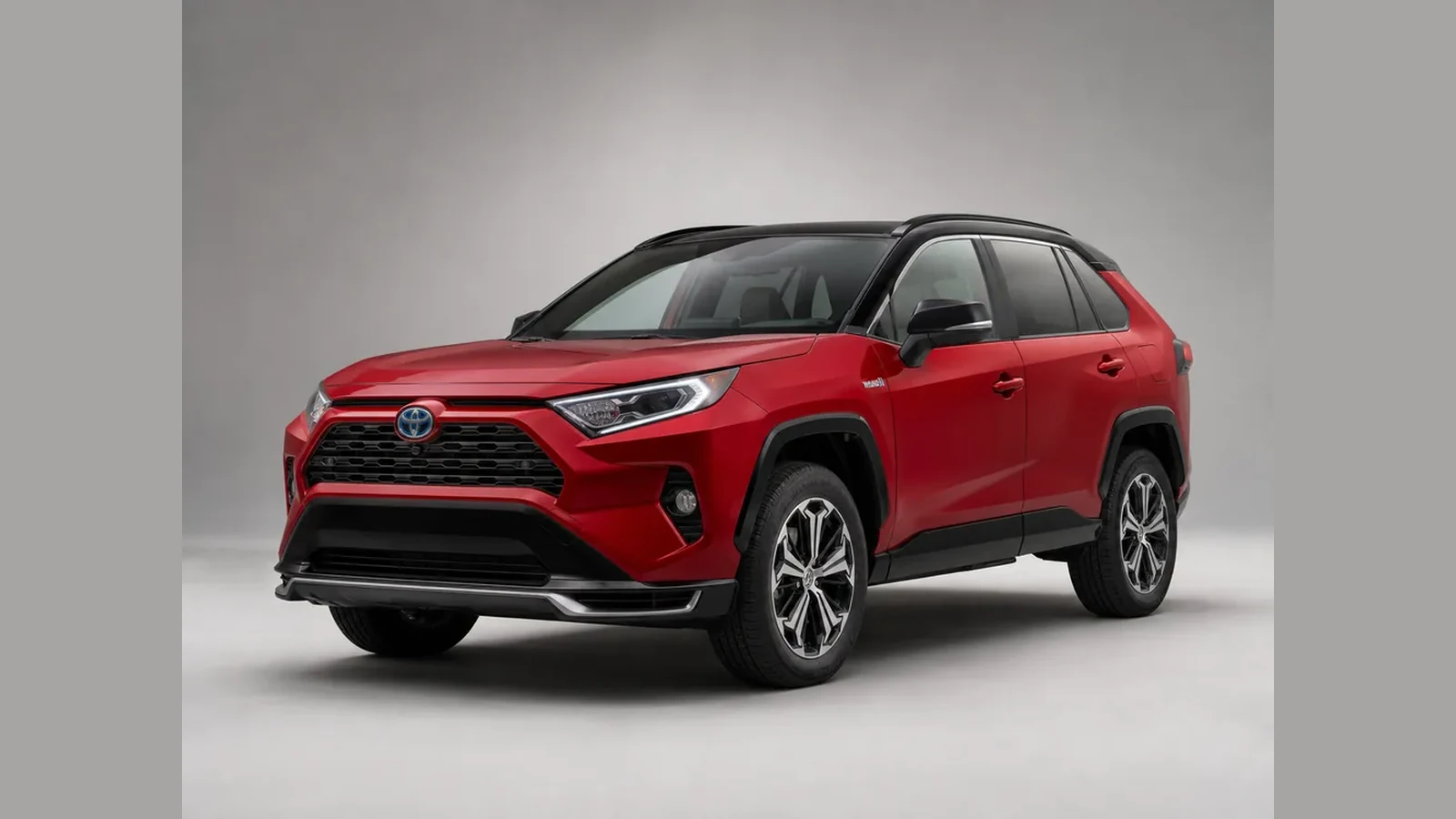
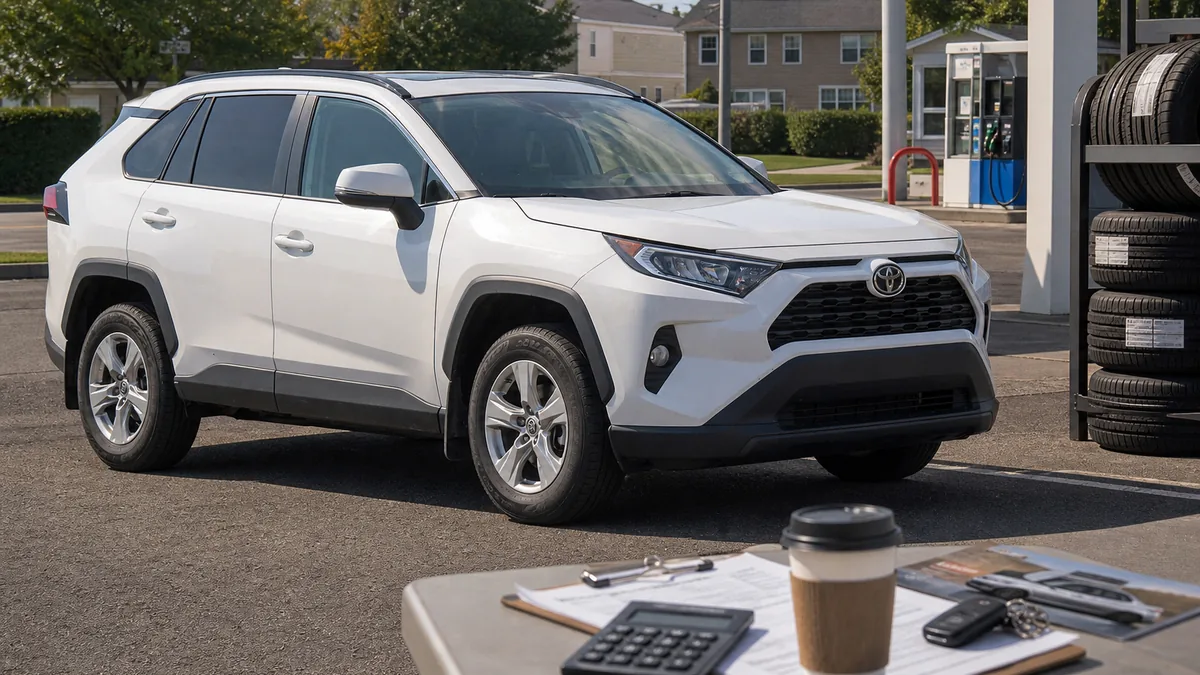
Best overall family SUV, Toyota RAV4 Hybrid
The Toyota RAV4 Hybrid is our top pick because it gives families the cleanest cost-to-use balance. It has strong fuel economy, standard AWD, high resale, and enough cargo space for normal family life.
One practical detail seals it for many buyers: the RAV4 Hybrid is easy to find and easy to service.
Toyota builds them in volume, most independent shops know the hybrid system, and parts are cheap and available.
A family car that any local mechanic can fix removes a real source of ownership stress.
It is not the softest or quietest SUV here. The reason it still wins is that fuel savings and resale work every week, long after the test-drive excitement fades.
For a household that wants one sensible compact SUV, that matters.
Read the full RAV4 Hybrid review and how it compares with the RAV4 Hybrid if you are choosing between the two default compact choices.
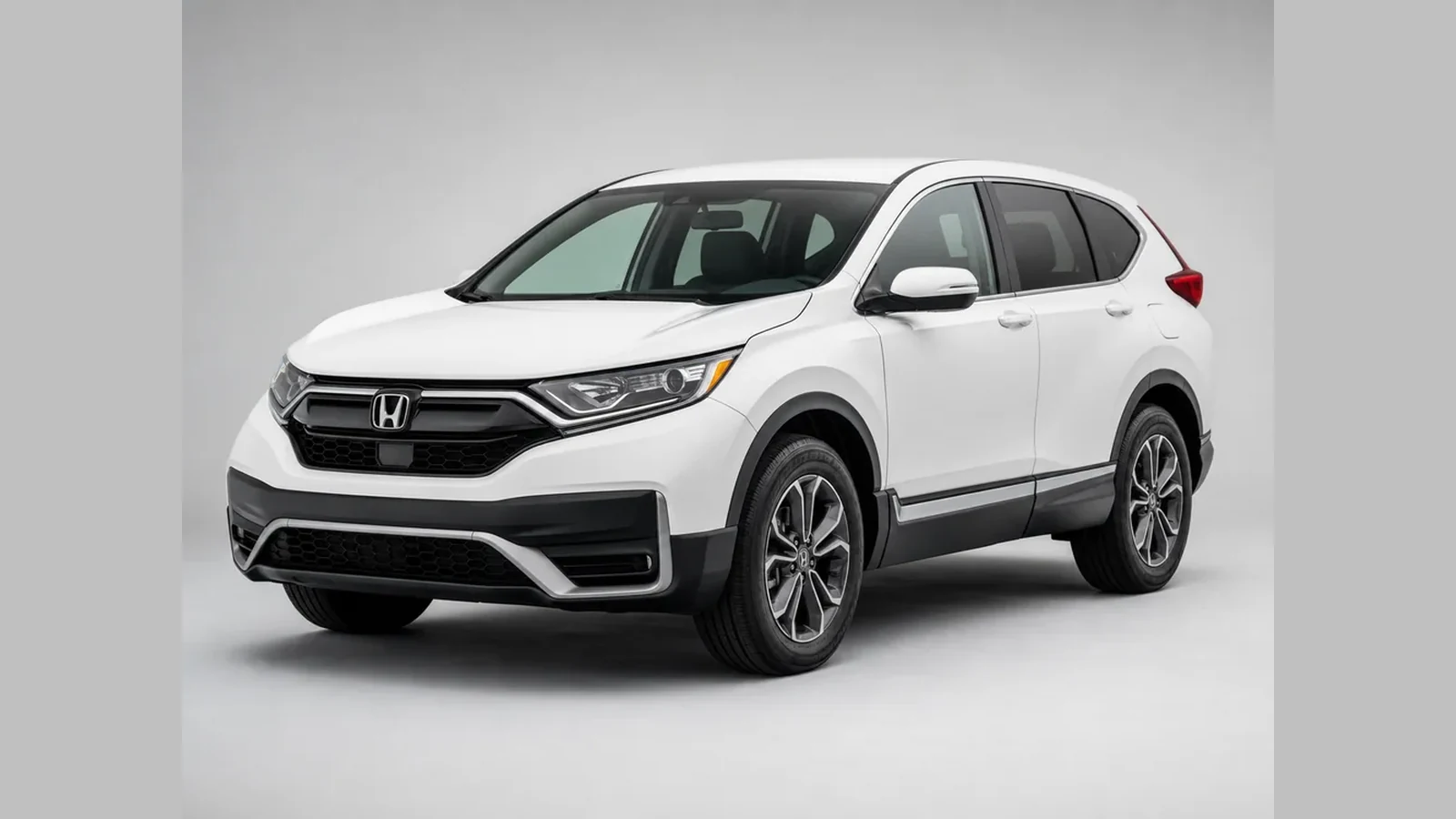
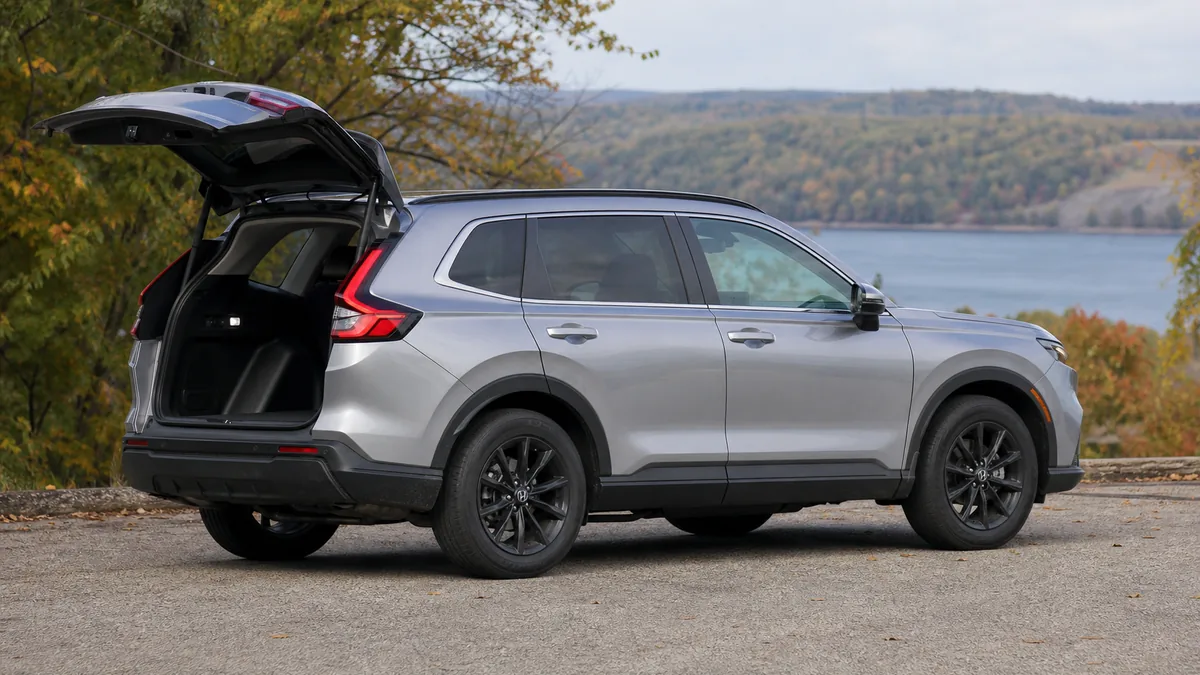
Best comfort-first pick, Honda CR-V
The Honda CR-V is the family SUV for buyers who care more about cabin calm and cargo access than the highest mpg number. It has a broad cargo hold, a relaxed ride, and a rear seat that works well with child seats.
There is also a hybrid CR-V, and it changes the math. The gas model is the value pick, but if your driving is mostly city errands the CR-V Hybrid narrows the fuel gap to the RAV4 while keeping the calmer ride.
Drive both Honda versions before you decide the Toyota wins on economy alone.
The gas CR-V trails the RAV4 Hybrid on fuel cost, but the cabin is easier to live with for many families. If your driving is mostly local errands and school runs, test the CR-V's doors, cargo floor, and second row before choosing on mpg alone.
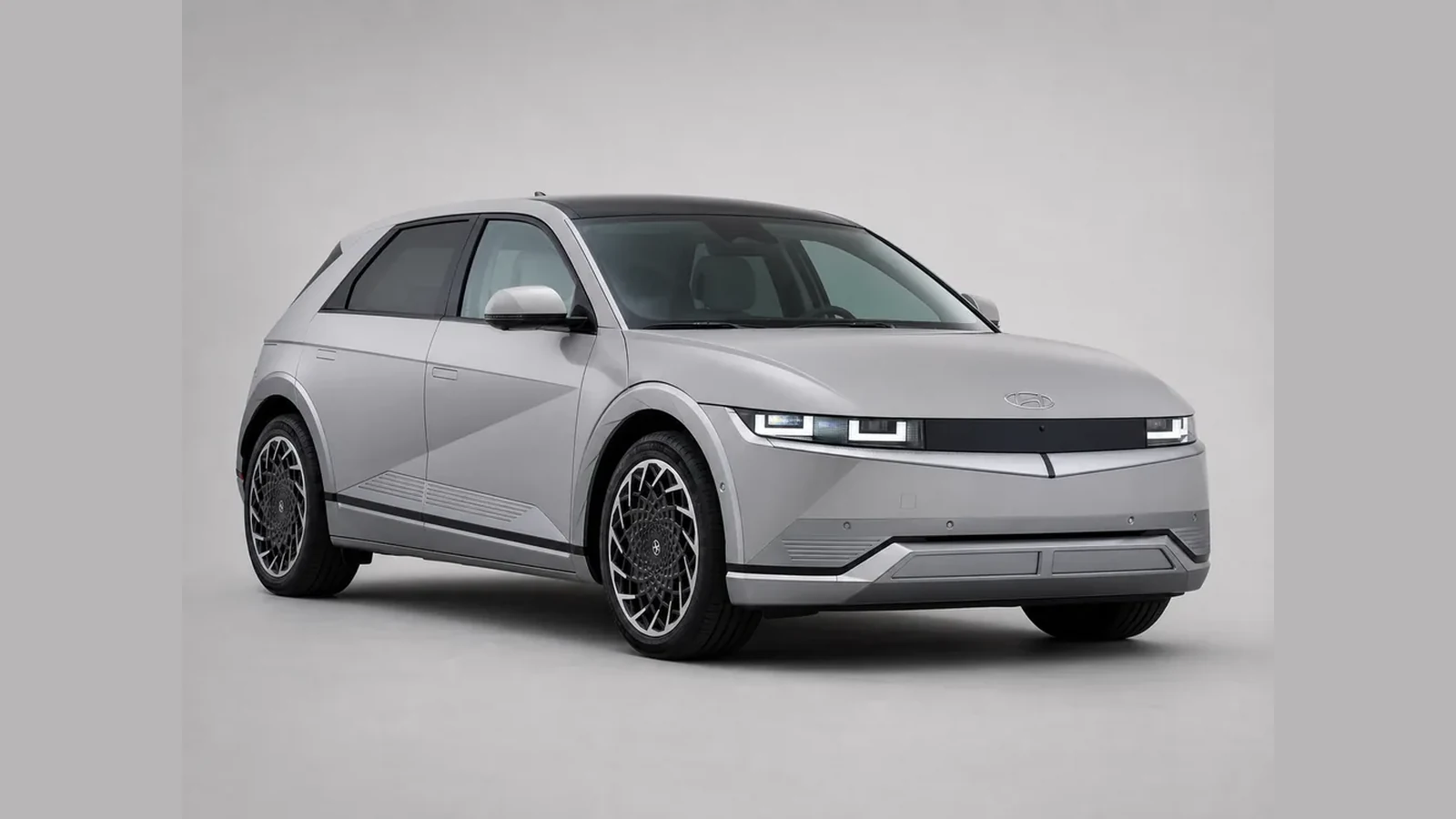
Best electric family pick, Hyundai Ioniq 5
The Hyundai Ioniq 5 earns its place because it feels more spacious than many compact SUVs and charges quickly on the right equipment. The flat floor, wide doors, and calm ride make it a strong family EV.
Range is the other half of the charging question. The Ioniq 5 offers up to 318 miles on the larger battery, which covers most family weeks without a public stop.
Buy the long-range version if you take regular highway trips, because the difference between 220 and 318 miles decides how often a family EV interrupts a drive.
The catch is charging. It is a great family choice if you can charge at home or have reliable local charging.
It is a weaker choice if you would depend on public chargers you have not tested.
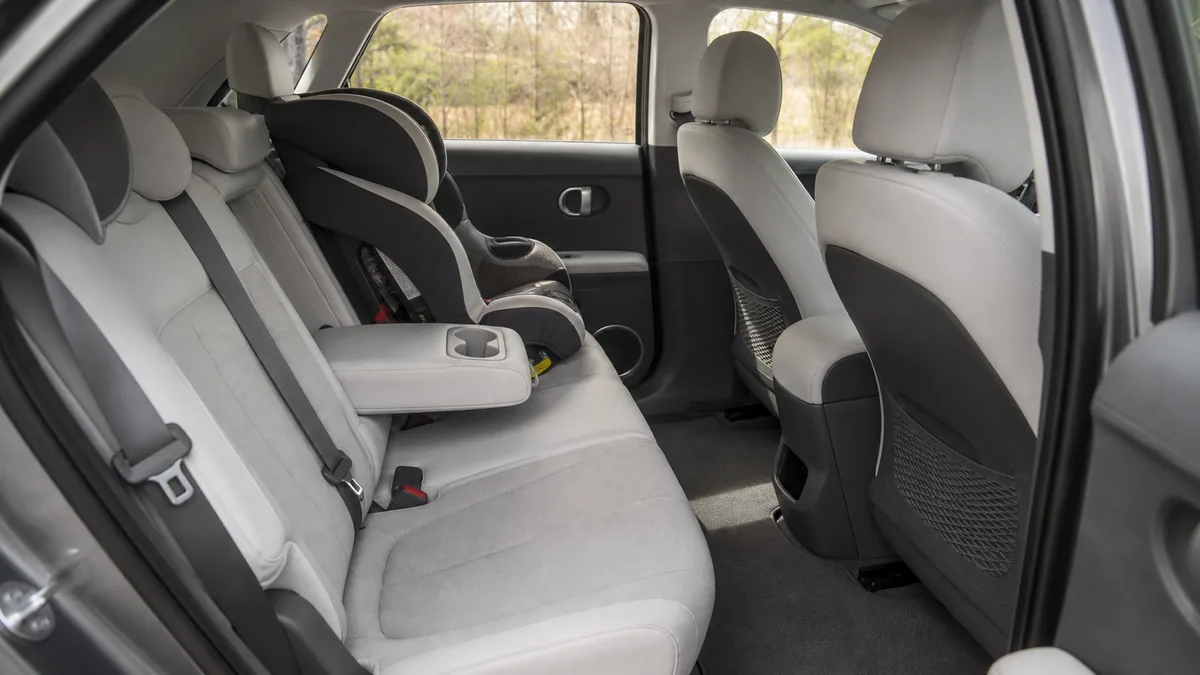
Weigh the Ioniq 5 against the Model 3 if you are split between EV range and cabin space. Use EV charging basics before treating any EV as a simple gas-car replacement.
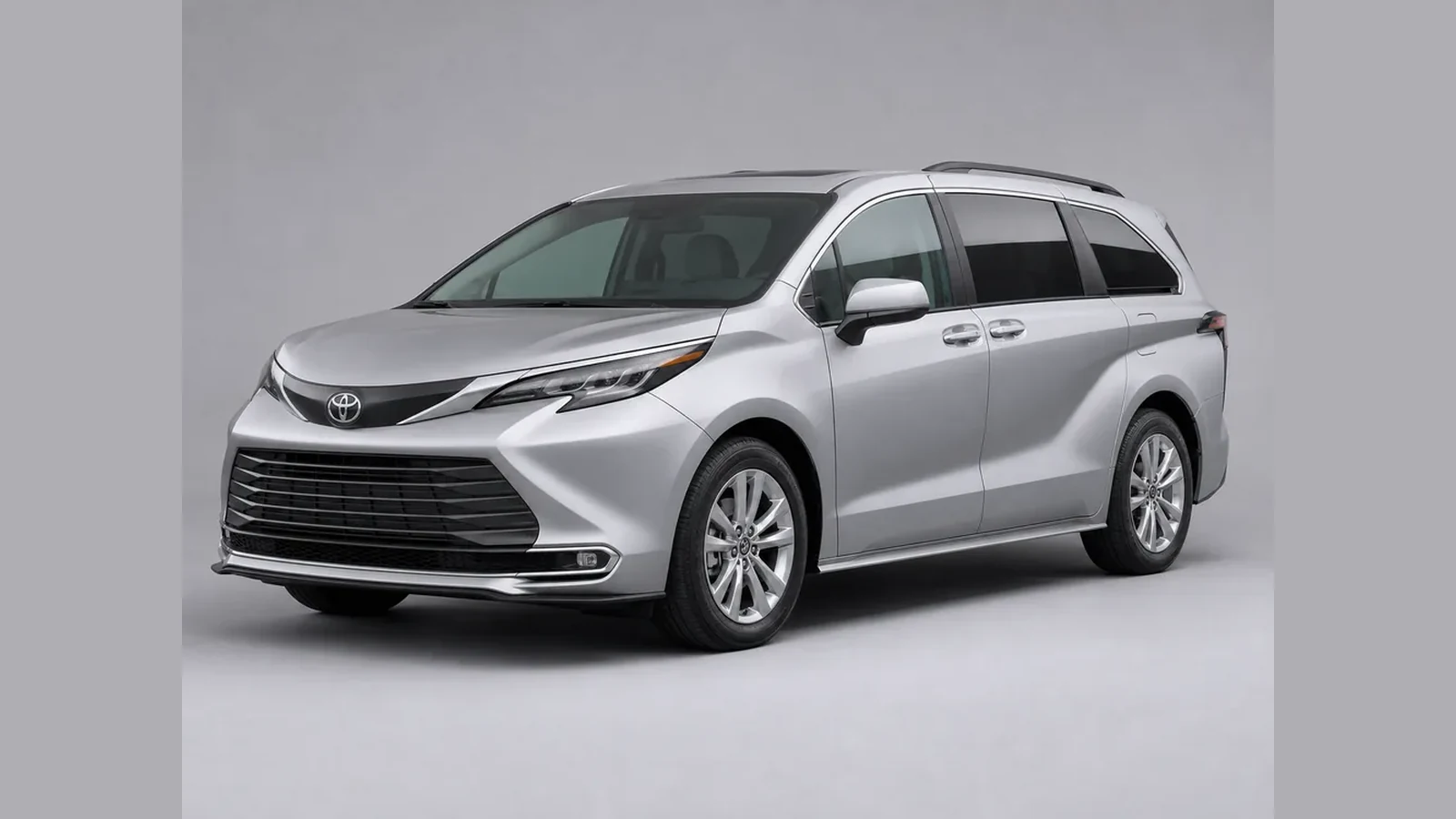
The minivan reality check, Toyota Sienna
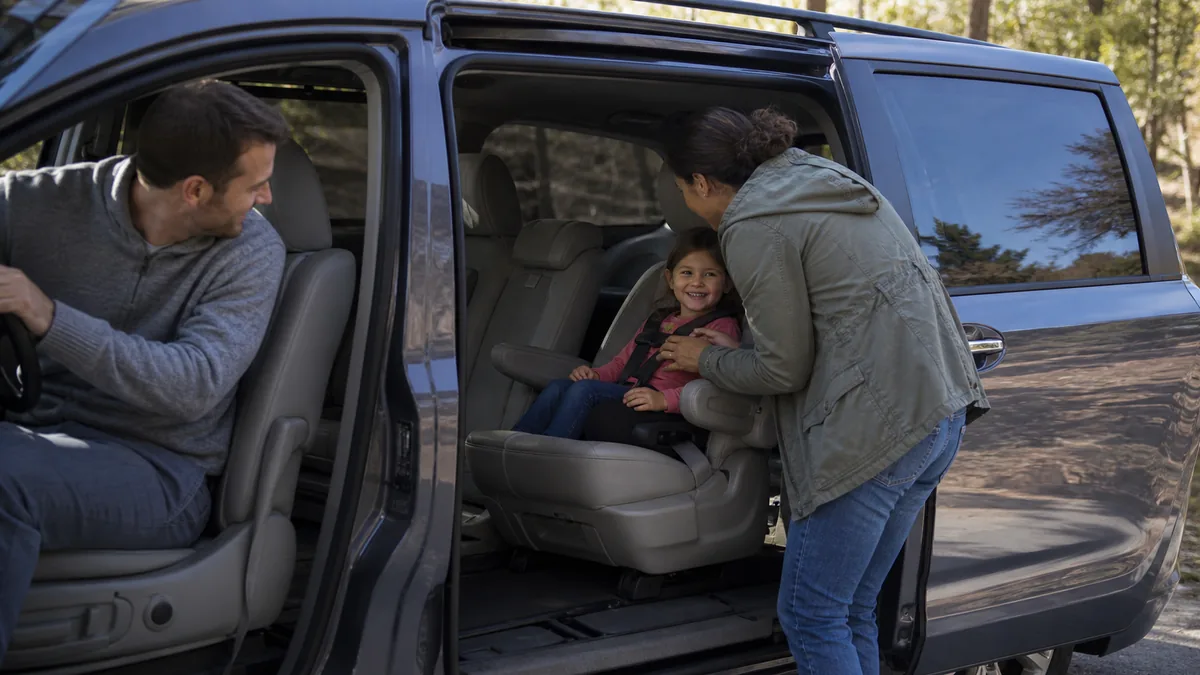
The Toyota Sienna is here because many families shopping SUVs actually need a sliding-door hybrid van. It offers easier third-row access, better people moving, and excellent fuel economy for its size.
The Sienna is also hybrid-only, which is unusual for a vehicle this size. It returns 36 mpg city and highway, a figure most three-row SUVs cannot approach.
For a family that drives a lot of miles with a full load, that efficiency can outweigh every styling argument for an SUV shape.
If you need three rows every week, the Sienna should be on the same spreadsheet as any SUV. If you only need two rows, it is probably more vehicle than you need.
- Choose Sienna if three-row access is a weekly need
- Choose RAV4 Hybrid if two rows and fuel cost matter most
- Choose CR-V if cargo loading is the daily pain point
- Choose Ioniq 5 if home charging is easy
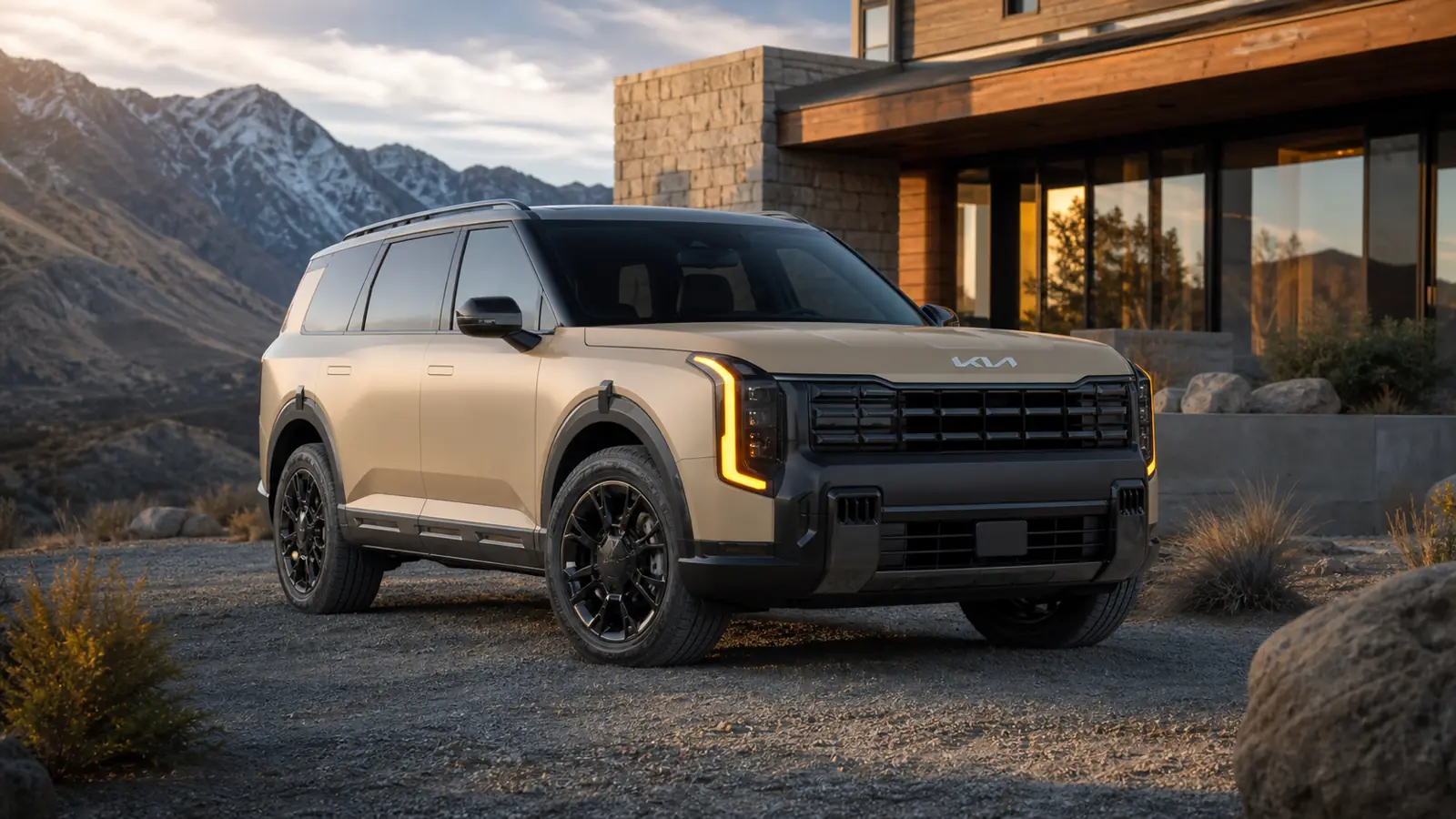
Best three-row family SUV, Kia Telluride
The Kia Telluride is the pick when the third row has to carry people rather than sit folded. It seats seven or eight, and the back row is usable by adults on a real trip instead of only in an emergency.
The Telluride also holds its value, which matters for a family that trades every few years. Strong used demand means the depreciation hit is smaller than on many rivals, so the higher purchase price is partly returned at resale.
Fuel economy is the tradeoff. The V6 returns up to 20 mpg city and 26 highway, so a Telluride costs more to run every week than a compact hybrid.
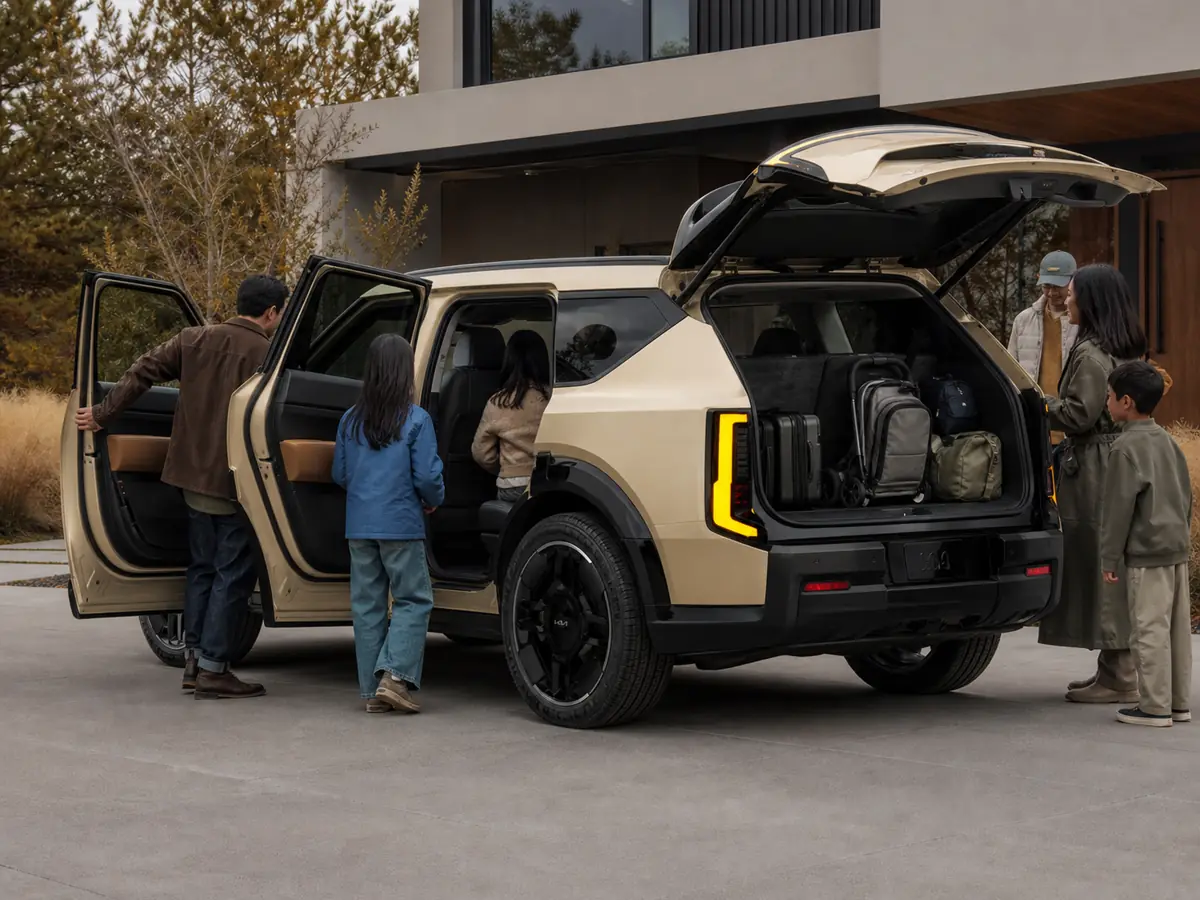
Pricing runs from $39,190 to about $58,000, which puts a mid-trim Telluride near a loaded compact SUV. Buy the Telluride when you need the third row on a normal week, because paying for seats you never use is the most common family-SUV mistake.
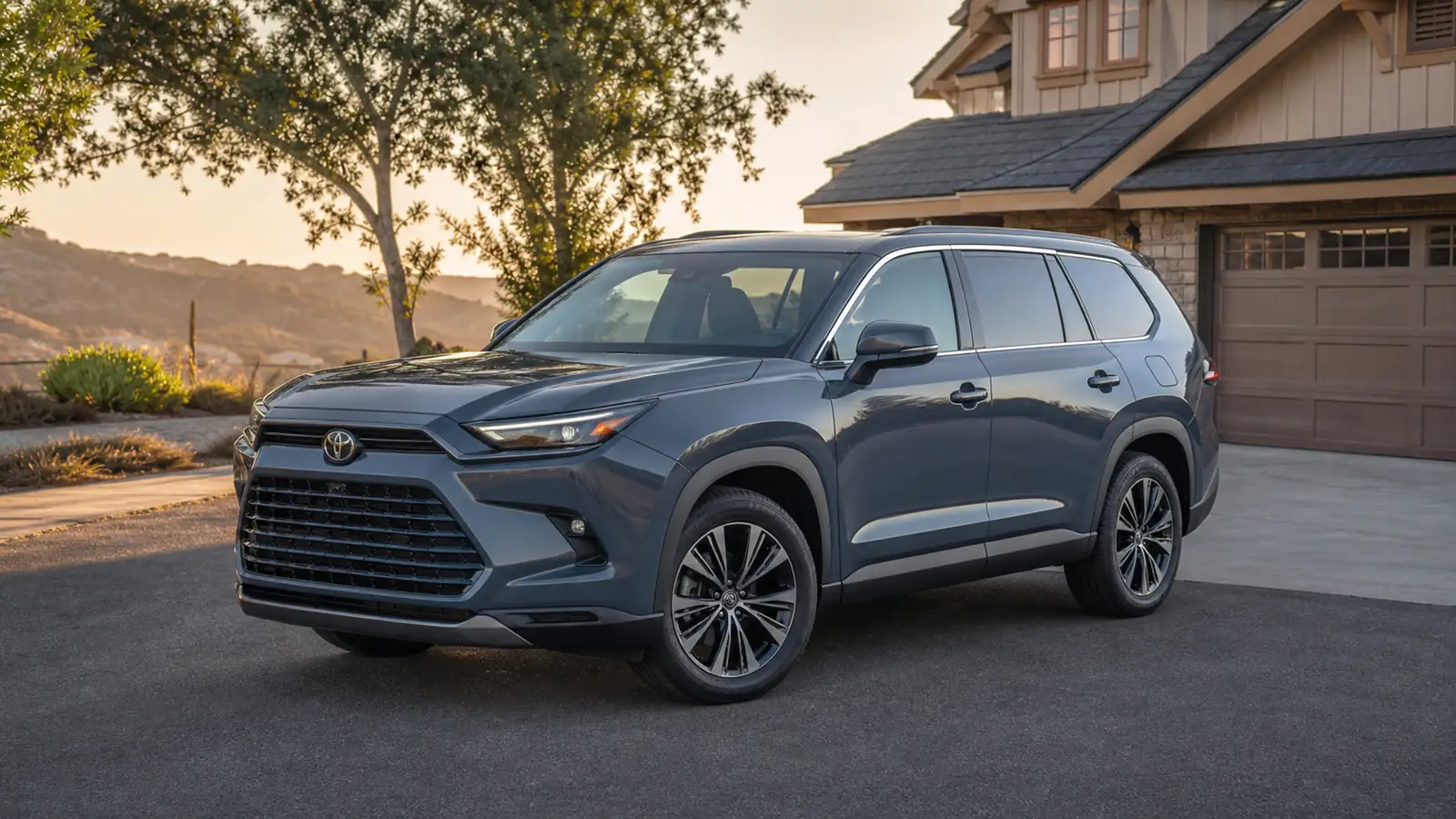
Best three-row hybrid, Toyota Grand Highlander
The Toyota Grand Highlander answers the complaint families make about three-row SUVs, which is that space normally costs fuel. Its hybrid returns up to 36 mpg combined, close to what many compact gas SUVs manage with two rows.
That efficiency is the reason it ranks above larger gas-only three-row SUVs here. A family driving 15,000 miles a year feels the difference between 20 and 36 mpg in the fuel budget, not on the spec sheet.
The catch is price. A Grand Highlander starts above a Telluride and climbs to about $60,000, so the fuel savings take years to close the gap on the sticker.
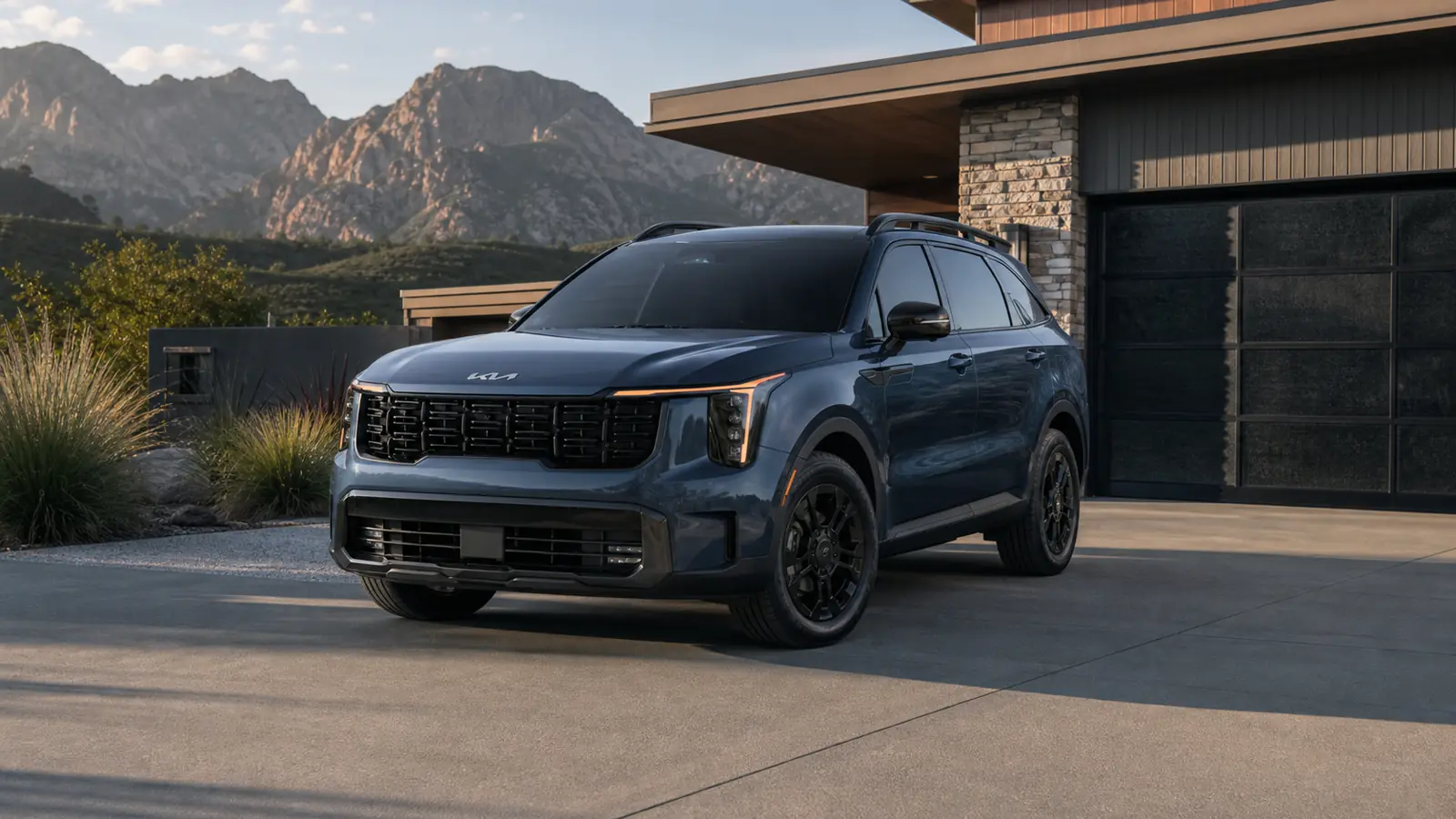
Best compact three-row, Kia Sorento
The Kia Sorento exists for the family that needs a third row but not a Telluride. It seats six or seven in a body short enough to park in a normal garage, which is the reason it ranks separately here.
The Sorento shares its warranty with the rest of the Kia range, which runs 10 years or 100,000 miles on the powertrain. For a family buying new and keeping the car, that coverage removes much of the risk of a hybrid drivetrain over a long ownership.
Its hybrid reaches up to 37 mpg combined, the best figure of any three-row on this list. That combination of a small footprint and hybrid economy is rare, and it is what the Sorento is for.
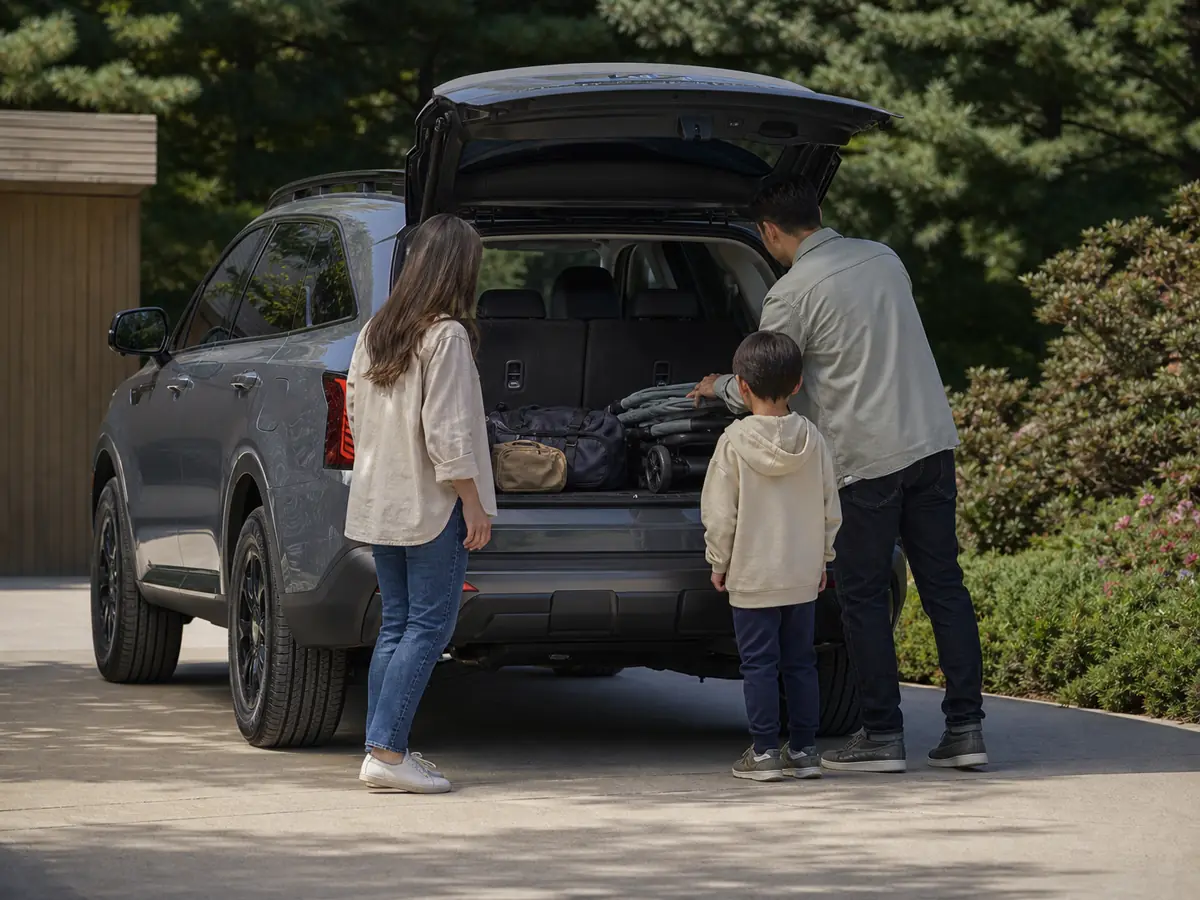
Be honest about that third row. It is tighter than the Telluride's and works best for children or short hops, so a family of seven adults should step up rather than save money here.
Pricing starts at $32,390 and runs to about $52,000. A hybrid Sorento is the cheapest way onto this list to get three rows and hybrid fuel economy in one vehicle.
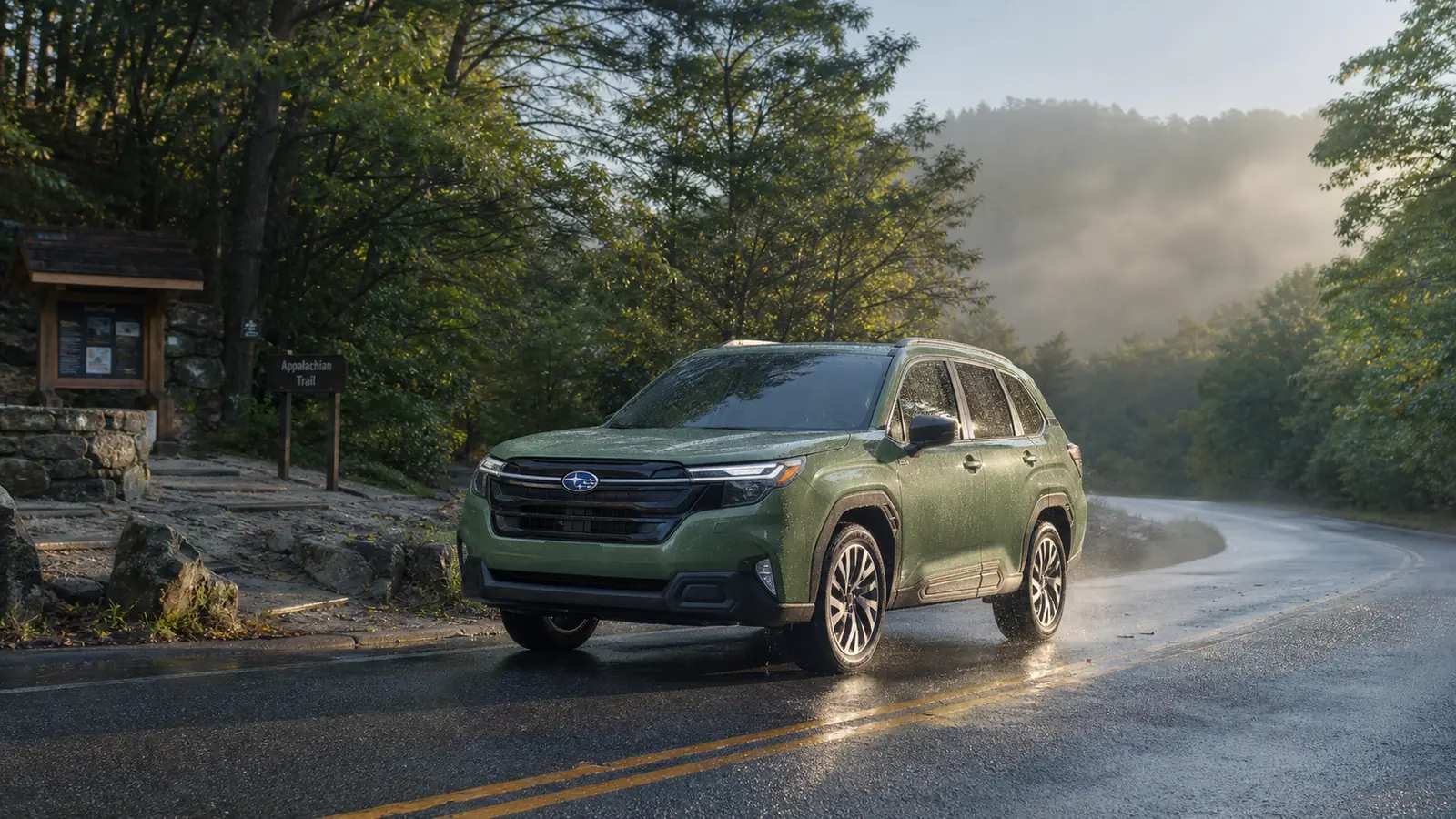
Best small-family value, Subaru Forester
The Subaru Forester is the pick for a two-row family that wants all-wheel drive without paying a hybrid premium. It starts at $29,995, the lowest entry price among the SUVs ranked here.
Subaru also gives the Forester standard all-wheel drive at that entry price, where most rivals charge extra for it. For a family in a snow state, that turns the Forester from the cheapest SUV here into one of the better-equipped ones for the money.
Visibility is its quiet advantage. The Forester has a tall glass area and upright pillars, which makes parking, school lots, and merging easier than in SUVs with thick rear pillars.
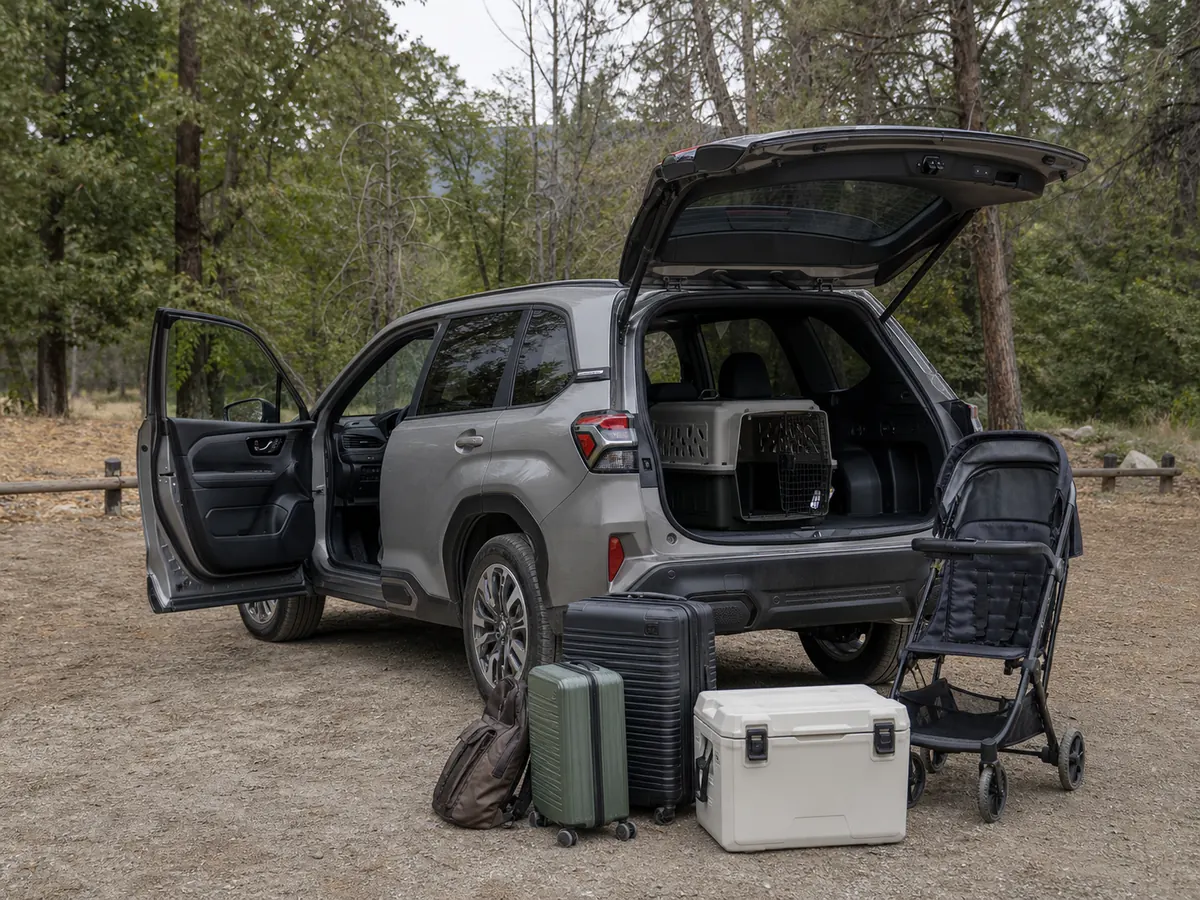
The gas Forester returns up to 26 mpg city and 33 highway, and the hybrid reaches 35 city and 34 highway. Neither matches a RAV4 Hybrid, so the Forester wins on price and sightlines rather than on fuel.
How many rows do you actually need?
Most families overbuy rows and underbuy cargo. A third row that carries passengers twice a year costs fuel, tires, and parking difficulty on the other 363 days.
Count the seats you fill on a normal week, not on a holiday. If the answer is four or five, a two-row SUV like the RAV4 Hybrid, CR-V, or Forester leaves more money for the things families actually burn through.
| Weekly passengers | Sensible shape | Example from this list |
|---|---|---|
| Two to four | Compact two-row SUV | RAV4 Hybrid, CR-V, Forester |
| Five with bulky gear | Two-row with a wide hatch | CR-V, Ioniq 5 |
| Six or seven every week | Three-row SUV | Telluride, Grand Highlander |
| Six or more plus easy access | Minivan | Sienna |
The exception is the family that carpools. If you regularly move other people's children, sliding doors and a usable third row stop being a luxury and start being the reason the car works.
What to check before you buy
Family vehicles get used hard. Look past clean photos and check tires, cabin wear, service records, cargo-area damage, child-seat marks, and whether every safety feature works without warning lights.
Records matter more on a family SUV than on any other used car, because these vehicles are driven hard and serviced late.
Ask for proof of oil changes, brake work, and any transmission service, and treat a gap in the history as a reason to negotiate or walk.
A clean maintenance record is worth more than a clean exterior.
A used family SUV with missing records can cost more than a new one with a warranty. Weighing new against used frames that decision, while checking tire pressure is a simple habit that protects fuel economy and tire life.
Family SUVs also hide wear in places a standard inspection skips. Check the third-row release mechanisms, the rear climate vents, every seatbelt retractor, and the cargo floor under the mat.
Used family SUV checks
- Third-row latches
- Fold and raise every seat twice
- Rear climate
- Test back vents and controls, not just the front
- Seatbelts
- Pull each belt fully out and let it retract
- Cargo floor
- Lift the mat and look for water staining
- Child-seat anchors
- Confirm every LATCH point is present and undamaged
Water staining under the cargo mat matters more than a scuffed bumper. It points to a leaking seal or a past flood, and it is the one finding that should end a purchase.
How to use this ranking at the dealer
Do not walk into the dealer asking only for the top-ranked vehicle.
Bring your real load. Put the child seat behind the tallest driver, fold the stroller, open the hatch, and check whether the cargo cover still fits.
Then price the exact trim that passed the test. Family SUVs can change quickly when you add AWD, larger wheels, premium audio, pano roof packages, or third-row substitutes.
The best family pick is the one that survives both the driveway test and the payment test.
Dealer checklist
- Child-seat fit
- Test behind the real driver position
- Cargo fit
- Load stroller, luggage, or sports gear before negotiating
- Trim cost
- Compare the exact VIN, not the advertised starting price
- Ownership
- Quote insurance and tire replacement before signing
Final ranking logic
The RAV4 Hybrid wins because it gives the strongest ownership math without giving up everyday usefulness.
The CR-V is close because its cabin and cargo shape reduce daily friction.
The Ioniq 5 is the EV answer for families with charging sorted. The Sienna is the honest answer for families who need more space than a compact SUV can provide.
Best practice: buy the smallest family vehicle that handles your real load without stress. Extra size costs money every mile.