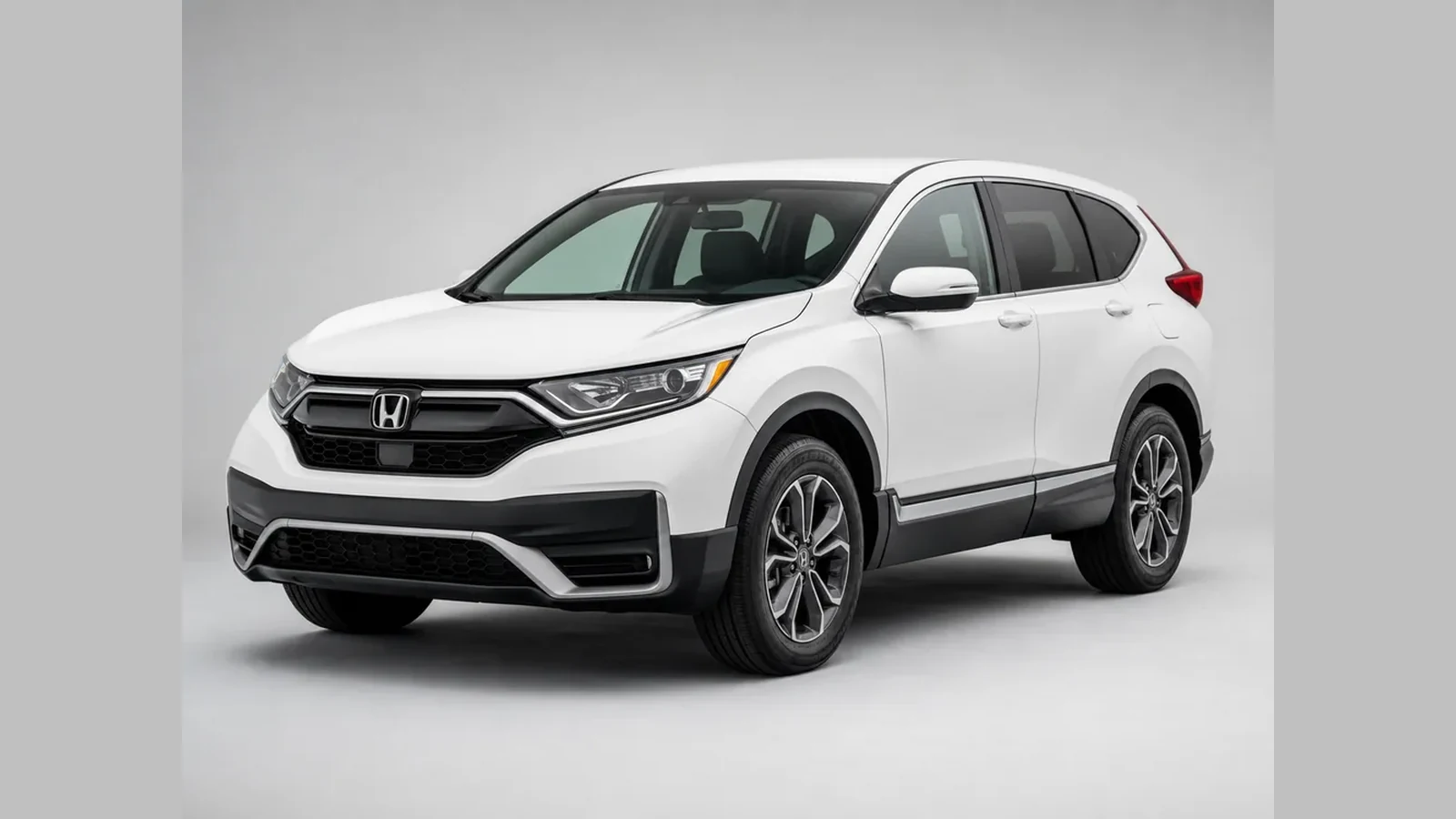
The Toyota RAV4 Hybrid is the easy pick for fuel economy, standard AWD, and resale strength. The Honda CR-V is the better daily family cabin if cargo access, ride comfort, and rear-seat ease matter more than maximum mpg.
Best practice: pick the RAV4 Hybrid for lower fuel bills, pick the CR-V when the SUV has to haul bulky family gear every week.
Start with the family job, not the badge
The RAV4 Hybrid and CR-V are both safe default answers, but they solve different family problems.
The Toyota RAV4 Hybrid is the fuel-saver with standard all-wheel drive. The Honda CR-V is the calmer cargo box with a wide rear seat and easier daily loading.
That split matters because many buyers come in asking which brand is better.
Brand is the wrong first question. Ask whether your week is mostly fuel cost, winter traction, stroller loading, rear-seat comfort, or highway quiet.
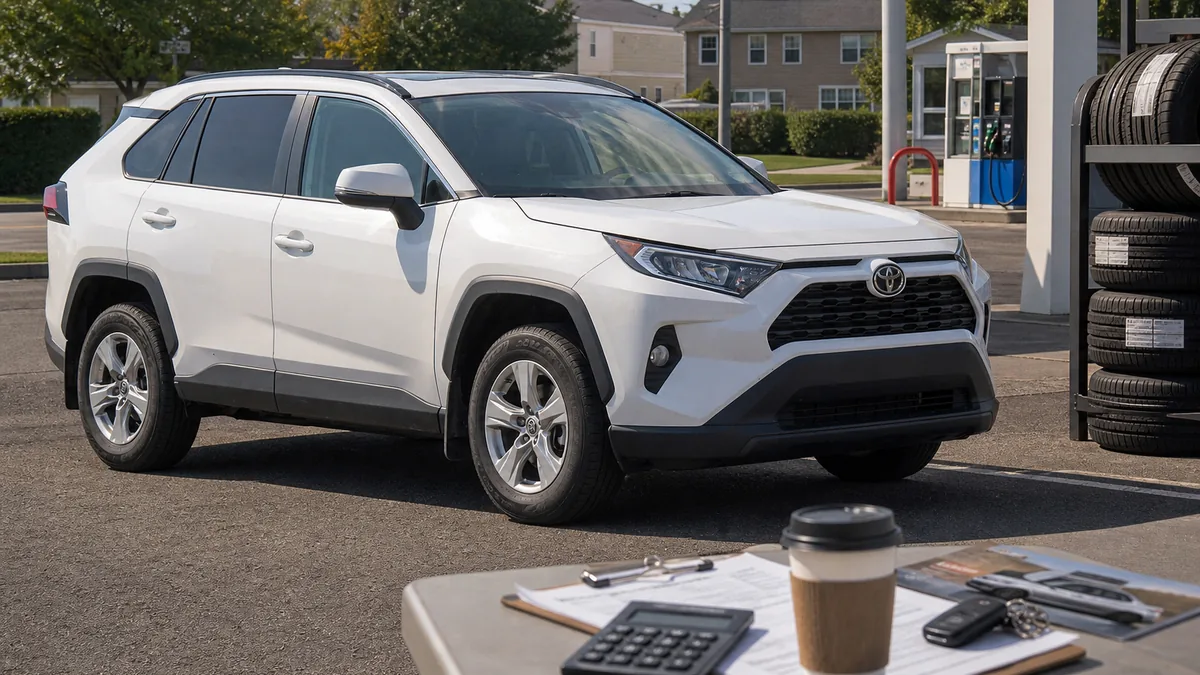
Is the RAV4 Hybrid's mpg advantage big enough to decide it?
For many buyers, yes. The RAV4 Hybrid's combined mpg advantage over the gas CR-V is large enough to show up every month if you drive often.
It also includes AWD as part of the hybrid package, which helps buyers in snow states avoid a separate option decision.
The gap is real in numbers. The RAV4 Hybrid returns up to 47 mpg city against the gas CR-V's 28, so a family driving 15,000 miles a year buys noticeably less fuel in the Toyota.
Over five years that difference alone can cover the RAV4's higher starting price.
There is a fairer comparison, though. Honda also sells a CR-V Hybrid at up to 40 mpg combined, which narrows the fuel gap to almost nothing.
If mpg is the deciding factor, compare the two hybrids against each other rather than the Toyota hybrid against the gas Honda, because that is where the honest decision sits.
The CR-V fights back if your mileage is low or your driving is mostly highway. A lower purchase price can beat fuel savings if the car does not rack up miles.
The CR-V Hybrid changes the math again, but this comparison uses the gas CR-V against the RAV4 Hybrid because that is the clearest current fuel-cost contrast.
Fuel is not the only cost. Tire size, insurance, financing rate, and trim choice can erase small savings.
If your main question is hybrid ownership beyond these two SUVs, use the hybrid cars ranking and the lease versus buy guide before signing.
Where does the CR-V feel better in real family use?
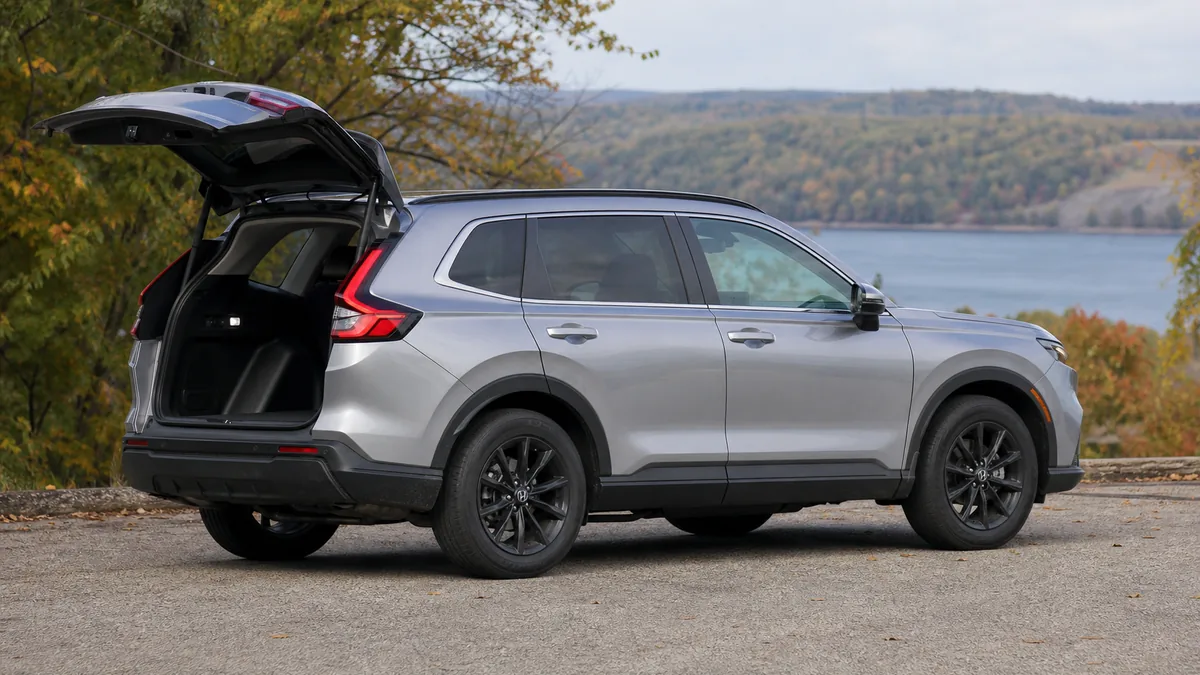
The CR-V's advantage is the way it uses space. The cargo opening is broad, the floor is low, and the rear doors make child-seat work less annoying.
It feels designed around errands, not trail styling.
Visibility and seat comfort also lean Honda's way. The CR-V's larger glass area and supportive front seats reduce fatigue on long family days, which is the kind of advantage that never shows on a spec sheet but shapes how much you enjoy the car after a year of school runs and road trips.
The CR-V's advantage is the cabin, not the spec sheet. Its rear doors open wider and its cargo floor is lower and squarer, which matters every time a parent loads a child seat or a stroller.
The RAV4 is more efficient, but the CR-V is easier to live with on the days a family actually uses the space.
The ride is also more settled. That matters when the car carries sleeping kids, older passengers, or a dog in the cargo area.
The RAV4 Hybrid is useful and efficient, but its engine note and firmer feel can make it seem busier under load.
| Need | Better pick | Why |
|---|---|---|
| Lowest fuel use | RAV4 Hybrid | Hybrid system is the main ownership advantage |
| Easy cargo loading | CR-V | Wider opening and calmer cargo shape |
| Snow traction | RAV4 Hybrid | AWD is standard |
| Quiet daily ride | CR-V | Softer, less busy feel |
| Resale strength | Tie | Both are among the safest bets in the segment |
What reliability risks should used buyers check?
The RAV4 Hybrid has the simpler used-buy story because Toyota hybrids have a long record and the RAV4 Hybrid's AWD setup is proven.
Still, a clean history matters. Check tire matching, hybrid system warnings, accident repairs, and service records.
Both are among the most dependable SUVs sold, but each has a check worth making. On used CR-Vs from the turbo years, confirm there is no fuel smell in the oil, a known issue on some early 1.5-liter cars.
On the RAV4 Hybrid, verify the hybrid battery holds charge and the car switches cleanly between electric and gas power.
The CR-V needs a more year-specific inspection. Earlier 1.5L turbo models had oil-dilution complaints in cold climates, so a used gas CR-V should get a careful oil check and service-history review.
A current-generation car with records is a different risk than a short-trip winter car from the earlier run.
For deeper checks, use the CR-V reliability page and the RAV4 Hybrid reliability page. These pages matter more than generic brand talk because the risk changes by year and powertrain.
Which trim gives the best value?
Do not climb the trim ladder until you know the job. The RAV4 Hybrid is strongest when you keep it efficient and practical.
Bigger wheels and luxury packages can raise the price without changing the reason to buy it.
Skip the very top trims on both. The features that separate a loaded RAV4 or CR-V from the mid-trim are mostly cosmetic, and they widen the price gap without changing how the car serves a family day to day.
The value sweet spot on both is the mid-trim, not the base or the loaded version. A mid-level RAV4 Hybrid or CR-V adds the safety and comfort features families actually use without the price jump of the top trims.
Buying the exact mid-trim and comparing the two real prices beats comparing advertised starting figures.
The CR-V is strongest in the middle of the range, where you get the cabin and cargo benefits without paying luxury-SUV money. If you want leather and premium audio, price a used Acura or Lexus before turning a mainstream crossover into an expensive one.

- Pick RAV4 Hybrid if fuel economy and AWD are non-negotiable
- Pick CR-V if you load bulky items often
- Quote insurance on the exact trim
- Price replacement tires before choosing larger wheels
- Test both with the same child seat or cargo load
Final verdict
The RAV4 Hybrid is the best-practice choice for the buyer who wants the lowest fuel bill and standard AWD in one package. It is the cleaner long-term math if you drive a lot, live with winter, or plan to keep the SUV for years.
Choose the RAV4 Hybrid if fuel cost and standard all-wheel drive lead your list, and the CR-V if cabin comfort and easy loading matter more. Both will run past 150,000 miles with routine care, so this is a choice between two right answers rather than a right and a wrong one.
The CR-V is the best-practice choice for the buyer who cares more about the cabin than the pump. Its cargo shape, ride comfort, and rear-seat ease make it feel less tiring in normal family life.
Pick the RAV4 Hybrid if ownership math decides the car.
Pick the CR-V if the people and cargo inside the car decide it.
If neither answer feels right, compare the wider best family SUVs list before forcing this two-car choice.
Sources and methodology
We weighted official specs, EPA fuel-economy framing, cargo use, AWD availability, known used-car checks, and ownership cost. This comparison is cross-linked to the SUV hub, AWD hub, Toyota brand hub, and Honda brand hub so readers can move from the head-to-head answer to the broader research path.
How should a family test these SUVs?
A family test drive should start with the back seat and cargo opening, not the driver seat. Install the child seat, load the stroller, fold the second row, and see which vehicle makes the weekly job easier.
The CR-V often feels calmer in that test because the cargo area is square and the cabin is quiet.
Bring your real gear to the test drive. Put the child seat behind the driver, load the stroller, and check whether the cargo cover still fits, because the difference between these two shows up in loading, not in a spec sheet.
Drive the same rough road in both to feel the CR-V's calmer ride against the RAV4's firmer setup.
The RAV4 Hybrid fights back when the drive cycle includes traffic, snow, and long ownership. Standard AWD and strong fuel economy reduce the number of decisions you have to make later.
That matters if the SUV will stay in the driveway for eight or ten years.
| Test | CR-V signal | RAV4 Hybrid signal |
|---|---|---|
| Rear doors | Easier child-seat access | Good, but less open |
| Cargo floor | Broad and square | Useful, slightly smaller |
| Fuel stop math | Depends on engine choice | Strong hybrid baseline |
| Winter confidence | AWD if optioned | AWD standard |
Which one is easier to keep long term?
The RAV4 Hybrid is the simpler long-term answer if fuel cost and resale carry the decision.
Toyota hybrids have a strong reputation, and the powertrain choice is already made for you.
That helps buyers who do not want to compare gas, hybrid, and AWD combinations.
Both have deep dealer networks and cheap, available parts, so neither will strand an owner. The RAV4 Hybrid's battery is the one long-term item to watch, while the gas CR-V's turbo engine wants regular oil changes to stay healthy.
Either can be a twenty-year car with basic maintenance.
The CR-V is easier to love from the driver's seat and family cabin.
It feels more polished, and many buyers prefer its ride quality. The long-term risk is choosing the wrong version for your use.
A gas CR-V can be fine, but a buyer chasing mpg should compare the hybrid CR-V before signing.
What should break the tie?
Break the tie with your most annoying weekly task. If that task is loading cargo, carrying adults, or keeping the ride calm, the CR-V has the edge.
If that task is fuel cost, winter traction, and long-term value, the RAV4 Hybrid has the edge.
When the numbers are this close, let the driveway decide. Park both where you live, load them the way you actually will, and buy the one that makes your weekly routine easier.
A small comfort or loading advantage you feel every day beats a spec-sheet edge you never notice.
The mistake is treating this as a brand loyalty question.
Both are strong compact SUVs. The better one is the one that removes more friction from your real week.