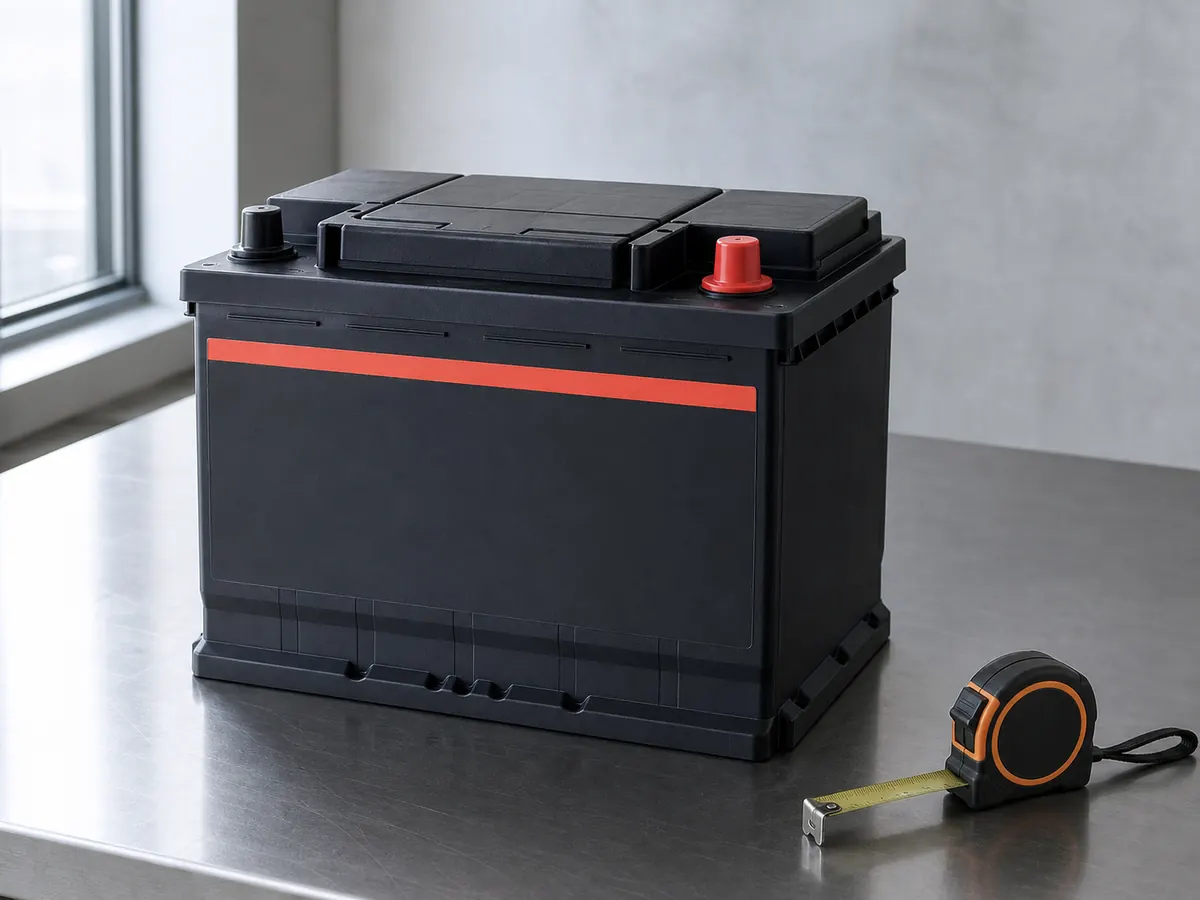
What battery size does a Toyota Corolla take?
The current answer begins with engine displacement. Interstate's 2023 application guide lists H4 for the 1.8-liter Corolla from 2020 through 2023 and H5 for the 2.0-liter Corolla from 2019 through 2023.
Current Interstate product pages continue to list later Corollas among H4 and H5 applications. Those broad product lists make an engine and VIN check important because the model name can appear under both groups.
The older 1.8-liter gas car follows a different pattern. Interstate lists Group 35 for 2009 through 2019, while the 2.4-liter engine offered from 2009 through 2012 uses 24F.
| Model years | Engine or version | Listed group | Product example | What to verify |
|---|---|---|---|---|
| 2020-2025 | 1.8L application | H4 | Interstate MTP-H4 | Confirm engine, year, and current catalog result |
| 2019-2025 | 2.0L application | H5 | Interstate MTP-47/H5 | Confirm the longer H5 case and terminal side |
| 2009-2019 | 1.8L gas | 35 | Interstate MTX-35 or MT-35 | Match Group 35 rating and hold-down |
| 2009-2012 | 2.4L gas | 24F | Interstate MTX-24F | Confirm 2.4L engine and 24F polarity |
| Current hybrid | Hybrid auxiliary system | Exact lookup | Buy by installed code | Do not use the gas table without confirmation |
The year ranges are useful filters rather than a substitute for the car. Record the certification label, engine information, group code, technology, terminal position, and dimensions before a seller selects a product.
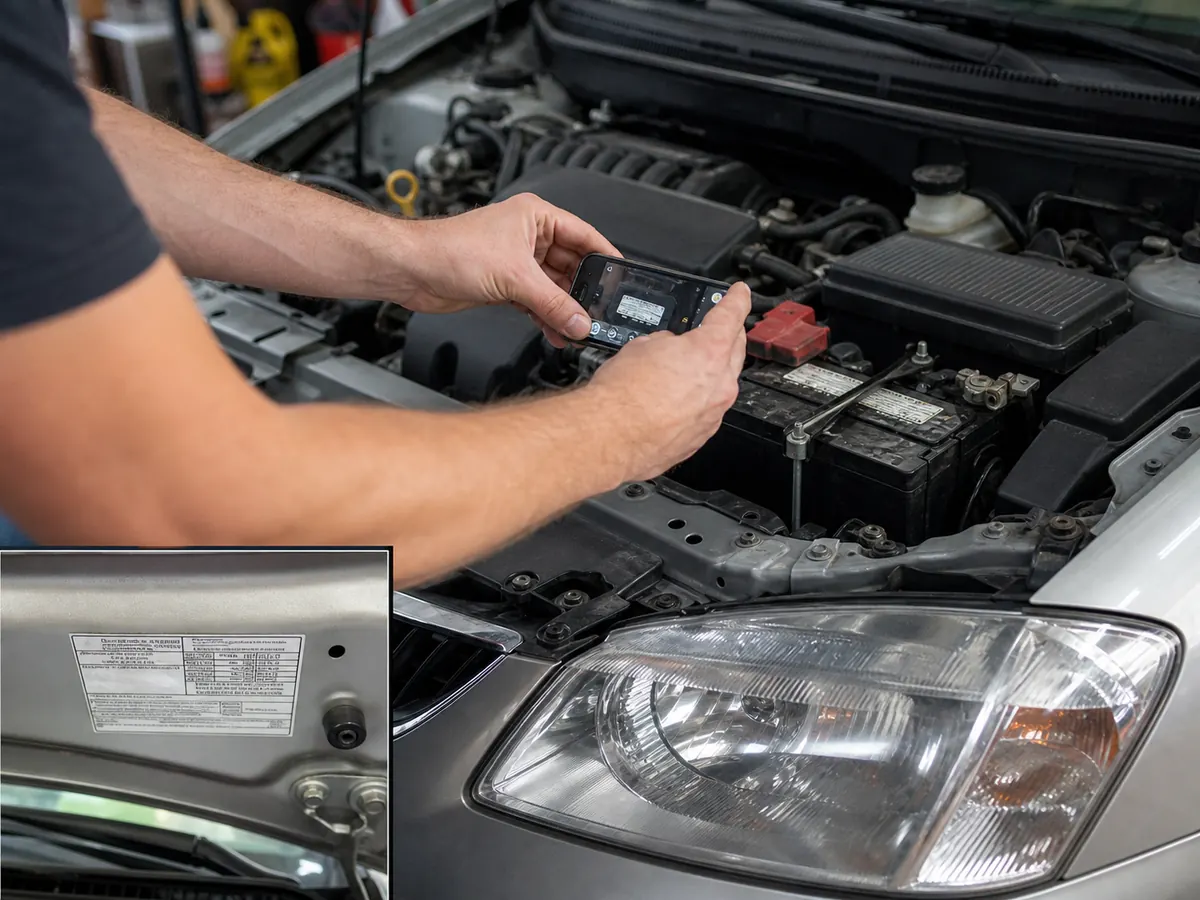
A used Corolla may carry an incorrect replacement that happens to start the engine. If the old case sits on a spacer, moves under the hold-down, stretches a cable, or disagrees with a VIN-based application result, stop and correct the fit instead of copying it.
The safest order is engine, year, battery group, terminal side, technology, and then product. Price and cold cranking amps enter only after those items agree.
H4 and H5 solve different modern Corolla applications
The 1.8-liter and 2.0-liter split is easy to overlook because both cars share the same Corolla badge. Their listed battery cases are physically different, which prevents H5 from being treated as a simple high-output upgrade for an H4 tray.
H4 versus H5 comes down to the exact Corolla application, not which case offers the larger rating.
Interstate's MTP-H4 measures about 8.125 inches long, 6.875 inches wide, and 7.5 inches high. It publishes 480 CCA, 52 Ah, and 74 minutes of reserve capacity.
The MTP-47/H5 is roughly 9.5 inches long with similar width and height. It publishes 650 CCA and 100 minutes of reserve capacity, but the extra length requires the tray, hold-down, and cable layout intended for H5.
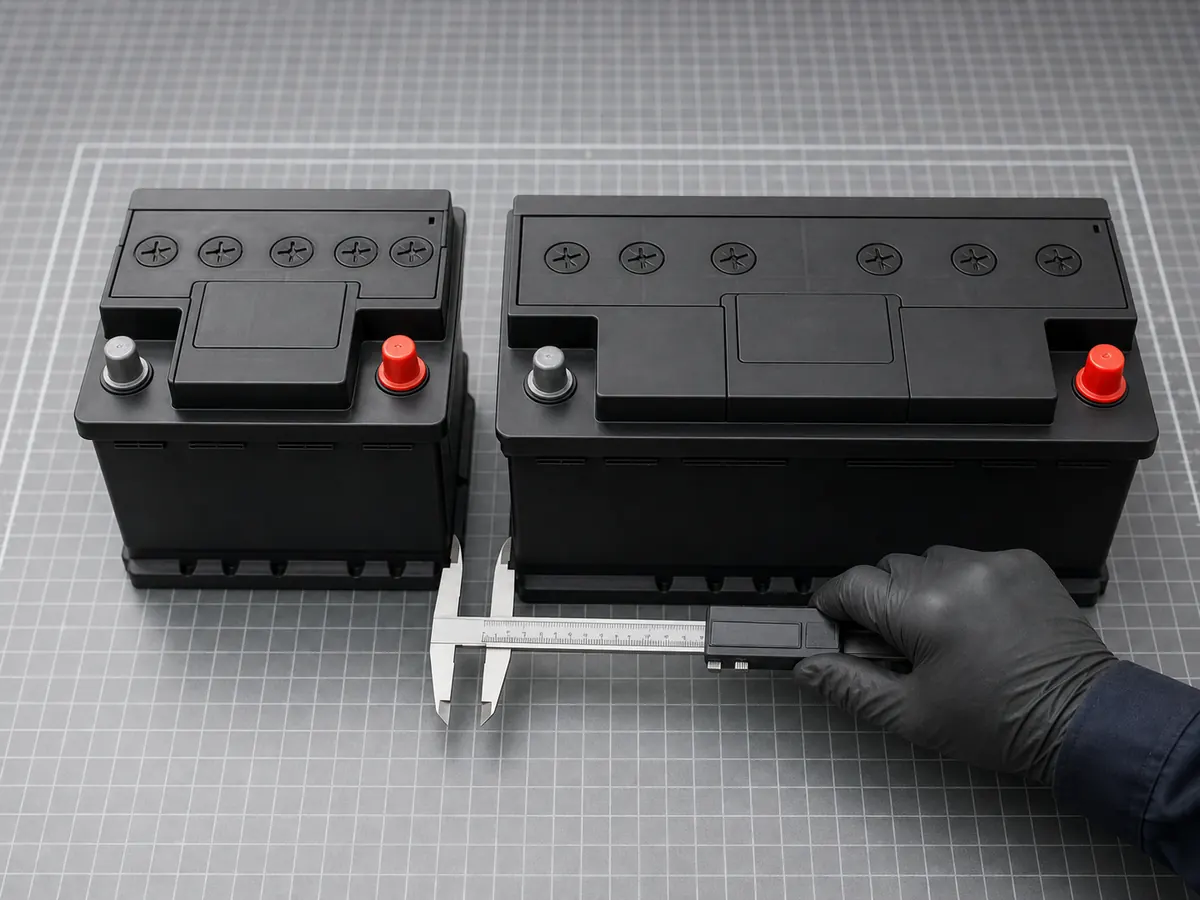
Those ratings reflect different products and applications. The 170 CCA gap does not prove that the H5 improves a 1.8-liter car because a case that cannot be secured correctly fails the first requirement.
Pros
- H4 keeps the compact footprint listed for many 1.8-liter applications
- H4 avoids paying for capacity the smaller application may not require
- H5 provides the footprint and reserve listed for 2.0-liter applications
Cons
- H4 and H5 cannot trade places only because width and height look similar
- A higher CCA number never excuses a loose hold-down
- Product-page fitment still needs engine and year confirmation
Measure the installed length when the label is unreadable. A difference of roughly 1.4 inches is large enough to affect the base ledge, bracket position, and nearby clearance even though both cases look compact in a retailer photograph.
Buy H4 for a confirmed H4 application and H5 for a confirmed H5 application. Treat the engine code as part of the battery specification rather than an optional detail.
Four worthwhile picks, each for a defined Corolla fit
The first two cards serve recent cars and the other two serve older branches. None should be ordered until the label and current application result place the Corolla in the card's group.
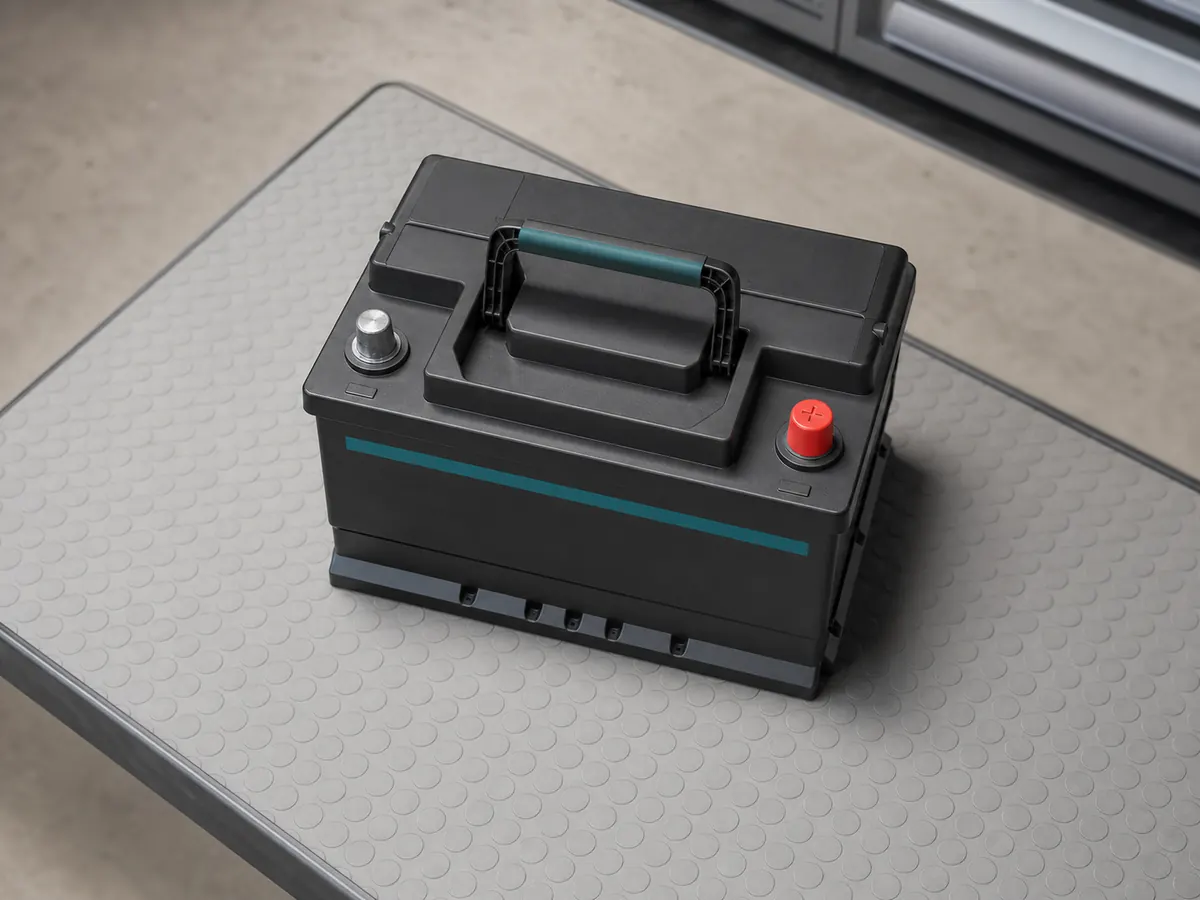
The Interstate MTP-H4 is the straightforward flooded choice for a verified H4 application. Its 480 CCA rating, 30-month free-replacement warranty, and compact footprint match the value-first character of the 1.8-liter car without pretending that every Corolla needs premium chemistry.
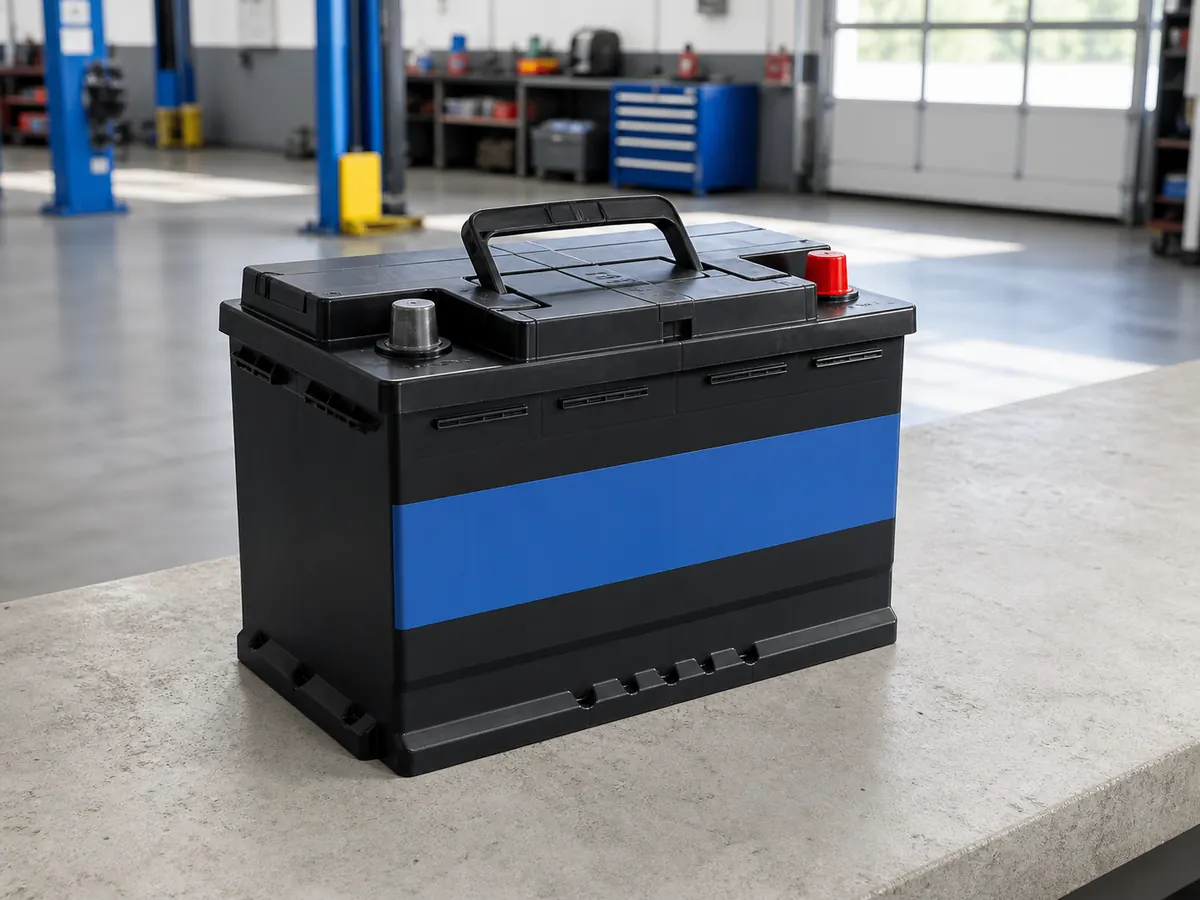
The Interstate MTP-47/H5 serves a verified H5 application such as the 2.0-liter branch. It provides 650 CCA and 100 minutes of reserve capacity with a conventional flooded design and a 30-month free-replacement warranty.
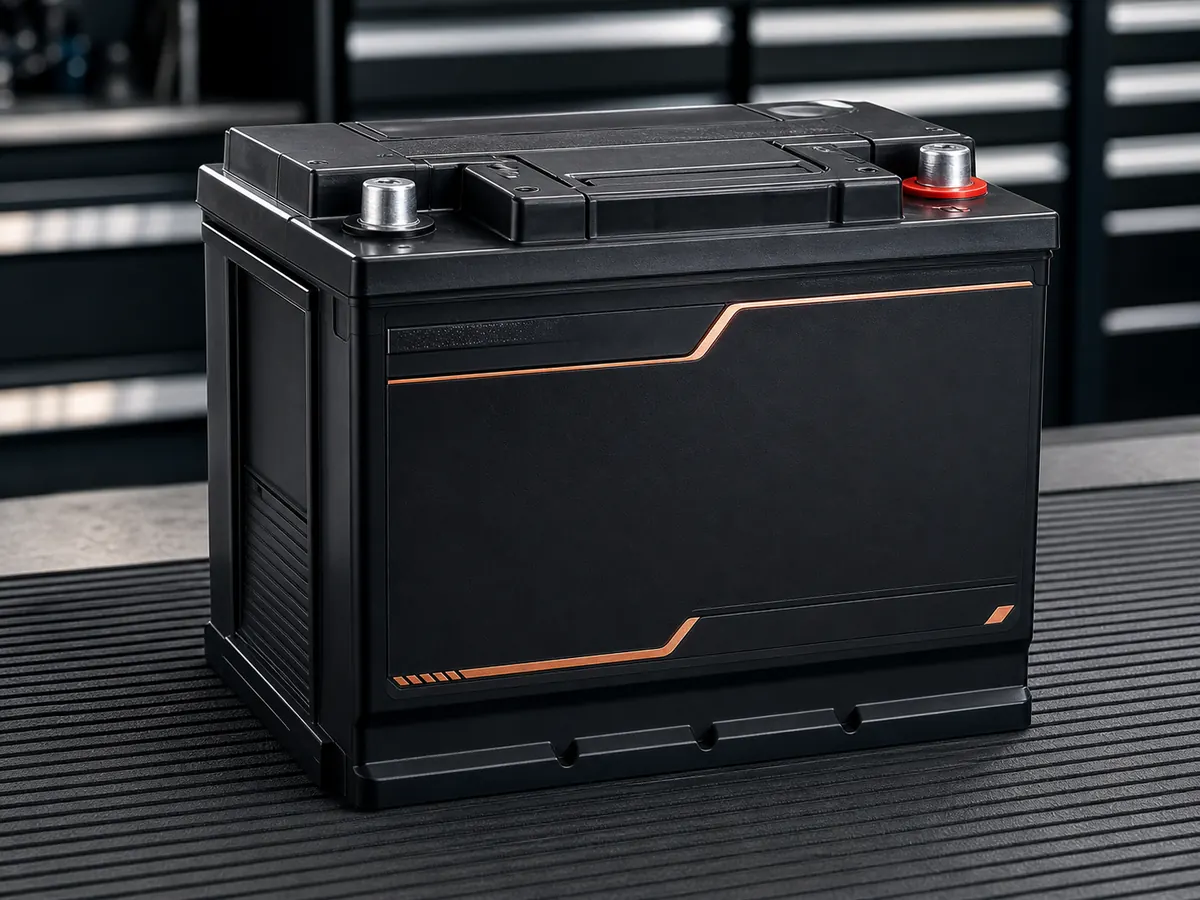
For a 2009 to 2019 1.8-liter car that confirms Group 35, the MTX-35 AGM offers 650 CCA, 55 Ah, and stronger cycling tolerance. It is the premium older-car choice, so its value depends on how long the owner plans to keep the vehicle.
The MTX-24F AGM is reserved for a verified 2.4-liter application from the 2009 to 2012 period. Its 710 CCA, 70 Ah, and 120-minute reserve rating do not make it suitable for the more common 1.8-liter Group 35 tray.
Corolla picks by fit
- Modern 1.8L H4
- Interstate MTP-H4
- Modern 2.0L H5
- Interstate MTP-47/H5
- Older 1.8L Group 35
- Interstate MTX-35 AGM
- Older 2.4L 24F
- Interstate MTX-24F AGM
The ranking therefore answers four smaller product decisions. It avoids declaring an expensive 24F or Group 35 winner for a current Corolla that physically requires H4 or H5.
Local stock and warranty access can break a tie between equally compatible products. A seller that records the exact vehicle on the invoice and can test an early failure is more useful than a distant listing with a slightly lower price.
When AGM is useful and when flooded is enough
A listed flooded battery is the practical default for a Corolla with ordinary commuting demand. The MTP-H4 and MTP-H5 products provide the required group-specific performance without charging the owner for AGM construction that may not change daily use.
AGM becomes useful when the exact application approves it and the car sees repeated short trips, long storage, sustained accessory use, or other cycling that a conventional starter battery handles less comfortably. Its sealed construction and stronger cycling tolerance can also appeal when the owner plans to keep the car through a full warranty period.
The AGM H4 product, for example, publishes 570 CCA and a 36-month free-replacement warranty, compared with 480 CCA and 30 months for the flooded H4 used in the ranked picks. That is a real upgrade inside H4, but it does not convert H4 into H5 or prove that the extra cost is worthwhile for every driver.
An owner who drives long enough to recharge the battery and parks in a moderate climate may gain little from the premium. An owner who makes several short starts a day or leaves the car unused for weeks has a clearer reason to compare AGM.
Do not downgrade an application that specifies EFB or AGM to ordinary flooded construction. The lower price disappears quickly if the battery cycles poorly, triggers repeat diagnosis, or fails before the intended service interval.
Warranty duration also needs context. A longer free-replacement period is valuable only when the buyer can keep the receipt, reach an authorized seller, and expects to own the Corolla during that period.
Corolla Hybrid owners must separate the 12-volt battery from the traction pack
A Corolla Hybrid uses a high-voltage traction battery to move the car and a separate 12-volt battery to power control systems. This article ranks serviceable 12-volt products and does not recommend work on the traction pack.
The 12-volt battery can prevent the car from entering READY mode when it is weak, even when the traction battery has energy. That symptom identifies the system to test, but it does not prove which case code or chemistry the exact hybrid requires.
The gas-engine table cannot be copied onto a hybrid solely because both vehicles use a 1.8-liter engine. Hybrid packaging, auxiliary-battery location, venting, terminal layout, and charging control may produce a separate application.
- State that the request concerns the 12-volt auxiliary battery
- Record the full VIN and model year
- Photograph the installed battery label and location
- Note any vent tube, sensor, cover, or insulation
- Confirm the product through Toyota or a current battery catalog
If a retailer result lists several possible batteries, ask what option or production detail separates them. A seller response that merely repeats the model name has not resolved the fitment.
Keep orange high-voltage cables and traction-battery components outside a routine 12-volt replacement. Use the exact owner's manual and qualified service when access requires work near hybrid equipment or the installer cannot identify the system safely.
A Corolla Hybrid needs its own exact 12-volt lookup. The H4, H5, Group 35, and 24F gas branches are evidence for those specific applications, not substitutes for hybrid confirmation.
Inspect and test before you remove the old battery
Document the installation while the old battery is still connected. A full tray photograph should show polarity, cable routing, hold-down contact, nearby metal, and enough case detail to compare the replacement before power is removed.
The battery should sit flat and remain immobile under the factory retainer. A stretched cable, improvised spacer, missing bracket, or post close to grounded metal indicates a fit problem that must be corrected.
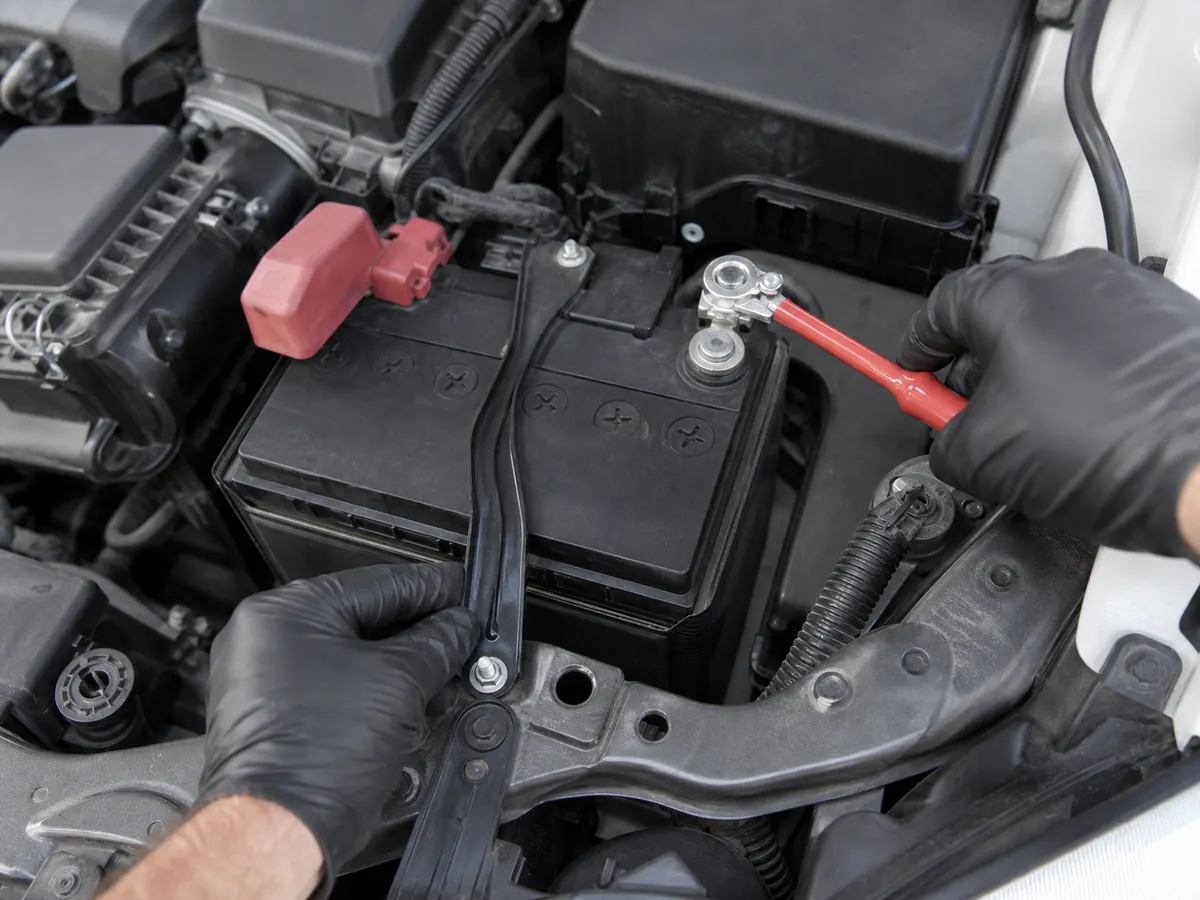
Corrosion and loose clamps can imitate a failing battery. Inspect and clean the connections with proper eye and skin protection before deciding that a slow crank or electrical reset requires a new case.
Use a conductance or load test that compares measured performance with the label. A discharged battery may need charging and retesting, while a battery that repeatedly loses charge can point toward charging-system trouble or an electrical load that remains active after shutdown.
Disconnect negative first and positive second only after the vehicle is fully off and the work area is safe. Install the new battery in the same verified orientation, secure the hold-down, then reconnect positive first and negative second.
Keep tools away from simultaneous contact with a positive terminal and body metal. Lead-acid batteries are heavy and can release flammable gas, so use a stable lifting method and keep sparks, flames, and smoking materials away.
After installation, follow the owner's manual for initialization and check normal starting or READY behavior, warning lights, windows, locks, clock, and audio. Persistent faults or another discharge need diagnosis rather than a second replacement.
The lowest-cost correct Corolla battery
The cheapest successful purchase begins with the correct group. For a verified modern 1.8-liter H4 application, the MTP-H4 is the straightforward value pick, while an AGM H4 earns consideration only when use and ownership horizon support the premium.
For a verified 2.0-liter H5 application, choose among H5 products. The flooded MTP-H5 supplies 650 CCA and a 30-month free-replacement warranty without turning a basic replacement into an unnecessary chemistry upgrade.
For an older Group 35 car, compare the MTX-35 AGM with a compatible flooded alternative based on how long the car will remain in service. Reserve the 24F card for a verified 2.4-liter application because its higher ratings do not make the case fit another tray.
Return the old lead-acid battery to recover the core charge and keep it out of household trash. Save the receipt, fitment result, and photographs so an early warranty claim and the next replacement can reproduce the correct configuration.
Do not pay for capacity the application cannot use, and do not save money by downgrading a required technology or forcing a longer case into a compact tray. That rule preserves the Corolla's value without reducing fitment to a generic cheap-battery recommendation.