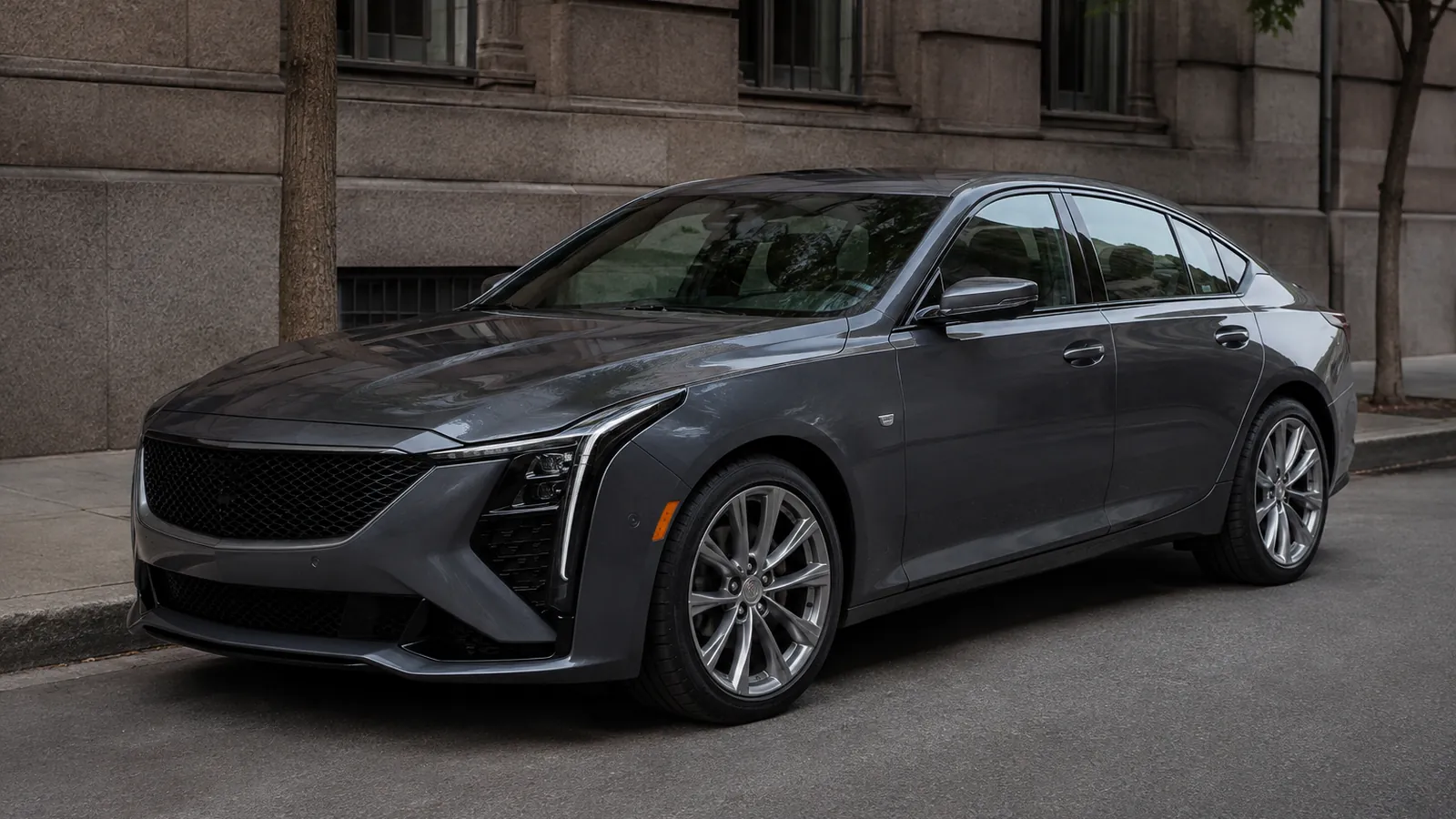
Rear-drive hardware is the CT4's argument, and 2026 is its last year
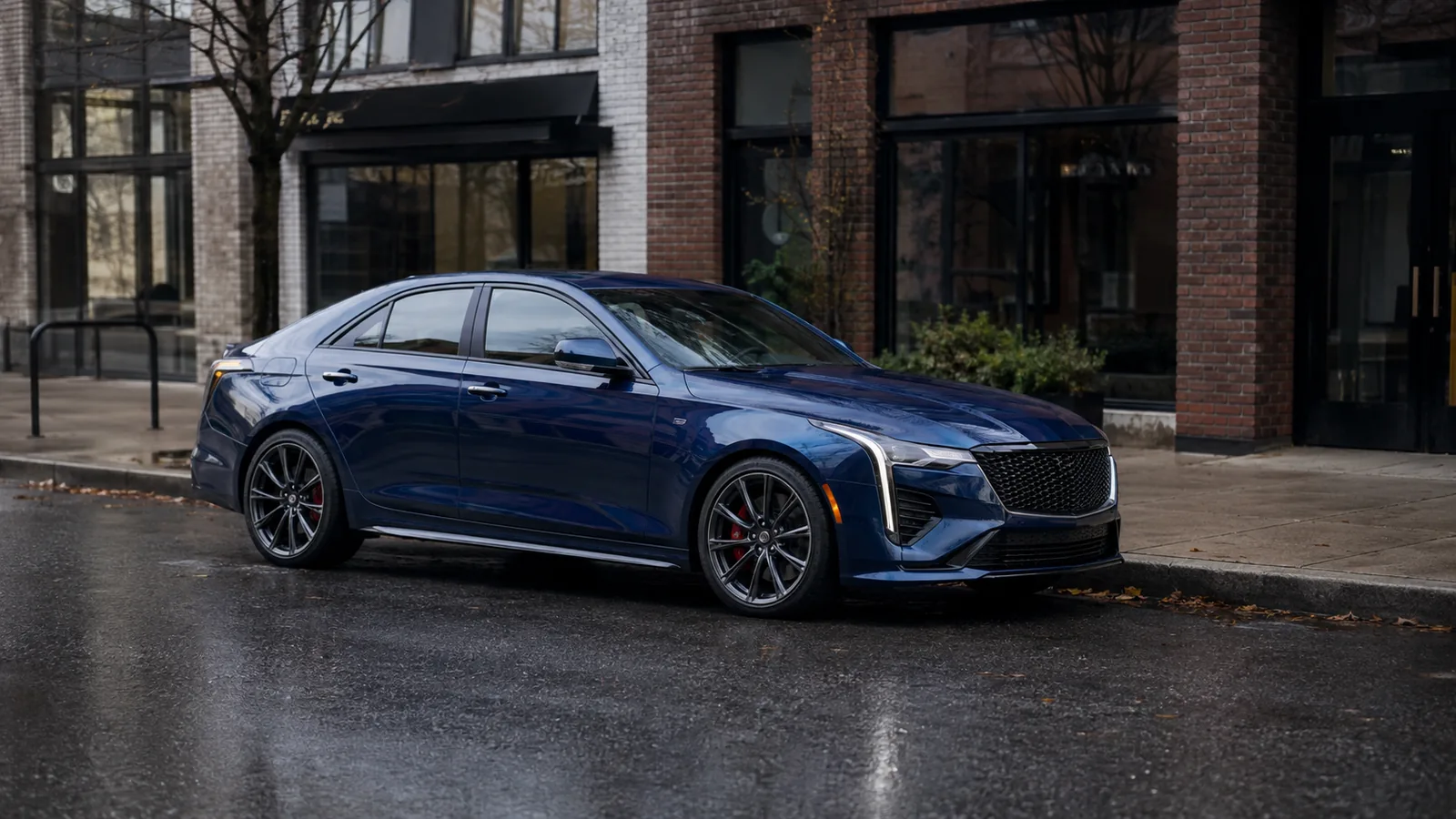
The 2026 Cadillac CT4 is a compact luxury sedan that drives its rear wheels as standard, which is the one thing separating it from nearly everything else at its price. All-wheel drive is optional, and the layout underneath does not change when you add it.
2026 is the last CT4. Cadillac ended production in June 2026 and has not planned a replacement.
At 187.2 inches on a 109.3-inch wheelbase, this is a small car by current standards, and it was priced to be an accessible one. That combination is why the rest of this review judges it on how it drives rather than on how much it holds.
The CT5 above it also stops after 2026, but that car returns as a new generation with a gas engine. The CT4 does not come back, so everything below is about a car you buy once and keep.
The generation ran from 2020 to 2026 without a redesign in the middle. That matters later, because a closed generation with no mid-life change means the recall and complaint record describes one car rather than three versions of it.
Three starting prices need one delivered-price basis
Cadillac lists three standard CT4 trims. Luxury starts at $36,000, Premium Luxury at $40,400 and Sport at $44,400, all before the destination charge.
That charge is $1,795 and it is not optional. A starting price that leaves it out is not a number anyone pays, so the strip below adds it once to every trim.
Delivered price, rear-wheel drive
- Luxury
- $37,795
- Premium Luxury
- $42,195
- Sport
- $46,195
- Destination, already included
- $1,795
- All-wheel drive, any trim
- add $2,000
All-wheel drive costs $2,000 on any trim, which puts a Luxury with all-wheel drive at $39,795 delivered. Hold that figure, because it lands $2,400 below where a rear-drive Premium Luxury begins.
That overlap is the most useful thing on this page for anyone holding two listings. A plain Luxury with all-wheel drive and a better-equipped rear-drive Premium Luxury sit within a few thousand dollars of each other, and they suit different weeks.
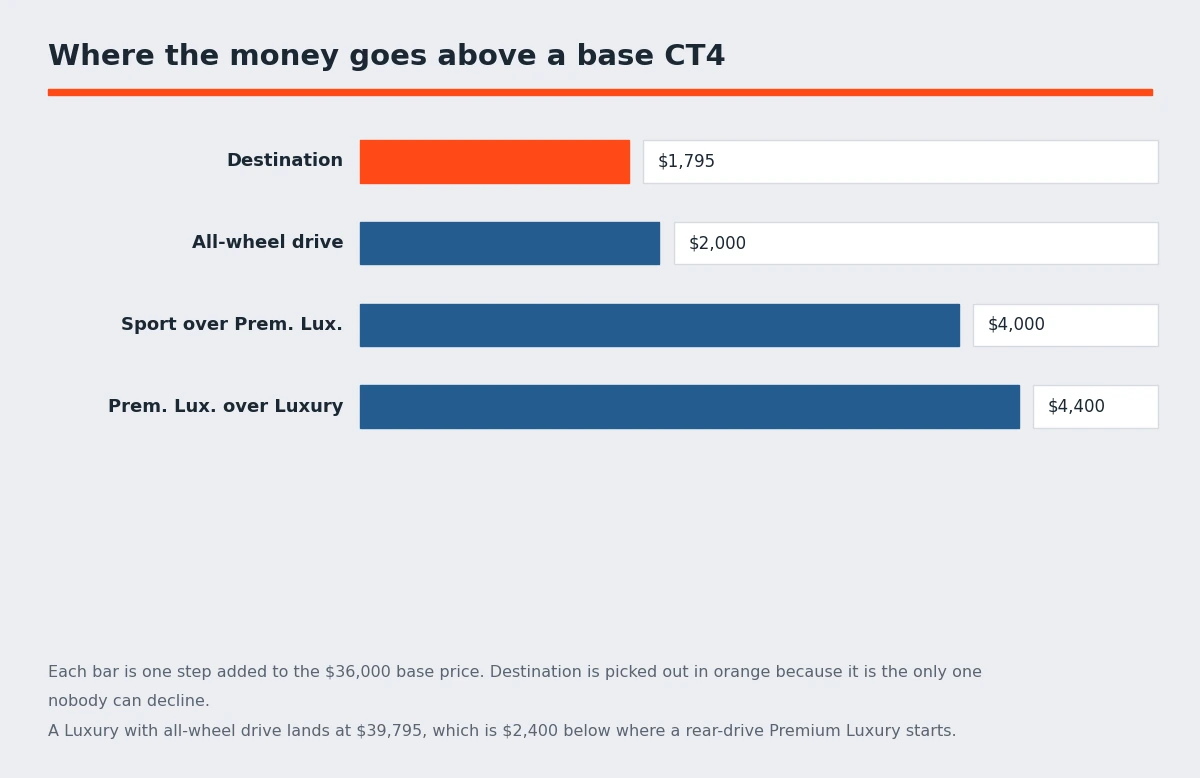
The walk from Luxury to Sport is $8,400 before destination. What that money buys is equipment and appearance rather than a different car underneath, so the price advantage that makes the CT4 interesting thins out as you climb.
One exception is worth flagging before the trim decision closes. The hands-free highway system is available on Premium Luxury and not on the base Luxury, which the safety section further down comes back to.
The engine choice changes more than horsepower
Both engines are turbocharged four-cylinders and both drive the rear wheels unless you pay for all-wheel drive. The gap between them is wider than the horsepower numbers suggest.
The 2.0-liter makes 237 hp and 258 lb-ft through an eight-speed automatic. The 2.7-liter makes 310 hp and 350 lb-ft through a ten-speed.
| Configuration | Output | Transmission | Trims | EPA city / hwy / combined |
|---|---|---|---|---|
| 2.0L, rear drive | 237 hp / 258 lb-ft | 8-speed automatic | all three | 22 / 32 / 26 |
| 2.0L, all-wheel drive | 237 hp / 258 lb-ft | 8-speed automatic | all three | 21 / 31 / 25 |
| 2.7L, rear drive | 310 hp / 350 lb-ft | 10-speed automatic | Premium Luxury, Sport | 21 / 31 / 25 |
| 2.7L, all-wheel drive | 310 hp / 350 lb-ft | 10-speed automatic | Premium Luxury, Sport | 21 / 29 / 24 |
The base engine is quick enough that most buyers will never feel short of it. Independent road testing puts the 2.0-liter car at 6.2 seconds to 60 mph, which is quicker than most cars this size needed to be a decade ago.
What testers note about the 2.0 is refinement rather than pace. It is responsive but coarse when worked hard, and that is the honest reason to try the 2.7, rather than any stopwatch argument.
Every version requires premium fuel, so the running-cost difference between the two engines is smaller than the mpg column implies. One combined mpg separates them in rear drive.
Price a year of premium fuel at 26 mpg against 25
The base Luxury cannot be had with the 2.7 at all. Wanting the bigger engine means also buying at least the Premium Luxury equipment, and that is the real price of the upgrade.
The two gearboxes also behave differently in traffic. An eight-speed has fewer decisions to make than a ten-speed, and the ten-speed is the unit named in the recall record further down.
A finished model changes what you are actually choosing
Production ended in June 2026. That removes the part of car buying where you pick a trim, an engine and a color and then wait for it.
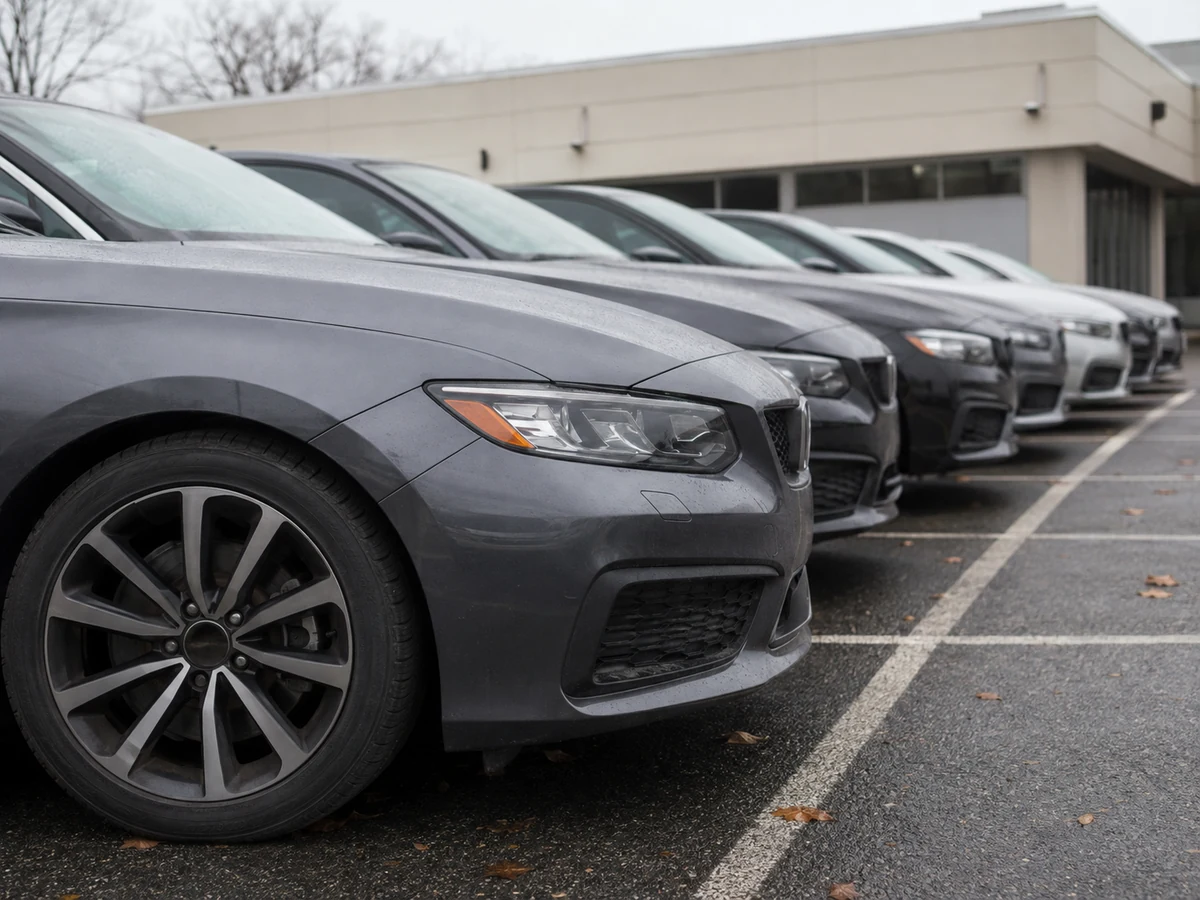
What is left is stock. The car in front of you is the specification you get, so the two sections above become a filter for listings rather than an order form.
Checks that only matter on a finished model
- Confirm the engine and drivetrain on the window sticker, because listing titles get this wrong often
- Ask for the in-service date, since warranty time starts there and a car can sit on a lot for months
- Ask whether the car served as a demonstrator, which starts that clock earlier still
- Run the vehicle identification number against open recall campaigns before you agree on a price
- Ask what the dealer will do on price, because there is no next model year to protect
Two things do not change. Service and parts run through the same network that already supported the CT4, and the factory warranty is untouched by the model ending.
Coverage is four years or 50,000 miles basic and six years or 70,000 miles on the powertrain, with roadside assistance on the same six-year term. Those clocks start at the in-service date, so a car built in spring and sold in fall has already spent some of them.
Work that through on a real example. A car placed in service in March and sold to you in November has spent eight months of a 48-month warranty before you have driven it, which is a sixth of the coverage and worth naming out loud during the price conversation.
The negotiating position moves toward the buyer. A dealer holding the last of a discontinued line has no following model year to protect and a carrying cost that grows every month.
The V and the Blackwing are a different purchase
Browse listings and you will meet CT4-V and CT4-V Blackwing cars alongside the standard ones. They end with the rest of the range in 2026, and they are not what this review is about.
The federal economy tables list eight separate 2026 CT4 records. Four are the standard car covered above, and four belong to the V and the Blackwing.
| Version | Engine | Transmission | EPA city / hwy / combined |
|---|---|---|---|
| CT4-V | 2.7L turbo four | 10-speed automatic | 20 / 29 / 23 |
| CT4-V, all-wheel drive | 2.7L turbo four | 10-speed automatic | 20 / 28 / 23 |
| CT4-V Blackwing | 3.6L V6 | 10-speed automatic | 16 / 24 / 19 |
| CT4-V Blackwing | 3.6L V6 | 6-speed manual | 15 / 23 / 18 |
The last row is the one that drew attention when the discontinuation was announced. A six-speed manual behind a six-cylinder engine in a rear-drive sedan is close to extinct, and this was among the last places to buy one new.
Telling them apart on a listing is simple once you know where to look. Six cylinders and a combined figure in the teens means a Blackwing, while a combined 23 from a four-cylinder means a V.
None of the value argument in this review carries across to those cars. They cost considerably more, they are bought for reasons the standard car cannot address, and their running costs sit in a different bracket.
If you came here to decide between a CT4 and something else around $40,000, the V and the Blackwing are a distraction. If you came here because a manual rear-drive sedan is about to stop existing, that is a different budget and a different decision.
Use the chassis enough to justify the cabin sacrifice
Rear drive is the reason to consider this car, which means the test drive has to be a real one. A loop around the dealership lot tells you nothing that matters here.
What independent testing consistently finds is a car that stays flat. There is hardly any body roll when it is pushed through a turn, and the steering is accurate and nicely weighted with real feel coming back through it.
The ride is the other side of that. It is taut in a way that suits the rest of the car, single harsh impacts are absorbed decently, and genuinely broken surfaces make it choppy.
That last point is why the route below starts on bad asphalt. A smooth demonstration loop shows you the good half of this car and hides the half you live with.
A dealer route that actually tests the car
- Find a patched roadRough asphalt is where a firm sport sedan either stays composed or starts to fidget. Smooth pavement hides the difference completely.
- Take one corner twiceOnce gently, once with more commitment. The car should feel like the same shape both times.
- Merge for realUse an actual on-ramp at actual speed and see how quickly the transmission answers.
- Hold a steady 70Listen for tire roar and wind noise, because those are what you live with on a long drive.
- Park itJudge the mirrors and the view out before you get attached to how it drives.
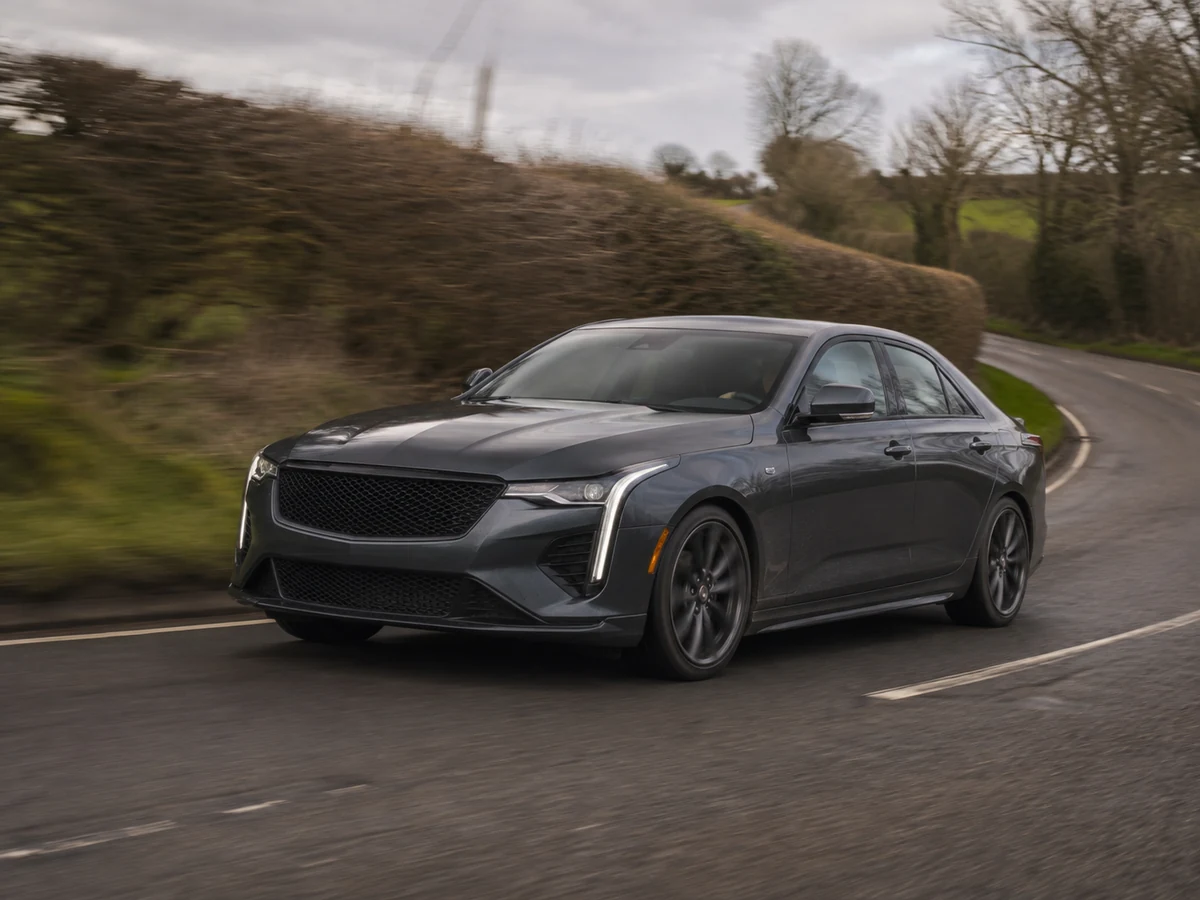
If your normal week contains none of that road, the chassis advantage stays theoretical. A quiet commute on smooth highway does not need rear-wheel drive, and the CT4 gives up real space to provide it.
Drive the exact car you intend to buy rather than a sibling on different wheels. Tire size and sidewall height change the ride more than any trim badge does, and a lot may hold several combinations.
The back seat and trunk set a hard use-case limit
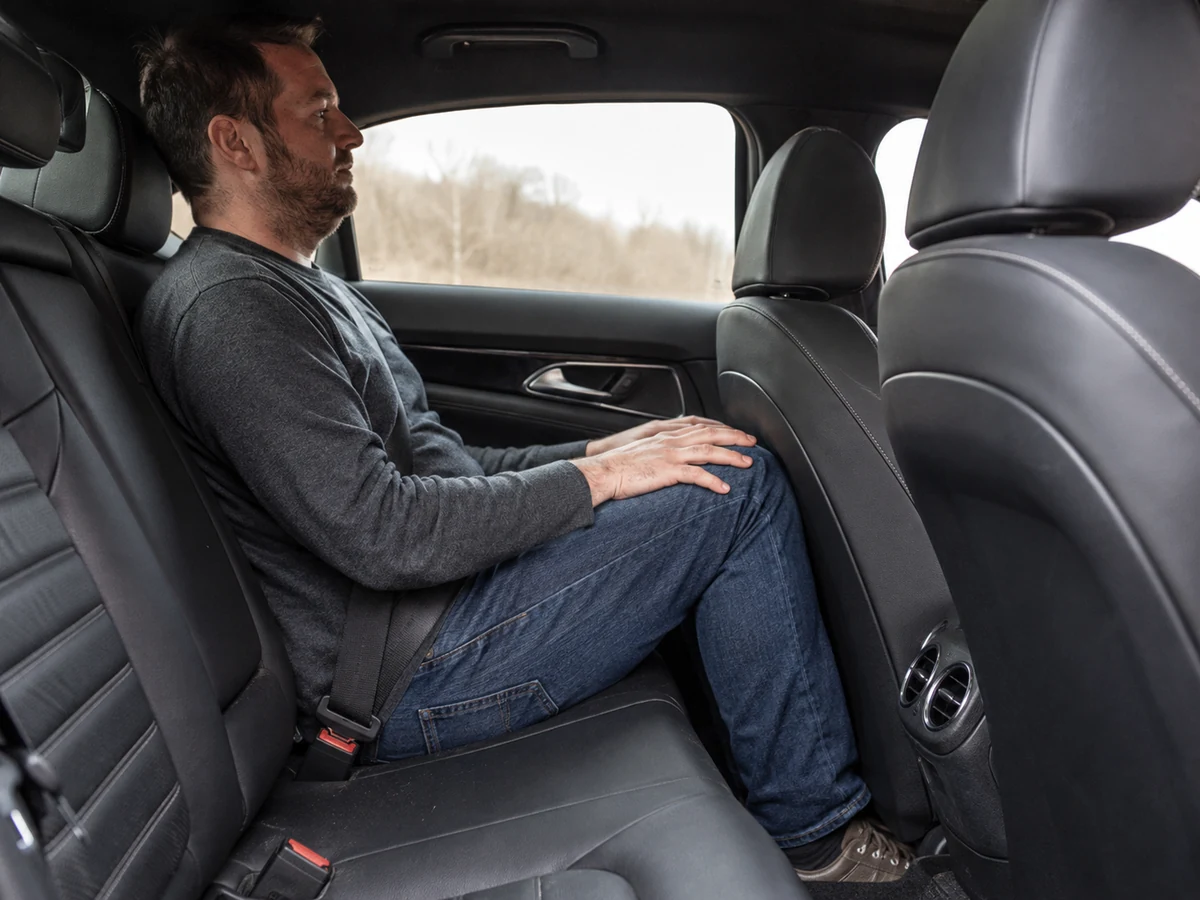
This is where the car asks you to pay for its layout. Rear legroom measures 33.4 inches and the trunk holds 10.7 cubic feet.
Inside the same car the front seats get 42.4 inches. That nine-inch gap between front and rear is the entire argument of this section.
Two separate tests, not one
The back seat
Set the front seat where its regular driver keeps it, then sit behind it yourself. Knees against the seatback at 33.4 inches is normal for this car, not a fault of the individual example.
The trunk
10.7 cubic feet is a narrow opening as much as a small volume. Bring the suitcase or stroller you carry most weeks and get it through the opening, not just into the space.
A split-folding rear seat with a pass-through is available and it solves one case, which is long narrow cargo such as skis. It does nothing for the seats-up load most people actually carry.
Rear headroom is 36.5 inches, which matters for anyone tall in back on top of the legroom. Take the passengers who ride with you regularly to the dealership, because this is not a number you can argue with afterward.
There is one situation where the measurement misleads in the car's favor. A rear-facing child seat pushes the front seat forward, and a 42.4-inch front row has room to give, so a family with an infant sometimes finds the CT4 works better than the number suggests.
That reprieve is temporary. A forward-facing seat and a growing child put the same 33.4 inches back in play, and the car does not change.
Neither crash-test body has ever rated this car
There is no crash-test evidence for the CT4. That is not the same as a poor result and should not be read as one.
The federal testing program has no 2026 CT4 record at all. Its 2025 CT4 entry exists and reads Not Rated in every crash field, which means the agency listed the car and never tested it.
The insurance industry's testing body has no CT4 rating page for any model year. Between the two of them, seven years of this car have passed without a published crash result.
Driver assistance is a separate question, and on this the car is well equipped. Automatic emergency braking, forward collision alert, front pedestrian braking and lane keep assist are standard, as are blind spot warning and rear cross traffic warning.
Cadillac also fits a seat that vibrates on the side a hazard is on instead of sounding a chime. It is a small thing that becomes obvious the first time it happens in traffic.
The feature that follows the trim walk is the hands-free highway system, available on Premium Luxury and not on the base Luxury. If long highway stretches are most of your mileage, that single option justifies the step up more convincingly than the leather does.
Adaptive cruise control is a separate item again, so do not assume a car has it because it has the rest. Check the individual window sticker rather than the brochure, because equipment moved around during this generation.
A closed generation, a short recall list, and what that can and cannot prove
The generation ran from 2020 to 2026 and is now closed, so its record is as complete as it will ever be. That is more than most reviews can say, and it still does not produce a failure rate.
Four recall campaigns reach the 2020 car and four reach the 2021. Two reach 2022, one reaches 2023, and nothing has been issued against the 2024, 2025 or 2026 cars.
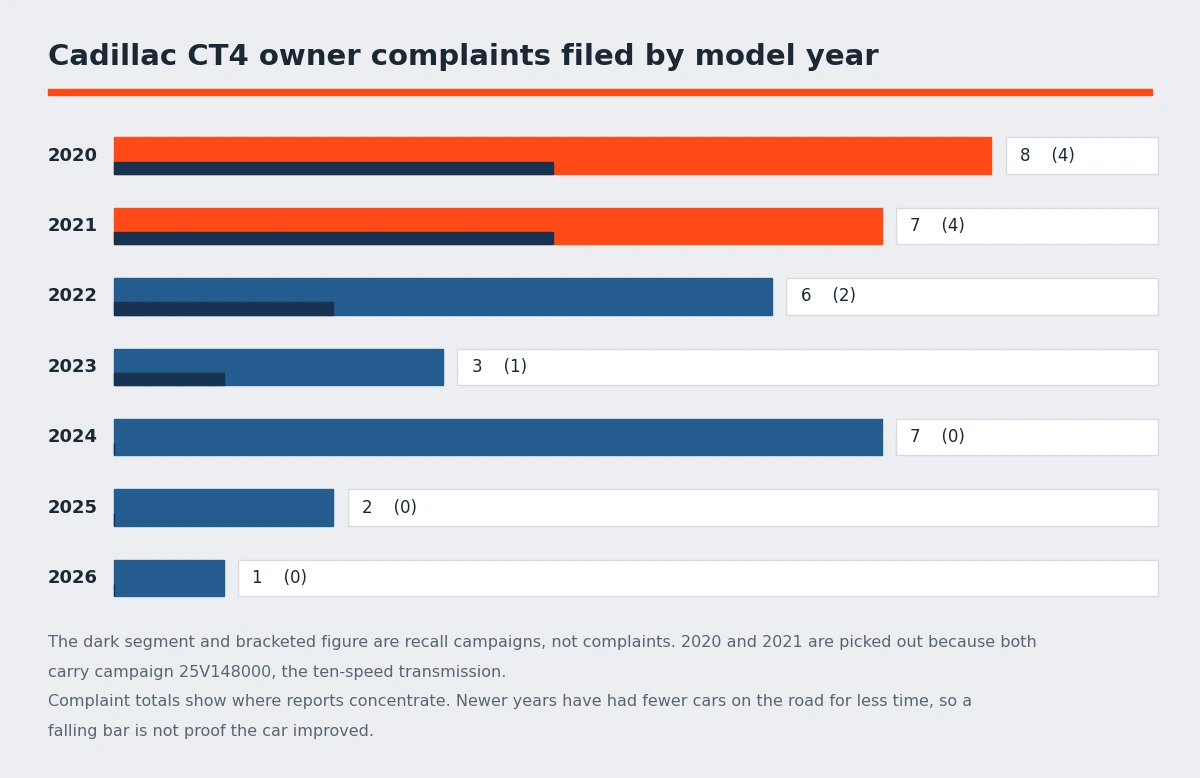
Two campaigns are worth knowing by number. Campaign 25V148000, opened in June 2025, covers 2020 and 2021 cars with the ten-speed transmission, where internal damage can lock the wheels, and the remedy is control-module software.
The other is 21V611000 from May 2021, covering 2020 to 2022 cars whose roof-rail curtain airbags may have been installed incorrectly. Both remedies are free, and both are checks you run against one vehicle identification number rather than against the model.
Owner complaints across all seven model years total 34 filings. Engine leads the categories at ten, then brakes at seven, then powertrain, steering and electrical systems at six each.
Read those categories as a list of things to have looked at rather than as a warning. Ten engine filings spread across seven model years is not a pattern a buyer can act on, but it does tell an inspector where to spend the first ten minutes.
The warranty is the concrete backstop. Four years or 50,000 miles basic and six years or 70,000 miles on the powertrain, counted from the in-service date rather than the build date.
One consequence of a closed model line deserves saying plainly. Campaigns can still be opened against a car after production ends, so a clean search today is a snapshot rather than a guarantee, and it is worth repeating before the sale closes.
Choose the CT4 for the road, not the rear row
The CT4 is a driving car that asks you to accept a small back seat and a small trunk. Whether that trade is worth making depends almost entirely on how often those two things come up in your week.
If the back-seat test is what rules the car out, the answer sits in the same showroom one size up. The Cadillac XT5 trades the rear-drive chassis for room that a family can actually use, and the Lyriq does the same on an electric powertrain.
If you are buying, the Luxury with the 2.0 at $37,795 delivered makes the argument best. It has the layout that matters and none of the equipment that dilutes the price advantage.
The one reason to step up is the hands-free highway system on Premium Luxury, and only when long highway stretches are most of your driving. Buying that trim for the leather instead puts you within reach of cars that have a usable back seat.
Buy the cheapest CT4 that clears your back-seat and trunk test, drive it on a bad road before you sign, and treat the end of production as a discount rather than a warning.