Why the Malibu is now a used-car decision
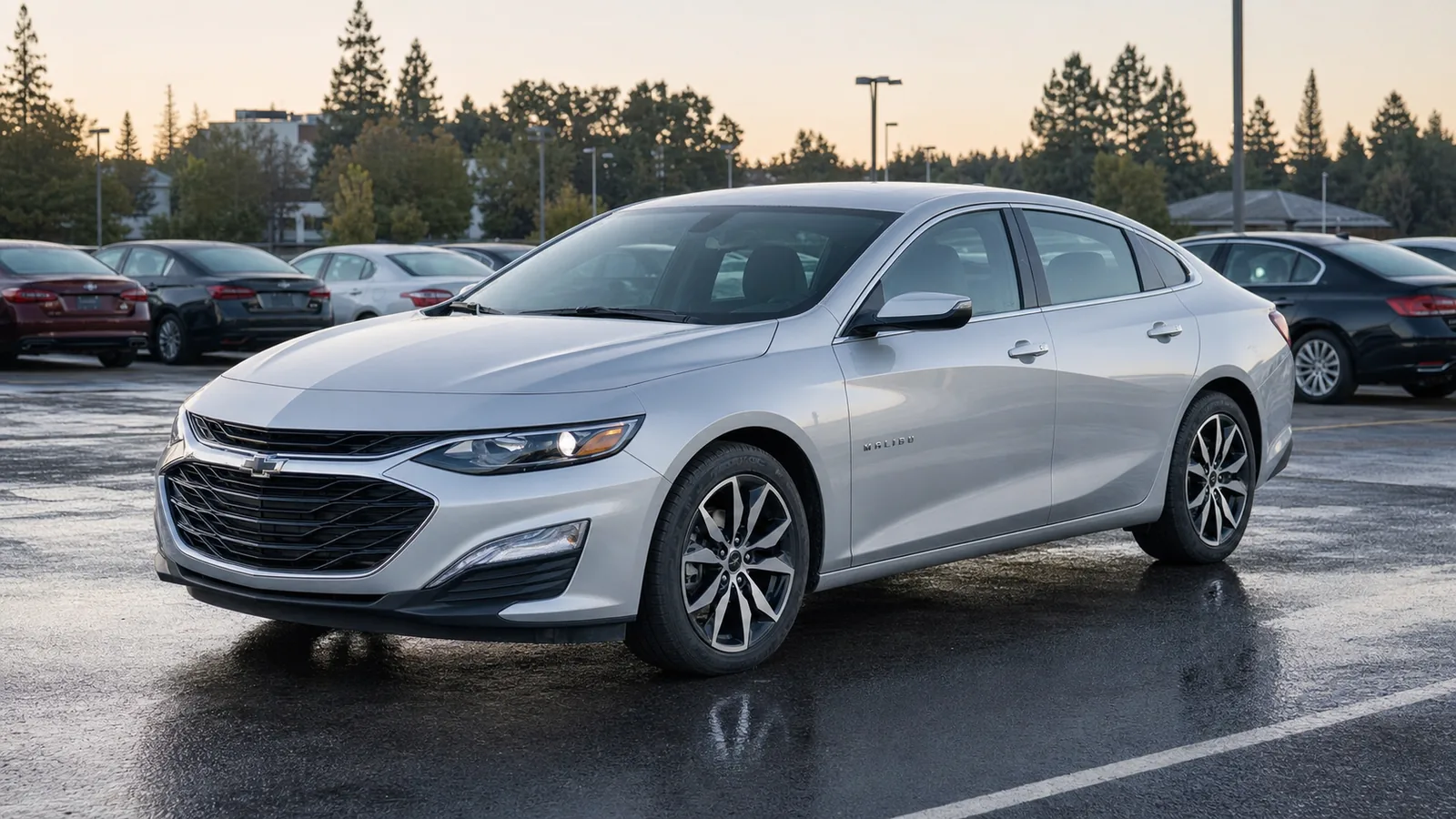
The Chevrolet Malibu ended U.S. production after the 2025 model year.
That changes the recommendation more than any trim detail. You are no longer choosing between a current Malibu and its current rivals at the same point in their life cycles.
You are deciding whether remaining inventory or a used Malibu is cheap enough to justify an older design.
The car still solves a useful problem. It gives you midsize rear-seat room, a 15.7 cubic foot trunk, regular-gas fuel costs, and a lower seating position than most crossovers.
Drivers who do not need SUV height can still get comfortable family transport without paying for the weight and tires of a taller vehicle.
Discontinued does not mean unserviceable. Chevrolet dealers and independent shops will continue to work on the car, and the 1.5L turbo engine was used for years.
The real effects are different. New-car supply disappears, resale demand may soften, and shoppers must judge warranty time from the original sale date.
A remaining 2025 car can look attractive when a dealer applies a large discount.
Ask for the full out-the-door number before reacting. A low advertised price can be erased by protection packages, finance products, or a rate that is worse than the offer on a newer rival.
Our new versus used calculation helps separate a real discount from a payment trick.
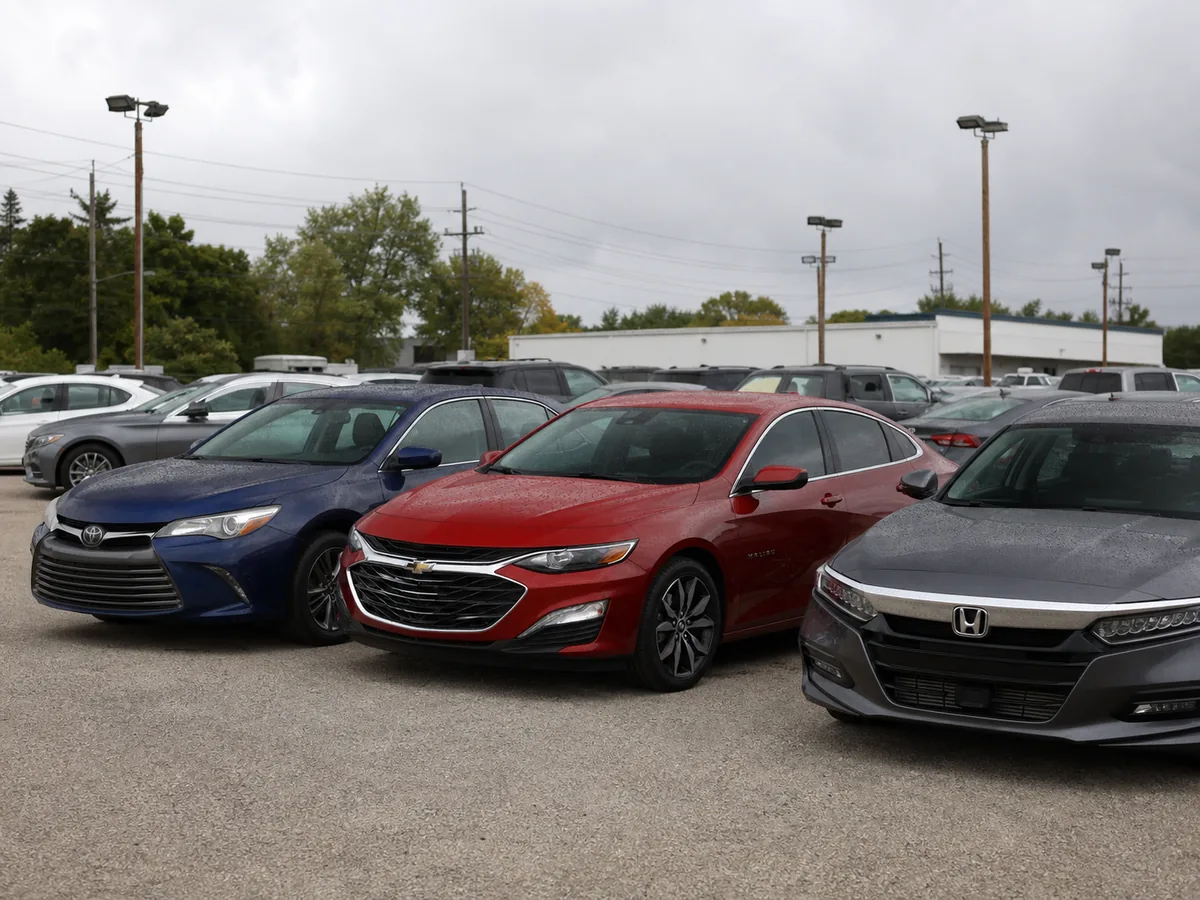
Start with the midsize sedan category and compare actual transaction prices. The Toyota Camry brings standard hybrid power and stronger resale, while the Kia K5 offers a newer design and a longer original warranty.
The Malibu works when the discount is large enough that you never need to explain why you skipped the newer cars.
What the final 1.5L turbo Malibu gives you
Every 2025 Malibu uses the same basic drivetrain: a 1.5L turbo four-cylinder, a continuously variable transmission, and front-wheel drive.
Output is 163 hp and 184 lb-ft of torque. EPA estimates are 28 mpg city and 36 mpg highway.
Those numbers fit a calm commuter. The turbo supplies useful low-speed torque, and the CVT keeps engine speed low in steady driving.
It does not deliver the quick response of a turbo K5 GT or the electric launch of a hybrid Camry.
Passing with passengers requires planning, especially on a grade.
Trim choice changes appearance and comfort more than performance.
LS is the simple value trim. RS adds 18-inch wheels, dark trim, and a rear spoiler.
1LT adds convenience equipment, while 2LT adds more cabin features and larger wheels without changing the engine.
| Trim | Reason to consider it | Main caution |
|---|---|---|
| LS | Lowest purchase and tire cost | Basic cabin and equipment |
| RS | Sharper appearance | 18-inch tires cost more without adding power |
| 1LT | Better comfort balance | Must remain clearly cheaper than newer rivals |
| 2LT | Most equipment | Used price can overlap stronger cars |
Larger wheels are a cost decision, not a performance transformation. They raise replacement-tire prices and can make potholes feel sharper.
A clean LS or 1LT on smaller wheels often fits the Malibu's value mission better than an RS or 2LT chosen for looks.
The car has no all-wheel-drive option. If regular snow or a steep driveway makes traction the main concern, compare purpose-built AWD cars before buying.
Winter tires can make a front-drive Malibu far more capable, but they need storage and a second set of wheels or seasonal mounting.
Fuel economy is respectable for a gas midsize sedan, though it cannot match a modern hybrid car in stop-and-go traffic.
High-mile city drivers should calculate annual fuel cost against the Camry. Low-mile highway drivers may find that the Malibu's lower purchase price matters more.
Cabin space is the Malibu's strongest everyday argument
The Malibu remains useful because it is a real midsize sedan, not a compact wearing a long nose. Rear legroom is generous, the trunk opening is broad, and the driving position works for a wide range of body types.
A family moving from a compact can feel the difference immediately.
Bring the people and objects that matter to the test drive. Put the tallest regular passenger behind the driver, install the child seat, and load the stroller or suitcases.
The sloping roof can reduce headroom for taller rear passengers even when legroom is fine.
- Check whether a rear-facing child seat forces the front passenger too far forward
- Fold the rear seat and confirm the opening accepts long cargo
- Test both trunk hinges with luggage in place
- Use every climate, audio, window, lock, and seat control
- Pair a phone and confirm wired or wireless features on that exact trim
The dashboard is simple by current standards. That can be an advantage for a driver who dislikes screen-heavy cabins, but the 8-inch interface looks dated beside newer competitors.
Judge it as a tool. If phone pairing, camera quality, and physical controls work well, age is less important than reliability.
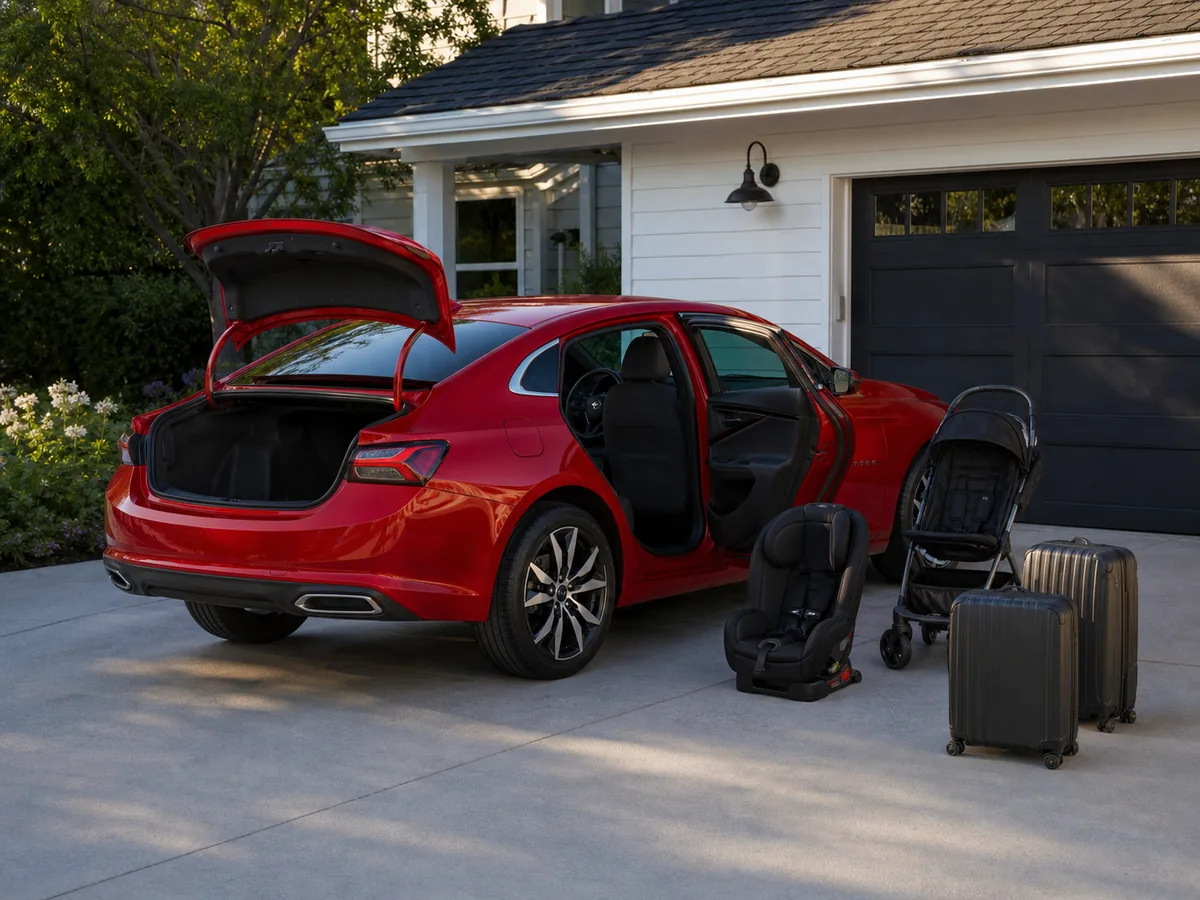
Road noise and seat comfort should be tested for at least 30 minutes. A short dealer loop may hide tire roar, seat pressure points, and the CVT sound during highway merges.
Drive broken pavement and a steady 65 to 75 mph section if local limits allow.
The Malibu gives more rear room than a Honda Civic and usually costs less than a similar-age Honda Accord.
It gives up the Civic's newer cabin and the Accord's stronger road manners.
Space is a real Malibu advantage, but it only matters when your passengers and cargo prove it during the test drive.
Safety results require an honest price adjustment
The final Malibu includes useful driver aids, but its structure dates to the 2016 redesign.
Newer crash tests expose that age. IIHS rated the 2025 car Poor in its updated side test, Marginal for headlights, Poor for pedestrian front-crash prevention, and Marginal for LATCH ease of use.
That does not mean every crash produces an injury. It means the Malibu performed worse than newer designs under the Institute's current procedures.
A family buyer should treat that evidence as a material tradeoff, not a footnote that disappears because the car has automatic emergency braking.
The driver-side small-overlap result is Good, and lane-departure warning and prevention are standard. Blind-spot detection was optional, so verify the exact car rather than assuming every LT has it.
Use the mirror indicators and rear cross-traffic alert in a parking lot before signing.
Headlights deserve a night test. IIHS found inadequate low-beam visibility in several curve tests.
Clean lenses and correct aim help, but they do not redesign the lamp. If much of your driving happens on dark rural roads, this weakness should carry more weight than it would for a daylight city commuter.
Child-seat users should install their actual seat before purchase. IIHS rated the lower anchors Marginal for ease of use because they can be deep and require more force.
This is an access problem, not a claim that a correctly installed seat cannot protect a child.
Compare the result with the latest family-car choices and current sedan ratings. A newer car can cost more while buying a stronger safety structure and better automatic braking.
If safety is your first priority, the Malibu discount needs to be unusually strong before this older platform makes sense.
The safety discount should reflect how and where the car will be used. A driver who spends most of the week on divided highways faces a different exposure from a family that makes frequent night trips on two-lane roads.
The Malibu's Marginal headlight rating and Poor pedestrian-prevention result matter more in the second case, so a newer rival with stronger lighting and crash-avoidance performance can justify a higher purchase price.
Check the exact headlamp type during the viewing because trim and equipment can change what is fitted. Aim the car at a wall on level ground, confirm that both beams have a clean pattern, then drive an unlit road if the seller permits it.
Cloudy lenses, mismatched bulbs, or a repaired front corner can make already limited night performance worse.
Drive it cold to judge the CVT and turbo system
A warm, five-minute test drive is not enough for a used Malibu.
Ask the seller not to start the car before you arrive. A cold start shows battery strength, idle quality, exhaust smoke, warning lights, and the first engagement of the CVT.
The engine should settle into a smooth idle. A little direct-injection sound can be normal, but repeated stumbling, loud ticking that does not fade, blue smoke, or a coolant smell needs diagnosis.
Look under the hood before the engine warms enough to dry a small leak.
Cold-drive checks
- Start
- Quick crank, stable idle, no persistent warning lights
- Reverse
- Prompt engagement without a bang or long delay
- Low speed
- Smooth pull-away without shudder
- Highway
- Predictable response without flare or vibration
- After drive
- No coolant smell, fresh drips, or overheated odor
CVTs can hold engine rpm steady while road speed rises.
That behavior alone is normal. Shudder, delayed engagement, repeated surging, or a sudden rpm flare without matching acceleration is not a characteristic to accept without an independent inspection.
The turbocharger relies on clean oil and a healthy cooling system. Ask for oil-change records and check whether the level is correct.
A car that was run low on oil or overheated can hide expensive damage behind a fresh detail.
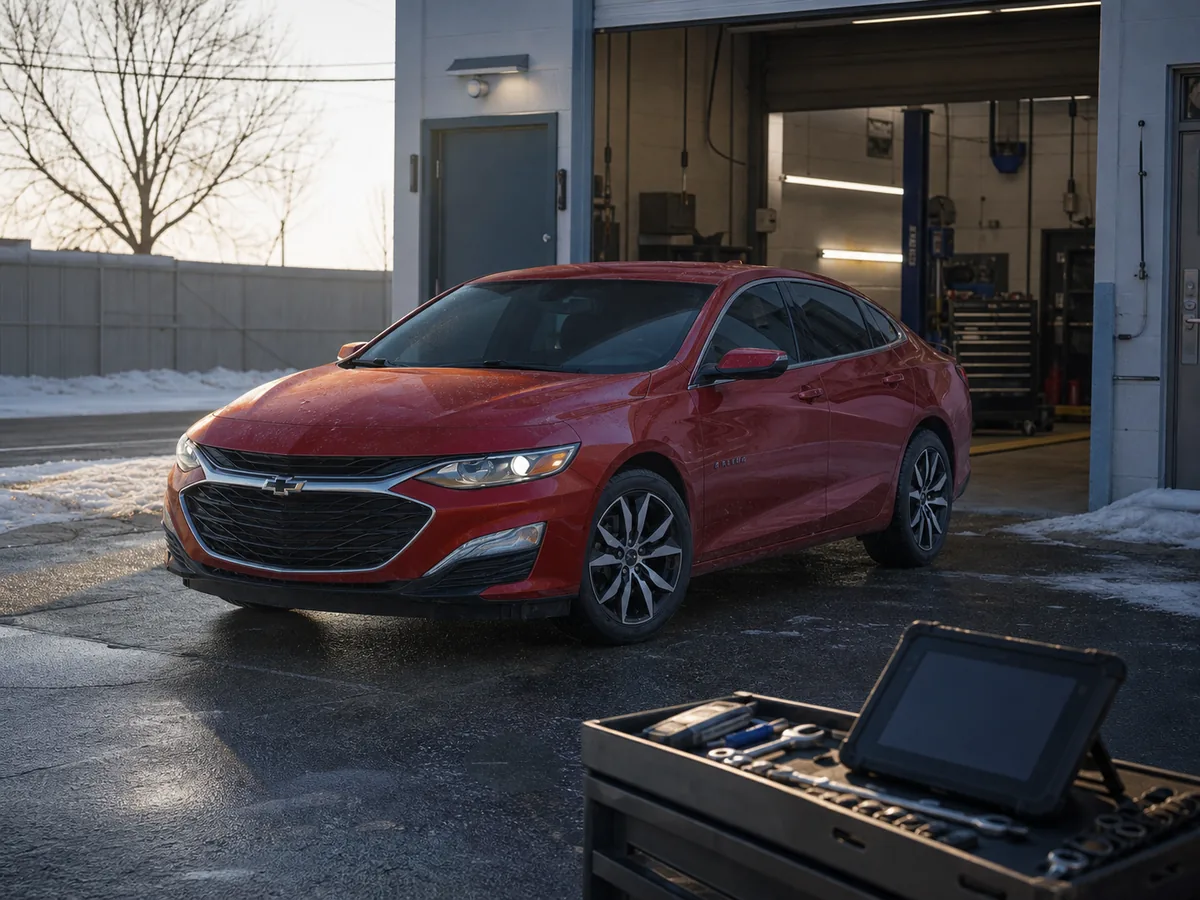
Drive over rough pavement with the radio off. Listen for front-end clunks, wheel-bearing hum, and tire noise that changes with speed.
Brake firmly from a safe speed and feel for steering-wheel or pedal vibration.
If the car fails one of these checks, do not negotiate against yourself. The planned Malibu reliability research can provide year context, but the exact car still needs diagnosis.
A smooth cold drive is the minimum entry ticket, not proof that the car needs no inspection.
Rental history and accident repair matter more than low mileage
Malibus were common in rental and fleet service.
Fleet history is not an automatic rejection. Highway miles with scheduled maintenance can be easier than short private trips with skipped service.
The problem is that odometer reading alone does not reveal idle time, many drivers, curb impacts, or rushed cosmetic repairs.
Start with the title and history report, then inspect what the report can miss.
Compare paint color and texture across adjacent panels. Look for overspray on rubber, uneven gaps, missing fasteners, and headlamps with different production dates.
Check the underside for crushed lift points.
- Match all four tire brands, sizes, speed ratings, and tread depths
- Inspect each wheel for bends, cracks, and heavy curb rash
- Check seat bolsters, pedals, steering wheel, and buttons against the mileage
- Scan every module for stored and pending codes
- Verify two working keys and all remote functions
- Check open recalls using the VIN, not the model name
A low-mile car with old tires, a weak battery, and no dated service record can need more immediate money than a higher-mile car maintained on schedule. Read the tire date codes and budget replacement when rubber is aged or cracked, even if tread remains.
A pre-purchase inspection should include a lift, scan, brake measurement, fluid check, and a road test by someone who is not selling the car. The fee is small beside a CVT, turbo, cooling-system, or collision-repair problem.
The used Malibu buying question deserves year-by-year detail.
In this profile, the rule is simpler. Condition and documentation outrank a clean-looking cabin.
Pay for evidence of care, not for a low odometer that asks you to ignore everything around it.
Service records need to match the mileage pattern. A former fleet car may have frequent oil changes and steady highway use, which can be easier on the powertrain than repeated short trips.
The warning signs are missing invoices, long gaps between services, several owners in a short period, or tires from different brands and date codes.
Pay for a pre-purchase inspection that includes a paint-depth check and an underbody view. The technician should compare panel gaps, look for overspray around seals, inspect radiator supports, and scan every control module.
A clean dashboard does not prove that stored crash, airbag, or communication faults are absent.
That inspection matters more than a small difference in odometer reading.
Separate the 2016 redesign from later simplified cars
The ninth-generation Malibu ran from 2016 through 2025, but the decade did not produce one identical car.
Early models offered more engine choices, including a hybrid and a stronger 2.0L turbo.
Later cars simplified around the 1.5L turbo and CVT.
That matters when online advice mentions a 9-speed automatic, hybrid battery, or 250 hp engine.
Those facts do not describe a final-year 1.5L CVT car. Match every problem report and maintenance recommendation to model year, engine, and transmission.
- 2016Ninth generation arrives with several powertrain choices
- 2019Styling update and CVT introduced with the 1.5L engine
- 2022Engine range narrows as Chevrolet simplifies the lineup
- 2024 to 2025Final cars use the 1.5L turbo and CVT
- November 2024U.S. Malibu production ends for the 2025 model year
An earlier 2.0T can be much quicker, but it also carries different fuel, tire, and maintenance questions.
A Malibu Hybrid has a separate battery and drivetrain story. Do not pay or diagnose them as though they are the same final-year commuter.
Service intervals are the baseline, not a guarantee. Oil age matters to the turbo, and transmission behavior matters to the CVT.
Cooling-system condition, brake fluid, tires, battery, filters, and suspension wear still age normally.
Check NHTSA recall status by VIN before purchase and again after ownership changes. A model-wide article cannot tell you whether one car received a campaign repair.
The planned Malibu recall lookup answers that narrower question, while the maintenance schedule should guide ongoing service.
Older does not always mean worse. A documented 2019 with good tires and no accident history can be safer financially than a neglected 2023.
Buy the year only after the condition passes, because the badge and generation cannot maintain a car for its previous owner.
Build the ownership budget around depreciation and catch-up work
The Malibu's low used price is its main advantage, but a low price and a low total cost are different things. Depreciation, immediate maintenance, insurance, fuel, tires, and financing decide whether the discount survives.
A discontinued sedan may depreciate faster than a Camry because fewer shoppers seek it later.
That matters if you plan to sell in two or three years. It matters less if you buy well, maintain the car, and drive it for six or eight years.
| Cost | What changes it | Best buyer move |
|---|---|---|
| Depreciation | Discontinued name and weaker demand | Buy at a clear discount and keep it longer |
| Fuel | 28 city / 36 highway rating | Best for steady highway use |
| Tires | 16 to 19-inch choices by trim | Prefer smaller wheels for lower replacement cost |
| Repairs | Unknown history and deferred service | Fund an inspection and first-month reserve |
| Insurance | Driver, ZIP code, trim, and claim history | Quote the VIN before paying a deposit |
Set aside money for oil, filters, brake fluid, battery testing, alignment, tires, and diagnostic work unless records prove each item is current. A $2,000 discount can disappear quickly when four tires, brakes, and a battery arrive together.
Financing can damage the value case. A dealer may make an older Malibu look affordable with a long term, high rate, or add-ons.
Compare total interest and amount financed, not only monthly payment. The lease versus buy framework is useful even when a used lease is not available because it exposes the cost of short ownership.
Fuel is predictable. At 12,000 annual miles, the difference between 31 combined mpg and a 50 mpg hybrid becomes meaningful, but it may take years to repay a large purchase-price gap.
Use your local gas price and actual miles.
The planned Malibu cost analysis can go deeper into estimates.
For this buying decision, demand a reserve after purchase.
The Malibu is affordable only when the deal leaves enough cash to correct ordinary used-car needs without using a credit card.
Keep the repair reserve separate from the purchase money. A Malibu bought below budget can still become expensive if it immediately needs four tires, brakes, a battery, and overdue fluid service.
Price those items from the inspection report before agreeing on the car, then use the total first-year figure when comparing it with a Nissan Altima.
Fuel cost should use your route, not the window-sticker result. A long highway commute may stay close to the Malibu's strong highway estimate, while short winter trips can use much more fuel.
The planned Malibu real-world mpg guide will separate those conditions. For the purchase decision, calculate annual gallons from your current mileage and a conservative mpg estimate.
Repeat the calculation at a higher fuel price so the deal still works if local prices rise. Keep registration and sales tax in the same first-year total, since a lower advertised price does not remove those charges.
Add one month of fuel and parking so the reserve reflects the car entering normal service immediately.
Who should buy a Malibu and who should keep shopping
A clean Malibu can fit a highway commuter, a family that needs midsize space on a compact-car budget, or a buyer who keeps vehicles long enough that resale matters less. It also works for someone who prefers simple controls and does not need hybrid power or AWD.
It is a weak fit for a buyer who prioritizes the latest crash performance, wants strong resale, drives enough city miles to benefit from a hybrid, or expects sporty acceleration. It is also a poor choice when the payment approaches a newer rival.
Cross-shop the Hyundai Sonata for newer midsize value, the K5 for warranty and style, and the Camry for hybrid economy and resale.
These cars do not need to be cheaper than the Malibu. They need to show how large the Malibu discount should be.
Do the decision in the right order. Verify the price, inspect the car, test it cold and hot, quote insurance, calculate catch-up maintenance, and then compare total cost.
Do not start by falling in love with the monthly payment.
The strongest Malibu purchase is deliberately boring: a stock car, smaller wheels, clean history, clear records, two keys, good tires, no warning lights, and a seller who allows an independent inspection.
When the car and price pass every check, the Malibu can still be honest midsize transportation.
When either needs excuses, keep shopping.