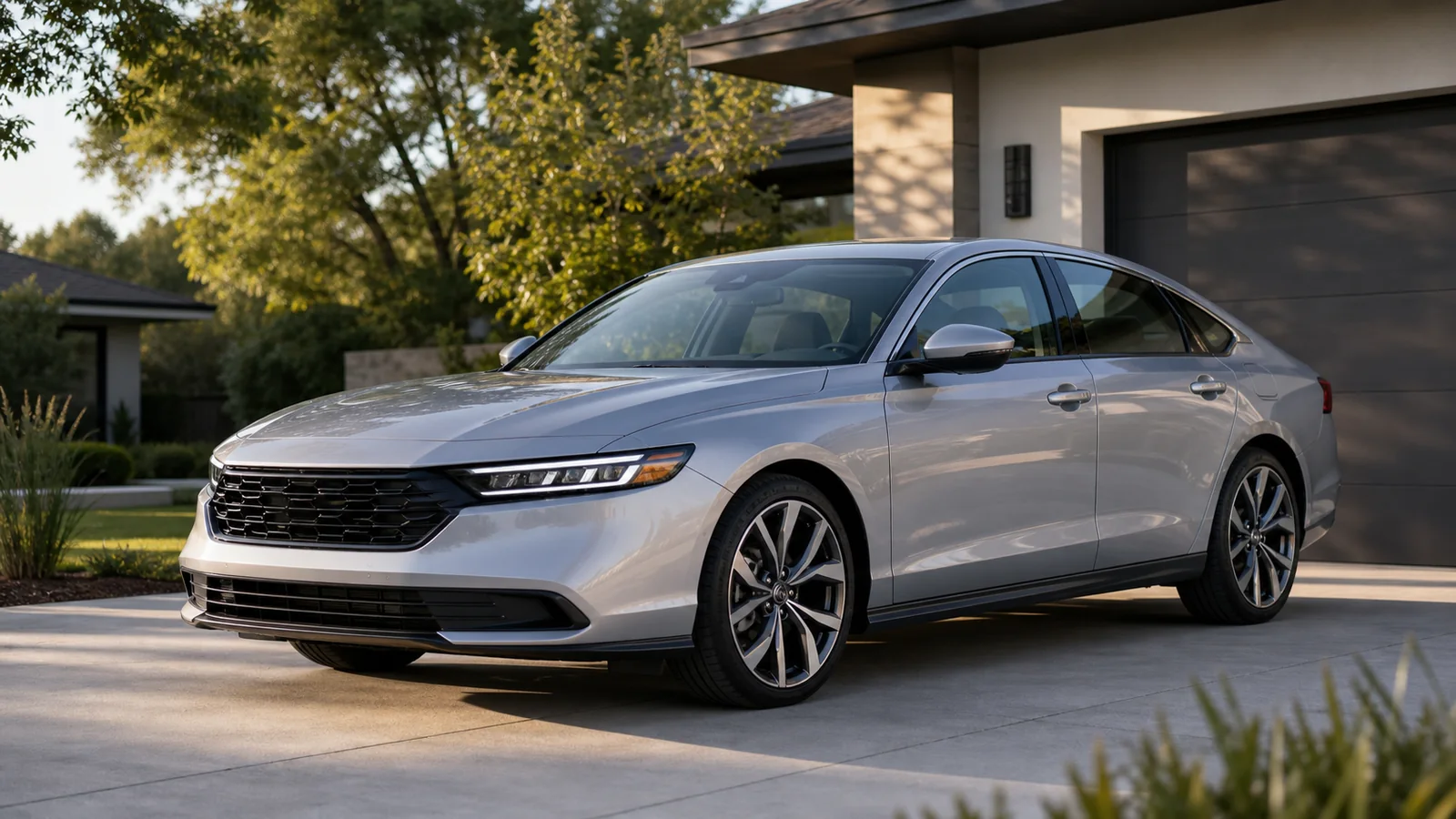
The hybrid premium pays back fastest in city traffic
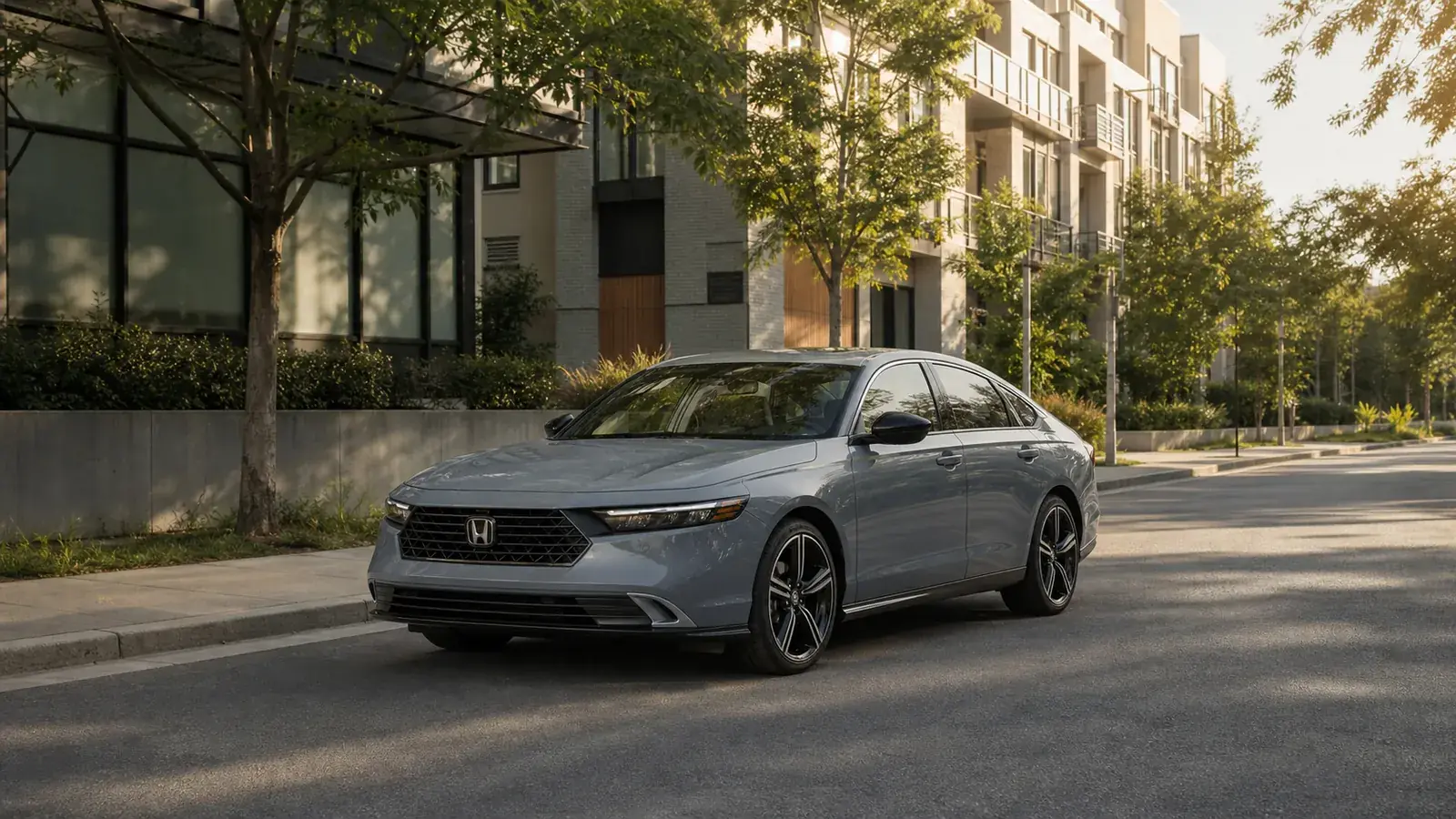
The 2026 Honda Accord Hybrid starts with the $33,795 Sport Hybrid, which is $3,100 above the gas SE before destination, taxes, and dealer charges. The hybrid adds a 204-hp two-motor system and a larger 12.3-inch touchscreen, so the price gap is not fuel economy alone.
Honda rates Sport Hybrid, Sport-L Hybrid, and Touring Hybrid at 46 city, 41 highway, and 44 combined mpg. EX-L Hybrid reaches 51 city, 44 highway, and 48 combined because its 17-inch wheel and tire package gives up less energy than the 19-inch setup on the other hybrid trims.
The published MPG gap is largest against a gas Accord in stop-and-go use.
A gas SE is rated 28 city, 36 highway, and 31 combined. Highway-heavy drivers see a smaller difference because the gas engine operates efficiently at steady speed, while city drivers let the hybrid recover energy under braking and move through low-speed traffic on electric torque.
Calculate annual fuel with your miles, expected MPG, and local regular-gas price. Repeat the calculation with a conservative MPG figure for winter, short trips, hills, and congestion.
Do not use a single national fuel price or assume the EPA label predicts every commute.
The petrol Accord is the direct comparison, because it is the same car without the premium this article is testing. The premium is easiest to justify when city miles are high, the car will be kept for years, and the selected trim does not add expensive equipment that the driver will not use.
Keep a separate line for miles that the household may stop driving after a job, school, or housing change.
Payback based on today's longest commute can disappear when that route changes. Compare the hybrid premium with the cost of choosing the gas trim and keeping the difference in savings.
Then test a low-mileage case, an expected case, and a high-mileage case. Use the same ownership period, fuel price range, insurance quote, and resale method in every case.
The answer should remain acceptable when one assumption moves against the hybrid. This approach also prevents a high EPA city figure from carrying the entire purchase decision.
Equipment still has value, but the buyer should name which heated seats, screen, wheels, audio, or driver aids are being purchased and how often they will be used.
When the financial result is close, choose from the better seat, ride, control response, and transaction rather than claiming a precise fuel forecast.
EX-L is the efficiency trim, while Sport and Touring spend fuel on equipment
All four hybrid trims use the same 204-hp system and front-wheel drive. Their different prices buy wheels, upholstery, audio, displays, cameras, and comfort equipment rather than more system output.
That makes trim selection a second value decision after choosing hybrid power.
| Trim | Starting MSRP | EPA combined MPG | Best reason |
|---|---|---|---|
| Sport Hybrid | $33,795 | 44 | Lowest hybrid entry price |
| EX-L Hybrid | $35,095 | 48 | Best economy and smaller wheels |
| Sport-L Hybrid | $35,495 | 44 | Sport appearance with leather trim |
| Touring Hybrid | $39,495 | 44 | Full technology and comfort package |
Sport Hybrid starts cheapest, but its 19-inch wheels give up four combined MPG to EX-L. EX-L costs $1,300 more at MSRP and adds comfort equipment while using 17-inch wheels.
Price both over the same ownership period because a lower purchase price and a higher fuel bill can cross depending on mileage.
Sport-L is close to EX-L in price but moves back to the larger wheel package. Touring adds Google built-in and upper-grade comfort technology, then asks the buyer to carry the highest purchase price, insurance value, and replacement-wheel exposure.
None of those features improves the published 204-hp output.
Drive the same broken pavement in 17-inch and 19-inch cars. Ask a tire shop for full replacement prices in the exact sizes, then check whether a damaged wheel is readily available.
Larger wheels may sharpen appearance, but the smaller package gives more sidewall, better label economy, and usually a calmer replacement budget.
A hatch and a stronger efficiency focus come with the Prius, while standard all-wheel drive at a higher price comes with the Crown. EX-L is the rational Accord Hybrid for fuel savings, while Sport, Sport-L, and Touring need equipment reasons strong enough to outweigh their MPG or price tradeoffs.
The two-motor system feels stronger than its 204-hp label suggests
Honda combines a 2.0-liter Atkinson-cycle engine with two electric motors. The traction motor is rated at 181 hp and 247 lb-ft, while total system output is 204 hp.
Those figures cannot be added together because the engine and motor reach peak output under different conditions.
Electric torque arrives without waiting for engine speed, so the car responds cleanly when traffic opens or a short merge begins.
At higher road speed the engine can connect more directly to the wheels. Drivers may hear engine speed rise under a long grade or hard acceleration even when road speed changes more gradually.
That behavior alone does not prove a transmission problem.
Use the test drive to check smooth handoffs among electric drive, engine generation, and direct engine drive.
Start with a fully cold car. Try parking-speed movement, a gentle city launch, a legal highway merge, steady cruising, regenerative deceleration, and climate operation.
Warning lights, a hard shudder, a persistent vibration, fluid odor, or a large change in brake feel needs diagnosis.
The drivetrain is front-wheel drive only. Buyers who require all-wheel drive for a steep untreated road should compare winter tires and route conditions before assuming an AWD badge is mandatory.
Front-wheel drive and five seats is the layout most practical cars use, so neither is a reason to choose this one over another five-seat sedan.
Choose the hybrid for its low-speed response and city efficiency, then judge the exact car by smooth transitions and warning-free operation rather than expecting it to behave like a conventional automatic.
Cabin and trunk space stay intact, but the sedan body sets the limit
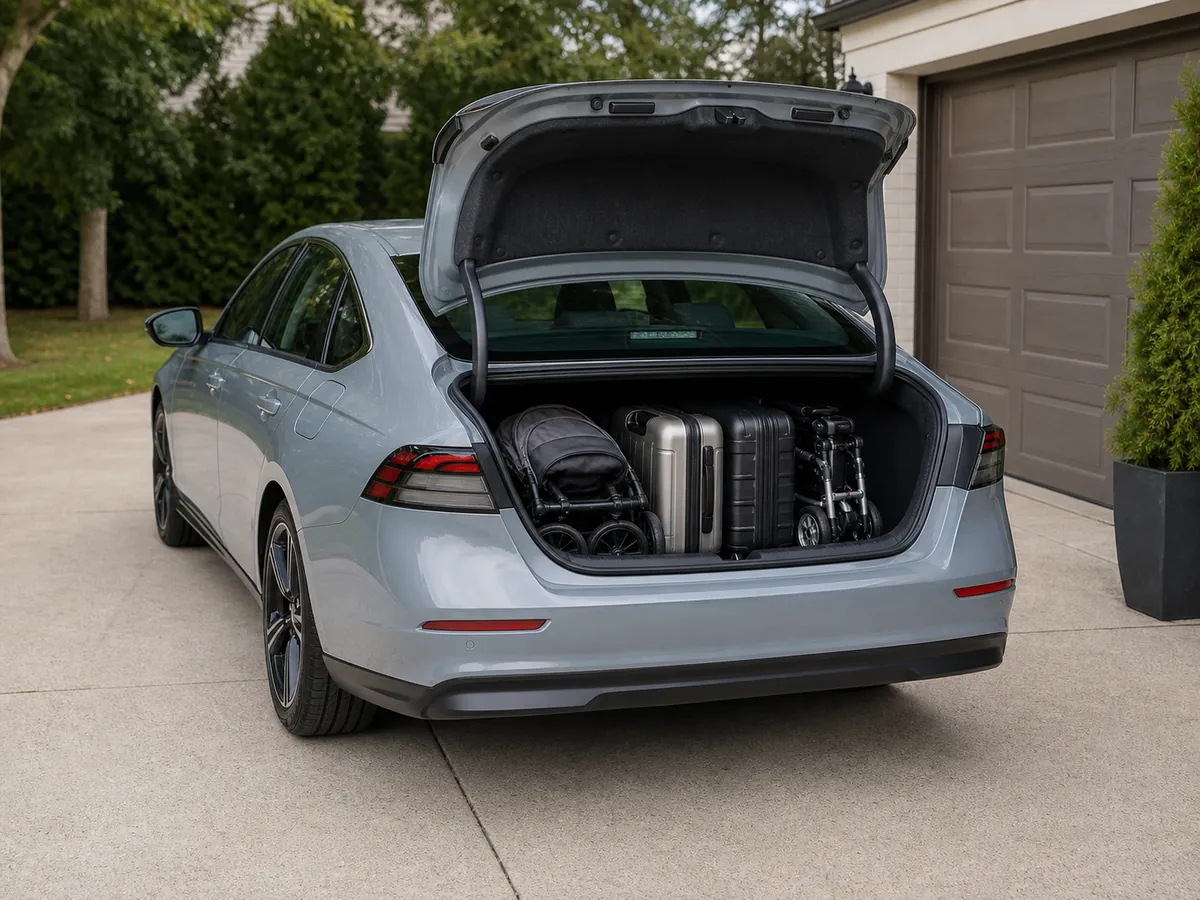
The Accord Hybrid keeps the same 16.7-cubic-foot trunk figure published for the gas sedan because Honda packages the hybrid hardware without sacrificing the main luggage compartment. That is useful for a hybrid sedan, but a trunk opening still handles bulky cargo differently from a hatch.
The rear-seat test, run with the front seats set normally
- Set both front seats for their regular drivers before anyone sits in the back
- Sit adults behind those positions rather than behind a seat slid forward
- Check knee room, foot space, headroom, shoulder room and centre-seat width
- Check vents, ports and belt access from the seat itself
- Fit every child restraint without moving the driver into a false showroom position
Load the awkward item first. A stroller, folding wheelchair, large suitcase, sports bag, or work case may have enough volume yet fail the opening angle.
Fold the rear seat only if the trip does not need every passenger place.
Secure hard objects because the trunk is not a substitute for proper restraint.
The cabin is wide and calm enough for long travel, but every hybrid trim uses front-wheel drive and a low sedan seating position.
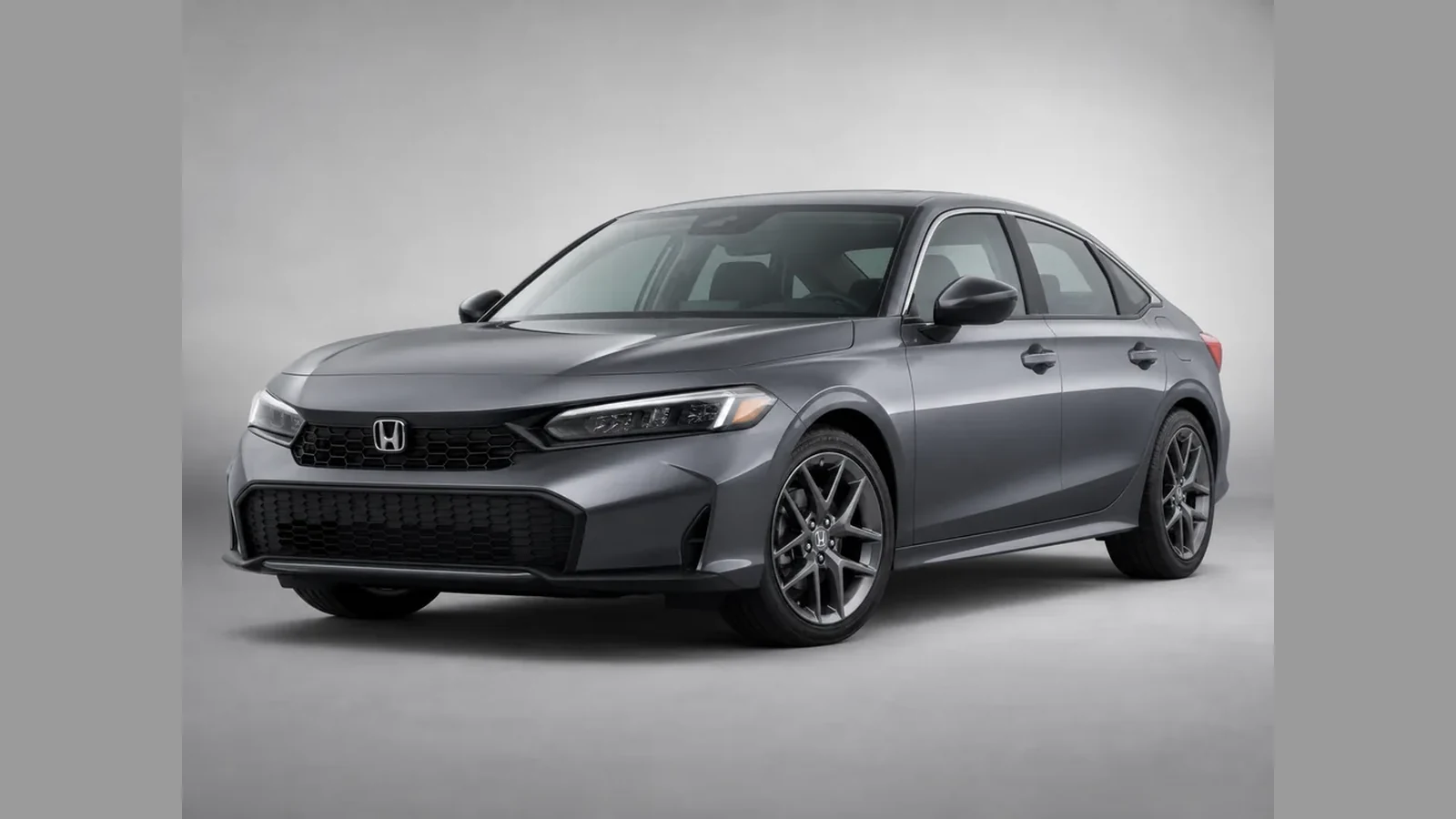
A driver who needs easier step-in height may prefer a Honda CR-V Hybrid. A buyer who values a wider cargo opening can compare the planned Civic Hatchback.
The Accord Hybrid works as a family sedan when five people and their luggage fit at the same time, not when the rear seat must be folded for every ordinary trip.
The 2026 IIHS result is strong and still needs its details
IIHS names the 2026 Accord a Top Safety Pick. Its published overview gives Good ratings for small-overlap front, updated moderate-overlap front, updated side, and headlights.
The standard pedestrian front-crash-prevention system receives an Acceptable rating, while seat-belt reminders are Good and LATCH ease is Good+.
The ratings apply to the Accord body and model years stated by IIHS. They do not mean every collision is survivable, and they do not replace a check of tires, brakes, restraints, glass, cameras, radar areas, alignment, or previous structural repair.
A child seat may also fit differently across positions even when anchor access scores well.
Test forward warning, adaptive cruise, lane assistance, blind-spot equipment where fitted, camera views, and parking sensors in safe conditions.
Read the manual limits before relying on them in rain, glare, road construction, snow, or around a motorcycle.
Driver assistance supports attention instead of replacing it.
Require calibration records after windshield, bumper, steering, suspension, or collision work. Uneven panel gaps, overspray, mismatched glass dates, an airbag warning, or a camera that cannot hold a clear image should pause the purchase.
Year-specific ratings and official campaign documents outrank a broad reputation claim, because a reputation covers a decade and a rating covers a test. The Accord's 2026 test record is a real strength when it is paired with a complete inspection of the exact car and honest limits on what the systems can do.
Bring every regular passenger to the inspection when possible. Buckle each seating position, install the actual child restraint, and make sure a rear-facing seat does not force the front passenger too close to the dashboard.
Confirm that head restraints rise high enough and that no warning remains after everyone is seated.
These checks connect the published ratings to the people who will use the car.
Used 2023 and 2024 hybrids need the fuel-pump recall checked by VIN
The current Accord generation began for 2023, which gives used shoppers a short evidence window. NHTSA campaign 24V-763 covers certain 2023 and 2024 Accord Hybrid vehicles because the high-pressure fuel pump may crack and leak fuel.
Honda's remedy calls for inspection and replacement when necessary.
The campaign does not prove every 2023 or 2024 car has a cracked pump, and it does not apply automatically to a 2025 or 2026.
Use the VIN at Honda and NHTSA on the purchase day. Require a dated repair record when the seller claims the work is complete.
For any used hybrid, start cold and scan every module before codes are cleared. Check engine oil, coolant, leaks, fuel odor, hybrid warnings, battery cooling inlets, brake feel, steering, tires, cameras, climate control, charge-state behavior, and service history.
Drive until the powertrain and cabin are fully warm.
Battery condition cannot be proven from dashboard MPG alone. Short trips, temperature, tires, traffic, recent resets, and driving style all change fuel economy.
Ask a qualified shop to review diagnostic data, fault history, and warranty status for the exact VIN.
A dedicated Accord Hybrid reliability check can hold year-specific evidence as it develops. A clean used Accord Hybrid needs recall documentation, a cold diagnostic scan, and smooth warm operation, not a seller's claim that every Honda hybrid lasts the same way.
Match the service history to elapsed time as well as mileage. A lightly driven car can still need oil, brake fluid, filters, tires, and inspection because age, moisture, heat, and storage continue to affect components.
Confirm the original in-service date and remaining Honda warranty in writing. A third-party service contract has separate limits, exclusions, and claim rules.
Five-year cost depends on miles, wheels, insurance, and finance terms
Fuel savings are only one line in Accord Hybrid ownership. Purchase price, tax, interest, insurance, tires, scheduled service, repairs, registration, depreciation, and collision deductible can outweigh a few MPG when the deal or trim is poorly chosen.
| Cost | Number to collect |
|---|---|
| Purchase | Out-the-door price after every fee |
| Finance | APR, term, down payment, total interest |
| Fuel | Annual miles, route MPG, local regular price |
| Insurance | Quote for the exact VIN and drivers |
| Tires | Full set in the selected wheel size |
| Service | Honda schedule and local labor |
| Repairs | Deductible and post-warranty reserve |
| Resale | Conservative estimate, not a promise |
Compare an EX-L Hybrid with a gas SE at the same dealer on the same day.
Use out-the-door prices because discounts and add-ons can reverse the MSRP gap. Calculate fuel over the period you expect to keep the car, then include interest on the extra amount financed.
Get insurance quotes before choosing Sport-L or Touring. Price 17-inch and 19-inch tires, alignment, and one damaged wheel.
A driver who covers 18,000 urban miles may recover the hybrid premium much faster than someone who drives 6,000 mostly highway miles.
Routine hybrid service still includes engine oil, filters, tires, brakes, fluids, inspections, and time. Regenerative braking may reduce friction-brake use, but corrosion, sticking hardware, or old fluid still needs attention.
Follow the maintenance minder and manual for the exact year.
Compare the budget with a smaller Honda Civic, an efficient Toyota Camry, and a higher-riding hybrid SUV. Buy the Accord Hybrid only after the fuel savings survive a complete five-year calculation that includes the actual deal and trim.
Write both calculations in gallons before converting them to dollars. Divide annual miles by the realistic MPG for each car, multiply by the local price of regular fuel, then repeat with a higher and lower fuel price.
Subtract the annual totals and divide the complete hybrid premium by that saving. If the result is longer than the expected ownership period, equipment and driving feel must justify the remaining cost.
The right test drive should reproduce the commute that creates the savings
A short loop around the dealer cannot show whether the Accord Hybrid fits the route that is supposed to justify its premium. Reproduce parking, broken pavement, stop-and-go traffic, a highway merge, steady cruising, a hill, and the garage or driveway used at home.

The drive that tests the premium, in this order
- Start it coldA true cold start, not a car warmed up before you arrived.
- Watch the lampsConfirm every warning lamp completes its check, then listen for abnormal mechanical noise and watch for persistent alerts.
- Set the climate normallyHeating, cooling, defrosting and short trips all affect fuel use, so testing with it off proves nothing about your commute.
- Drive the real routeParking, broken pavement, stop-and-go, a highway merge, steady cruising and a hill, in whatever order your week actually presents them.
Use light and moderate acceleration. Check steering return, straight-line tracking, brake blending, regenerative deceleration settings, ride over sharp edges, wind noise, and seat support after at least 30 minutes.
The transition near a full stop should remain predictable. A sudden pull, vibration, grinding sound, or changing pedal needs diagnosis.
Park forward and backward. Test mirrors, camera clarity, turning space, door opening, trunk access, and the seating position of every regular driver.
Pair a phone and operate core controls without looking away from the road for long.
Repeat part of the drive in a gas Accord when the premium decision is close. The planned Accord versus Accord Hybrid comparison can organize the direct tradeoffs, while the road test must answer comfort and response for the actual buyer.
The hybrid earns its price when it remains comfortable and predictable on the exact roads where its city efficiency will be used.
Record the outside temperature, trip length, indicated fuel economy, and battery display only as context. One short drive, even with correct tire pressure, cannot establish long-term MPG, but a large difference between two cars on the same route can reveal tire pressure, alignment, brake drag, climate use, or a mechanical issue that deserves inspection.
Reset nothing until the seller explains the existing trip data.
EX-L Hybrid is the best answer for most high-mileage buyers
Accord Hybrid combines strong published safety results, a responsive 204-hp system, a roomy cabin, a full-size sedan trunk, and 44 to 48 combined MPG. It gives up AWD, a hatch opening, and the lower purchase price of a gas Accord.
Pros
- Responsive two-motor hybrid system
- Up to 48 mpg combined
- Large 16.7-cu-ft trunk
- Strong 2026 IIHS results
Cons
- Front-wheel drive only
- Larger wheels reduce label MPG
- Premium may not repay low annual mileage
- Used 2023-2024 cars need recall verification
The car suits drivers who want a midsize sedan and spend enough time in urban or mixed traffic to use its efficiency.
Highway-only, low-mileage drivers should consider the gas model and compare the gas model. Buyers who require a liftgate or AWD should move to a different body or drivetrain instead of forcing the Accord to do that work.
The rest of Honda's range answers different questions from this one, and a buyer who is not sure the premium fits should look there before signing.
EX-L Hybrid is the strongest value when annual mileage is high enough to matter, while the final choice should follow out-the-door price, real route MPG, tire cost, and a clean VIN history.