The hatch opening matters more than the 24.5-cubic-foot number
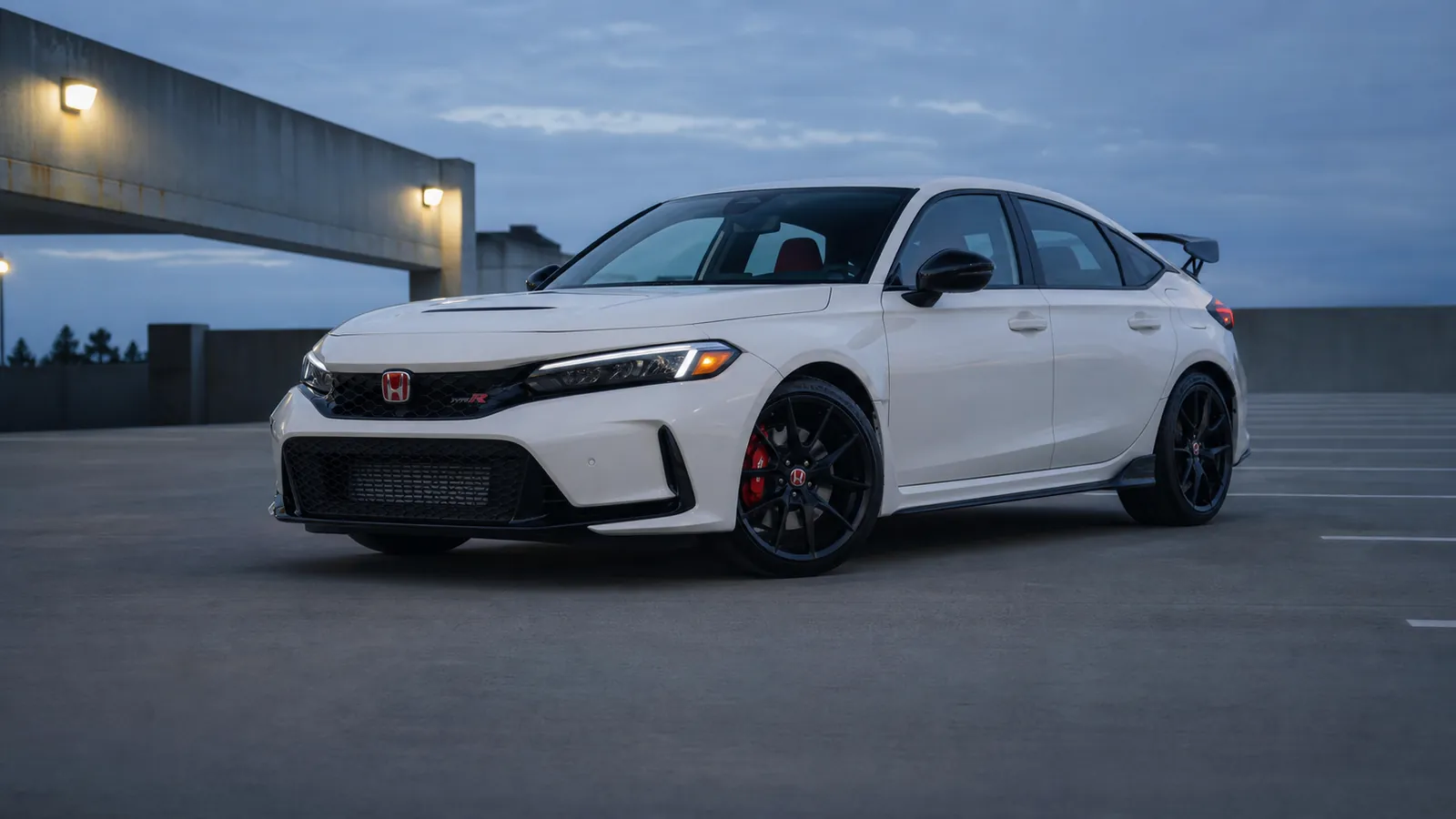
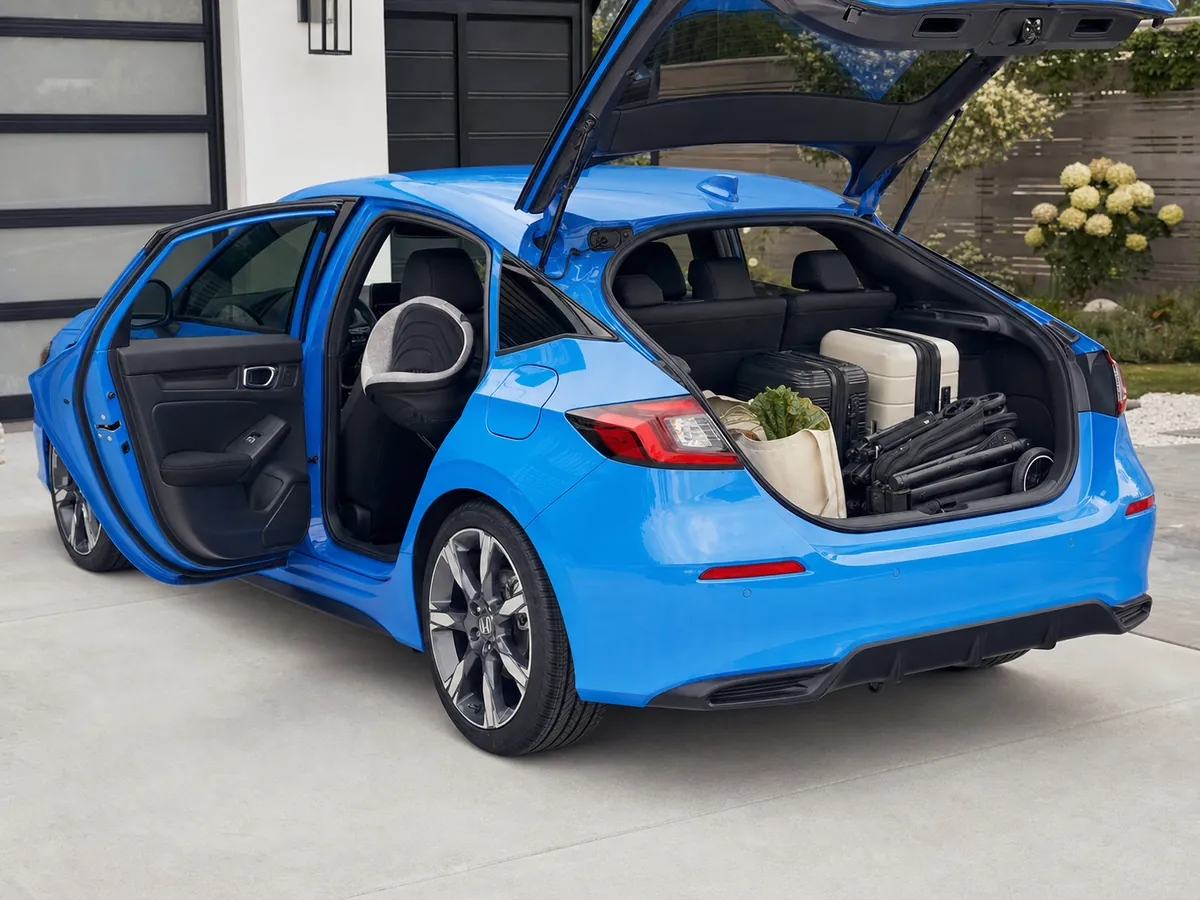
The 2026 Honda Civic Hatchback publishes 24.5 cubic feet of cargo volume with the rear seat up. Its wide liftgate accepts taller and bulkier items than a sedan trunk, while the sloping roof and rear glass still limit the shape of what fits.
The hatch beats the sedan when the regular load needs a large opening, not simply because one cargo number is bigger.
Bring the stroller, folding wheelchair, dog crate, sports bag, work case, bicycle wheel, or suitcase that creates the question.
Measure its widest and tallest points, then load it without scraping trim or blocking the driver's view.
A dealer demonstration with small empty boxes proves little.
The rear seat uses a 60/40 split, which helps when one long item and one rear passenger travel together.
The useful arrangement depends on where child restraints, pets, and adults sit. Hard cargo needs restraint because a liftgate does not isolate it from the cabin like a sealed trunk does.
Set the cargo cover where it will normally sit. Check whether the item fits below it, whether the cover can be removed and stored, and whether the liftgate closes without pressure.
A load that touches glass or depends on an open latch is not a workable fit.
Compare the format with the Honda Civic sedan and the hatchback body hub. A larger five-seat SUV may carry taller objects but costs more to buy and fuel.
Mark the opening height, narrowest width, floor length, and distance to the front seat on a simple sketch.
Check the same dimensions with the cargo cover installed and removed. This catches a common mismatch where the total volume looks sufficient but the wheel arches, roof slope, or front seat blocks the actual object.
Keep the measurement with the purchase notes so another hatchback can be compared on the same basis.
Sport Hybrid turns the practical hatch into the better powertrain
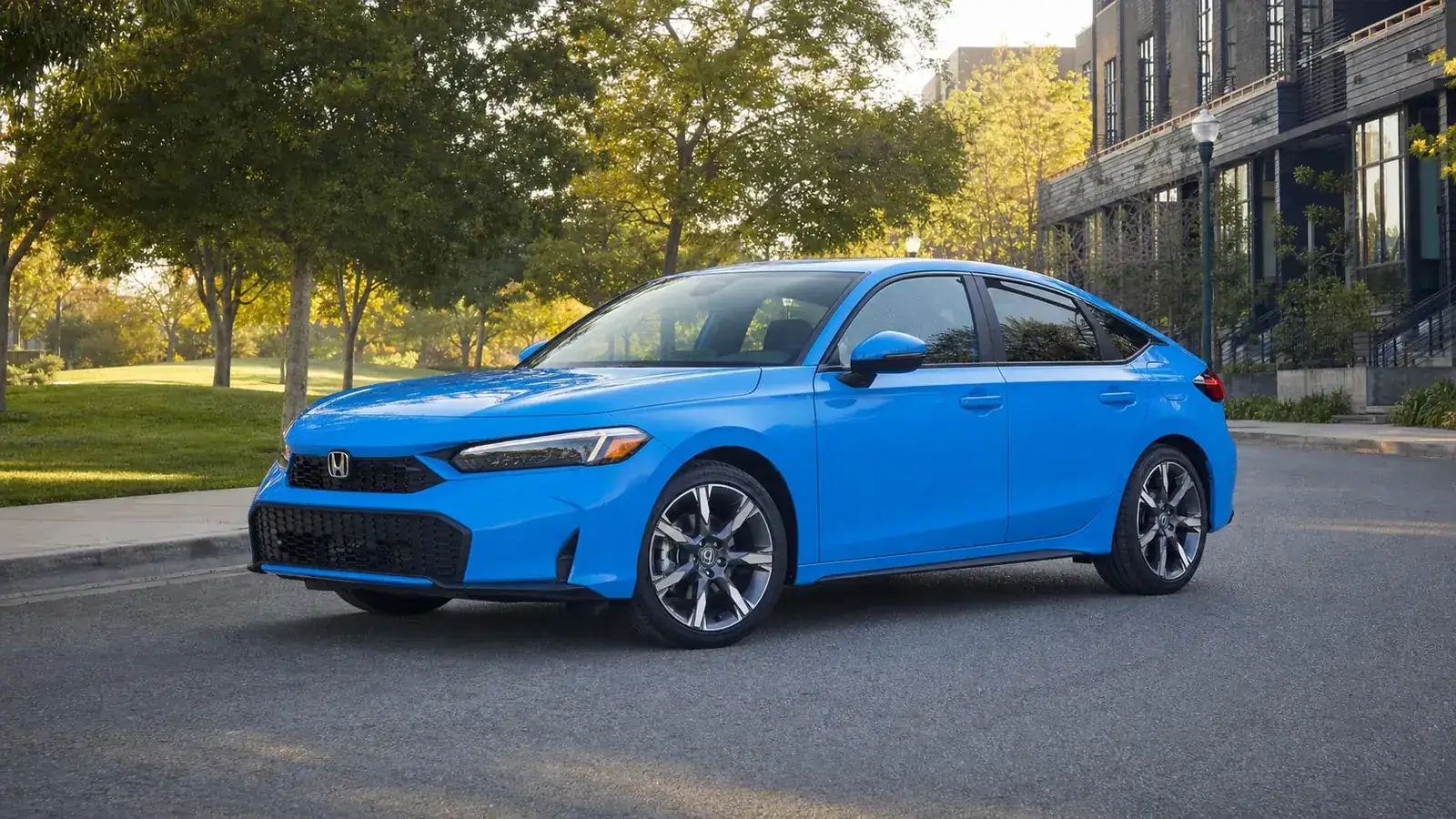
Honda offers three hatchback trims. Sport uses a 150-hp 2.0-liter engine and CVT.
Sport Hybrid and Sport Touring Hybrid use a two-motor system with 200 total system hp and 232 lb-ft from the traction motor.
Every version is front-wheel drive.
The gas Sport starts at $27,895 and is rated 30 city, 38 highway, and 34 combined mpg.
Sport Hybrid starts at $30,595 and reaches 50 city, 45 highway, and 48 combined. The $2,700 MSRP difference also brings heated front seats, dual-zone climate control, a moonroof, and other equipment, so fuel cannot be separated completely from trim.
Hybrid response is stronger at low speed because the electric motor delivers torque immediately.
The gas engine is adequate for commuting and keeps the initial price lower. Highway-heavy drivers with low annual mileage may save less fuel than the label gap suggests, while city drivers can use the hybrid advantage more often.
Drive both with passengers and cargo. Test a normal launch, a short merge, a hill, steady highway travel, regenerative deceleration, and parking-speed control.
The hybrid should transition cleanly among electric and engine operation. The gas car should accelerate without a warning, shudder, or persistent CVT flare.
The hybrid powertrain hub includes other efficient choices, while the gas car hub keeps the lower-price alternative visible. Sport Hybrid is the broadest fit because it adds useful acceleration and a large MPG gain without changing the hatchback's cargo space.
Estimate fuel from the route instead of multiplying the two EPA combined figures by price. Divide annual miles between city and highway use, apply conservative MPG to each share, and repeat the result for summer and winter.
Add the financing cost of the $2,700 difference. The calculation shows whether the hybrid premium can return during the years the household expects to keep the car.
Sport Touring adds cabin technology rather than more speed
Sport Touring Hybrid starts at $33,595, which is $3,000 above Sport Hybrid. Both make 200 total system hp, use the same 18-inch wheel diameter, carry the same 24.5-cubic-foot cargo figure, and share 50 city, 45 highway, and 48 combined MPG ratings.
| Trim | Starting MSRP | Combined MPG | Main reason |
|---|---|---|---|
| Sport | $27,895 | 34 | Lowest purchase price |
| Sport Hybrid | $30,595 | 48 | Power and efficiency value |
| Sport Touring Hybrid | $33,595 | 48 | Premium cabin and technology |
Sport Touring adds leather-trimmed seating, a Bose audio system, Google built-in, parking sensors, and upper-grade cabin details.
Those features may improve every drive for someone who uses them. They do not create extra cargo volume, rear-seat room, traction, or output.
Sit in both hybrid trims with the audio off. Check seat material, adjustment, screen behavior, phone pairing, camera clarity, climate controls, and visibility.
List the features used at least weekly. Divide the added out-the-door cost by the years the car will be kept instead of assuming the top trim will recover its premium at resale.
Every trim rides on 18-inch wheels, so tire replacement is part of the base ownership plan rather than a top-trim surprise. Get a quote for the exact tire size, alignment, and one damaged wheel before signing.
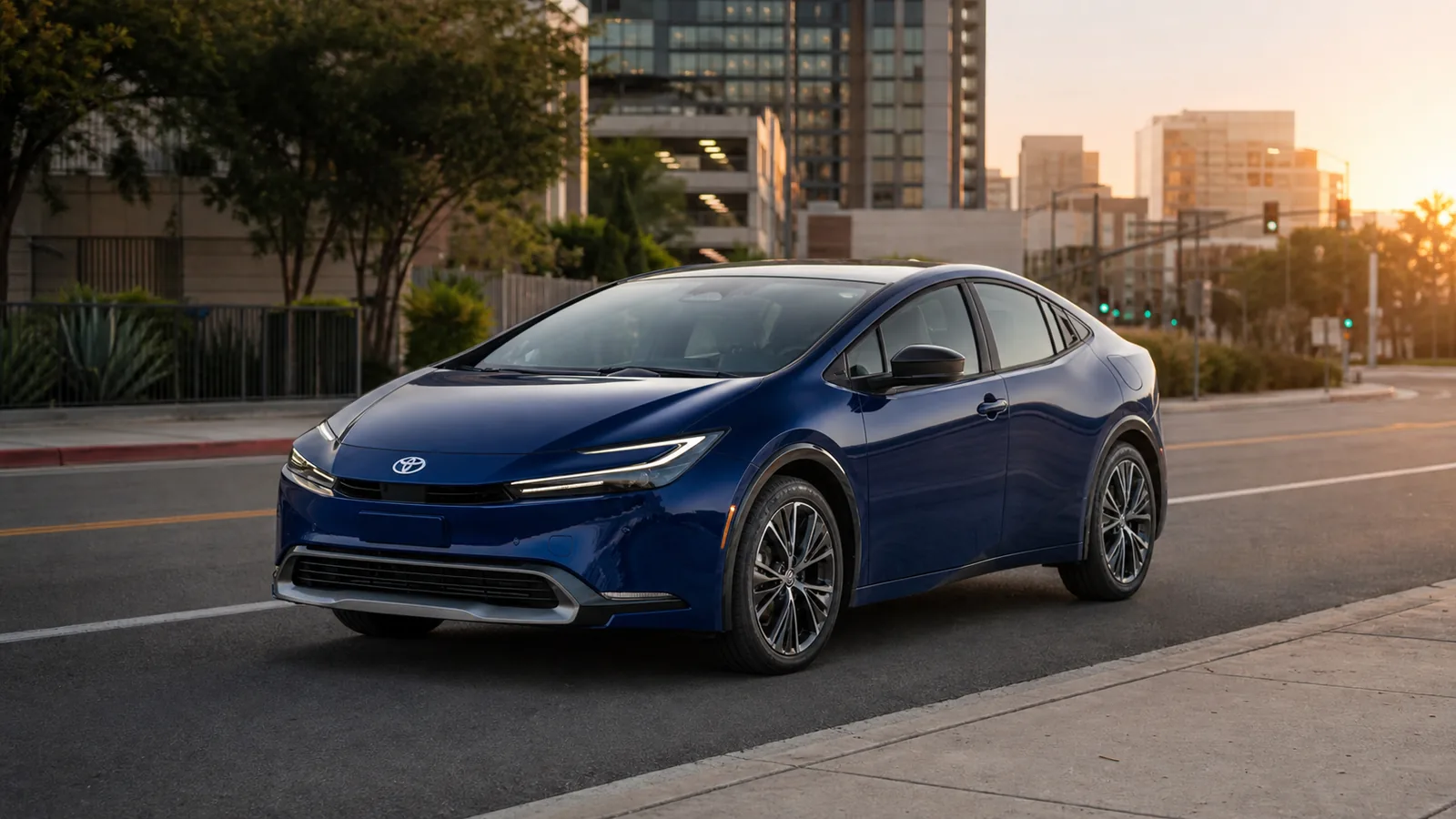
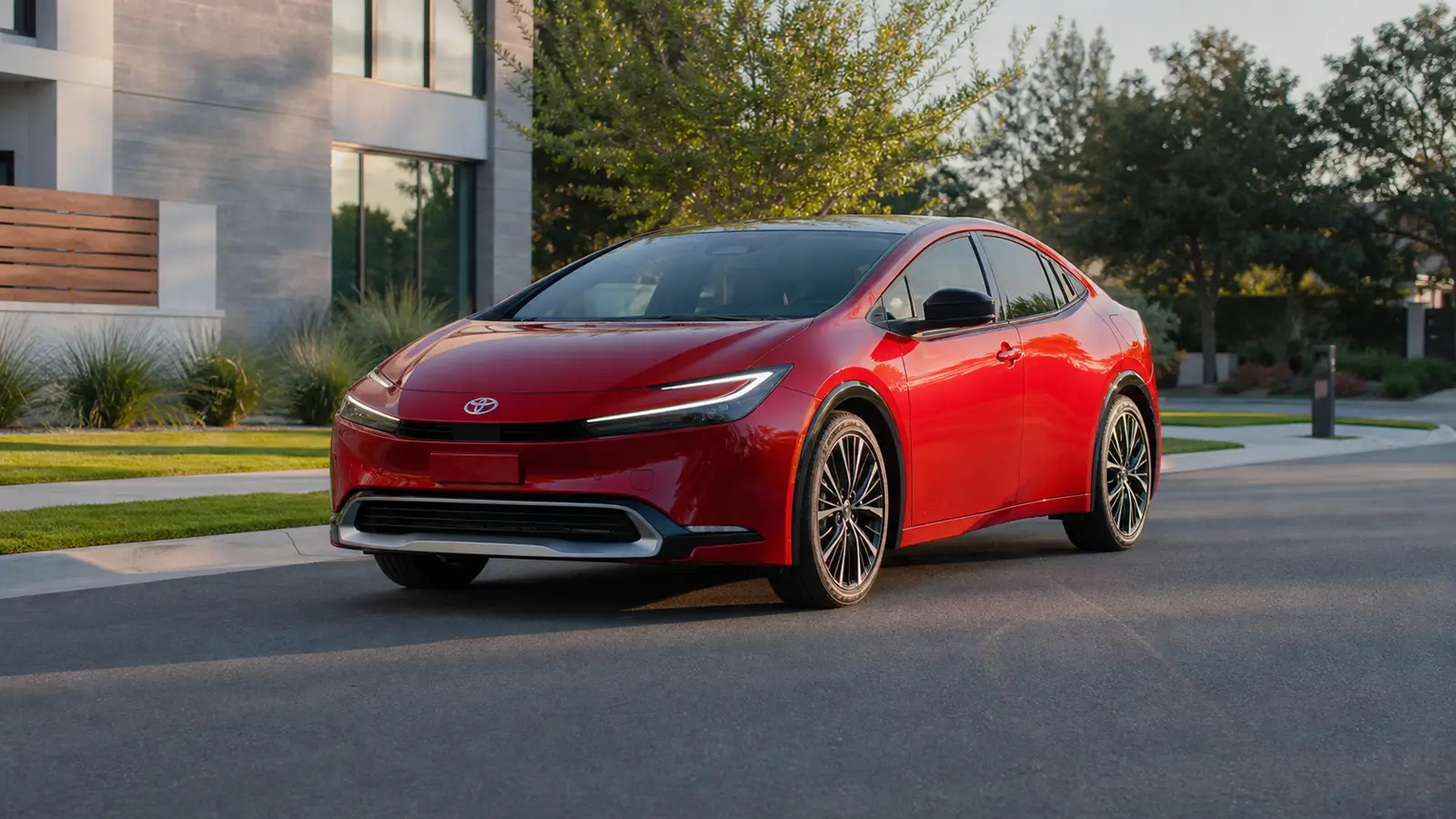
A Honda Accord Hybrid adds midsize rear room and a trunk, while a Toyota Prius leans harder into efficiency. Choose Sport Touring only when its seat, audio, parking, and software features are worth $3,000 in daily use.
Confirm which connected features require a phone, data connection, account, trial, or later subscription. Sign into a temporary profile only with the seller's permission, then remove personal data before leaving.
A feature that works during a dealer demonstration may have different terms after the trial period, so software convenience belongs in the ownership calculation rather than the horsepower comparison.
Rear passengers and cargo have to fit on the same trip
Honda lists 37.4 inches of rear legroom across the hatchback range. Sport has 99.0 cubic feet of passenger volume, while the moonroof-equipped hybrids list 96.6.
Those dimensions are useful references, but seat shape, front-seat position, child restraints, and passenger width decide the real fit.
Set the driver's seat for safe pedal reach and steering position. Put the regular front passenger in place, then check rear knees, feet, headroom, shoulder space, center-seat comfort, vents, ports, and belt buckles.
Do not slide the front seats forward to create a false result.
Install every child restraint using Honda and seat-maker instructions. Check front-seat clearance, tether routing, lower-anchor access, door opening, and whether an adult can sit beside the restraint.
Fold the seat only after confirming the restraint or passenger plan still works.
Load luggage, groceries, a stroller, mobility equipment, pet gear, or work tools with all required seating positions upright.
Keep loose items below the seatback or secured. Check the spare-tire or repair-kit access and make sure emergency equipment remains reachable.
A Honda HR-V provides crossover entry height, while a Mazda3 offers another compact hatchback approach. The Civic Hatchback is practical when people and cargo fit together without moving the driver or giving up a required seat.
Repeat the seating check with the cargo area loaded because luggage can change rear visibility, cabin noise, and access to the folded seat releases.
Have each passenger enter and leave from the side they normally use. Check whether a child can buckle independently and whether an adult can reach the center buckle without routing the belt incorrectly.
If a pet rides in the cabin, use a restraint made for the animal and keep it away from airbag deployment areas.
The hatch should close without pushing against bags, and nothing heavy should sit above the rear seatback without a barrier or secure tie-down.
Photograph the successful layout and record which seat section was folded. This gives the household a repeatable packing plan instead of discovering at departure that one suitcase displaces a passenger.
IIHS gives the 2026 hatchback a Top Safety Pick with one reminder weakness
IIHS names the 2026 Civic four-door hatchback a Top Safety Pick. Its overview shows Good ratings in the small-overlap front, updated moderate-overlap front, updated side, and headlight evaluations.
Standard vehicle-to-vehicle and pedestrian front-crash prevention are Acceptable.
The seat-belt reminder rating is Marginal. That does not cancel the strong crashworthiness results, but it shows why an award should be read by category instead of treated as a blanket score.
IIHS states that the updated moderate-overlap result applies to 2025 and 2026 hatchbacks.
Inspect belts, airbags, child anchors, tires, brakes, glass, lamps, cameras, radar areas, and body structure on the exact car.
Require calibration paperwork after windshield, bumper, steering, suspension, or collision repair. A clean dashboard cannot prove that a sensor bracket or restraint component was repaired correctly.
Test collision warning, adaptive cruise, lane assistance, blind-spot equipment where fitted, camera views, and rear cross-traffic functions in safe conditions. Read the operating limits and keep full attention in glare, rain, snow, construction, or around vulnerable road users.
The compact sedan comparison shows how size and crash-test categories differ. The published result is strong, while the exact car still needs a restraint, tire, brake, sensor, and repair-history inspection.
Check the rear hatch and quarter panels carefully because a repair near the opening can affect sealing, alignment, glass, cameras, and rear restraints without creating an obvious warning.
Spray water only with the owner's approval, inspect the spare well for moisture, and compare gaps on both sides.
Any structural repair needs invoices and an independent body inspection.
Used 2022 through 2025 cars need steering recall proof
NHTSA campaign 24V-744 covers certain 2022 through 2025 Civic vehicles because excess friction in the steering gearbox can increase steering effort. Honda's bulletin lists all Civic trims for those years and instructs dealers to verify eligibility by VIN.
The campaign does not automatically include a 2026 car, and it does not prove every earlier Civic has the defect.
Search the exact VIN at Honda and NHTSA on the day of sale. Match the repair invoice to the campaign instead of accepting a seller's memory.
Start a used hatchback cold and scan every module. Check steering effort at parking and road speed, straight-line tracking, tire wear, alignment, brakes, cameras, climate control, hatch seals, rear defroster, liftgate struts, cargo trim, and water entry.
On a hybrid, inspect warning history and smooth engine-motor transitions. On a gas car, test CVT behavior cold and fully warm.
Look underneath for curb or road-debris damage. Inspect wheels and 18-inch tires for bends, sidewall bubbles, mismatched models, old date codes, and uneven tread.
A bent wheel or poor alignment can imitate or hide a steering concern.
The planned Civic Hatchback reliability record can separate evidence by year as it develops. A used hatchback should pass a cold scan, a full steering test, and a VIN recall check before price negotiation.
Compare the odometer with service invoices, inspection dates, tire date codes, and electronic history. Long gaps do not prove neglect, but they require an explanation and a fresh baseline inspection.
Confirm ownership transfers, original in-service date, remaining factory coverage, and whether any service contract can transfer. Keep verbal promises out of the value calculation unless the seller puts them in the signed agreement.
Fuel savings compete with tires, insurance, and the purchase premium
The hybrid can reduce fuel use sharply, but ownership cost begins with the out-the-door transaction.
Compare Sport and Sport Hybrid after dealer discounts, accessories, tax, and fees. Include interest on the extra amount financed and the time the car will actually remain in the household.
| Cost | Evidence |
|---|---|
| Purchase | Signed out-the-door quotes |
| Finance | APR, term, down payment, total interest |
| Fuel | Annual miles, city share, local gas price |
| Insurance | Exact VIN and driver quotes |
| Tires | Full 18-inch set and alignment |
| Service | Honda schedule and local labor |
| Repairs | Deductible and post-warranty reserve |
| Cargo value | Trips or rentals the hatch genuinely replaces |
A driver covering many congested miles can use the 48-mpg combined rating to recover the hybrid premium sooner.
A low-mileage highway driver may need years. Use conservative MPG for winter, short trips, hills, and high speeds.
Track miles and gallons over several tanks after purchase rather than judging one display.
All trims use 18-inch wheels, so tire cost deserves an early quote.
Sport Touring's higher purchase value can raise insurance. Hybrid service still includes engine oil, filters, tires, brakes, fluids, and inspections.
Regenerative braking does not make friction brakes maintenance-free.
The hatch's value also includes what it replaces. If the opening avoids an SUV purchase or several annual rentals, that matters.
If the owner rarely carries bulky items, the sedan may deliver the same passenger job for less money.
Compare a mainstream hatchback with an efficient sedan before deciding. Sport Hybrid is worth more when both its fuel savings and cargo access solve repeated needs.
Price the decision in three ownership lengths, such as three, five, and eight years. Use the same resale assumption method for both trims and avoid promising that the hybrid will retain a fixed premium.
Add the cost of borrowing and the opportunity cost of the larger down payment. This makes a cheap monthly payment less likely to hide a long loan or a purchase that only works under an optimistic resale figure.
A mixed-route test exposes the hatchback's real compromises
The Civic Hatchback combines a low seating position, responsive steering, a large rear opening, and firm 18-inch tires. The same package can create road noise, sharper impacts, limited rearward sightlines, and wheel-damage exposure on rough urban streets.
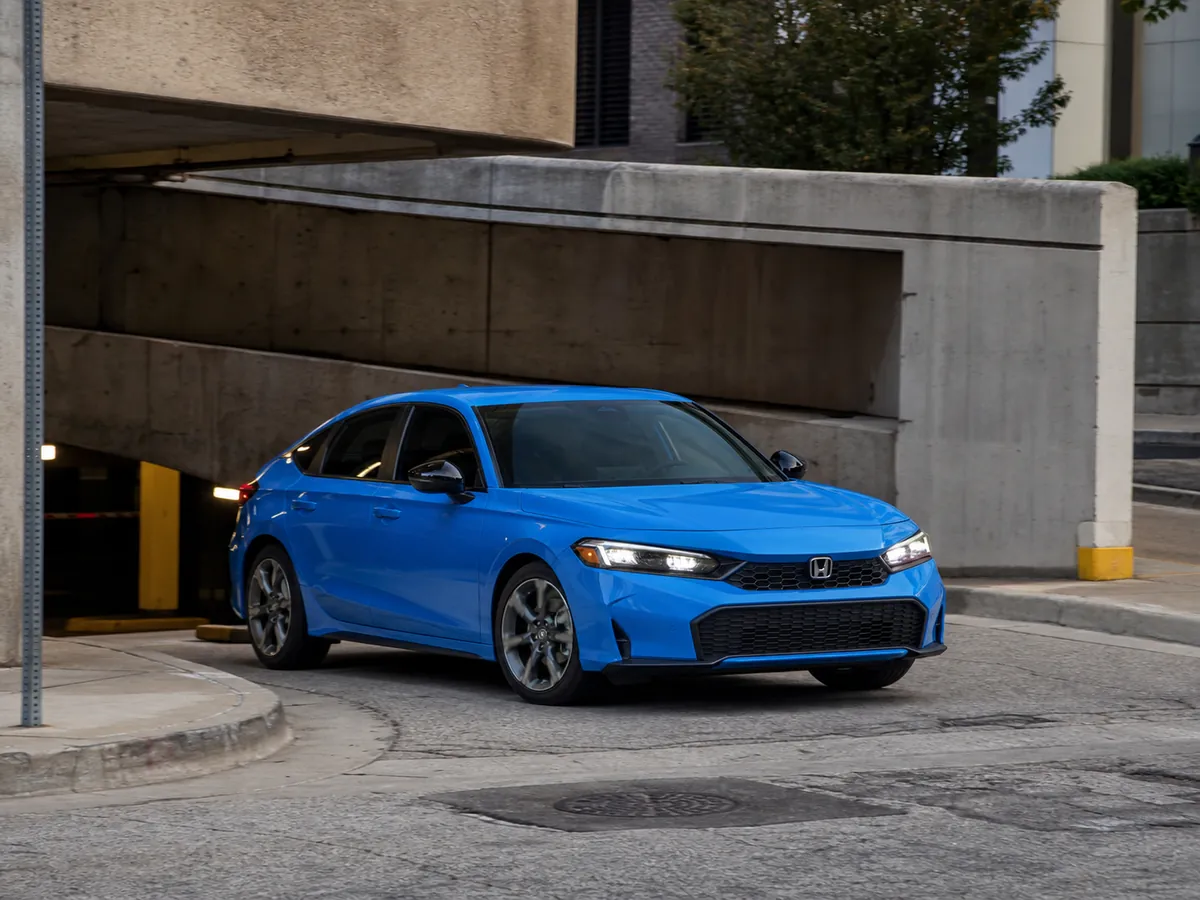
Begin cold and use the climate system normally. Drive the roughest regular street, then a smooth road, stop-and-go traffic, a legal highway merge, a steady cruise, a hill, and a parking structure.
Listen for suspension noise, tire roar, wind noise, hatch rattles, and abnormal powertrain sounds.
Check steering return, brake consistency, lane tracking, mirror coverage, rear-glass view, camera clarity, turning circle, and front-overhang clearance. Load the heaviest normal cargo during a second drive if it can affect ride, braking, or visibility.
In the hybrid, confirm predictable regenerative deceleration and smooth transitions. In the gas Sport, test CVT response at light and moderate throttle.
Neither version should display a warning, persistent vibration, or changing pedal feel.
Drive a Toyota Corolla Hybrid or Honda Civic Hybrid sedan over the same route when the hatch opening is not essential. Choose the hatchback only after its ride, noise, sightlines, and parking behavior remain acceptable beyond the first ten minutes.
Run the same route in Sport and Sport Hybrid when the powertrain decision is close.
Start with similar tire pressures, passenger load, climate settings, and battery condition where practical.
Do not compare one warm demonstrator with one car that has sat overnight. Note the response needed for the same merge, the noise at the same road speed, brake behavior near a stop, and how often the engine becomes prominent.
Park both in the home garage or an equivalent measured space. The hybrid's stronger response may be valuable every day, while the gas car's lower transaction price may matter more to a low-mileage owner.
The useful test is whether either version creates fatigue, visibility trouble, or control confusion on a route that the buyer repeats several times each week.
Sport Hybrid is the best all-around Civic Hatchback
Civic Hatchback offers a useful 24.5-cubic-foot cargo area, good passenger room, strong IIHS crashworthiness results, and a choice between a lower-priced gas engine and a quicker 48-mpg hybrid. Its fixed 18-inch wheels, front-wheel-drive layout, and sloping roof keep the tradeoffs visible.
Pros
- Wide and useful hatch opening
- 200-hp hybrid is quick and efficient
- Strong 2026 IIHS crashworthiness ratings
- Rear seat keeps adult-friendly legroom
Cons
- No AWD choice
- Every trim uses 18-inch wheels
- Sport Touring adds cost without more output
- Used 2022-2025 cars need steering recall checks
The best buyer uses the liftgate regularly, carries no more than five people, and can accept a low compact-car seating position.
The gas Sport suits a shorter ownership or lower mileage. Sport Touring suits a driver who values its cabin upgrades enough to pay for them.
Use the Honda brand hub, planned Civic Hatchback versus Prius comparison, and front-wheel-drive cars to keep the decision grounded.
Sport Hybrid is the default pick after the actual cargo, passenger, tire, insurance, and route tests all pass.