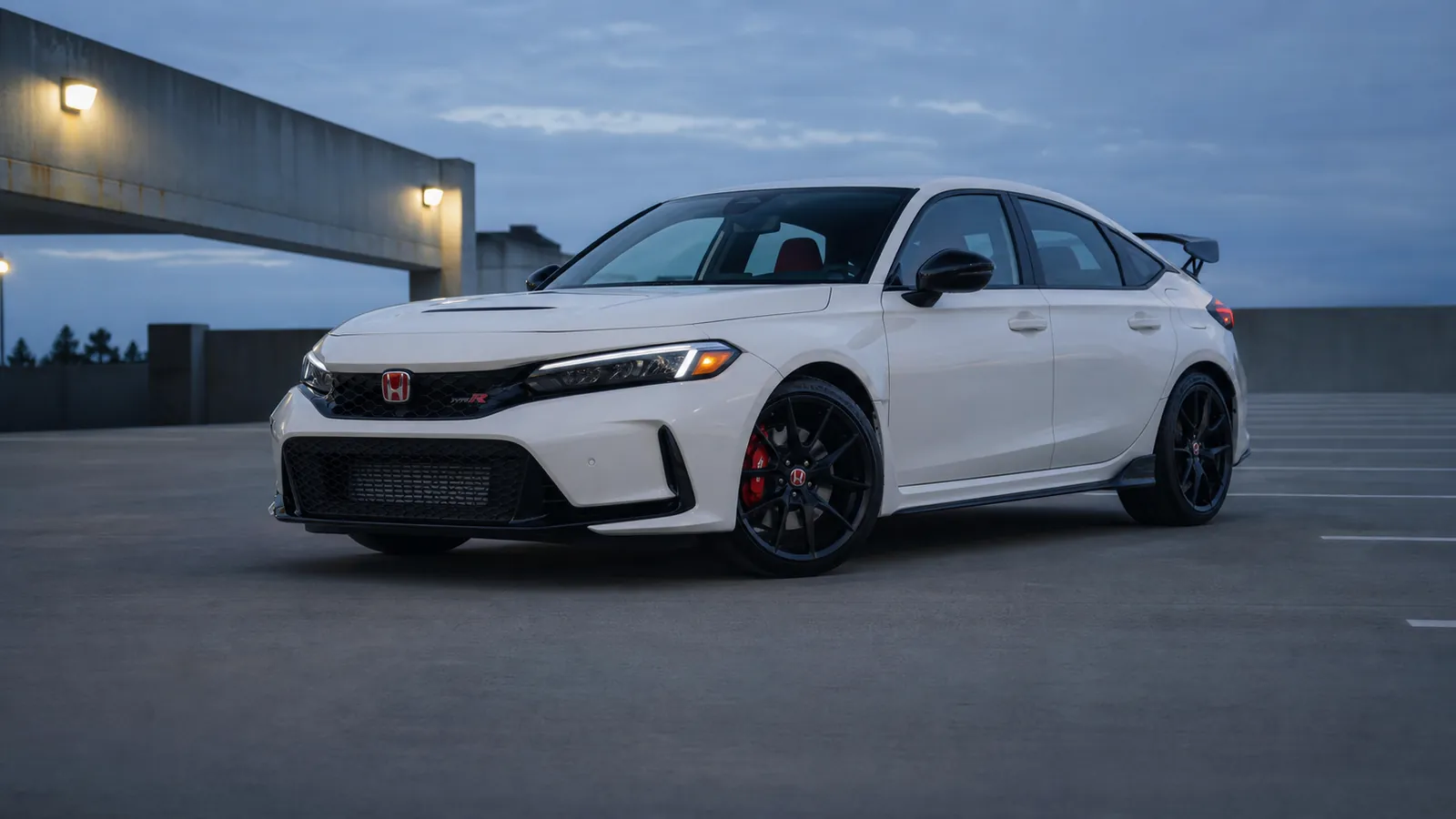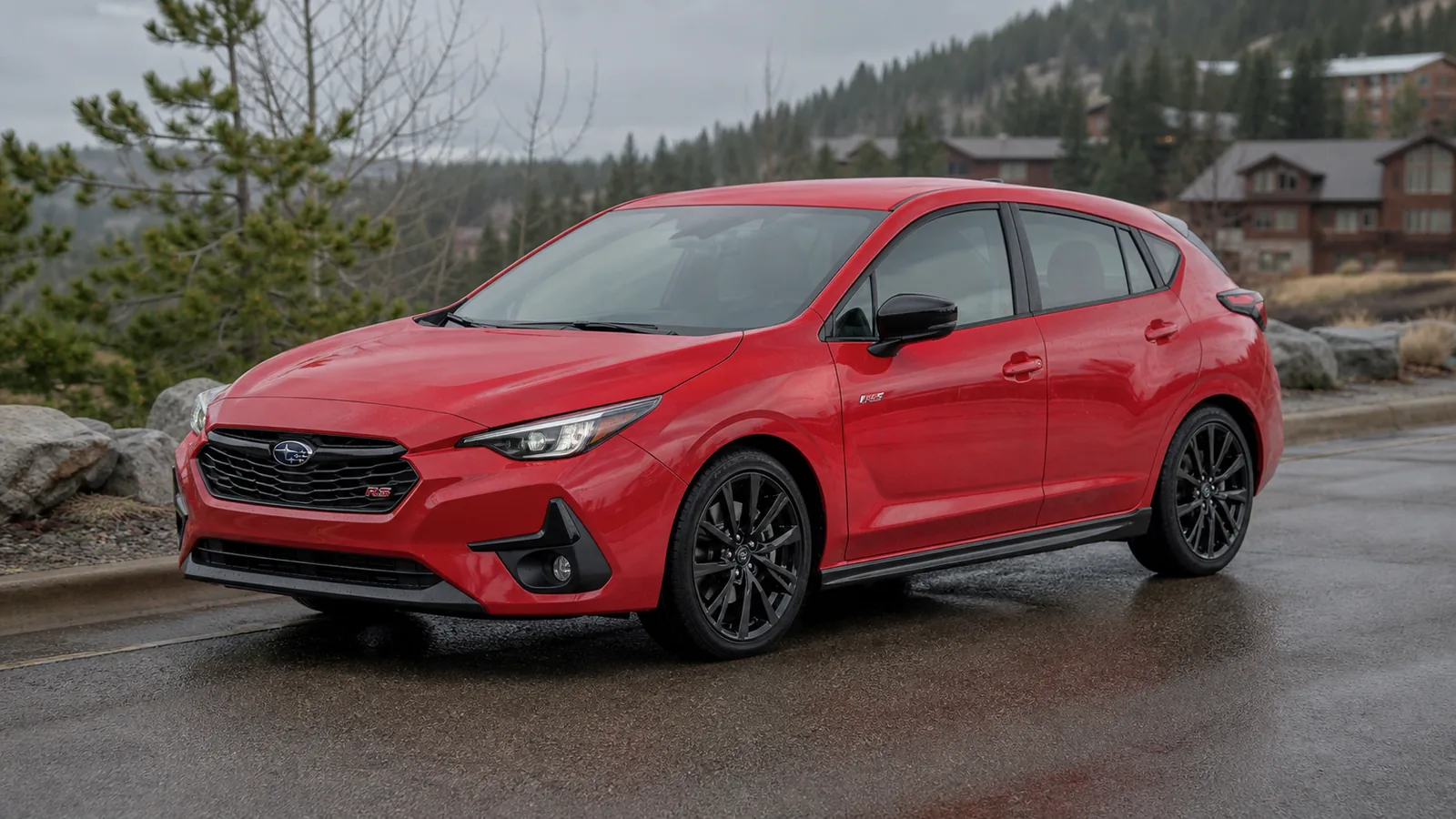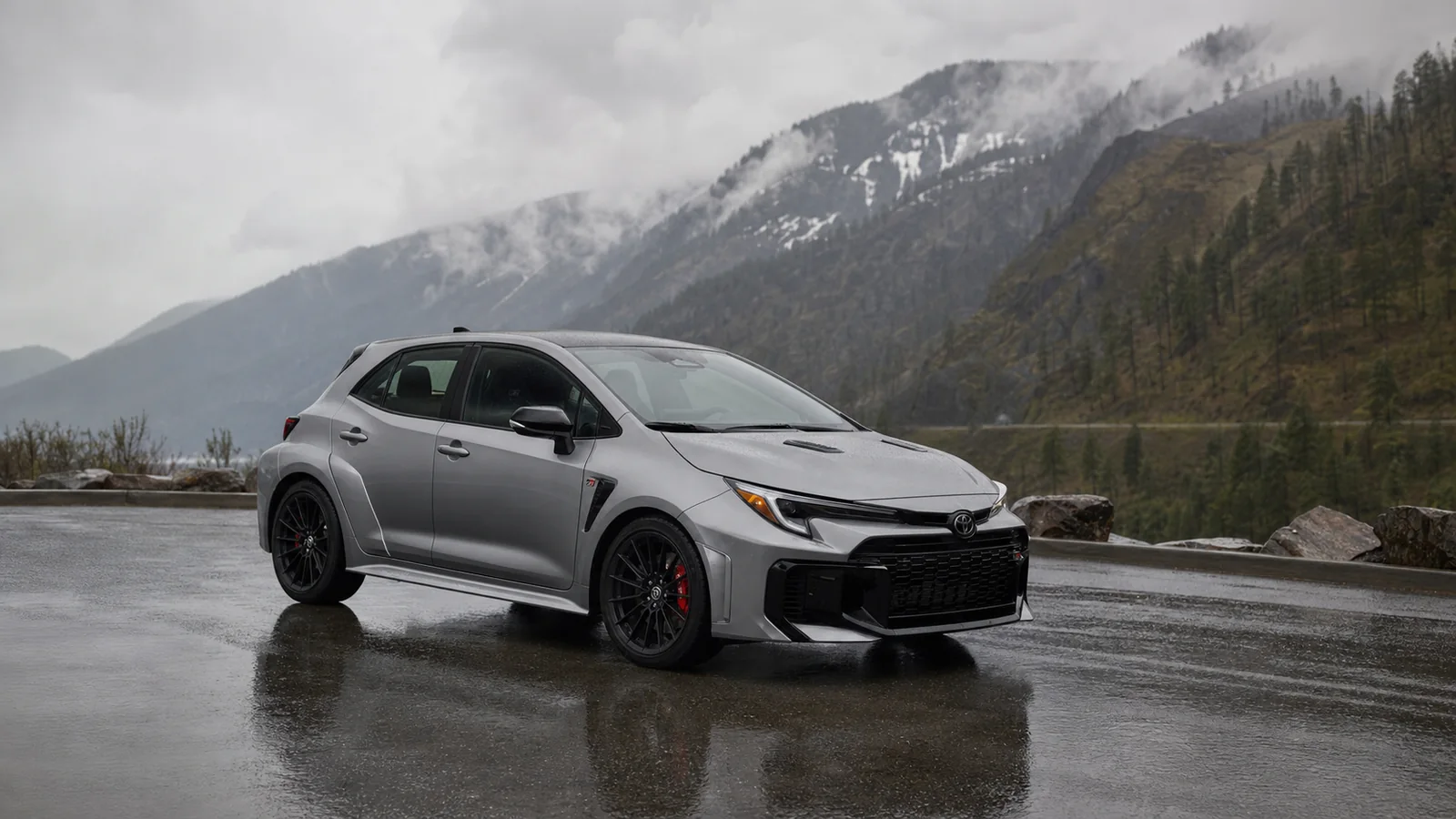
GR Corolla is a performance car before it is a practical Corolla
The 2026 Toyota GR Corolla puts a 300-hp turbo three-cylinder, GR-FOUR all-wheel drive, and front and rear Torsen limited-slip differentials into a compact hatchback. It can carry five people and groceries, but firm suspension, road noise, short fuel range, performance tires, and a tight rear seat keep it from behaving like an ordinary Corolla.
Toyota lists a 2026 starting MSRP of $39,920 for the manual Base grade before its processing fee.
Premium Plus manual starts at $45,965. The eight-speed automatic adds $2,000 to either grade.
Those prices overlap larger, quieter vehicles, so the GR must earn its compromises through traction, response, and driver involvement.
Compare it with a normal Toyota Corolla and the hatchback hub. A regular Corolla is cheaper, calmer, and more efficient.
GR Corolla makes sense only when the driver will use its stronger engine, differentials, brakes, tires, and chassis often enough to accept their cost.
Buy GR Corolla as a 300-hp all-weather performance car that happens to have rear doors, not as the practical Corolla trim at the top of the list.
Manual and Direct Automatic solve different commutes
The six-speed intelligent manual gives direct clutch and gear control. Toyota's eight-speed GR Direct Automatic Transmission uses vehicle inputs to anticipate shifts and adds full-speed adaptive cruise control capability that differs from the manual setup.
The automatic can reduce traffic work, but it should not be chosen from acceleration claims alone.
| Question | 6-speed manual | 8-speed DAT automatic |
|---|---|---|
| Traffic | Repeated clutch work | Easier low-speed travel |
| Control | Direct clutch and gear choice | Fast programmed or manual shifts |
| 2026 Base MSRP | $39,920 | $41,920 |
| Used inspection | Clutch, synchros, over-rev history | Fluid, heat, engagement, stored codes |
| Best fit | Driver wants the process | Driver values traffic ease and repeatability |
In the manual, start on a hill, creep, shift slowly from first to second, and check take-up hot and cold.
Listen for gear noise and test rev matching without rushing. In the automatic, check reverse and drive engagement, parking-speed smoothness, light-throttle shifts, a legal passing downshift, manual commands, and behavior after full warm-up.
A short drive in the most aggressive mode can hide the behavior that matters every morning.
Use normal mode, rough pavement, congestion, a parking structure, and a highway cruise.
Confirm steering-wheel and pedal fit for the main driver.
The planned GR Corolla reliability page can track transmission evidence by year. Choose manual for an interaction you enjoy every day, or automatic for a commute that genuinely benefits from its ease and logic.
GR-FOUR changes balance but cannot replace correct tires
GR-FOUR can vary front and rear torque distribution according to the selected mode and conditions.
Standard front and rear Torsen differentials can direct torque across each axle when traction differs. These systems help the car put power down, but they cannot overcome worn, cold, mismatched, or unsuitable tires.
Drive a tight low-speed circle in both directions after the car warms.
Listen for abnormal binding, clicking, or differential noise. Test gentle and stronger acceleration on a safe straight road.
The car should track predictably without a warning, vibration, or pull. Do not try to prove an AWD mode on public roads by exceeding grip.
- Match all four tires by approved size and suitable model
- Measure tread across the whole width
- Check date codes and seasonal temperature limits
- Inspect wheels for bends, cracks, and spacers
- Confirm differential and drivetrain service records
- Price a winter set before the first freeze
A four-wheel traction comparison should include tire condition and ground clearance, not just the AWD badge.
GR Corolla sits low enough that deep snow and ruts remain limits. A Subaru brand alternative may offer more clearance, while still needing four suitable tires.
GR-FOUR earns its value when four correct tires, sound differentials, and measured driving let the system work as designed.
Base and Premium Plus share the engine but not the budget
Both 2026 grades use the same 300-hp engine, both transmissions are available, and Toyota says front and rear Torsen differentials are standard.
Premium Plus adds equipment including a forged carbon-fiber roof, suede-trimmed seats with red stitching, a head-up display, and appearance details.
The extra cost buys features rather than a different core power figure.
2026 trim facts
- Base manual
- $39,920 MSRP
- Base automatic
- $41,920 MSRP
- Premium Plus manual
- $45,965 MSRP
- Premium Plus automatic
- $47,965 MSRP
- Engine
- 300 hp, 295 lb-ft
- Differentials
- Front and rear Torsen standard
Sit in both trims and list the equipment used weekly. Check seat comfort, roof headroom, display visibility, audio, climate operation, wheel and tire replacement prices, and insurance.
A carbon roof may lower mass high in the car, but it also requires careful inspection after impact or poor body repair.
Do not assume the most expensive trim has the strongest resale.
Transaction price, mileage, color, condition, service, and market demand matter. A Base car with clean records and fresh correct tires can be the better purchase than a Premium Plus that needs consumables.
Compare both with the mainstream price hub and a premium car budget. Base preserves the core GR hardware and value, while Premium Plus needs a repeated comfort, display, material, or roof reason to justify its price.
Rear-seat and cargo fit decide whether it can replace a normal hatch
GR Corolla has four side doors and a rear liftgate, but its packaging serves performance hardware first.
Adults should test knee, foot, head, and shoulder room behind the normal front-seat positions.
A child restraint needs a complete installation check using Toyota and seat-maker instructions.
Enter through both rear doors. Fasten belts, locate anchors, and check whether feet clear the front seat rails.
Do not move the driver forward to create showroom space. If three rear passengers are expected, sit them together with normal clothing and any child seat installed.
Load groceries, work bags, a stroller, sports equipment, or luggage in the combination the household uses. Check liftgate height, floor shape, rear visibility, seatback releases, and whether folding a seat removes a needed passenger place.
Secure loose objects because hard braking can turn cargo into a hazard.
A five-seat car hub includes larger choices. The Honda Civic and Volkswagen Golf GTI can frame practical performance alternatives if available in the buyer's market.
GR Corolla can replace a normal hatch only when the actual rear passengers, restraints, and weekly cargo fit without changing the driver's seating position.
Performance driving changes the maintenance plan
Toyota includes a one-year NASA membership and one High Performance Driving Event for eligible new-car buyers, subject to program terms.
Toyota also warns that performance driving involves personal and vehicle risk and may not be covered by insurance or warranty.
The free event is an invitation to learn, not proof that every cost is covered.
Before any event, follow the organizer's technical inspection, Toyota's manuals, tire-maker limits, and insurance terms. Check oil level, coolant, brakes, tires, wheel torque, battery security, loose cabin objects, and warning lights.
Use qualified instruction. Leave public-road experimentation out of the plan.
| Item | Required question |
|---|---|
| Insurance | Is this event and damage covered? |
| Warranty | What does Toyota exclude under the circumstances? |
| Inspection | Which fluids, fasteners, tires, and brakes must pass? |
| Consumables | What pads, rotors, tires, and fuel will the day use? |
| Cooling | Are temperatures and warning data normal? |
| Return trip | Is enough tire and brake life left to drive home? |
After the event, inspect fluids, brakes, tires, wheels, fasteners, and the underside.
Record work and symptoms. A car that ran without a warning can still need pads or tires.
A performance driving guide should support preparation, not substitute for the manufacturer manual or track organizer.
Treat every track day as a separate maintenance and insurance event because the included entry does not include the vehicle's heat, wear, or repair bill.
A used GR Corolla needs a cold scan and heat-history inspection
The model has attracted strong demand and enthusiast modifications since 2023.
Some cars remain stock and carefully maintained. Others may have tunes, intake or exhaust changes, altered suspension, wheel spacers, repeated track heat, or repaired damage.
Appearance cannot separate them.
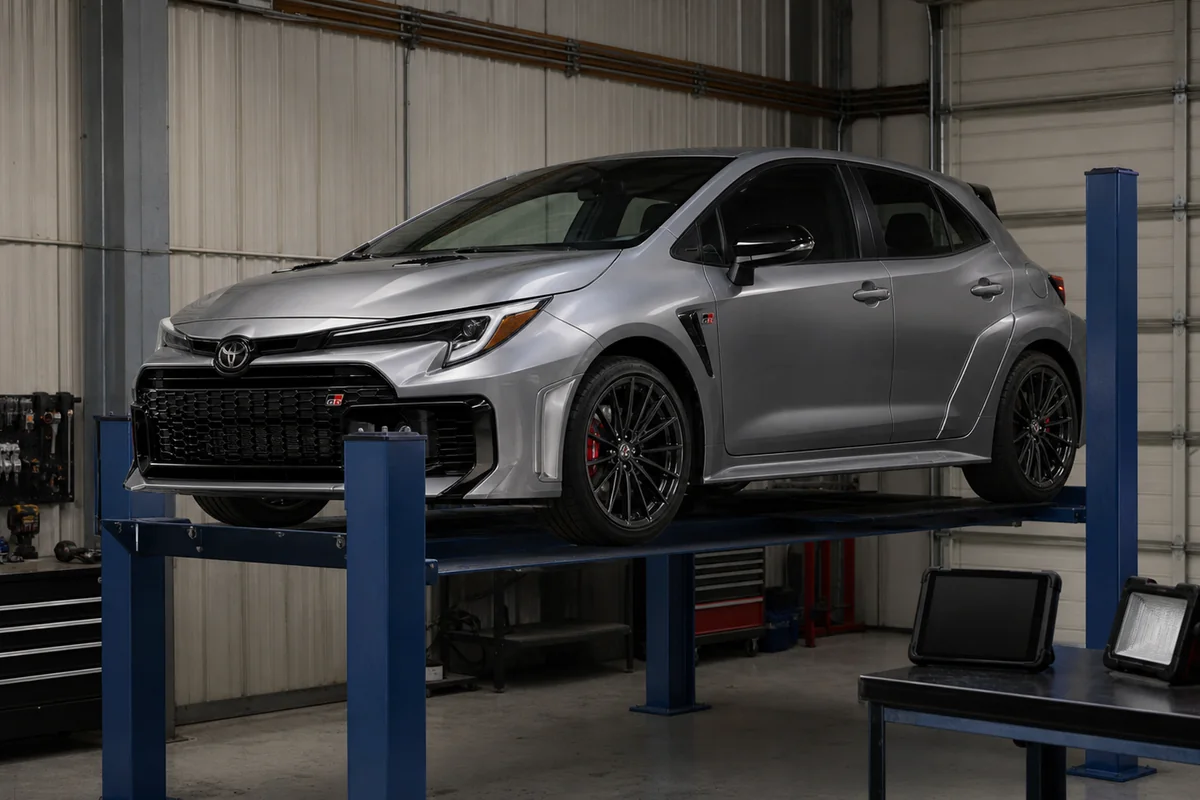
Require a true cold start. Scan every module and review stored, pending, and history codes.
Check readiness monitors, oil and coolant records, leaks, smoke, boost behavior, cooling fans, hoses, mounts, and warning history.
Inspect clutch and synchros on a manual or engagement and hot shifts on the automatic.
On a lift, inspect all four tires, wheels, pads, rotors, bearings, axles, differential areas, suspension, underbody, jack points, skid areas, and exhaust.
Look for melted weights, heavy rubber pickup, repeated wheel changes, nonfactory fasteners, or removed parts.
Identify any tune and require original parts and invoices where represented.
Check panel gaps, paint depth, glass dates, airbag status, restraint indicators, alignment, sensor mounts, and calibration records. Walk away when a seller refuses an independent inspection or cannot explain recent code clearing.
A used GR Corolla deserves sports-car diagnostics and heat inspection even when it still has four doors, a warranty claim, and factory-looking wheels.
Safety and problem claims require an evidence boundary
Toyota Safety Sense 3.0 equipment supports forward warning, automatic braking, lane assistance, and other functions according to system limits. Equipment presence does not create an overall crash-test rating, and driver aids do not make high-speed or low-grip choices safe.
Online discussion about engine failures or fires must not be turned into an official defect or recall without manufacturer or NHTSA evidence.
Search the exact VIN at Toyota and NHTSA on purchase day. Review every warning, oil or cooling symptom, repair order, insurance record, and modification with a qualified technician.
Inspect belts, airbags, seats, child anchors, glass, lamps, cameras, sensors, tires, brakes, alignment, and body structure.
Require calibration paperwork after windshield, bumper, steering, suspension, or collision work. Check tire grip in the temperature where the car will operate.
The Toyota safety research explains why NHTSA, IIHS, manufacturer documents, and exact VIN records outrank complaint counts. Keep safety claims limited to published tests and official campaigns, then use a complete inspection to answer what those sources cannot say about one car.
Ownership cost is closer to a sports car than a compact hatch
A $39,920 starting price does not make GR Corolla cheap to operate. Premium fuel, insurance, performance tires, brakes, alignment, scheduled service, winter equipment, financing, depreciation, and event use need their own lines before the payment is accepted.
| Cost | What to price |
|---|---|
| Purchase | Car, transmission, grade, fees, dealer products |
| Finance | Rate, term, down payment, total interest |
| Insurance | Exact VIN, driver, mileage, use, storage |
| Fuel | Premium requirement and actual annual miles |
| Tires | Street set plus winter or event set |
| Brakes | Pads, rotors, fluid, labor |
| Service | Oil, filters, drivetrain fluids, inspections |
| Repairs | Deductible and post-warranty reserve |
Automatic and Premium Plus increase the purchase price before insurance and interest.
Track use can consume tires and brakes quickly. Winter driving may require a separate wheel set.
Tell the insurer how the vehicle will be used and read event exclusions.
Compare the full budget with a gas hatchback, all-wheel-drive car, or a calmer Toyota model. A cheaper normal hatch plus occasional performance instruction may fit better than owning performance hardware every day.
Budget GR Corolla from tires, brakes, fuel, insurance, and use rather than assuming Corolla running costs follow the badge.
Base manual is the clearest value after the household test
GR Corolla is rare in combining compact dimensions, a useful hatch, 300 hp, sophisticated AWD, and a manual option. Its value depends on whether those features improve real trips enough to outweigh firm ride, cabin noise, tight rear space, short range, and consumable cost.
Pros
- 300-hp turbo engine in a compact hatch
- Standard GR-FOUR AWD and two Torsen differentials
- Manual and automatic choices
- Rear doors and liftgate add real utility
Cons
- Ride and noise remain performance-car compromises
- Rear space needs a physical test
- Tires, brakes, fuel, and insurance cost more
- Short model history limits long-term conclusions
Use the Toyota brand hub, hatchback hub, AWD hub, and comparison archive to keep alternatives in view.
Base manual is the strongest enthusiast value, but the correct GR Corolla is the transmission and grade that still works after a full commute, rear-seat load, winter plan, and five-year budget.
Cooling, fuel, and event use need separate operating rules
The turbocharged three-cylinder produces high output from 1.6 liters, so oil level, coolant condition, airflow, warm-up, cool-down, and warning history deserve consistent attention.
Follow Toyota's manual and maintenance guide for fluids, intervals, severe use, and track preparation. Online routines do not override the manufacturer procedure for the exact year and transmission.
Check oil on level ground using the stated procedure.
Record consumption instead of guessing. Investigate a sudden change, warning, leak, smoke, odor, or temperature concern.
Inspect the radiator and coolers for debris or impact without bending fins. Verify that nonfactory intake, grille, intercooler, exhaust, or software changes have not altered cooling or warranty assumptions.
| Use | What changes |
|---|---|
| Short urban trips | More cold operation and moisture management |
| Hot commute | Cooling, fan, AC, and traffic behavior |
| Winter | Correct tires, pressure, warm-up, salt cleaning |
| Mountain travel | Brake temperature, fuel planning, weather margin |
| Track event | Inspection, insurance, fluids, tires, brakes, cool-down |
| Long storage | Battery, fuel, tire, moisture, and rodent plan |
Use the fuel grade Toyota specifies. A busy station does not prove the right grade is in the nozzle, so check the pump label and receipt.
Track fuel cost by miles and gallons over several tanks. A small tank and enthusiastic driving can create frequent stops even when average economy looks acceptable on paper.
Event use needs written rules before arrival. Read the organizer's inspection requirements and flag system.
Confirm helmet and restraint requirements, insurance exclusions, warranty terms, tow-home options, and whether the car has enough brake and tire life for both the event and return trip.
Bring a pressure gauge, torque tool used only to the correct specification, fluids permitted by the organizer, drinking water, and a way to secure cabin cargo.
After hard use, let the car cool according to manufacturer and event guidance. Inspect tire shoulders, pressures, wheel fasteners, pads, rotors, fluid leaks, warning memory, and underbody.
Do not reset a warning before its cause and freeze-frame data are recorded.
A car that completes the day can still require service before the commute.
- Keep oil and coolant records with dates and mileage
- Stop for a pressure, temperature, or lubrication warning
- Do not cover cooling openings with cosmetic accessories
- Separate event consumables from the transportation budget
- Arrange a safe way home before using the car hard
- Inspect again after the car returns to normal temperature
The maintenance guide archive can support routine planning, while Toyota instructions and a qualified technician control the exact procedure. GR Corolla stays usable when daily, winter, mountain, event, and storage conditions each have their own documented fluid, tire, brake, and cooling checks.
Fuel range, tire temperature, and cabin noise shape the daily limit
GR Corolla can complete normal commuting, but the experience is deliberately busier than a regular compact. Turbo response, short gearing, performance exhaust sound, firm tire sidewalls, road texture, and a relatively small fuel reserve can add attention on long or congested trips.
Test those traits when tired, not only when excited.
Drive an hour at the highway speed used most often.
Turn the audio off and keep climate settings realistic. Listen for tire roar, exhaust drone, wind noise, and any abnormal bearing or trim sound.
Cross expansion joints and broken pavement. A sound that seems energetic for ten minutes may become tiring over a two-hour commute.
| Question | Test |
|---|---|
| Fuel stops | Track miles and gallons across several normal tanks |
| Highway noise | One-hour drive with audio off |
| Ride | Rough street with normal tire pressure |
| Cold weather | Correct seasonal tires and pressure plan |
| Traffic | Low-speed clutch or automatic behavior fully warm |
| Parking | Door clearance, turning, cameras, wheel protection |
Performance summer tires need temperature planning. Follow the tire maker's guidance for cold storage and use.
Do not drive a frozen summer tire as though warm pavement performance still exists. Where winters are mild but mornings are cold, an appropriate performance all-season setup may suit daily use better.
Where snow and ice are regular, use a dedicated winter plan. Keep all four tires compatible with Toyota's requirements and the AWD system.
Record fuel use rather than relying on the display alone. Divide miles by gallons from consistent fill points, and note traffic, temperature, event use, and long idling.
Frequent full-throttle driving changes consumption quickly. Plan remote trips around station spacing and the required fuel grade.
Check whether friends, family, or coworkers will tolerate the ride and noise. The driver may accept the trade because the steering and traction are rewarding.
A passenger with back pain, motion sensitivity, or a child who sleeps in the car may reach a different conclusion.
- Test the roughest regular road
- Drive long enough for noise fatigue to appear
- Price summer, winter, or all-season choices before delivery
- Measure fuel use over normal tanks
- Keep wheel protection in mind when parking
- Reject a tire setup that does not suit the coldest expected temperature
GR Corolla works every day when its noise, ride, fuel stops, tire temperatures, parking risk, and passenger comfort remain acceptable after the performance novelty fades.
The delivery record should preserve condition before the first mile
Photograph the exterior, wheels, tires, glass, seats, cargo area, odometer, fuel level, keys, manuals, and warning-light check before accepting delivery.
Match the VIN on the car, contract, insurance, and window sticker. Confirm the transmission, grade, roof, differential equipment, options, and accessories in writing.
- Remove unwanted dealer products before signing
- Record tire brand, size, date, and pressure
- Confirm both keys and all included equipment
- Save the signed inspection and recall lookup
- Schedule any promised correction in writing
A clear handoff protects both new and used buyers when a wheel mark, missing part, warning, or promised repair appears later. Do not leave delivery with a verbal promise that changes price, condition, equipment, or repair responsibility.