The LE keeps the Prius fuel-saving promise intact
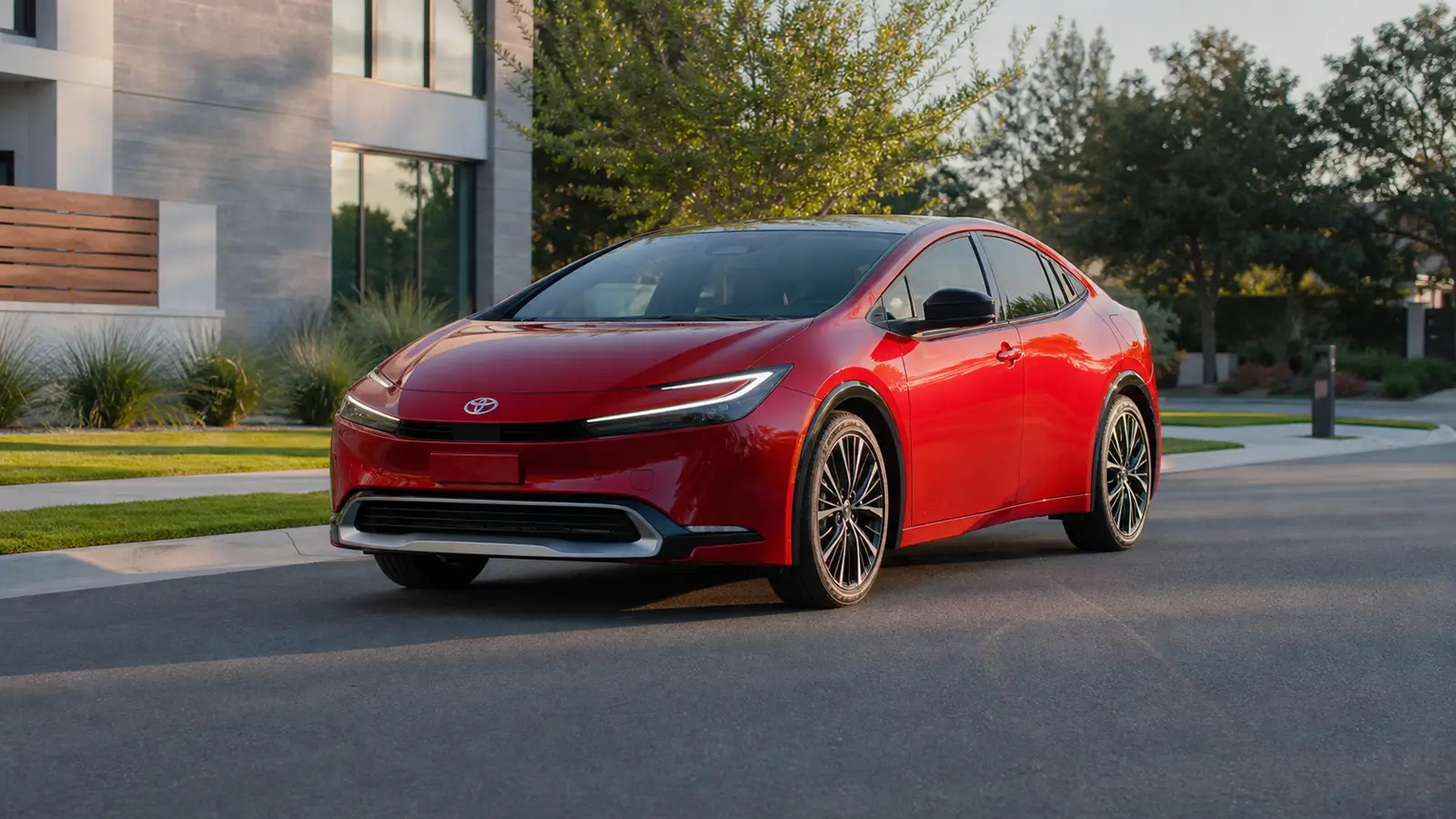
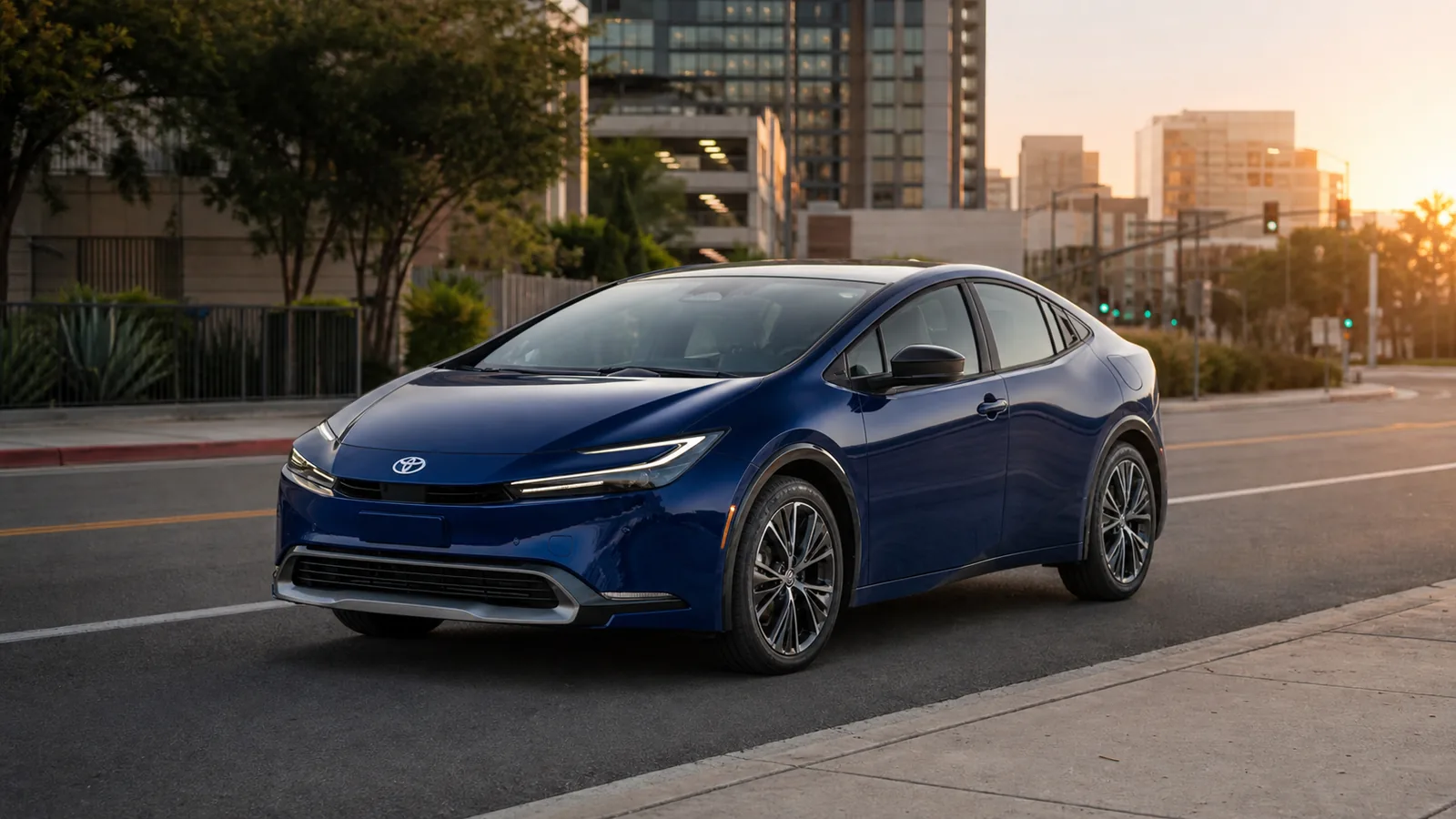
The 2026 Toyota Prius starts at $28,550 for LE and combines 194 hp with a manufacturer-estimated 57 mpg on front-wheel-drive models. That is the cleanest version of the Prius idea: pay for an efficient hybrid system, small wheels, and useful hatchback space before paying for luxury equipment.
The fifth generation changed the old compromise. A Prius no longer feels slow in normal traffic.
The 2.0L hybrid system has enough power for short ramps and highway passing, while the lower roof and wider stance make the car feel more settled than the tall previous generation.
That recommendation protects more than MSRP. LE's smaller wheels help fuel economy, ride comfort, and tire replacement cost.
A higher trim can still be right, but it moves the Prius away from maximum savings and toward a normal comfort purchase.
The car's new shape also creates a new question. Style improved, but rear headroom, door access, and rear visibility became less generous.
Sit behind your own driving position and use the rear glass before accepting the design from online photos.
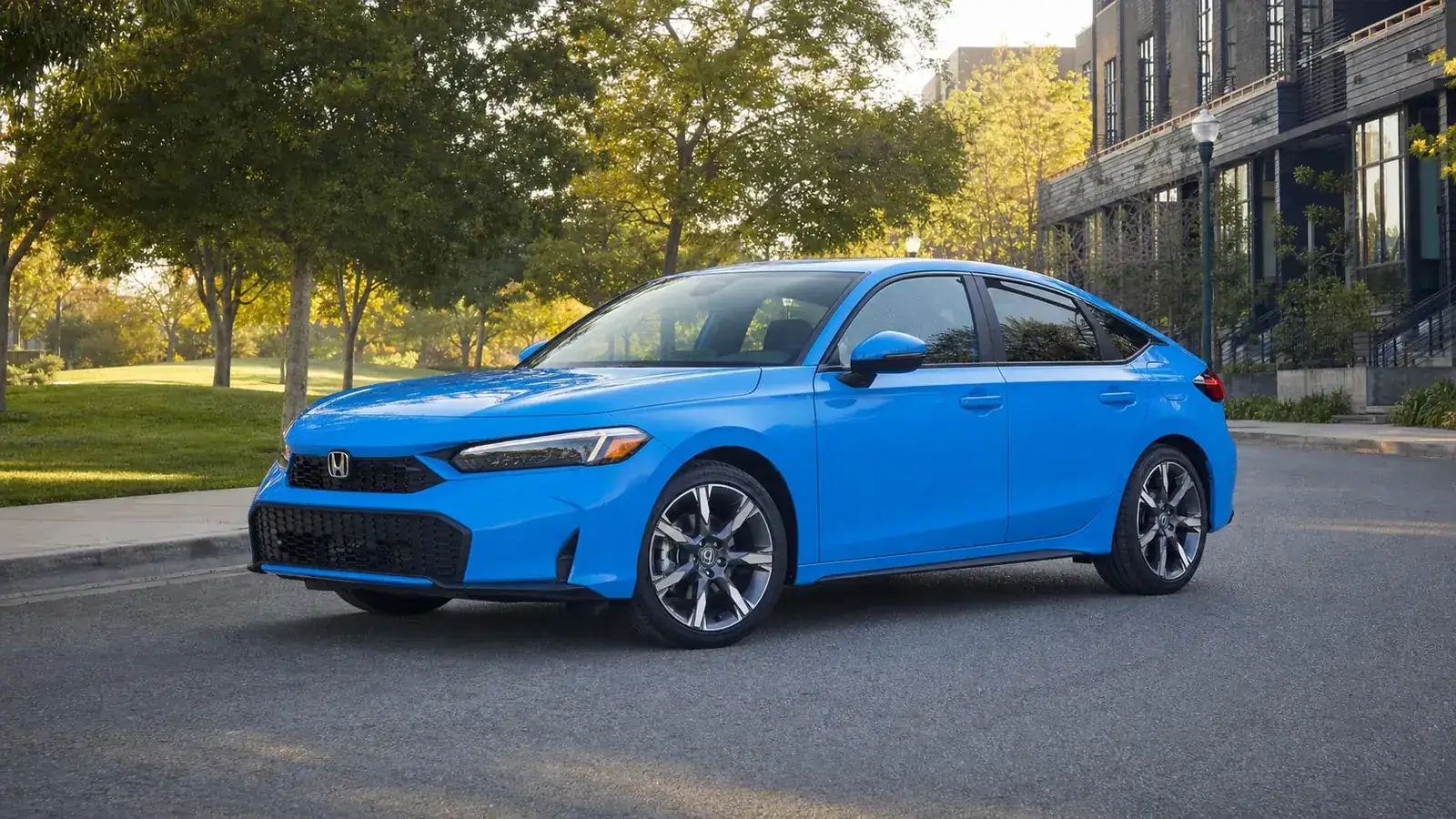
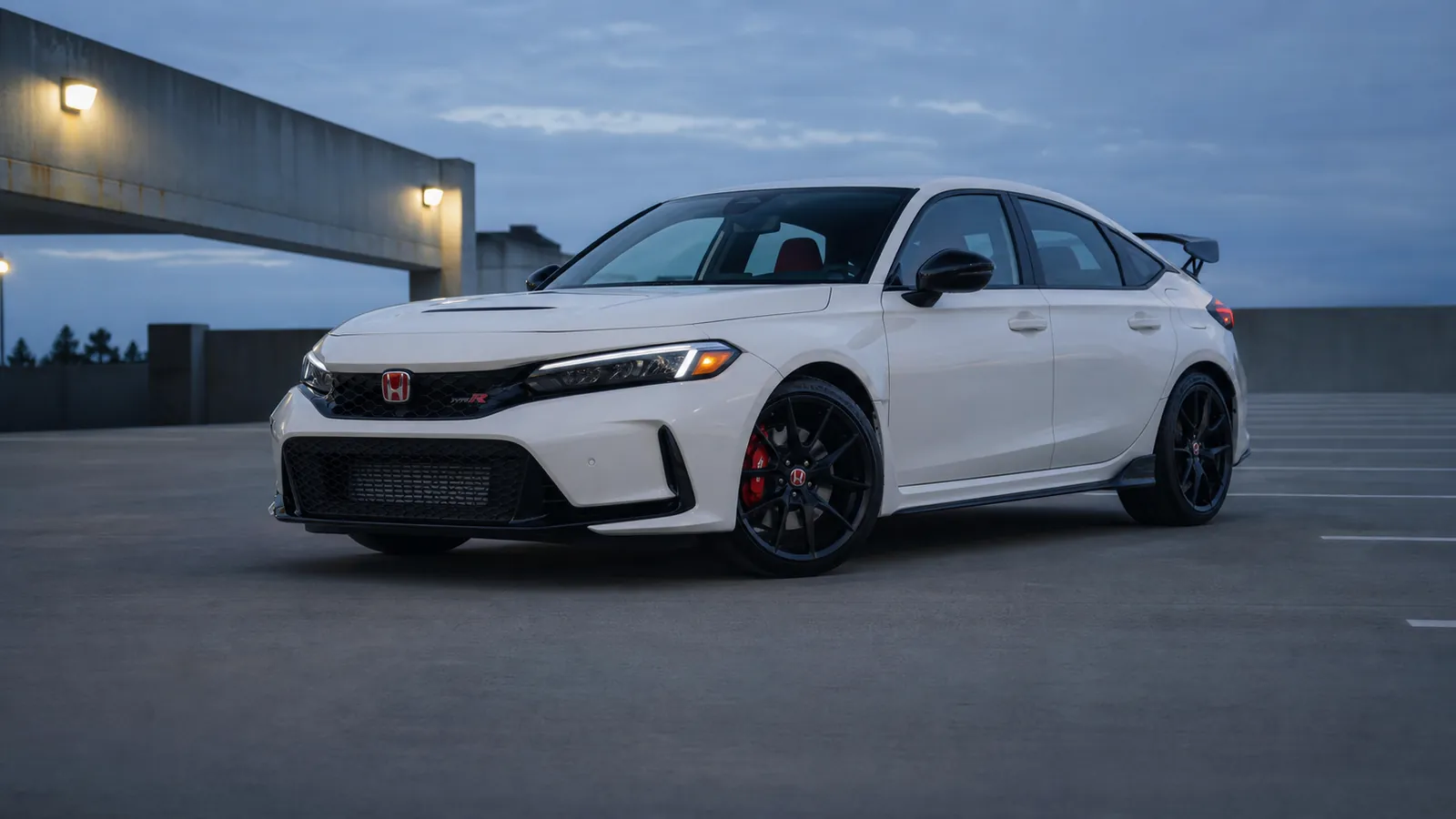
Compare the Prius with the Toyota Camry when rear-seat comfort and highway quiet matter more. Compare it with the Honda Civic when driving feel and a lower non-hybrid entry price matter.
The Prius wins when annual miles and stop-and-go traffic turn fuel economy into money you can actually keep.
LE also protects the efficiency advantage through its smaller wheels and lower starting price. Larger wheels can sharpen appearance, but replacement tires cost more and their efficiency penalty repeats on every tank.
Buyers focused on total cost should compare a tire quote for LE with one for XLE or Limited before valuing cabin upgrades.
The correct baseline includes comfort, not just mpg. Drive LE over broken pavement, adjust the seat for at least 20 minutes, and check whether its materials and noise level suit the length of your commute.
If they do, a higher trim must justify every added dollar with a feature you will use. If they do not, the cheapest Prius can be false economy for a driver who spends two hours a day in the car.
Check dealer pricing against the mainstream car price range. Market adjustments, accessories, and finance products can remove the fuel savings that attracted you to the Prius.
Compare signed out-the-door numbers rather than monthly payments.
FWD and AWD change traction more than acceleration
Front-wheel-drive Prius models make 194 combined hp. Electronic on-demand AWD adds a rear motor and raises total output to 196 hp.
The two-horsepower difference is not the reason to choose AWD. Extra launch traction on snow, wet hills, and slippery driveways is the reason.
The rear motor helps when the car starts or detects slip. It does not turn the Prius into a high-clearance crossover, and it does not replace winter tires.
Ground clearance and approach angles remain those of a low hatchback.
AWD costs more and gives up some efficiency. At 12,000 annual miles, a three-mpg difference is modest.
The purchase premium and tire discipline can matter more. Calculate with your fuel price rather than treating the EPA number as a verdict.
Match the drivetrain to the route.
- Choose FWD for cleared city roads, mild winters, and maximum fuel economy
- Choose AWD for recurring snow, steep starts, or wet rural roads
- Use four matching tires with similar tread on either drivetrain
- Buy winter tires when braking and cornering on snow matter regularly
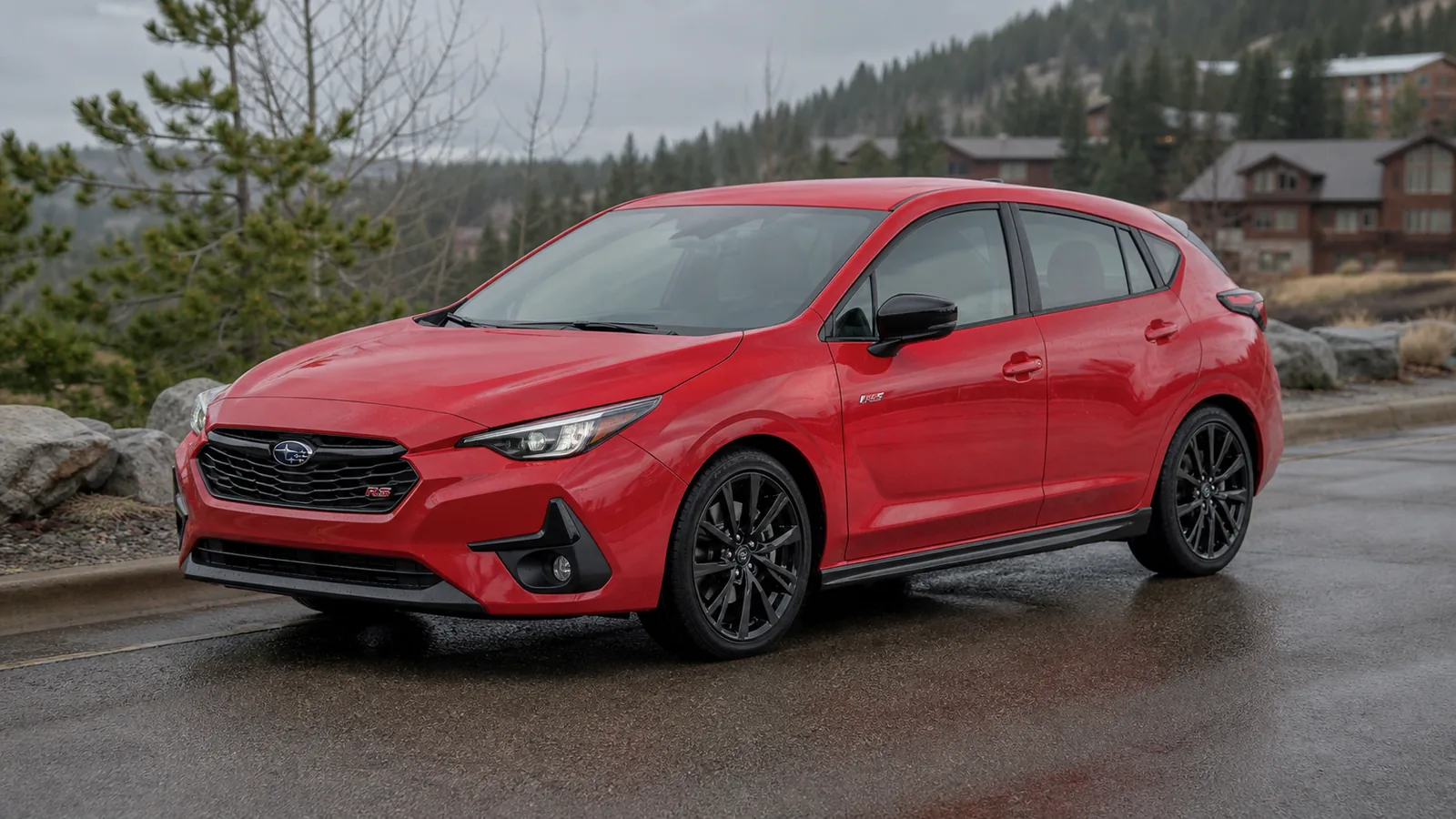
The AWD car category includes sedans and hatchbacks that may offer more clearance or a different driving feel. A Subaru Impreza supplies standard AWD and more upright hatchback access, but it uses considerably more fuel.
A test drive should include a ramp and a rough street. The hybrid system can let engine rpm rise and remain steady under full acceleration.
That sound is normal for the eCVT, though a buyer sensitive to powertrain noise should experience it before signing.
AWD adds rear-motor assistance when traction is limited, but it does not turn the Prius into a high-clearance vehicle.
Ground clearance, tire sidewall, and the low front body still matter on deep snow or an unplowed driveway. A driver who regularly meets those conditions should compare the Prius with an efficient crossover instead of assuming AWD solves the entire winter problem.
Tires remain the first contact with the road. A front-drive Prius on good winter tires can stop and turn with more confidence than an AWD car on worn all-season tires.
Budget a matched seasonal set before paying for drivetrain hardware that cannot improve braking grip by itself.
Test both versions on the same route if possible. Listen for road noise, check ride comfort, and make a low-speed tight turn.
The power difference is too small to drive the decision. Choose AWD for repeatable traction conditions, and choose FWD for the lowest purchase price and highest official efficiency.
AWD is a traction purchase with a small mpg penalty, not the faster Prius trim.
XLE, Nightshade, and Limited trade efficiency for comfort
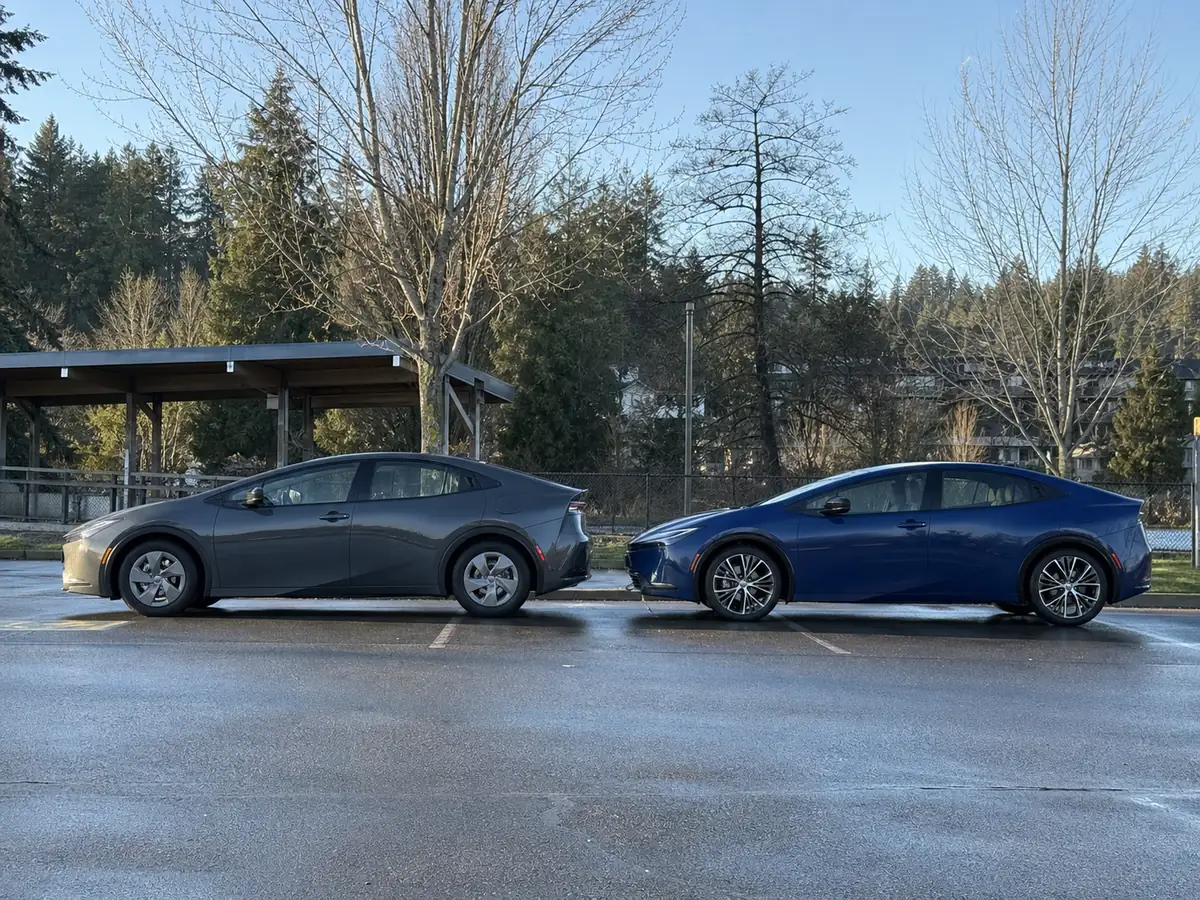
XLE adds the comfort features many buyers expect in a $30,000 car, including power-adjustable and heated front seats, a smart key system, and larger wheels.
Nightshade is mainly a styling treatment built around XLE equipment. Limited adds the richer audio, larger display, ventilation, and other premium items.
The equipment can improve daily use, especially when two drivers share the car or winters make heated seats valuable. The trade is higher purchase price, heavier and larger wheels, more expensive tires, and a small fuel-economy loss.
| Trim | Strongest reason | Main compromise |
|---|---|---|
| LE | Maximum mpg and lowest total cost | Fewer seat and cabin upgrades |
| XLE | Heated power seat and daily comfort | Larger wheels and higher price |
| Nightshade | Dark exterior style | Pays for appearance without changing performance |
| Limited | Ventilation, audio, and premium cabin features | Price can approach larger cars |
Wheel damage deserves special attention on used XLE, Nightshade, and Limited cars.
Low-profile tires offer less cushion over potholes. Check each rim for bends, cracks, repairs, and uneven wear, then price the exact tire size.
The larger touchscreen can look more impressive in a showroom, but the standard system already handles normal phone integration. Decide whether screen size changes a weekly action or only the first impression.
A loaded Prius can overlap a better-equipped Camry or an entry crossover. The new versus used framework helps when a used Limited appears near the price of a new LE.
Remaining warranty, tire condition, interest rate, and equipment all belong in that comparison.
Toyota's hybrid lineup gives buyers many ways to spend more for height or space.
Stay with Prius when hatchback utility and maximum efficiency are the goal.
XLE is the comfort ceiling for most buyers, while Limited should solve several daily needs before its price makes sense.
XLE adds the features many drivers notice daily, but its value depends on seat comfort and climate. Heated seats can matter in a cold region, while a glass roof or appearance treatment may carry little practical value.
Nightshade is primarily a styling choice, so compare its price with an equivalently equipped XLE rather than treating it as a mechanical upgrade.
Limited makes the strongest case for buyers who want the upgraded cabin and technology in a car they will keep for many years.
Test the larger screen, audio controls, parking features, and seat adjustment while stationary. A complicated feature that is awkward in the showroom will not become easier during a busy commute.
Larger wheels deserve a road test on the worst pavement you use.
They change tire cost, ride impact, and pothole risk. Ask the dealer for the exact replacement tire size and obtain a local installed price.
That number gives the comfort upgrade a real lifetime cost.
The lower roof improves style but changes passenger fit
The current Prius hatchback looks less like an appliance because its windshield and roofline sit lower.
That visual improvement has a physical cost. The rear opening is tighter, tall passengers sit closer to the headliner, and the view through the rear glass is more restricted.
Do not judge space from cargo-volume numbers alone. Bring the tallest household member and install any child seat you use.
Watch head clearance while entering, not only after everyone is seated. A passenger who fits once may still dislike ducking under the roof every day.
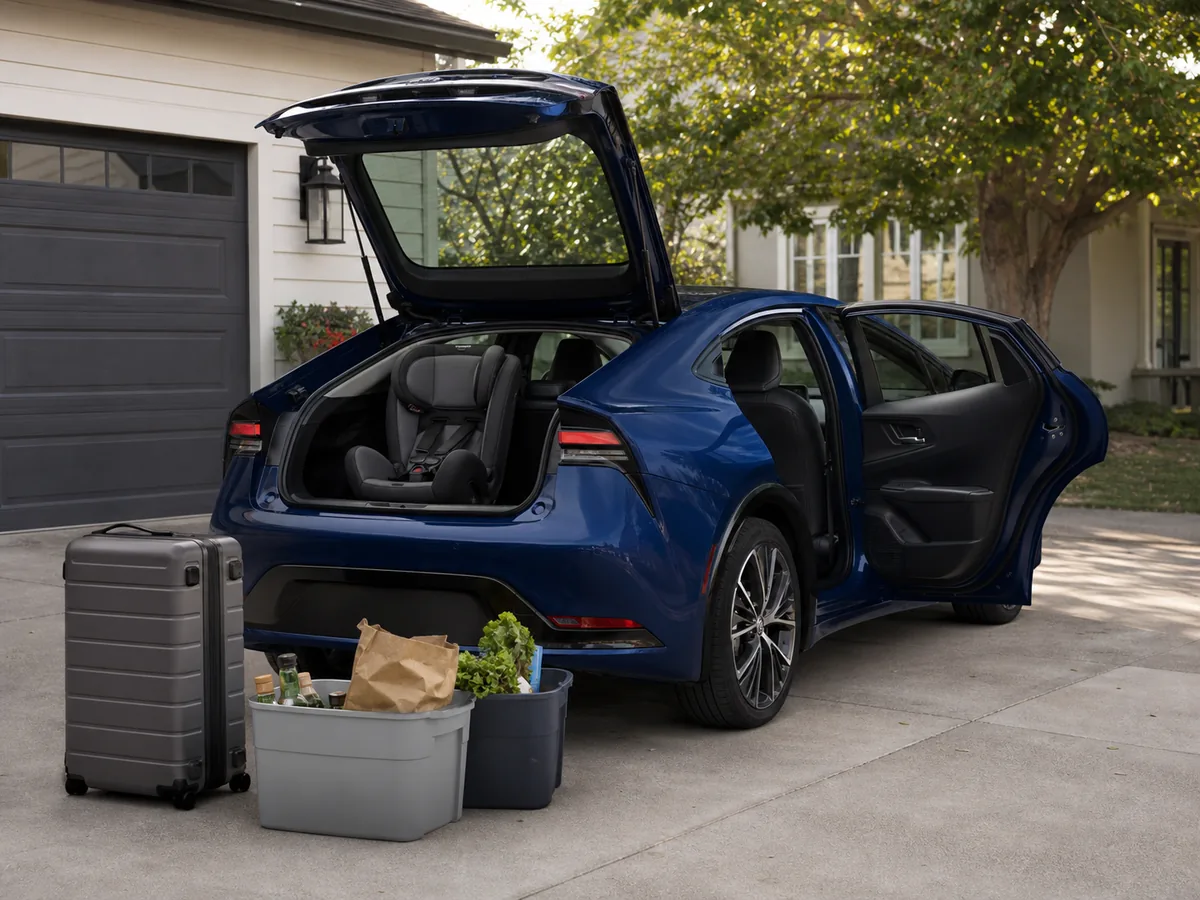
The hatch remains useful for groceries, suitcases, and long objects. Its opening is more flexible than a sedan trunk, though the sloping rear glass limits box height.
Fold the seat and try the bulky item that causes trouble in your current car.
Rear visibility depends on mirrors, camera quality, weather, and the glass shape.
Use the car at dusk or in rain if possible. Clean cameras and working defroster lines matter more on a shape that already gives the driver less direct glass area.
- Check the digital and physical sightline around the rear pillars
- Confirm a stroller or suitcase fits below the hatch glass
- Sit behind both front-seat positions
- Test LATCH access with the actual child seat
- Inspect the hatch opening for paint damage from loading
The 2026 Prius earned an IIHS Top Safety Pick+ designation with Good results in the current small-overlap, updated moderate-overlap, and updated side tests. Headlights were Acceptable, while vehicle and pedestrian front-crash prevention were Good.
That safety performance is a meaningful strength, but driver aids do not repair poor outward fit. Buy the shape only after every regular passenger can enter comfortably and the rear view feels manageable on your roads.
Load the car with the people and objects it will carry. A tall rear passenger should enter without ducking into the roof edge, sit behind the real driver position, and check head clearance over bumps.
A child seat should be installed rather than held near the opening because roof height and door shape affect the angle needed to secure it.
The hatch is long and useful, but the sloping glass reduces the height available at the rear.
Bring a stroller, large suitcase, dog crate, or mobility aid to the viewing. Lay the rear seats down and confirm that the resulting floor shape works for the longest item.
Published volume cannot show whether one rigid object clears the opening.
Rear visibility also needs a live test in rain or darkness. Set mirrors correctly, reverse into a tight space, and check how much the camera and parking sensors compensate for the body shape.
A buyer who frequently carries bulky cargo may be better served by the Corolla Cross even if it uses more fuel.
Hybrid savings depend on where and how far you drive
A 57 mpg rating is impressive, but the dollar value comes from annual miles, fuel price, traffic, temperature, and trim.
City and suburban driving usually let the hybrid recover more energy through regenerative braking.
Long high-speed trips reduce the advantage.
Use a simple comparison. Divide annual miles by expected mpg, then multiply gallons by local fuel price.
Compare the result with the car you would buy instead. Do not compare Prius fuel cost with a vehicle you were never going to purchase.
| Vehicle efficiency | Gallons per year | Difference from 57 mpg |
|---|---|---|
| 57 mpg Prius | About 211 | Baseline |
| 45 mpg hybrid | About 267 | 56 more gallons |
| 34 mpg gas compact | About 353 | 142 more gallons |
| 28 mpg crossover | About 429 | 218 more gallons |
At $3.50 per gallon, 142 gallons equal about $497 per year. A $3,000 price premium takes years to repay at that rate.
Higher mileage or fuel prices shorten the time.
Lower mileage lengthens it.
Cold weather can reduce short-trip efficiency because the engine runs to warm the cabin and emissions system.
Tire pressure also falls with temperature. Summer heat can increase air-conditioning load.
Use EPA figures for comparison, not a promise that every tank matches the sticker.
The regular Prius does not plug in. If you can charge at home and drive many short trips, compare the planned Prius Plug-in Hybrid separately.
If charging is inconsistent, the regular Prius keeps its advantage by requiring no new routine.
The planned real-world Prius mpg analysis can handle owner-style conditions in more detail. Buy the Prius for measured annual savings, not because the 57 mpg number looks good without a mileage calculation.
Calculate payback from annual gallons. Divide yearly miles by the mpg of each car, multiply by your local fuel price, then compare the annual difference with the Prius purchase premium.
A 15,000-mile urban driver can recover a premium much faster than a 6,000-mile highway driver who already owns an efficient sedan.
Cold weather, short trips, cabin heat, speed, and tire pressure all move the result. Use a conservative estimate that reflects winter and freeway driving rather than the best official figure.
Keep the calculation simple enough to update when fuel prices change.
Financing changes the answer too. Interest paid on a higher purchase price can consume several years of fuel savings.
Compare cash price, loan rate, insurance, and expected holding period together. The Prius works best when the owner drives enough and keeps it long enough for repeated fuel savings to overcome the initial difference.
Reliability is strong, but the 2023 redesign is still young
The Toyota hybrid architecture has a long record across Prius generations, taxis, and other Toyota models. The current fifth-generation car arrived for 2023, so its exact body, electronics, and components have less long-term evidence than the Prius name as a whole.
Separate system reputation from vehicle condition. The high-voltage battery is designed for long service, but cooling, warning lights, accident repair, and neglected maintenance still matter.
The 12-volt battery can also create faults and a no-start condition even when the hybrid battery is healthy.
- 2016 to 2022Fourth generation emphasizes maximum practicality and established used-car data
- 2023Fifth generation arrives with 2.0L hybrid power and much stronger acceleration
- 2025Nightshade joins the lineup and current safety testing expands
- 2026LE, XLE, Nightshade, and Limited continue with FWD or AWD
Inspect the battery cooling intake for dust, pet hair, or blockage. Start the car from cold, confirm the Ready indicator appears normally, and watch for hybrid, brake, or driver-assist warnings.
Acceleration should be smooth as the engine joins the electric motor.
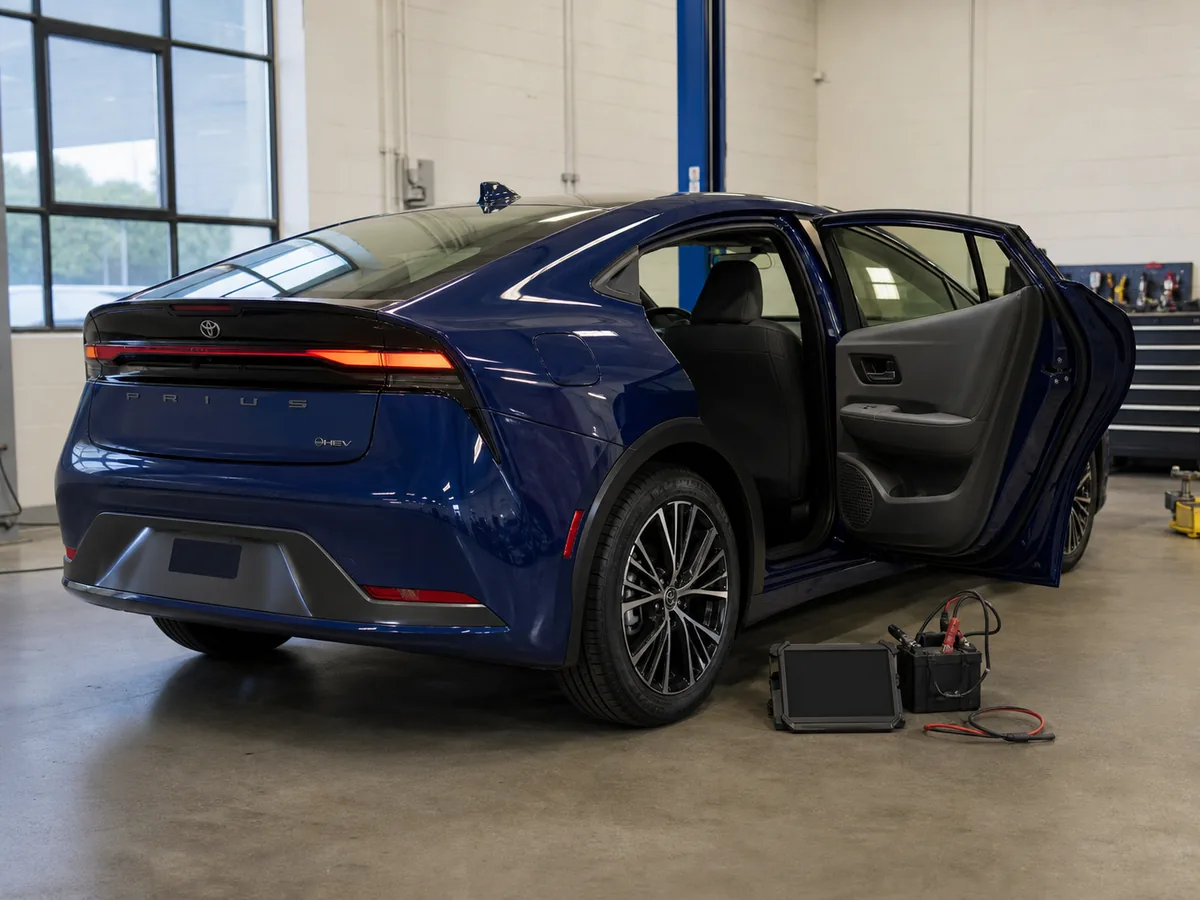
Use a scan tool capable of reading Toyota hybrid and body modules, not only generic engine codes.
Verify recall status by VIN through NHTSA or Toyota. The planned Prius recall lookup answers that exact question, while the Prius maintenance schedule should guide service after purchase.
Check tires and wheel alignment because low rolling-resistance tires can be expensive and larger wheels are easier to damage.
A clean hybrid history does not compensate for accident repairs or four neglected tires.
The Prius reputation is a useful starting point, while records and diagnostic evidence decide the exact car.
A used inspection should verify that hybrid cooling inlets are clear, the 12-volt battery is healthy, and no warning lights have been recently erased.
Scan all modules, then compare readiness monitors with the seller's story. Incomplete monitors can mean the battery was disconnected or codes were cleared shortly before the viewing.
Review recall completion by VIN through the manufacturer and NHTSA. A model reputation does not prove that one car received every campaign or repair.
Ask for service invoices, check tire wear across the tread, and confirm that driver-assistance cameras work after any windshield replacement.
On the road, watch the energy display without chasing a particular pattern. Engine starts and stops should be smooth, braking should blend predictably at low speed, and the car should track straight.
A harsh transition, warning message, or repeated cooling fan noise needs diagnosis before purchase.
Ownership cost is best on small wheels and a long hold
Fuel is the obvious saving, but depreciation, tires, insurance, financing, and trim price can be larger.
LE aligns all of them with the Prius mission. It costs least, returns the best mpg, and uses the least expensive wheel package.
Higher trims may still hold value well because used buyers want comfort, but they expose more dollars to depreciation. A $7,000 equipment increase cannot be repaid by fuel economy because the drivetrain is nearly the same.
Insurance should be quoted by VIN before deposit. Hybrid parts, driver-assist sensors, wheel size, local theft and collision data, and the driver's record all influence the premium.
A generic online estimate is not enough.
Regenerative braking can reduce friction-brake wear, but it does not eliminate brake-fluid service or corrosion checks.
Cars in wet or salted areas can develop rusty rotors when gentle braking rarely scrubs them clean.
A test drive should include a firm, safe stop without vibration.
Used buyers need a first-month reserve for tires, battery, filters, fluids, alignment, and inspection. A low-mile Prius that sat can still have aged tires and a weak 12-volt battery.
Financing can erase fuel savings. Compare amount financed, rate, term, and dealer add-ons with the lease-versus-buy calculation.
The planned Prius ownership-cost research can extend the horizon, but the cleanest recommendation remains simple.
Buy the lowest trim that fits, keep it for years, and let fuel savings accumulate instead of financing equipment that cannot save fuel.
Build a five-year estimate with tires, insurance, registration, routine service, and financing. Fuel is the Prius advantage, but wheels and trim can change the non-fuel side.
An LE kept for many years usually preserves the cleanest cost case because it combines the lowest price, highest efficiency, and less expensive tire size.
Collision repairs can be costly when cameras, sensors, lamps, and body panels are involved.
Compare insurance quotes by VIN and understand the deductible. For a used car, check that all safety systems calibrate correctly after glass or front-end work.
Resale strength helps only when the purchase price is sensible. Paying far above market transfers future resale value to the seller on day one.
Buy the condition and configuration you need, keep complete records, and let the long holding period spread the initial cost over more miles.
Who should buy a Prius and who needs a different shape
The Prius fits a high-mile commuter, delivery-style errand driver, small household, or city owner who wants hybrid savings without charging. It also fits buyers who want a hatchback but do not need crossover ground clearance.
It is weaker for very tall rear passengers, families loading bulky boxes, drivers who dislike restricted rear visibility, and buyers whose annual mileage is too low to justify a hybrid premium. People who charge at home may find the plug-in version more useful, while people who need height may prefer a hybrid SUV.
Drive the Subaru Forester when visibility, cargo height, and standard AWD matter more than 57 mpg. Drive the Camry when rear-seat comfort and highway calm matter more than hatchback access.
Finish the decision with annual fuel math, a rear-seat test, cargo loading, tire prices, an insurance quote, and the out-the-door figure. Those checks prevent a famous efficiency number from hiding a poor fit.
The best Prius is the one that turns your real mileage into savings without making passengers, cargo, or financing harder than they need to be.