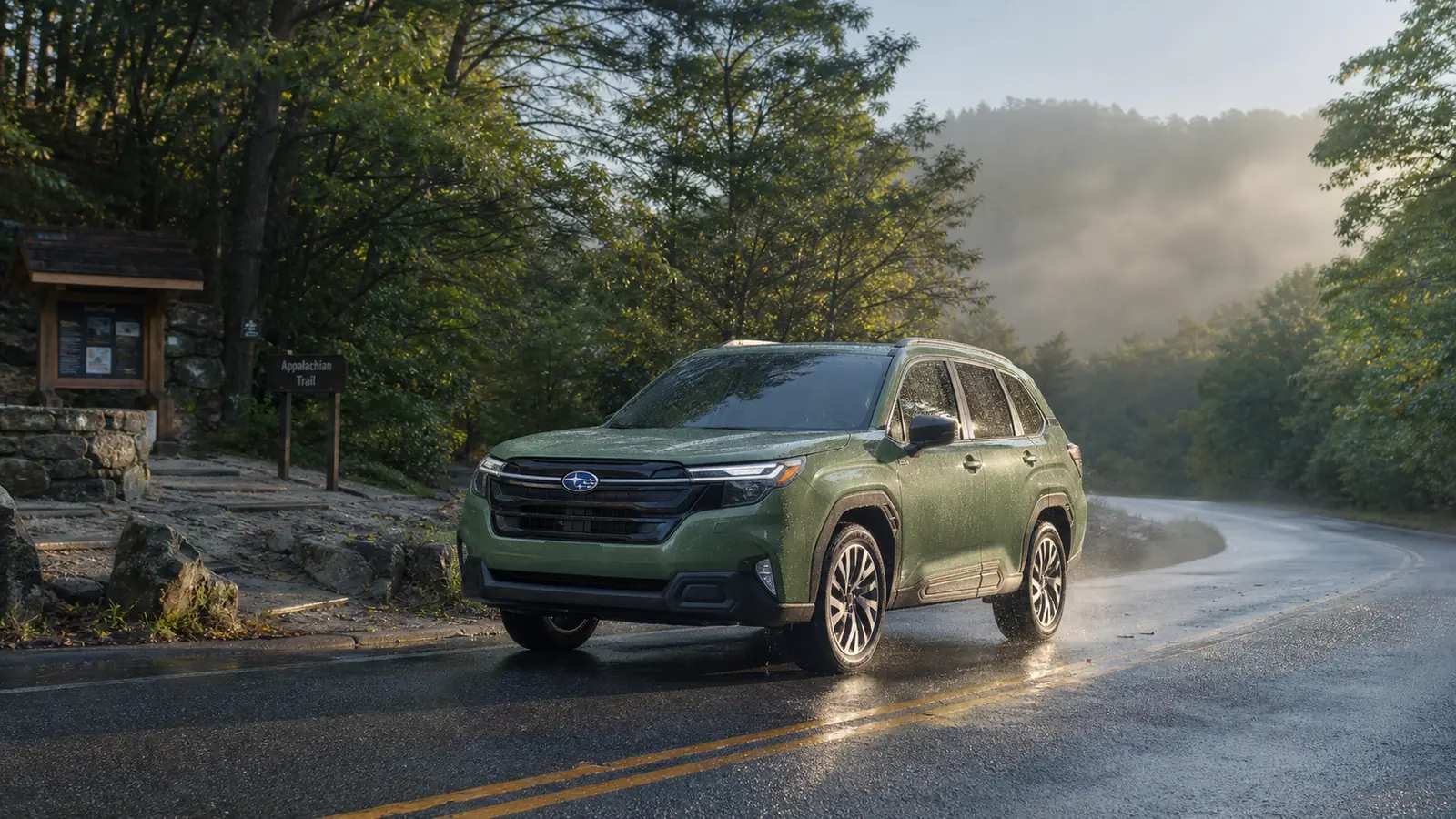
Premium gas trim is the Forester baseline to beat
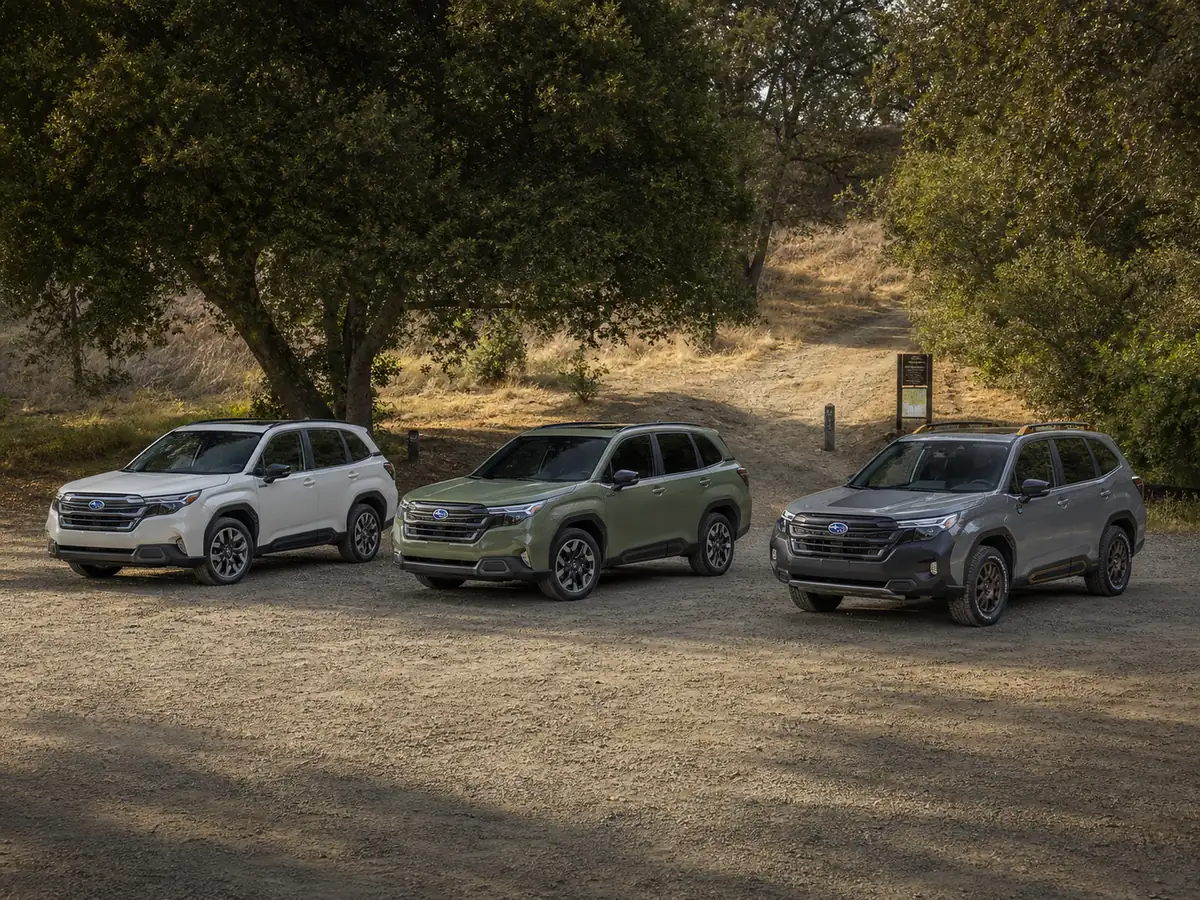
The 2026 Subaru Forester lineup now stretches from a $29,995 Base model to gas, hybrid, Wilderness, and Touring versions above $40,000 within the Subaru range.
That range can make the decision look complicated. Start with gas Premium because it captures the Forester's main strengths without paying for every available system.
Every Forester includes symmetrical all-wheel drive, at least 8.7 inches of ground clearance outside special configurations, a tall glass area, and a boxy cargo opening. Those are physical advantages that apply before hybrid badges or luxury equipment.
Base has the lowest price and the most cargo volume, but its dual 7-inch screen setup and missing comfort items may feel sparse. Premium adds the larger 11.6-inch interface, wireless phone integration, heated equipment, and convenience features that many owners use daily.
Sport changes wheels, trim, and chassis presentation.
Limited and Touring add comfort. None of these gas trims changes the 180 hp engine, so higher prices do not buy faster acceleration.
Compare the Forester with the Honda CR-V and Toyota RAV4 on the same route.
The Forester should win on visibility, AWD confidence, and cargo access.
If it does not, the brand's reputation is not enough.
The trim should solve a real use case, because every expensive Forester still begins with the same upright family-SUV shape.
Gas and hybrid pay back on different roads
Gas Foresters use a 2.5L flat-four rated at 180 hp and pair it with a Lineartronic CVT.
Base, Premium, and Limited reach 26 mpg city and 33 highway. Sport and Touring are rated at 25 city and 32 highway, while Wilderness drops to 24 and 28.
Hybrid trims combine a 2.5L engine with electric motors for 194 total hp. EPA figures are 35 mpg city and 34 highway, and Subaru lists up to 581 miles of range.
The advantage concentrates in city driving, where electric assistance and regenerative braking do more work.
| Use pattern | Gas Forester | Forester Hybrid |
|---|---|---|
| Low annual mileage | Lower price usually wins | Premium takes longer to recover |
| Heavy city traffic | 26 mpg on efficient gas trims | 35 mpg creates meaningful savings |
| Long highway trips | Up to 33 mpg | 34 mpg narrows the advantage |
| Maximum range | About 547 miles on efficient trims | Up to 581 miles |
| System output | 180 hp | 194 hp |
The hybrid starts at $34,730, $2,735 above gas Premium before comparing exact equipment.
At 12,000 city-heavy miles, the fuel gap can matter. At 7,000 mostly highway miles, the repayment can be slow.
Use local fuel price and your route.
The hybrid does not need external charging. Its battery is replenished by the engine and regenerative braking.
That makes it easier than a plug-in, but it cannot deliver a daily electric-only commute.
All versions keep mechanical AWD. The hybrid does not become a front-drive fuel special, which preserves the Forester's all-weather identity.
It also means a buyer cannot choose a cheaper, more efficient front-wheel-drive trim.
Rival hybrid SUVs reach their economy with different all-wheel-drive strategies, and several of them drop the rear drive entirely at a steady cruise. Choose hybrid for repeated city miles, not because it is automatically the better Forester on every road.
The hybrid's strongest case is repeated city and suburban use, where braking energy can be recovered and the engine can spend more time off.
A steady highway commute narrows the fuel gap. Calculate annual gallons from your real route before treating the 35 city figure as a universal result.
Purchase price matters as much as fuel. Subtract the comparable gas trim's out-the-door price from the hybrid price, then divide that premium by expected annual fuel savings.
Include finance interest because borrowing the premium raises the amount that fuel must recover. A low-mileage owner may prefer the gas car even when the hybrid uses less fuel.
The hybrid also changes cargo packaging and vehicle weight. Load the same family gear into both versions and drive the same uneven road.
Choose it when the quieter low-speed response and city savings are worth the price and space trade, not simply because hybrid is the newer badge.
Visibility and cargo shape matter more than the volume headline
The Forester's upright windshield, low beltline, and large side glass reduce the effort required to place this five-seat SUV in traffic and parking spaces.
This is one of the few strengths a spec sheet cannot fully express. Drivers who feel enclosed in a Mazda CX-5 or low-roof crossover may relax immediately.
Base lists 29.6 cubic feet behind the rear seat and 74.4 cubic feet with it folded. Most other trims list 27.5 and 69.1 cubic feet because equipment and packaging reduce the measurement.
The useful part is the nearly square opening and tall roof.
Bring the stroller, dog crate, cooler, luggage, or mobility equipment that determines whether the SUV works. A volume number cannot show whether the hatch clears a tall object or whether wheel-well width accepts a crate.
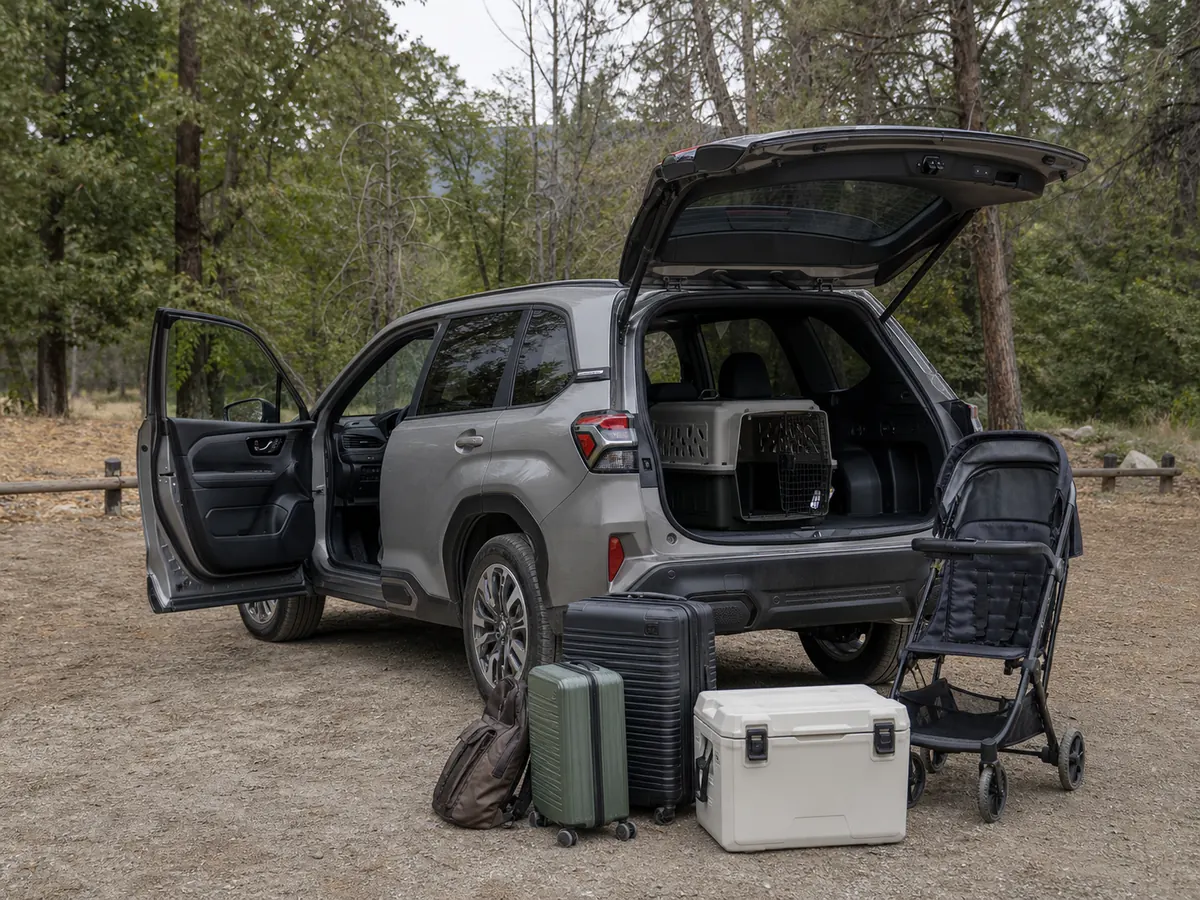
Rear doors open wide, and the roof gives adults room to lean in around a child seat.
Install the actual seat and check front-passenger space. Verify that the rear head restraints, tether anchors, and lower anchors work with your equipment.
Roof use needs a separate calculation. Dynamic roof-load limits, crossbars, cargo boxes, and rooftop tents are not interchangeable.
Follow the owner's manual and accessory instructions for the exact setup.
The SUV body category contains vehicles with more style, power, or fuel economy.
The Forester's argument is practical visibility and access.
If you can see corners easily and load the awkward item without a fight, those advantages will matter more often than an extra screen feature.
Set the driver's seat first, then test the rear seat behind it. Check child-seat access, door opening, and whether a rear-facing seat forces the front passenger too far forward.
The Forester's upright glass makes the cabin feel open, but the family fit still depends on real seating positions.
Bring the widest and tallest item you carry. Measure the hatch opening at its narrowest point, fold the seats, and check the step between the cargo floor and seatbacks.
A boxy opening can accept an object that will not fit through a more stylish crossover with a similar published volume.
Visibility should be checked at night and in rain. Confirm that mirrors cover the rear quarters, the camera lens is clear, and lights provide enough reach on an unlit road.
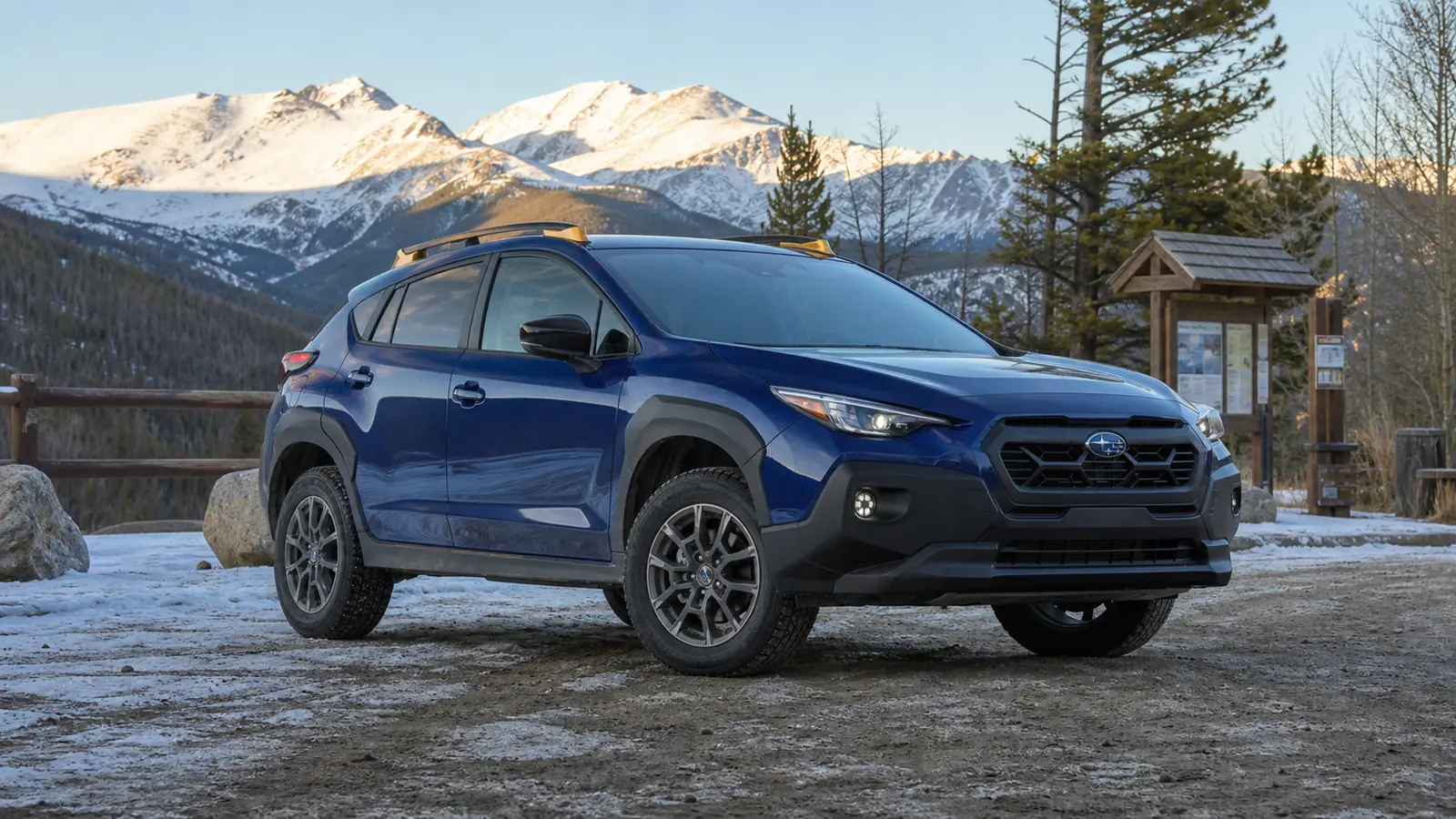
A smaller alternative exists in the Crosstrek, though few vehicles of any size combine this glass area with standard all-wheel drive.
Wilderness is for clearance, tires, and trail hardware
Forester Wilderness costs $36,995 and changes the vehicle more meaningfully than a normal appearance package. It adds increased ground clearance, all-terrain-oriented tires, revised gearing and X-Mode behavior, underbody protection, and a higher towing rating than ordinary gas trims.
Those features help on rough access roads, deep snow, steep unpaved climbs, and outdoor trips where tire sidewall and clearance are used. They also reduce fuel economy to 24 city and 28 highway and add tire cost and road noise.
Wilderness decision
- Ground clearance
- Higher than standard Forester
- Tires
- More aggressive for loose surfaces
- Fuel economy
- 24 city / 28 highway
- Towing
- Higher rating than ordinary trims when properly equipped
- Best use
- Repeated rough-road, snow, or outdoor access
Do not buy Wilderness for black trim and a tougher image. A gas Premium on good all-season or winter tires is better for many paved-road households.
The Wilderness penalty appears every week in fuel and tire behavior, while its capability may be used twice a year.
Test the tire sound at highway speed and the ride on broken pavement.
Aggressive tires can change steering response, braking distance, and replacement options.
Price the exact size before assuming the difference is small.
Towing remains limited compared with a truck or larger SUV. Read the door label, manual, hitch requirements, tongue-weight limit, and payload capacity.
Passengers and cargo consume payload before a trailer is attached. The planned Forester towing capacity should answer that calculation in detail.
The planned Forester alternatives can help when Wilderness is still not rugged enough. Buy Wilderness when a normal Forester has a documented clearance, tire, or towing limitation on trips you already take.
The value of Wilderness appears on rough access roads, deep snow, and surfaces that threaten the underside of a lower crossover.
Its tires, gearing, cooling changes, and extra clearance support that use. They also bring more road noise and lower fuel economy, costs a pavement-only driver pays every day.
Inspect a used Wilderness underneath. Look for damaged shields, bent exhaust parts, mud packed around suspension components, and cuts in tire sidewalls.
Record sidewall cuts, wheel damage, and any tire that is much newer than the rest. Off-road styling does not prove abuse, but it gives a seller more opportunity to use the vehicle beyond paved roads.
A regular Forester with suitable tires can handle snow-covered streets and maintained gravel roads.
Buy Wilderness when the destination repeatedly requires its hardware. Skip it when the main attraction is appearance because a Premium or Sport will be quieter and cheaper to fuel.
Safety performance is a major 2026 strength
The 2026 Forester earned IIHS Top Safety Pick+ and Good results in the updated moderate-overlap test, updated side test, vehicle-to-vehicle prevention, pedestrian prevention, and seat-belt reminders. Subaru changed rear-seat belts for 2026 to improve rear-occupant protection in the updated moderate-overlap test.
This is useful evidence for family buyers because it covers newer procedures that place more emphasis on rear occupants and heavier striking barriers. It does not make crashes harmless, and it does not replace correct seating and speed.
Standard EyeSight includes automatic braking and adaptive cruise functions.
Use every control during the test drive. Driver assistance should engage and cancel predictably, lane support should not produce unexplained warnings, and the camera area should be free of damage.
The Forester's visibility is a passive safety advantage in normal driving. Large windows help drivers see pedestrians, curbs, and vehicles before software needs to intervene.
Adjust mirrors correctly and check the front corners during parking.
Families should still install child seats. Trim upholstery and seat shape can change access even when the anchor design is rated well.
Confirm a rear-facing seat does not force an unsafe front position.
Compare the result with the Honda HR-V, which also earns Top Safety Pick+ but serves a smaller, slower, less expensive use case. The Forester's safety case combines current crash results, strong prevention ratings, and unusually clear sightlines rather than relying on one badge.
Road manners favor calm control over quick acceleration
The 180 hp gas Forester is adequate for normal commuting, but it does not feel quick with passengers or on a steep highway merge.
The CVT can raise engine speed and hold it during acceleration. That sound is normal, though buyers should experience it at full throttle before accepting the car.
The hybrid's 194 hp and electric response improve initial movement, but the system remains tuned for smooth efficiency.
Do not expect a sport-SUV transformation. Its advantage is easier city response and lower fuel use.
Drive the same loop in gas and hybrid trims. Include these conditions:
Conditions the same loop must include in both trims
- A stop-and-go section to judge low-speed smoothness
- A highway ramp with normal passenger load
- Broken pavement to compare wheel and tire packages
- A tight parking maneuver to test camera and sightlines
- A hill to hear CVT behavior under sustained load
- A crosswind or open highway section to judge noise
Steering is light, and the body prioritizes comfort and predictability.
Buyers coming from a sedan may notice more lean. Buyers coming from an older SUV may appreciate the stable, easy character.
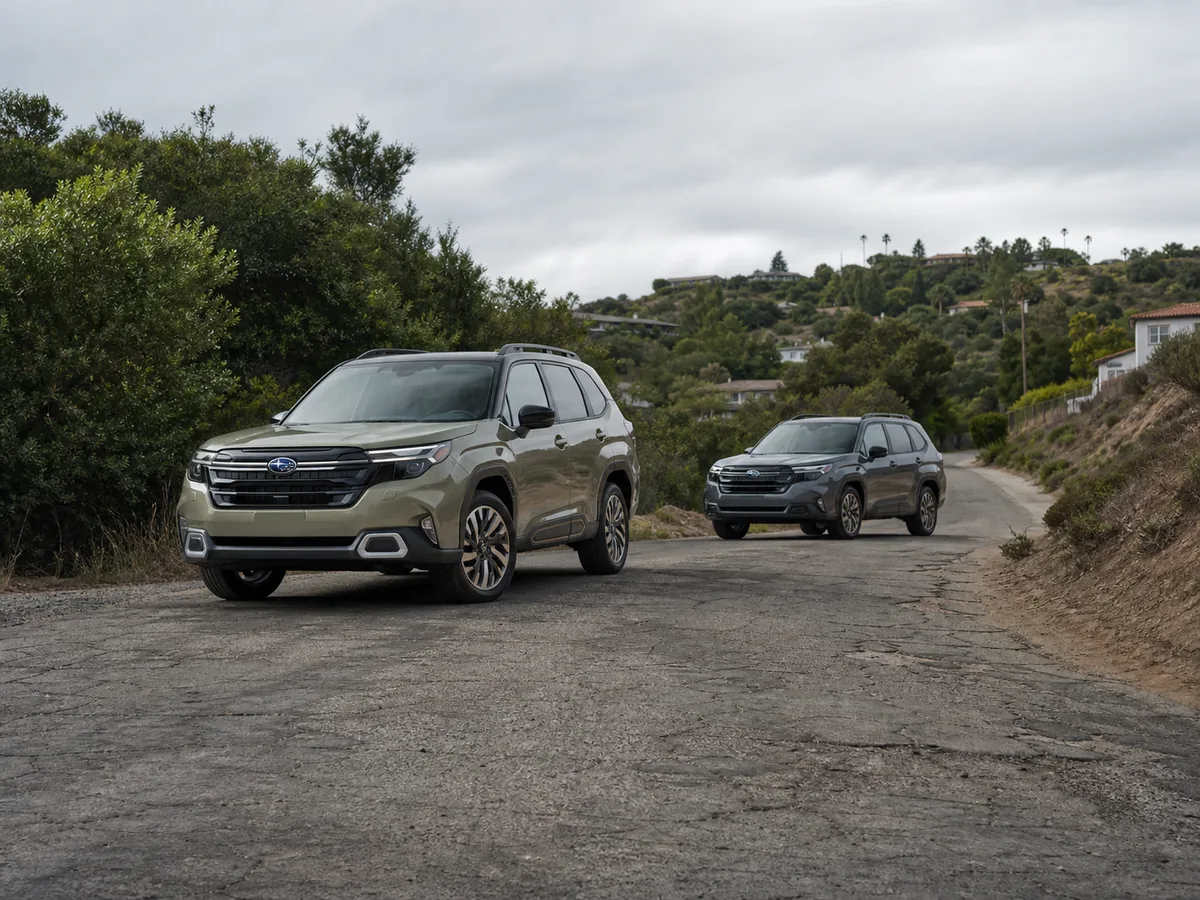
Wheel size changes ride quality. Base and Premium tires provide more sidewall than 19-inch Sport and Touring setups.
A top trim can feel busier over sharp impacts and cost more at replacement time.
If driving feel leads the list, compare the Mazda CX-5. If efficiency and smooth hybrid response lead, compare the CR-V Hybrid.
The Forester wins through ease and visibility, not through speed or sharp steering.
Test the gas model with passengers and air conditioning running. Merge onto a fast road, climb a grade, then accelerate from 40 to 65 mph.
The CVT may hold engine speed while the vehicle gains speed, which is normal under load.
Shuddering, rpm flare without matching acceleration, or warning lights are not normal.
Drive the hybrid on the same route and note low-speed response, brake blending, and engine transitions. It should feel easier in stop-and-go traffic, while the gas car may sound more consistent at highway speed.
Neither version is designed as a quick performance SUV.
Use a rough corner to judge body control and steering correction. The Forester favors predictable movement and a clear view over a low, sporty posture.
Buyers who dislike that movement should compare a Hyundai Tucson on the same road before deciding.
Reliability checks start with tires, CVT behavior, and electronics
The sixth-generation Forester began for 2025, and the hybrid is newer still.
Long-term data for these exact versions is developing. Older Forester experience can identify inspection habits, but it cannot prove the future of a redesigned car.
Subaru's AWD system makes tire condition especially important. All four tires should match in size, model, and tread depth.
A replacement tire with a large circumference difference can create driveline stress. Ask how a puncture was handled and measure tread rather than relying on appearance.
- 2014 to 2018Fourth generation has different electronics and older CVT history
- 2019 to 2024Fifth generation brings a mature platform and broad used supply
- 2025Sixth generation redesign arrives
- 2026Rear-seat safety changes and expanded gas and hybrid range
Start cold and listen for abnormal knocking, prolonged rattle, or wheel-bearing hum. The CVT should engage promptly and accelerate without repeated shudder or warning lights.
Hybrid models should transition smoothly between electric and engine assistance.
Test the 11.6-inch screen, cameras, climate controls, wireless phone connection, power hatch, seat functions, and driver aids. A weak 12-volt battery can create strange electronic behavior, so battery condition belongs in the inspection.
Check oil and coolant levels, underside leaks, accident repairs, windshield replacement, and service records.
Verify recalls by VIN. Use the planned Forester reliability research for model-year detail and the Forester recall lookup for current campaigns.
Subaru's AWD system makes matched tires especially important. Measure tread depth at several points on all four tires and compare brands, models, sizes, and date codes.
A single new tire beside three worn ones can create a circumference difference that should be corrected, not ignored.
Start the car cold and scan every module. Check the infotainment screen, cameras, power liftgate, climate controls, and every driver-assistance function.
Electronic faults can be intermittent, so repeat the checks after the road test when the car is hot.
Review maintenance records for fluid services and recall completion. A clean history report does not replace invoices or an underbody inspection.
Have a Subaru-experienced technician check leaks, wheel bearings, suspension damage, and stored transmission faults before money changes hands.
A clean Forester has four matched tires, predictable CVT behavior, working electronics, and records that explain every major service or repair.
Price the hybrid premium, tires, and windshield before buying
Forester ownership cost is trim-sensitive even though most versions sit in the mainstream price tier.
Gas Premium controls purchase price while retaining the features most owners use. Hybrid adds fuel savings and power, Wilderness adds capability, and Touring adds comfort.
Each can be correct, but none is free.
| Cost | Lower-cost choice | Higher-cost trigger |
|---|---|---|
| Purchase | Base or gas Premium | Hybrid, Wilderness, Limited, Touring |
| Fuel | Hybrid in heavy city driving | Wilderness and large-wheel gas trims |
| Tires | Smaller gas-trim wheels | 19-inch and all-terrain packages |
| Glass | Insurance with useful glass coverage | EyeSight windshield replacement and calibration |
| Depreciation | Mid trim bought at a fair price | Loaded trim traded quickly |
Get a windshield and comprehensive-insurance quote for your ZIP code. Camera calibration can make replacement more expensive than plain glass, and Forester owners who drive gravel or winter roads may face chips.
Coverage terms matter more than a generic premium estimate.
Calculate hybrid payback with the price gap between exact trims, not Base versus Touring.
Then use annual miles and separate city from highway. The hybrid's nine-mpg city advantage over efficient gas trims is meaningful, while its one-mpg highway advantage is not.
Price tires by exact size and type. Wilderness all-terrain tires and 19-inch Sport or Touring tires can cost far more than Base or Premium sizes.
Keep rotations current and address alignment early.
The planned Forester cost-to-own analysis can extend the estimate. Financing still needs the same discipline described in our lease-versus-buy framework.
The least expensive Forester is usually a gas Premium kept for years, unless city mileage gives the hybrid enough work to repay its premium.
A windshield replacement can require camera calibration, so ask local shops for the complete installed cost rather than glass alone.
Add that figure to insurance deductible and premium comparisons. Drivers on gravel roads or construction routes face this expense more often.
Tire cost varies by trim and intended use. Price a full matched set because replacing one tire may not be appropriate when the others are worn.
Wilderness rubber can cost more and may wear differently from touring tires. The planned Forester real-world mpg report will separate route conditions, but a purchase budget should use a conservative mixed estimate now.
Compare five-year totals for the exact trims. Include purchase price, interest, insurance, annual fuel, tires, and the first major scheduled service.
The hybrid can win for a high-mileage urban owner, while Premium may remain cheaper for a lower-mileage household.
Who should buy gas, hybrid, or Wilderness
Gas Premium fits the broadest group: families, dog owners, winter commuters, and buyers who value sightlines and cargo access. It delivers the essential Forester experience without requiring a long fuel-payback calculation.
Hybrid fits drivers with substantial city or stop-and-go mileage who plan to keep the SUV. It also helps buyers who want slightly stronger low-speed response without giving up mechanical AWD.
Wilderness fits people who already drive rough trailheads, deep snow, rutted access roads, or tow within the Forester's limits.
It is not the best-looking trim for everyone. It is a tool that carries fuel and tire penalties.
Families should compare the Forester with the CR-V for powertrain polish and the RAV4 for resale and hybrid breadth.
Drivers should test the CX-5 for steering feel. These comparisons expose whether visibility and cargo shape are truly the priorities.
Finish with an insurance quote, tire prices, city-versus-highway fuel math, a cargo load, child-seat installation, and a mixed road test. The best Forester is the least specialized version that handles the weather, cargo, and road you actually face.