Two complaint peaks define the used CX-5 search
The CX-5 does not have one failure that spans every generation. NHTSA data shows an early peak in 2014, a larger peak in 2016, and a different engine-focused pattern in 2018 and 2019.
That split should control the inspection before mileage or trim enters the decision.
The table uses NHTSA complaint and recall API results retrieved on July 12, 2026.
Complaint totals are submitted reports, not failure rates. They can grow over time, and one report may list more than one component.
| Year | NHTSA complaints | NHTSA recalls | Leading evidence | Starting verdict |
|---|---|---|---|---|
| 2014 | 377 | 4 | Electrical and visibility reports, fuel-pipe campaign | Inspect carefully |
| 2016 | 507 | 5 | Exterior-lighting concentration, DRL recall | Avoid without proof |
| 2018 | 113 | 3 | Engine reports, PCM stall and fuel-pump recalls | Verify by VIN |
| 2019 | 260 | 2 | Engine concentration, same two powertrain campaigns | Verify by VIN |
| 2020 | 105 | 0 | Lower report count and no listed recalls | Stronger target |
| 2022 | 62 | 0 | Lower accumulated count, lighting leads | Stronger target |
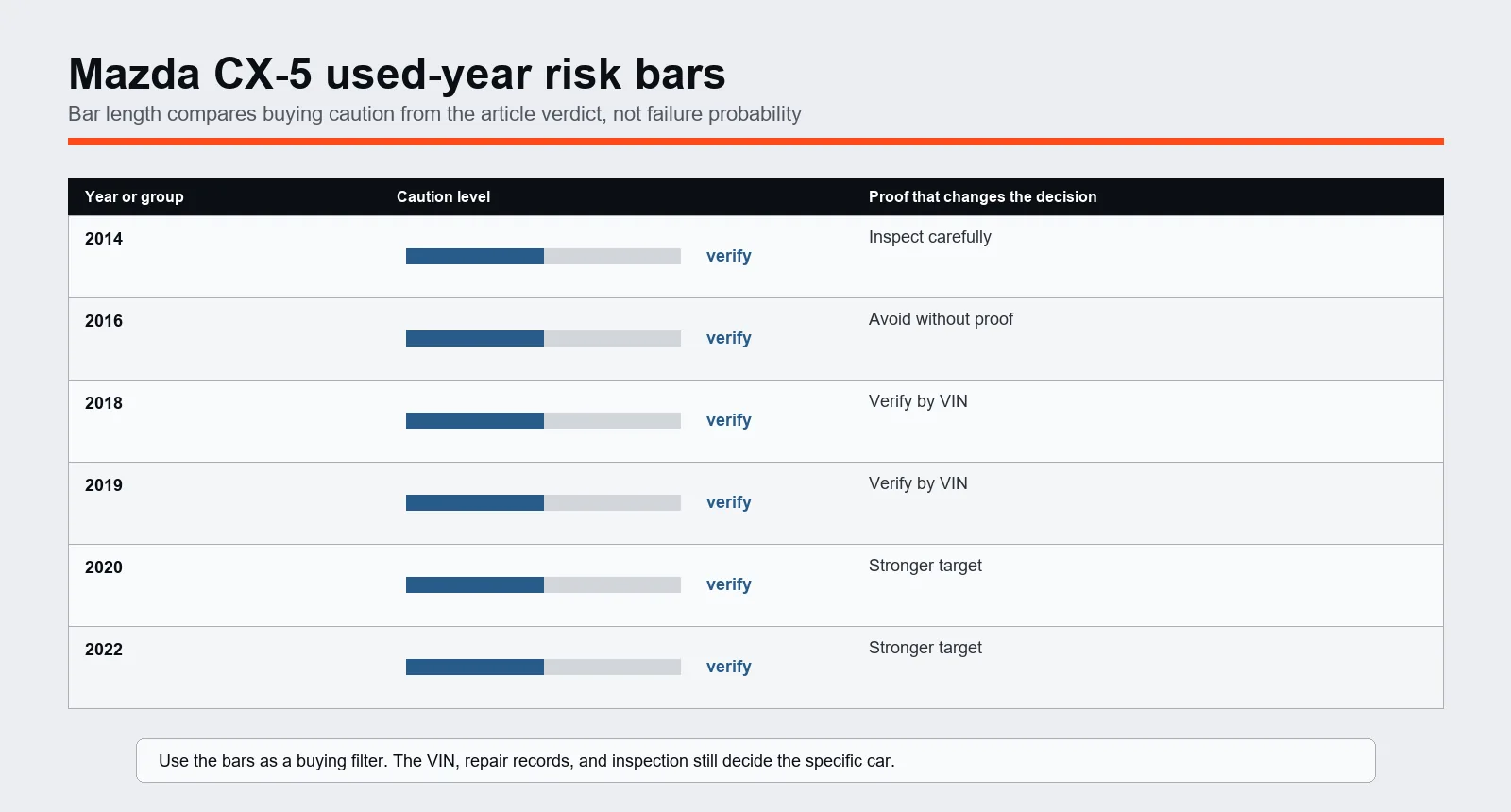
This is a triage list. A repaired 2016 can be usable, while an abused 2020 can still be a bad purchase.
Move a listing forward only when its physical condition explains the database pattern instead of asking you to ignore it.
The 2016 LED running-light failure is the clearest warning
NHTSA recorded 507 complaints and five recalls for the 2016 CX-5 in the snapshot.
Exterior lighting was the largest complaint component, with 152 reports grouped under that label. CarComplaints separately lists 57 owner reports for the specific daytime-running-light failure, an average reported repair cost of $1,050, and average mileage of about 45,500 miles.
Mazda recall 20V-063 covers certain 2016 CX-5 models with LED daytime running lights. The manufacturer report says the sealing gasket could release sulfur that corrodes the LED control circuit.
It lists 36,761 potentially affected vehicles and estimates that 21 percent of that recall population carried the defect.
That percentage applies to the recall population identified by Mazda, not every 2016 CX-5 on the road.
Halogen-equipped trims are not part of the LED headlamp defect in the same way.
Confirm which assembly the car has before applying the warning. On an affected LED car, the repair may involve the sealing gasket or the headlamp assembly, so a seller's claim that a bulb was changed does not match the integrated hardware.
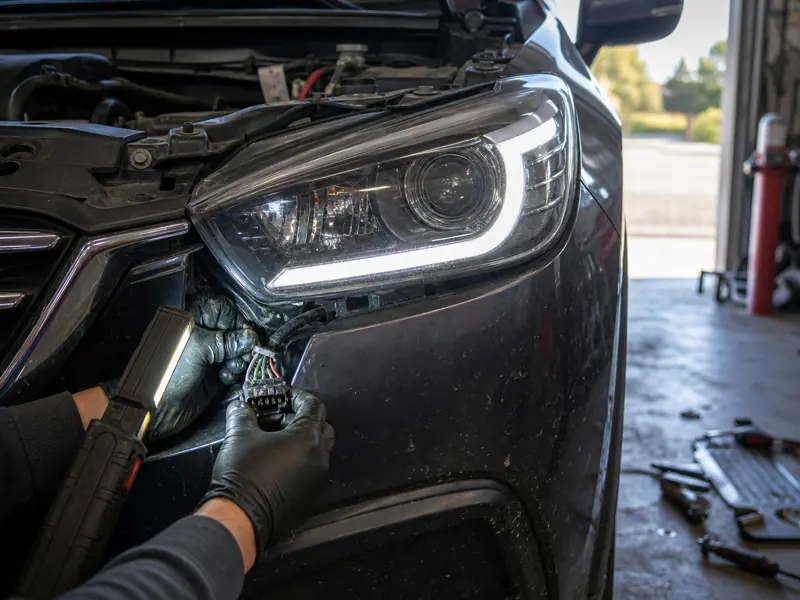
Use a simple light sequence during the visit:
- Observe both running lights at cold startup
- Switch low beams and high beams on separately
- Check turn signals, brake lights, and rear lamps
- Look inside each lens for moisture or heat damage
- Match any headlamp invoice to the correct side and VIN
A dark LED strip can turn a fairly priced Grand Touring into an immediate repair decision. Do not value a 2016 as recall-complete until the dealer history and the working lights agree.
A 2014 needs an early-generation electrical and chassis audit
The 2014 generated 377 NHTSA complaints and four recalls in the snapshot. Electrical system reports led the component groups, followed by visibility and body-related submissions.
Its campaigns include a fuel-filler pipe that could rupture in a rear crash, liftgate support struts that could corrode and fail, certain steering-knuckle fasteners that might allow separation, and a replacement-windshield issue on vehicles with driver-assistance hardware.
Not every campaign applies to every VIN. The steering recall involved a small population, and the windshield campaign concerned specific replacement glass.
That makes documentation more important, not less. A generic printout that says there are no open recalls should be paired with invoices for any prior glass, liftgate, or collision work.
Electrical diagnosis should begin with battery condition and charging voltage because low system voltage can create several unrelated warnings.
After the battery passes, operate the infotainment controller, Bluetooth connection, backup camera, keyless entry, power outlets, seat controls, and every exterior lamp.
Cycle the ignition more than once so an intermittent startup fault has another chance to appear.
The liftgate deserves a load test. Open it fully, wait beneath neither strut, and observe whether it holds at different temperatures if service history mentions replacement.
Check the hinges, latch, wiring boot, and water marks near the rear trim. A replacement strut with the wrong force can mask one symptom while stressing the hinges or making the hatch difficult to close.
Check the first-generation car in this order:
- Smell for fuel near the rear quarter after filling and inspect the filler area
- Raise and lower the liftgate several times without standing beneath it
- Inspect front strut-to-knuckle fasteners and alignment evidence
- Test every window, lock, mirror, lamp, camera, and infotainment control
- Look for windshield branding and calibration records after replacement
The early CX-5 is also old enough for rust, worn suspension, and deferred fluids to outweigh model-year statistics.
A compact SUV comparison helps with space and price, but only a lift inspection can price corrosion or impact damage.
A 2014 is acceptable only when its recall history and front-chassis condition are both clear.
The 2018 and 2019 question is engine-stall recall completion
The second-generation CX-5 changed the risk pattern. NHTSA complaint groups for 2018 and 2019 concentrate on the engine, while both years appear in recall 19V-497 for PCM software that could cause an engine stall.
They also appear in recall 21V-875 for a low-pressure fuel-pump impeller that could crack, deform, and stop supplying fuel.
The counts differ sharply. NHTSA returned 113 complaints and three recalls for 2018, then 260 complaints and two recalls for 2019.
The 2018 also carries a side-curtain airbag campaign. A 2019 has fewer campaigns but a larger engine-report concentration, so neither year should be cleared by recall count alone.
Ask a Mazda dealer to print the completed campaigns by VIN. Then scan the engine, transmission, ABS, airbag, and body modules for stored, pending, and history codes.
A cleared dashboard is only the start because a recently erased code may not return during a short test drive.
Ask the shop to review readiness monitors before clearing anything. Several incomplete monitors can mean the battery was disconnected or codes were erased recently, though recent legitimate service can produce the same result.
The seller should be able to explain the timing. Record freeze-frame data for any stored fault because engine speed, temperature, and load can show when it occurred.
Fuel delivery should be checked without opening the system during a casual visit. Long cranking after a hot soak, loss of power under load, or a fuel-pressure code needs a qualified diagnosis.
Confirm that the pump campaign remedy was applied to the exact VIN, then keep the road test long enough to include the operating conditions that produced any prior complaint.
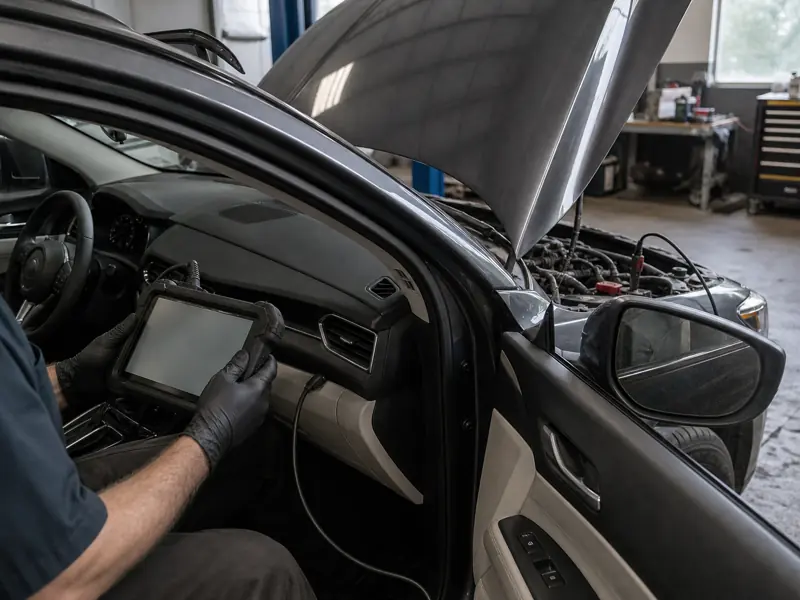
Drive long enough to include hot restart, steady cruise, light acceleration, and a firm merge.
Note hesitation, extended cranking, uneven idle, or a sudden loss of response.
Walk away when the seller will not provide a VIN, permit a scan, or allow the engine to reach operating temperature.
Brake behavior separates wear from a real fault
Service-brake reports were the second-largest NHTSA component group for 2016, with 47 reports in the snapshot. That count does not name one universal defect, so the correct response is a measured brake inspection rather than a blanket claim.
Rotor thickness, pad wear, caliper movement, fluid condition, warning codes, and parking-brake operation can identify the actual bill.
Start the test drive on a flat road. Apply light pressure from neighborhood speed, then repeat with a firmer stop after the brakes warm.
Steering pull, pedal pulsation, grinding, a sinking pedal, or an electronic parking brake that will not set needs diagnosis.
Rust on a rotor after storage may clear, while deep scoring or uneven pad thickness will not.
Measure all four corners instead of approving the car from the visible front pad. A sticking rear caliper, uneven slide pin, or parking-brake fault can create heat and accelerated wear that a smooth first stop hides.
After the drive, compare wheel temperature cautiously without touching a hot brake.
One corner that is much hotter deserves inspection.
Brake fluid age also matters. Dark fluid does not prove internal damage, but a moisture reading and documented flush history help price maintenance.
Inspect flexible hoses for cracks, hard lines for corrosion, and the master-cylinder area for seepage. A warning light that was reset without a named repair should be treated as an unresolved fault.
The CX-5 uses all-wheel drive on many used examples, and four matched tires affect both braking and driveline load.
Measure tread across each tire and confirm the same size, model, and load rating at all four corners. The tire-pressure procedure should come before judging pull because one low tire can imitate an alignment or brake problem.
Brake and chassis proof
- Pedal
- Firm, repeatable travel with no sinking
- Rotors
- Adequate thickness and no deep scoring
- Calipers
- Even pad wear and free slide movement
- Parking brake
- Sets, holds, releases, and stores no code
- Tires
- Four matching sizes with close tread depth
The better years fit three different budgets
A 2017 is the lower-cost target. NHTSA returned 148 complaints and one recall, which was a trailer-hitch wiring campaign limited to affected accessory installations.
It starts the second generation without the 2018 and 2019 engine-stall recall combination, though age, electronics, and prior repair still matter.
A 2020 is the balanced pick. The snapshot returned 105 complaints and no recalls for that model year.
It is recent enough to offer the newer cabin and safety equipment without the campaign load of the two years before it.
Check the battery, infotainment, power liftgate, cylinder-deactivation behavior on applicable engines, and complete service history.
A 2020 should restart cleanly after a hot soak and cruise without a shudder when the engine changes load.
Ask whether spark plugs, coils, injectors, or engine-control software were serviced. A smooth five-minute drive does not substitute for a scan and a longer mixed-speed route.
For 2022 and newer cars, verify the front and rear lighting before assuming the lower complaint total means the issue disappeared.
Check driver-assistance calibration after glass or collision work and confirm all cameras initialize without warnings. Newer age reduces wear exposure, but it can also make a poorly repaired crash harder to spot because the cabin still looks fresh.
A 2022 or newer car suits a buyer who wants less age and can pay more. Counts are lower so far, but newer vehicles have had less time and mileage to generate reports.
The 2022 snapshot showed 62 complaints and no recalls, with exterior lighting as the largest component group.
Choose the year that fits your budget, then keep the same inspection standard regardless of age.
The Mazda range explains why buyers pay for sharper road manners. Compare the CX-5 with the five-seat field and mainstream price tier before accepting a premium for trim or appearance.
A higher trim cannot repair missing maintenance.
Mileage and climate should change how you rank the three targets. A northern 2017 needs underbody, brake-line, and wheel-bearing scrutiny.
A low-mile 2020 that spent months parked needs battery, tire-age, and fluid checks. A newer car used for rideshare or delivery work may carry more seat, brake, and door wear than its calendar age suggests.
Collision history deserves extra weight because later CX-5 trims use cameras and radar for driver assistance.
Inspect panel gaps, paint depth, headlamp dates, windshield markings, and calibration invoices. A clean title does not prove that every repair reached an insurer.
Uneven tire wear or a steering wheel that sits off-center can expose geometry that a polished body hides.
Build the pre-purchase inspection around the chosen year
Every CX-5 needs cold-start evidence, a complete scan, a lift inspection, and a road test.
The selected year tells the technician where to spend extra time.
A 2016 gets a lamp and brake audit. A 2014 gets fuel-filler, liftgate, windshield, and front-knuckle checks.
A 2018 or 2019 gets recall, fuel-delivery, and stall-history review.
Bring the listing, VIN, and service file to the shop. Ask the technician to record faults instead of clearing them, photograph leaks or corrosion, and identify which repairs are urgent.
Check engine oil and coolant before startup, then inspect again after the drive.
Powertrain specification changes the inspection. A naturally aspirated engine needs smooth cold idle, steady oil level, and clean load response.
A turbocharged example adds charge-air hoses, coolant routing, oil seepage, and stricter service-record questions. Confirm which engine the VIN and underhood label identify because sellers sometimes copy the wrong trim description.
All-wheel-drive cars need transfer-case and rear-differential leak checks plus four compatible tires.
Rotate each wheel on the lift, inspect axle boots, and listen for bearing roughness. A quiet road test can miss seepage that is obvious from below, while fresh underbody cleaning can hide the dust pattern around an older leak.
Use the new versus used checklist for title, ownership, financing, and collision records. The mechanical appointment should cover:
- Cold start and hot restart
- Full-module diagnostic scan
- Charging-system and battery test
- Brake measurement and parking-brake operation
- Tire matching and suspension play
- Oil, coolant, transmission, and differential leaks
- Recall completion by the exact VIN
The gas-car ownership basics help compare routine service with rival crossovers, while the SUV buying checklist keeps cargo and seating needs separate from repair risk. Pay for the inspection before negotiating around a fault that has not been diagnosed.
Source hierarchy matters more than one scary number
NHTSA complaints flag repeated owner reports. Recall filings identify a defined safety defect, affected population, and remedy.
Mazda dealer records show whether an individual VIN received that remedy. CarComplaints adds owner-reported repair cost and mileage context, while RepairPal provides nameplate-level cost data.
RepairPal rates the CX-5 4.5 out of 5 and reports an average annual repair cost of $447 across model years.
That strong fleet-level record is useful context, but it cannot clear a specific 2016 headlamp or a 2019 with stored stall history.
The relevant sources are NHTSA recall search, the 2016 DRL recall report, CarComplaints CX-5 data, and RepairPal CX-5 data.
The final CX-5 filter
A 2016 needs working LED running lights and a closed campaign record. A 2014 needs a clean chassis, electrical test, and four resolved recall questions.
A 2018 or 2019 needs the PCM and fuel-pump campaigns completed plus a clean full-module scan.