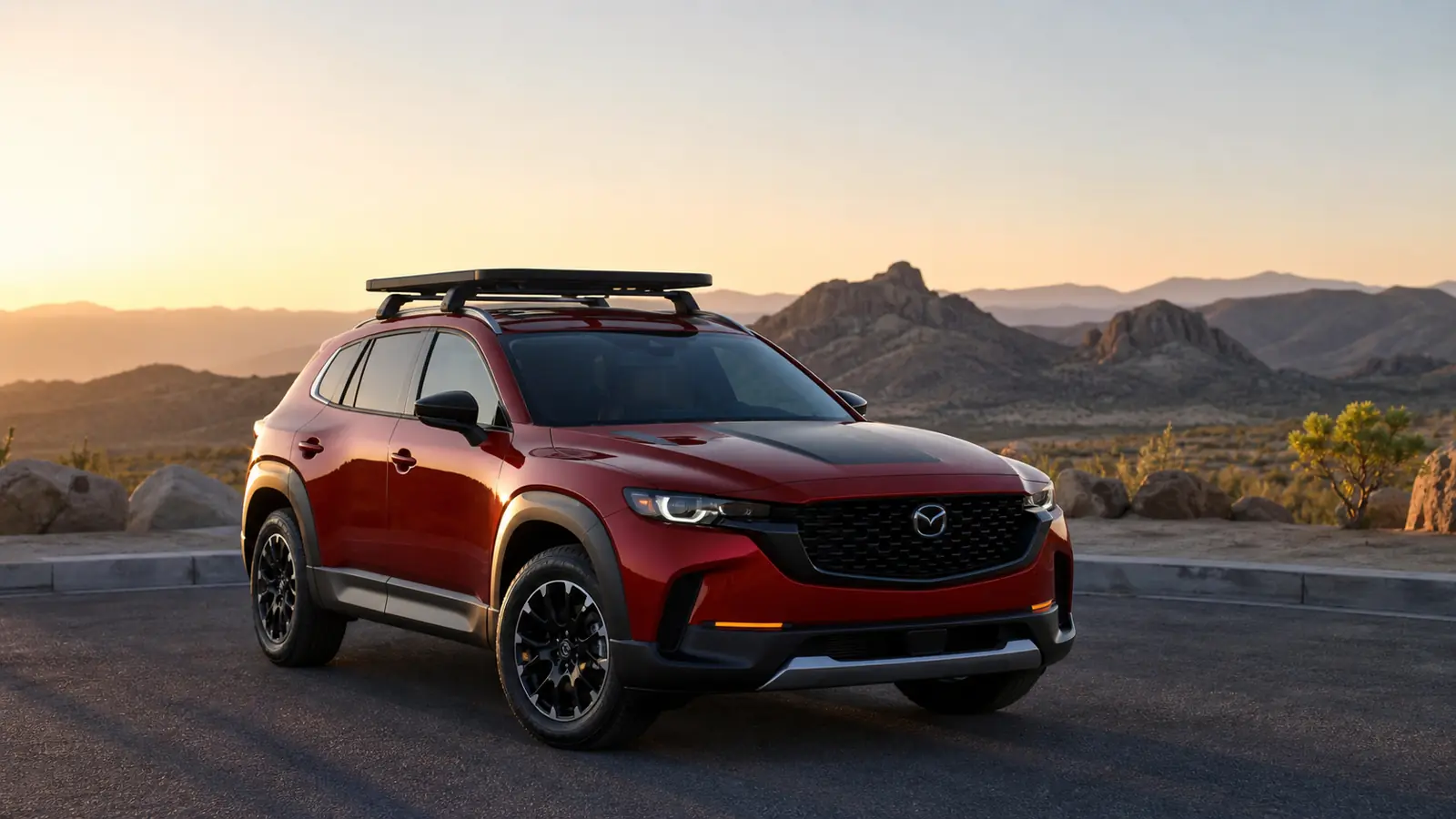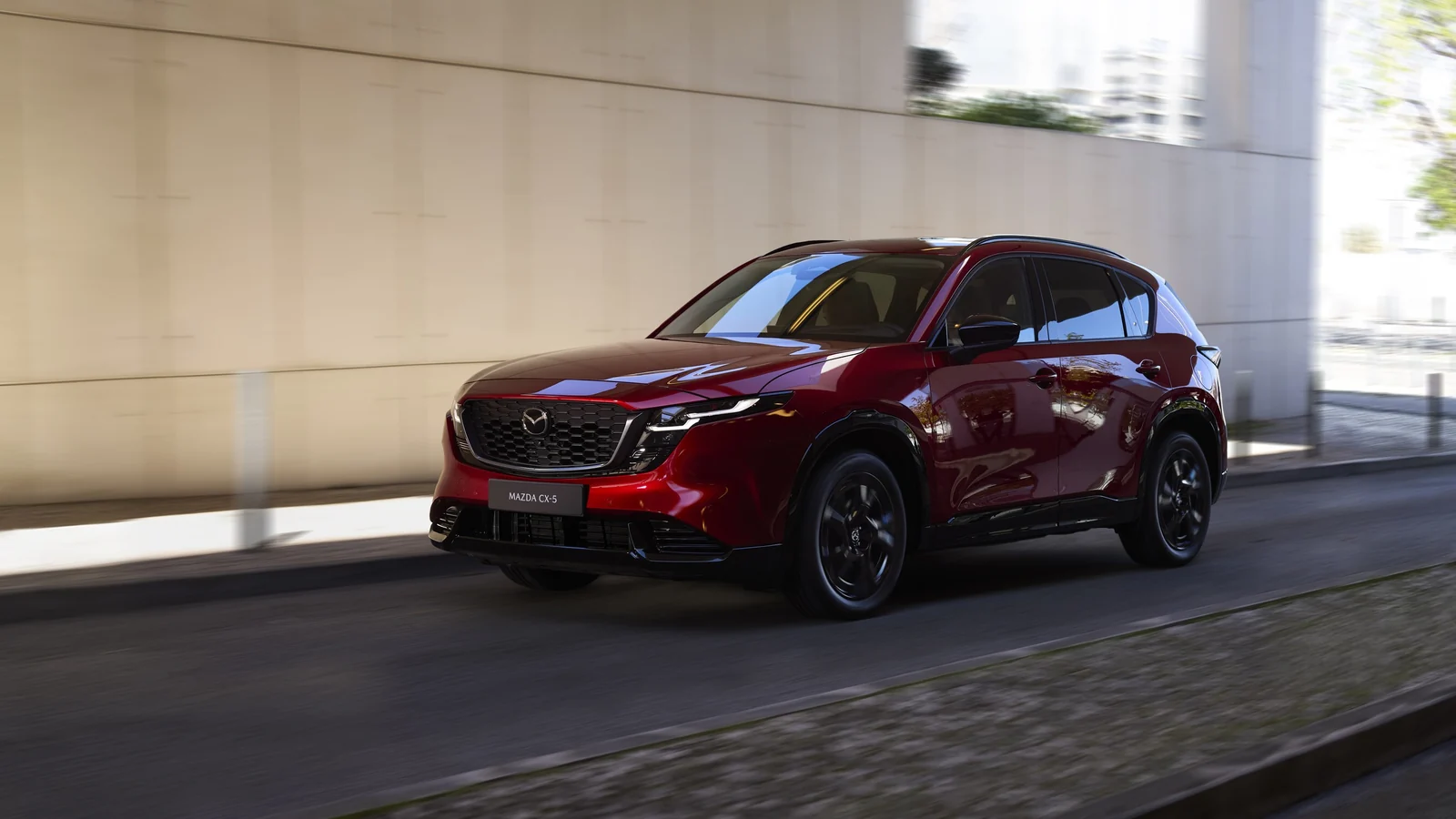
Does the CX-5 actually drive better, or just look it?
Steering feel is the first reason to open a Mazda CX-5 listing, so start there. Most compact SUVs steer with a numb, light touch, and the CX-5 is the rare one tuned to feel connected from the driver's seat.
That difference is real, not a brochure line. We rate its steering feel a 9 out of 10, well above the appliance crossovers it competes with, because Mazda builds the car around how it responds rather than how big the cargo number reads.
The 6-speed automatic is part of why it feels different. It works through fixed gears instead of the rubber-band drone of a CVT, so the car responds the way drivers who dislike CVT behavior expect.
That engagement puts the CX-5 closer to Mazda's sports-car thinking than to a typical family box. The same instincts that make the Mazda MX-5 Miata fun show up here in a taller, more practical shape.
You feel it most on a back road or a quick highway merge, where the body stays composed and the steering loads up in a way rivals do not manage. On a dull commute the payoff is smaller, though the car still feels tighter than the class average.
The seats and driving position back that up, set low and snug so you feel planted behind the wheel rather than perched on top of the car. That planted feel is what owners tend to keep the CX-5 for, long after the showroom shine wears off.
The best way to judge it is a normal errand route, not a showroom lap. Park it, sit behind your own driving position, and drive some rough pavement, because a CX-5 should feel better than the average SUV without giving up the basics.
The honest limit is that feel alone cannot carry a family purchase. A car has to fit your people and gear first, and the CX-5 only earns its price once it clears those basics.
Buy the CX-5 for the drive, but confirm it fits your life before the steering seals the deal.
If a spirited drive ranks near the top of your list, cross-shop the picks in our most fun-to-drive cars roundup so you know exactly what you are trading space for.
Inside the cabin you pay a premium feel for
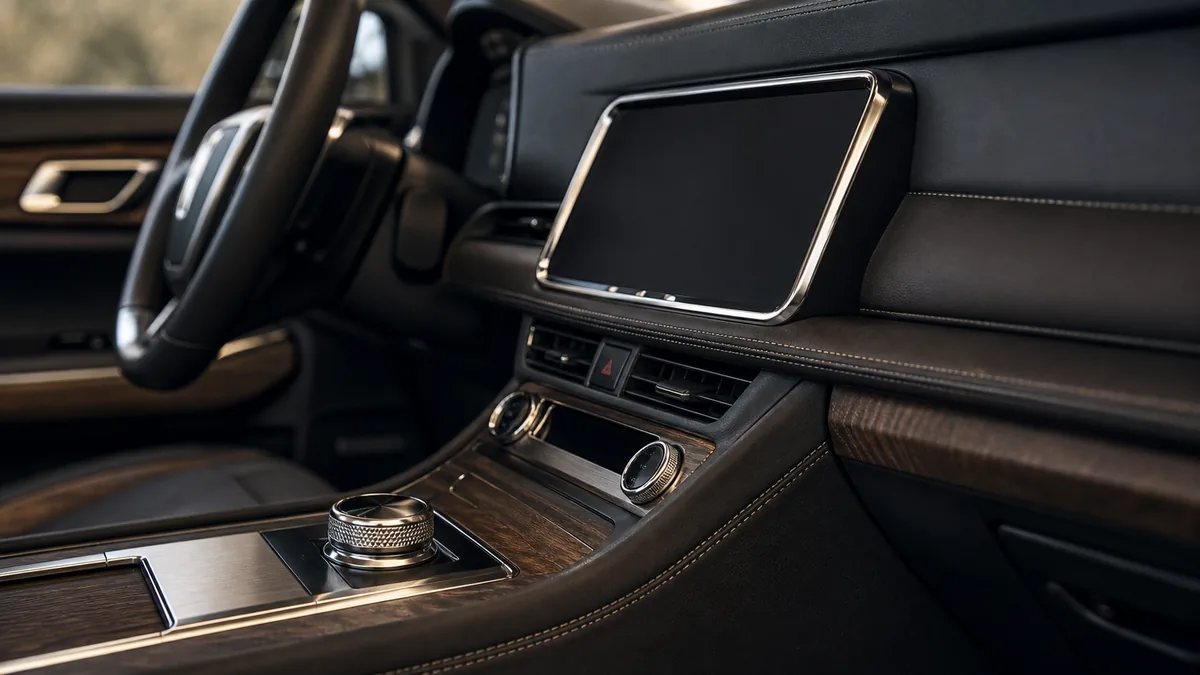
The cabin is the CX-5's second real draw, and it feels a step above what mainstream money usually buys. Materials, layout, and quiet ambition give it a near-premium mood that rivals in the $30,000 to $40,000 range rarely match.
We score cabin quality an 8 out of 10, which is high for a compact SUV at this price. That feel is why some shoppers pick the CX-5 over a plainer but roomier rival, and it is central to the whole reason the car exists.
The 2026 car leans harder on a large display, up to 15.6 inches, and moves more controls onto that screen. The look reads upscale, but a screen-heavy cabin can slow down simple tasks, so it needs a real test before you buy.
Check glare, menu speed, phone projection, and voice control on your own errands. A premium-looking cabin can still frustrate you if changing the climate or the map takes too many taps at 60 mph.
While the screen is on, run the backup camera, the parking sensors, and any driver-assist warnings through a quick loop. A fuzzy camera or a jumpy lane alert is easy to miss in a showroom and hard to live with later.
The cabin also sets up the value question the rest of the car has to answer. You are paying for materials and feel that sit closer to the premium price tier while the badge and the sticker stay mainstream.
That gap works in your favor only if you actually notice the nicer cabin every day. Small tech annoyances also matter more here, because the car is sold as the better-feeling compact SUV, so a laggy screen stings more than it would in a plain rival.
If the interior feel does not move you on the test drive, a roomier rival is the smarter buy for the same money.
One gas engine, no hybrid, and the turbo that's gone
The engine choice is simple because there barely is one. The 2026 CX-5 launches with a single 2.5L four-cylinder making 187 hp and 186 lb-ft, a gas-only setup with no hybrid and no turbo option at launch.
That cuts both ways. It keeps the mechanicals familiar and easy to service, but it also caps fuel economy at 24 city, 30 highway, and 26 combined, well short of a hybrid rival in stop-and-go traffic.
| Setup | Best reason to choose it | Watch for |
|---|---|---|
| CX-5 2.5L gas | Simple, familiar, standard AWD | 26 mpg combined, modest when loaded |
| RAV4 Hybrid | Lowest fuel bill in city driving | You give up the CX-5's cabin feel |
| CR-V Hybrid | Easy family space with strong mpg | Less engaging from the driver's seat |
The missing turbo changes the pitch too. Older CX-5s offered a stronger turbo engine, and without it the 187 hp car can feel modest with passengers and luggage aboard.
So test a real highway merge with your family and gear in the car, not an empty solo loop. We rate its power-when-loaded a 6 out of 10, fine for daily use but not a car that shrugs off a full load and a long uphill on-ramp.
The upside of that plain gas setup is response you can predict. A conventional automatic and a naturally aspirated engine react the same way every time, which drivers who dislike CVT surge and turbo lag tend to prefer.
That familiarity also helps the reliability case, because there is no turbo plumbing or hybrid battery to worry about down the road. The 186 lb-ft of torque is enough for daily merging, so the honest gap is passing power with a full car, not everyday pace.
If fuel cost is your top concern, though, the honest answer sits elsewhere. A Toyota RAV4 Hybrid or CR-V Hybrid saves the most exactly where a plain gas powertrain wastes fuel, which is crawling through city traffic.
The hybrid route makes its strongest case for heavy city drivers who idle at lights all week. Choose the CX-5 engine for its simple, familiar feel, and only if you accept that hybrids will beat it at the pump.
Standard AWD you can't skip
All-wheel drive is standard on every CX-5, so the usual should-I-add-it question does not apply. Mazda fits i-Activ AWD across the line, which means you pay for traction whether your winters need it or not.
That is a genuine advantage in snow states and wet climates, where standard grip gives you confident starts without hunting for the right options box. In warm, dry regions the same hardware is nice rather than necessary, and it costs you a little fuel and tire life every year.
Unlike some rivals, the CX-5 gives you no cheaper front-drive version to duck the fuel penalty. That trade is baked into the car, so weigh it honestly against how often you actually face bad weather.
The grip is meant for wet roads and snowy starts, not trail crawling. A buyer who wants to wander real dirt roads should look at a Subaru Outback, which is built with more genuine off-pavement hardware and ground clearance.
Larger wheels are the other AWD-adjacent cost worth naming. A trim on bigger wheels can look sharper and ride firmer, and it costs more to shoe, so check wheel rash, tire brand, and tread depth before the badge tempts you upward.
On a used car, the AWD system also tells you how the last owner drove. Even tire wear and a clean rotation history point to careful upkeep, while mismatched tread hints at corners cut.
For most CX-5 shoppers the standard AWD is a quiet confidence feature, not an adventure tool. Value the standard AWD most if you drive snow or rain often, and price a set of matching tires before you sign.
Did the redesign finally fix CX-5 space?
Space was the old CX-5's real weakness, and the 2026 redesign is Mazda's answer to it. The new car runs about 4.5 inches longer with more rear-seat and cargo room than before.
That growth matters because the previous CX-5 could feel tight in the second row. The extra length should ease that, but do not take it on faith, because the CX-5 still trails the roomiest compact SUVs even after the stretch.
Pros
- Sharper steering than most compact SUVs
- Standard all-wheel drive
- Improved 2026 rear-seat and cargo room
- Premium cabin feel at mainstream money
Cons
- Space still trails the class leaders
- Fuel economy behind hybrid rivals
- 187 hp feels modest fully loaded
Sit behind your own driving position and load the cargo hold before you decide. Bring the child seat, stroller, or weekly cargo that usually causes trouble, because the CX-5 has to pass that test to earn its premium feel.

The CX-5 has always been Mazda's answer to a plain-feeling class, so the redesign is really about removing the one excuse not to buy it. If the rear seat and cargo hold now fit your life, the steering feel becomes much easier to justify.
If maximum cargo and the easiest loading decide your purchase, a Honda CR-V still gives more room and a lower, wider hatch. The CX-5 asks you to give up some of that space for the way it drives and feels, and that trade is not right for everyone.
Shoppers who put family logistics first should scan our best family SUVs list and judge the CX-5 inside the wider SUV body group with a clear priority list. If rear-seat space is your top priority, measure it with real passengers before the cabin feel wins you over.
Familiar engine, brand-new body, and the reliability split
The CX-5 reliability case splits cleanly in two. The naturally aspirated 2.5L engine and conventional automatic are long-serving, simpler Mazda parts, which is easier to trust than many turbo, hybrid, or plug-in setups.
The body and cabin around them are brand new for 2026, so proven mechanicals do not erase new-model risk. Fresh electronics, seat comfort, rear doors, and road-noise levels all deserve a careful check early in the cycle.
- 2012 to 2016First-generation CX-5 sets the driver-focused compact SUV formula
- 2017 to 2025Second-generation adds polish, cabin quality, and a turbo option
- 2026Redesign grows the body, drops the turbo, keeps standard AWD
Used shoppers should judge condition over the premium badge. Check service history, oil-change and coolant records, brake wear, tire matching, infotainment behavior, and whether the car saw winter salt, since a nice cabin can hide ordinary used-car wear.
On the test drive itself, listen for road noise on coarse pavement and check that the brakes feel steady rather than grabby. Road noise is a known CX-5 gripe, and a used car with tired brakes or worn suspension will show it here first.
AWD condition depends on tires and maintenance more than on looks. Mismatched tires or a skipped rotation history should lower your confidence faster than a shiny interior raises it, and clean oil-change records show the engine was fed on time.
Weighing a fresh redesign against a proven used car is exactly what our new versus used guide walks through before you commit.
The Mazda brand has a solid record here, but any redesign still asks for normal first-year patience.
On any used CX-5, even tire wear and clean records beat a polished cabin as proof the car was cared for.
What you actually pay to feel good every day
The CX-5 ownership bill is moderate, but it reads as a value story, not a savings story. You accept lower mpg than hybrid rivals in exchange for the drive and cabin, so the math only works when you use what you paid for.
Fuel is the swing cost, and standard AWD with gas-only power keeps it above the hybrid crowd. Estimate your annual miles honestly before you buy, because a long city commute is where the fuel gap grows fastest.
CX-5 cost signals
- Fuel
- Gas AWD trails hybrids, worst in heavy city miles
- Tires
- Standard AWD wants matched sets and rotations
- Depreciation
- Solid, though Toyota and Honda resale run stronger
- Maintenance
- Simple gas engine and automatic keep it ordinary
- Insurance
- Quote the exact VIN by trim before you commit
Tires deserve a line of their own. AWD and larger wheels raise the bill, and a cheap used CX-5 on worn tires may not stay cheap once you replace a full set of four.
Depreciation is reasonable, though a Toyota RAV4 or CR-V often holds value better, so avoid paying a resale-champion price for the Mazda. The value is strongest when the payment stays mainstream and the cabin still feels a clear cut above the class.
Do not stretch to a loaded trim just because the interior looks rich. A top CX-5 can drift into bigger-SUV or used-luxury money, which is when a lease-versus-buy look and a quick scan of CR-V alternatives keep you honest on price.
Routine maintenance should stay ordinary if you keep records clean. Oil, filters, coolant, brake fluid, tires, alignment, and inspections are the whole rhythm, with no hybrid battery or turbo service to budget around.
The simple gas drivetrain rewards owners who keep cars a long time, since there is less complex hardware to age out.
If you trade often, the fuel penalty and the resale gap matter more, so know which side of that pattern you are on.
The cheapest CX-5 to own is a fair-priced mid-trim that keeps Mazda's feel without paying for every luxury-look option.
Who should buy the CX-5, and who should skip it
Buy the CX-5 if you want a compact SUV that feels composed and nicely trimmed rather than like an appliance. It fits commuters, couples, and small families who still care about steering, seat feel, and cabin materials.
It is also a smart pick for drivers in wet or snowy places who prefer a normal automatic over a CVT. Standard AWD and that 6-speed give a familiar, confident feel many rivals trade away chasing the highest mpg number.
It is the wrong car for two clear buyers. If you need the easiest loading and the biggest rear seat, a Honda CR-V answers better, and if fuel cost rules your week, a RAV4 Hybrid or CR-V Hybrid ranks higher.
The head-to-head most shoppers weigh is the CR-V versus RAV4 Hybrid matchup, which frames the space-and-fuel side of the same decision. If a sharper premium drive tempts you further up in price, a BMW 3 Series shows where that money goes next.
Start your trim search in the middle, since a lower trim may already deliver the steering and AWD that make the car special. A top trim should earn its price with features you use every day, not just a richer-looking screen.
Bring the passengers and gear that usually cause frustration, and let the CX-5 earn its feel with a full cabin rather than an empty showroom one. The CX-5 wins when its drive and cabin matter enough to accept less space and lower mpg than the hybrids.