Why a gas RAV4 still makes sense in a hybrid era
The gas RAV4 still sells for one plain reason. It costs less to buy than a new hybrid, and for many drivers that upfront saving matters more than the mpg gap.
Toyota moved the 2026 line to hybrid power, so the gas RAV4 is now mostly a used 2019 to 2025 buy, and used prices are where its value lives. A clean used gas RAV4 usually lists thousands below a new hybrid trim.
That lower sticker comes with simpler mechanicals and no hybrid battery to think about years down the road. You give up some fuel economy and get plainer hardware that independent shops already know inside out.
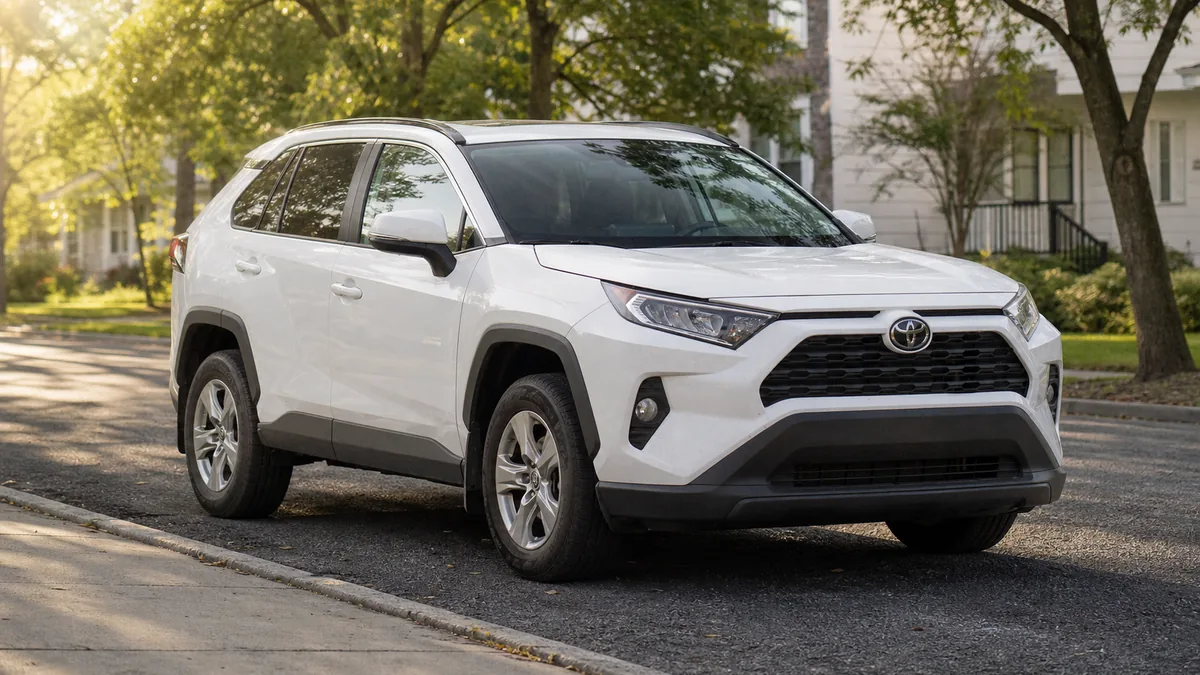
The gas 2.5L four-cylinder and 8-speed automatic have run in Toyotas for years, so parts stay cheap and the repair fear stays low. That track record is part of why the Toyota lineup holds its resale even on the gas cars.
Gas makes the most sense in a few clear cases. If you drive low annual miles, buy used to save cash, or just want the plainest possible drivetrain, a hybrid's fuel savings may never earn back its higher price.
You also skip any charging habit, and the upkeep stays basic Toyota routine. Oil, filters, brakes, and tires are the whole story, with no eCVT or high-voltage pack in the mix.
We would still steer most heavy commuters toward the RAV4 Hybrid review, because stop-and-go driving is where the hybrid pays back fastest. The gas car wins when your miles are modest and your budget is tight.
Think of the gas RAV4 as the value default inside the gas powertrain group, not the efficiency champion. Buy gas when the lower price and simpler hardware matter more to you than squeezing out every mile per gallon.
What the gas engine costs you at the pump
Fuel is the gas RAV4's clear weakness, so face the numbers head on. A front-drive gas RAV4 rates about 27 mpg city and 35 highway, landing near 30 combined, while the hybrid climbs toward 40 or more.
That gap turns into real money over years of driving. The rugged gas trims give up even more, because the Adventure and TRD Off-Road sit closer to 25 city on their grippier all-terrain tires.
| Version | City | Highway | Combined |
|---|---|---|---|
| Gas front-drive | about 27 | about 35 | near 30 |
| Gas all-wheel drive | about 27 | about 34 | near 30 |
| Adventure or TRD Off-Road | about 25 | low 30s | high 20s |
| Hybrid | up to 47 | up to 40 | around 40 plus |
The real question is whether the fuel gap is worth the price gap. If you drive 8,000 relaxed miles a year, the hybrid can take a decade to repay its premium, so the cheaper gas car wins on total cost.
When you cover heavy city miles, the math flips fast. Traffic is exactly where the hybrid version does its best work and the gas four-cylinder wastes the most fuel.
The gap narrows on the open road. Steady highway cruising suits any efficient engine, so a gas RAV4 on a long commute trails the hybrid by far less than the city numbers suggest.
The gas RAV4 is not thirsty for an SUV. It is simply ordinary, and a gas Honda CR-V lands in the same range, so the RAV4 does not lose this fight to its main rival, only to its own hybrid version.
Run your real annual miles through both prices before you decide the hybrid premium is worth it.
The gas RAV4 pairs a 2.5L four-cylinder with an eight-speed automatic, good for about 203 horsepower and roughly 30 mpg combined on front-wheel-drive trims.
Adding all-wheel drive costs a mile or two per gallon, so a mostly-highway driver loses less to AWD than a city commuter does.
If your weekly miles are modest, the lower purchase price can outweigh the thirstier numbers.
The trim ladder, from LE to TRD Off-Road
Toyota built the gas RAV4 in a wide trim ladder, which is one of its quiet strengths. You can shop a plain LE work-horse or a trail-styled TRD Off-Road, and both share the same reliable engine underneath.
Here is how the gas grades split by job:
- LE and XLE cover value buyers who want the basics done right
- XLE Premium adds comfort touches without a big price jump
- Adventure brings a rugged look, higher tow prep, and Multi-Terrain Select
- TRD Off-Road adds tuned suspension and all-terrain tires for real dirt
- Limited stacks the tech and comfort near the top of the range
The TRD Off-Road is the one gas trim worth a careful think. It gets a retuned suspension, chunky all-terrain tires, and drive modes for mud and sand, which help on a real trailhead and cost a little at the pump.
Do not confuse the two rugged grades. The Adventure mostly buys a tougher look plus the higher tow prep, while the TRD Off-Road adds the retuned suspension and terrain modes that change how the car behaves off pavement.
Drivetrain is the other choice inside the ladder. Front-wheel drive keeps the price and fuel use lowest, while all-wheel drive adds grip for snow and wet hills at a small cost in mpg.
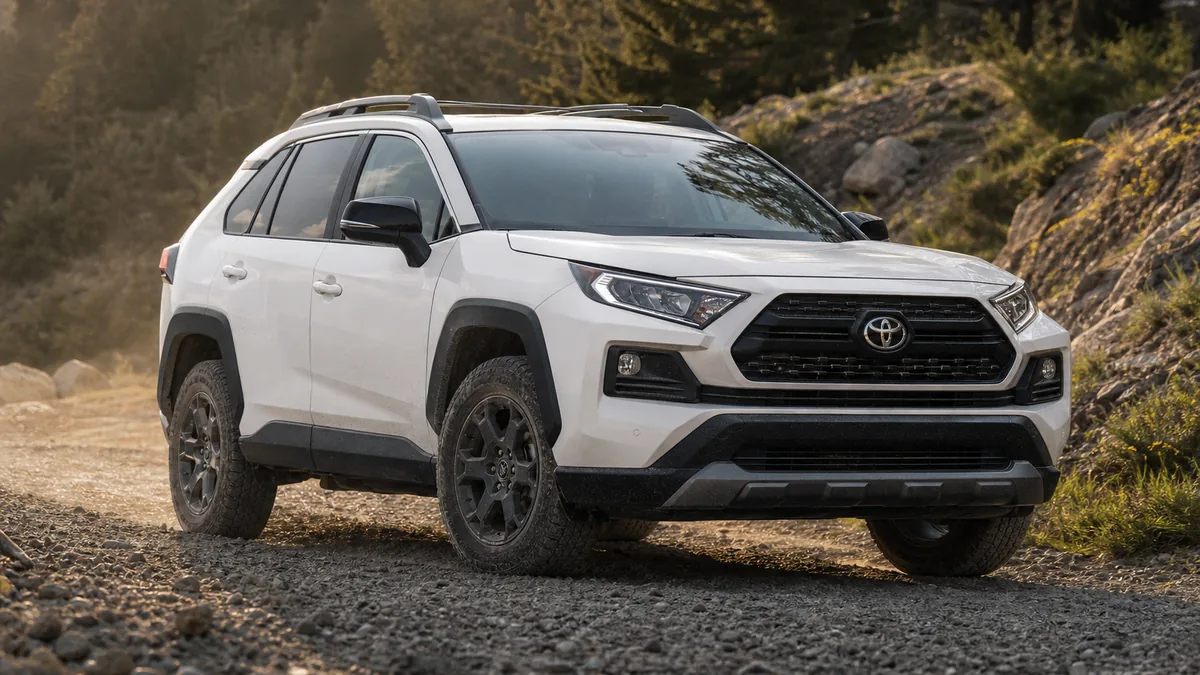
If real weather capability is your reason to buy, cross-shop a Subaru Outback too, since it is built around the same all-weather job. Match the trim to your real week, and hold yourself to the mainstream trims rather than reaching for the loaded top.
Everyday room, seats, and towing
Practicality is the reason the RAV4 became a default family SUV, and the gas car keeps every bit of it. You get up to 37.6 cubic feet of cargo behind the second row, five seats, and a tall, easy step-in height.
Everyday capability
- Cargo behind rear seat
- up to 37.6 cu ft
- Seating
- 5
- Towing, Adventure or TRD Off-Road
- up to 3,500 lbs
- Towing, other trims
- about 1,500 lbs
- Basic warranty
- 3 yr / 36,000 mi
That cargo hold swallows a stroller, a big grocery run, or a dog crate without folding a seat. The floor is flat and the opening is wide, so loading heavy bins is easier on your back.
Towing needs a careful read, because the rating splits by trim. Only the Adventure and TRD Off-Road, properly equipped, reach the 3,500 pound figure, while most gas trims stop near 1,500 pounds.
Before you trust any brochure number, bring your real gear to the test drive:
- Load the stroller or dog crate you use every week
- Check the cargo floor height against your knees and back
- Try the rear seats with car seats already installed
- See whether your longest item fits with the seats folded
Five seats fit a small family, not a big one. If you regularly carry more people, a Toyota Sienna hauls them better, and space-first shoppers often start from our best family SUVs list.
The RAV4 sits in the middle of a crowded compact SUV set, so it is worth checking rivals before you commit.
Loading ease is one spot where the CR-V can edge ahead, and sorting your drivetrain and cargo needs early is the first step in choosing an SUV.
For most families the gas RAV4 has enough room, and the real test is loading your own gear, not reading the spec.
Cargo is the RAV4's quiet strength, with about 37.6 cubic feet behind the rear seats and a low, square load floor that swallows strollers and weekend gear.
Towing stays modest at roughly 1,500 pounds on gas trims, which covers a small utility trailer or a pair of bikes but not a camper.
The rear bench seats three across for short trips and two adults in real comfort on long ones.
Reliability and the used gas RAV4 check
Reliability is the gas RAV4's strongest card. The 2.5L four-cylinder and 8-speed automatic are proven Toyota parts with no hybrid battery or electric motor to fail, so the drivetrain worry is low.
That does not make every used gas RAV4 a safe buy. A neglected Toyota can still cost you real money, so the inspection matters more than the badge on the tailgate.
Focus your used check on the things that actually go wrong on this car:
- Look for matching tire brand, size, and tread on all four corners
- Listen for suspension noise over rough pavement
- Test the screen, cameras, and phone pairing with your own phone
- Check the cargo floor and lower bumper for signs of past repair
- Confirm any open recalls by VIN before you talk price
Road noise and a firm ride are the common gripes here, not mechanical faults. Drive coarse concrete before you buy, because cabin calm is a daily thing you notice long after the test drive ends.
A few small items still deserve a look. Test the 12-volt battery health, brake feel, and screen response, since worn versions of those are the parts most likely to nag an older gas RAV4.

A quick tire pressure check and a look at the oil records reveal cheap maintenance fast, and keeping your own oil change receipts protects resale later.
Weighing a used gas car against a newer hybrid is exactly what our new versus used guide walks through.
The best used gas RAV4 has boring records, even tire wear, and no story the seller struggles to explain.
Running costs, tires, and resale
The gas RAV4's ownership story is a lower buy-in set against a higher fuel bill. You pay less up front than a hybrid, then spend a bit more at the pump, so your yearly miles decide who really wins.
| Cost area | What changes the bill | Buyer move |
|---|---|---|
| Purchase | Used gas prices sit below new hybrids | Buy used to bank the upfront saving |
| Fuel | Near 30 mpg, below the hybrid | Estimate with your own annual miles |
| Tires | All-wheel drive and big wheels cost more | Price a set before choosing a trim |
| Depreciation | Toyota resale stays firm | Avoid paying over a fair used price |
| Insurance | Trim and ZIP both move it | Quote the exact VIN before signing |
Fuel is the line that grows with your miles. A low-mileage driver barely feels the gap, while an 18,000-mile-a-year commuter pays for it every week and might do better with the hybrid.
Tires are the other quiet cost. Larger wheels and all-terrain rubber on the rugged trims cost more to replace, so price a full set before you fall for the look.
Small extras add up too. Roof racks, cargo mats, and a tow hitch all pile onto the bill, so budget the accessories you actually need instead of buying up a whole trim for them.
Resale protects you later, but it never refunds a bad purchase price. If a used gas RAV4 is priced like a hybrid, that advantage disappears, so compare it against a Mazda CX-5 on the same day.
When the monthly payment is driving the choice, run the lease or buy math before you sign a long loan. A cheap gas SUV can still get expensive at the wrong rate.
Widening the search keeps you honest on price, and our CR-V alternatives list is a fast way to see what else the same money buys. The cheapest gas RAV4 to own is a fairly priced used one with the drivetrain you need and no markup on top.
Gas or hybrid: making the call
So should you take the gas RAV4 or pay up for the hybrid? Decide it from the gas side, starting with your budget and your miles, not with the sticker mpg.
Gas is the right call for a value-first buyer. A used 2019 to 2025 car saves cash today, skips the hybrid battery question, and still carries Toyota resale into your next trade.
The hybrid wins for a high-mileage driver. It is quicker, far thriftier, and repays its premium fast when you drive a lot, which is why heavy commuters should read the RAV4 Hybrid review before choosing.
Cross-shopping keeps the choice honest. A gas Honda CR-V covers the same ground, and our CR-V versus RAV4 Hybrid matchup shows how close these rivals really are.
If your real interest is electric miles, do not force a compact SUV to fake it. Price a Tesla Model Y instead, because a full EV answers that itch better than any gas trim.
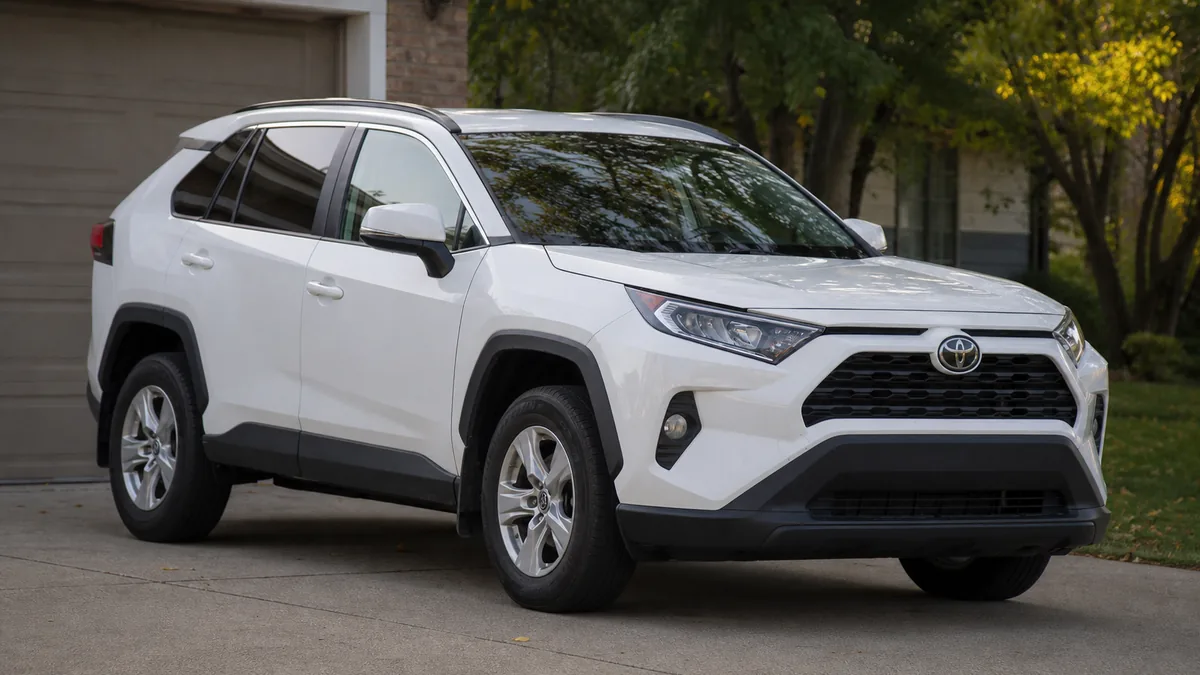
Bring your gear, drive rough pavement, and get a firm out-the-door price before you commit. Take the gas RAV4 when the lower price and simpler drivetrain fit your miles, and step up to the hybrid only when heavy driving makes the fuel savings pay.
The decision usually comes down to one number. The hybrid costs roughly $2,500 more up front, and at normal gas prices it saves a few hundred dollars a year, so the payback lands somewhere near 40,000 to 60,000 miles.
Drive city miles or keep the car for years and the hybrid wins.
Drive mostly highway or trade often and the gas RAV4 is the cheaper answer.