Is the Mach-E a real Mustang, or an SUV wearing the badge?
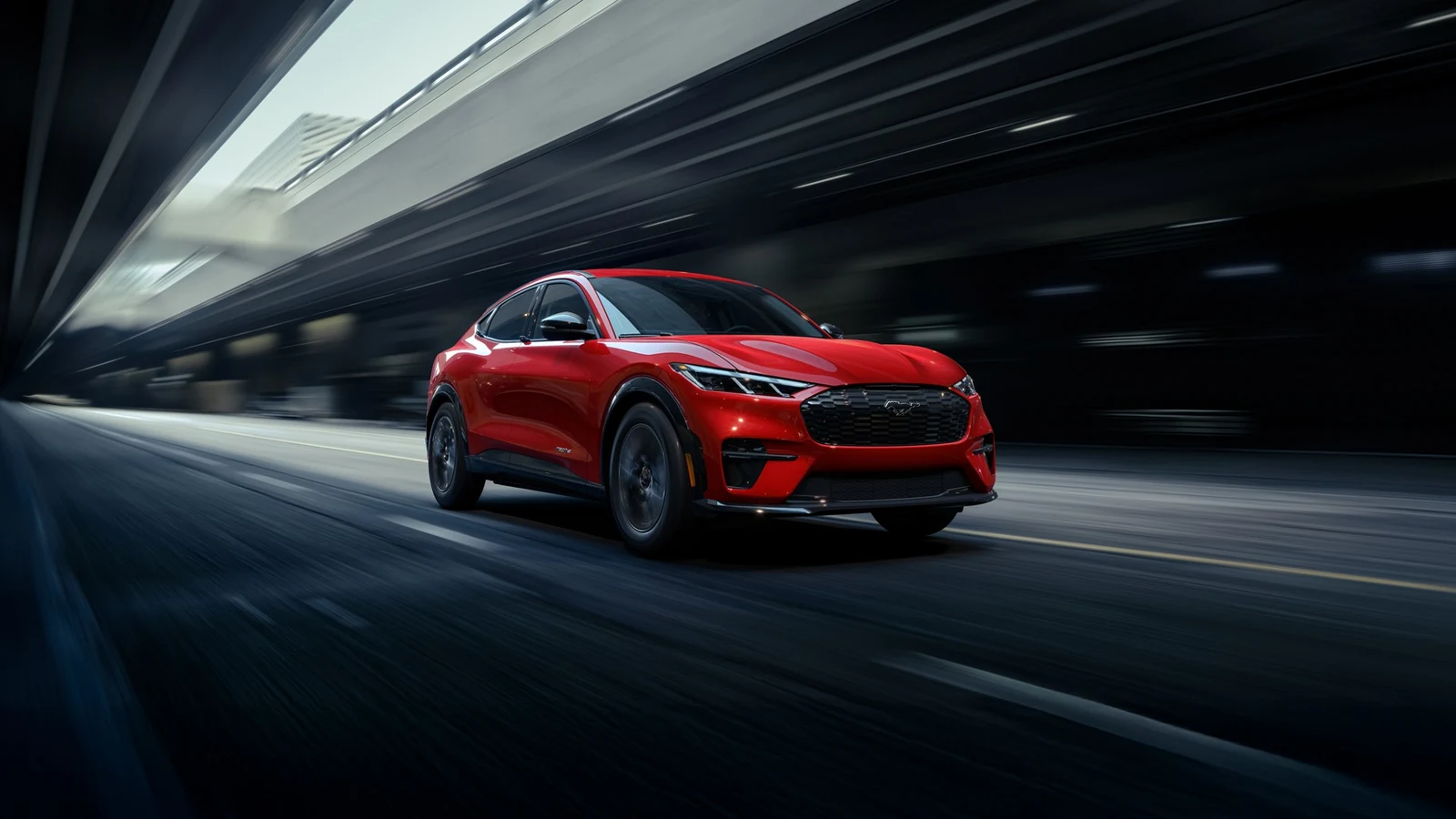
The Mustang badge sets up the first argument you will have with yourself in the showroom. You expect a low two-door coupe, and what Ford actually parks in front of you is a tall five-seat electric crossover that borrows the name to promise quick response and style.
Read that gap honestly and the car gets easier to judge. The Mach-E drives with a performance-flavored personality in a practical shape, so it feels sharper and more planted than most family EVs without pretending to be a sports car.
Power is where the badge earns some of its keep. Output runs from 264 hp on the entry setups to 480 hp on the GT and Rally trims, which is genuinely quick for a crossover this size.
That speed comes with a personality most rivals skip. Next to a Hyundai Ioniq 5, the Ford feels more driver-focused and less like a rolling lounge, and next to a Tesla Model Y it feels more familiar and less minimalist inside.
The trap is letting the name write the check. Buyers who want a coupe-like sports car should skip it, because this is a practical electric crossover with quick versions rather than a stand-in for a two-door.
If the drive is what pulls you in, test it against the picks on our fun-to-drive cars list before you decide the badge is worth a premium. A normal Premium already feels brisk, so the GT is a want and not a need.
That middle position, sharper than an appliance EV and calmer than a track toy, is the Mach-E's real strength. Judge it as an electric crossover first and a Mustang-branded product second, because that order predicts whether you will be happy after the novelty fades.
Select, Premium, GT, and Rally: matching the trim to the job
The Mach-E lineup can overwhelm you before you even drive one. A Select, a Premium, a GT, a Rally, a rear-drive car, and an all-wheel-drive car do not answer the same need, so pick the use case first and let the trim follow.
Start with the battery, because it changes the car more than the name on the tailgate does. Ford pairs a standard-range 73 kWh pack with available extended-range packs of 88 to 91 kWh, and that choice sets your whole trip buffer.
A Select on the standard battery works for commuting when home charging is reliable. A Premium extended-range rear-drive car is the long-range play, and it is the one that stretches closest to the top of the range span.
| Question | Why it matters | Buyer move |
|---|---|---|
| Standard or extended range | Decides trip buffer | Buy extended range for road trips or winter |
| Rear-drive or eAWD | Changes traction and range | Buy eAWD for weather or acceleration |
| Premium or GT | Comfort versus speed | Choose Premium unless performance is the reason |
| Home charging | Decides daily ease | Verify Level 2 charging before delivery |
| BlueCruise | Useful only if your roads support it | Price the subscription before counting it as value |
Electric all-wheel drive adds traction and power, and it trims range in exchange, so buy it for weather or acceleration rather than for the badge. The GT and Rally trims are quick and more characterful, and they push tire, insurance, range, and purchase cost all in the wrong direction for a calm commute.
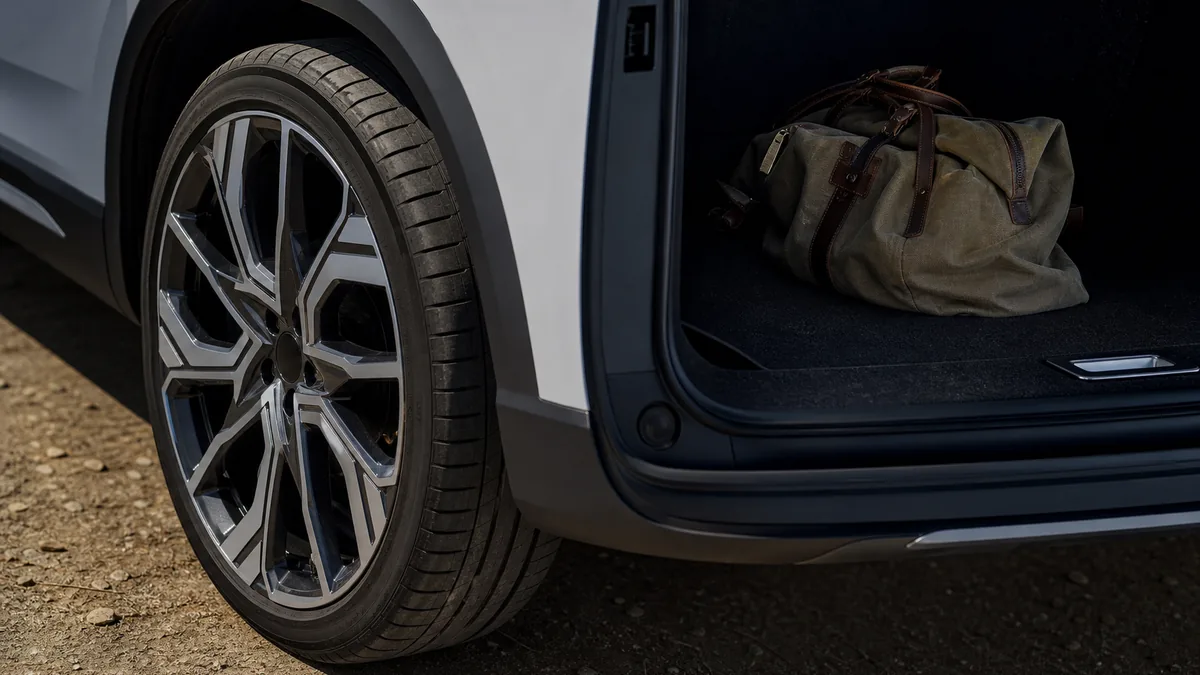
Wheel size belongs in the same decision. Bigger wheels sharpen the look and raise both tire cost and the hit to range, while smaller wheels ride better and protect your miles.
Sort the whole decision with three questions before you shop a trim:
- How far is your longest regular trip on one charge
- Do winter or steep roads call for all-wheel drive
- Is real speed worth the tire and insurance bill of a GT
Do not let one test drive stand in for the lineup, because a GT on large wheels and a base rear-drive car feel like different vehicles. Drive the exact battery and trim you plan to buy.
A well-equipped Mach-E lands in the premium EV price band, so it pays to drive the wider electric SUV field before you commit to one trim. For most buyers the cleanest pick is a Premium with the battery that covers your longest normal trip, not the fastest trim on the page.
Real range, and the non-Tesla charging reality
Every Mach-E shopper reaches the same question fast. How far does it really go, and where do you plug it in, because the EPA range spans 240 to 320 miles depending on the battery and the drive layout.
Read that number as a planning tool and not a promise. Highway speed, cold air, big wheels, and cabin heat all pull the real figure down the way they do on any EV.
Charging is where the honest talk starts. The Mach-E charges quickly enough for road trips, and it is not a class leader on peak charging, so plan around the battery size, charger reliability, temperature, and the route rather than one brochure number.
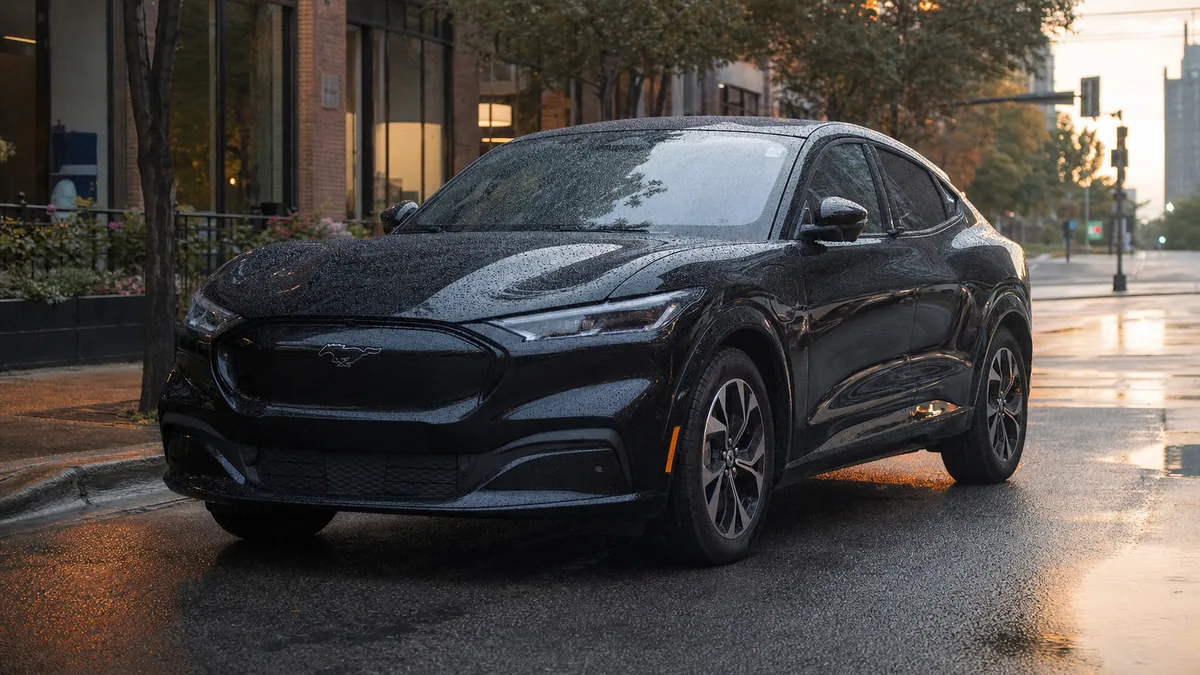
The plug standard is a live shopping question right now. Ford EVs came up outside Tesla's network, and the industry is moving toward the same connector, so the adapter and account path can differ by model year on the same lot.
- 2021Mach-E launches as Ford's electric crossover on its own charging network
- 2023 to 2024Software and charging updates become part of the ownership story
- 2025 to 2026The NACS transition and Supercharger access make the connector a key shopping question
Many Ford EV owners can now reach Tesla Superchargers with the correct adapter and account setup, and you should confirm current compatibility before you count on it for a trip. The Tesla Model Y still sets the network benchmark, so match your real routes against it before you sign.
If the plug question is new to you, our EV charging basics guide is worth a read first, because a fast car with no dependable plug near your parking feels worse to own than a slower one that fits your week.
Home Level 2 charging is the cleanest setup by far. Plug in overnight and you leave every morning full, which turns the daily range question into a non-issue and keeps fuel cost low.
The charging plan should decide the Mach-E before the trim does.
The familiar cabin, the screen, and how much crossover you get
Step inside and the Mach-E makes its clearest case against a Tesla. The cabin feels closer to a normal car than a minimalist EV, with a familiar layout, real crossover cargo space, and a hatch and rear seat sized for daily family use.
A large center screen still runs most of the controls, so this deserves a real test rather than a showroom glance. Run the tasks you actually repeat instead of the fun ones:
- Change the cabin temperature and turn on the defroster
- Set the wipers and adjust the mirrors for rain
- Pair your phone and add a charging stop to the route
- Fold the rear seats and load a child into the second row
That slow test tells you more than a lap around the block, because the layout either clicks with your day or wears on you. Now walk the same trip through the space it gives you.
Cabin and practicality
- Seating
- 5 in a familiar crossover layout
- Controls
- Large center screen plus more physical switches than a Tesla
- Cargo
- Useful hatch space with a sealed front trunk
- Driver aid
- BlueCruise hands-free help on supported roads
The cargo flexibility is a big part of why the Mach-E lands on family shortlists. The hatch swallows strollers and boxes that fight a sedan trunk, and the front trunk handles wet gear or a coiled charging cable without eating into the main hold.
BlueCruise is the headline driver aid, and it only pays off if your regular roads support hands-free driving, so price the subscription before you treat it as value. A feature you cannot use on your commute is not worth the monthly line.
The familiar cabin comes with a familiar sales and service path too. A normal Ford dealer network means you are not tied to a direct-sales model, which suits buyers who want a local service bay they can walk into.
If you are weighing this against gas crossovers on space, our family SUVs roundup tells you to carry the same gear to every car. A quicker EV is not automatically the better family car, so measure the cargo and rear seat with your own stroller and child seat.
Mach-E against the Model Y and Ioniq 5
Most Mach-E shoppers put it on a list with two other electric crossovers, so it helps to name where each one wins. The short version puts the Ford in the middle, with a familiar cabin on one side and a charging edge it cannot quite match on the other.
The Tesla Model Y is the charging-network benchmark. If your road trips depend on the broadest, simplest network, that can outweigh cabin preference, and it is the Mach-E's real weakness.
The Hyundai Ioniq 5 is the comfort and fast-charging alternative. It charges very quickly on strong hardware and rides more like a lounge, while the Ford answers with a more driver-focused feel and a more traditional brand experience.
Pros
- Broad range and battery choices
- More familiar cabin than a Tesla
- Quick GT and Rally trims
- Useful crossover cargo space and Ford dealer access
Cons
- Fast charging is not class-leading
- Performance trims can raise tire cost
- Range varies widely by setup
- Mustang name can distract from a practical trim choice
The Mach-E is the better Model Y alternative for drivers who want a normal-brand dealer relationship and a less minimalist cabin. It is the weaker pick for buyers whose trips lean on the widest charging network, and that split should decide more than the badge.
A buyer torn between the two should compare charging confidence first. If the Tesla network settles your trips, that can end the debate, and if home charging covers most of your week, the Ford earns a serious look.
Shoppers cross-shopping the sedan shape can also weigh a Tesla Model 3, which trades the hatch for lower cost and more range.
For the full field, our best electric cars list shows where the Mach-E leads and trails.
Start from your charging access and your weekly miles, then let the badge follow.
What a Mach-E costs to run, and the incentive math
The Mach-E fuel story looks great until the other bills arrive. Home electricity can run it for a fraction of pump prices, and the same car gets expensive if you lean on public fast charging, buy the GT, and wear through tires quickly.
There are no oil changes, spark plugs, or exhaust parts to budget, which trims routine service to tires, filters, wipers, and alignment. The savings are real, and they are not the whole picture.
| Cost area | What changes the bill | Buyer move |
|---|---|---|
| Electricity | Home rate versus public fast charging | Estimate both before buying |
| Tires | EV weight and torque raise wear | Rotate on schedule and price replacements |
| Insurance | Trim, battery cost, and region matter | Quote Select, Premium, and GT separately |
| Depreciation | EV prices move quickly | Avoid paying extra for range you do not use |
| Charging setup | Home electrical work can cost real money | Price installation before delivery |
Insurance is the surprise most shoppers underrate, so get a real quote with the exact trim and VIN before you order. The GT and the Premium do not land on the same premium, and a fuel calculator will not warn you about the gap.
Home charging hardware is a first-year cost of its own. A Level 2 charger, the wiring run, a permit, an electrician, and a possible panel upgrade can turn a cheap fuel plan into a real upfront bill.
Depreciation is harder to predict than on a gas mainstream SUV, because incentives, charging standards, and newer models can move EV values quickly. A strong lease deal can make sense when you want the car without long resale exposure, and our lease vs buy guide folds in the charger install, insurance, and tires.
Keep the tire pressure habit that protects both tread and range, since a heavy EV punishes soft or unrotated tires faster than a light sedan.
If you cannot charge at home, price a Toyota RAV4 hybrid before you commit, because it will not feel as quick and it may be easier to live with.
Cheap home charging plus a disciplined trim choice is what makes the Mach-E cost less to run than the gas SUV it replaces.
Reliability, the used-Mach-E check, and who should skip it
The Mach-E reliability record is still younger than a Camry or a Corolla, so the smart move is to inspect rather than assume. Focus on the battery warranty, software updates, charging behavior, suspension noise, tire wear, and whether recalls or service campaigns were completed.
Complaints tend to cluster around software, charging behavior, the 12-volt battery, recalls, tire wear, and the occasional cabin or suspension noise. None of that makes the car a bad buy, and all of it changes what you check on a used lot.
Inspect a used Mach-E like an EV and like a normal car at the same time:
- Test Level 2 and DC fast charging if the seller allows it
- Confirm software updates and recall status by VIN
- Check tire tread and replacement cost before choosing a GT
- Test phone pairing, navigation, driver-assist alerts, and cameras
- Listen for suspension noise over rough pavement
- Inspect the cargo area, hatch seals, and charging-port function
The 12-volt system still matters, because EVs get low-voltage battery gremlins the same way gas cars do. Warning messages, slow wake-up behavior, or odd electrical complaints should be diagnosed before money changes hands.
Ford dealer access can be a real advantage over a direct-sales service model, but only when your local store actually services EVs well. Call the service desk before you buy, and lean on our new vs used framework so battery warranty and software status outweigh a lower sticker.
Cold-weather buyers should leave a bigger range buffer than the brochure suggests, because cabin heat, battery temperature, and wet roads all trim usable miles. If the winter route is tight on paper, choose the larger battery or a RAV4 Hybrid instead.
The mistake is buying the badge before the battery. Range, charging access, tires, and warranty support decide ownership satisfaction far more than the name on the hatch, so choose the Mach-E as a household tool that fits your parking and your routes.