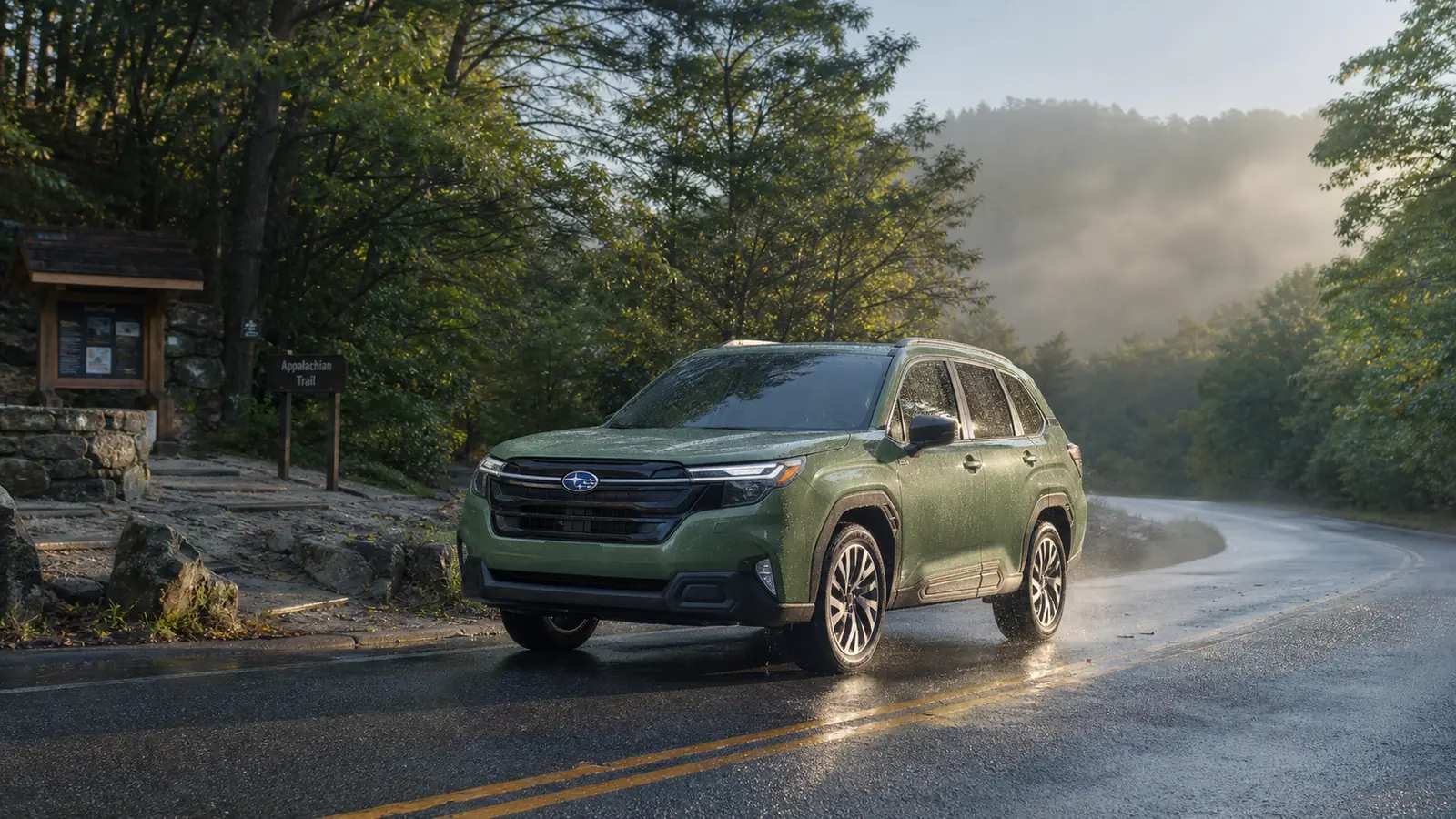
Is the Subaru Forester reliable?
Yes, many Foresters provide long and practical service, especially when maintenance records are complete and the vehicle has not been driven with low oil or an unresolved cooling warning. The flat cargo floor, good visibility, and standard all-wheel drive also make the model useful long after newer styling has lost its appeal.
The answer cannot be reduced to one fleet score. Certain 2011 through 2014 cars have an official oil-consumption coverage history, the 2018 model received added CVT coverage, and 2019 through 2021 cars have a long thermo control valve extension.
A completed campaign fixes the condition named in that campaign. It does not establish the health of the engine, transmission, wheel bearings, cooling system, or body repairs around it.
The best used Forester is therefore an exact-car decision. The model deserves a yes only after the generation-specific evidence agrees with a cold start and a fully warm drive.
Which Forester years have the clearest oil-consumption history?
Subaru service bulletin 02-157-14R applies to 2011 through 2014 Foresters with the 2.5-liter FB engine and to 2015 Foresters with that engine and a manual transmission. Subaru extended qualifying powertrain coverage for excessive engine oil consumption to eight years or 100,000 miles.
That population is precise. It does not include every later 2.5-liter Forester, and it does not prove that every included engine consumed too much oil.
- 2011-2014 Forester 2.5LIncluded in Subaru's named oil-consumption program
- 2015 Forester 2.5L manualIncluded, while the CVT version is not named in this bulletin
- Inspection todayCoverage may have expired, but repair and test records still matter
- Purchase decisionStable oil level and documented corrective work are stronger than reassurance
Check the oil before the engine is started and compare the reading with the service interval. Ask how often oil is added, which viscosity was used, and whether an authorized retailer performed a consumption test or replaced the short block.
A low level can also result from an external leak, poor service, or a seller who did not check it. Blue exhaust smoke, fouled plugs, catalyst codes, a persistent low-oil history, or a vague replacement story requires diagnosis rather than a quick top-off.
An invoice for engine work should identify the assembly, mileage, date, installer, and remaining coverage. A replacement can be positive evidence when the engine now starts quietly, holds fluids, and produces clean scan and compression results.
Oil history matters beyond the original complaint because low oil can damage bearings, timing components, and the catalyst. On an affected older Forester, a stable dipstick and complete repair record are purchase evidence, not optional paperwork.
The CVT question is about evidence, heat, and current behavior
Subaru extended CVT coverage on the 2018 Forester from five years or 60,000 miles to ten years or 100,000 miles. The notice covers both the naturally aspirated 2.5-liter and turbocharged 2.0-liter Forester and says the change was intended to provide added assurance rather than respond to one named defect.
That wording matters. The extension establishes extra factory responsibility for qualifying original or approved replacement units, while it does not say that every transmission is defective.
Begin the road test with the vehicle cold. Select Reverse and Drive with the brake applied, then note a long delay, harsh impact, warning lamp, or repeated attempt to engage.
Drive gently through neighborhood speeds before joining faster traffic. Engine speed can rise and hold during normal CVT acceleration, but road speed should respond smoothly without shudder, flare, whining that grows with heat, or loss of acceleration.
Continue until the engine and transmission are fully warm, then repeat low-speed starts and moderate acceleration. A short loop around a dealer lot cannot reproduce sustained grade, summer heat, or highway load.
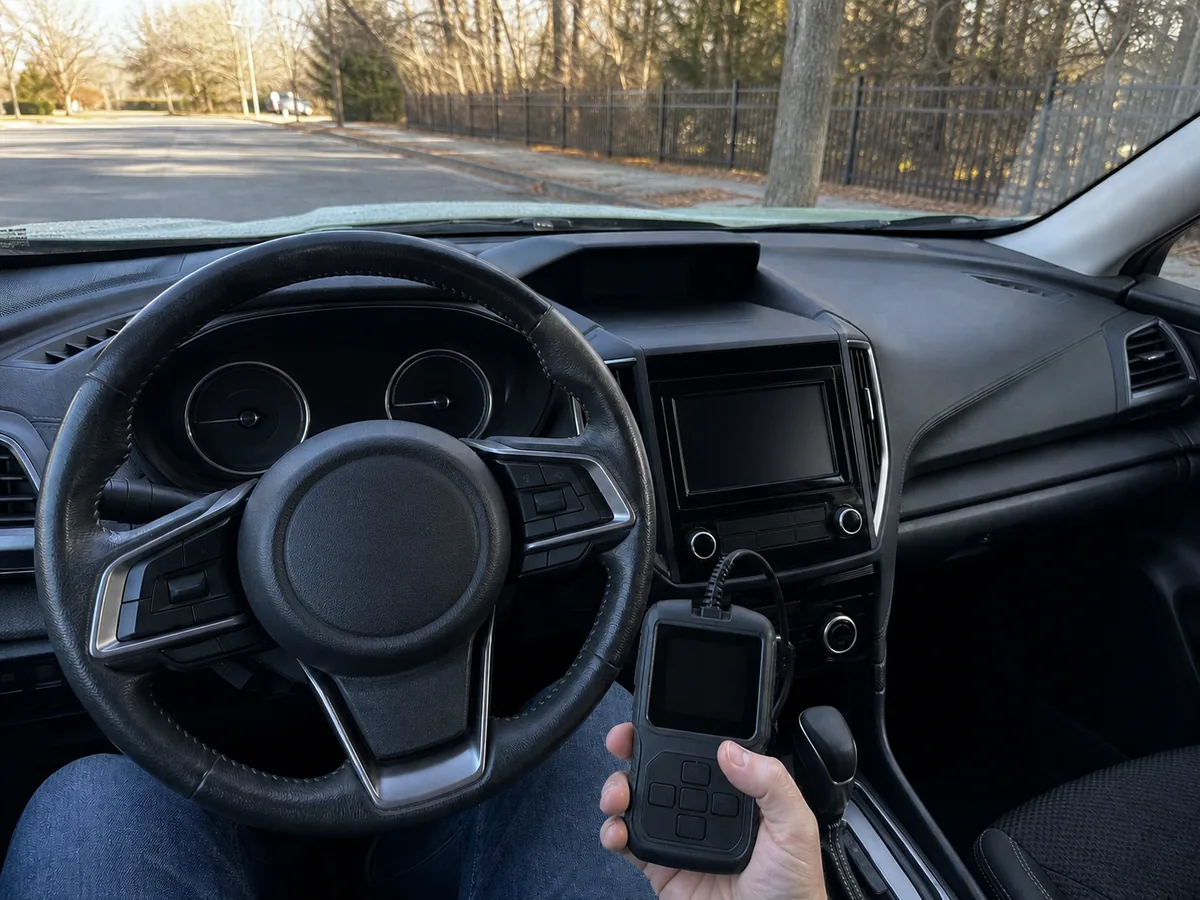
A scan should include current, pending, and history codes in the transmission controller. Recently cleared monitors or a disconnected battery justify another inspection instead of a rushed purchase.
Service invoices are more useful when they name the fluid, procedure, software action, valve body, cooler, or complete transmission. The phrase transmission serviced does not reveal what happened.
A normal warm drive and a clean controller history carry more weight than either the CVT reputation or the old warranty extension.
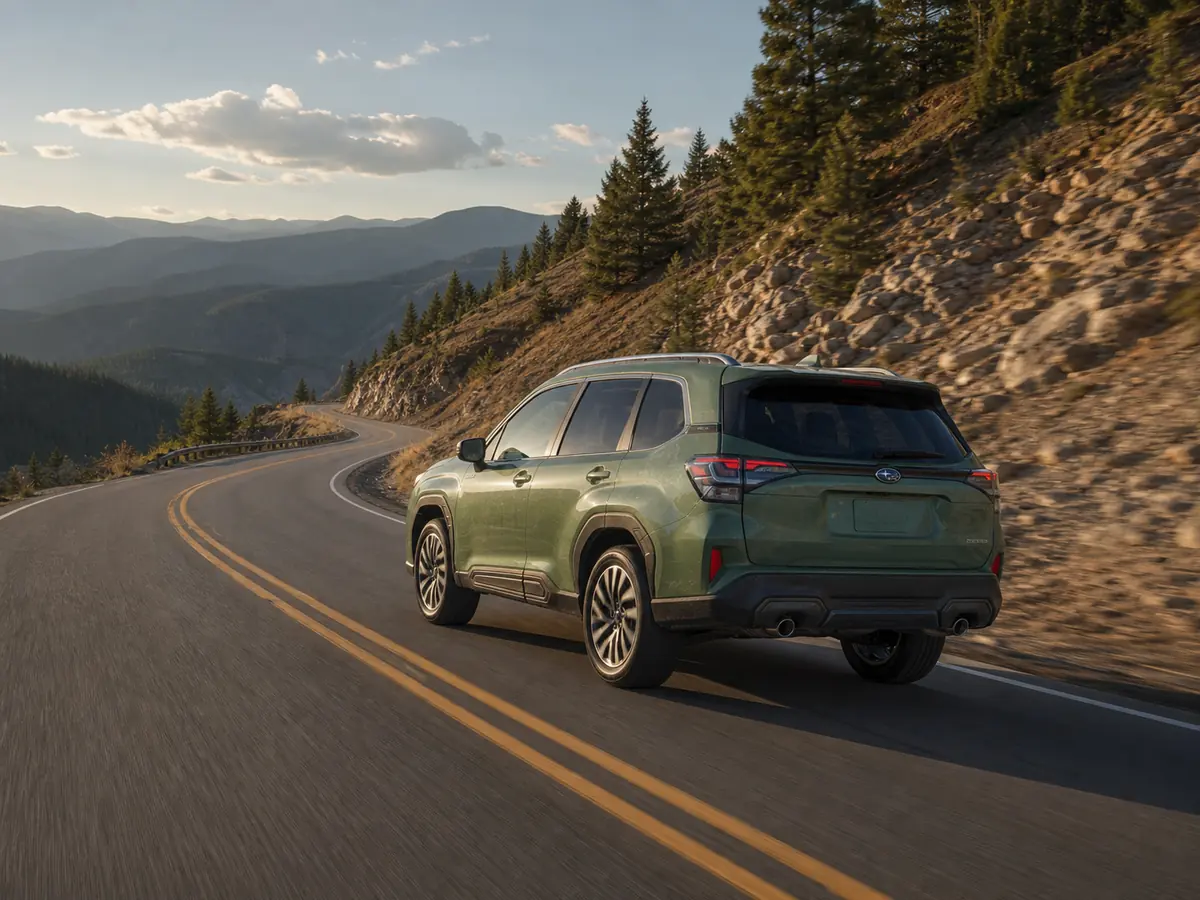
Why the 2019 to 2021 thermo control valve matters
Subaru bulletin 09-119-24 covers 2019 through 2021 Foresters with a thermo control valve condition. Coolant vapor could enter the sensor area and trigger codes in the P2682 or P26A family.
Subaru developed a revised valve with a stainless steel shaft and improved water protection. Qualifying vehicles received coverage for 15 years or 150,000 miles from the original warranty start date.
The condition can illuminate the check-engine light and affect coolant control. Ask for the exact code, repair order, replacement part, coolant refill procedure, and post-repair test instead of accepting a generic cooling system fixed entry.
A check-engine light can have many causes, so do not diagnose the valve from the dashboard alone. Read all modules, pressure-test the cooling system when appropriate, and inspect for dried coolant around the relevant plumbing.
Coverage depends on the VIN, in-service date, and Subaru's vehicle inquiry. Verify eligibility before paying for a diagnosis that may fall within the extension.
Matched tires protect more than winter traction
The Forester's all-wheel-drive system expects four tires with compatible size, construction, and rolling circumference. A severely mismatched replacement forces the driveline to accommodate a speed difference during every mile.
Measure tread depth at several points on all four tires and confirm the labels match. One new tire beside three heavily worn tires, mixed sizes, or different constructions can indicate a shortcut after damage.
Drive slowly through a tight turn in both directions and listen for binding, clunks, or tire scrub beyond the normal surface sound. Then drive at a steady speed and make gentle lane changes where legal to see whether a wheel-bearing hum changes with side load.
Wheel bearings, control-arm bushings, struts, and alignment also affect the Forester's road noise and tire wear. An owner may describe the familiar cabin sound as normal Subaru behavior even when one corner has a measurable fault.
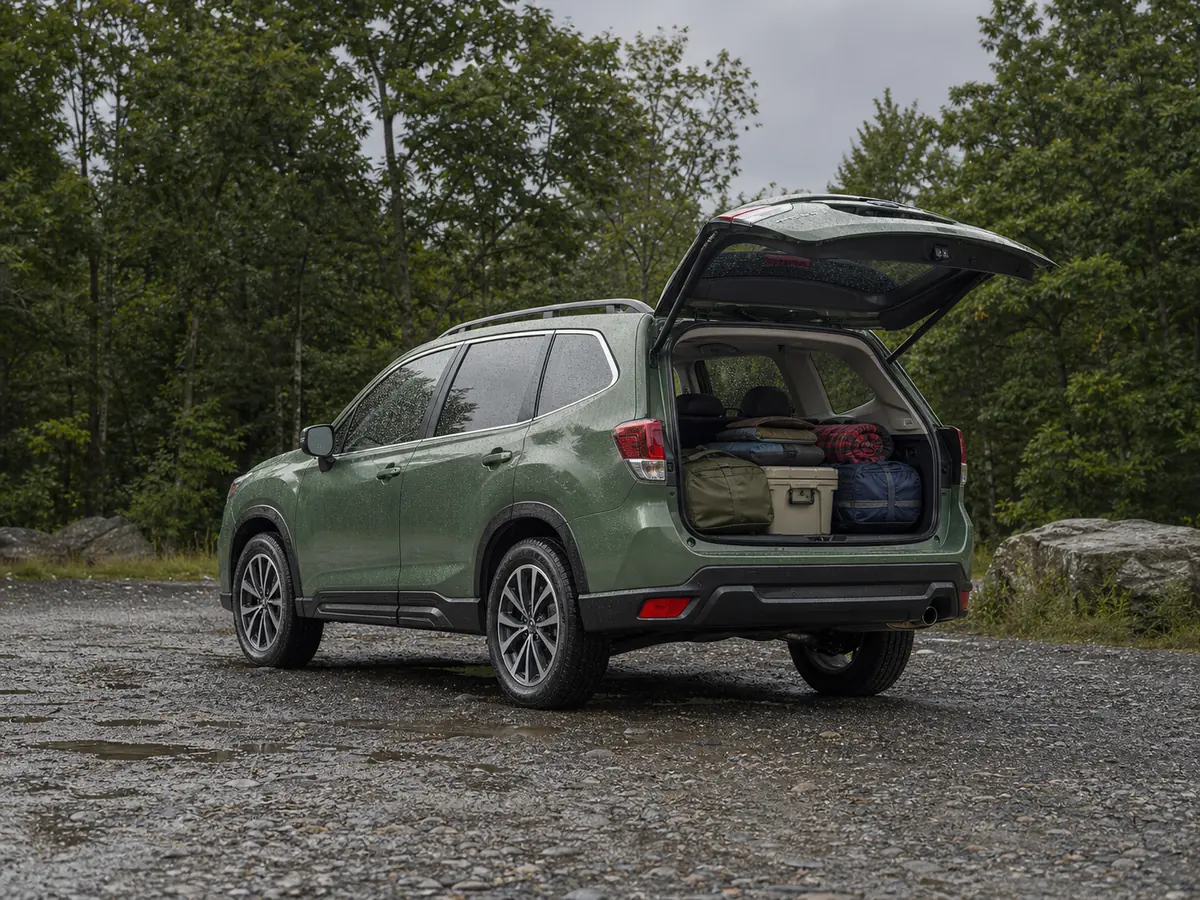
Inspect the spare, jack area, and cargo floor for water or collision repairs. The Forester is often used for dogs, wet gear, gravel roads, and roof loads, so interior wear should make sense beside the odometer and underbody condition.
Four fresh, correct tires can add real value because they protect traction and reduce diagnostic uncertainty. Uneven or mismatched tires are evidence about both the AWD system and the owner's maintenance decisions.
The new Forester Hybrid has strong support but a short record
The current Forester Hybrid combines a 2.5-liter gasoline engine with electric assistance and standard all-wheel drive. It adds useful low-speed torque and fuel savings without changing the Forester's five-seat mission.
Its long-term record is necessarily short because buyers have not yet accumulated the age and mileage available for earlier gas generations. A long warranty can limit some financial exposure, but it cannot create ten years of field evidence.
Separate the traction battery, power electronics, gasoline engine, cooling circuits, and 12-volt battery during diagnosis. A warning in one area does not establish the condition of the others.
The gas Forester is the conservative choice for a buyer who values a longer service history and broad independent-shop familiarity. The hybrid makes more sense when its fuel savings fit the route and the buyer accepts newer-system uncertainty.
Choose the hybrid for its measurable operating benefit, not because anyone can already promise its extreme-mile lifespan.
How long can a Subaru Forester last after 100,000 miles?
A Forester does not become unreliable at 100,000 miles, but the evidence standard changes. At that point the buyer is judging completed maintenance, aging chassis parts, and the cost of the next service cycle rather than the original factory reputation.
Ask for a dated chronology rather than a stack of disconnected receipts. Oil changes should form a consistent pattern, while coolant, spark plugs, differential service, brakes, tires, battery work, and any CVT service should fit the mileage and use.
A single major repair does not renew the whole car. A documented short block or thermo control valve can resolve one concern while struts, wheel bearings, control-arm bushings, axle boots, air conditioning, and corrosion still set the next ownership cost.
Highway mileage with steady maintenance can be easier to interpret than low mileage accumulated through short trips and long storage. The road test should still reach full operating temperature because heat exposes cooling and transmission behavior that an odometer cannot.
There is no defensible maximum lifespan for every Forester. Buy the next 50,000 miles of documented condition, not a promise that every Subaru reaches one headline number.
Should you buy this particular Forester?
A strong candidate has a cold engine, correct oil level, stable coolant, four compatible tires, complete recall status, and service records that match its mileage. The seller should allow enough time to warm the CVT and complete an independent scan.
Mileage becomes useful only after those systems agree. A documented 130,000-mile Forester may be easier to price than a 75,000-mile example with low oil, four different tires, and a recently cleared check-engine light.
A pre-purchase inspection should be performed by a shop familiar with Subaru scan data, cooling service, CVT behavior, and AWD tire requirements. Buy the Forester whose records explain its condition and whose road test confirms the records.