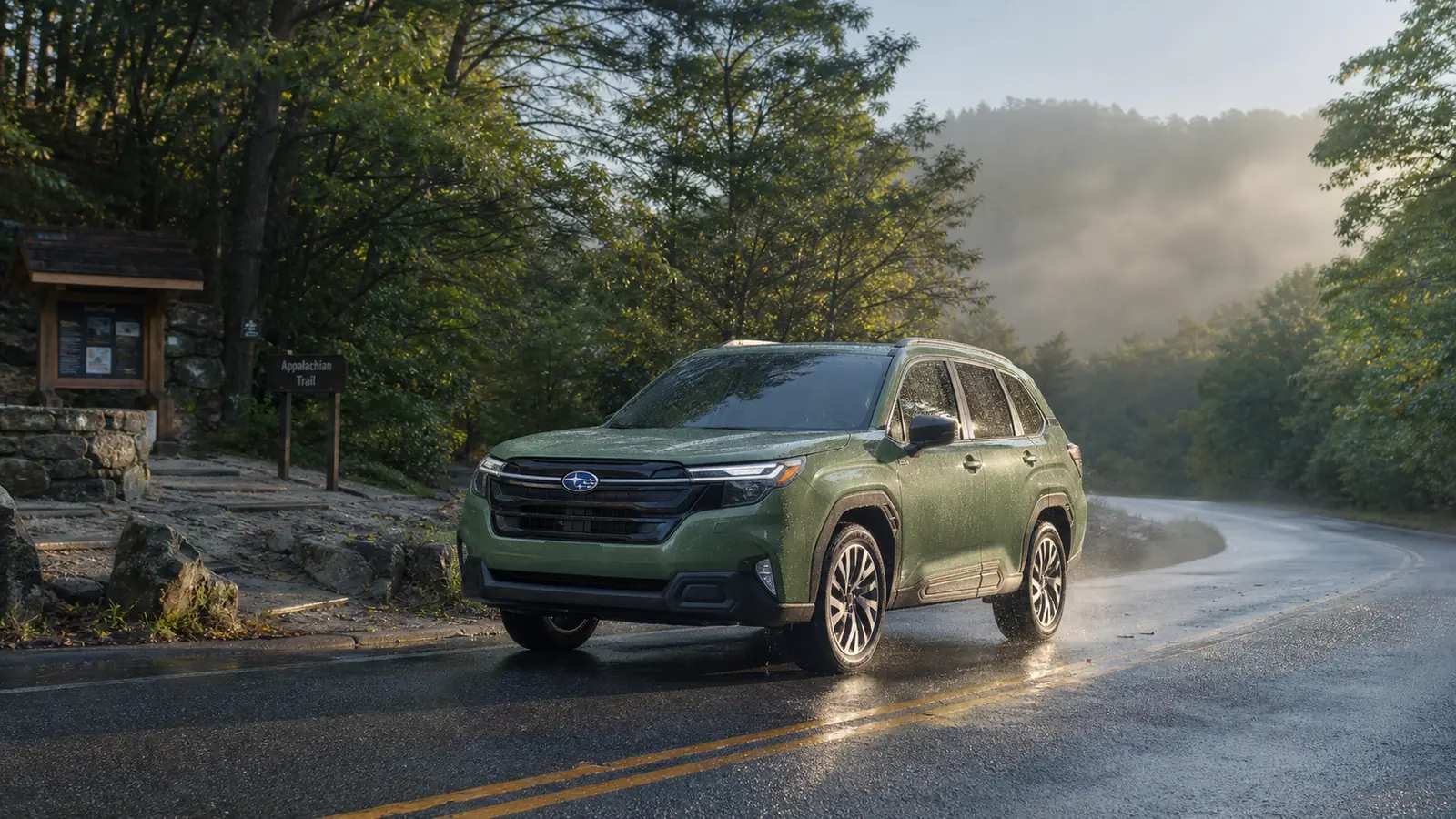
The Forester years I would avoid first
The Forester years I would avoid first are 2015, 2014, 2019, and 2020. They are not all bad for the same reason, so a useful shortlist has to separate older mechanical age from newer complaint concentration.
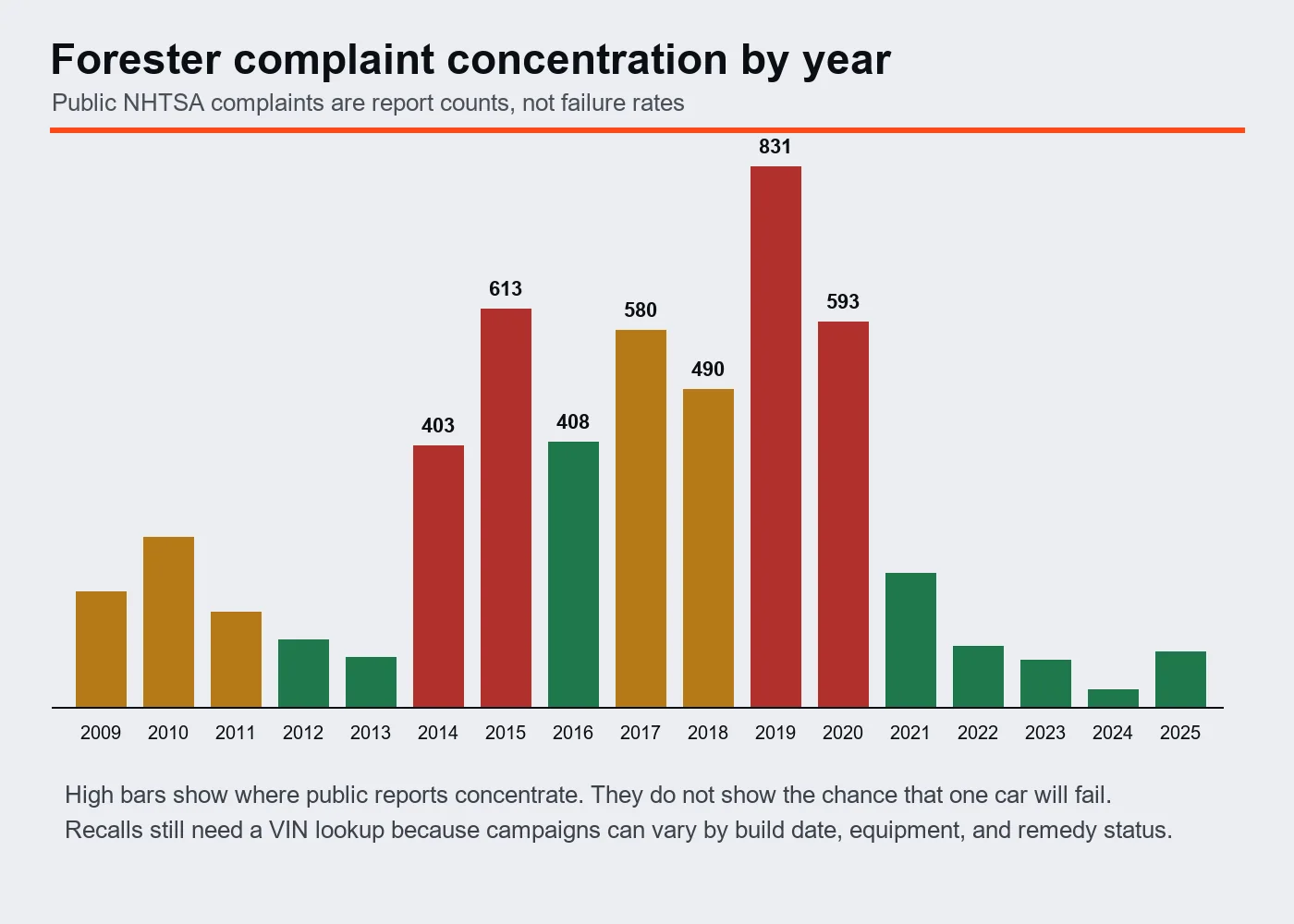
In the NHTSA snapshot I checked on August 8, 2026, the 2019 Forester returned 831 complaints, the 2015 returned 613, the 2020 returned 593, and the 2014 returned 403. Those four years stand out because they combine high public report volume with buyer issues that can change the cost of ownership after purchase.
| Model year | NHTSA complaints | NHTSA recalls | Main reason to pause | Starting verdict |
|---|---|---|---|---|
| 2015 | 613 | 3 | Engine, airbag, powertrain, and electrical reports during the fourth generation | Avoid unless documented well |
| 2014 | 403 | 2 | Redesign year with suspension, engine, airbag, electrical, and speed-control reports | Avoid first for budget buyers |
| 2019 | 831 | 3 | Fifth-generation launch year with heavy visibility and electrical reports | Inspect hard and reprice |
| 2020 | 593 | 0 | Similar high visibility, electrical, engine, and driver-assistance report mix | Inspect hard |
| 2017 | 580 | 1 | Glass, airbag, electrical, and unknown-category reports | Conditional buy |
| 2010 | 262 | 17 | Recall-dense older car with airbag, brake, seat, and engine records to verify | Deep inspection year |
A high complaint count does not mean every car from that year will fail. It means you should not pay a clean-year premium until the records, scan, road test, and VIN lookup support that specific Forester.
The safest way to use the list is to make it a price and inspection filter. If a 2015 or 2019 is priced like a cleaner year but cannot prove its known checks, move on or make the discount large enough to pay for diagnosis.
Why 2014 and 2015 are the toughest used Forester years
The 2014 and 2015 Forester years matter because they sit at the front of a generation that moved many shoppers into Subaru's newer compact SUV formula. Early-generation cars can be good, but they need more proof because redesign changes often expose weak parts, supplier issues, and calibration problems after customers start using them.
NHTSA complaints for 2014 are led by suspension, engine, airbag, electrical, and vehicle-speed-control categories. The 2015 record gets heavier, with engine, airbag, powertrain, electrical, unknown, and speed-control reports all showing meaningful volume.
The 2015 also has recall context that changes the inspection. NHTSA campaign 19V701 covers certain 2015 through 2018 Foresters with heated seats because an electrical connection in the passenger-seat occupant classification system could loosen.
Some 2015 Forester 2.0XT vehicles also appear in NHTSA campaign 16V162 for a turbocharger air intake duct concern. That does not affect every Forester, but it is exactly why trim, build date, and VIN matter more than a generic model-year label.
The fourth-generation CVT check should be deliberate. During the test drive, use light throttle, steady suburban speed, hill starts, parking-lot turns, and a warm restart to feel for shudder, delayed engagement, flare, harsh simulated shifts, or warning lights.
Engine evidence matters because engine complaints are prominent in both 2014 and 2015 data. Look for oil consumption records, coolant stability, cold-start behavior, misfire history, timing-cover seepage, and any sign that a seller cleaned the engine bay before the appointment.
A well-kept 2015 with full records can still make sense. The problem is paying top money for one because the Forester name sounds durable while the specific car has incomplete evidence.
Why 2019 and 2020 need a glass and electronics check
The 2019 and 2020 Forester years are a different problem from 2014 and 2015. They are newer, safer on paper, and easier to find with modern driver-assistance equipment, but the NHTSA complaint mix is heavily concentrated around visibility, wipers, electrical reports, engine reports, and forward-collision-avoidance complaints.
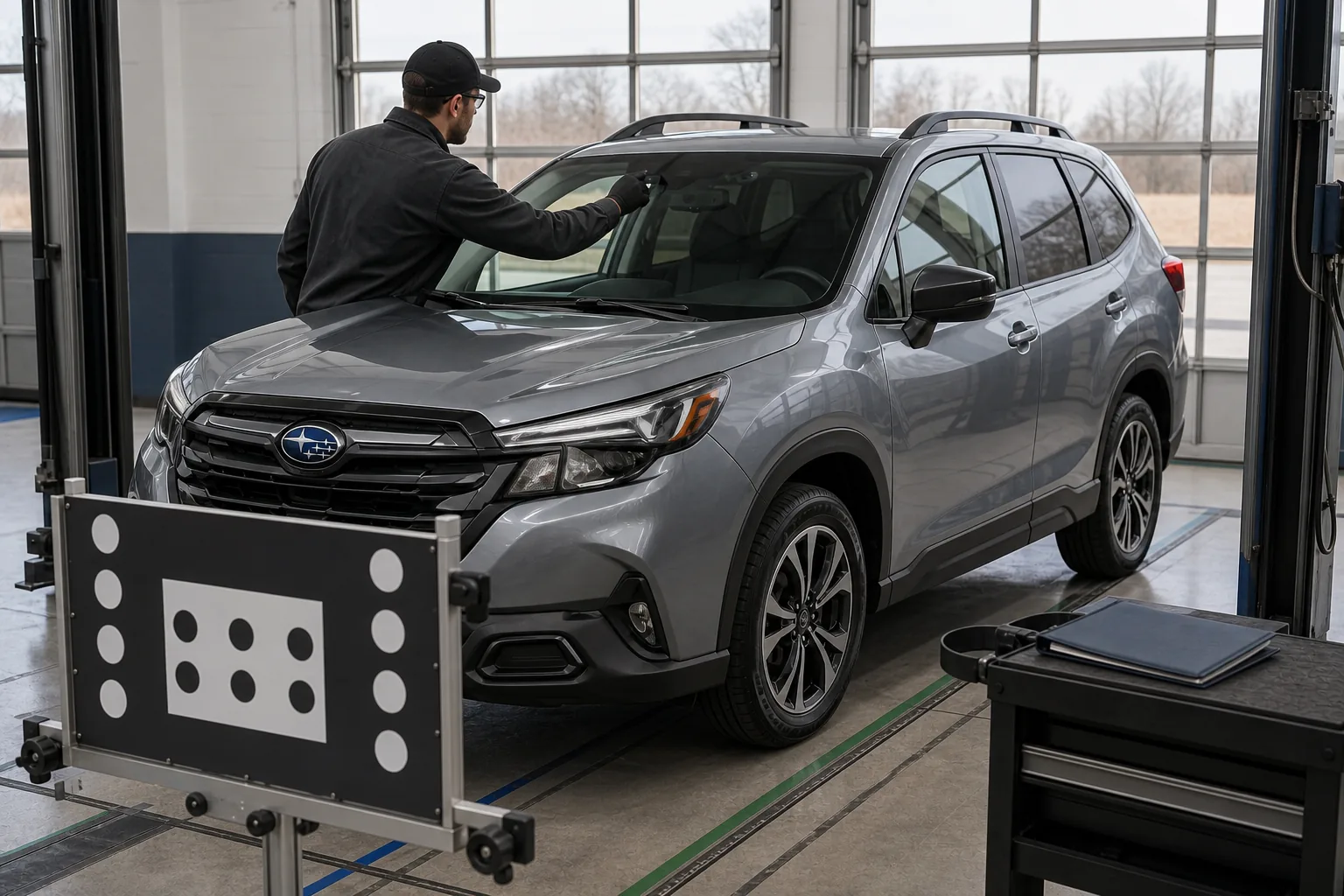
The 2019 Forester is the highest-report year in this snapshot at 831 NHTSA complaints. Visibility and wiper complaints alone account for a large share of that record, which is why windshield history, camera calibration, and glass replacement receipts matter before price negotiation.
NHTSA campaign 19V065 covers certain 2019 Forester and Crosstrek vehicles for an electric power steering connector concern. Campaign 19V856 covers certain 2019 Crosstrek, Forester, and Ascent vehicles for a positive crankcase ventilation valve issue.
Campaign 21V263 also covers certain 2019 Forester vehicles for rear stabilizer bracket bolts that may loosen. A 2019 with those campaigns completed is not automatically bad, but an unresolved VIN record should change the deal immediately.
A windshield replacement is not a reason to reject the car by itself. It becomes a buying problem when the invoice does not mention the correct glass, calibration, or post-repair driver-assistance behavior.
The 2020 Forester returned 593 complaints in the same NHTSA check, with visibility and wiper reports again leading the list. It returned no recall result through the API query I ran, so the inspection has to focus on the car's complaint pattern and current condition rather than assuming campaigns explain everything.
Drive a 2019 or 2020 in daylight and at dusk if possible. Test adaptive cruise, lane assistance, warning lights, wipers, washer spray, defrost, backup camera behavior, steering assist feel, and all infotainment and electrical functions before discussing a final price.
Older Foresters need rust, head-gasket, and recall proof
A 1998 through 2004 Forester can be charming and cheap, but it is now an age purchase before it is a reliability purchase. Rubber, seals, suspension arms, subframes, brake lines, cooling parts, and previous repairs matter more than broad reputation.
NHTSA data shows 2003 and 2004 had heavier older-year report clusters than the years around them, with fuel, suspension, engine, airbag, and related categories appearing near the top. The 2003 and 2004 recall records also include front lower control arm corrosion campaign 11V464 on certain vehicles.
Head-gasket evidence belongs in the older-Forester inspection because coolant loss, overheating history, oil contamination, and prior engine work can decide whether a cheap car is actually cheap. Do not accept a seller's claim without service paperwork and a cold-start inspection.
The 2009 through 2013 years need a separate recall lens. NHTSA returned 18 recalls for 2009, 17 for 2010, 16 for 2011, 15 for 2012, and 12 for 2013 in the current API snapshot, with Takata passenger airbag inflator campaigns appearing repeatedly in the records.
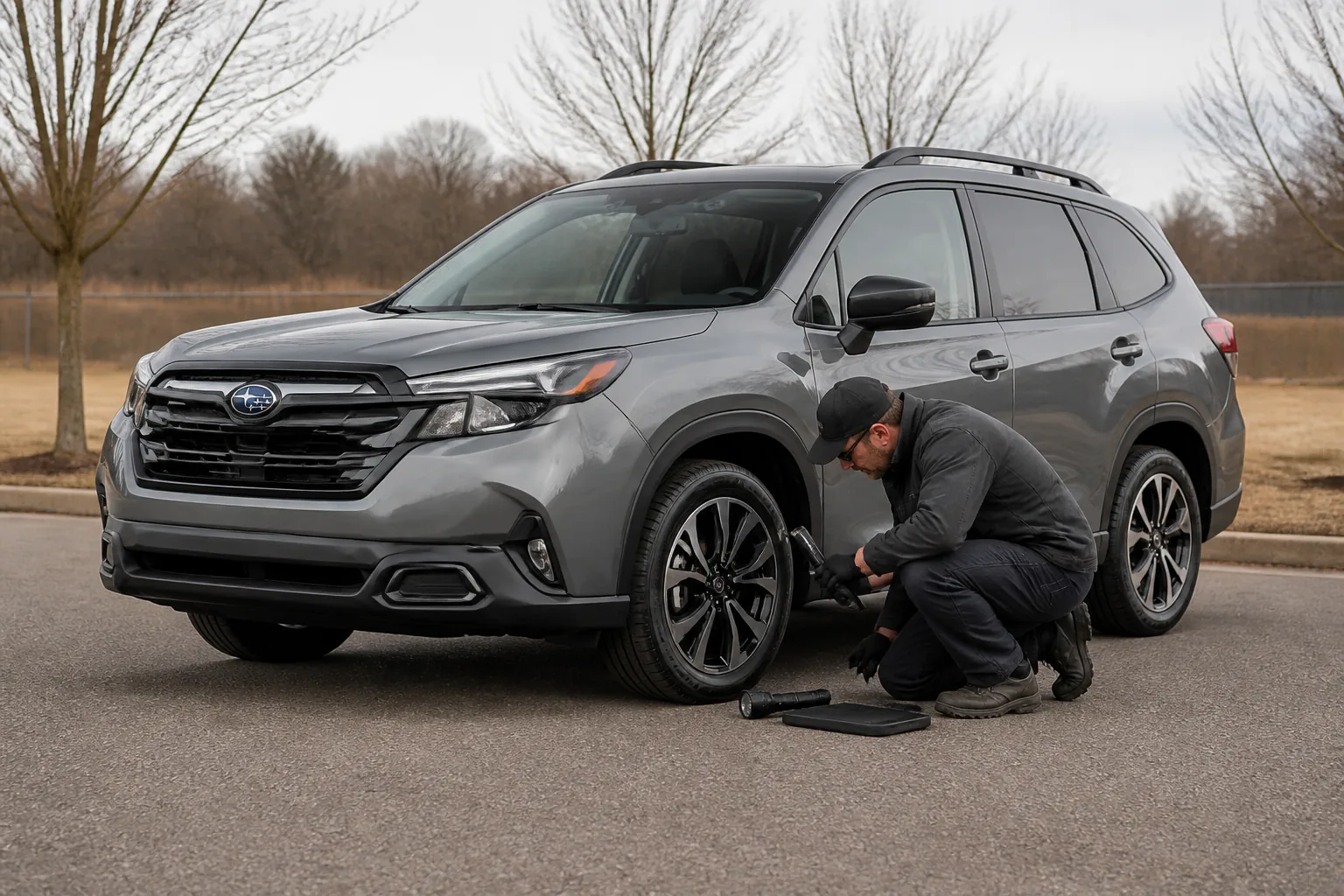
Older Foresters also need tire and drivetrain discipline because the all-wheel-drive system does not like mismatched tires. Confirm all four tires match by brand, model, size, and tread depth before treating the drivetrain as healthy.
A cheap older Forester can be a useful winter car if the body is solid and the service story is coherent. It is a poor buy when rust, cooling history, airbag recalls, tire mismatch, or engine evidence is vague.
The cleaner Forester years to shop first
The cleaner starting points are usually 2021 through 2024, plus a carefully inspected 2016 or 2018 when price and records are strong. These are starting points, not automatic approvals.
NHTSA returned 207 complaints for 2021, 94 for 2022, 73 for 2023, and 28 for 2024 in the August 8, 2026 snapshot. Those counts are much calmer than 2019 and 2020, but newer cars have less time in service and can still carry open recalls or owner-specific damage.
A 2022 Forester returned one recall, while 2023 returned one and 2024 returned two in the same query. That makes VIN verification part of the clean-year process rather than a formality.
A 2016 Forester returned 408 complaints and three recalls, which keeps it out of the cleanest bucket. It can still be a rational buy when the price is lower than later clean years and the inspection does not show the engine, CVT, airbag, or electrical concerns that dominate weaker years.
A 2018 Forester returned 490 complaints and three recalls, with visibility and wiper reports at the top. It is not as calm as 2021 through 2024, but it may be a better value than a 2019 if the glass, airbag, fuel-pump, tire-label, and service history check out.
The 2025 Forester is too new for a reputation shortcut. NHTSA returned 86 complaints and three recalls in the current snapshot, so you should treat it as a fresh design that needs VIN, warranty, wheel, child-seat-anchor, labeling, and delivery-condition checks.
Check the VIN, then inspect these systems
Start with the VIN because a Forester year can include different campaigns by build date, trim, equipment, and repair history. Use the VIN record to identify open recalls before you decide whether a test drive is worth your time.
Then inspect the systems that match the year. A 2014 or 2015 needs engine, CVT, airbag, electrical, suspension, tire, and coolant evidence, while a 2019 or 2020 needs windshield, EyeSight camera behavior, electrical function, steering, PCV, and rear-suspension proof.
Do not skip a cold start. Listen for chain rattle, uneven idle, misfires, exhaust leaks, belt noise, and cooling-fan behavior before the seller has warmed the car.
The road test should include stop-and-go traffic, steady 35 to 55 mph cruising, a hill or firm merge, tight parking-lot turns, and a hot restart. A short loop around the block will not expose enough CVT, steering, braking, electrical, or cooling behavior.
Service records should line up by date and mileage. Oil changes, coolant, spark plugs, brake fluid, differential fluid, CVT service, tires, wheel bearings, recalls, windshield replacements, and alignments should tell one story.
Forester buy, reprice, or skip decision
Buy a Forester when the year starts from a calmer risk group and the specific car proves itself. The best candidate has a clean VIN record, matching tires, stable fluids, clean scan data, normal CVT behavior, no meaningful rust, and service records that match the mileage.
The Forester's appeal is real because it gives you useful space, standard all-wheel drive, and simple gasoline ownership in a compact SUV shape. The right used Forester is the one whose year risk has already been answered by the car in front of you.
Sources
- NHTSA recall lookup and NHTSA complaint API snapshots checked August 8, 2026 for Subaru Forester model years 1998 through 2025
- Subaru Forester official model information for current vehicle positioning, powertrain, and standard all-wheel-drive context
- RepairPal Subaru Forester reliability data for repair-cost and reliability context