Gas SEL is the fair baseline
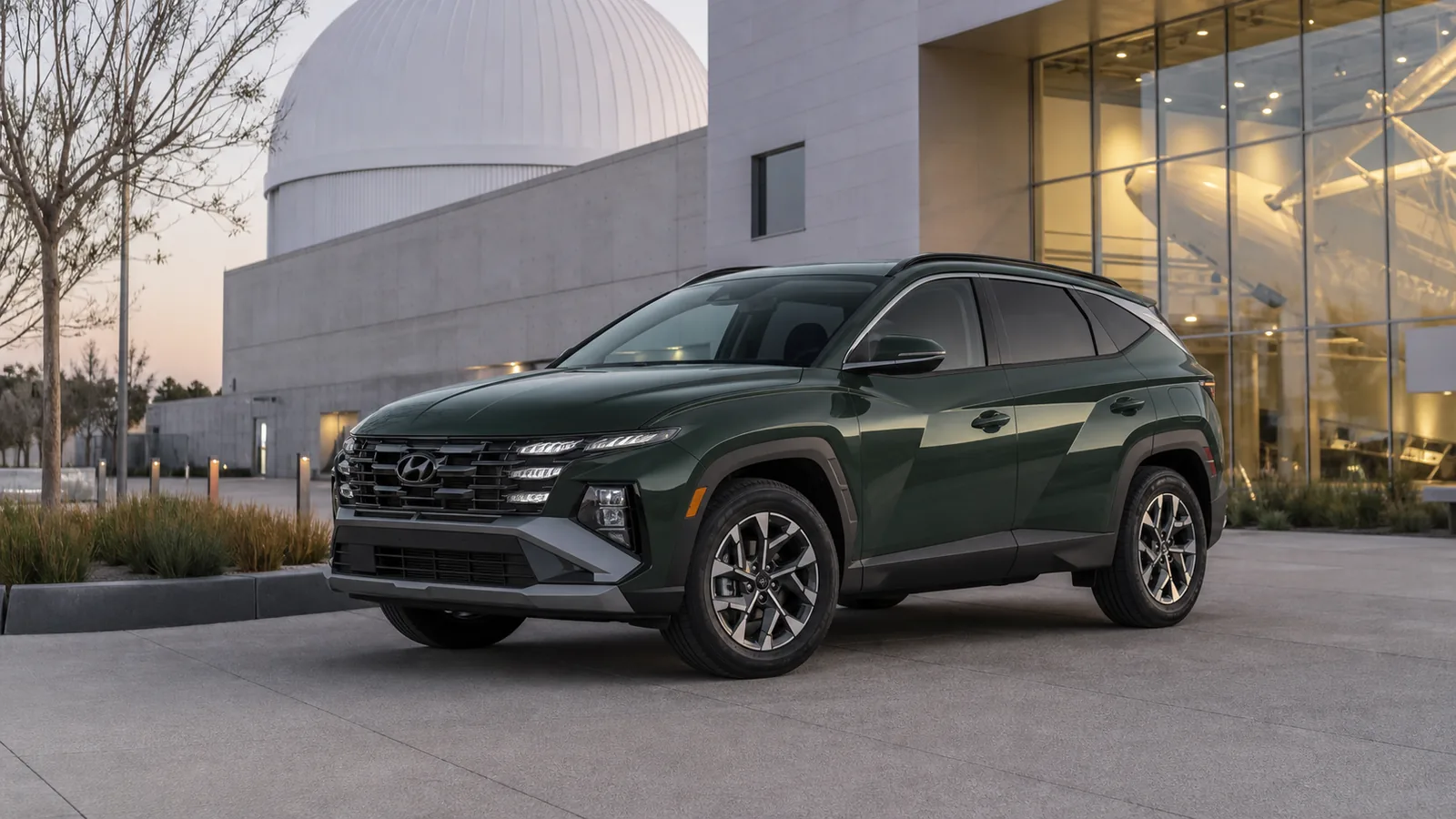
The 2026 Hyundai Tucson SEL is the gas model to price first. It includes the cabin space, useful screen, comfort equipment, and warranty structure that make the Tucson attractive without tying the decision to the largest wheels or most expensive glass.
Every gas trim uses the same 187 hp 2.5L engine, so moving upward does not fix performance.
The lowest trim can work when the discount is clear and its seat and driver-assistance equipment are enough.
SEL is easier to recommend because it covers more daily needs without pushing the price into a different powertrain decision.
Limited adds comfort and technology, but a buyer should prove that the camera, seat, roof, or convenience feature solves a repeated problem.
Large wheels can make the body look more dramatic. They also reduce tire sidewall, raise replacement cost, and can sharpen impacts over broken pavement.
A panoramic roof adds light but also glass, heat, weight, and a future repair item.
Treat every upgrade as a five-year ownership decision rather than a showroom reward.
Compare SEL within the mainstream SUV range and the broader Hyundai lineup.
Match drivetrain, safety equipment, seat functions, wheel size, and dealer accessories. Record MSRP, discount, destination charge, fees, finance rate, and trade value separately.
The gas Tucson's main advantage is a lower initial price and a conventional eight-speed automatic.
Its weakness is ordinary response when loaded. The hybrid costs more but changes both acceleration and fuel use.
Price packages from the window sticker instead of the dealer's feature summary.
Mark each item required, useful, cosmetic, or unwanted. A convenience bundle can make sense when it includes three functions the household chose separately.
It is poor value when one desired camera or seat feature forces large wheels and roof glass the owner would not buy alone.
Ask for an equivalent SEL without dealer-installed accessories before assuming the package is unavoidable.
SEL is the honest baseline because it reveals whether the buyer values the Tucson's space enough to accept the gas engine or pay for the hybrid.
The hybrid changes the whole drive
The Tucson Hybrid is more than a fuel-economy package. Its electric assistance gives stronger low-speed response than the 187 hp gas model, which can make traffic gaps, hills, and a full cabin feel easier.
The buyer is paying for a different drive as well as fewer gallons.
| Question | Gas Tucson | Tucson Hybrid |
|---|---|---|
| Initial price | Lower | Higher |
| Response | Adequate, needs revs loaded | Stronger low-speed assistance |
| Transmission feel | Eight-speed automatic | Hybrid automatic system |
| City fuel use | Higher | Lower |
| Best buyer | Low miles or strong discount | Higher miles and traffic |
Calculate the premium from comparable trims. Do not compare a lightly equipped gas vehicle with a loaded hybrid and call the full difference a powertrain cost.
Then estimate annual gallons from real miles and conservative MPG.
Include finance interest and insurance. Fuel savings need time to catch an upfront premium.
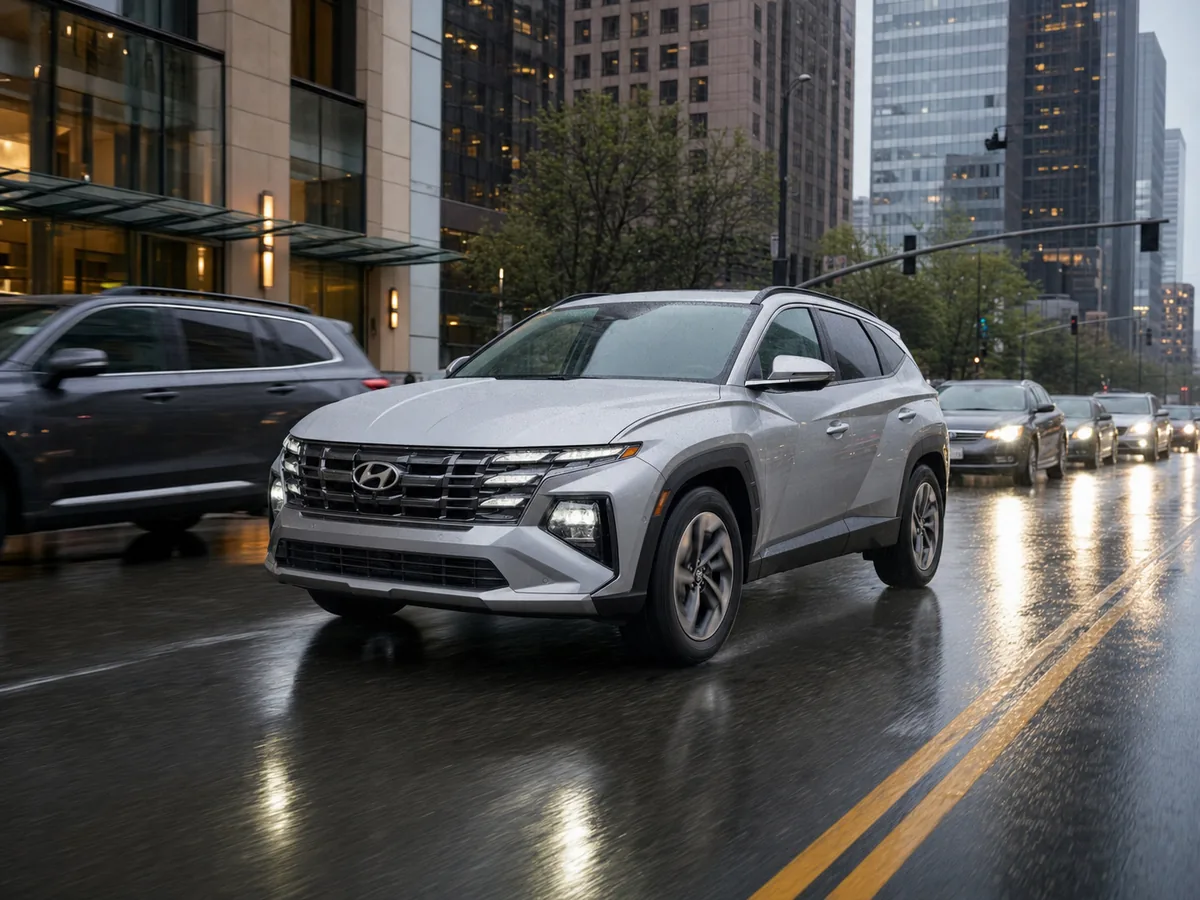
Drive both versions on the same loop. Begin with parking-lot creep, join a busy road, climb a grade, and settle at highway speed.
Pay attention to brake blending, engine sound, transmission response, steering, and tire noise. The hybrid should not be approved from MPG alone if the driver dislikes the pedal feel or price.
Compare it with the Toyota RAV4 Hybrid and the Honda CR-V. One may return a better price, quieter ride, more comfortable seat, or stronger resale expectation.
The Tucson can win through cabin space and equipment, but the out-the-door totals must be comparable.
A low-mile owner may never recover a large hybrid premium. A high-mile city driver can use the stronger response and fuel savings every day.
Use the hybrid vehicle hub to compare the Tucson's approach with other electrified models.
Then run a sample. At 12,000 miles, a gas SUV returning 28 mpg uses about 429 gallons.
A hybrid returning 36 uses about 333. The 96-gallon annual difference can be multiplied by local fuel price.
Compare that result with the exact premium and interest, then leave room for real MPG to fall below the estimate.
Ask whether hybrid inventory changes cargo-floor height, spare-tire provision, service intervals, or towing equipment for the exact trim.
These details can affect a family even when the fuel calculation works. Review the owner's manual and window sticker, then load the same bags used in the gas model.
A stronger, more efficient drivetrain should not be approved until the complete vehicle still fits the household.
Choose the Tucson Hybrid when its better drive and recurring fuel savings both matter, not because hybrid is automatically the responsible badge.
Is 187 hp enough loaded?
The gas Tucson uses a 187 hp 2.5L four-cylinder and an eight-speed automatic.
The combination is simple to understand and calm in easy travel. Its limit appears when passengers, climate control, elevation, and a short highway ramp arrive together.
That is why a loaded route matters more than an empty acceleration number.
Start cold. The engine should fire and settle without persistent smoke, knocking, fuel odor, warning messages, or heavy vibration.
Adjust the driver's seat, load the usual passengers, turn on climate control, and use the hardest repeated merge.
Repeat a 40-to-70 mph pass where legal, then hold a long grade.
The transmission may downshift several gears and the engine may become audible.
That is expected when a modest engine moves a full compact SUV.
The response should still be predictable. Repeated hesitation, flare, bang shifts, reduced-power messages, overheating, or a driver who avoids normal gaps belongs in the decision.
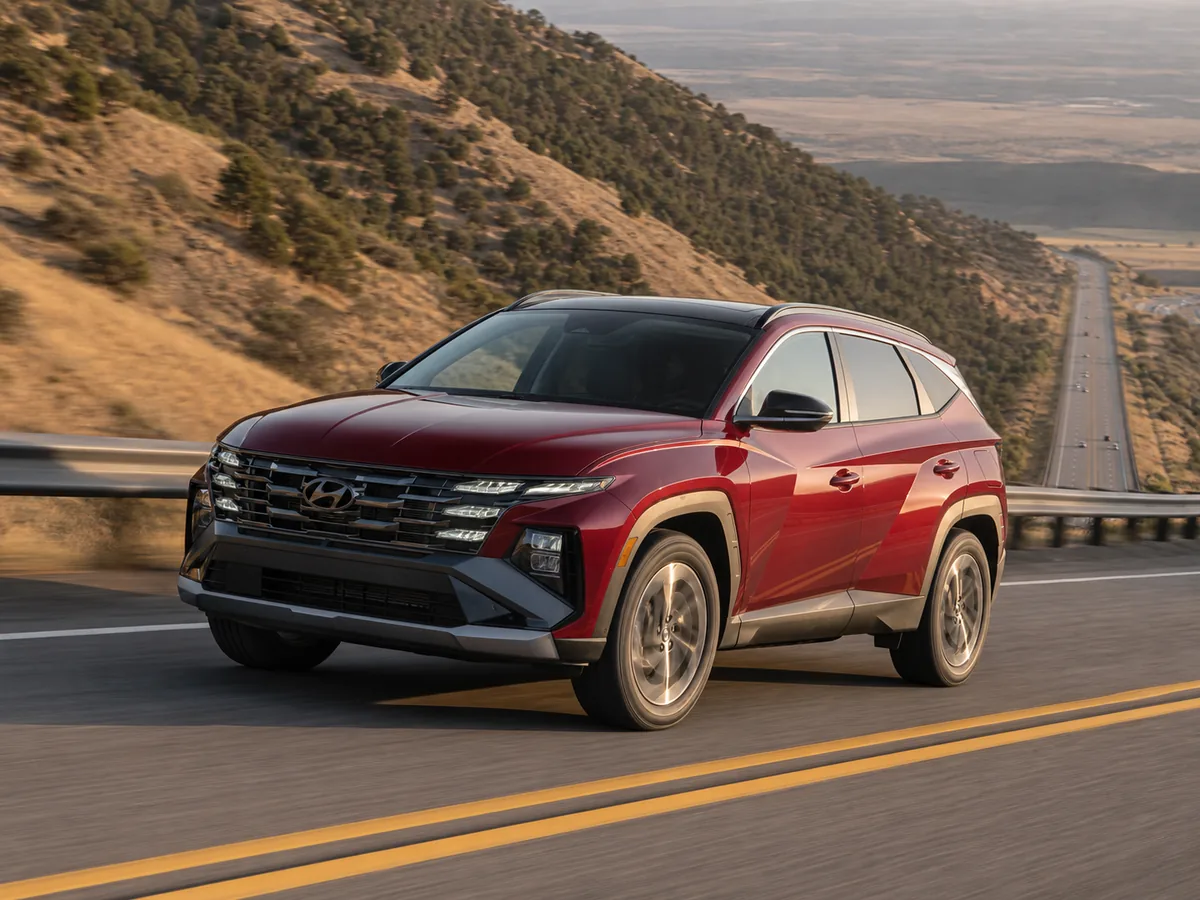
Compare the gas Tucson with gas-powered SUVs, including the Mazda CX-5 and Ford Escape.
Some rivals offer more power. The Tucson may answer with more cabin room, easier controls, or a better deal.
The buyer should decide which compromise appears every week.
Repeat the route after the engine is warm. Test Reverse, parking-lot creeping, and a rolling pass.
Listen for tire noise and impact harshness because an upper trim's wheels can make the vehicle feel less relaxed without adding power.
After the highway section, stop for five minutes and restart. Recheck idle, warning history, fluid smell, and the ground below the vehicle.
Repeat Reverse engagement and one low-speed turn while hot. Some faults appear only at first start, while others arrive after heat and pressure build.
A complete test includes both states and enough time for pending data to appear on a scan tool.
The 187 hp engine is enough when the fully loaded Tucson still feels predictable on the buyer's hardest repeated road.
Bold outside, practical inside
The Tucson's sharp exterior lines attract attention, but the cabin is the more useful part. The rear seat gives adults and child restraints meaningful room, the cargo opening is broad, and the controls are easier to learn than the bodywork suggests.
Family fit should be tested before color or wheel design.
Set both front seats for their regular occupants. Sit behind the taller adult and check knee room, foot space, headroom, and air vent reach.
Install the real rear-facing seat, forward-facing seat, or booster. Find lower anchors and top tethers, tighten at the belt path, and make sure a neighboring buckle remains usable.
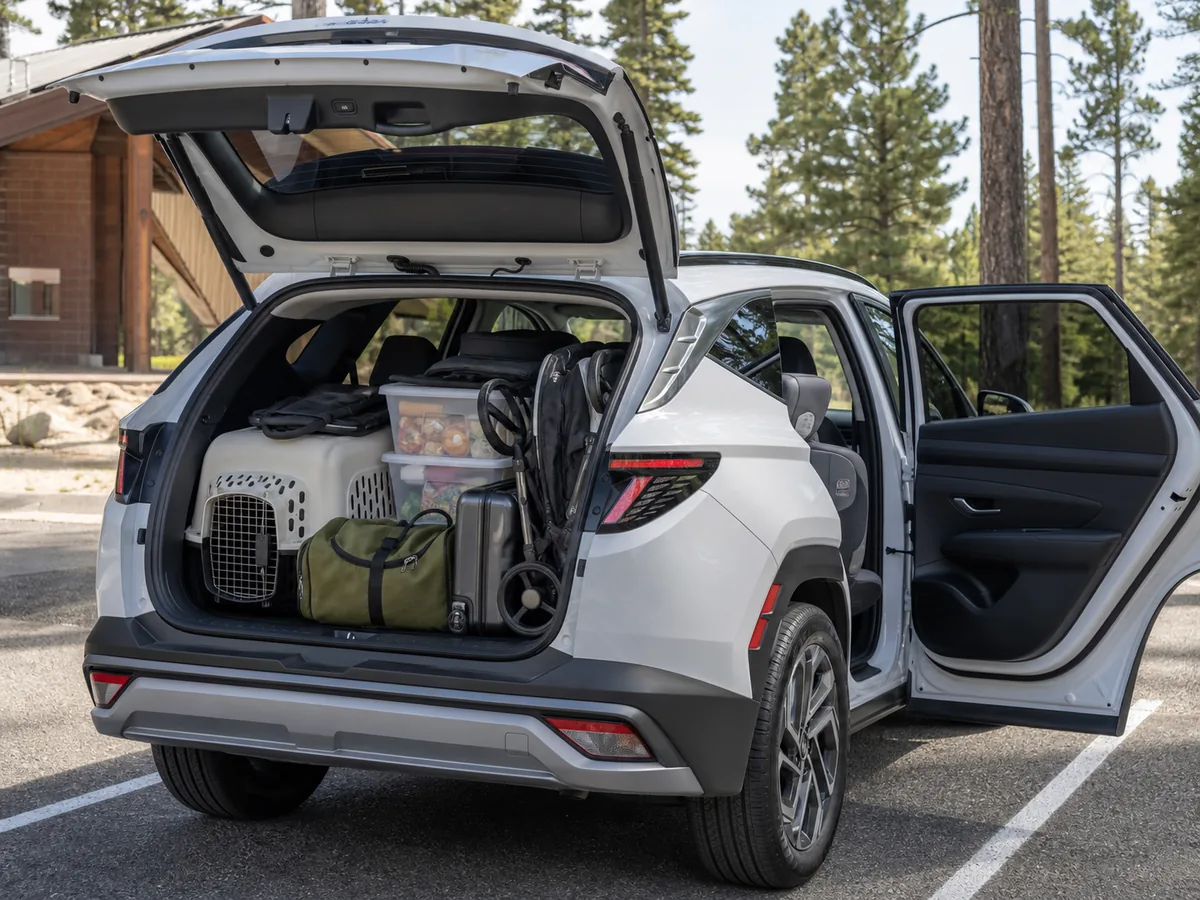
Load the stroller, grocery bins, sports bag, pet crate, work case, and airport luggage in the combinations that travel.
Close the hatch without pressing against the glass. Check floor height, privacy-cover clearance, storage below the floor, and rear visibility.
Fold only one side to see whether a passenger can remain beside long gear.
- Install every child restraint used at home
- Test three-across buckles if needed
- Load the stroller without folding the bench
- Reach climate and screen controls while parked
- Check the camera view with normal cargo aboard
- Open the liftgate under the home garage door
Compare the same load in the Subaru Forester and Honda HR-V.
One may offer a taller roofline or smaller parking footprint. The Tucson should win because its space removes a repeated problem, not because the exterior looks larger.
Older passengers should test step-in height, sill clearance, grab handles, and head restraint position.
Check small-item storage after the large cargo fits. Phones, cups, charging cables, sunglasses, wipes, and a child's bottle need secure places that do not block controls.
Sit in the dark if possible to see whether screen glare or glossy trim distracts the driver. A cabin can be roomy and still create daily clutter when the storage shapes do not match what the household carries.
The Tucson's design has real value when the practical cabin lets people enter, buckle, load, and see out without a daily workaround.
AWD costs fuel every mile
Hyundai rates the gas Tucson at 25 city, 33 highway, and 28 mpg combined with front-wheel drive.
HTRAC AWD changes those figures to 24 city, 30 highway, and 26 combined. The difference is not huge on one trip, but it appears across every gallon and should be exchanged for a real traction need.
At 15,000 miles a year, 28 mpg uses about 536 gallons.
At 26 mpg, the same miles use about 577. The 41-gallon difference can be multiplied by local fuel price, then added to the purchase and maintenance difference.
The calculation does not reject AWD. It shows what recurring weather protection costs.
AWD helps distribute engine power when a front tire would spin. It cannot create traction from worn rubber or shorten braking distance on snow.
Four suitable tires, correct pressure, and enough tread remain the foundation. A front-drive Tucson on good winter tires can stop and turn better than an AWD Tucson on worn all-seasons.
Review front-wheel-drive choices and AWD vehicles from actual roads.
A flat urban route may never need HTRAC. A steep unplowed driveway, rural lane, or repeated mountain trip may justify it.
Test the exact system on a wet incline when possible and listen for tire mismatch or warning messages.
Roof bars, cargo boxes, short cold trips, speed, elevation, and tire size also change fuel use. Budget from the difficult season.
Record tire brand, model, size, speed rating, production date, and tread depth on each test vehicle.
Different tires can make one drivetrain feel quieter, sharper, or more secure than another.
Ask the dealer to correct pressure before the comparison. When buying used AWD, a single new tire beside three worn tires can create a rolling-circumference mismatch that belongs in the price and inspection.
Pay the Tucson's AWD fuel penalty when traction problems appear regularly enough to use the system, then maintain four suitable, closely matched tires.
Safety needs exact-year evidence
The Tucson has current safety evidence, but a buyer should not carry one model year's rating across the entire generation.
Crash structures, airbags, headlights, software, and prevention systems can change. The exact vehicle page, build label, VIN, and recall record belong together.
Read the IIHS small-overlap front, updated moderate-overlap front, and updated side results separately.
Updated tests can put more pressure on rear-passenger protection than older ratings.
Then check headlights and pedestrian crash prevention. A trim with different lamp hardware may not share every result.
KnowMotors explains how it weighs government and independent evidence on the research methods page. When a dealer says a recall or campaign was completed, ask for the repair order showing date and mileage.
A clean dashboard does not prove that stored faults or open recalls are absent.
Install every child restraint in the intended position. Find lower anchors and top tethers, tighten at the belt path, and check adjacent buckle access.
A wide seat can reduce the practical five-person capacity. An adult should be able to enter without stepping on a restraint or twisting a belt.
Test lane support, blind-zone alerts, automatic braking warnings, adaptive cruise, and camera views on a legal route.
Learn the settings while parked. Rain, dirty sensors, faded markings, and unusual traffic can limit performance.
Headlights should be checked after dark where safe.
Review collision repairs with extra care when airbags, seat belts, pillars, roof rails, windshield cameras, or radar sensors were involved.
Ask for invoices and calibration records, not only a clean paint finish. Watch every warning light during the startup check and scan all modules.
A repaired vehicle can be safe, but the buyer needs proof that the restraint and assistance systems were restored to the manufacturer's procedures.
Use exact-year safety evidence to compare the Tucson, then complete the protection with correct restraints, suitable tires, clear sensors, working lights, and understood controls.
Warranty value depends on ownership
Hyundai's long original powertrain warranty is part of the Tucson value story, but a used buyer must confirm what remains.
Coverage can depend on original ownership, in-service date, mileage, title status, market, maintenance, and transfer terms.
A verbal promise is not coverage.
Ask Hyundai or an authorized dealer to show the VIN, original in-service date, current owner status, remaining limited coverage, remaining powertrain terms, and any exclusions in writing.
Prior rental, commercial, branded-title, imported, or modified use can change value and eligibility.
The buyer should read the warranty booklet that applies to the exact vehicle.
| Area | Verify | Evidence |
|---|---|---|
| Warranty | Remaining terms and owner status | VIN printout and booklet |
| Service | Oil, filters, coolant, campaigns | Dated invoices with mileage |
| Powertrain | Cold start and eight-speed behavior | Scan and independent inspection |
| Electronics | Screens, cameras, roof, driver aids | Demonstration and module scan |
| Body | Paint, seals, glass, underbody | History plus physical inspection |
Start the vehicle cold. Check oil and coolant only by the owner's-manual procedure.
Watch for smoke, fuel odor, warning lights, rough idle, cooling messages, or delayed engagement.
Drive low speed, highway, and a grade. Repeated harsh shifts, flares, shudder, overheating, or stored codes need diagnosis before purchase.
Test both keys, remote functions, climate, phone connection, screen, cameras, power seats, liftgate, windows, panoramic roof, outlets, and every driver aid.
Inspect four tires for matching size, date, tread, damage, and uneven wear. Look underneath for leaks, curb damage, loose shields, and fresh coating that hides repairs.
Use the new versus used guide to compare remaining coverage with the discount. Order an independent inspection and full-module scan.
If a repair is already open, obtain the diagnosis, parts status, loaner terms, and expected completion in writing.
Warranty does not make an unfinished vehicle ready to buy. A repeated symptom with several invoices may be more important than one covered repair.
Ask whether replacement parts or software carry separate coverage and whether the repair changes any maintenance requirement.
Warranty adds value only after the buyer proves eligibility, documents maintenance, and refuses to use coverage as an excuse for a fault found today.
Large wheels erase some value
Tucson ownership cost changes with powertrain, drivetrain, wheel size, glass, electronics, insurance, finance interest, and trade timing.
Gas SEL with moderate wheels is the controlled baseline. Hybrid fuel savings may improve the total, while a loaded upper trim can move the price toward a different class.
| Cost | Controlled pattern | Higher-cost trigger |
|---|---|---|
| Purchase | Gas SEL at a clean total | Loaded Limited or large package |
| Fuel | Hybrid or gas FWD | Gas AWD, short cold trips, fast travel |
| Tires | Smaller common wheel size | Large wheels and low sidewall |
| Insurance | Exact SEL VIN quote | High trim value and glass coverage |
| Repairs | Clear warranty and simple equipment | Roof, cameras, large glass, ignored faults |
| Depreciation | Mid trim kept longer | Loaded trim traded early |
Get insurance quotes for exact VINs. Ask how windshield camera calibration and panoramic glass claims are handled.
Price four correct tires with mounting, balancing, disposal, and alignment. A large wheel can raise cost and make pothole damage more likely without improving the gas engine.
Build a five-year worksheet. Include purchase and interest, fuel or electricity, insurance, tires, scheduled service, registration, accessories, and a repair reserve.
Use the same annual miles and resale assumption for gas and hybrid. The result is an estimate, but it exposes which choice depends on optimistic fuel savings or trade value.
Compare out-the-door totals, not MSRP. Dealer accessories, protection products, taxes, fees, and loan length can erase a discount.
The lease versus buy guide helps when a lower payment hides mileage limits or a vehicle that will not stay long enough to repay its premium.
Ask the service department for current prices on oil service, filters, brakes, one wheel, one tire, and windshield calibration.
Include the cost of keeping the vehicle after the original warranty period. A long loan can outlast major coverage, leaving the owner with payment and repair risk at the same time.
Compare 48, 60, and 72-month interest totals rather than selecting by monthly amount. If the Tucson needs a long term to fit, a lower trim or less expensive rival is the safer value decision.
The Tucson keeps its value promise when the buyer chooses useful space and powertrain benefits before expensive wheels, glass, and equipment that will not be used.
Which Tucson should you buy?
The Tucson suits families and commuters who want generous compact-SUV space, easy daily controls, strong equipment value, and warranty protection they can verify.
The gas model works for lower annual miles and a strong SEL price. The hybrid works for drivers who use its stronger response and fuel savings often.
Compare the Tucson within the compact SUV field and the best family SUVs. Use the same route, passengers, cargo, insurance limits, and loan term.
Rankings can build a list, but they cannot install a child seat or feel the gas model on the buyer's grade.
Run the decision in order. Quote gas SEL and hybrid, drive both loaded, test the cargo routine, choose drivetrain from weather, read exact-year safety evidence, verify warranty, price tires and insurance, then negotiate the out-the-door total.
Set a walk-away number before finance.
A buyer who needs quick gas performance, a smaller body, or a proven transferable warranty arrangement may prefer another vehicle. A buyer who values space and finds a clean five-year result has a strong case.
Keep the trade, financing, and vehicle price separate until each is clear. A high trade allowance can hide a high Tucson price, while a low payment can hide a long loan.
Compare signed out-the-door totals for gas SEL, hybrid, and the strongest rival. The final choice should still make sense if fuel savings arrive slowly or resale is lower than hoped.
The Tucson's value matches its bold styling when the household buys the powertrain and equipment it will use, then keeps enough budget for tires, fuel, and long ownership.