Four drivetrains, four different jobs
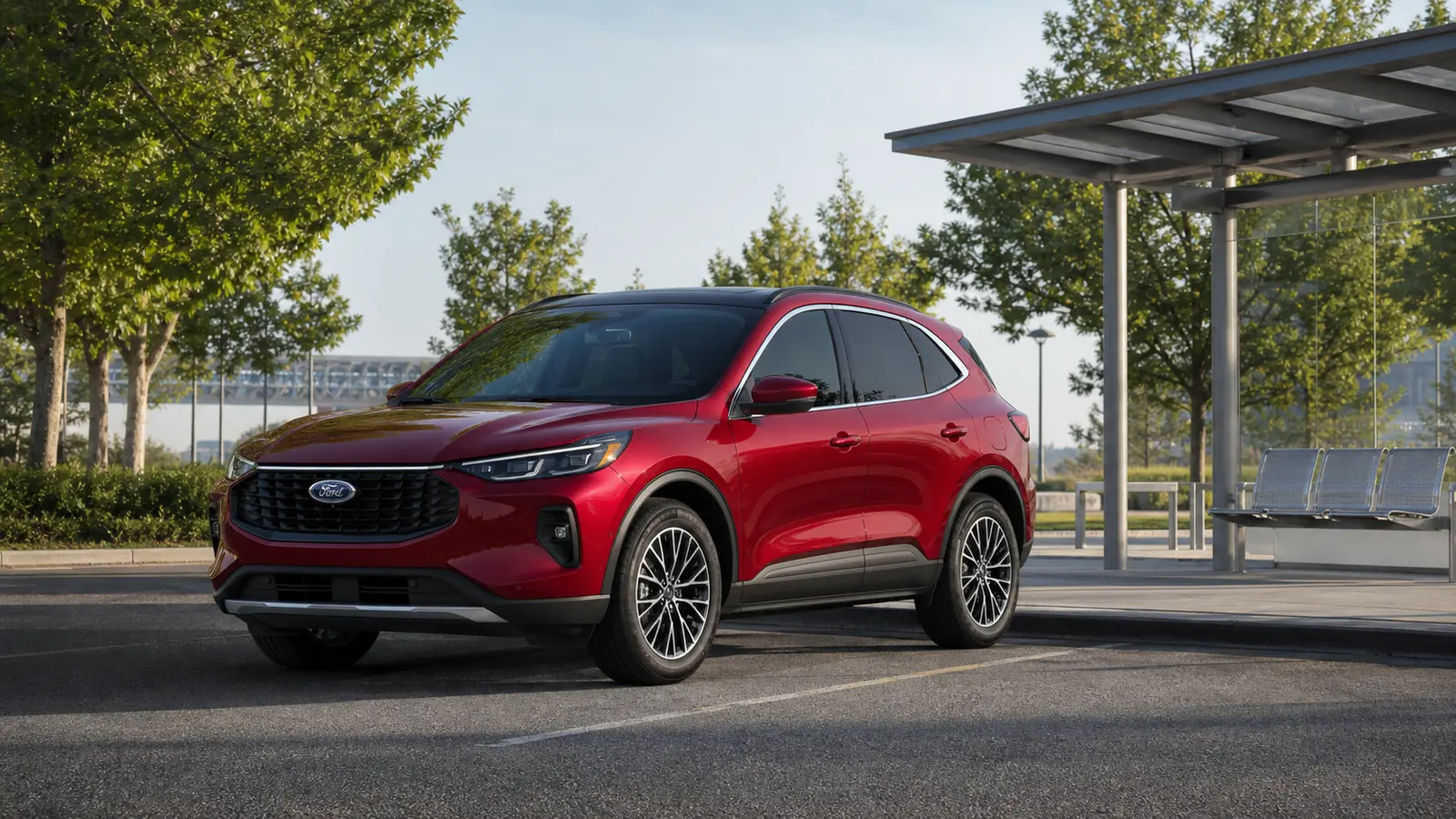
The 2026 Ford Escape is unusual because one compact SUV can be ordered with a 180 hp 1.5L turbo, a 250 hp 2.0L turbo, a 192 hp hybrid, or a 210 hp plug-in hybrid.
That variety is useful only when the buyer starts with the weekly route. Shopping by trim first can lock a household into the wrong fuel, traction, charging, or towing answer.
Start with distance. Record a normal workday, the longest repeated weekly drive, and the few trips that create anxiety.
Then record where the vehicle sleeps, whether a plug is available, how often snow or unpaved roads appear, and the actual loaded trailer weight.
This turns four brochures into four separate tools.
The 1.5T is the price answer. Its 180 hp can handle commuting and ordinary highway travel, but a three-cylinder sound and eight-speed downshifts may be more noticeable with passengers.
Test it on the steepest merge or grade in the normal route. A low price stops being attractive if the driver dislikes the response every day.
The hybrid is the broad default because it combines strong city efficiency with AWD. It deserves comparison with the Toyota RAV4 Hybrid and other hybrid SUVs, using out-the-door price rather than one advertised payment.
The PHEV shifts the question toward charging. The 2.0T shifts it toward power and towing.
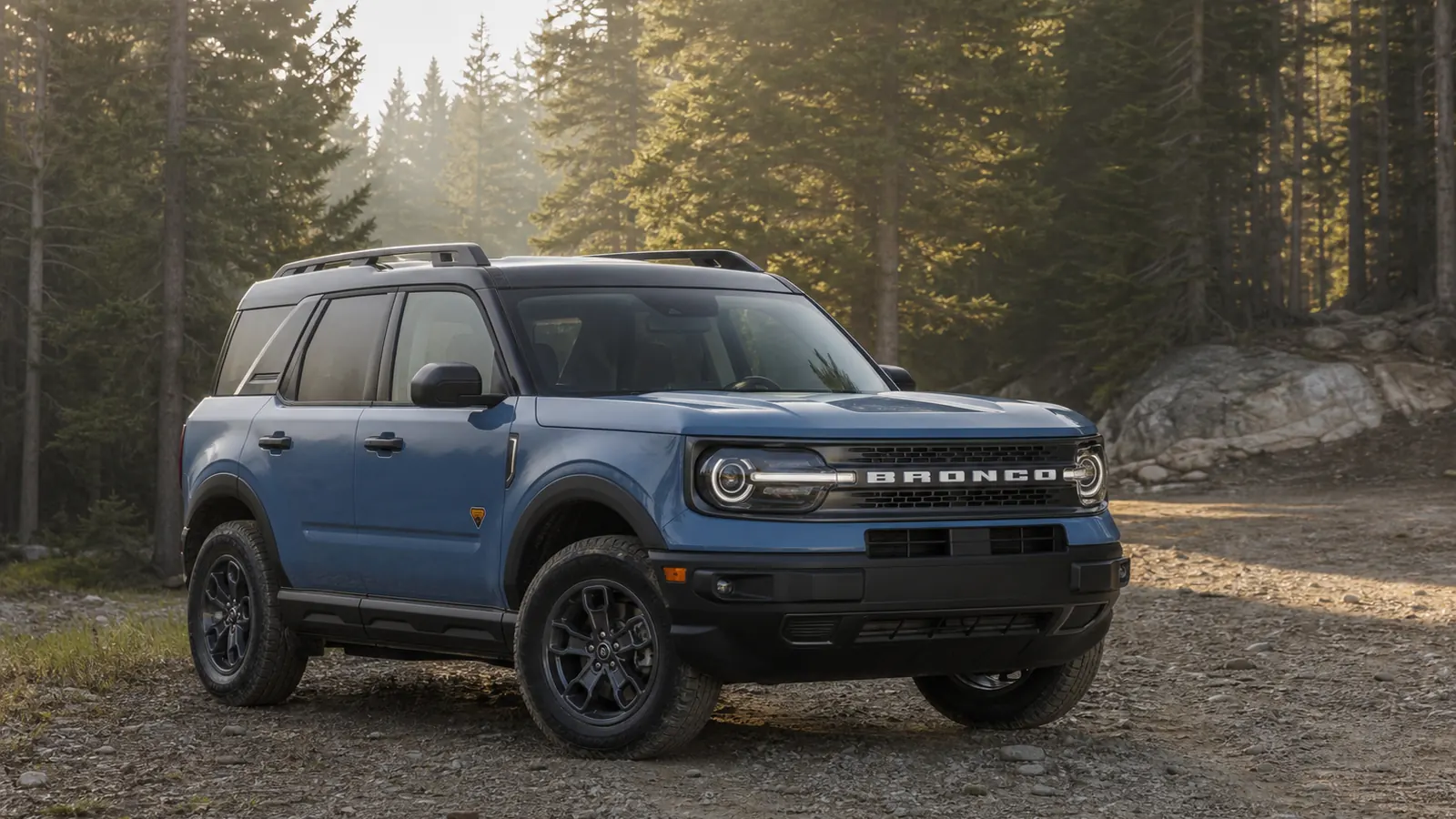
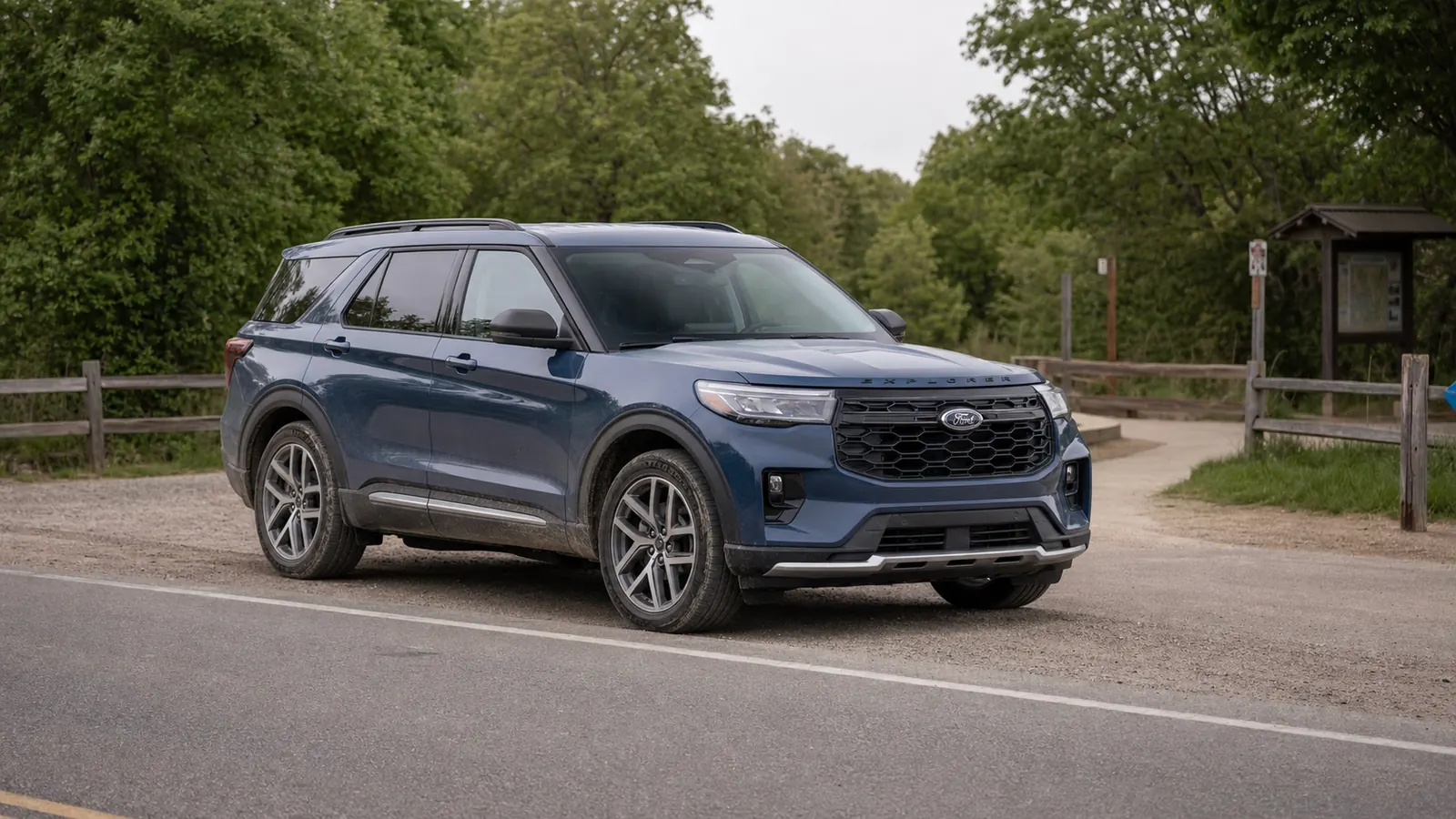
Look through the Ford SUV lineup only after this filter. Bronco Sport may suit boxy cargo and rougher roads, while the Escape favors road comfort and efficiency.
Build four comparable quotes before choosing. Match seat material, driver aids, climate equipment, and wheel size as closely as inventory allows.
Record MSRP, dealer discount, required accessories, taxes, finance rate, and trade allowance on separate lines. A hybrid advertised with a discount may cost less than a heavily optioned 1.5T, while a PHEV incentive may come with eligibility rules.
Compare signed numbers, not trim order.
The practical Escape is the one whose special ability appears in the buyer's normal week.
Why the AWD hybrid wins
The Escape Hybrid produces 192 hp and comes with all-wheel drive for 2026.
Ford lists 39 mpg combined, which gives it a clear job. It reduces fuel use in stop-and-go driving without asking the owner to plug in or give up the traction option many northern buyers want.
The best case is a driver who covers 12,000 to 18,000 miles a year, spends meaningful time below highway speed, and plans to keep the vehicle.
The weaker case is a low-mile driver paying a large premium to save a small number of gallons.
Use the exact price difference between comparable trims, not the difference between a stripped gas model and a loaded hybrid.
A simple calculation keeps the decision honest. At 15,000 annual miles, a vehicle returning 39 mpg uses about 385 gallons.
A gas alternative returning 30 mpg uses 500. The hybrid saves about 115 gallons a year before fuel price is applied.
Multiply that by the local price, then compare the result with the purchase premium, finance interest, insurance, and expected ownership period.
Real MPG will change, but the method survives.
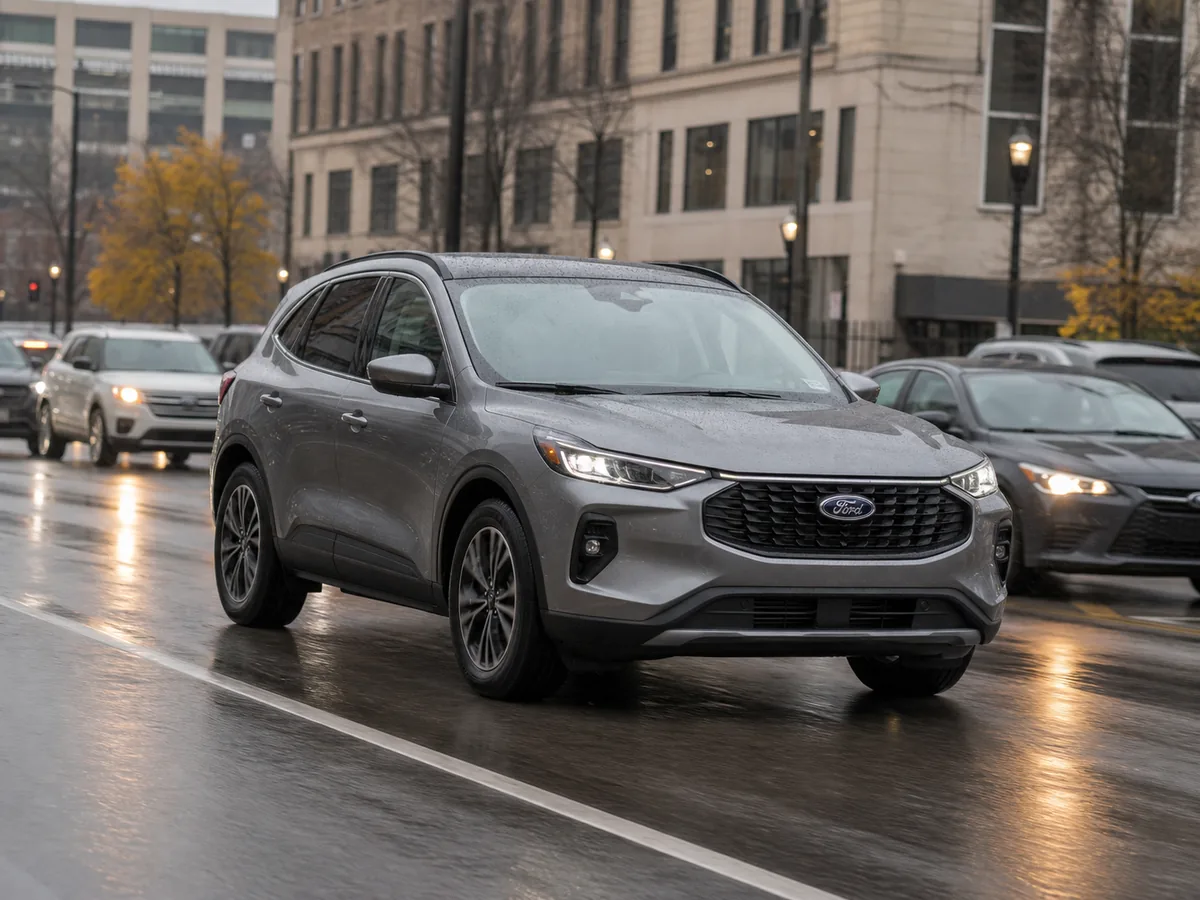
An eCVT does not imitate the shifts of the gas eight-speed. Engine speed can rise and hold during a long acceleration while road speed catches up.
That is normal behavior, but the cabin should not shake, display warnings, or surge unpredictably. Drive the Honda CR-V and Toyota RAV4 on the same loop because seat comfort, brake feel, and road noise may matter more than a one-mpg paper difference.
AWD helps the Escape put power down when a front tire would slip.
It does not shorten braking distance on snow. Four suitable tires still decide how the vehicle stops and turns.
Reset the trip computer and drive at least 20 minutes after the powertrain is warm. Include the congested section, a steady highway stretch, and the hill that appears every week.
One short dealer loop can exaggerate either benefit. Repeat the route in similar weather, then use the result as a budgeting estimate rather than a promise.
Brake blending should feel predictable when easing to a stop, with no warning lights or sudden change in pedal response.
For most buyers, the hybrid wins because it saves fuel during ordinary use without creating a charging chore.
Can you charge the PHEV nightly?
The Escape Plug-In Hybrid has a 210 hp system and an EPA-estimated 37 miles of electric range.
It can cover many commutes without starting the gasoline engine, then continue on fuel when the trip runs longer.
That sounds flexible, but the value depends on a plug that is available, reliable, and inexpensive enough to use.
Walk the parking routine before ordering the vehicle. A homeowner should know where the cable will run, whether the outlet and circuit are suitable, and whether an electrician recommends changes.
An apartment resident needs written permission and dependable access, not a charger that is usually occupied. Public charging can help on occasion, but building a daily plan around a retail stop removes much of the convenience.
| Question | Strong PHEV case | Weak PHEV case |
|---|---|---|
| Home charging | Dedicated overnight access | No dependable plug |
| Daily distance | Mostly within 37 miles | Regularly far beyond range |
| Traction need | Front-wheel drive is enough | AWD is required |
| Electric rate | Low overnight cost | High or time-limited rate |
| Ownership | Kept long enough to use savings | Short trade cycle |
The PHEV is front-wheel drive. A buyer who needs AWD must choose another Escape powertrain or another vehicle.
Winter also changes the electric result. Cabin heat, cold battery temperature, speed, hills, and tires can reduce electric miles.
Plan from the worst normal week, not a mild-weather best case.
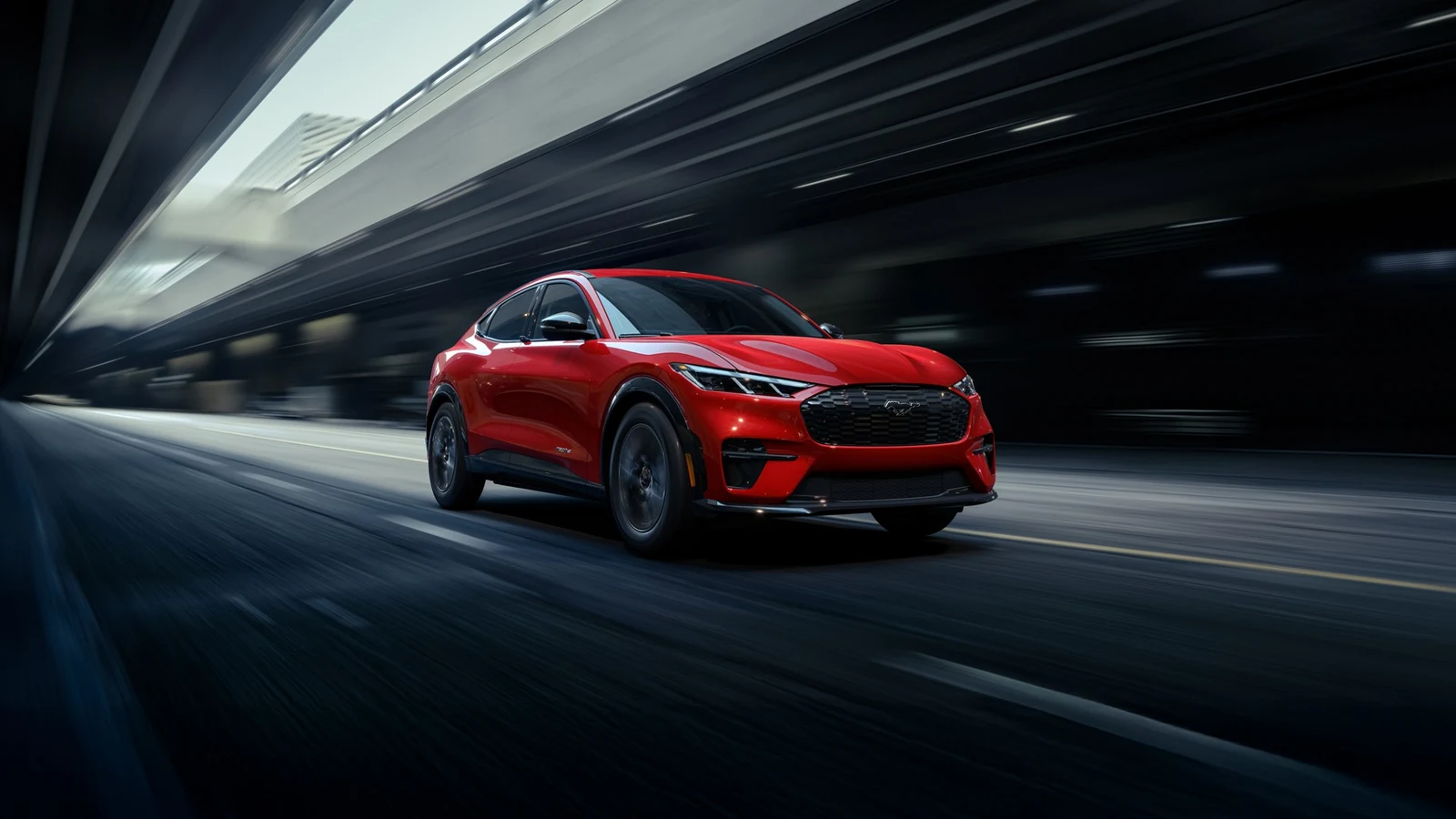
Use the EV charging basics to check outlet, circuit, connector, and charging-time questions. Compare the Escape with the Ford Mustang Mach-E only if the household is also ready to consider a fully electric vehicle.
A PHEV is not automatically the cautious choice when the owner rarely plugs it in. Carrying a battery while using gasoline most days can produce a poor return on the higher price.
Test electric operation from a full charge. Confirm the estimated range, charging door, cable, climate preconditioning, transition to gasoline power, brake feel, and dashboard energy screens.
On a used example, scan every module and verify that the charging equipment is included.
Buy the PHEV for a repeatable home-charging routine, not for the idea that charging might become convenient later.
The 2.0T exists for towing
The 250 hp 2.0L EcoBoost gives the Escape its strongest acceleration and highest towing ceiling.
Ford lists up to 3,500 pounds with the required equipment. The 1.5T reaches 2,000 pounds, while the hybrid and plug-in hybrid are rated at 1,500 pounds.
Those numbers make powertrain choice part of the trailer decision.
| Powertrain | Maximum published rating | Best use |
|---|---|---|
| 2.0L turbo | 3,500 lb | Small camper or heavier utility trailer |
| 1.5L turbo | 2,000 lb | Light utility or small recreational trailer |
| Hybrid | 1,500 lb | Very light trailer when equipped |
| Plug-in hybrid | 1,500 lb | Very light trailer when equipped |
A maximum rating is only the first filter. Read the payload label on the driver door of the exact Escape.
Subtract passengers, child seats, pets, cargo, hitch hardware, and trailer tongue weight. A family can use a large share of payload before the trailer is attached.
Confirm the receiver, wiring, cooling equipment, brake requirements, and owner's-manual limits by VIN and drivetrain.
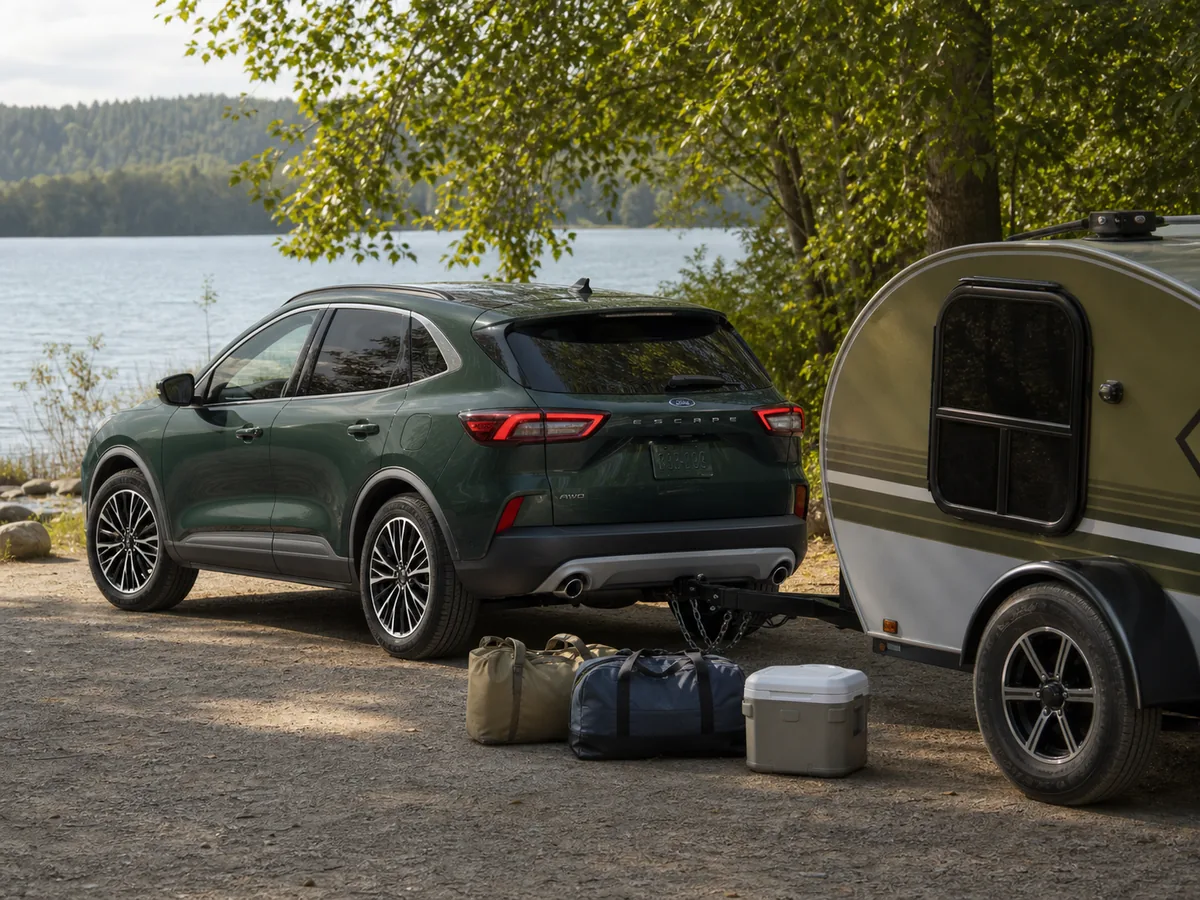
The 2.0T should be driven with the same load and on the same grade expected in service.
Watch low-speed control, shift quality, engine temperature, braking stability, mirror coverage, and rear suspension height. Towing mode can improve shift strategy, but it cannot correct an overloaded vehicle or poorly balanced trailer.
A buyer towing several times a month should compare the Escape with a larger SUV or pickup truck choices rather than working at the ceiling.
The Subaru Forester may suit rough access roads but does not replace careful rating checks.
Choose the 2.0T because the trailer math or loaded performance requires it, not because 250 hp sounds safer in every situation.
Slide the rear seat before loading
The Escape seats five and uses a sliding second row to trade rear legroom for cargo room. That mechanism is more useful than a single maximum volume because households rarely drive with every rear seat folded.
The right test uses the passenger positions, child restraints, stroller, groceries, and luggage that travel together.
Begin with the driver and front passenger adjusted. Install any rear-facing seat, forward-facing seat, or booster according to its instructions.
Slide the rear bench only until the passenger still has safe knee room and the restraint remains correctly installed.
Check that the seat movement does not hide a buckle or make the top tether hard to reach.
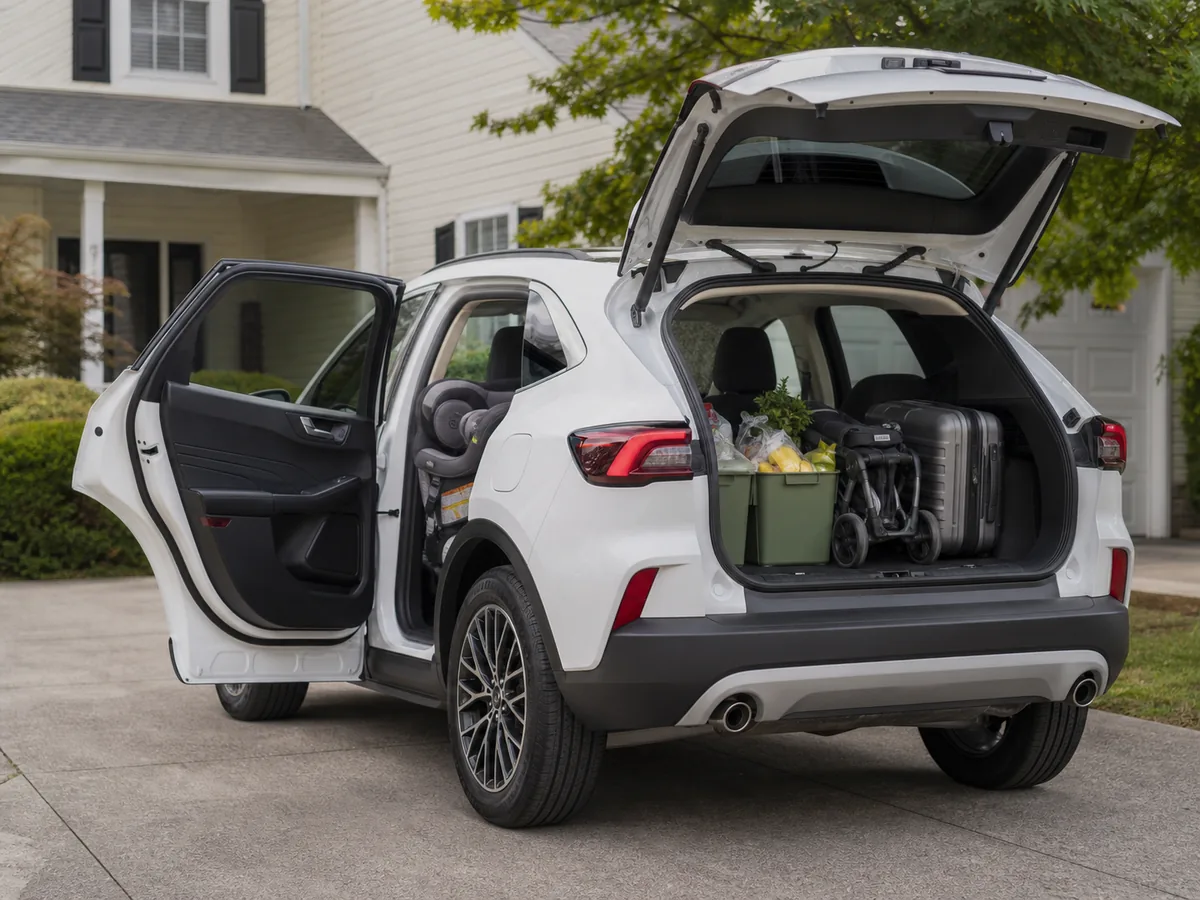
Ford quotes up to 65.4 cubic feet behind the first row. That is useful for furniture or occasional bulky cargo, but it does not answer the school-day question.
With the rear seat occupied, load the stroller lengthwise, stand grocery bags where they will not tip, close the hatch, and check whether the rear glass or roof shape steals height.
A cargo cover must fit over the load if privacy matters.
- Open both rear doors in a tight parking space
- Install the actual child restraints
- Set adult knee room before sliding the bench
- Load the stroller without folding a seat
- Check hatch clearance in a low garage
- Confirm a spare tire or repair kit is present
Compare the same load in the Mazda CX-5 and Honda HR-V. The Escape may offer a better passenger-cargo compromise, while a boxier rival may accept taller items more easily.
A family that often carries three people across the rear should sit all three together because shoulder room and buckle access can matter more than legroom.
Check the small details after the large items fit. A tall driver may need the rear seat farther back, which can put a stroller handle against the hatch.
A pet barrier can consume the height that made the cargo area look generous. Open the liftgate while standing on a slope and confirm the power function does not strike a garage door.
These conflicts are cheap to discover before purchase and frustrating to manage every day.
The sliding seat is valuable only when it lets the Escape carry the household's people and cargo at the same time.
2026 safety scores need context
Safety shopping works best when each test is named. The 2026 Escape has strong results in several established crash categories, but current IIHS ratings also include updated tests and crash-prevention subratings that are not uniformly top level.
A shopper should read the exact vehicle page rather than repeat an older award or a dealer summary.
Start with structure and restraints. IIHS rates the Escape Good in the small-overlap front test.
The updated side test and updated moderate-overlap evaluation put more attention on occupant injury measures that older tests did not stress in the same way.
Read the detailed rows, including rear-passenger measures, rather than reducing the page to one color.
Pedestrian automatic emergency braking can earn different scores in daylight and darkness. Headlights also vary in how well they illuminate straight roads and curves without glare.
If the chosen trim uses different lamp hardware, verify that the rating applies. Test automatic high beams and driver-assistance alerts on a legal route without treating any system as a substitute for attention.
Child-seat fit remains physical. Locate each lower anchor and top tether, install the real restraint, and check movement at the belt path.
The sliding bench must stay in a position allowed by both the vehicle and child-seat instructions. Make sure one installed seat does not block another buckle or the door access needed for a second child.
AWD cannot fix worn tires, and automatic braking cannot see every object in every weather condition.
Cameras need a clean view. Lane support needs visible markings.
Ask the salesperson to demonstrate how to adjust alert sensitivity and how to disable a feature temporarily without digging through menus while moving.
Drive through one marked curve and one ordinary intersection to learn the warning timing. If the steering tugs unexpectedly or an alert arrives too late for the driver to understand it, review the settings and manual.
A system that confuses the owner may be ignored, which removes the benefit that justified paying for it.
Use the current safety evidence to compare named strengths and limits, then verify restraints, tires, lights, and visibility on the exact Escape.
Used Escapes split by powertrain
The current Escape generation began for 2020, but a used inspection cannot treat every version alike.
Gas models use an eight-speed automatic. Hybrids use an electrified system and eCVT.
The PHEV adds a charge port, larger battery role, cable, and charging software. The first job is to identify the exact drivetrain by VIN and equipment label.
Start every vehicle cold. A gas engine should start, idle, and settle without persistent smoke, fuel smell, knocking, coolant warnings, or a seller-cleared dashboard.
Engage Drive and Reverse, then test light and firm acceleration. Delayed engagement, repeated harsh shifts, flares, shudder, or stored transmission codes need diagnosis rather than a promise that the car only needs to warm up.
| Version | Must-test items | Records to request |
|---|---|---|
| 1.5T or 2.0T | Cold start, cooling, eight-speed shifts | Oil, coolant, transmission complaints |
| Hybrid | Battery state, eCVT, brake blending | Hybrid warnings, software work |
| PHEV | Full charge, cable, port, EV drive | Charging faults, battery or module work |
| All models | Screens, cameras, water entry, tires | Recalls, collision repair, invoices |
For a hybrid, watch battery state and energy flow through a complete warm-up.
The transition between electric and engine power should be predictable. For a PHEV, begin with a documented full charge, inspect the port for damage or heat marks, use the included cable where safe, and drive in electric and hybrid modes.
Missing charging equipment belongs in the price.
Test both keys, climate control, phone connection, screen, cameras, liftgate, windows, seat heaters, panoramic roof, and every driver aid fitted.
Inspect the spare or repair kit and look under the cargo floor for moisture. Four tires should match in size and have similar tread depth, especially on AWD models.
Use the new versus used guide to compare remaining warranty with the discount.
Order an independent inspection and full-module scan. Verify recall completion by VIN instead of accepting a clean dashboard.
A good used Escape has records and test results that fit its exact powertrain, not one generic claim about the model.
Count miles before buying efficiency
The Escape's purchase price is only one part of the powertrain decision. Fuel, electricity, interest, insurance, tires, charging equipment, maintenance, and resale exposure change the total.
The cheapest version on a dealer website can cost more over time, while the most efficient version can fail to repay a large premium.
| Choice | Cost advantage | Cost pressure |
|---|---|---|
| 1.5T | Lowest clean purchase price | More fuel than hybrid in traffic |
| Hybrid | Lower gasoline use | Higher initial price |
| PHEV | Cheap electric commuting at home | Charging setup and front-drive limit |
| 2.0T | Power and towing capacity | Fuel, insurance, and purchase price |
| Large wheels | Appearance | Higher replacement tire bill |
Build the calculation from annual miles. Divide miles by a conservative MPG estimate, multiply by local fuel price, and repeat for each gas or hybrid choice.
For the PHEV, estimate the share of miles covered from home electricity, use the local per-kWh rate, and leave a gasoline allowance for long trips and cold weather.
Do not assume every electric mile is free.
Get insurance quotes for exact VINs. A 250 hp trim, a high replacement value, glass with camera hardware, driver age, and location can change the premium.
Price four correct tires with mounting, balancing, disposal, and alignment. Larger wheels often raise cost while reducing the sidewall that protects against potholes.
Compare financing on the out-the-door total. Taxes, accessories, dealer products, and interest can erase fuel savings.
The lease versus buy guide is useful when the lower monthly payment hides mileage limits or a vehicle that never stays long enough to repay its efficiency premium.
A high-mile driver should compare the final five-year figure with other mainstream-price cars, not just another Escape trim.
For a plug-in hybrid SUV, include any outlet inspection, electrical work, replacement charging cable, and higher registration fee that applies locally.
Also compare the electricity rate by time of day. A low overnight rate can strengthen the case, while an expensive public charger may cost as much per mile as gasoline.
Keep a repair reserve even during warranty because tires, glass, collision deductibles, and routine service remain the owner's responsibility.
Efficiency pays when the buyer drives enough, charges consistently when required, and keeps the vehicle long enough for recurring savings to catch the upfront cost.
When the Escape still makes sense
The Escape still works as a practical small SUV for a buyer who wants road comfort, a flexible rear bench, and a powertrain matched closely to daily use.
It is strongest as an AWD hybrid for a high-mile household. It also has clear special cases in the home-charged PHEV and 3,500-pound-rated 2.0T.
Skip the PHEV when charging access is uncertain or AWD is required. Skip the 2.0T when its power and tow rating will be used only during the test drive.
Skip a lightly equipped 1.5T when its price approaches a more complete or more efficient rival.
Upper trims need to solve comfort or visibility needs rather than add expensive wheels.
The Escape should be compared with the compact SUV field on one fixed route and one fixed load. Families can also review the best family SUVs to identify shapes worth testing, but rankings cannot replace seat fit, cargo, and exact pricing.
Run the final decision in order. Choose the powertrain, perform the hardest weekly drive, load the family gear, read the exact safety page, price insurance and tires, then compare out-the-door totals.
Do not negotiate until the Escape has passed the parts of ownership that cannot be fixed with a discount.
The Escape remains sensible because it offers unusually specific answers, but the buyer must choose the answer that matches real life rather than the one with the longest feature list.