Start With Big Bend Unless the Trail Matters More Than the Commute
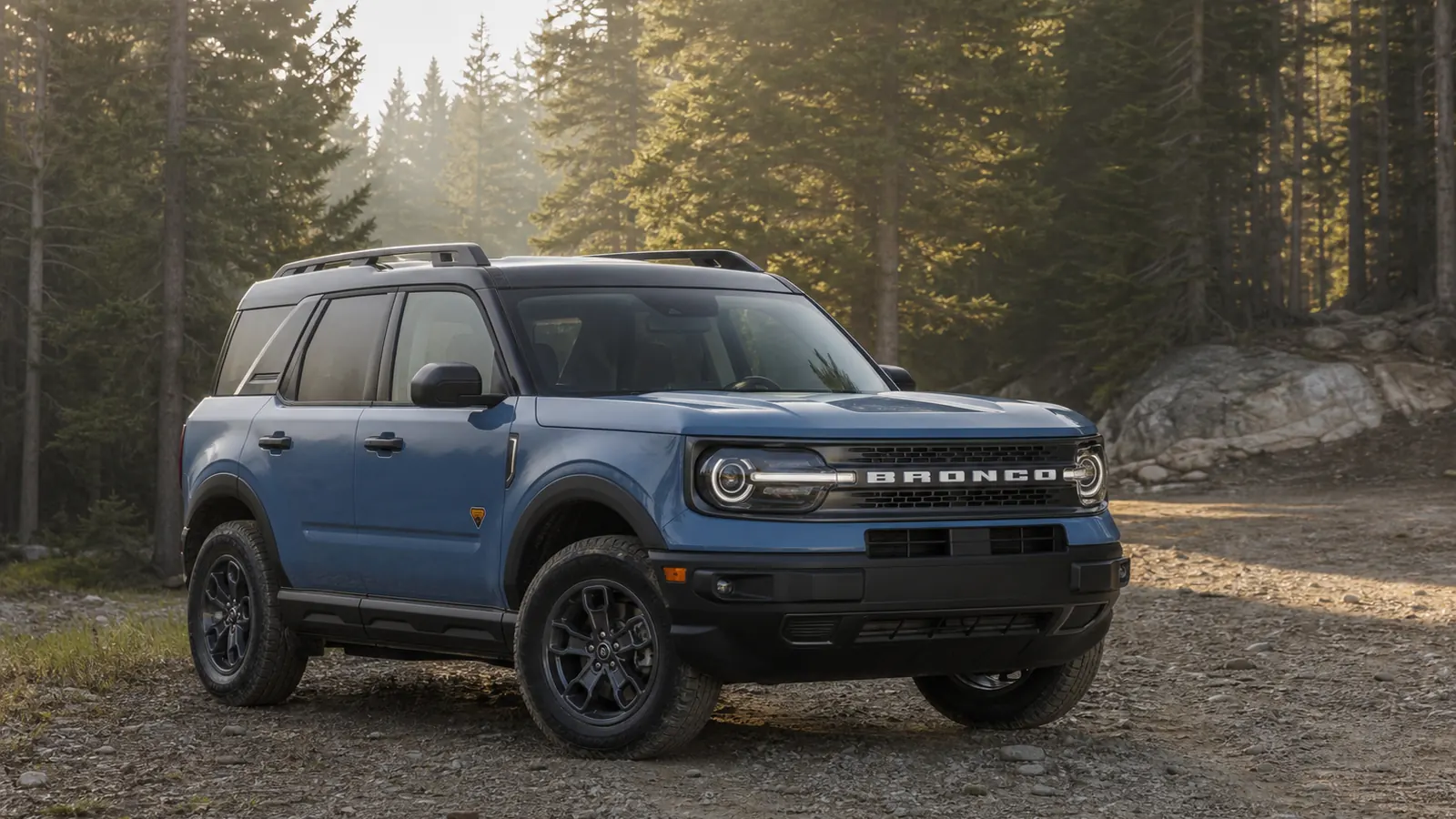
The Ford Bronco Sport is a compact, five-seat SUV with standard four-wheel drive and a useful square cargo area.
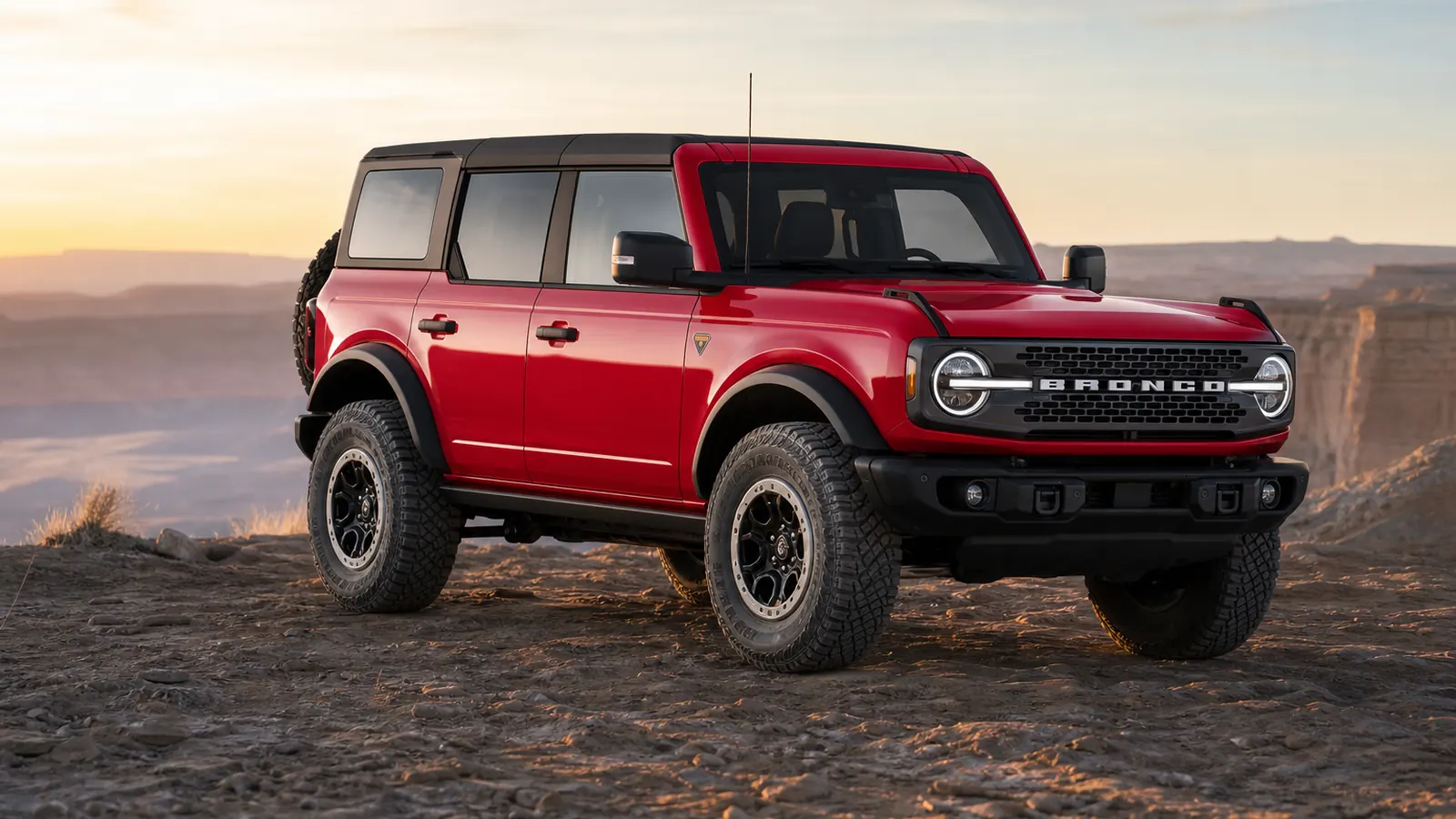
It shares a name and some styling ideas with the larger Ford Bronco, but it is a different kind of vehicle.
The Sport uses a car-based platform, has a fixed roof, and is easier to park and live with every day.
Buyers looking at a gas SUV should treat it as a rugged alternative to a normal crossover, not as a smaller version of the body-on-frame Bronco.
For 2026, the lineup is centered on Big Bend and Badlands. Big Bend starts at $31,845 before destination and uses a 180-hp 1.5-liter turbocharged three-cylinder.
Badlands starts at $37,265 and brings a 250-hp 2.0-liter turbo four-cylinder, a more capable rear drive unit, extra ground clearance, and stronger trail hardware.
Both use an eight-speed automatic and standard four-wheel drive.
Big Bend is the better default for commuting, snow, camping roads, and light trails.
Badlands makes sense when the owner will actually use its extra traction modes, power, clearance, and 2,700-pound tow rating.
Paying for Badlands only to drive on pavement also means accepting lower fuel economy and more expensive tires without gaining much in the daily routine.
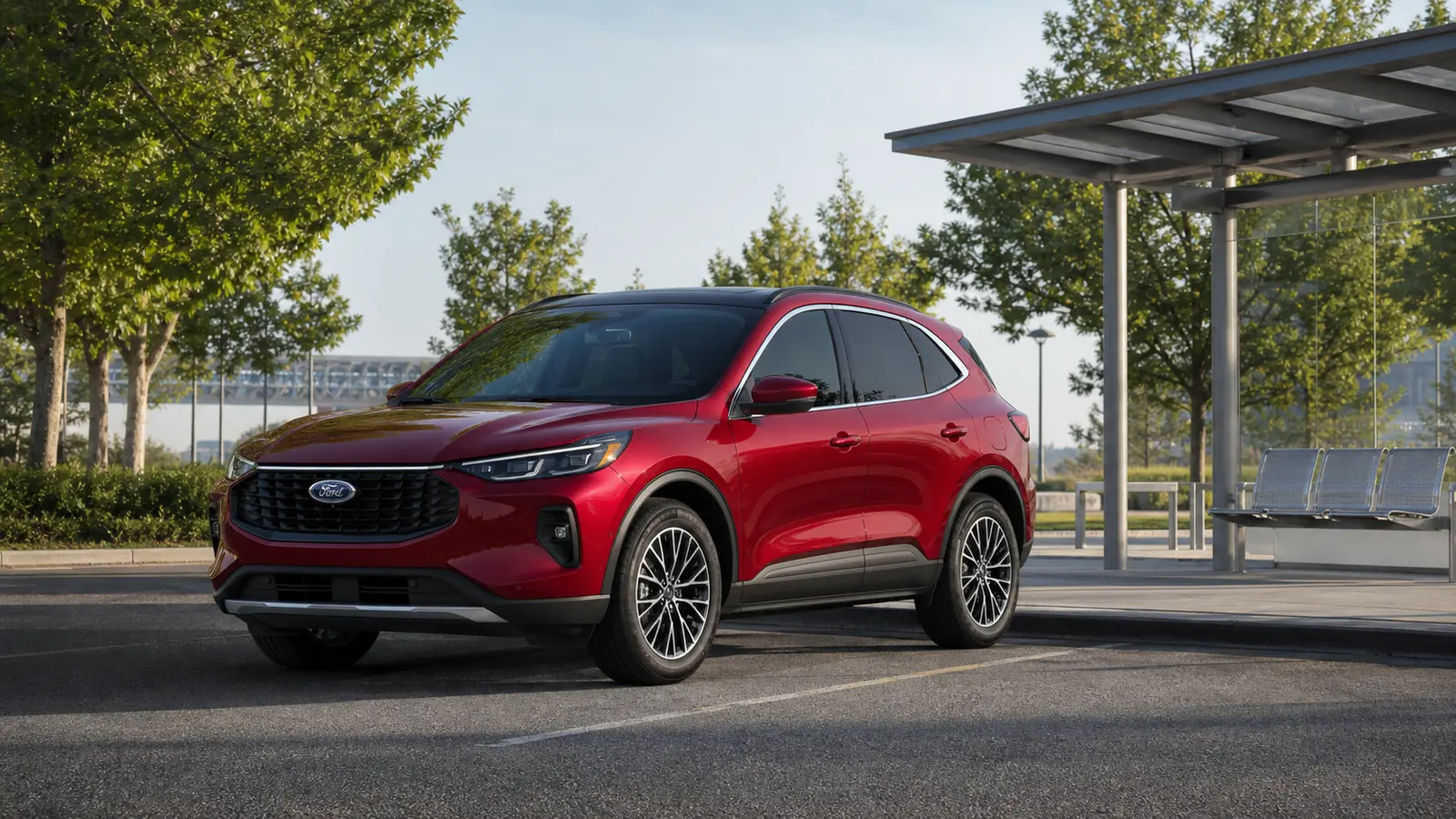
That split gives the Bronco Sport a clearer purpose than many appearance-led trims. It also separates it from the softer Ford Escape, which offers a calmer road focus and electrified choices, and the larger Bronco, which has removable body panels and much greater off-road limits.
The 1.5-Liter Saves Fuel, While the 2.0-Liter Changes Passing and Towing
The Big Bend's 1.5-liter engine makes 180 hp and 200 lb-ft of torque. It has enough output for city driving and steady highway travel, but the three-cylinder can sound busy when the vehicle is loaded or climbing.
The transmission often needs a downshift for a short passing gap. Drivers moving from a naturally aspirated compact SUV should test it on a grade, not only around a flat dealer loop.
Badlands raises output to 250 hp and 280 lb-ft. The difference is easy to notice when merging, passing, or carrying camping gear.
Its extra torque also helps the vehicle hold speed on loose surfaces without demanding as much throttle.
The engine does not turn the Bronco Sport into a performance SUV, though. Its all-terrain tires and taller stance still favor control and traction over sharp steering response.
Engine comparison
- 1.5-liter turbo
- 180 hp, 200 lb-ft, 8-speed automatic
- 2.0-liter turbo
- 250 hp, 280 lb-ft, 8-speed automatic
- Big Bend EPA estimate
- 25 city, 30 highway, 27 combined mpg
- Badlands EPA estimate
- 21 city, 27 highway, 23 combined mpg
- Fuel requirement
- Regular unleaded accepted; output can vary with fuel and conditions
At 12,000 miles a year, the four-mpg combined gap works out to roughly 77 extra gallons for Badlands.
The exact cost depends on local fuel prices and driving conditions, but the direction is clear. A buyer who does not need the stronger engine pays at purchase and again at the pump.
The same tradeoff appears on any all-wheel-drive crossover, and Ford markets this particular system as four-wheel drive rather than all-wheel drive.
The standard engine is not automatically the economical choice if the vehicle will tow often or carry four adults and gear through mountains.
In that use, the stronger 2.0-liter may feel less strained. For ordinary mixed driving, however, the 1.5-liter's EPA rating and lower entry price make the better financial case.
Badlands Hardware Earns Its Price Only Beyond Graded Roads
Every Bronco Sport sends power to all four wheels. What separates the two trims is the ground each is built for.
Two trims, two kinds of ground
Big Bend
Snow, wet grass, maintained forest roads and campsites that do not demand underbody protection. Standard four-wheel drive and the 1.5-litre engine are enough for all of it.
Badlands
A twin-clutch rear drive unit that directs torque across the rear axle, extra drive modes aimed at mud, ruts and rock crawl, metal bash plates and front recovery hooks.
Ground clearance is the figure to check on the window sticker rather than in a review. Published numbers differ between sources and change again with the optional off-road package, so the sticker on the exact vehicle is the only one that applies to it.
Ground clearance tells only part of the story in any case.
Approach, breakover, and departure angles also improve on Badlands. Those numbers matter when a bumper, rocker panel, or exhaust component would otherwise touch the ground.
They do not eliminate the need to walk an obstacle first and choose a safe line.
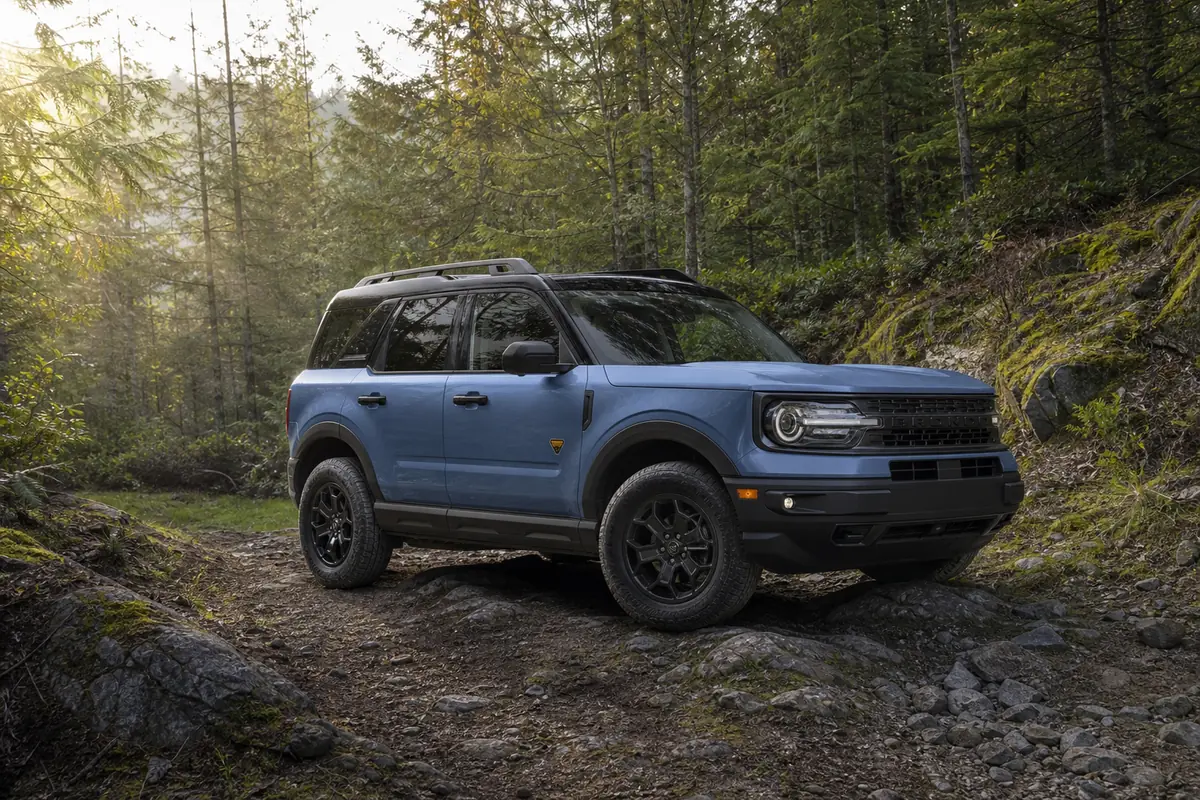
The optional Sasquatch equipment gives the Bronco Sport a stronger visual connection to the larger Bronco and adds trail-focused hardware.
Before ordering it, check the actual equipment list for the selected trim and model year.
Packages can change tire size, suspension tuning, recovery points, and exterior dimensions. A tire that improves grip in loose soil can add noise, increase replacement cost, and lengthen wet-road braking.
More carlike road manners with strong bad-weather traction is what the Crosstrek offers a buyer who rarely meets a deep rut.
Broader powertrain choice and a larger dealer network come with the RAV4 instead. The Bronco Sport earns its place when its upright visibility, washable details, and real trail equipment solve a specific need rather than simply matching an outdoor image.
The Tall Cargo Box Is More Useful Than the Exterior Length Suggests
A short overall length makes the Bronco Sport manageable in parking lots, while the upright roof keeps the rear area useful.
Big Bend provides 32.5 cubic feet behind the second row and 65.2 cubic feet with the rear seat folded.
Badlands gives up some space to its powertrain hardware, with 29.4 cubic feet behind the seat and 60.6 cubic feet at maximum.
Those are manufacturer figures measured under a standard method, so a test load still matters.
The low cargo floor, separate-opening rear glass, and squared roof help with dogs, coolers, and stacked storage bins.
The rear glass is especially handy when a long item or small bag needs to be added without letting everything lean against a fully opened liftgate.
Owners carrying bicycles inside should measure handlebar height and wheelbase. Published cubic feet cannot show whether a particular bike clears the hatch.
| Item | What to verify | Why it matters |
|---|---|---|
| Rear-facing child seat | Front-seat position with the seat installed | Rear legroom can feel tighter than the tall roof suggests |
| Dog crate | Height at the hatch opening, not only inside the roof | The opening can be the limiting dimension |
| Two bicycles | Handlebar width and folded-seat step | Volume figures do not describe the usable shape |
| Roof box or kayak | Crossbar rating and total vehicle height | Garage clearance changes quickly |
| Full-size spare | Location and cargo-floor height | Trail equipment can reduce storage flexibility |
Rear-seat headroom is generous for the class, but knee room is only average.
A household using bulky child seats should install one during the test drive. The Honda CR-V and Mazda CX-5 take different approaches, with the Honda emphasizing passenger and cargo room and the Mazda emphasizing a more polished cabin and steering feel.
It works best as a small-family vehicle rather than a substitute for a three-row SUV, which is why it belongs with the five-seat options rather than beside them. Four adults can travel comfortably enough for shorter trips, but luggage for everyone will test the cargo area sooner than the upright body implies.
Towing Capacity Depends on Both Engine and Factory Equipment
The 1.5-liter Bronco Sport can tow up to 2,200 pounds when properly equipped.
Badlands raises the maximum to 2,700 pounds. Those figures cover the trailer and everything loaded in it.
They are ceilings, not promises that every configuration can tow that amount with every passenger and cargo combination.
Check the certification label for payload, then subtract the weight of people, cargo, accessories, and trailer tongue load.
A small 2,000-pound camper may place 200 to 300 pounds on the hitch.
Four occupants and recovery gear can use the remaining payload quickly.
Roof cargo also counts against the vehicle's carrying capacity.
Before you trust either ceiling
- Confirm the exact tow package and hitch hardware on the vehicle, especially when buying used.
- Match the trailer connector and brake requirements to state law and the trailer's loaded weight.
- Weigh the loaded combination when the margin is close. Brochure dry weight leaves out water, batteries, propane, and personal gear.
- Keep tires at the door-label pressure and shorten following distance. A short-wheelbase compact SUV reacts more strongly to trailer movement than a full-size tow vehicle.
A Bronco Sport is a sensible tow vehicle for a light utility trailer, small watercraft, or carefully chosen compact camper.
Buyers planning to tow near 2,700 pounds on long grades should compare a larger vehicle with more wheelbase, cooling capacity, and payload margin.
The Ford Explorer gives up compact dimensions but offers more room for that job.
Ford's figures also assume the vehicle is maintained and loaded correctly. An owner should follow the towing section in the manual, use the recommended hitch setup, and avoid relying on an aftermarket receiver alone as proof of capacity.
On Pavement, Tire Choice Changes the Experience More Than the Styling Does
The Bronco Sport sits high enough to give a clear view over its hood, and its compact footprint reduces the stress of narrow streets.
The body moves more than a low crossover in quick direction changes, but the steering is predictable.
Big Bend on road-oriented tires is the quieter and more efficient daily setup. Badlands feels more substantial under acceleration, though its trail tires can transmit extra texture and noise.
A long highway test is important because tire hum and wind noise vary by wheel and package. Drive at the speed used on a normal commute, then listen on both smooth and coarse pavement.
Also try a tight parking maneuver. The squared hood helps place the front corners, while the rear-mounted spare seen on the larger Bronco is absent, so the Sport remains easy to judge.
These scores describe the design priorities, not measured safety or reliability ratings. A compact SUV comparison should include the exact tires because a Crosstrek on all-season rubber and a Badlands on all-terrain tires answer different questions.
Drivers who never leave pavement may prefer the smoother responses and larger rear area of mainstream compact crossovers. Buyers dealing with snow, unpaved access roads, or outdoor equipment gain more from the Bronco Sport's standard driven rear axle, roof shape, and easy-clean details.
The correct choice depends on which compromise appears every week, not which capability looks impressive once a year.
Safety Results Include Strong Crash Ratings and One Important Seat Concern
The Insurance Institute for Highway Safety ratings for the 2025 Bronco Sport apply to 2025 and 2026 models.
The vehicle earned Good results in the driver- and passenger-side small-overlap tests. It earned Acceptable in the updated moderate-overlap test and Acceptable in the updated side test.
Its standard headlights were rated Good, and pedestrian front crash prevention was rated Good.
The front crash prevention result was Acceptable in the vehicle-to-vehicle evaluation.
The LATCH child-seat anchors were rated Acceptable for ease of use. The weak point was the front-seat head restraint and seat evaluation, which received a Poor rating in the updated whiplash-prevention test.
That result deserves attention from buyers who assume a modern compact SUV is equally strong in every evaluation.
The Bronco Sport includes current driver-assistance features, but trim and package details can change. Verify blind-spot monitoring, lane support, adaptive cruise control, and parking aids on the exact window sticker.
During a test drive, learn how to change following distance and lane-assist settings without looking away from the road.
Parents should install every child seat they expect to use. The roof gives good head clearance, yet anchor access and front-seat space are separate issues.
Cabin measurements and safety equipment are purchase checks on any SUV, and this vehicle is a clear case of why a badge comparison settles neither.
Used Buyers Should Check Fuel-Injector and 12-Volt Battery Recall Work
Reliability cannot be reduced to a single model-wide score. The Bronco Sport has two major recall histories that deserve VIN-specific confirmation.
Certain 2022 and 2023 vehicles with the 1.5-liter engine were recalled because a fuel injector could crack.
Leaking fuel or vapor near a hot ignition source could cause an underhood fire. Ford's remedy added detection software and a drain tube rather than replacing every injector in advance.
NHTSA later questioned whether that remedy addressed the underlying failure, and Ford issued a new recall in 2025 for certain 2021 through 2023 vehicles that had received the earlier work.
Owners were instructed to obtain the updated remedy when available. A buyer should ask for repair invoices and then confirm completion through the official recall database.
A separate 2024 recall covered certain 2021 through 2024 Bronco Sport vehicles because a 12-volt battery issue could lead to loss of electrical accessories or drive power.
The remedy involved software calibration and battery testing or replacement when needed. Symptoms such as repeated low-voltage warnings, a recent unexplained battery replacement, or intermittent electrical behavior justify a deeper inspection.
| Check | Useful evidence | Walk-away signal |
|---|---|---|
| Open recalls | NHTSA VIN result and Ford dealer repair record | Seller says a safety recall is unimportant |
| 12-volt system | Battery date, test result, clean terminals | Repeated no-start or low-voltage warnings without diagnosis |
| Fuel system | Completed recall documentation, no fuel odor | Raw-fuel smell or warning light after a cold start |
| Tires and alignment | Four matching tires with even wear | Mixed sizes, sidewall damage, or heavy inner-edge wear |
| Underbody | Clean shields, intact exhaust, no fluid seepage | Bent mounting points or poorly repaired impact damage |
A pre-purchase inspection should also scan every control module, check for leaks after a full warm-up, and inspect the underside for trail damage.
Our Bronco Sport reliability research and recall record address those questions in greater depth.
The model review stays focused on whether the complete vehicle fits the buyer.
Budget for Tires, Fuel, and Trail Damage Before Accessories
Routine ownership costs start with engine oil, filters, brakes, tires, and the 12-volt battery. Four-wheel-drive hardware adds fluids and components that should be inspected after water crossings or hard trail use.
Ford's maintenance schedule and oil-life monitor should set the service timing. A generic mileage rule should not override the manual for the exact engine and operating conditions.
Tires can become the biggest difference between trims. A road-oriented Big Bend tire usually costs less and lasts longer than an aggressive all-terrain replacement.
Four matching tires with similar tread depth help the all-wheel-drive system work as designed.
Rotating them on schedule can prevent an early four-tire purchase caused by uneven wear.
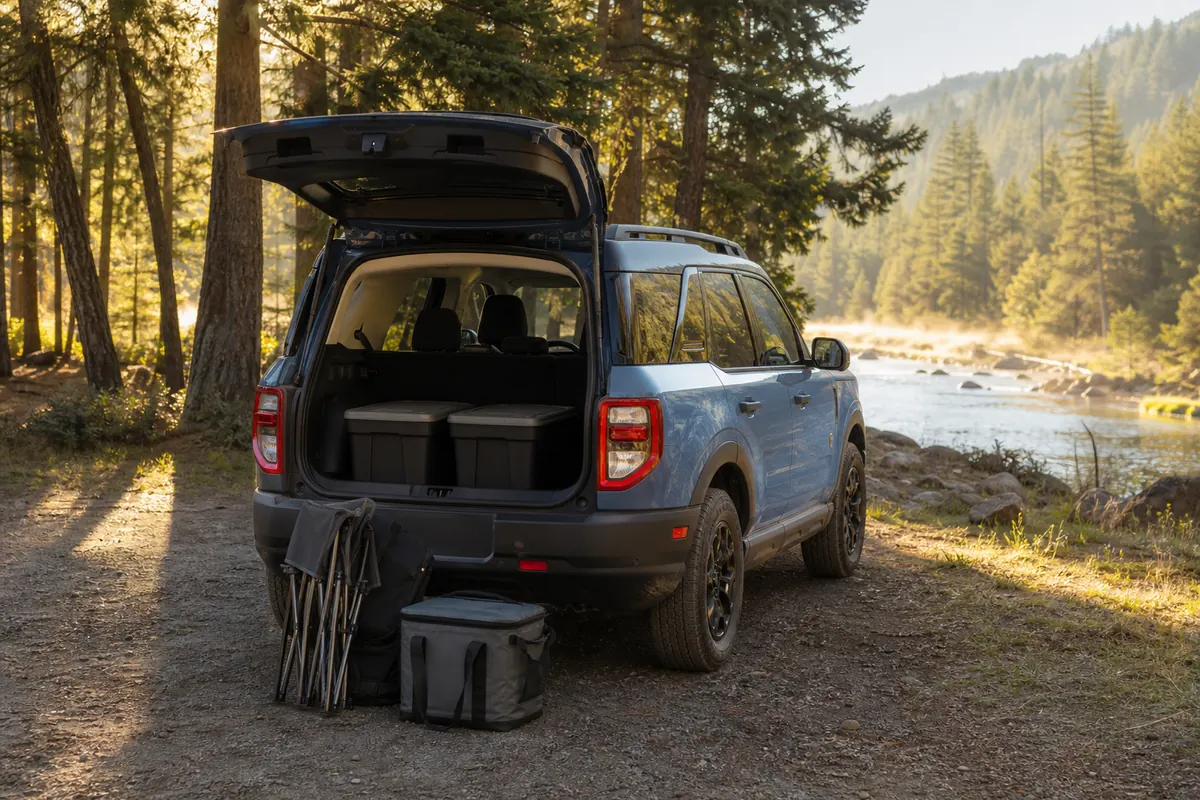
Fuel is another recurring gap. Using Ford's combined estimates, a Big Bend driven 12,000 miles uses about 444 gallons at 27 mpg.
A Badlands at 23 mpg uses about 522 gallons. Multiply the difference by the local fuel price and by the expected ownership period.
That calculation is more useful than relying on one national cost estimate.
Insurance can also vary sharply between drivers, locations, and trims.
Quote the actual VIN before signing. Badlands hardware, large tires, and option packages raise the amount at risk even if two vehicles share the same model name.
Budget the consumables above before pricing a single accessory, and treat model-year shopping as a separate exercise from choosing a trim.
Avoid spending the repair reserve on a roof basket, lift, or lighting package immediately. Keep enough cash for a battery, tire damage, an insurance deductible, and the first scheduled service.
Accessories are easy to add after the vehicle proves healthy.
Buy for the Compact Size and Real Trail Margin, Not the Bronco Name
The Bronco Sport works best for a driver who needs compact exterior dimensions, upright cargo space, dependable bad-weather traction, and more trail margin than a normal crossover.
Big Bend covers that brief at the lowest running cost. Badlands is the choice when the stronger engine and rear-drive hardware will be used often enough to justify roughly $5,400 more before options and destination.
Pros
- Square cargo area and separate-opening rear glass make bulky gear easier to manage.
- Standard four-wheel drive and clear outward visibility suit snow and unpaved roads.
- Big Bend offers a useful 27-mpg combined EPA estimate.
Cons
- Rear-seat legroom and highway refinement trail roomier road-focused rivals.
- Badlands uses more fuel and can carry less cargo behind the rear seat.
- Recall history makes a VIN check and documented remedies essential on used examples.
A buyer mainly seeking quiet highway travel and maximum cabin room should compare the Honda CR-V and the Toyota RAV4. Someone planning difficult trails with removable doors and much larger tires should start with the full-size Bronco.
The Sport occupies the middle ground, where daily ease and genuine light-trail ability matter at the same time.
The strongest Bronco Sport purchase is the least expensive trim that clears the owner's real terrain and load requirements.
Verify the equipment on the window sticker, run the VIN through the recall lookup, and complete a full-speed test drive before deciding.
Those three checks matter more than an appearance package or a trail badge that may never be used.