Choose the Standard Body Before Paying for Expedition MAX
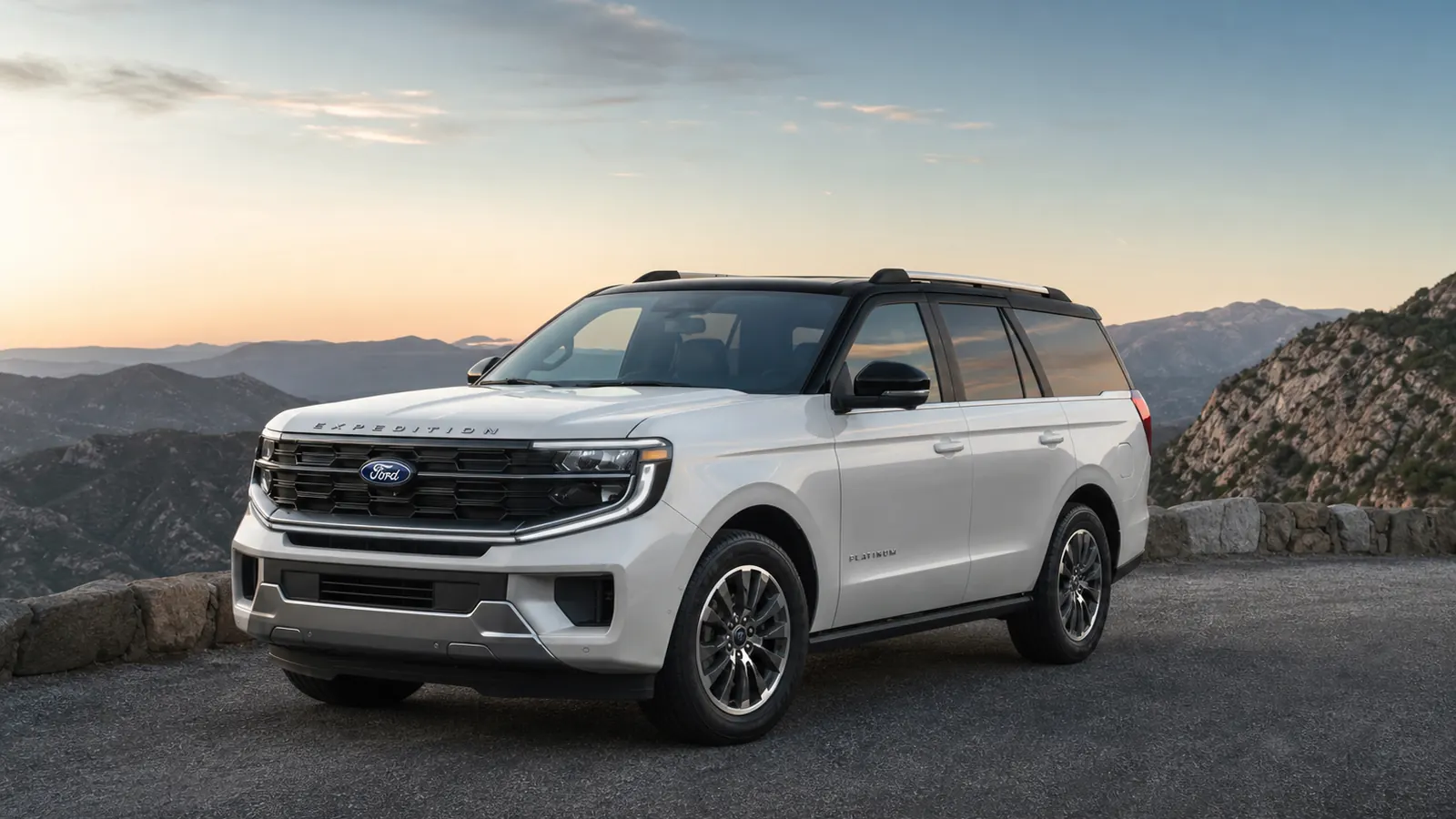
The Ford Expedition is a full-size, truck-based SUV built for three-row passenger space, heavy towing, and long-distance family travel.
The first decision is not trim or paint.
It is body length. The standard Expedition is easier to park and already carries adults in all three rows.
Expedition MAX adds about a foot of overall length and directs most of that gain to cargo space behind the third row.
The standard body provides 22.9 cubic feet behind row three, 69.9 behind row two, and 108.5 with both rear rows folded.
MAX increases those figures to 37.4, 84.5, and 123.1 cubic feet. A family that regularly fills all seats and still carries suitcases, a stroller, or sports bags will feel the MAX advantage on every trip.
A household that folds the third row for most errands may not.
The standard Expedition is the better default because it already solves the passenger-space problem without adding MAX length and weight.
MAX earns its cost when a real load test shows that 22.9 cubic feet cannot cover the family's normal travel.
Bring the stroller, coolers, or hockey bags to the dealer. Published volume cannot show how those exact shapes stack below the rear window.
The Expedition sits above the Ford Explorer in size and towing ability. It competes more directly with the Toyota Sequoia and other large seven-seat SUVs.
Buyers who need only two rows should not assume that more vehicle is automatically safer or more useful.
Larger dimensions raise fuel, tire, parking, and purchase costs every day.
The 3.5-Liter EcoBoost Has the Torque, but Configuration Sets the Rating
Every 2026 Expedition uses a twin-turbocharged 3.5-liter EcoBoost V6 and a ten-speed automatic.
The standard-output version makes 400 hp and 480 lb-ft of torque. The high-output version in Tremor and selected performance packages makes 440 hp and 510 lb-ft.
Rear-wheel drive is available on some versions, while four-wheel drive is the logical choice for snow, boat ramps, and loose surfaces.
The standard engine is not a weak option. Its 480 lb-ft arrives low enough in the rev range to move a loaded SUV without constant high-rpm noise.
The high-output engine improves passing response and gives Tremor useful reserve on grades, but it does not increase every towing or payload figure.
Axle ratio, body length, drive system, cooling equipment, wheels, and installed options all change the certified limit.
Powertrain facts
- Standard 3.5-liter V6
- 400 hp and 480 lb-ft
- High-output 3.5-liter V6
- 440 hp and 510 lb-ft
- Transmission
- 10-speed automatic
- Drive layouts
- Rear-wheel drive or four-wheel drive, depending on configuration
- Fuel tank, standard body
- 23.6 gallons
- Fuel tank, MAX body
- 27.8 gallons
Rear-wheel-drive standard-body versions can reach an EPA estimate of 16 mpg city and 24 mpg highway.
Some four-wheel-drive and high-output combinations are rated as low as 15 city and 22 highway.
The exact window sticker is the authority for the vehicle being considered. A one-mpg gap is meaningful when the SUV covers 15,000 miles a year.
Drivers who do not tow and mostly travel alone should compare a smaller gas-powered SUV before accepting this fuel use.
Drivers who need the size should test both normal and high-output engines at highway speed. The standard unit usually leaves enough reserve that money is better spent on the correct body, tow hardware, and seating layout.
A 9,600-Pound Tow Rating Requires the Right SUV and the Right Load
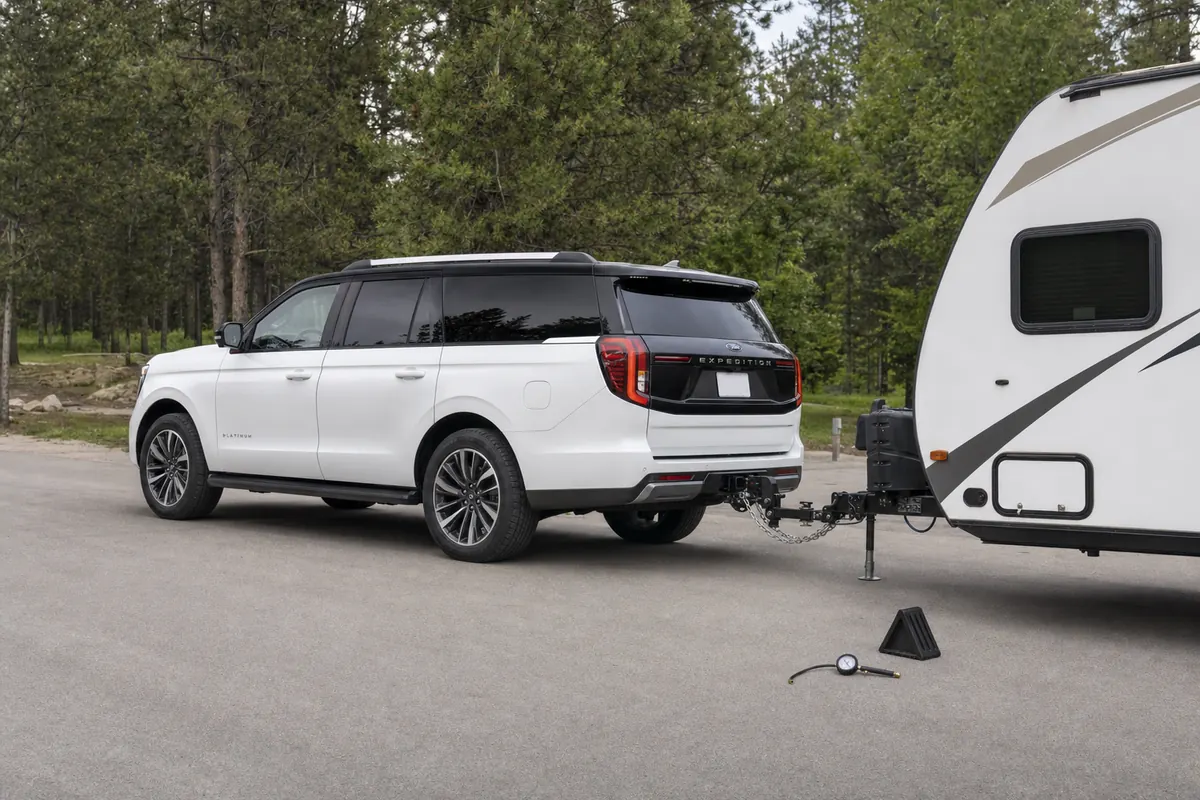
Ford lists a maximum conventional tow rating of 9,600 pounds for a properly configured standard-length four-wheel-drive Expedition.
Tremor can reach 9,300 pounds, while Expedition MAX can reach 9,000.
These are configuration maximums. The yellow payload label on the driver's door jamb and the vehicle-specific towing guide determine how much a particular SUV can handle.
Payload often becomes the limiting number before the advertised tow rating does. A loaded 8,000-pound travel trailer may place 800 to 1,000 pounds on the hitch.
Add two adults, three children, luggage, a cooler, and a weight-distributing hitch, and the remaining payload can disappear.
King Ranch seats, a panoramic roof, large wheels, and other equipment also add weight to the vehicle before anyone climbs aboard.
| Load | Number to collect | Where to find it |
|---|---|---|
| Vehicle payload | Vehicle-specific pounds, not a brochure maximum | Driver-door certification label |
| Trailer weight | Loaded scale weight | Public truck scale or verified trailer label |
| Tongue weight | Actual loaded hitch load | Tongue scale or weight calculation |
| Gross combined limit | Rating for engine, axle, and body | Ford towing guide and owner's manual |
| Passengers and cargo | Real travel load | Weigh or total each item |
| Hitch and accessories | Installed weight | Product documentation or scale |
Do not use the trailer's empty weight for the final decision. Water, batteries, propane, food, and equipment can add hundreds of pounds.
The driver also needs a compatible brake controller, correct hitch setup, properly loaded axles, and tires at the specified pressure.
State trailer-brake laws still apply even when the SUV can pull the load.
The Expedition's long wheelbase and strong low-speed torque make it a far more stable tow vehicle than a compact crossover.
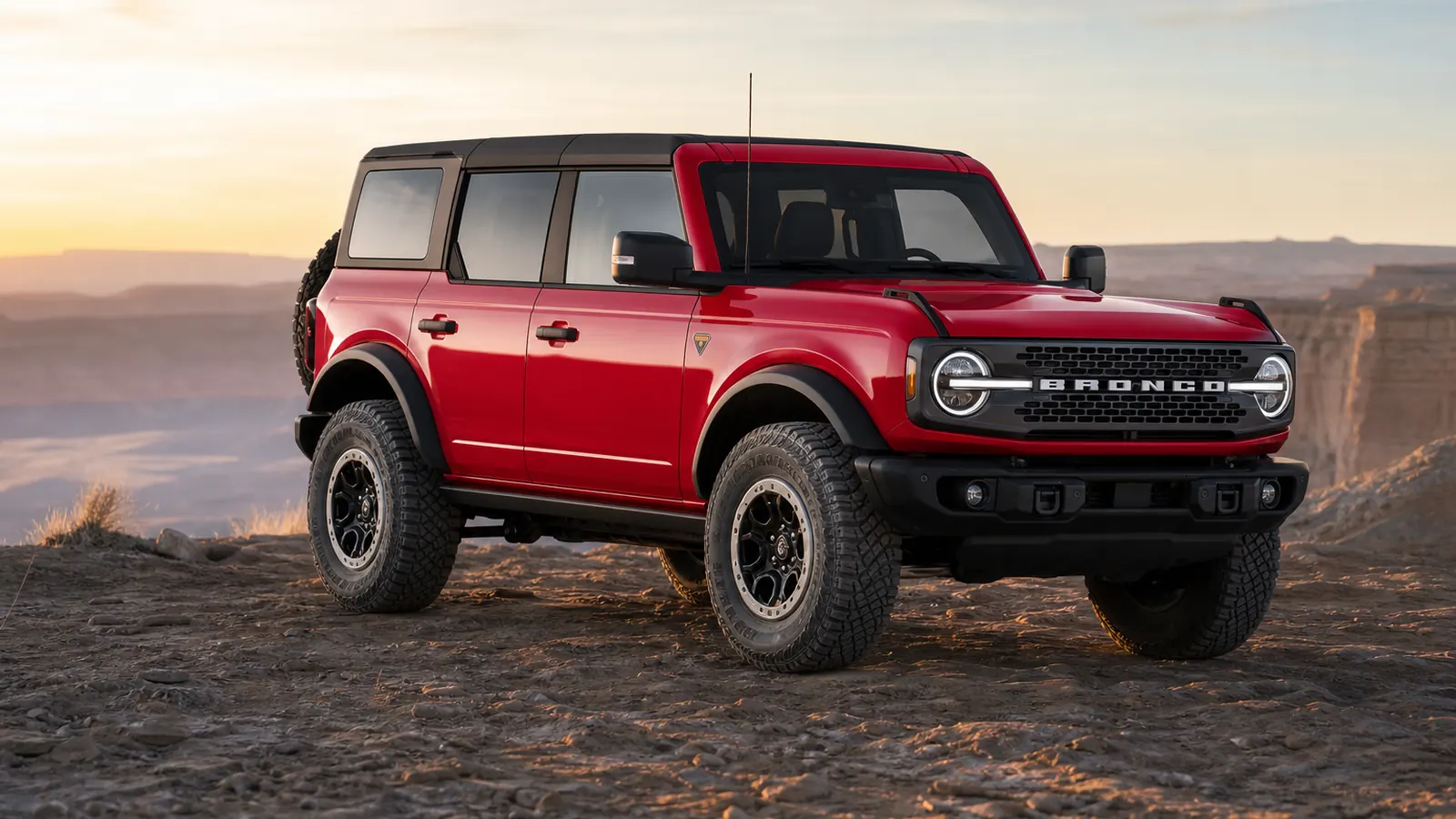
The MAX body adds wheelbase but has a lower maximum tow figure in Ford's published table. Buyers comparing the Ford Bronco should note that even the Bronco Raptor stops at 4,500 pounds.
That difference is why a large SUV exists, but it does not remove the need to stay within every rating.
Choose the Expedition by its door-label payload and the trailer's loaded tongue weight, then treat the headline tow number as the last check. This approach prevents a common mistake where the engine can pull the trailer but the SUV is overloaded by people and hitch weight.
The Split Gate Helps Daily Loading More Than Another Luxury Package
The current Expedition uses a split rear opening, and the two halves do different jobs.
What each half of the gate is for
The upper glass and hatch
They lift together for normal loading, and the glass alone opens when there is not enough room behind the vehicle to swing the whole hatch.
The lower gate
It folds down like a short tailgate and supports up to 500 pounds, so it holds items during loading, makes a seat at a campsite, and stops loose groceries rolling out when the vehicle is parked facing uphill.
The split also changes how much clearance is needed behind the SUV, which is worth measuring in your own garage rather than assuming.
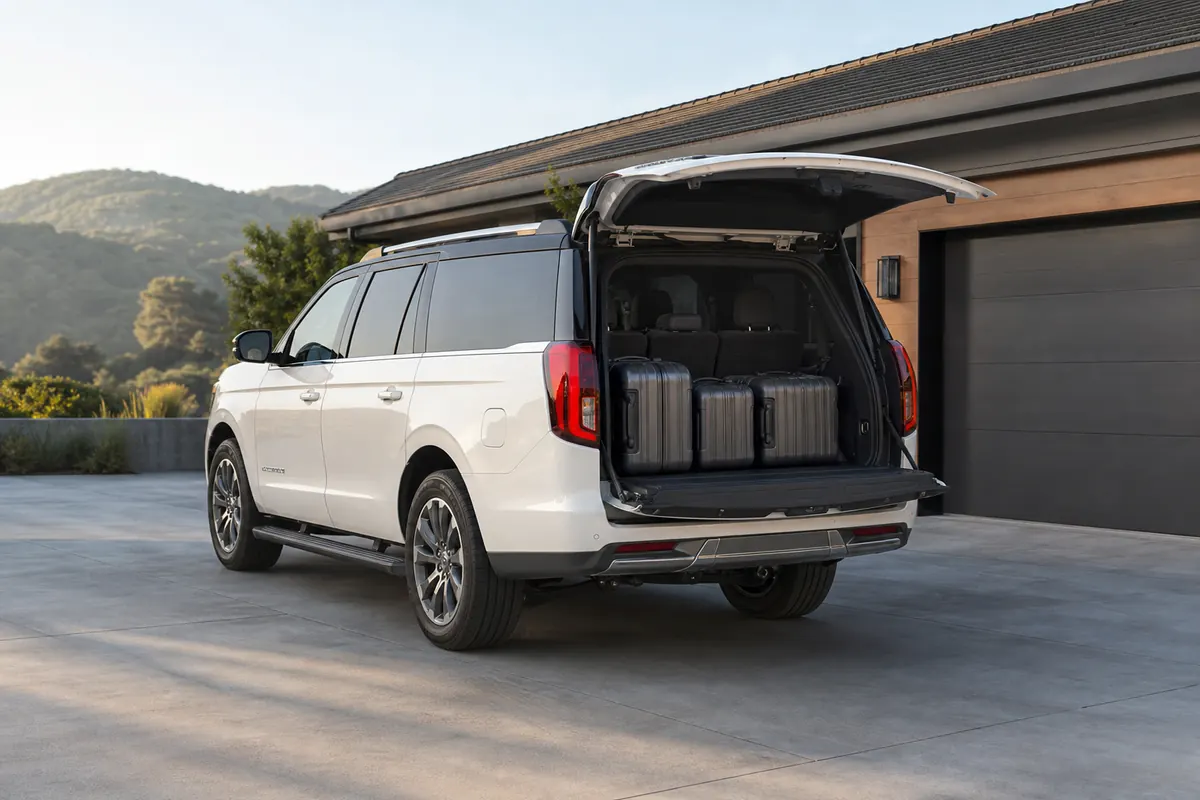
The second and third rows fold to create a long floor, and adults can use the third row more comfortably than in most midsize crossovers.
Seat count varies. A second-row bench gives eight places, while captain's chairs reduce that to seven and improve the path to row three.
Households using three child restraints should map each seat, tether, and buckle before choosing the more expensive captain's-chair layout.
The Toyota Grand Highlander uses less exterior space and fuel while still offering a useful third row.
The Honda Pilot is another easier-to-park option. Neither matches the Expedition's maximum tow rating or full-size third-row width.
The correct comparison begins with people, trailer, and cargo requirements rather than brand prestige.
Cabin controls mix physical switches with a wide central display. Confirm that the driver can reach climate, camera, trailer, and drive-mode functions without a long glance.
Connect every phone used by the family and test rear charging ports. In a vehicle built for long trips, a software frustration repeated for six hours matters more than a decorative trim panel.
A trial load should include a view through the rear glass. Stacking to the roof may reach the volume number while blocking sightlines and creating unsecured projectiles.
Use tie-downs for heavy items, and keep the emergency kit accessible without unloading the entire cargo area.
Active Covers the Essentials, Tremor and King Ranch Serve Different Jobs
The trim ladder can make two Expeditions look similar while serving different owners.
Active is the sensible starting point. It carries the core engine, three-row packaging, and available towing hardware without the cost of the richest cabin.
Platinum adds comfort and technology. King Ranch focuses on distinctive leather and luxury equipment.
Tremor adds the high-output engine, trail tuning, underbody protection, and hardware for buyers who regularly leave pavement.
Four-wheel drive is a practical option in snow regions and for slippery launch ramps, but it adds cost, weight, and maintenance points.
It does not shorten braking distance on ice. Proper winter tires can change braking and steering more than a drive-mode selector.
Buyers considering a rear-wheel-drive vehicle should compare insurance and resale in their region as well as the purchase price.
Large wheels deserve the same scrutiny. They can sharpen appearance and steering response, but shorter tire sidewalls cost more, transmit more impact, and leave less protection against potholes.
A family travel vehicle often works better on the smallest factory wheel that clears the brakes and carries the required load rating.
Ford's option combinations can change during a model year. Build the desired vehicle, then ask for the window sticker and the towing pages that name its exact equipment.
Do not assume that a tow package, BlueCruise hardware, heavy-duty cooling, or a limited-slip differential is included because a similar SUV on the lot has it.
Within Ford's own range the Expedition is the answer for buyers who need three rows and a tow rating in the same vehicle. Within this model, the best-value choice is usually an Active with the body length, seats, and tow package selected deliberately.
Luxury features should come after those structural choices.
Highway Comfort Is Strong, but Size Follows the Driver Into Town
The Expedition's independent rear suspension helps it ride with more control than an old solid-axle utility vehicle, especially over uneven highway pavement.
The cabin is quiet enough for long conversations, and the turbo V6 has useful passing reserve. A long wheelbase also reduces the quick pitching motion that can make smaller SUVs tiring on rough roads.
The same mass appears under braking and in tight corners. The driver needs more distance, wider turns, and a clear plan for parking.
Cameras and sensors help, but they cannot create space. Test the exact body in a normal garage, school pickup lane, and supermarket lot.
MAX can be the right travel tool and still be the wrong daily parking tool.
These are practical assessments, not official ratings. They show where the design spends its size and fuel.
A full-size SUV should be excellent at carrying people and a trailer because the owner accepts compromises every time it enters a fuel station or narrow lot.
Tremor is taller and uses more aggressive tires, so its road feel and stopping behavior differ from an Active or Platinum.
Drive the trim being purchased. On the highway, listen for tire noise at 65 to 75 mph and check whether the lane-centering system feels natural.
On a rough road, watch how quickly the body settles after a bump.
A week that rarely holds more than five people is a week a smaller SUV covers for less money and less parking difficulty. The Expedition's comfort is genuine, but empty seats and unused tow capacity still consume fuel and garage space.
IIHS Results Show Good Side Protection and a Weak Driver-Side Structure
The Insurance Institute for Highway Safety page for the 2024 Expedition applies to 2023 through 2026 models. It earned a Good result in the original moderate-overlap front test and Good in the updated side test.
It earned Marginal in the driver-side small-overlap test and Marginal in the updated moderate-overlap test.
The driver-side small-overlap details are important. IIHS rated the structure and safety cage Poor, even though the overall test result was Marginal.
The passenger-side small-overlap test was not conducted. Headlights were rated Marginal, and child-seat LATCH ease of use was Acceptable.
Pedestrian front crash prevention was Good, while the vehicle-to-vehicle front crash prevention evaluation listed on that page was Marginal for the tested model years.
The Expedition's size can reduce injury risk in some collisions with smaller vehicles, but it also increases risk to people outside the SUV and demands more stopping distance.
Cameras, automatic emergency braking, blind-spot monitoring, and parking aids support the driver. They do not replace a clear view, correct tires, or speed appropriate for the road.
Families should install all child seats before purchase. Check lower-anchor access, tether routing, buckle placement, and whether an adult can still reach the third row.
A wide cabin can solve shoulder-room problems while a chosen captain's-chair layout creates a different access issue.
Used Expeditions Need Recall Records, Cold-Start Checks, and a Loaded Road Test
A used Expedition should be judged by model year, VIN, service record, and condition rather than a broad reliability label.
In 2025, Ford recalled certain 2022 through 2024 Expeditions for a rear-view camera image that could freeze, delay, or fail to display correctly.
The remedy was software-based. A buyer should still test the camera repeatedly after the vehicle has fully started and confirm completion in the NHTSA database.
NHTSA also publicized an underhood fire risk affecting certain 2021 Expeditions. Owners were told to park outside and away from structures while Ford developed the remedy.
That campaign does not apply to every Expedition, but it shows why a VIN lookup matters more than a seller saying that all recalls are complete.
| Area | Test | Concern |
|---|---|---|
| Cold engine | Start after an overnight rest and listen through warm-up | Persistent rattle, smoke, warning lights, or uneven idle |
| 10-speed automatic | Drive slowly, then accelerate and coast through all gears | Repeated harsh shifts or delayed engagement |
| Cooling system | Inspect reservoir, hoses, radiator area, and underbody | Low coolant, dried residue, active leak, or overheating history |
| Four-wheel drive | Select each permitted mode on a suitable surface | Warning message, binding, or failure to engage |
| Rear camera and displays | Cycle reverse and restart the system | Frozen image, black screen, or delayed view |
| Trailer hardware | Inspect receiver, connector, and underbody | Corrosion, bent mounts, or wiring repairs |
Scan all modules, not only the engine computer. Air suspension where fitted, camera modules, trailer controls, and seat systems can store useful fault history.
Check tire date codes and load ratings. Replacing four full-size SUV tires can be a four-figure expense, so worn tires should change the purchase price.
A pre-purchase inspection should include a highway drive and, if the seller permits, a representative load.
Empty operation can hide weak rear leveling, brake vibration, or transmission behavior that appears under weight.
Our Expedition reliability guide and Expedition recall page cover those records separately.
No service history, unresolved warning lights, or an incomplete safety recall should pause the purchase until evidence resolves the issue. A large luxury SUV can look clean while carrying expensive mechanical and electronic needs.
Fuel and Tires Make the Five-Year Budget Larger Than the Payment Suggests
The purchase price is only the first large number. Fuel use, insurance, tires, brakes, scheduled service, registration, and depreciation all scale with a full-size SUV.
The fuel difference against a midsize SUV is worth doing as arithmetic rather than as an impression.
| Vehicle | Average mpg | Gallons a year | Cost at $3.50 a gallon |
|---|---|---|---|
| Expedition | 18 | about 833 | about $2,916 |
| Midsize SUV | 24 | about 625 | about $2,187 |
| Difference | 6 | about 208 | about $729 |
That $729 a year arrives before either vehicle needs a repair, and it recurs every year you own the larger one.
Tires require the correct load index and should be replaced as a matched set when wear or age demands it.
Large optional wheels raise replacement cost and can shorten the useful life of a tire on broken pavement.
Brakes also work hard when the vehicle is loaded. Trailer brakes reduce the burden but do not remove heat from the SUV's own braking system.
Follow the oil-life monitor and the severe-duty schedule when towing, idling extensively, driving in dust, or making repeated short trips.
Transmission, transfer-case, axle, and coolant service must follow Ford's manual for the exact configuration.
Maintenance marketed as universal should not replace that schedule.
Insurance quotes should use the VIN. Platinum, King Ranch, Tremor, and MAX versions can carry different repair values even when the driver history is unchanged.
Keep a repair reserve for electronics, cooling components, a battery, and a deductible. A warranty may reduce some repair risk but does not cover tires, damage, fuel, or neglected service.
Our Expedition cost-to-own guide expands the budget, and a used Expedition guide separates model-year questions.
For this buying decision, the key test is simple. If the household cannot comfortably fund fuel, tires, and maintenance after the monthly payment, a lower trim or smaller vehicle is the safer choice.
The Expedition Is Worth Its Cost When Every Part of Its Capacity Gets Used
The Expedition justifies itself for families that need adult-sized third-row space, substantial cargo volume, or a tow rating far beyond a midsize crossover.
It is especially strong as a highway travel vehicle, where the quiet cabin, long wheelbase, and turbocharged torque reduce fatigue.
The standard body and standard-output engine cover more use cases than their position in the lineup suggests.
Pros
- Adult-friendly third row and a choice of seven or eight seats
- Up to 9,600 pounds of properly configured towing capacity
- Useful split rear gate and substantially more luggage room in MAX
Cons
- High fuel, tire, insurance, and depreciation costs
- Large dimensions make parking and narrow roads harder
- Mixed IIHS front-crash results require a closer look than one headline grade
A household that tows a light utility trailer twice a year and normally carries four people should compare the Honda Pilot or Grand Highlander.
A family pulling a heavy travel trailer with six occupants has a much stronger reason to choose the Ford.
The vehicle should solve the loaded day, not simply make an empty test drive feel luxurious.
The Expedition is worth the running cost when a smaller SUV cannot carry the same people, tongue weight, and luggage within its ratings.
Confirm the door-label payload, complete the trailer calculation, review the IIHS details, and run the VIN through NHTSA before purchase.
Those checks turn a very large SUV into a deliberate tool instead of an expensive assumption.