A 2021 to 2024 Edge Is the Sensible Used Target
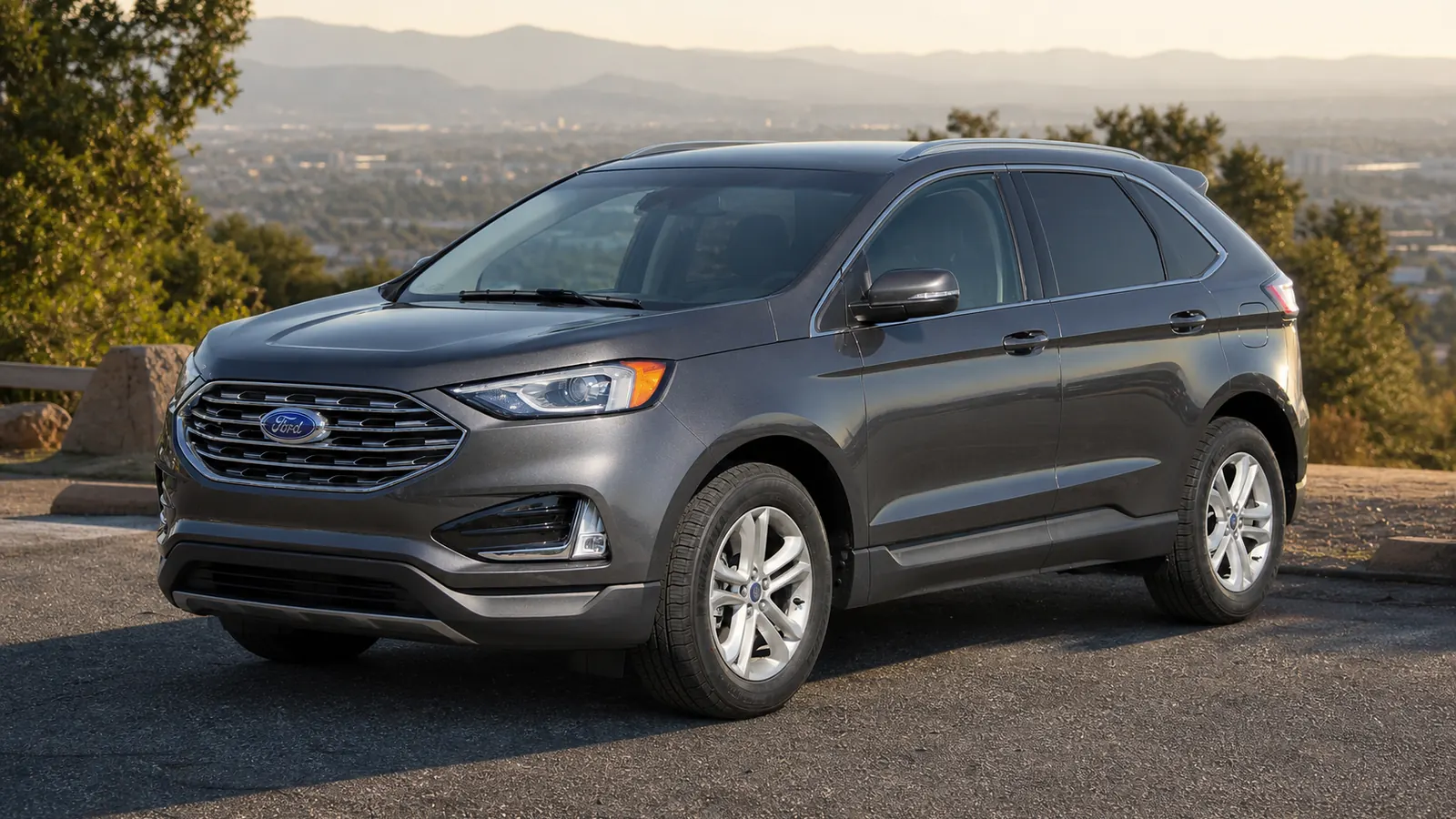
The Ford Edge ended U.S. production after the 2024 model year, but discontinuation alone does not make it a poor used purchase.
Ford sold the two-row midsize SUV for nearly two decades, and normal service support does not stop when the assembly line does.
The practical question is whether an Edge offers enough price advantage over newer rivals to justify buying a design with no direct 2025 or 2026 successor in U.S. showrooms.
For most shoppers, a 2021 through 2024 Edge with the 2.0-liter engine is the strongest target. Those years have standard all-wheel drive, the large portrait-format infotainment screen, useful driver-assistance equipment, and a mature version of the platform.
The ST uses a 335-hp twin-turbo V6 and is much quicker, but its fuel, tire, brake, insurance, and purchase costs serve a narrower buyer.
Buy a used Edge for its roomy two-row cabin, 39.2-cubic-foot cargo area, and favorable price, not because it is the newest Ford SUV design.
Compare the actual transaction price with a Ford Escape, Honda CR-V, and Mazda CX-5. If the Edge costs nearly as much as a newer rival with more warranty, better fuel economy, or stronger resale support, its space advantage may not repay the age.
The Edge remains a true five-seat SUV. It does not have the third-row packaging compromises of an Explorer, and it is wider and roomier than many compact crossovers.
That simple formula is still useful for buyers who carry adults or bulky gear but do not tow heavily or need seven seats.
The 2.0-Liter Fits the Edge Better Than Its Modest Cylinder Count Suggests
Most 2024 Edges use a turbocharged 2.0-liter four-cylinder with 250 hp and 280 lb-ft.
It works with an eight-speed automatic and standard all-wheel drive. The engine has enough low-speed torque for normal merging and family loads, though it can sound strained during a short full-throttle pass.
A healthy example should accelerate cleanly without smoke, warning lights, or repeated harsh shifts.
The Edge ST uses a twin-turbocharged 2.7-liter V6 with 335 hp and 380 lb-ft, a seven-speed automatic, and sport-oriented chassis equipment.
Its stronger midrange makes the heavy SUV feel genuinely quick. It also encourages more expensive wheel, tire, and brake choices.
An ST-Line copies part of the appearance while retaining the 2.0-liter, which suits a buyer who likes the look but not the V6 running costs.
Both remain conventional gas-powered SUVs with no hybrid option.
2024 powertrain facts
- SE, SEL, ST-Line, Titanium
- 2.0-liter turbo, 250 hp, 280 lb-ft
- ST
- 2.7-liter twin-turbo V6, 335 hp, 380 lb-ft
- Drive layout
- All-wheel drive standard
- 2.0-liter transmission
- 8-speed automatic
- ST transmission
- 7-speed automatic
- Maximum properly equipped towing
- Up to 3,500 pounds
EPA estimates vary by trim and wheel setup. A 2.0-liter all-wheel-drive Edge is generally rated around 21 mpg city and 28 highway, while the ST is around 19 city and 25 highway.
Verify the federal label or official listing for the exact VIN and model year. A used vehicle's tire choice, alignment, maintenance, speed, and trip length can create a larger real-world difference than one trim-level estimate.
The 2.0-liter is the recommended engine because it gives the Edge adequate performance without turning a value purchase into a performance-SUV budget.
Buyers wanting V6 acceleration should test the ST against the total cost, not against the slower Edge alone. A smaller turbo crossover may match the four-cylinder's fuel use while giving up rear-seat width and cargo volume.
Trim Equipment Matters Less Than Tires, Service History, and Purchase Price
The final Edge lineup included SE, SEL, ST-Line, Titanium, and ST.
SE covers the basic layout. SEL adds common comfort features.
ST-Line gives the standard engine a sportier appearance.
Titanium emphasizes cabin equipment. ST changes the engine and chassis enough to be a separate performance choice.
Used-market condition can erase the trim hierarchy quickly.
A lower trim with matching quality tires, documented fluid service, two working keys, and no accident history is usually a better buy than a neglected Titanium.
Large optional wheels increase tire cost and reduce sidewall protection. A panoramic roof adds light but also adds seals, drains, and a mechanism that require inspection.
Heated and ventilated seats are useful only if every function still works.
| Version | Main reason to choose it | Main check |
|---|---|---|
| SE | Lowest price and simpler equipment | Confirm desired driver aids and seat features |
| SEL | Balanced comfort and value | Compare condition rather than badge alone |
| ST-Line | Sport appearance with 2.0-liter costs | Do not pay ST money for appearance |
| Titanium | Richer cabin and convenience equipment | Test roof, seats, liftgate, cameras, and audio |
| ST | 335-hp V6 and sharper responses | Price tires, brakes, insurance, and fuel first |
Ford's large SYNC display controls many functions. Connect a phone, use navigation, change climate settings, and restart the vehicle during the test drive.
A delayed screen or occasional reboot may sound minor until it controls something used every morning. Confirm that over-the-air or dealer software updates have been completed when service records mention display complaints.
A Ford brand overview shows newer choices, but a discontinued model should be judged on parts support, condition, and price.
Ford dealers and independent shops can continue servicing the Edge. Unique trim pieces and some electronics may become slower or costlier to source over time, which is another reason to avoid paying a near-new price.
Keep a repair reserve after the purchase. Spending every dollar to reach Titanium or ST leaves no room for tires, a battery, an insurance deductible, or an electronic repair.
On a used Edge, those reserves provide more real comfort than another option package.
Two-Row Space Is the Edge's Strongest Reason to Exist
The Edge provides a broad rear bench and a nearly flat floor, making the center position more usable than in many compact SUVs.
There is no third row competing for legroom or cargo height. Adults can sit behind adults, and wide-opening rear doors help with child seats.
The vehicle is still large enough that a home garage and parking-space test are worthwhile.
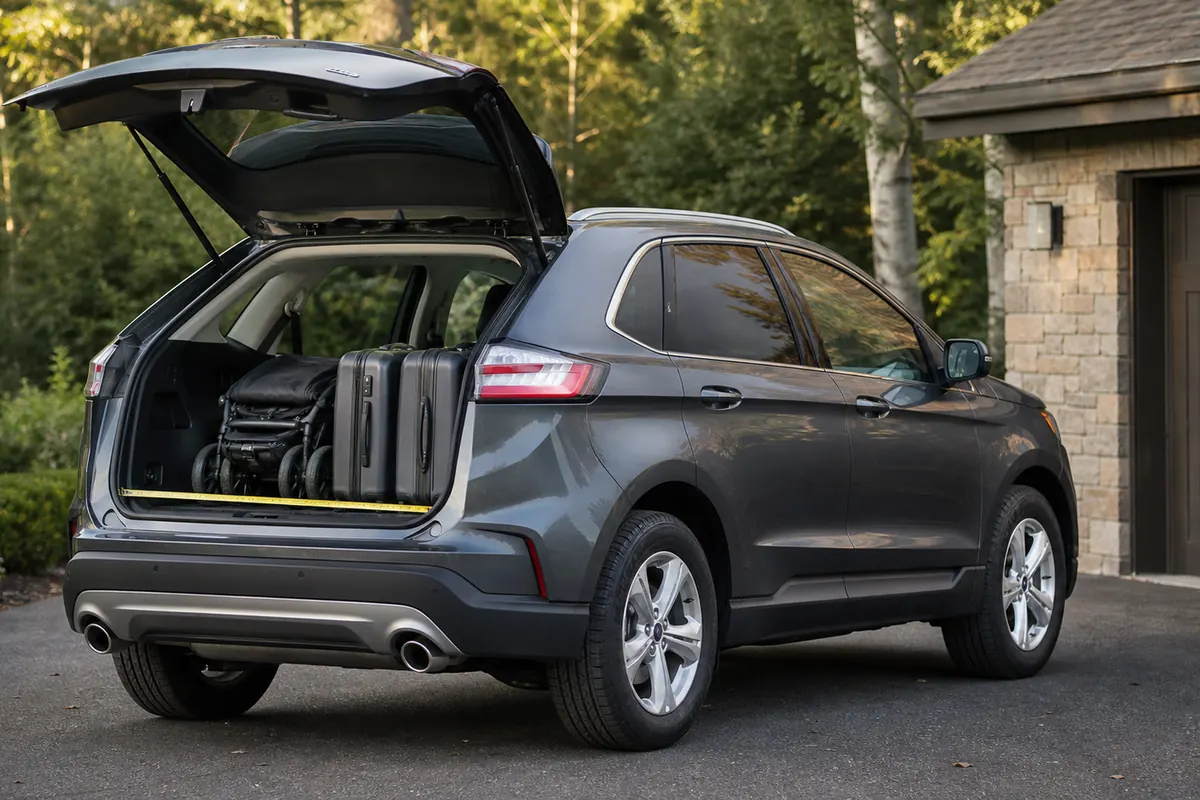
Cargo volume is 39.2 cubic feet behind the rear seat and 73.4 cubic feet with it folded.
The area is wide and relatively square, which matters more than a small volume advantage measured into narrow corners.
A large dog crate, stroller, mobility device, or two bicycles should be trial-loaded because hatch opening height and handlebar width can become the limiting dimensions.
The rear seat reclines, improving comfort on long trips.
Check every latch and folding release. A seat that will not fold can turn a minor cable or latch issue into a repeated frustration.
Lift the cargo floor, inspect the spare or inflator equipment, and look for water staining near the side trim and spare-wheel well.
The Toyota RAV4 and Honda CR-V are more efficient mainstream choices, but the Edge feels wider and provides a midsize rear seat.
The Ford Explorer adds a third row and greater towing potential at the cost of more length and fuel.
The Edge works for buyers caught between those groups.
Parents should install each child seat and confirm that the front seats remain comfortable. Child-seat anchor ease was rated Acceptable by IIHS for the tested 2024 Edge.
Published legroom does not reveal whether a specific rear-facing shell presses against the front passenger seat.
Road Manners Favor Stability and Comfort Over Compact-SUV Agility
The Edge feels substantial on the highway. Its width and wheelbase help it track steadily, and the cabin is calmer than the rugged styling of some SUVs suggests.
The steering is light enough for parking but does not provide much road detail. Body motion is controlled in normal driving, while large wheels can make broken pavement feel sharper.
Standard all-wheel drive can direct power rearward when the front tires need help. It improves acceleration on wet or snowy surfaces, but it does not increase tire grip during braking.
A good matched tire set remains the first winter priority. Check tread depth across every tire because uneven wear can point to alignment, suspension, or inflation problems.
These are practical buying judgments, not test-lab ratings. They explain why the Edge can still suit a highway commuter or small family even though newer compact SUVs use less fuel.
The wider cabin has value only when passengers or cargo use it. An owner driving alone in dense city traffic may experience mostly the parking and fuel penalties.
Drive the vehicle over patched pavement and listen for clunks, wheel-bearing hum, trim rattles, and tire roar.
Then accelerate gently through each gear and coast back down.
The transmission should not repeatedly bang, flare, or hesitate. One harsh shift can be a learned-control issue, but a pattern requires diagnosis before purchase.
Buyers who value more responsive steering should compare the Mazda CX-5. Those who want maximum space per gallon should try the CR-V.
The Edge's answer is a relaxed, wide two-row cabin with standard all-wheel drive, especially when its used price sits clearly below those alternatives.
The 2024 Edge Has Strong Crash Results but Headlight Performance Varies
The Insurance Institute for Highway Safety rated the 2024 Edge Good in the driver- and passenger-side small-overlap front tests, Good in the original moderate-overlap test, and Good in the updated side test. Those results apply to the 2015 through 2024 generation according to the individual test notes, although equipment and structural changes within a long generation still require careful model-year reading.
Headlights varied by trim and build. IIHS listed an Acceptable system on certain vehicles and a Poor result for another configuration because of inadequate visibility or glare.
This means a buyer should identify the exact headlamp setup rather than assuming every Titanium or ST has the same night performance.
Drive after dark if nighttime travel is common.
Pedestrian front crash prevention earned an Advanced rating in the IIHS evaluation, and the LATCH child-seat system was rated Acceptable for ease of use.
Driver-assistance equipment can still vary by model year and trim. Verify automatic emergency braking, lane support, blind-spot monitoring, adaptive cruise control, and rear parking aids on the actual vehicle.
Look under the cargo floor and along door apertures for disturbed seam sealer, wrinkles, overspray, or mismatched fasteners.
A professional body inspection can identify repairs that a clean-looking exterior hides.
Advanced safety sensors also need correct calibration after windshield or bumper work. Ask for invoices when replacement glass or collision repair appears in the history.
The broader SUV guide explains why test results, visibility, tire condition, and child-seat fit must be considered together. The Edge has solid published crash performance, but the exact used example determines how much of that protection remains.
Older 2.0-Liter Edges Need a Specific Coolant-Intrusion Check
Ford service bulletin 19-2172 addressed certain 2015 through 2018 Edge vehicles with the 2.0-liter EcoBoost that could show low coolant, white exhaust smoke, rough running, or a malfunction light because coolant entered a cylinder.
The bulletin's service procedure could involve replacing the engine long block. This is a model-year and engine-specific concern, not a claim that every Edge engine fails.
A buyer considering those years should insist on a cold start after the vehicle has sat overnight. Check the coolant level before startup, watch the exhaust after initial condensation clears, and scan for misfire history.
Dried residue around the reservoir or a seller who recently topped off coolant without a repair explanation deserves investigation.
A pressure test and professional inspection provide better evidence than a clean dashboard.
Later 2021 to 2024 vehicles use a revised period of the platform and are the recommended shopping range in this review.
They still require normal leak, cooling, oil, and transmission checks. No model year should be purchased based only on the absence of the older bulletin.
| Observation | Possible meaning | Next step |
|---|---|---|
| Coolant below the cold mark | Leak, poor service, or internal loss | Pressure test and inspect before purchase |
| Persistent white smoke after warm-up | Possible coolant entering combustion | Stop the purchase until professionally diagnosed |
| Stored cylinder misfire codes | Ignition, fuel, compression, or coolant issue | Complete mechanical diagnosis |
| Clean reservoir and stable level | Encouraging but not conclusive | Continue full inspection and road test |
| Engine replacement invoice | Prior repair with useful details | Verify part, date, mileage, and warranty |
Do not pour sealant into the cooling system to mask loss. It can restrict small passages and make a correct repair harder.
Do not accept a claim that turbo engines naturally consume coolant. A sealed cooling system should maintain its level between normal service checks.
Our Edge reliability research separates powertrain periods and other reported issues.
For a shopper, the practical conclusion is narrower. The discounted price on a 2015 to 2018 2.0-liter Edge must leave room for inspection and reflect any missing evidence about the cooling system.
Recall Completion Must Be Verified by VIN, Especially for the Rear Camera
In 2025, Ford recalled certain 2021 through 2024 Edges as part of a wider campaign involving rear-view camera software.
The image could delay, freeze, or fail to display. A failed camera increases crash risk while reversing, especially in a vehicle with a broad rear body and limited low-object visibility.
The remedy used updated software, but completion still must be confirmed.
Older Edges have different recall histories. A 2025 campaign covered certain 2015 through 2017 vehicles for a rear brake flexible hose that could rupture and lengthen stopping distance.
Other years and configurations may have separate campaigns. A model-name list from a classified advertisement is not enough because production dates and equipment determine inclusion.
Use NHTSA's official VIN lookup, then compare the result with Ford dealer records.
A recently announced campaign may show no remedy available yet. In that case, ask what the manufacturer advises and decide whether the vehicle can be used safely until parts or software are available.
A seller's promise to handle it later does not close the safety issue.
- Confirm that the VIN on the dashboard, door label, title, and scan report matches.
- Print or save the NHTSA result on the inspection date.
- Ask the dealer for closed campaign numbers and completion dates.
- Test the rear camera after several starts and after the screen has been used for other functions.
- Treat intermittent black or frozen images as a fault even when no warning appears.
The Edge recall page keeps the campaign question separate from the overall vehicle review.
An open safety recall is a repair task, not a bargaining point to ignore.
Resolve it before the vehicle enters normal family use whenever a remedy is available.
A Five-Year Budget Should Assume Normal Used-SUV Repairs
A used Edge needs a reserve for more than oil changes. Budget for tires, brakes, a 12-volt battery, filters, fluids, suspension wear, electronics, and an insurance deductible.
The exact service schedule comes from the owner's manual and Ford's maintenance information for the model year.
Repeated short trips, towing, dust, or extreme temperatures can shorten intervals.
At 12,000 miles per year, an Edge averaging 24 mpg uses about 500 gallons.
An ST averaging 21 mpg uses about 571. At $3.50 per gallon, the difference is roughly $250 a year.
Tires and insurance can create a larger gap. Price both with actual VINs and tire sizes before deciding that the V6 premium is small.
All-wheel drive means all four tires should have compatible size, type, and wear.
Rotate them on schedule when the tire design permits. If one tire is destroyed, measure the remaining tread and follow Ford and tire-maker guidance before replacing only one.
A cheap mismatched tire can create poor handling and unnecessary driveline stress.
Depreciation may be less severe after the Edge's initial used-price drop, but discontinuation can affect demand. That uncertainty should appear as a lower purchase price, not as a prediction that the SUV will become rare.
Plan to keep it long enough that utility matters more than short-term resale.
Our Edge cost-to-own guide provides a fuller worksheet, while a used Edge guide compares model years.
The recommended reserve is enough to buy four tires and cover one moderate repair without borrowing.
If the purchase consumes that cash, choose a lower trim or a less expensive example.
The Edge Still Makes Sense When Its Used Price Pays for the Compromise
The Edge remains useful because it offers more rear-seat width and cargo room than many compact SUVs without adding a third row.
A clean 2021 to 2024 example can be a comfortable highway and family vehicle. Its standard all-wheel drive, straightforward 2.0-liter choice, and mature platform are reasonable strengths.
Production ending after 2024 simply raises the standard for price and inspection.
Pros
- Wide adult-friendly rear seat and 39.2 cubic feet behind it
- Standard all-wheel drive on later models
- Strong 2024 IIHS crash-test results in the published front and side evaluations
Cons
- Discontinued in the United States after 2024
- Four-cylinder fuel economy trails some newer compact crossovers
- Older 2.0-liter examples need careful coolant-loss screening
A newer Subaru Outback may provide a longer current-product runway and excellent cargo access.
A RAV4 or CR-V can use less fuel. The Edge answers with cabin width, relaxed road manners, and used-market value.
It needs a clear discount against those alternatives because warranty time and future resale are shorter.
A used Edge still makes sense when a clean 2021 to 2024 example costs meaningfully less than a newer rival and leaves cash for repairs.
Confirm the VIN recall status, test every screen and camera, inspect it from a cold start, and compare the out-the-door price.
The model's production status matters less than the evidence attached to the exact vehicle.