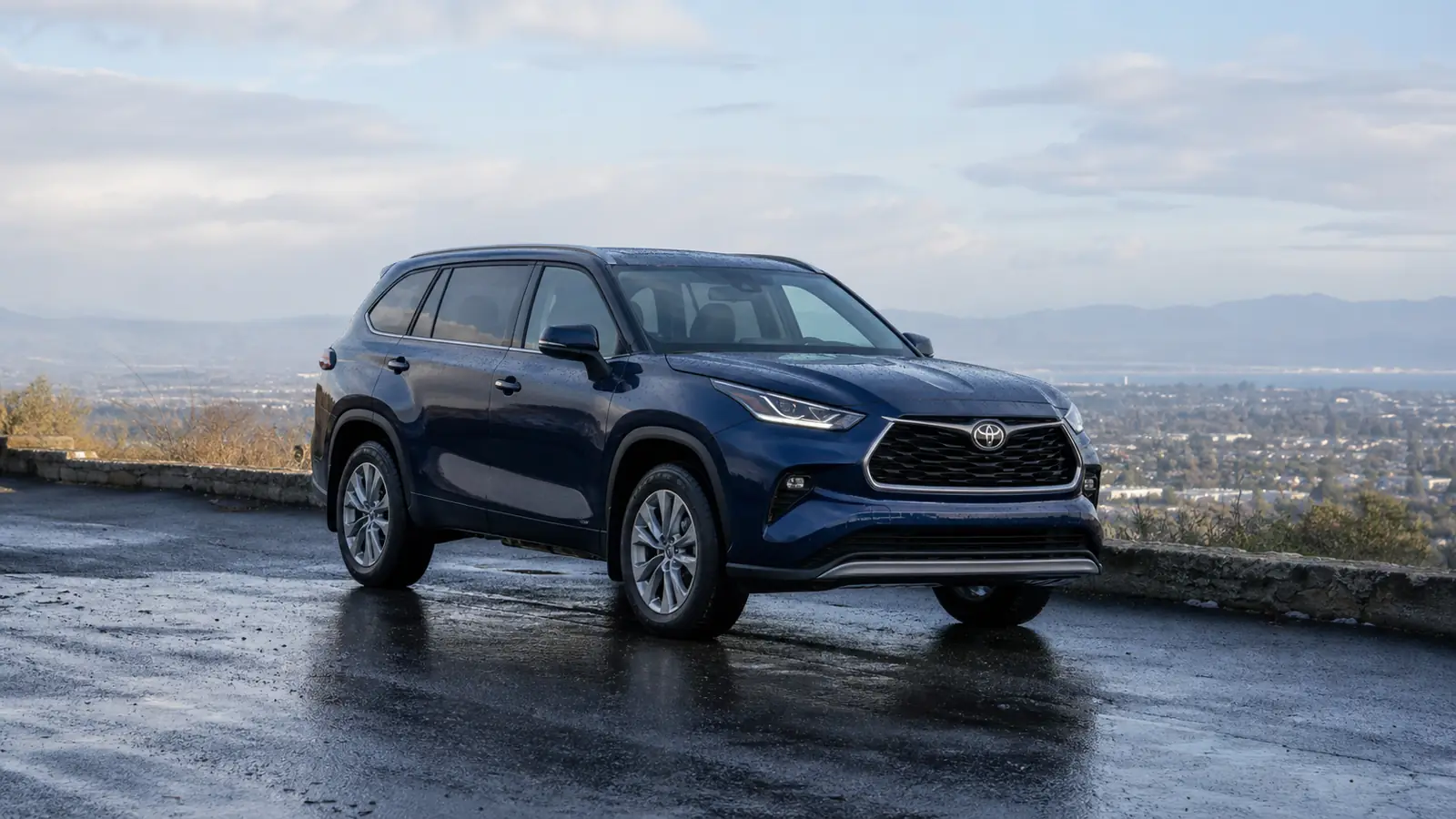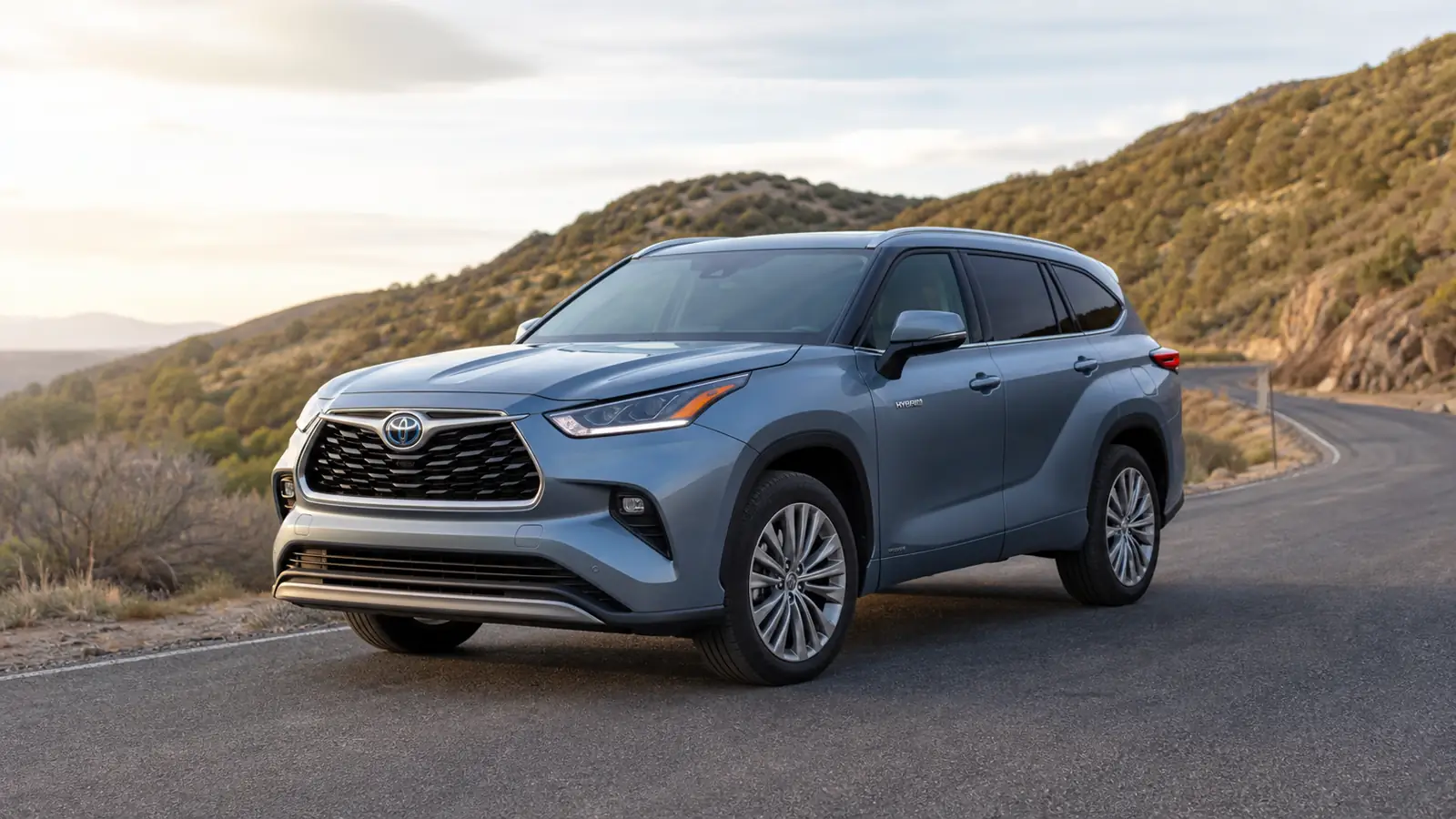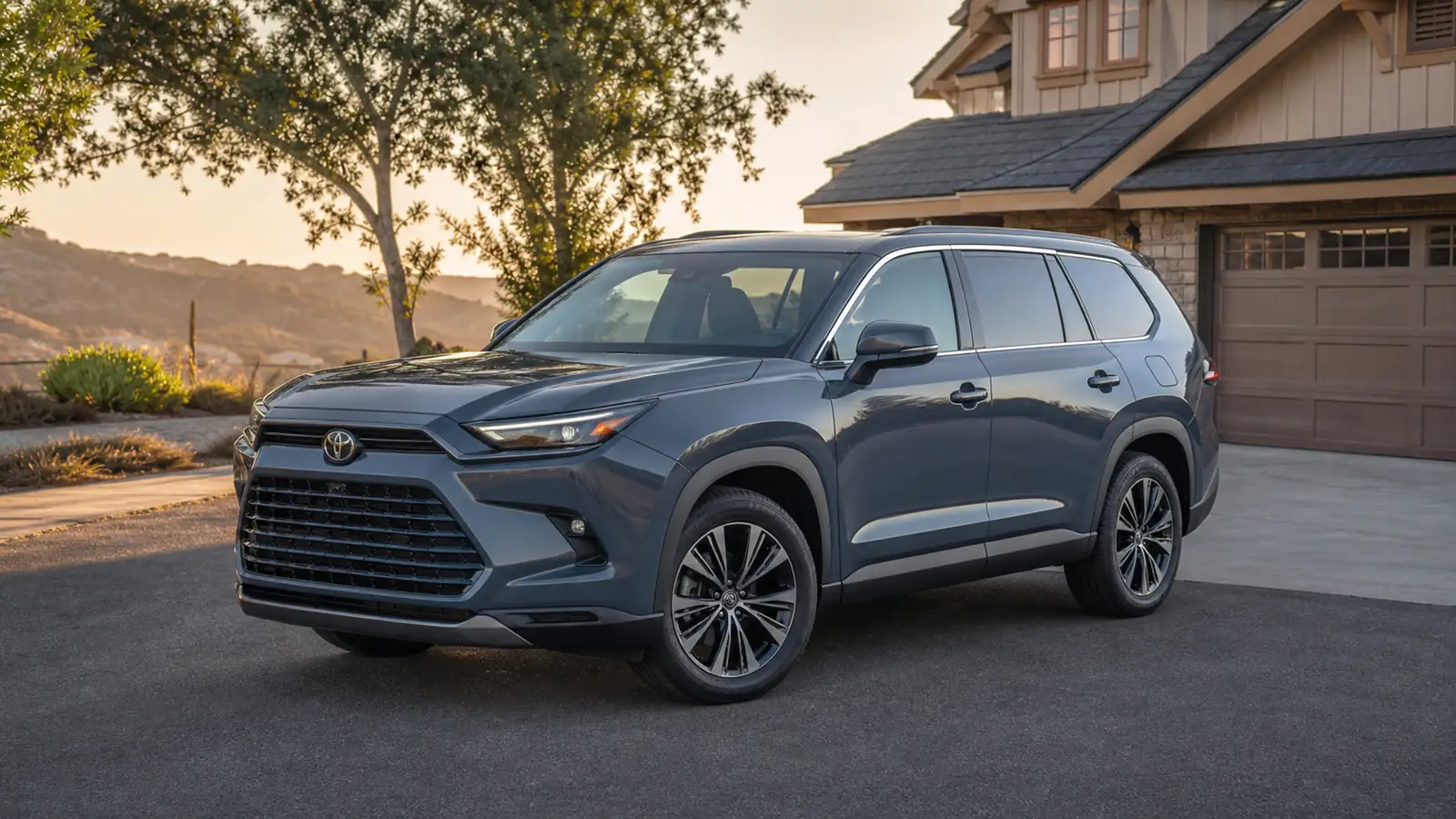
The extra length solves the regular Highlander's space problem
The 2026 Toyota Grand Highlander is designed for families that use all three rows and still carry luggage. Toyota lists 33.5 inches of third-row legroom and up to 97.5 cubic feet of maximum cargo space.
It says seven carry-on suitcases can fit behind the third row, a much more useful family measure than maximum volume with seats folded.
The larger body only earns its price when the household needs it. Set front seats for the regular drivers, move the second row to a comfortable position, then ask the tallest third-row passenger to enter, sit, and exit from both sides.
Install child restraints because a fixed seat can block the aisle.
Load every travel bag while all seats stay raised. Check rear visibility, liftgate clearance, tie-down access, cargo-cover storage, and whether a stroller must stand in the passenger area.
The regular Highlander is easier to park and may be enough for five people.
A Toyota Sienna still provides easier sliding-door access and a lower floor. Grand Highlander is worth the extra footprint when real passengers and bags use the third row together several times a month.
Choose gas, Hybrid, or Hybrid MAX before choosing a trim
Toyota offers three distinct answers. The 2.4L turbo gas model makes 265 hp and carries the lowest starting price.
The regular hybrid makes 245 hp and reaches up to 36 mpg combined. Hybrid MAX makes 362 hp and trades some efficiency for stronger passing and towing performance.
| Powertrain | Output | Best reason |
|---|---|---|
| 2.4L turbo gas | 265 hp | Lower purchase price and 5,000-lb tow ceiling |
| 2.5L hybrid | 245 hp | Up to 36 mpg for family mileage |
| Hybrid MAX | 362 hp | Strong acceleration and 5,000-lb towing |
Drive each candidate with passengers. The regular hybrid is adequate for normal travel, but its engine can become audible on long grades.
Gas feels familiar and may cost less up front. Hybrid MAX provides confident passing but adds purchase price, tire, insurance, and fuel exposure.
Calculate the regular hybrid premium using annual miles and local fuel.
Match trims and drivetrain before comparing. A low-mile highway driver may not recover the same premium as a high-mile urban family.
Hybrid MAX should be selected for performance or towing, not as a fuel-saving shortcut.
The hybrid vehicle hub contains smaller alternatives. Compare a Highlander Hybrid when the extra space is occasional.
The regular hybrid is the broad family choice, gas controls entry price, and Hybrid MAX needs a repeated power or towing reason.
The family fit test needs people and luggage at the same time
Grand Highlander seats up to eight with a second-row bench or seven with captain's chairs. A bench adds capacity and can suit three children, while captain's chairs open an aisle and reduce conflict.
Neither layout is automatically better when child restraints and adult access are involved.
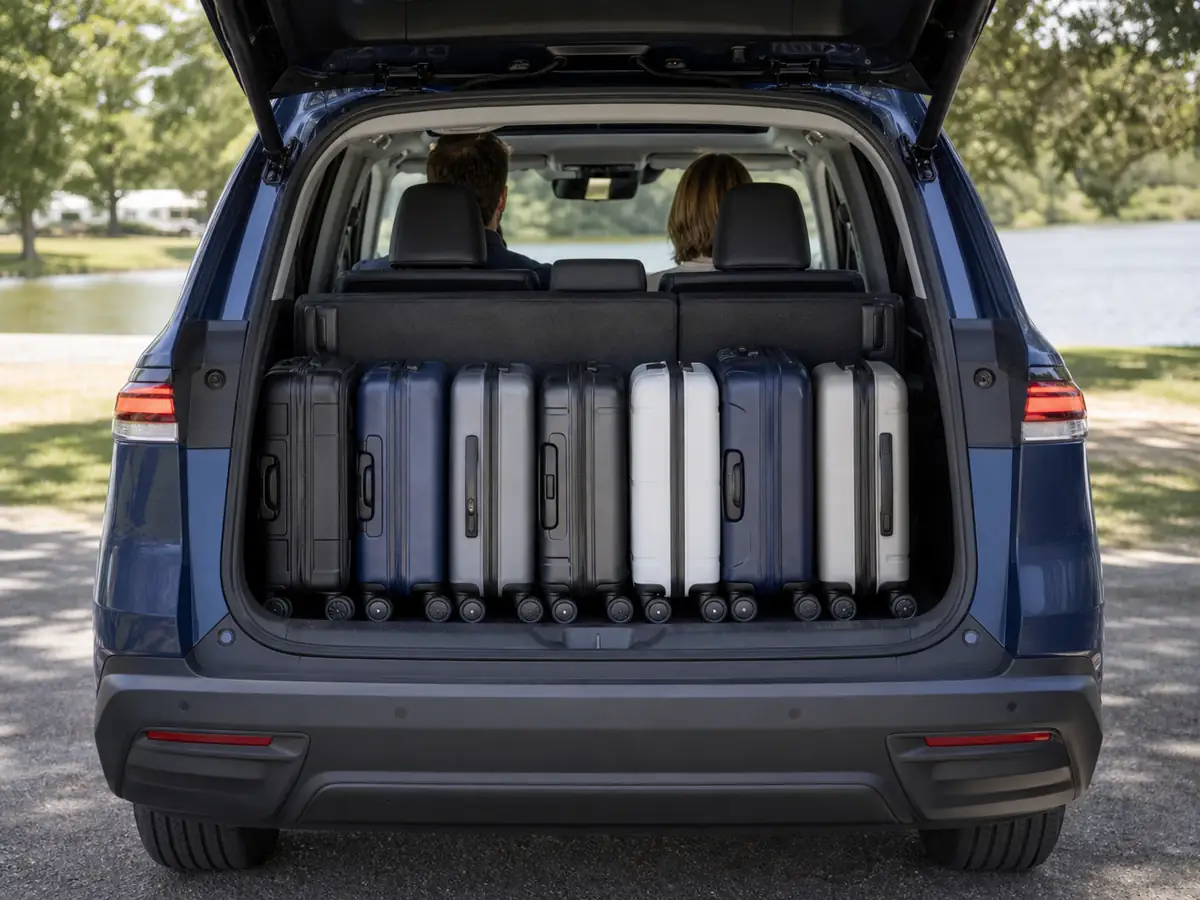
Install every restraint according to Toyota and seat-maker instructions. Check rear-facing clearance, buckle reach, top-tether points, head-restraint rules, and whether another passenger can enter the third row.
Place the tallest adult in back for a 20-minute drive over rough pavement.
Load suitcases, stroller, cooler, mobility equipment, sports bags, pet crate, or work cases.
Keep heavy items low and secured, and do not block rear visibility. Verify liftgate clearance inside the garage and check whether the cargo floor hides tools without trapping frequently used items.
- Use the actual child seats
- Keep all occupied seats in normal positions
- Load the largest weekly equipment
- Rehearse third-row exit from both sides
- Park in the home garage before buying
The seven-seat hub includes different packaging. Grand Highlander proves its value only when the busiest passenger-and-bag combination fits without moving people into unsafe or uncomfortable positions.
Trim and seating choices can cost more than the space itself
The 2026 gas LE FWD starts at $41,360 before destination, and the Hybrid LE starts at $44,710.
Hybrid MAX begins much higher, with Limited starting at $55,190. Upper trims add displays, audio, upholstery, cameras, larger wheels, and comfort features without changing the body's core room.
Shopping order
- Powertrain
- Gas, Hybrid, or Hybrid MAX
- Drivetrain
- FWD or AWD where available
- Second row
- Bench or captain's chairs
- Trim
- Only features used weekly
- Wheels
- Ride and replacement price checked
Start with LE or the lowest trim that offers the required seating.
Add AWD for a repeated traction need. Add a surround-view camera when the garage and school pickup route make the large body difficult to place.
Avoid paying for appearance packages before checking tire replacement cost and ride quality.
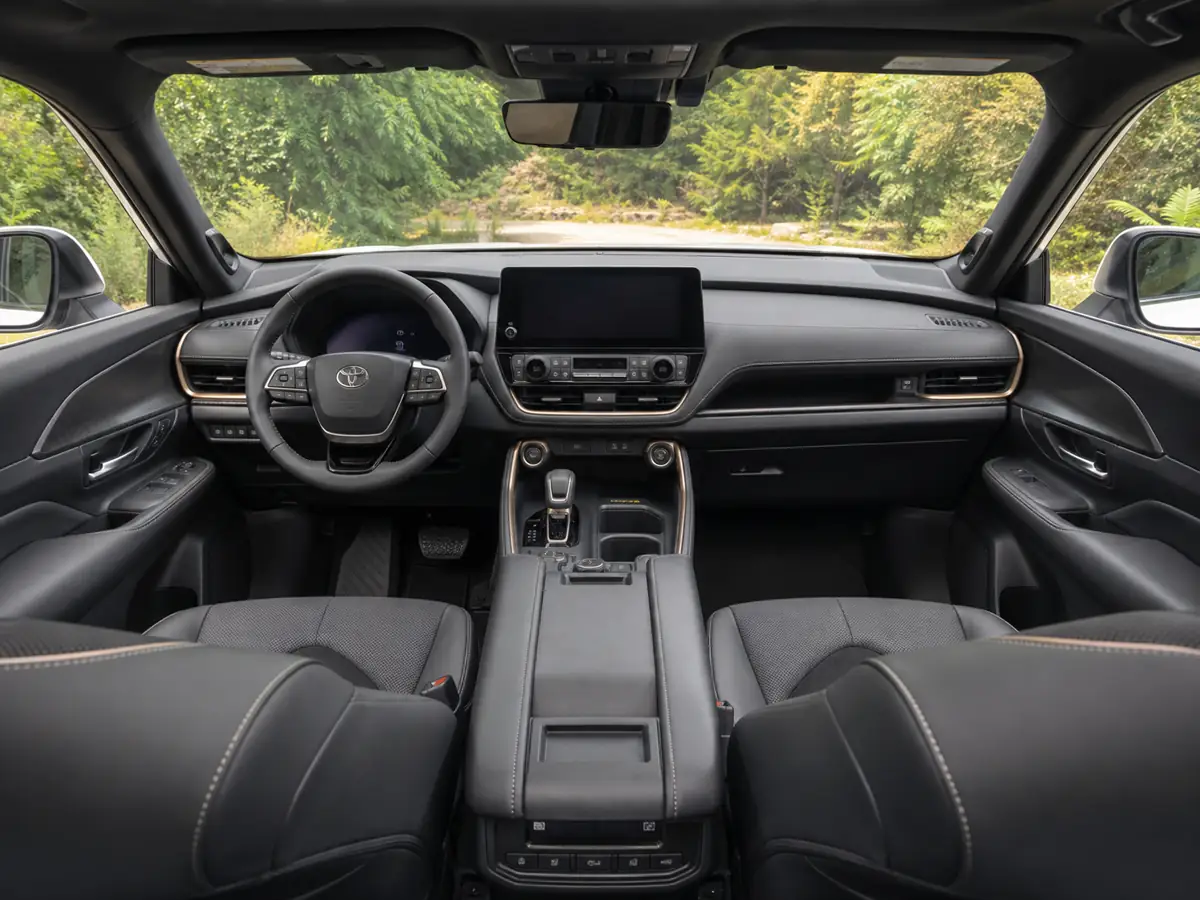
Get insurance quotes for the exact VINs. Hybrid MAX output and upper trim values can raise premiums.
Compare the total financed amount after tax and destination, not just the difference in advertised MSRP.
The lease versus buy guide helps expose due-at-signing and mileage limits.
The Toyota brand hub provides lineup context. Choose powertrain, drivetrain, and seating first, then buy the lowest trim that contains the family features used every week.
Towing separates the regular hybrid from gas and Hybrid MAX
Toyota rates the regular hybrid to tow up to 3,500 pounds when properly equipped.
Gas and Hybrid MAX versions can tow up to 5,000 pounds. These ceilings apply only when the exact vehicle, hitch, wiring, cooling, tires, payload, trailer brakes, and load meet Toyota's requirements.
| Powertrain | Maximum | Best fit |
|---|---|---|
| Regular hybrid | 3,500 lb | Small utility, boat, or compact camper |
| Gas turbo | 5,000 lb | Moderate trailer with lower entry price |
| Hybrid MAX | 5,000 lb | Moderate trailer with stronger acceleration |
| Any version | Door-label payload | Passengers, cargo, and tongue weight count |
Tongue weight presses on the vehicle and consumes payload. Add the driver, every passenger, luggage, accessories, and hitch equipment before deciding the trailer fits.
Use a scale and keep every axle, tire, gross vehicle, and combined limit in view.
Test the exact setup on a grade and monitor temperatures. Trailer shape can matter as much as weight because a tall camper pushes more air.
AWD helps launch traction but does not change the braking physics of an overloaded combination.
A Honda Pilot offers a different V6 towing experience, while a full-size SUV costs more to fuel and park. Choose regular Hybrid for light towing and efficiency, then move to gas or Hybrid MAX only when the loaded trailer requires the 5,000-pound ceiling.
The bigger body needs a parking and road test
Grand Highlander's space comes with more length and visual mass than Highlander. The driver should test the home garage, driveway turn, school lane, workplace ramp, grocery space, and narrow street.
A vehicle that fits the family but cannot clear the garage is the wrong family vehicle.
Use every camera and parking sensor without depending on them completely. Check mirror coverage, front-corner judgment, rear glass view, turning path, and liftgate clearance.
Drive the exact wheel package over patched pavement because upper trims can feel firmer and replacement tires cost more.
On the road, compare gas, Hybrid, and Hybrid MAX response during merging, passing, and long grades.
Check brake blending on hybrids and straight tracking in crosswinds. The regular hybrid's calm efficiency can be more useful than Hybrid MAX speed on a crowded commute.
Compare with the smaller Highlander Hybrid and lower-floor Toyota Sienna on the same route. The larger cabin is worth buying only when the driver can place the vehicle confidently in every normal parking and road situation.
Current IIHS results should be read test by test
IIHS rates the 2026 Grand Highlander Acceptable in the small-overlap front test, Good in the updated moderate-overlap front and updated side tests, and Acceptable for headlights. Vehicle-to-vehicle and pedestrian front crash prevention are Good, seat-belt reminders are Good, and LATCH ease is Good.
| Area | Result | Buyer action |
|---|---|---|
| Small-overlap front | Acceptable | Compare structure and injury measures |
| Updated moderate front | Good | Review rear-passenger details |
| Updated side | Good | Verify side-airbag and body history |
| Headlights | Acceptable | Drive at night |
| Crash prevention | Good | Stay responsible for braking |
| LATCH ease | Good | Install actual restraints |
A broad safety label would hide the Acceptable small-overlap and headlight results.
Compare named procedures with the regular Highlander and minivans. Seat position, restraint fit, visibility, tires, and attentive driving still affect real outcomes.
On a used vehicle, inspect belts, airbags, seat tracks, body seams, glass, paint edges, and collision invoices.
Windshield replacement may require camera calibration. Test warnings and cameras and verify the normal startup lamp sequence.
The research standards explain why official results are reported precisely. Grand Highlander has several Good current results, but its Acceptable small-overlap and headlight ratings belong in the same family comparison.
The 2026 rear axle recall requires a VIN check
Toyota announced a July 8, 2026 recall covering about 5,400 certain model-year 2026 Grand Highlander and Lexus TX vehicles.
The rear axle carrier may break, which can affect stability and increase crash risk. Toyota said dealers will inspect identification codes and replace affected parts at no charge, with owner notification expected in early September 2026.
Certain 2024 Grand Highlanders also fall under NHTSA recall 24V461 concerning curtain shield airbags that might not deploy as intended with a front window rolled down.
The remedy replaces affected airbags. This is relevant to an early used vehicle, not a reason to claim every 2026 has the same defect.
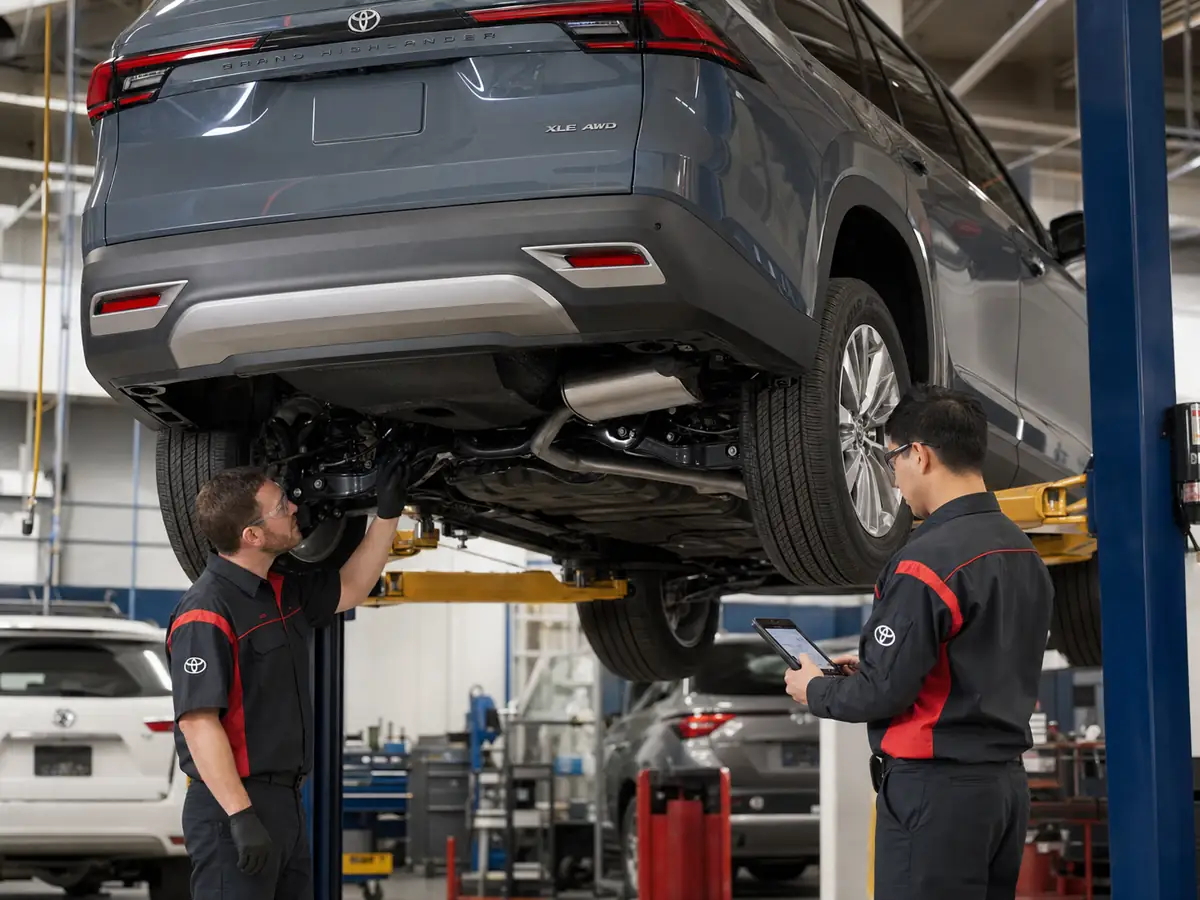
Inspect the underbody for impact, incorrect lifting, corrosion, leaks, and previous work. A completed campaign addresses the named defect but does not certify every suspension or collision repair.
The planned Grand Highlander recall guide can track campaign detail.
Do not take delivery of an affected vehicle until the official record and required free remedy are clear.
A short model history makes inspection more important
Grand Highlander began for 2024, so there is not yet a decade of long-term fleet evidence. Toyota's wider hybrid experience is useful context, but it cannot prove the durability of every new body, turbo system, module, seal, or supplier part.
Buy the exact condition and keep a repair reserve.
Start a used vehicle cold. Check oil and coolant, warning history, gas transmission or hybrid transitions, AWD operation, brake blending, cameras, screens, liftgate, climate zones, seat hardware, windows, locks, and every key.
Scan before and after the road test.
- Run both Toyota and NHTSA VIN checks
- Obtain campaign repair orders
- Check tires for matching size and inner wear
- Inspect glass and calibration records
- Test every occupied row's climate and restraints
- Examine the underside and rear axle area
A weak 12-volt battery can create misleading electronic symptoms.
Test it rather than replacing parts by guess. On hybrids, keep the battery cooling intake clear and verify the warranty start date and terms.
On gas and Hybrid MAX models, inspect turbo operation and service records.
The planned Grand Highlander reliability guide can separate years and powertrains. A short history is not proof of unreliability, but it demands stronger VIN, service, diagnostic, and physical evidence from the individual vehicle.
Five-year cost depends first on powertrain and trim
Build the budget with transaction price, destination, tax, total finance interest, insurance, registration, fuel, tires, brakes, scheduled service, towing equipment, repairs, and resale. Grand Highlander's wide powertrain and trim range makes a generic ownership number misleading.
| Cost | Evidence | Common omission |
|---|---|---|
| Fuel | Annual miles and chosen powertrain | Using regular Hybrid MPG for MAX |
| Insurance | Exact VIN quote | Ignoring output and trim value |
| Tires | Exact size and rating | Forgetting AWD matching needs |
| Finance | Total of payments | Looking only at monthly amount |
| Repairs | Inspection and cash reserve | Assuming new model means no risk |
| Resale | Conservative estimate | Counting Toyota badge as a guarantee |
The regular hybrid can recover its premium for high-mile mixed driving.
Gas may remain cheaper for low-mile ownership. Hybrid MAX costs more to buy and insure, and its performance can increase tire use.
Calculate each version separately with matched features.
A Honda Pilot can cost less with conventional V6 power, while Sienna may use less fuel and provide easier passenger access. Compare the same ownership term and family load.
The premium price hub shows alternatives. The strongest cost case is usually a modest-trim regular hybrid driven enough to use its efficiency, not the most powerful or highly equipped version.
Buy the extra space only after choosing the right powertrain
Begin with the regular Hybrid LE or the lowest hybrid trim that contains the required seating.
It combines the large cabin with up to 36 mpg and avoids Hybrid MAX's price.
Choose gas when the lower transaction cost wins over the family's actual mileage. Choose Hybrid MAX for repeated 5,000-pound towing or passing power that the other systems cannot provide comfortably.
Load every passenger and bag, park in the home garage, drive at night, test a highway grade, and price insurance and tires. Compare that result with Highlander Hybrid, Toyota Sienna, and Honda Pilot.
For a used vehicle, require VIN campaign records, clean diagnostics, cold operation, correct tires, intact restraint systems, and an independent body and underbody inspection. The rear axle and applicable airbag campaigns must be handled by exact VIN.
Grand Highlander succeeds because it makes all three rows useful together. Buy it when the extra room solves a repeated family load, then select the least costly powertrain that can safely handle the route and trailer.