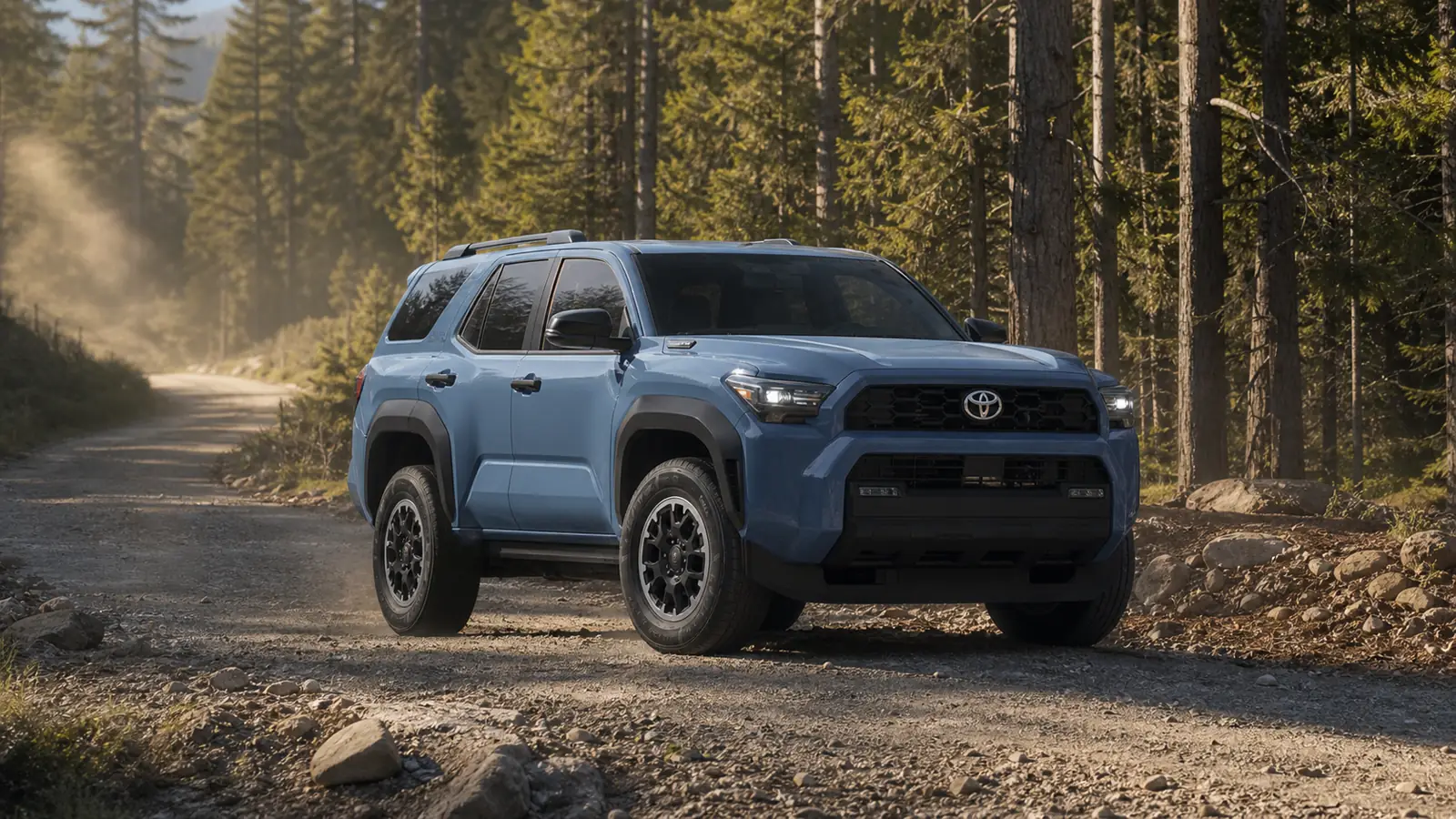
SR5 4WD and TRD Off-Road are the useful baselines
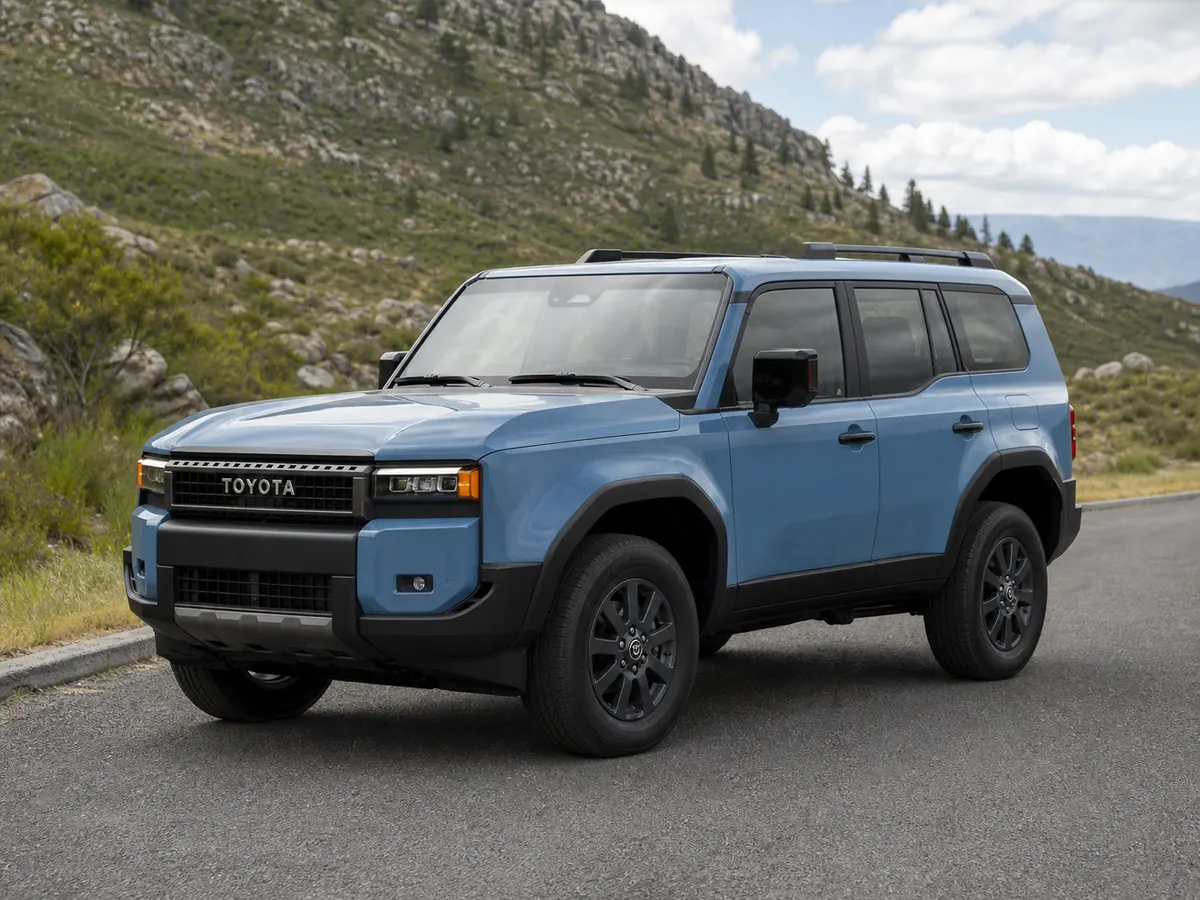
The 2026 Toyota 4Runner starts at $41,570 before destination and spreads nine trims across rear-drive, part-time 4WD, full-time 4WD, gas, and hybrid configurations. Start with SR5 4WD for broad use or TRD Off-Road for regular trail work.
SR5 keeps the power rear window, useful cargo body, 278 hp turbo engine, and available low-range 4WD without paying for specialized shocks or luxury equipment. TRD Off-Road adds a locking rear differential, underbody protection, Bilstein dampers, Multi-Terrain Select, and Crawl Control.
TRD Sport uses 20-inch wheels and road-focused tuning. It looks quicker, but its lower-sidewall tires are poorly matched to buyers who regularly air down or strike sharp rocks.
Limited and Platinum move in the opposite direction with road comfort, leather, and available full-time 4WD. They fit drivers who want the 4Runner body and towing ability without spending weekends on narrow trails.
TRD Pro and Trailhunter should be separated by use. TRD Pro prioritizes high-speed rough-terrain control with adjustable FOX dampers.
Trailhunter is shaped around slower loaded travel with Old Man Emu dampers, a high air intake, roof rack, onboard compressor, and recovery-focused equipment.
Each system has replacement and service costs. A buyer who cannot name the terrain, load, and speed that require those parts should keep the money in tires, recovery training, and travel.
Limited and Platinum add comfort and available full-time 4WD. TRD Pro and Trailhunter include expensive shocks, 33-inch tires, hybrid torque, and specialty hardware for demanding terrain.
- SR5 4WD is the all-purpose value choice
- TRD Off-Road is the trail-value choice
- Limited suits road buyers who want full-time 4WD and comfort
- Trailhunter suits loaded overland travel
- TRD Pro suits faster rough-terrain use
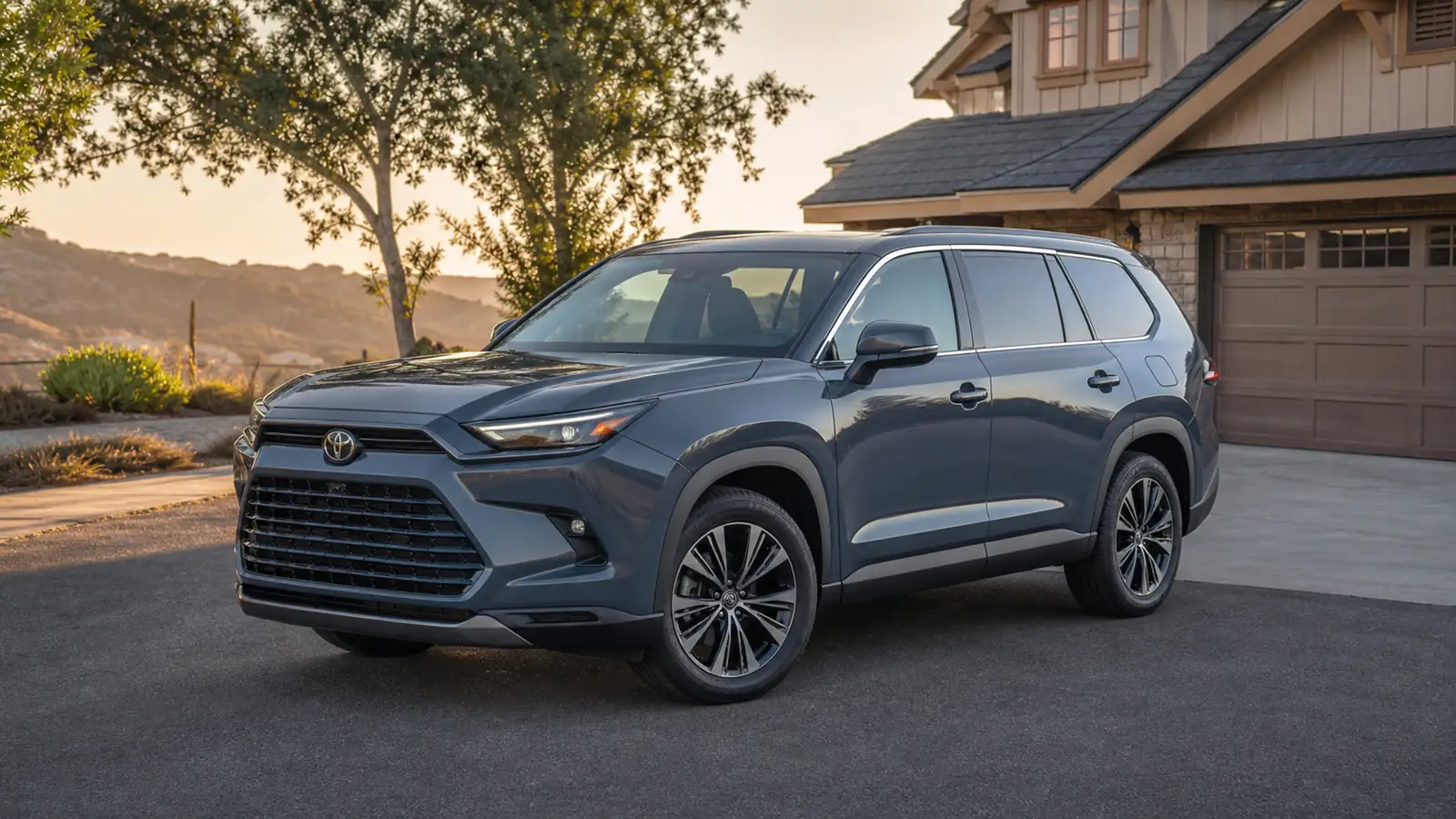
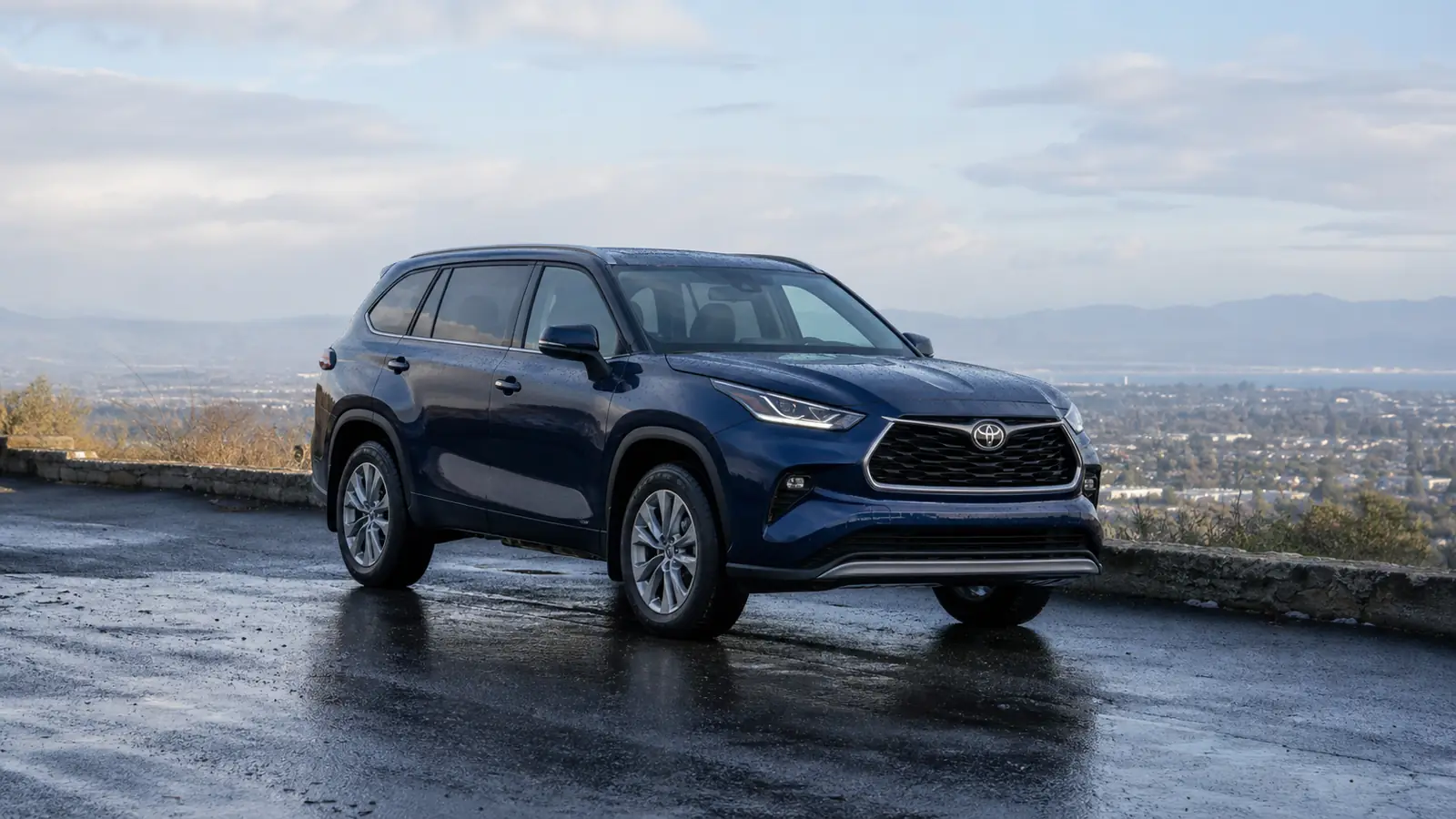
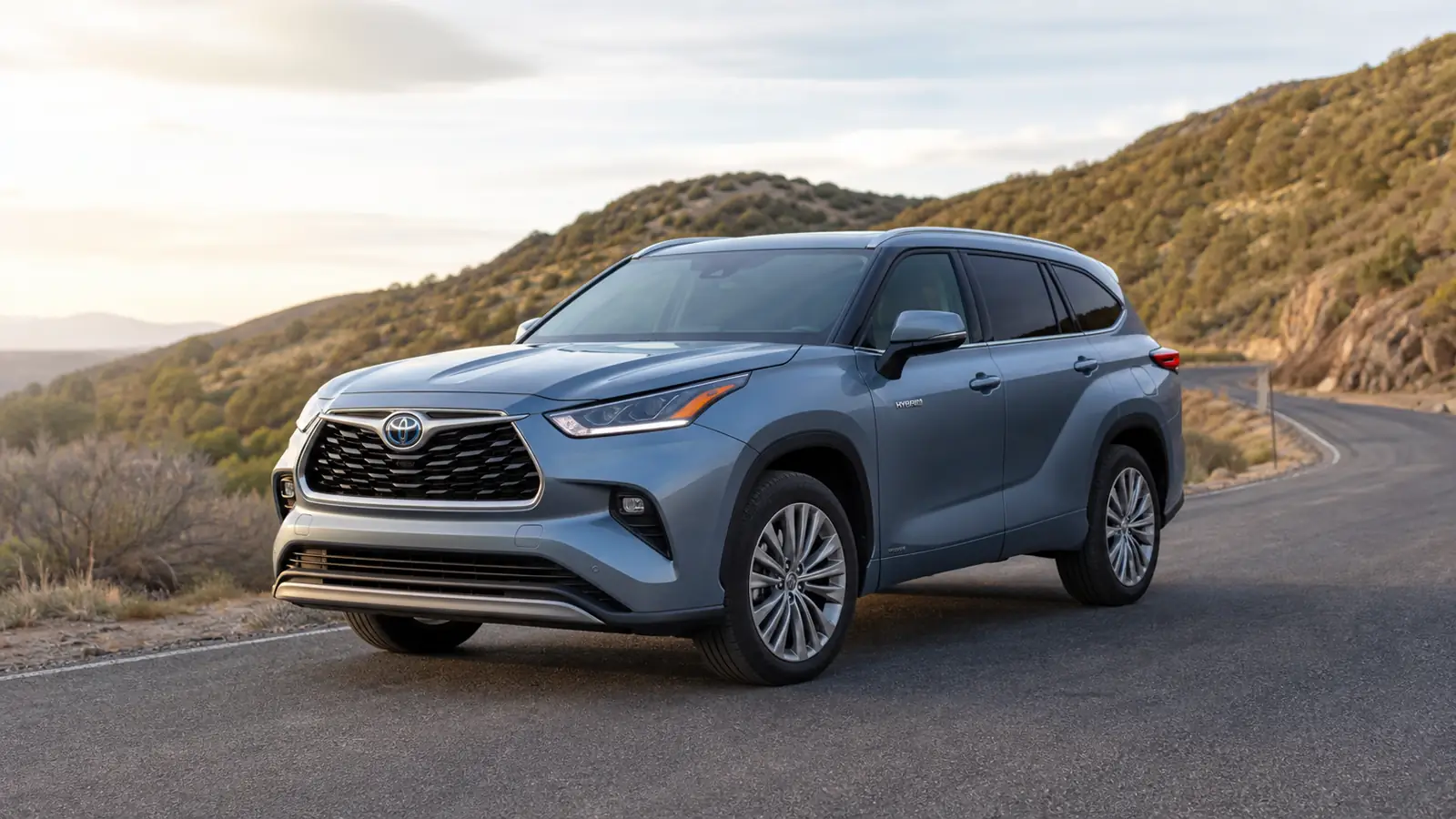
The 4Runner belongs beside other truck-based SUVs and capability-focused vehicles such as the Jeep Wrangler, not ordinary crossovers. Compare the Toyota Highlander when quiet ride, three rows, and fuel economy matter more than low range or frame strength.
A high trim does not make the 4Runner universally better. It can make the ride louder, tires costlier, roof height greater, and purchase price harder to justify.
The least specialized 4Runner that clears the route is usually the best one to own.
Gas and hybrid trade price and packaging for torque
The standard 2.4L turbo i-FORCE engine makes 278 hp and 317 lb-ft and uses an eight-speed automatic. Toyota rates it up to 26 mpg highway in the most efficient configuration.
The i-FORCE MAX hybrid adds an electric motor between engine and transmission for 326 hp and 465 lb-ft. It is standard on Platinum, TRD Pro, and Trailhunter and available on selected TRD Off-Road and Limited versions.
| Question | i-FORCE gas | i-FORCE MAX hybrid |
|---|---|---|
| Output | 278 hp / 317 lb-ft | 326 hp / 465 lb-ft |
| Best highway rating | Up to 26 mpg | Up to 24 mpg |
| Drivetrain range | RWD or 4WD by trim | 4WD standard |
| Main advantage | Lower price and simpler packaging | Strong low-rpm torque and power supply |
| Main compromise | Less torque | Higher price, weight, and packaging loss |
The hybrid label does not mean Prius-like economy. The system is tuned for torque, response, and accessory power in a heavy body-on-frame SUV.
Its 2,400-watt AC outlets can support tools or camp equipment on equipped models.
Hybrid torque is most valuable at low speed with a load, where the electric motor fills response before the turbo reaches full output.
That can help on grades, loose surfaces, and trailer launches.
It also adds mass. Compare brake feel, front-end response, and suspension recovery over repeated bumps.
The strongest engine is not automatically the easiest configuration to place on a narrow trail. Price the hybrid premium against the gas TRD Off-Road rather than an unrelated base trim, and include the standard equipment bundled with each version.
Cargo floor height and storage differ because the hybrid battery occupies space.
Open both versions, fold the seats, and load the largest item. A torque gain is not free if the packaging no longer fits the job.
Fuel savings are also configuration-sensitive. A hybrid Trailhunter on 33-inch tires may use more fuel than a simpler gas 4Runner on road tires.
Compare EPA labels for exact trims rather than engine families.
Drive both on a hill and at low speed.
The hybrid should feel stronger without rough transitions. The gas model should build boost predictably and shift cleanly.
Warning lights, coolant smell, surging, or uneven power delivery need diagnosis.
The hybrid vehicle hub and gas vehicle group include systems designed mainly for efficiency.
This one is designed mainly for capability.
Buy i-FORCE MAX for its 465 lb-ft and standard 4WD, not because the word hybrid promises the lowest fuel bill.
Drivetrain hardware matters more than trim names
A rear-drive SR5 can suit dry-road towing and buyers who never leave pavement. Most 4Runner shoppers should start with part-time 4WD because low range, A-TRAC, and a two-speed transfer case define the vehicle's capability.
Part-time 4WD should not be locked on dry pavement. Full-time 4WD on selected Limited and Platinum versions can manage mixed surfaces without the same driver intervention.
Know which system is under the shifter before buying.
4Runner traction ladder
- RWD
- Lowest complexity for dry paved use
- Part-time 4WD
- Low range for loose, steep, or slippery terrain
- Rear locker
- Standard on TRD Off-Road, TRD Pro, and Trailhunter
- Full-time 4WD
- Road-friendly automatic traction on selected luxury trims
- Stabilizer disconnect
- More suspension articulation on demanding trims
A locking rear differential helps when one rear wheel loses traction, but it requires correct use. Crawl Control manages very low speed, while Multi-Terrain Select changes system response for loose surfaces.
Neither replaces tire grip, recovery planning, or safe line choice.
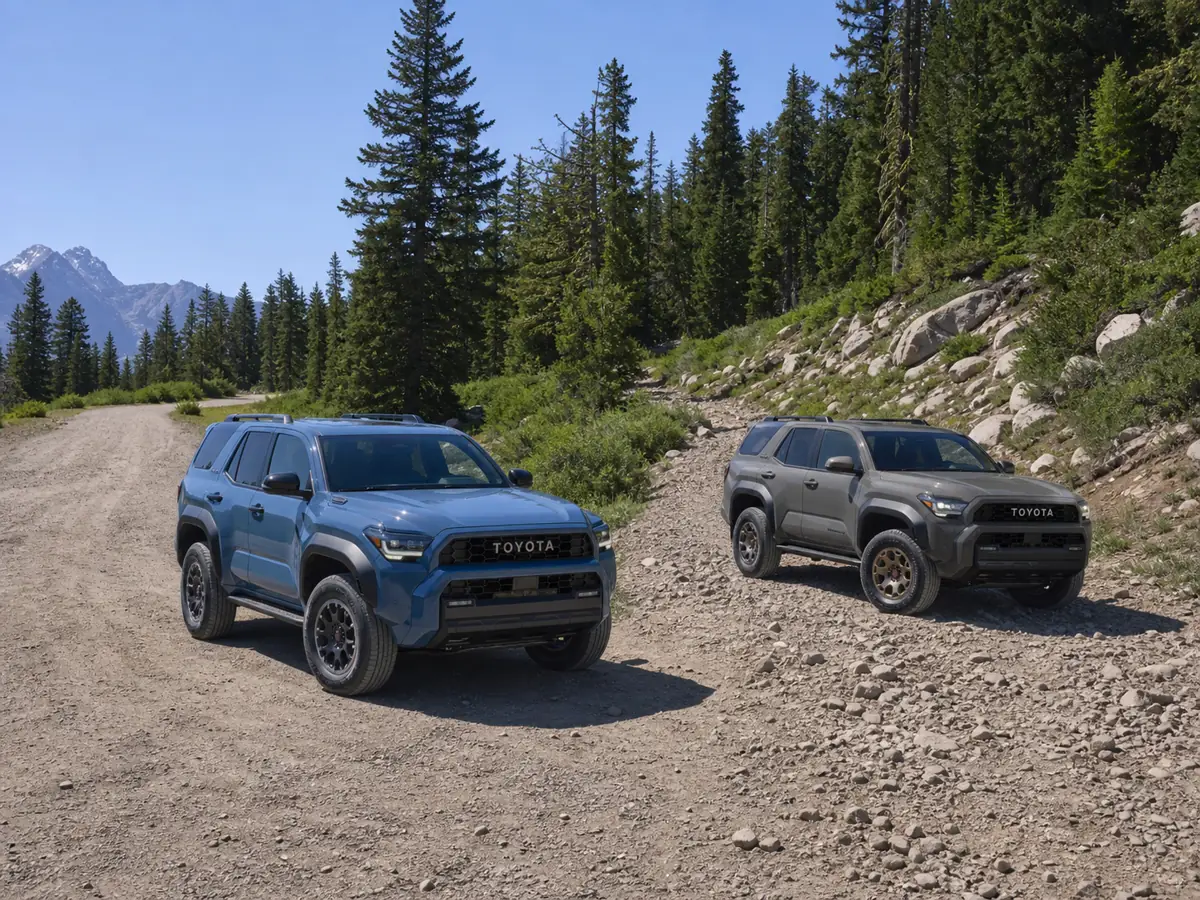
The planned 4Runner towing guide should separate ratings, payload, tongue weight, and equipment.
Long-term maintenance also changes with specialty trim hardware. Remote-reservoir dampers, an onboard compressor, aggressive tires, skid plates, roof equipment, and recovery points should be inspected and serviced as working equipment rather than decoration.
Ask what parts are rebuildable, what replacement lead time looks like, and whether a local shop understands the system.
Clean mud from cooler surfaces and suspension areas without forcing water into electrical connectors or breathers.
After deep water, inspect fluids for contamination according to Toyota guidance. Re-torque accessories at the maker interval and look for fretting around mounts.
A simple SR5 has fewer specialty items but still needs differential, transfer-case, driveshaft, brake, cooling, and transmission service matched to towing or off-road use.
Keep a trip log for heavy loads, water crossings, and severe dust. That record helps set a maintenance schedule based on actual use rather than the optimistic normal-service column.
A trailer changes the value of hybrid torque and full-time 4WD, but it also magnifies heat, braking, and stability demands.
Test the integrated trailer systems with the actual connector, confirm brake-controller operation, and weigh the combination.
Keep water, fuel, recovery equipment, and roof cargo in the payload calculation. A 6,000-pound headline can be unusable after a heavily accessorized vehicle and full passenger load consume the available capacity.
Towing and off-road options consume payload, so read the door label on the exact SUV.
- Use 2HI on dry pavement with a part-time system
- Shift to 4HI for loose or slippery surfaces as the manual permits
- Use 4LO only under the low-speed conditions described by Toyota
- Engage lockers before wheelspin becomes violent
- Air tires only within safe load and terrain limits
Choose drivetrain hardware from the worst surface you face regularly, then avoid paying for systems that will never leave their dashboard icons.
Cargo utility includes one feature no crossover copies
The power rear window is the 4Runner's signature utility feature. It lets long items extend through the hatch, improves airflow when conditions are safe, and gives quick access without raising the whole liftgate.
The rest of the cargo decision is less simple. Hybrid packaging raises the floor and can reduce underfloor flexibility.
Large off-road tires, roof racks, recovery gear, coolers, and drawers also consume useful load and payload.
Bring the dog crate, stroller, camping bins, or work cases. Measure hatch width, cargo-floor height, roof access, and the step created when seats fold.
A large maximum volume does not prove that a heavy item can be lifted over the bumper safely.
The current 4Runner is available mainly as a five-seat SUV across the lineup. Buyers who need three-row family packaging should verify the exact configuration rather than relying on old-generation knowledge or dealer listings.
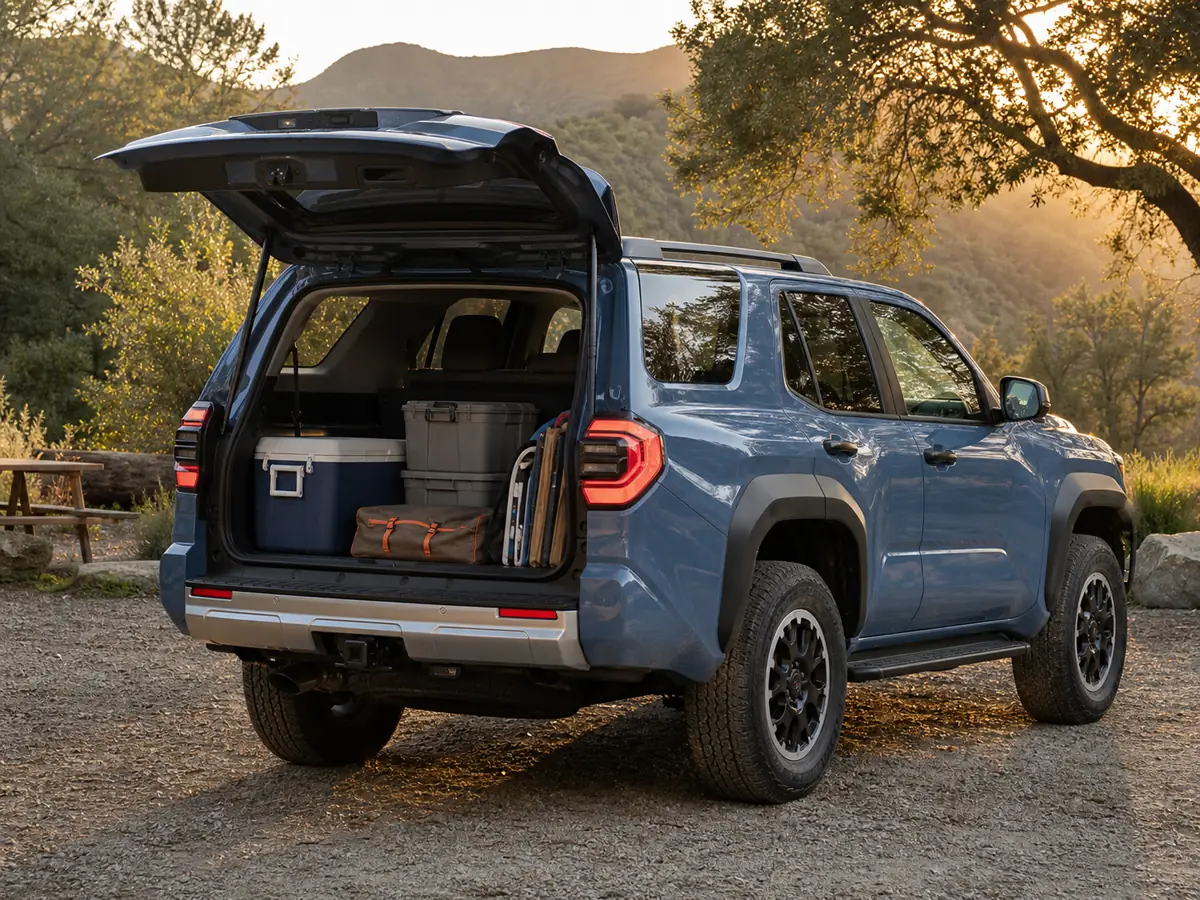
Roof loads require the manual's dynamic limit, rack limit, and center-of-gravity guidance.
An overland roof tent changes handling and rollover risk. A dealer-installed rack is not permission to load any amount.
- Measure the hybrid and gas floors side by side
- Add passengers before calculating payload for cargo or trailer tongue weight
- Confirm the rear window seals and operates smoothly
- Check lift height for heavy coolers and tool cases
- Secure every item that could become a projectile off road
The 4Runner's cargo area works best when the equipment list is planned before accessories consume space and payload.
Road manners still reveal the truck underneath
The sixth generation is more composed than the old 4Runner, but the ladder frame, tall body, off-road tires, and long-travel suspension still create slower responses than a crossover. That is a capability trade, not a defect.
SR5 and Limited are the road-oriented reference points within the mainstream market.
TRD Sport's 20-inch wheels can sharpen appearance while reducing tire sidewall. TRD Pro and Trailhunter add tire hum, height, and suspension behavior intended for rough surfaces.
Measure the tires on the tested vehicle and confirm their load index, speed rating, and spare match Toyota's requirements.
Dealer-installed wheels or suspension parts can change alignment, camera calibration, clearance, and warranty discussions.
Ask for the original parts and installation invoice. At highway speed, listen for tire roar, roof-rack whistle, driveline vibration, and a steering pull that could become tiring during a long trip.
Run the same route in the least specialized trim you would accept. The comparison often shows whether expensive trail hardware improves a recurring job or merely makes daily driving louder and heavier.
Drive this loop before choosing:
- Stop-and-go traffic to judge turbo and transmission response
- A 40-to-70 mph pass with passengers
- Broken pavement to compare sidewall and shock tuning
- A sweeping highway curve to judge steering correction
- A steep driveway to test visibility and clearance
- A tight garage to measure height and turning room
Electric power steering supports modern safety systems, but it does not turn the 4Runner into a sedan. Crosswinds and rutted pavement can require more correction than a Highlander or Honda Pilot.
Braking distance and emergency response change with 33-inch all-terrain tires.
Tire pressure also changes behavior. Use the door label for road use and adjust only within the tire maker and Toyota guidance for a trail.
Airing down can improve compliance and traction on loose surfaces, but it increases heat and sidewall risk at speed.
Carry an accurate gauge and a compressor sized for the tire volume. After a trail, inspect tread blocks, sidewalls, bead areas, and wheel barrels before returning to highway speed.
The roof and rear cargo load affect steering too. Repeat the road test with the normal camping or work weight, not an empty dealer car.
Heavy drawers and roof gear can make the body take longer to settle after a lane change.
If a loaded test feels tiring, a lighter configuration or different vehicle is the safer choice.
Test the exact package in rain when possible and leave more margin. Do not treat a rugged tire as automatically better on every surface.
The available adaptive suspension on Limited and Platinum can improve road comfort, yet it adds cost and complexity. A simpler SR5 on sensible tires may be the stronger long-term fit.
Accept the truck-like movement only when low range, clearance, towing, or rough-road strength repays it on real trips.
Safety improved, but configuration and build date matter
Toyota Safety Sense 3.0 is standard and includes automatic emergency braking, adaptive cruise, lane support, and related driver aids. The 2026 4Runner has Good IIHS results in the small-overlap and updated side tests, while the updated moderate-overlap result is Marginal.
IIHS headlight and prevention results vary by details including build timing. The pedestrian system on 2026 models built after January 2026 receives a Good rating, so the door-jamb production date matters when comparing inventory.
A tall body can create strong outward views over traffic while hiding low objects near the bumper.
Use the cameras, then confirm with direct observation. Trail cameras can help place wheels but do not show every obstacle or person.
Driver aids may behave differently with trailers, roof loads, snow, mud, or a dirty camera.
Test every feature and read the manual. Keep sensors clean and verify calibration after windshield replacement or front-end repair.
Child-seat fit should be tested in the exact trim because seat shape and available cabin layouts vary. Tighten the restraint, check tether routing, and confirm the front passenger retains a safe position.
Use the planned 4Runner recall lookup for active campaigns. The best safety comparison uses the exact build date and equipment, not the assumption that every 2026 4Runner is identical.
Early sixth-generation reliability requires a careful inspection
The current 4Runner began for 2025 and shares its TNGA-F foundation and turbo powertrain family with newer Toyota trucks. That gives parts and engineering context, but it does not create a decades-long reliability record for this exact model.
Start cold and scan every module. Check stable idle, turbo response, coolant level, oil condition, eight-speed shifts, hybrid transitions where fitted, and the operation of every drive mode.
Warning lights cleared just before sale can return after a complete drive cycle.
- 2003 to 2009Fourth generation with older V6 and V8 choices
- 2010 to 2024Long-running fifth generation with 4.0L V6
- 2025Sixth generation introduces turbo and hybrid power
- 2026Second model year adds updated trim details and safety timing changes
Inspect the frame, skid plates, exhaust, suspension mounts, recovery points, and body seams for impacts or corrosion.
A proper check uses a lift and good lighting. Scraped skid plates can be normal, while bent mounts, crushed seams, leaking dampers, or a shifted crossmember signal harder contact.
Check the rear differential breather and seals after water or mud use.
Examine CV boots and steering joints for cuts. On hybrid models, inspect the high-voltage protection areas without touching orange cables or opening components.
Only a qualified technician should test that system. Review accessory wiring from battery to fuse and ground.
Every added light, compressor, winch, refrigerator, or trailer circuit should have correct protection and routing away from heat and abrasion.
Unfused or loosely grounded wiring can turn a useful build into a fire or reliability risk., exhaust, suspension mounts, recovery points, and body seams for impacts or corrosion.
Mud packed into crossmembers, fresh undercoating, and one new tire deserve questions.
Measure all four tires. Large all-terrain sets are expensive, and mismatched diameter can stress 4WD components.
Check alignment by driving on a flat road and reading tread wear across each tire.
Test the rear window, liftgate, cameras, 14-inch screen where fitted, JBL speaker, AC outlets, seats, roof equipment, and driver aids. Accessories can introduce wiring faults or water leaks.
Use planned 4Runner reliability research and 4Runner problems analysis for model-year depth. A Toyota truck specialist should inspect any modified or trail-used example.
A clean new-generation 4Runner has predictable turbo or hybrid response, working 4WD, an undamaged underside, matched tires, and records that explain every accessory.
Tires, fuel, and accessories can outrun resale value
Toyota resale is a useful ownership advantage, but it cannot cancel a high purchase price or expensive modifications. A $41,570 SR5 and a loaded Trailhunter solve different jobs and expose the owner to different costs.
Fuel economy varies by engine, drivetrain, tire, and trim. Use the exact EPA label and conservative annual miles.
A 33-inch tire, roof rack, lift, or heavy camping build can reduce real mileage.
| Cost | Lower-cost pattern | Higher-cost trigger |
|---|---|---|
| Purchase | SR5 4WD or TRD Off-Road | TRD Pro, Trailhunter, Platinum |
| Fuel | Road tires and moderate speed | 33-inch tires, roof load, towing |
| Tires | Common SR5 size | Specialty all-terrain set |
| Suspension | Stock conventional hardware | Adaptive or remote-reservoir systems |
| Insurance | Stock VIN and factory equipment | High trim value and modifications |
| Depreciation | Useful factory configuration | Personal accessories with little resale value |
Price five tires when the spare matches road use. Add alignment and any recalibration needed after suspension work.
A bargain used truck with worn specialty tires can require thousands of dollars immediately.
Payload is the hard limit that accessories quietly consume. Add the weight of bumpers, winch, skid plates, roof rack, tent, drawers, water, fuel cans, recovery gear, passengers, and trailer tongue load.
The number can disappear before the cargo area looks full. Weigh a finished travel setup at a certified scale and compare each axle with its rating.
Keep heavy gear low and between the axles. A roof load raises the center of gravity and increases body movement on side slopes, emergency lane changes, and crosswinds.
Accessories rarely return full cost. A roof rack, lights, drawer system, lift, or bumper may help one owner and deter another.
Verify installation quality, weight, payload effect, and insurance coverage.
The planned 4Runner cost-to-own analysis can extend the estimate. For purchase, compare amount financed, annual fuel, insurance, tires, expected maintenance, and the first likely wear replacement.
The best-value 4Runner keeps factory capability close to the real need and leaves enough budget for fuel, tires, recovery gear, and maintenance.
Where the 4Runner earns its weight and price
The 4Runner offers body-on-frame durability, a locking rear differential on TRD Pro and TRD Off-Road trims, and resale values that recover a larger share of the purchase price than most mid-size SUVs.
Those strengths carry real costs: roughly 18 combined mpg from the 4.0-liter V6, a curb weight above 4,400 pounds that limits payload margin, and a solid-rear-axle ride that transmits more road texture than car-based competitors on daily pavement.
Each capability listed below has a corresponding ownership expense the buyer cannot eliminate through trim selection alone.
Pros
- Real low-range 4WD
- Strong hybrid torque
- 6,000-pound towing
- Power rear window
Cons
- High price
- Truck-like ride
- Complex trim range
- Hybrid does not maximize MPG
Who should buy each kind of 4Runner
Buy SR5 4WD for mixed road use, weather, towing, camping, and occasional trails. Buy TRD Off-Road when the rear locker and low-speed controls are required by repeated terrain.
Choose Limited or Platinum when road comfort and full-time 4WD matter more than maximum trail hardware. Choose Trailhunter for slower loaded overland travel and TRD Pro for demanding terrain where its shocks and tires will be exercised.
Compare the Highlander for family-road use, the Pilot for passenger space, and the Ford F-150 or Ram 1500 when a bed and higher work capacity matter. These alternatives reveal whether the enclosed off-road SUV shape is essential.
Finish with a loaded road test, build-date check, underbody inspection, tire quote, insurance quote, fuel budget, and payload calculation.
The 4Runner is right when its frame, low range, clearance, and towing solve a weekly or monthly job that a crossover cannot.