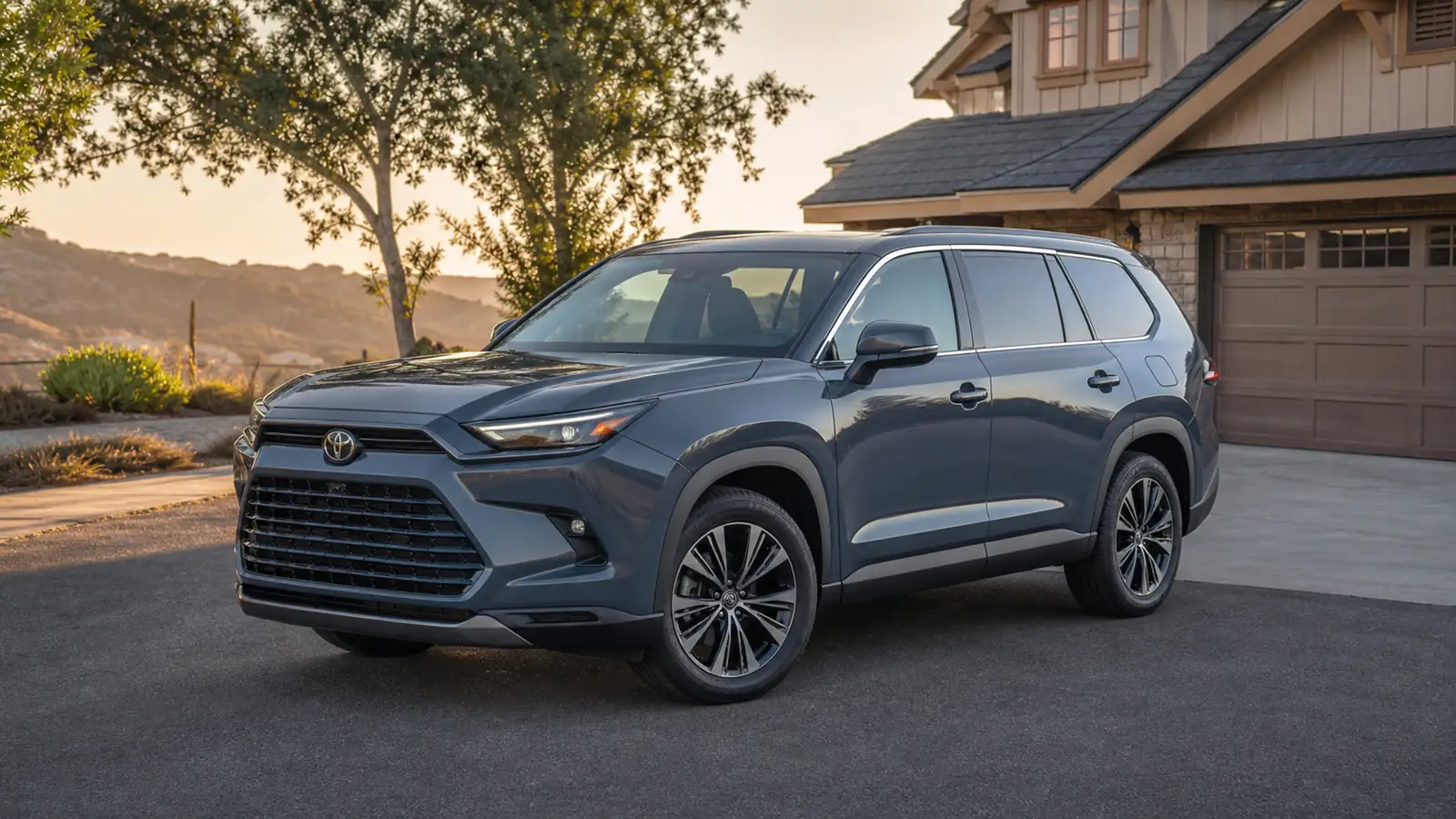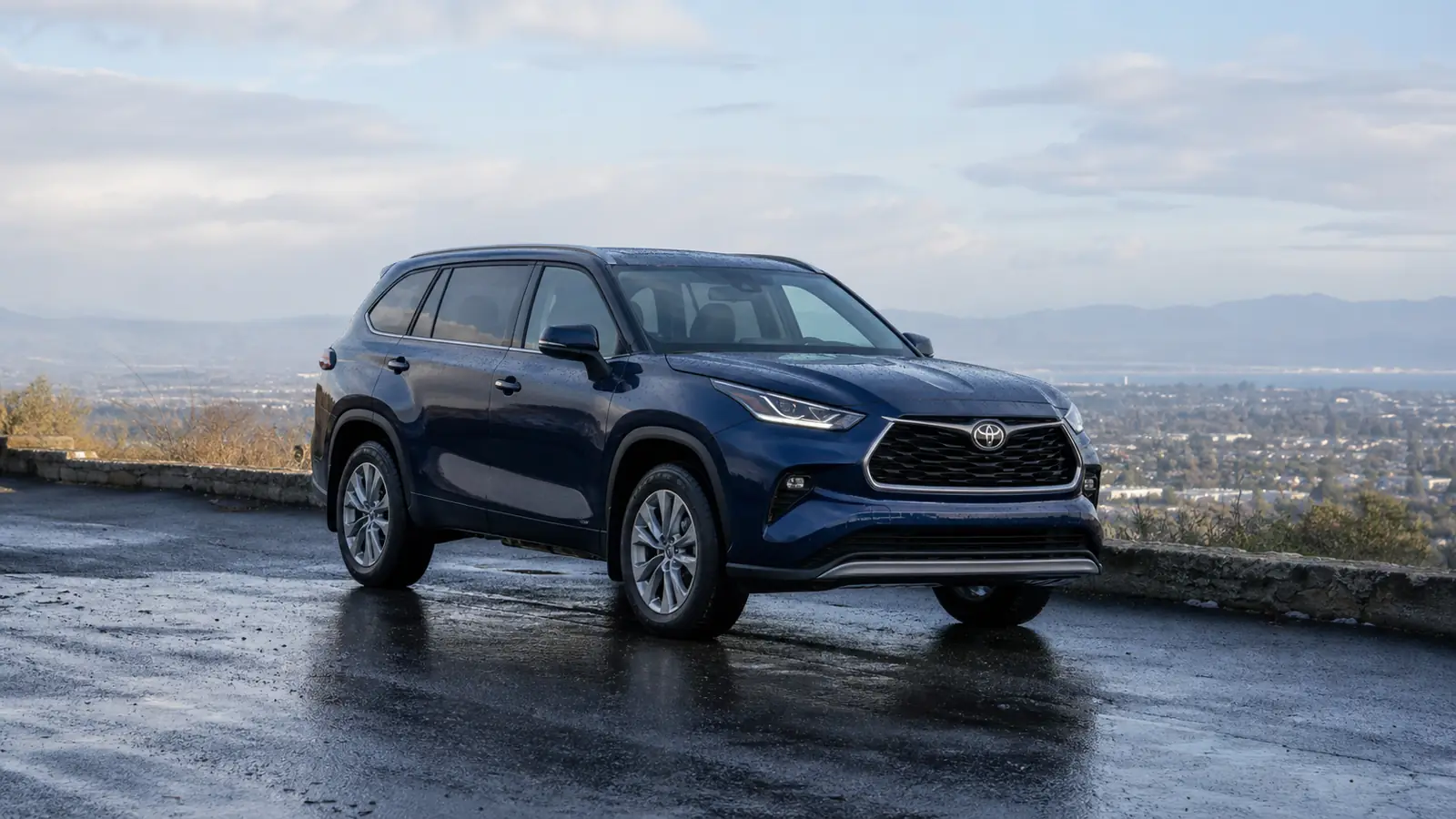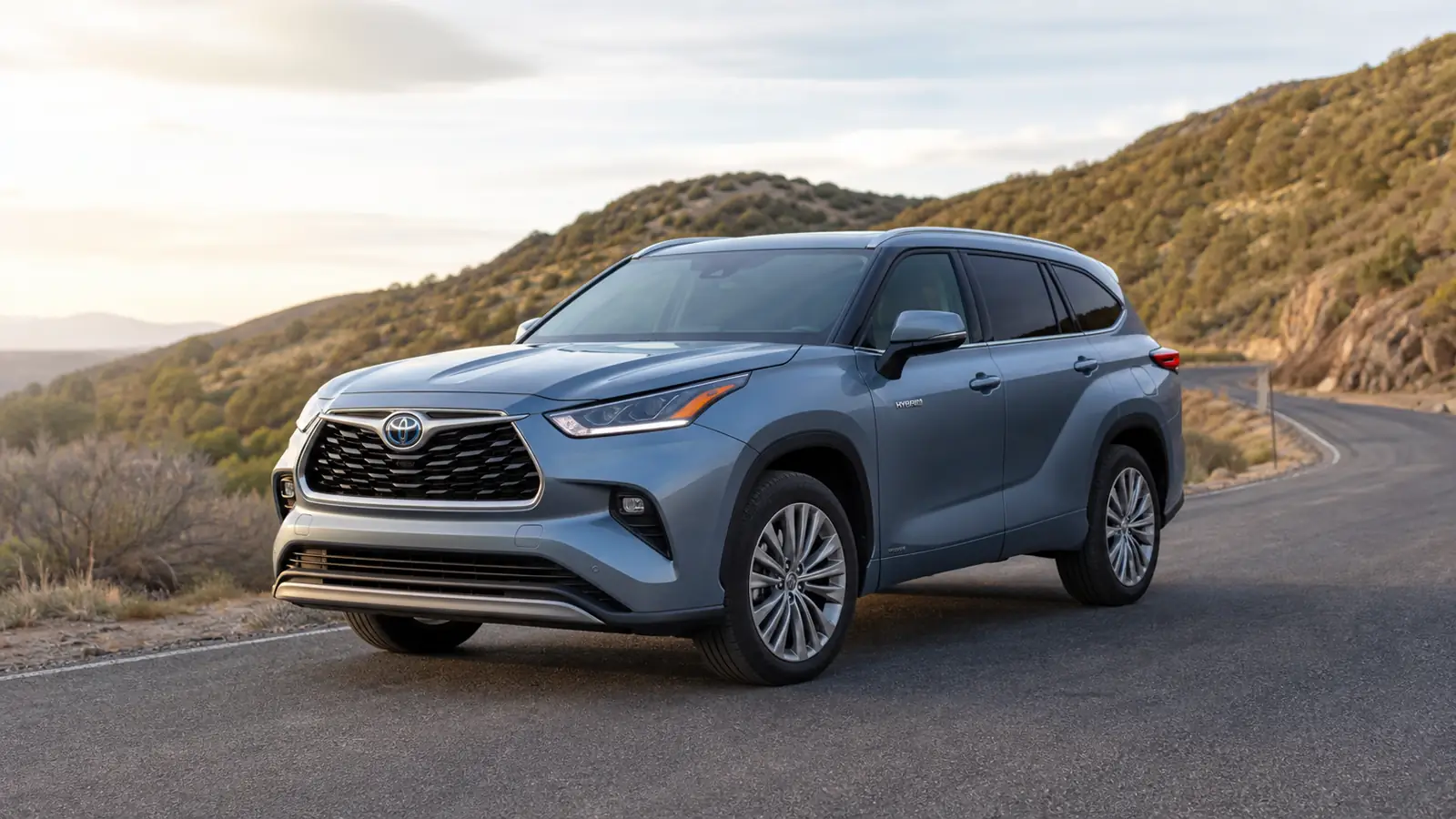
The 2026 hybrid is the final version of this Highlander generation
The 2026 Toyota Highlander Hybrid is the last conventional Highlander before Toyota's announced all-electric 2027 replacement.
Toyota expects the next generation to reach dealers in late 2026. That timing does not make the current hybrid obsolete, but it changes the discount, resale, and ownership decision.
- 2020Fourth-generation Highlander Hybrid arrives
- 2026Final hybrid model year with standard AWD
- Late 2026Toyota expects electric 2027 Highlander sales to begin
A buyer who can charge at home and wants the latest platform may wait to compare the electric model.
A household that needs proven hybrid refueling, long-trip flexibility, and a purchase now can still prefer 2026.
Negotiate with the generation change in mind and avoid paying a scarcity premium for an outgoing vehicle.
The announced electric Highlander will answer a different energy question. It does not replace the current hybrid's five-minute refueling or establish future charging access for a renter.
Compare use, not model-year novelty. The Toyota brand guide provides the broader transition context.
Ask for the build date, current incentives, total transaction price, and expected delivery for any alternative.
A discounted 2026 can be sensible when the family keeps it well beyond the redesign.
Buy the outgoing hybrid for its current efficiency and usability, while using the 2027 change to demand a fair price.
243 horsepower, 35 mpg, and standard AWD define the package
Toyota pairs a 2.5L four-cylinder engine with electric motor-generators for 243 combined horsepower.
Every 2026 Highlander Hybrid uses electronic AWD, and Toyota estimates up to 35 mpg combined.
The system favors smooth family efficiency over rapid acceleration or heavy towing.
Electronic AWD powers the rear axle with an electric motor rather than a mechanical driveshaft. It can improve launch traction and stability response, but tire grip still controls braking and cornering.
Drivers facing deep snow should budget for suitable tires and test ground clearance on the actual route.
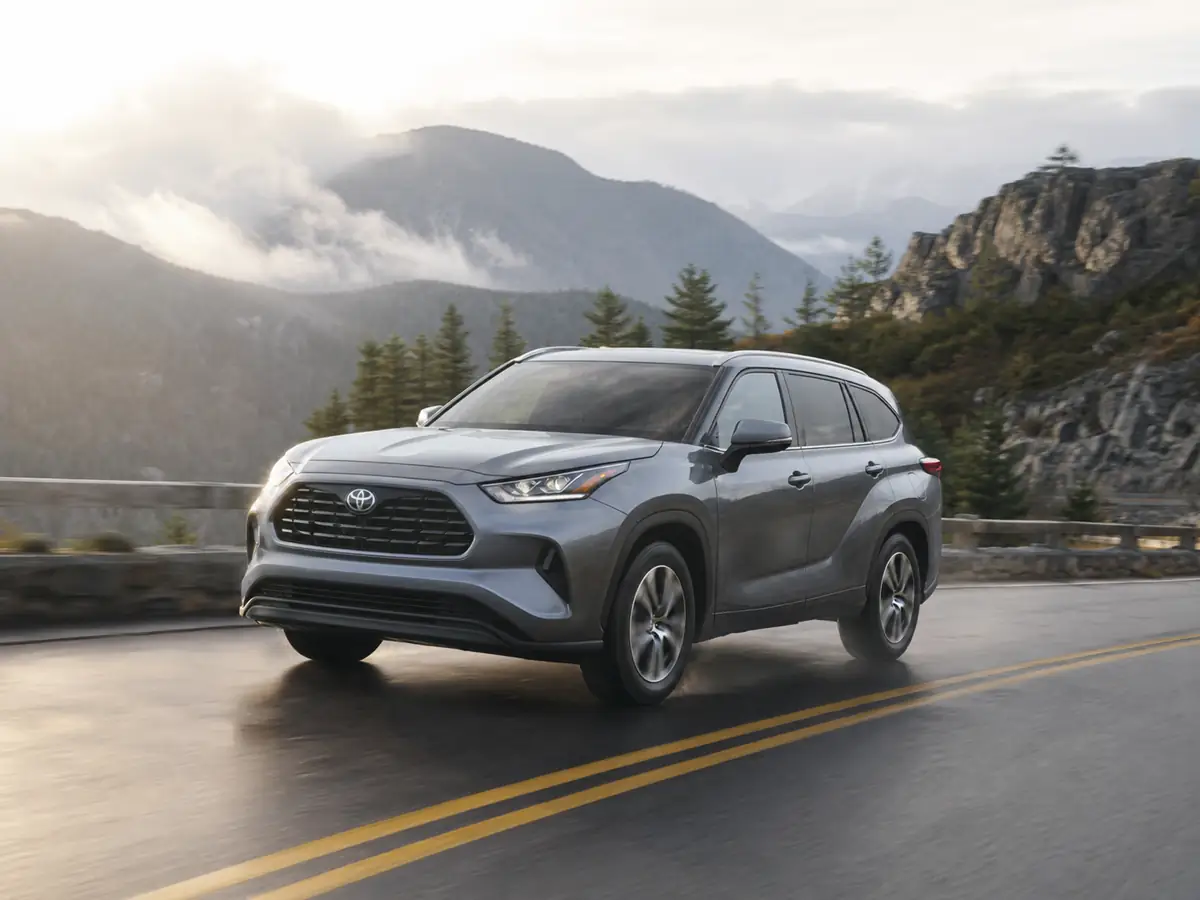
Load the family before judging performance. Merge uphill, pass at highway speed, and climb a garage ramp with the air conditioning running.
The engine can become more audible under sustained demand. That is normal system behavior, but each buyer should decide whether it remains comfortable.
A Toyota Highlander gas model can tow more in some configurations, while the Grand Highlander offers stronger powertrain choices and more room. The hybrid package suits steady family miles, not buyers who expect sport-SUV speed or frequent heavy towing.
Fuel savings need a route-based break-even calculation
A 35-mpg estimate is valuable only when compared with the price and fuel use of the alternative the family would actually buy.
Use annual miles, local gasoline price, city-versus-highway share, and realistic ownership years. Hybrid savings are usually strongest in stop-and-go driving where regeneration recovers energy.
| Input | Use this evidence | Avoid this shortcut |
|---|---|---|
| Purchase premium | Matched out-the-door quotes | Comparing unlike trims |
| Annual miles | Odometer or commute log | Guessing a round number |
| Fuel price | Local regular average | One unusually cheap station |
| Real MPG | EPA and route conditions | Best highway claim |
| Ownership term | Likely years kept | Assuming forever |
| Resale | Conservative estimate | Counting uncertain future value |
Compare an XLE Hybrid with a similarly equipped gas Highlander, not with a base gas trim missing required features.
Divide the price premium by annual fuel savings to estimate simple payback, then include finance interest and insurance. A buyer driving 6,000 highway miles may never recover the same premium that a 20,000-mile urban driver does.
The hybrid vehicle hub includes smaller and larger alternatives. A Honda CR-V Hybrid uses less fuel and costs less but lacks a third row.
A Sienna combines three rows with stronger economy in a minivan shape.
- Use matched trims
- Include financing and insurance
- Test city and highway use separately
- Recalculate when fuel price changes
The hybrid premium is justified by repeated mileage and time kept, not by the word hybrid on the tailgate.
The third row is for occasional use, not a full travel party
Highlander seats seven with second-row captain's chairs or up to eight with a bench, depending on trim.
The third row works best for children or shorter trips. Its access, knee room, foot space, and low seating position become tiring for many adults, especially when the second row cannot slide forward much.
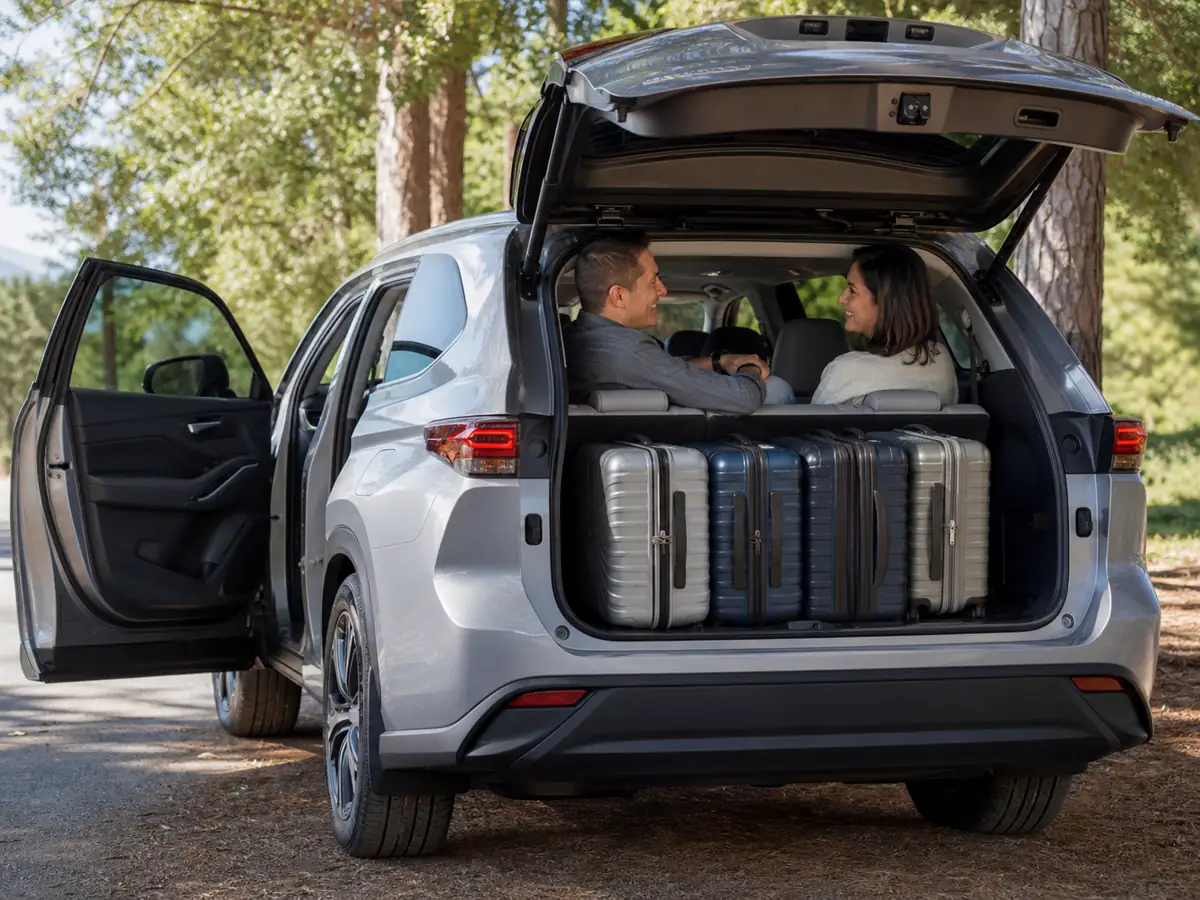
Toyota lists 16.0 cubic feet behind the third row, 48.4 behind the second, and 84.3 maximum.
The first figure controls airport and vacation use. Load every suitcase, stroller, mobility device, cooler, or pet crate while all seats remain upright.
Do not count folded-seat volume when all seats are occupied.
Set the front seats for the regular drivers, then position the second row to balance both rear rows.
Install child restraints and rehearse third-row exit from each side.
Check air vents, cupholders, charging access, head restraints, and visibility.
Families using the third row every day should compare the Toyota Grand Highlander and Toyota Sienna with the same load. Highlander Hybrid works best as a roomy five-seat SUV with two occasional seats, not as a minivan substitute for seven adults and luggage.
XLE is the practical trim and upper grades need a clear reason
The 2026 hybrid lineup includes XLE, Limited, and Platinum, all with AWD.
XLE starts at $47,020 before destination. It carries the same 243 hp system, three-row body, and 3,500-pound tow ceiling as the more expensive versions, so higher trims primarily add comfort, display, audio, appearance, and convenience equipment.
Trim decision
- XLE
- Core hybrid family value
- Limited
- Premium cabin features used often
- Platinum
- Top comfort and appearance equipment
- Second row
- Bench or captain's chairs by configuration
- Wheels
- Price replacement tires before upgrading
Start with seating layout. A bench can carry eight and may help a three-child family, while captain's chairs create an aisle and separate passengers.
Install actual restraints because a fixed child seat can change third-row access.
Next, drive the exact wheel and tire package over broken pavement. Larger wheels can cost more, reduce sidewall protection, and change ride quality.
Price a complete matching set and ask whether the spare-tire arrangement fits long-distance travel.
A used Limited or Platinum may cost less than a new XLE, but compare warranty time, tire condition, service, financing, and generation-change depreciation.
The lease versus buy guide helps compare total paid.
XLE is the default because it preserves the hybrid's efficiency and family function without making luxury equipment part of the fuel-saving calculation.
Electronic AWD and a 3,500-pound rating have firm limits
Toyota lists 3,500 pounds of maximum towing for the 2026 Highlander Hybrid when properly equipped. That is enough for some small boats, utility trailers, or compact campers, but the exact loaded trailer, passengers, cargo, and tongue weight must fit the vehicle's labels and manual.
| Job | What matters |
|---|---|
| Snowy commute | Tires, clearing, grade, and AWD operation |
| Gravel access | Ground clearance and underbody protection |
| Small trailer | Hitch, wiring, brakes, payload, tongue weight |
| Mountain trip | Loaded performance and cooling |
| Roof cargo | Roof limit, height, and wind drag |
Tongue weight rests on the vehicle and consumes payload. Add occupants, luggage, accessories, and the hitch before deciding the trailer fits.
Use a scale and follow Toyota's limits. The engine's ability to pull away does not override axle, tire, brake, or combined-weight ratings.
AWD also does not turn Highlander into a low-range off-road SUV.
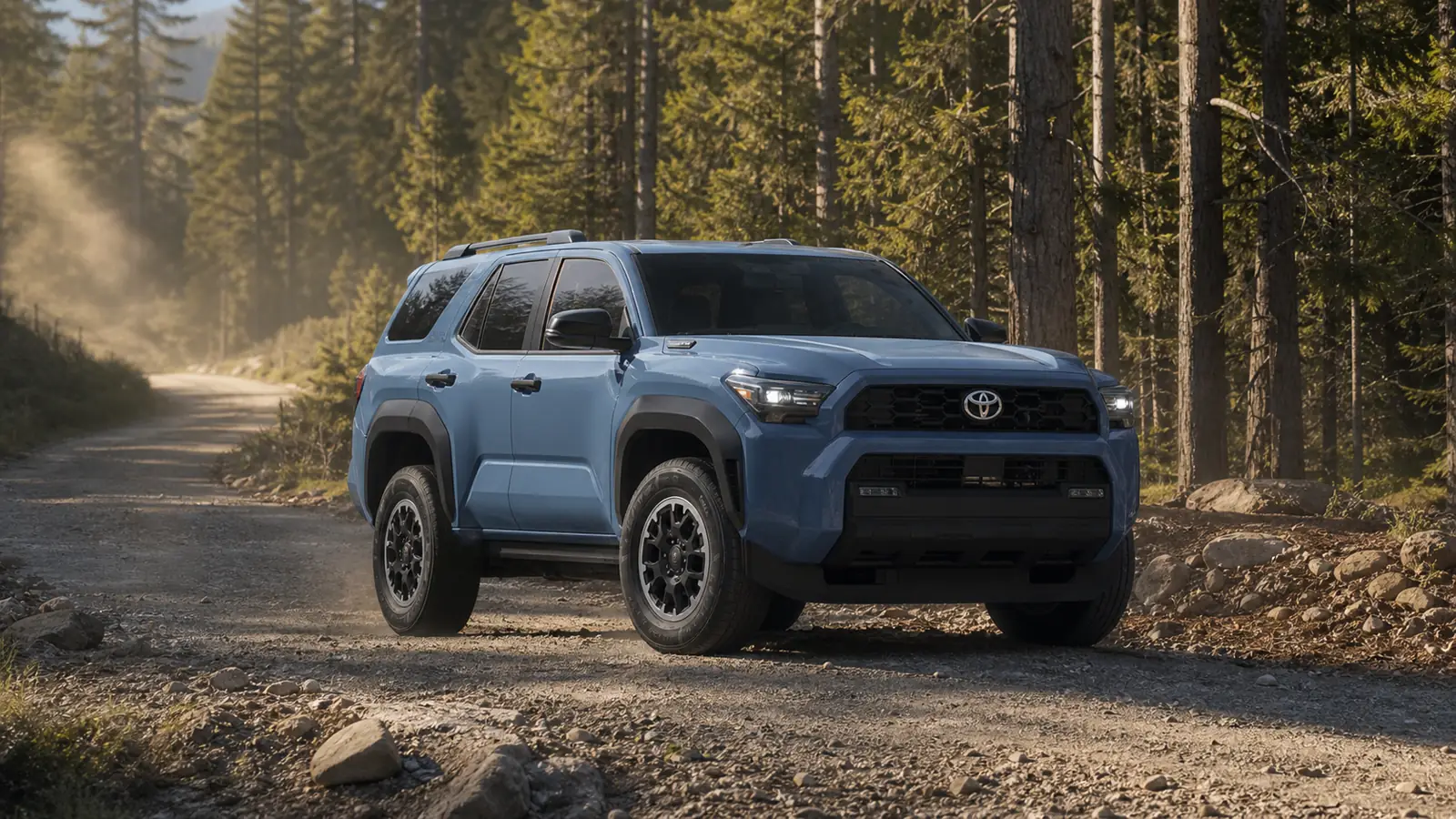
Inspect the route for rocks, ruts, water, and approach angles. A Toyota 4Runner is built for rougher travel but uses much more fuel and behaves differently on road.
- Read the door-label payload
- Weigh the loaded trailer
- Count tongue weight and passengers
- Use brakes where required
- Test temperatures on the actual grade
Choose Highlander Hybrid for efficient paved travel with light towing, and choose stronger hardware when heavy trailers or rough access are routine.
IIHS results are strong in some tests and Marginal in one current test
IIHS gives the 2026 Highlander a Good small-overlap front result, Marginal in the updated moderate-overlap front test, and Good in the updated side test.
Headlights range from Good to Acceptable by trim. Pedestrian crash prevention and LATCH ease of use are Good.
| Area | Result | Buyer action |
|---|---|---|
| Small-overlap front | Good | Check structural repair quality |
| Updated moderate front | Marginal | Compare rear-passenger measures |
| Updated side | Good | Verify airbags and body history |
| Headlights | Good or Acceptable | Match trim and drive at night |
| Pedestrian prevention | Good | Keep sensors clean and stay alert |
| LATCH ease | Good | Install actual restraints |
The ratings apply to the body line and test configuration shown by IIHS, so use the exact model year page.
A broad old award can hide a newer procedure. Driver assistance can support an attentive driver but does not replace steering or braking responsibility.
On a used vehicle, inspect belts, airbags, seat tracks, glass, body seams, paint edges, and repair invoices.
A replaced windshield may require camera calibration. Scan the vehicle and verify the normal warning-lamp check at startup.
Compare the named tests with the Grand Highlander and Sienna rather than ranking family vehicles by one badge. The Highlander's Good side and small-overlap results belong beside its Marginal updated moderate result in any safety decision.
Hybrid warranty is valuable, but a used inspection still matters
Toyota states a 10-year or 150,000-mile hybrid battery warranty and eight years or 100,000 miles for specified hybrid components under its terms.
Basic and powertrain coverage have shorter limits. A used buyer should confirm the original in-service date, mileage, transfer terms, exclusions, and completed maintenance.
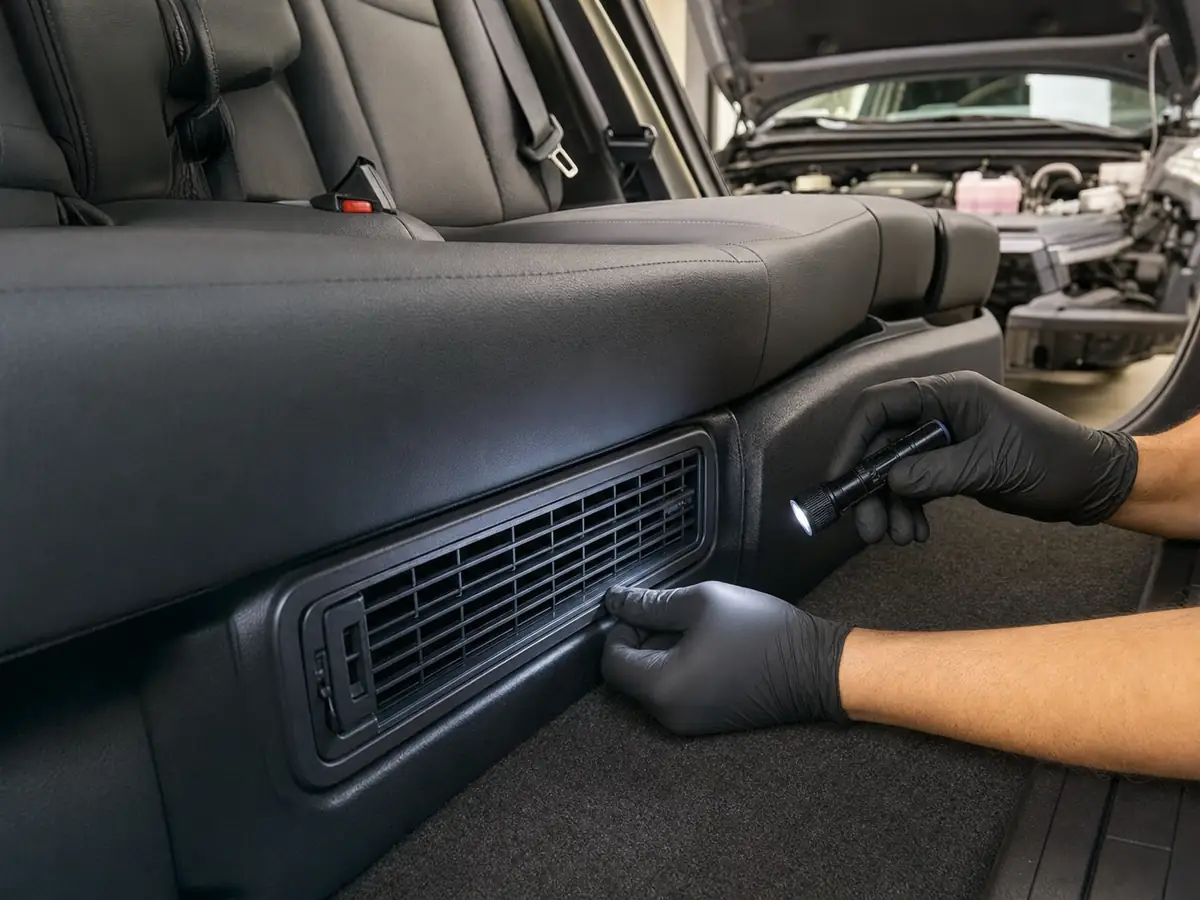
Start cold and watch the normal warning sequence. Check oil, engine and inverter coolant, brake fluid, battery cooling intake, air conditioning, and stored codes.
Drive through electric launch, blended operation, steady highway speed, braking, and a hot restart.
There should be no unexplained warnings or severe vibration.
Inspect tires for matching size, brand, tread, pressure, and inner-edge wear. Test brakes after regenerative driving, check the liftgate, cameras, screens, seats, climate zones, windows, locks, and every key.
Run the VIN through Toyota and NHTSA.
- Obtain service and recall records
- Scan before and after the drive
- Keep the battery cooling intake clear
- Verify collision and windshield repair
- Price every due tire and brake item
The planned Highlander Hybrid reliability guide can separate model years. Warranty reduces the risk of covered defects, while condition, maintenance, and accident history still decide whether a used vehicle is sound.
Five-year cost rewards mileage and a moderate trim
Build the five-year budget with transaction price, tax, total finance interest, insurance, registration, fuel, tires, brakes, scheduled service, repairs, and resale. Add any generation-change discount or incentive only after it appears in a written out-the-door quote.
| Cost | Evidence | Common mistake |
|---|---|---|
| Fuel | Annual miles and route MPG | Assuming every mile earns 35 mpg |
| Insurance | Exact VIN quote | Using gas Highlander rates |
| Tires | Exact size and rating | Ignoring AWD matching needs |
| Warranty | In-service date and terms | Treating wear as covered |
| Finance | Total paid | Comparing monthly amount |
| Resale | Conservative estimate | Ignoring the redesign |
XLE usually controls purchase, tire, and depreciation exposure. Limited or Platinum may be worth more to the family, but premium equipment does not improve the fuel payback.
Keep a repair reserve after the down payment because tires, collision damage, wear, and excluded items remain the owner's cost.
Compare with a Honda Pilot for stronger conventional performance and a Toyota Sienna for passenger access and economy. Use the same annual mileage, passenger requirement, and ownership term.
The premium price hub shows how quickly equipment changes total cost. The Highlander Hybrid cost case is strongest for a high-mile family buying XLE at a fair outgoing-model price and keeping it for several years.
Cold operation reveals more than a warmed-up test drive
Ask the seller not to start the Highlander Hybrid before the inspection. A true cold start reveals fluid level, engine noise, warning behavior, and the first transition between electric and gasoline operation.
Confirm the gasoline engine starts cleanly when requested and shuts down without a harsh shake after warming.
Drive until the engine, inverter, cabin heat, and air conditioning have all worked. After parking, check for coolant or fuel odor and confirm the radiator fans stop normally.
Scan the car again because some faults appear only after a complete heat cycle.
Inspect the brake rotor faces as well as pad thickness. Regenerative braking can leave the friction brakes underused in wet climates, so rust or uneven contact may remain hidden during gentle stops.
Make several safe friction-brake applications and watch for a pull, grinding sound, persistent vibration, or an abrupt change in pedal feel.
A cold-to-hot test gives a used hybrid buyer better evidence than a short drive in a vehicle the seller warmed before arrival.
Buy it for five-person efficiency with occasional extra seats
Start with an XLE and set the second row for the household. Install child seats, place the regular third-row passengers, load the vacation bags, drive a highway grade, test the lights at night, and price a matched set of tires.
That rehearsal will expose the Highlander's space limits before a payment begins.
Compare the same load in a Grand Highlander and Sienna. The larger SUV protects luggage room, while the minivan improves access and efficiency.
A smaller RAV4 Hybrid costs less when the third row is never used.
For used cars, require warranty dates, service, a cold hybrid test, clean diagnostics, correct tires, brake condition, recall results, and collision evidence. For new cars, negotiate with the outgoing generation in view.
The 2026 Highlander Hybrid remains a coherent family tool despite the announced electric successor. Buy it when 35-mpg travel and occasional third-row use match the household, and move up in size when people and luggage need all three rows together.