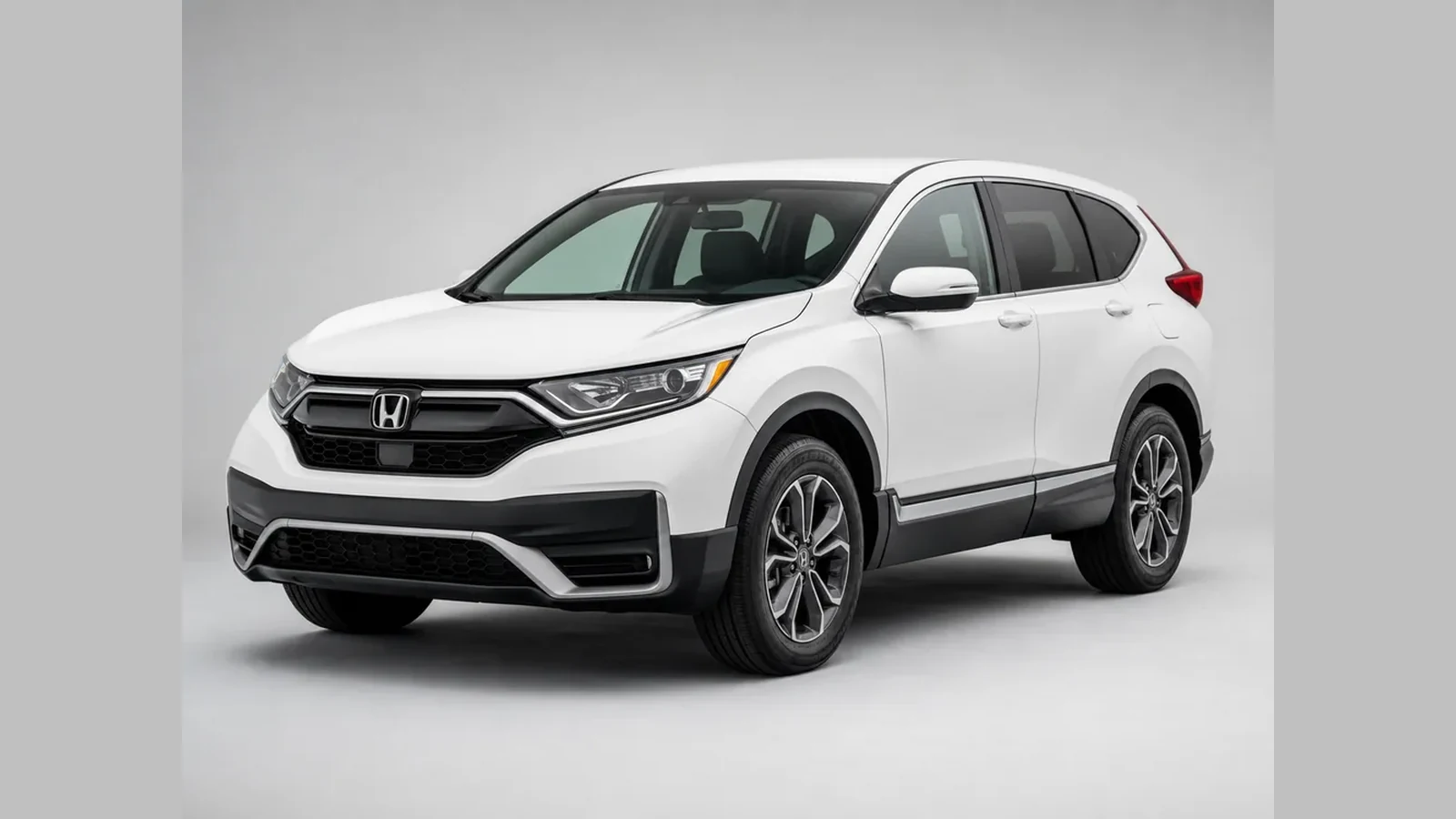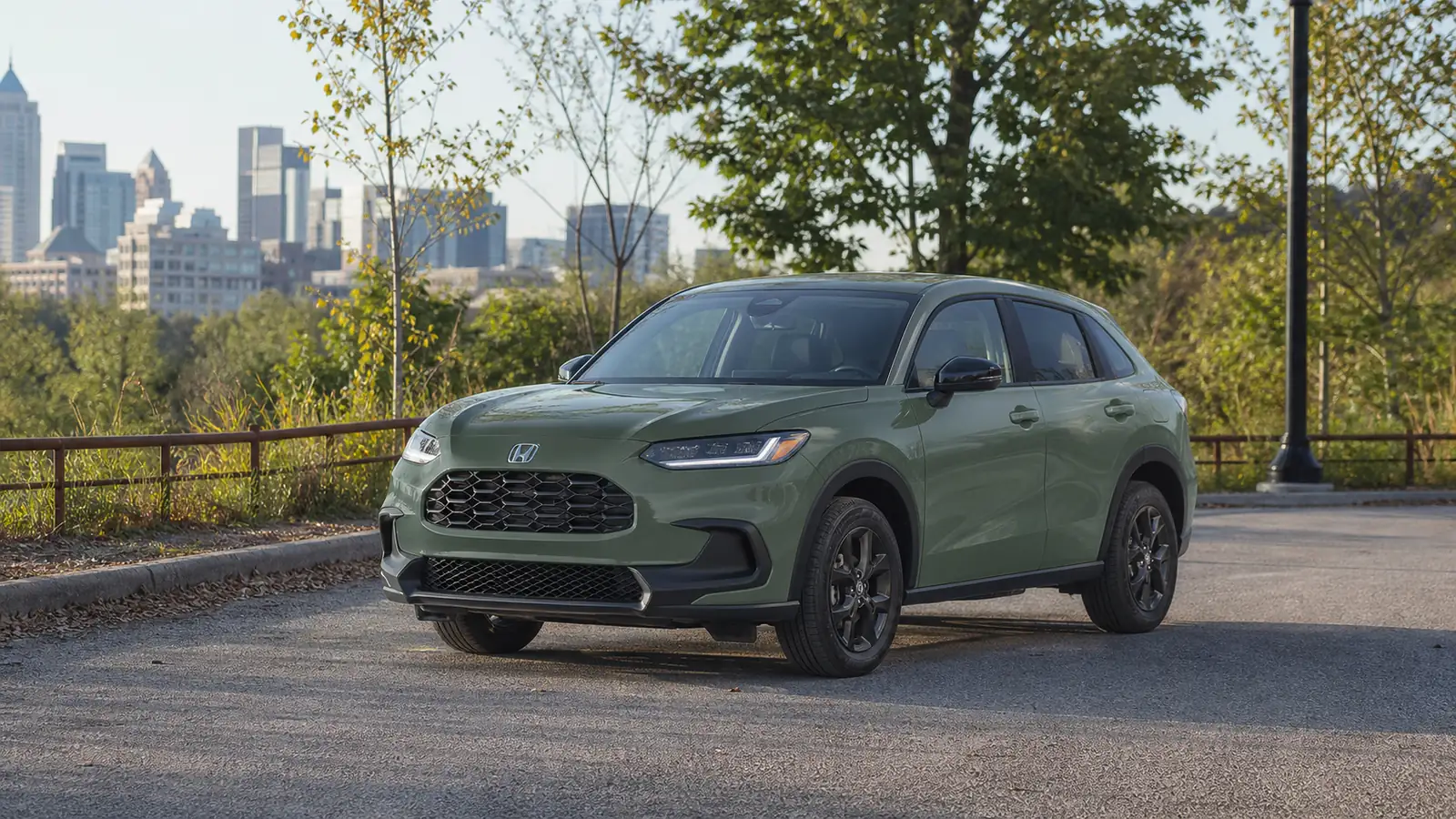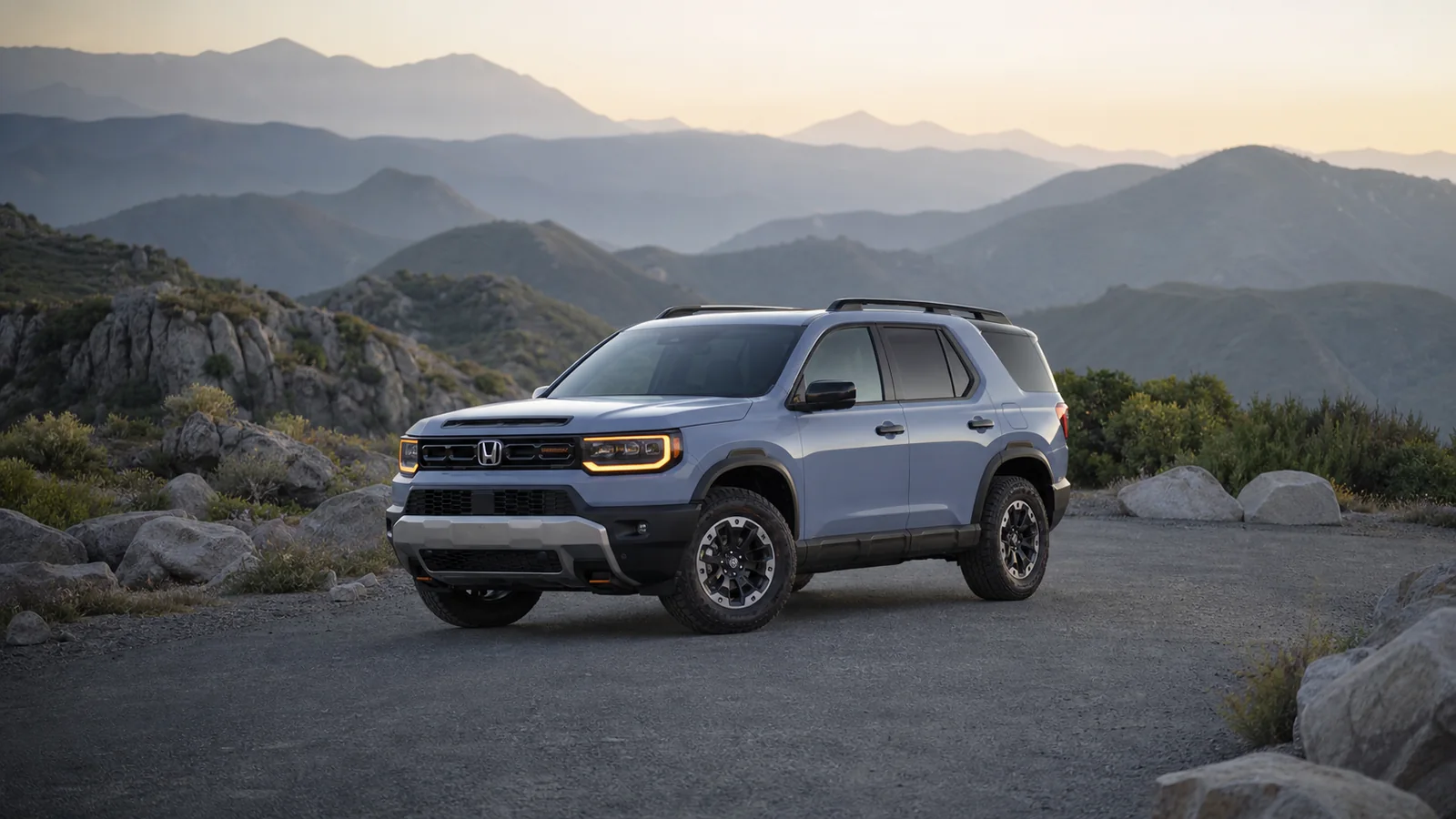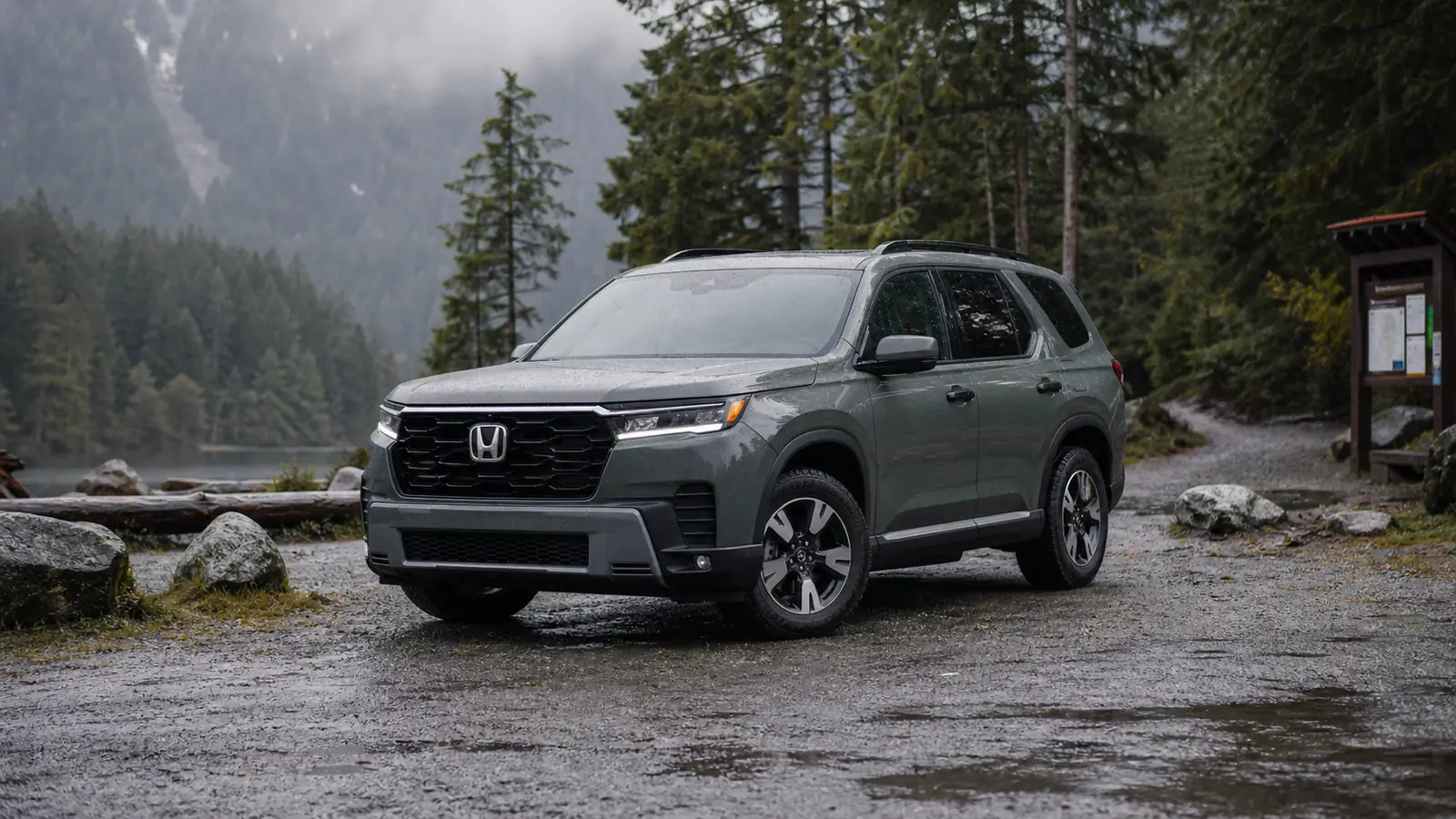
Protect the hybrid savings
The CR-V Hybrid can save fuel and still cost more overall when AWD, TrailSport tires, large wheels, insurance, or a long loan are added without a repeated need.
Protect the savings by keeping Sport Hybrid FWD as the baseline and pricing every change across the same ownership period.
A hybrid premium works only when trim, drivetrain, tires, and finance do not spend the fuel savings first.

For a driver covering 15,000 miles, 40 mpg uses 375 gallons while 37 mpg uses about 405. The 30-gallon difference is modest for one year but joins the AWD purchase price and added interest.
TrailSport at 35 mpg uses about 429 gallons, and its all-terrain tires may cost more to replace.
Price those differences before treating either version as the safe default.
| Choice | Value to prove | Cost to include |
|---|---|---|
| AWD | Repeated slippery grade or unplowed road | Price, fuel, four matched tires |
| TrailSport | Rough access and tire preference | Lower MPG, noise, replacement set |
| Sport-L | Comfort used every commute | Higher price and insurance |
| Sport Touring | Technology and AWD used often | Price, wheels, glass, depreciation |
| Long loan | Keeps payment inside a target | Total interest and negative equity risk |
Get exact VIN insurance quotes and installed tire prices. Ask whether windshield camera calibration and original-equipment glass are covered.
Compare 48, 60, and 72-month total interest. A longer term can make the premium appear small while leaving the owner with payments after the fuel break-even date should have arrived.
Choose AWD from a route, not a general fear of winter.
A steep driveway or mountain commute can justify it.
Cleared city streets may not. Four winter tires on FWD can provide better stopping and turning than worn all-seasons on AWD.
AWD helps the vehicle move and cannot cancel braking distance.
After the first three tanks, calculate actual MPG from miles and fuel added. Reprice the five-year case with that result, the real loan rate, and the first insurance bill.
This check catches a commute that is colder, faster, or shorter than the rating cycle. It also gives the owner time to correct tire pressure, roof cargo, or driving speed before deciding the hybrid missed its target.
Compare the front-wheel-drive category with AWD alternatives using the actual road. Keep the configuration that solves the recurring condition, then place the saved trim money into correct tires, maintenance, and an insurance deductible.
Price the premium correctly
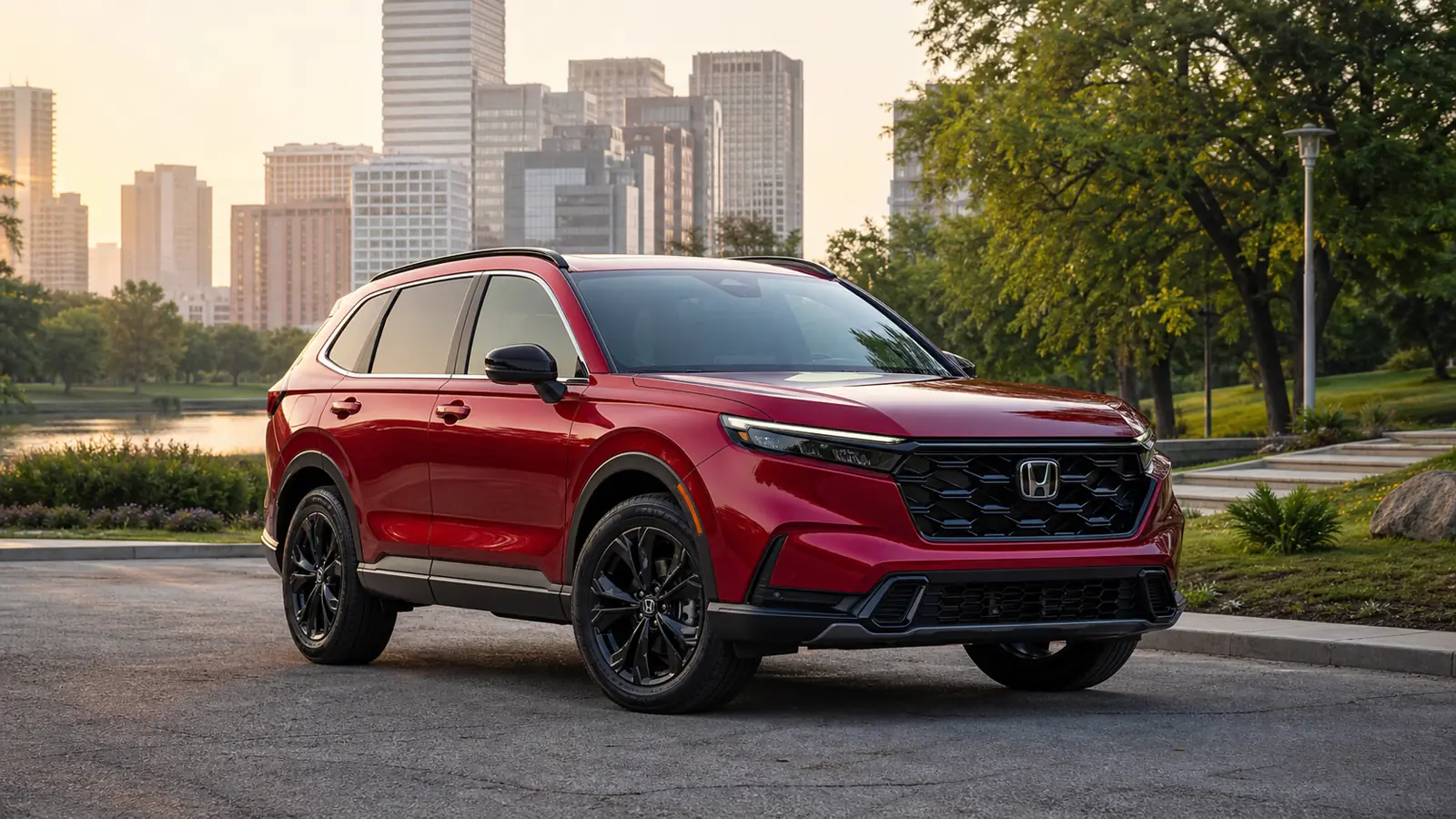
The 2026 Honda CR-V Hybrid starts at $35,630 in Sport Hybrid form. A fair premium comparison does not place that trim beside the $30,920 gas LX, because equipment differs.
Match Sport Hybrid with the closest gas CR-V configuration, then compare written out-the-door totals.
The premium is the complete difference after equipment, fees, finance interest, and insurance, not the gap between two advertised base prices.
Ask dealers for itemized figures that exclude the trade. Include destination, accessories, tax, documentation, protection products, and any markup.
Obtain a bank or credit-union rate, then compare manufacturer financing. A lower APR on one version can change total cost more than a small sticker difference.
Get insurance quotes for exact VINs. Hybrid classification, replacement value, wheel size, windshield cameras, glass coverage, and trim equipment can change the premium.
Add the difference across the planned ownership years. Price one windshield replacement with calibration and one set of tires.
| Cost | Gas CR-V | CR-V Hybrid |
|---|---|---|
| Out-the-door price | Exact matched trim | Sport Hybrid or matched trim |
| Finance | APR and total interest | APR and total interest |
| Insurance | Exact VIN quote | Exact VIN quote |
| Fuel | Annual miles divided by gas MPG | Annual miles divided by hybrid MPG |
| Tires | Installed set price | Installed set price |
| Resale | Conservative estimate | Conservative estimate, not a guarantee |
The lease versus buy guide helps when a short ownership period makes depreciation and mileage limits important.
A lease can shift resale risk but adds rules. Buying can use the hybrid's long-term savings, but a seven-year loan may outlast the period when the driver wants the vehicle.
Compare the gas Honda CR-V if it is available in the database and the Honda brand range for equipment context.
The goal is not to prove that every hybrid saves money. It is to find the actual amount this buyer pays for efficiency and stronger response.
Fuel savings need enough miles
Honda rates Sport Hybrid FWD at 43 mpg city, 36 highway, and 40 combined. The comparable gas CR-V rating can reach 28 city, 33 highway, and 30 combined.
Those figures create a strong city case, but annual miles and ownership length determine whether savings recover the premium.
At 15,000 miles, 40 mpg uses 375 gallons.
At 30 mpg, the same distance uses 500.
The hybrid saves about 125 gallons. Multiply by a conservative local fuel price, then divide the complete premium by annual savings.
That gives a rough break-even period before maintenance, insurance, resale, and finance differences.
| Annual miles | Hybrid at 40 MPG | Gas at 30 MPG | Gallons saved |
|---|---|---|---|
| 6,000 | 150 gallons | 200 gallons | 50 |
| 12,000 | 300 gallons | 400 gallons | 100 |
| 15,000 | 375 gallons | 500 gallons | 125 |
| 20,000 | 500 gallons | 667 gallons | 167 |
Use exact ratings for the selected drivetrain. AWD hybrid trims are rated lower, and TrailSport Hybrid is lower again.
City share, speed, weather, short trips, cabin heat, tire pressure, roof cargo, elevation, and idling change real results.
Run a poor-year case at several MPG below the rating.
A highway driver may save fewer gallons because the gas CR-V closes part of the gap at steady speed.
A city driver can use regenerative braking and electric assistance more often.
Track one normal week of miles and speeds rather than guessing.
Fuel price is another variable. Run calculations at current price, a lower price, and a higher price.
A choice that requires expensive gasoline forever is too fragile. The hybrid may still be worth buying for response or quiet operation, but those benefits should have their own value.
Compare hybrid compact SUVs with the Kia Sportage and Hyundai Tucson. Each has a different price, drivetrain, cargo, and warranty balance.
Fuel savings support the CR-V Hybrid when enough city or mixed miles occur before the planned trade date. Low-mile highway drivers need a smaller price gap or another reason to choose it.
The hybrid also drives better
The CR-V Hybrid's premium buys more than MPG. Its two-motor system produces 204 total horsepower, and the drive motor is rated at 247 lb-ft.
Electric torque gives quick, smooth response from low speed, which can make city gaps and highway entry easier than in the 190 hp turbo gas model.
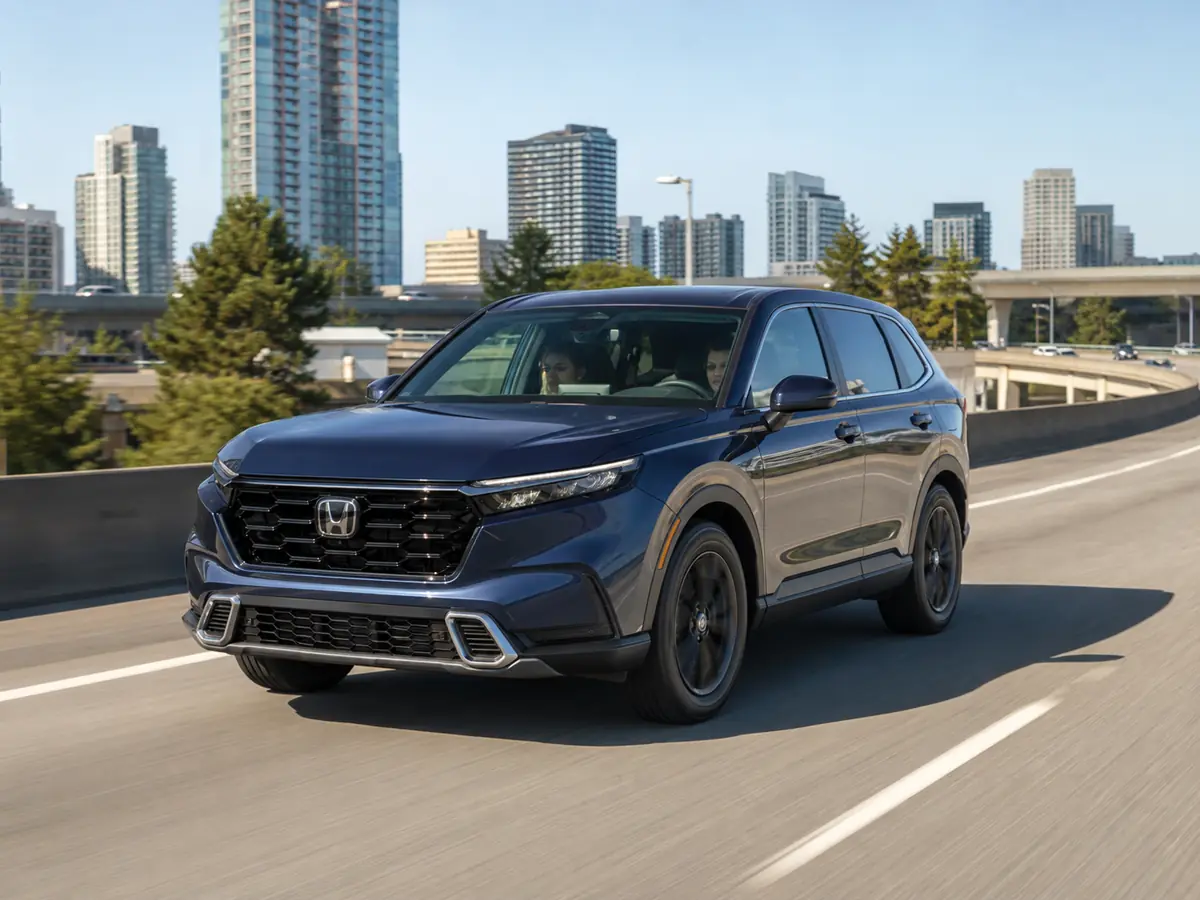
Drive both versions on the same day with passengers, cargo, and climate settings matched. Start in a parking lot, cross a busy road only with a safe gap, merge, climb a grade, and hold speed into a headwind.
The hybrid should transition among electric drive, engine operation, and direct engine drive without warnings or inconsistent response.
The engine can rev during hard acceleration. That sound is not a defect by itself.
Listen for roughness, knocking, surging, or a change that does not match driver demand.
Watch the power-flow display only while parked or through a passenger.
The road deserves attention.
Brake blending also matters. Regenerative braking recovers energy before friction brakes complete the stop.
The pedal should remain predictable through gentle and firm braking. Pulling, grinding, vibration, a sudden change in effort, or warning lights need diagnosis.
Use drive modes only after reading the manual.
| Segment | What to judge | Reject sign |
|---|---|---|
| Parking speed | Smooth launch and pedal control | Surge or warning |
| Highway merge | 204 hp under load | Inconsistent response |
| Long grade | Engine noise and temperature | Overheat or lost power |
| Gentle stop | Regenerative blend | Abrupt pedal change |
| Harder legal stop | Direction and vibration | Pulling or brake shake |
Performance value is personal but should be bounded. Decide how much extra the smoother response is worth before seeing the final payment.
A buyer who dislikes the gas engine on every merge can reasonably assign part of the premium to drivability, even when fuel alone takes years to recover it.
Compare the Ford Escape Hybrid when a lighter vehicle and sliding rear seat matter. The CR-V Hybrid is worth more than its fuel savings when the 204 hp system makes the buyer's repeated traffic, merge, and grade easier.
AWD lowers the MPG case
Sport Hybrid FWD carries the strongest rating at 43 city, 36 highway, and 40 combined.
Sport Hybrid AWD is rated 40 city, 34 highway, and 37 combined.
TrailSport Hybrid is rated 38 city, 33 highway, and 35 combined. AWD and all-terrain equipment can be useful, but they weaken the fuel break-even case.
At 15,000 miles, 40 mpg uses 375 gallons and 37 mpg uses about 405. The 30-gallon annual difference can be multiplied by local fuel price and added to the AWD purchase premium.
TrailSport uses about 429 gallons at 35 mpg.
The numbers do not reject AWD. They show what traction and equipment cost.
Choose AWD from a repeated problem. A steep unplowed driveway, rural road, or mountain trip can justify it.
Cleared city streets and flat highways may not. AWD helps distribute driving power but does not shorten stopping on snow.
Four suitable tires, correct pressure, and enough tread remain the safety foundation.
Drive FWD and AWD on the same wet grade if possible. Feel gentle launch and steering behavior without creating a dangerous demonstration.
Check that all four AWD tires match in size, model, date, load rating, and tread depth.
A single new tire beside three worn ones may require measured correction.
TrailSport adds all-terrain tires and appearance, but buyers should test highway noise, wet braking, ride, replacement price, and actual rough-road access.
It is not a low-range off-road vehicle. A driver who visits a maintained campsite twice a year may be better served by Sport Hybrid AWD on road-focused tires.
Review front-wheel-drive vehicles and AWD alternatives with the actual weather route.
Choose FWD for the clearest hybrid payback.
Add AWD or TrailSport only when recurring traction or road conditions use the extra cost every season.
Hybrid cargo is smaller
Honda lists 36.3 cubic feet behind the second row and 71.8 behind the front seats for hybrid trims.
Gas versions provide 39.3 and 76.5 cubic feet. The hybrid difference is 3.0 cubic feet with rear seats raised and 4.7 at maximum.
That may be invisible for bags and decisive for a tall stroller, crate, or mobility device.
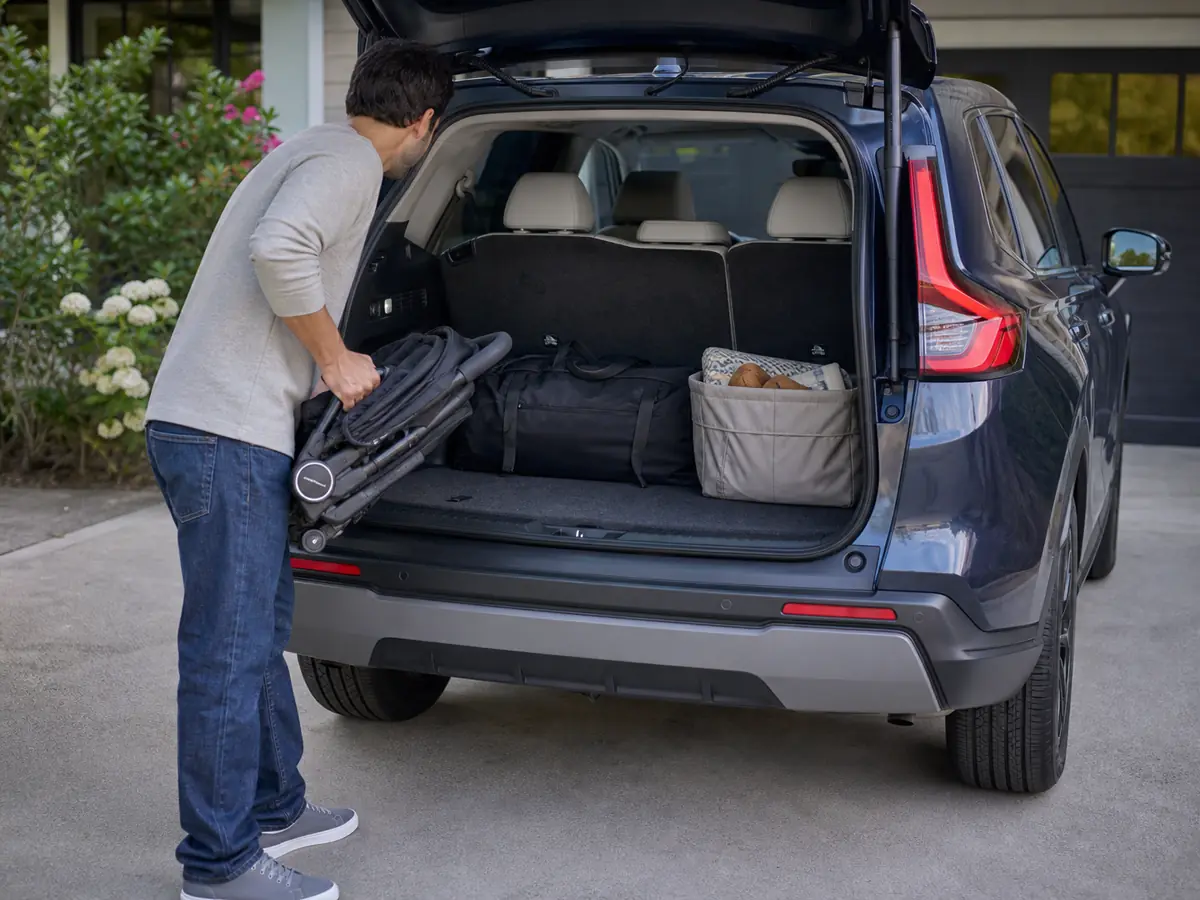
Bring the largest weekly object. Load it without folding a seat needed for a passenger.
Check hatch opening, floor height, wheel-well intrusion, underfloor storage, seatback angle, cover clearance, tie-downs, and rear visibility.
Close the hatch gently and make sure cargo does not press the glass.
Install child restraints first. Check lower anchors, top tethers, front-seat clearance, adjacent buckle access, rear-door opening, and roof height.
A roomy second row can still lose practical capacity when a booster covers a buckle or a rear-facing seat pushes the front passenger forward.
- Load the stroller or crate first
- Add groceries or one bag per traveler
- Keep the rear window and camera useful
- Fold one rear section and retain a passenger
- Check hatch clearance in the garage
- Reach emergency equipment with cargo aboard
Compare gas and hybrid vehicles side by side if cargo is close. The battery does not make the hybrid impractical, but buyers should see the physical trade before assigning value to fuel savings.
A roof box can replace lost volume but adds cost, drag, noise, total height, and storage work.
The compact SUV index includes the roomier Subaru Forester and differently shaped Mazda CX-50. The CR-V should win because its passenger and cargo layout fits the household, not because the nameplate has a strong reputation.
Accept the hybrid's smaller cargo figure only after the normal passenger and object load fits without a roof box or folded seat that changes the trip.
Sport Hybrid is the baseline
Sport Hybrid FWD is the best trim for testing the economic case. It starts at $35,630 and carries the highest hybrid fuel rating.
Sport-L adds comfort equipment. Sport Touring adds more technology and standard AWD.
TrailSport Hybrid adds all-terrain tires and a different road-use mission.
Build a list of equipment used weekly. Heated seats in a cold climate, a power liftgate for mobility, parking sensors in a tight garage, or better seat adjustment can have real value.
Leather, large wheels, premium audio, roof hardware, and appearance should not be purchased automatically.
Test the exact seats for an hour. Check cushion shape, lumbar support, steering-wheel reach, sightlines, head restraint position, and entry height.
A power seat can be worth more than an audio upgrade when two drivers share the car.
Price four tires installed and one replacement wheel for every serious trim.
Large wheels often cost more and provide less sidewall.
TrailSport tires may add noise and fuel use. Get insurance quotes for exact VINs and ask about windshield camera calibration, glass, sensors, and wheel claims.
A loaded Sport Touring can overlap larger or more premium vehicles.
Compare the best family SUVs using out-the-door price, not MSRP. A lower trim kept longer can return more value than an upper trim traded early.
Keep trade, financing, and price separate. Compare total interest at 48, 60, and 72 months.
A long loan can make a premium appear affordable while reducing the fuel savings that remain after interest.
Sport Hybrid FWD is the value baseline. Move up only for equipment that removes a repeated problem, and recalculate the premium after every trim change.
Verify safety and glass work
Match CR-V safety evidence to the exact model year, trim, headlights, and drivetrain.
Crash tests and equipment can change during a generation. Read individual IIHS tests, use the VIN in the NHTSA recall lookup, and save the build month and current results.
Updated side and moderate-overlap tests may put more attention on rear occupants than older procedures.
Check headlight results by trim. A broad award does not prove that every lamp or repaired vehicle performs identically.
Inspect glass for chips, distortion, scratches, haze, tint near cameras, and nonstandard accessories.
Watch startup indicators. Test adaptive cruise, lane support, automatic braking alerts, blind-spot information, cameras, and parking sensors on a legal route.
Learn limitations from the manual. Rain, dirt, glare, faded lines, and unusual traffic can reduce performance.
Install every child restraint in the intended position. Find lower anchors and top tethers, tighten the seat, check front passenger space, and verify buckle access beside boosters.
Test adult belt fit and head restraints.
Secure cargo below passenger head level.
Ask for calibration and repair records after windshield, bumper, radar, camera, suspension, wheel-alignment, pillar, roof, seat-belt, or airbag work.
Scan all modules. A clean dashboard and paint finish do not prove that stored faults are absent or that restraints were restored correctly.
Check headlights after dark on the actual route.
Confirm aim, automatic functions, and corner visibility. Tires, speed, following distance, and attention remain important regardless of assistance.
Review KnowMotors' source methods and buyer disclaimer. Use current safety evidence to compare the CR-V Hybrid, then verify its glass, sensors, restraints, lights, tires, and repair records on the exact vehicle.
Inspect the hybrid cooling path
A used CR-V Hybrid needs more than a clean body and a short quiet drive. Inspect the engine, two-motor system, battery cooling intake, brake blending, software, 12-volt battery, tires, and every electronic module.
Reliability comes from exact condition and maintenance, not a promise about all Honda hybrids.
Start cold. Check engine oil and coolant by the manual, watch every warning light, and listen for abnormal rattle, smoke, fuel odor, or uneven operation.
Drive electric launch, engine start, traffic, highway load, a grade, and repeated braking.
Scan all modules for current, pending, and history faults.
| Area | Inspect | Evidence |
|---|---|---|
| Engine | Cold start, oil, coolant, loaded operation | Records, drive, scan |
| Hybrid | Transitions, warnings, power flow | Hybrid inspection |
| Cooling | Battery intake and required service | Clean path and service history |
| Brakes | Blend, rotor condition, fluid history | Road test and measurement |
| AWD | Four matched tires | Tread and size measurements |
| Safety | Glass, cameras, calibration | Invoice and full scan |
Find the battery cooling intake identified in the manual and make sure bags, seat covers, pet hair, or dirt do not block it.
Ask what cleaning or inspection Honda specifies.
Do not disassemble high-voltage components. That work belongs to trained technicians.
Brake rotors can corrode when regenerative braking reduces friction-brake use, especially in wet or salted areas.
Inspect both faces, measure remaining material, and perform controlled stops. Grinding, pulling, vibration, warning lights, or an abrupt pedal change need diagnosis.
Operate screens, cameras, phone connection, climate, seats, liftgate, windows, locks, outlets, driver aids, and roof.
Check carpets, spare area, headliner, seals, and odor for water. Inspect four tires for matching size, model, load rating, date, and tread.
Verify recalls, campaigns, and warranty by VIN, in-service date, mileage, title, owner status, and market.
Use the used car guide to compare discount with remaining coverage.
A used CR-V Hybrid is ready when the cooling path is clean, operation is warning-free, and records plus an independent scan support the condition.
When is the premium worth it?
The CR-V Hybrid premium is worth paying when annual city or mixed miles are high enough, the stronger low-speed response improves repeated driving, cargo still fits, and the owner plans to keep the vehicle through the break-even period. It is harder to justify for low-mile highway use or a short ownership cycle.
Run the decision in order. Match gas and hybrid equipment, collect out-the-door prices, calculate fuel at several prices, drive both loaded, choose FWD or AWD from weather, test cargo, verify safety, complete a hybrid inspection, quote insurance and tires, then compare total interest.
Build a five-year worksheet with purchase, interest, fuel, insurance, service, tires, registration, accessories, and a repair reserve.
Use conservative resale. Run a poor case with lower MPG and trade value.
The vehicle should remain affordable when conditions are less favorable.
Do not count a federal tax credit for a standard hybrid. Confirm any current state, utility, employer, or local program from its official source before placing it in the budget.
Incentives and laws can change, and ordinary hybrids have different treatment from plug-in vehicles.
A low-mile owner can still choose the hybrid for drivability, but should name that preference rather than claiming quick fuel payback.
A high-mile owner can still choose gas when the hybrid markup or insurance difference is unusually large.
Evidence belongs to the exact deal.
For most high-mile city and mixed drivers, Sport Hybrid FWD provides the strongest case. Gas wins when the complete premium cannot be recovered before the planned trade, while AWD and upper trims must solve needs beyond appearance.