EX-L is the family-value Pilot
The 2026 Honda Pilot starts at $42,395 for Sport and reaches $55,195 for Black Edition before destination. Every trim uses the same 285 hp 3.5L V6 and 10-speed automatic, so the real choice concerns seats, drivetrain, wheels, trail equipment, and cabin features.
EX-L is the best baseline for most families. It adds the removable second-row center seat, leather-trimmed seating, parking sensors, and practical cabin features without forcing the price into the top of the range.
Sport is less expensive, but it lacks the flexible middle-seat arrangement. Compare the actual monthly payment and total interest between Sport and EX-L instead of looking only at MSRP.
EX-L earns its step when the removable seat, leather surface, parking sensors, and cabin communication reduce daily friction.
Touring earns another step only if its surround-view camera, hands-free hatch, audio, and roof are used frequently.
The panoramic roof adds light but also weight, heat load, glass exposure, and headroom considerations. Elite can be sensible in a cold climate when heated second-row seats, rain-sensing wipers, and the head-up display matter every week.
Black Edition largely changes appearance. A family should not finance an appearance package while accepting old tires, a weak trade value, or a loan term that lasts longer than planned ownership.
That lower trim also lacks the flexible middle-seat arrangement that makes the Pilot unusual.
Touring adds the panoramic roof, Bose audio, camera system, and hands-free liftgate. Elite and Black Edition focus on luxury and appearance rather than more passenger space or power.
- Choose EX-L for the strongest equipment and flexibility balance
- Choose Touring when its camera and audio package matters daily
- Choose TrailSport for repeated unpaved access and standard trail hardware
- Choose Elite for cold-weather and comfort equipment, not capability
The Pilot is larger and thirstier than the Honda CR-V and Toyota RAV4, but its adult-usable third row and cargo shape justify that difference for households that fill the seats.
It should also be compared with the Toyota Highlander, whose hybrid option changes fuel cost.
EX-L captures the reason to buy a Pilot without charging for the most expensive appearance and luxury packages.
Passenger access is the Pilot's strongest advantage
The Pilot seats eight in most trims and seven in TrailSport. The removable middle section in the second row can create a bench for maximum capacity or be stored beneath the rear cargo floor to form captain's-chair access.
That flexibility matters more than a decorative feature because a family can change the layout without storing a heavy seat in the garage. Test the removal process, storage compartment, and aisle with the adults or children who will use it.
Passenger comfort needs a full-trip test. The third row has useful legroom, but cushion height, thigh support, foot space, and window view decide whether an adult remains comfortable after an hour.
Put the tallest regular passenger in back and drive over the road used for family trips. Ask whether knees contact the second row and whether the headliner or hatch trim crowds the head.
Check that rear climate vents can cool the row without freezing the middle passengers. Carry water bottles and charging cables to see whether storage and USB access are usable.
In the second row, compare the bench with captain chairs for shoulder room and child-seat placement. The removable center seat is valuable only when one adult can remove, carry, and stow it without injury.
Practice the full process before purchase and confirm the storage compartment remains accessible when luggage is loaded.
Third-row access uses one-touch second-row movement. A child can operate it, but a child seat installed on that section may prevent the seat from tilting.
Plan the whole restraint layout before assuming every path remains open.
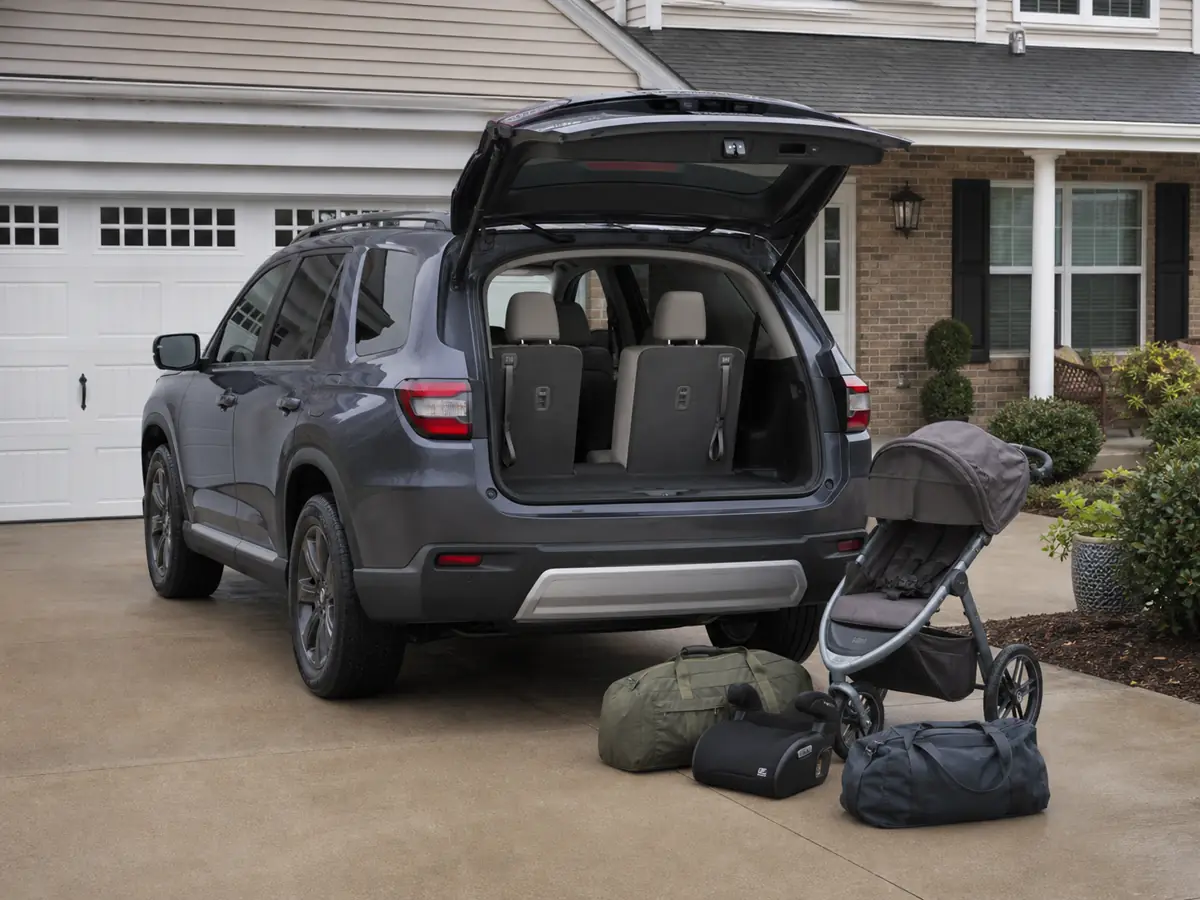
Bring rear-facing seats, boosters, stroller, sports bags, and the largest suitcase.
Install rather than estimate. Set the driver's seat first, then confirm second-row knee room, third-row access, buckle reach, tether use, and remaining cargo depth.
- Raise all three rows before loading luggage
- Store the removable center seat in its actual compartment
- Check whether a child seat blocks one-touch access
- Verify the hatch clears the garage door
- Confirm every passenger can exit without moving cargo
The seven-seat SUV group and minivan category contain other family layouts that advertise similar capacity, but the Pilot gives adults a more credible rear position.
A minivan still offers easier sliding-door access and more efficient space.
Choose the Pilot when the third row carries real people often enough to justify the vehicle's size and fuel use.
V6 power is simple to choose but expensive to fuel
Honda fits every Pilot with a 3.5L V6 rated at 285 hp and 262 lb-ft, plus a 10-speed automatic.
Front-drive Sport and EX-L are rated at 19 mpg city, 27 highway, and 22 combined.
Most AWD versions rate 19, 25, and 21, while TrailSport drops to 18, 23, and 20.
The Pilot does not offer a fuel-saving powertrain escape, so trim and route choices carry more weight.
Compare gallons against a hybrid rival over the intended ownership period, then subtract any purchase-price difference. A household towing several weekends may accept the V6 bill because the same vehicle replaces a separate tow rig.
A city family using only five seats may pay for capacity it rarely uses. The calculation should include idling in school lines, winter warm-up, and roof or cargo accessories that add drag.
The engine uses regular gasoline and delivers predictable response with passengers. The transmission uses several ratios to keep the V6 efficient, but its low-speed shifting should feel deliberate rather than hesitant or harsh.
| Version | Fuel rating | Towing limit | Best use |
|---|---|---|---|
| FWD Sport or EX-L | 19/27/22 mpg | 3,500 lb | Mild climate, paved roads, lower price |
| AWD mainstream trims | 19/25/21 mpg | 5,000 lb | Snow, hills, trailer duty |
| TrailSport AWD | 18/23/20 mpg | 5,000 lb | Rough access roads and trail use |
| Upper AWD trims | 19/25/21 mpg | 5,000 lb | Comfort with all-weather traction |
There is no 2026 Pilot hybrid. A 12,000-mile household at 21 mpg uses about 571 gallons a year.
At $3.50 per gallon that is roughly $2,000 before towing, cold weather, idling, or short trips reduce mileage.
Compare that bill with a Highlander Hybrid or Toyota Sienna before assuming the larger V6 is worth it. Fuel can erase a small purchase discount over several years.
Towing requires the vehicle, hitch, trailer, and passengers to be treated as one system. Start with the door-label payload, subtract occupants and cabin cargo, then subtract trailer tongue weight.
A 5,000-pound rating does not mean every AWD Pilot can carry a full family, a packed cargo area, and a trailer at the maximum at the same time.
Use a brake controller and weight-distributing equipment only where Honda and the trailer maker specify them.
Check oil, tire pressure, and brake feel during towing use.
AWD is more than a winter badge. Honda's i-VTM4 system can move torque across the rear axle, and AWD models gain the higher tow rating.
It still cannot overcome worn tires or careless trailer loading.
Before signing, compare the trip computer with a manual fuel calculation from a full tank. Reset it for a normal week that includes school traffic, highway driving, and the usual passenger load.
A short dealer loop can hide the difference between a 20 mpg TrailSport and a 22 mpg front-drive EX-L.
Check the door label before ordering a hitch because payload varies with trim and equipment. Price the hitch, wiring, transmission service, and matching trailer tires with the vehicle rather than treating them as later extras.
Drive the exact drivetrain with passengers and air conditioning. Test a grade, a 40-to-70 mph pass, a parking maneuver, and several low-speed gear changes after the powertrain is hot.
The V6 suits a loaded family, but the Pilot must earn its fuel bill through space, towing, or frequent passenger use.
TrailSport changes hardware, not just appearance
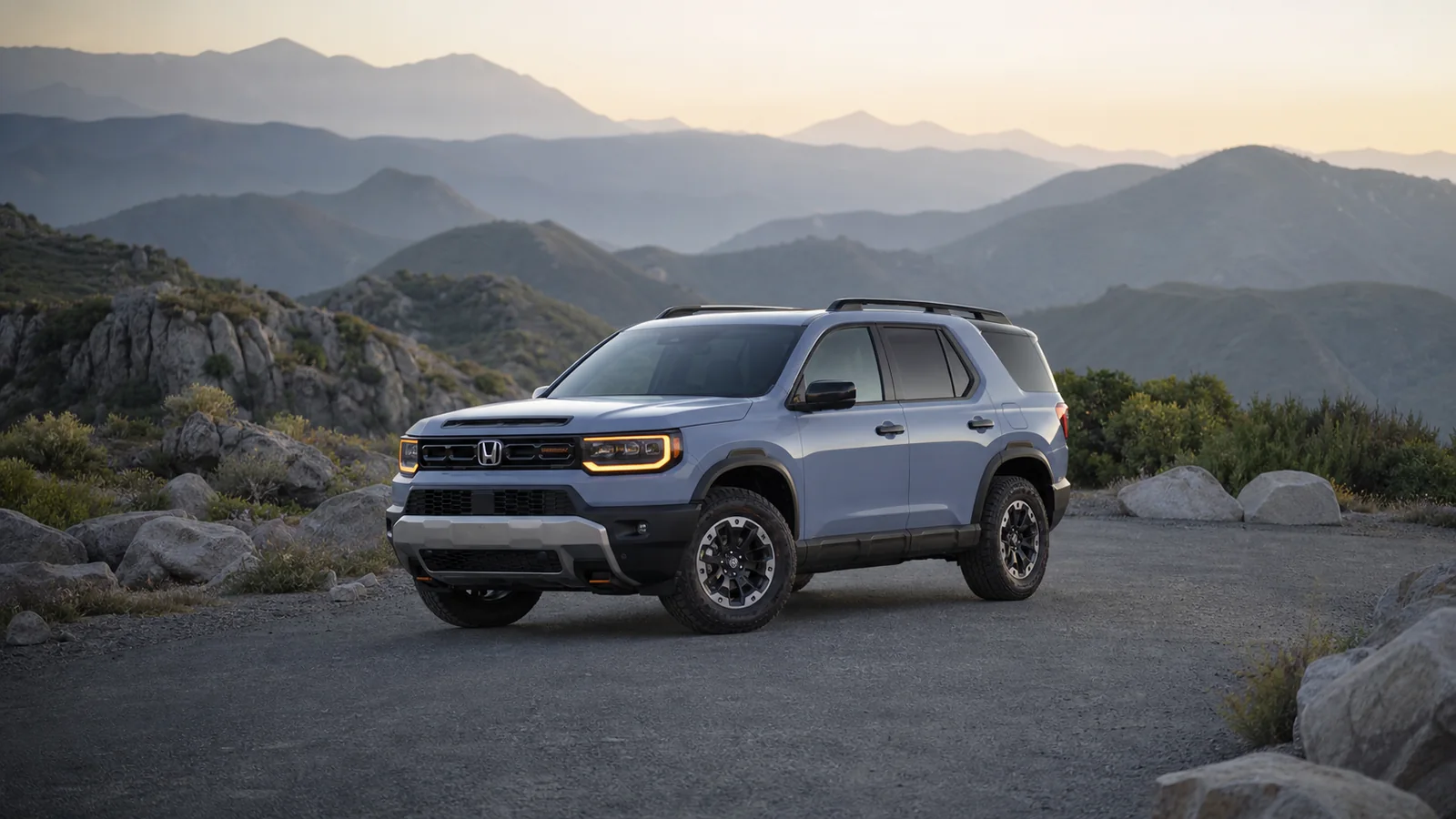
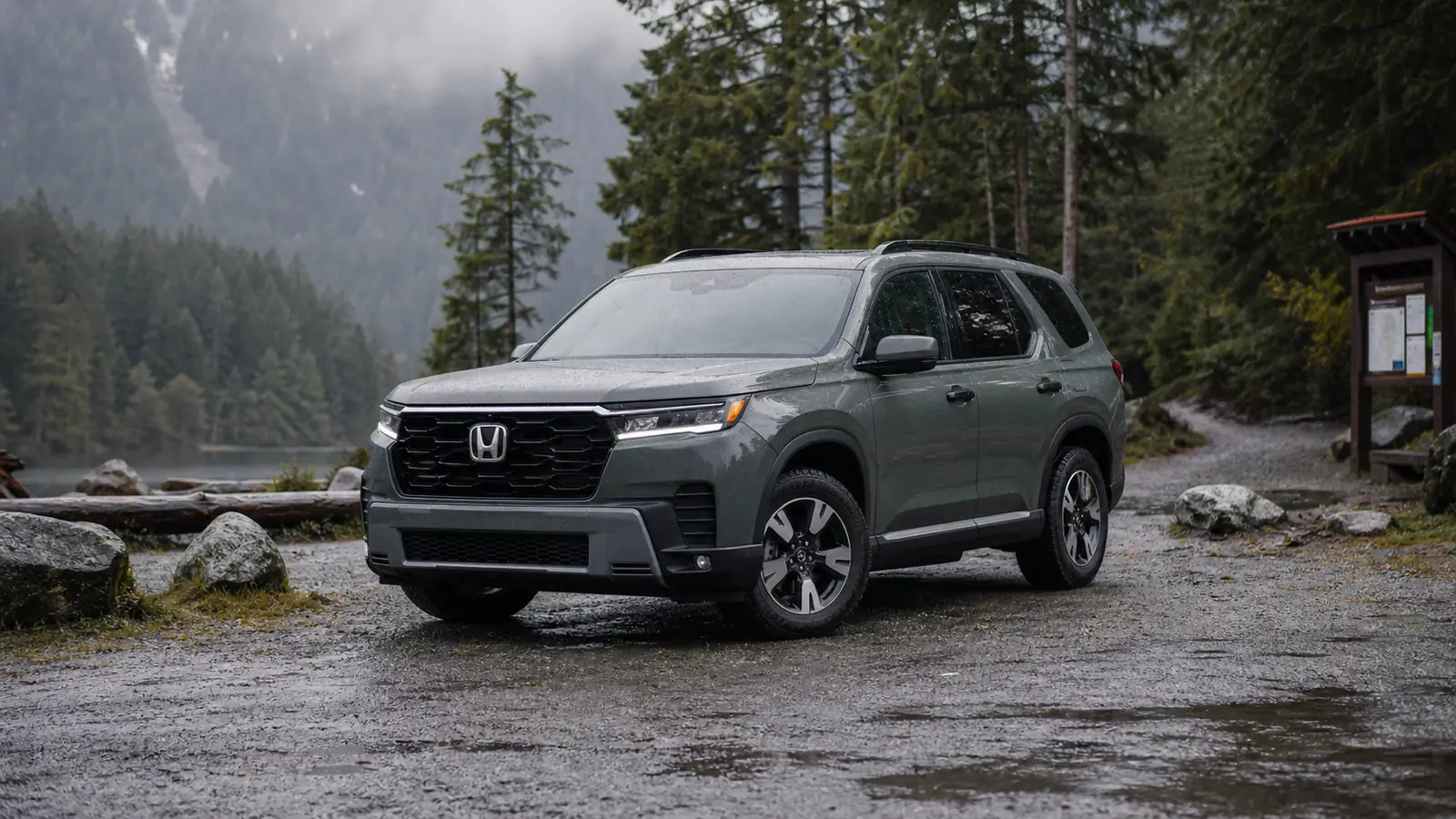
TrailSport costs $50,595 and includes AWD, 18-inch wheels with rugged-terrain tires, an off-road-tuned suspension, a full-size spare, recovery points, underbody protection, TrailWatch cameras, and seven-seat captain's chairs.
Those parts help on rutted access roads, muddy fields, deep snow, and trailheads where a normal road tire or low bumper creates a limit. They also add tire noise, reduce fuel economy, and remove the eight-seat layout.
TrailSport decision
- Tires
- 265/60R18 rugged terrain
- Seating
- Seven with captain's chairs
- Fuel rating
- 18 city / 23 highway / 20 combined
- Towing
- Up to 5,000 lb
- Best use
- Repeated rough-road family access
Do not pay for TrailSport because the orange stitching and tougher stance look appealing. EX-L AWD can handle snow-covered roads and maintained gravel on suitable tires while using less fuel.
Test TrailSport at highway speed before accepting its tire sound. Price a full replacement set and confirm that a local shop can source the exact size.
The full-size spare helps away from pavement but adds weight and takes space.
The AWD vehicle hub includes crossovers such as the Subaru Forester with better fuel economy and truck-based SUVs with lower gearing.
The Pilot sits between them. It has useful torque management and clearance, but it is still a unibody family SUV.
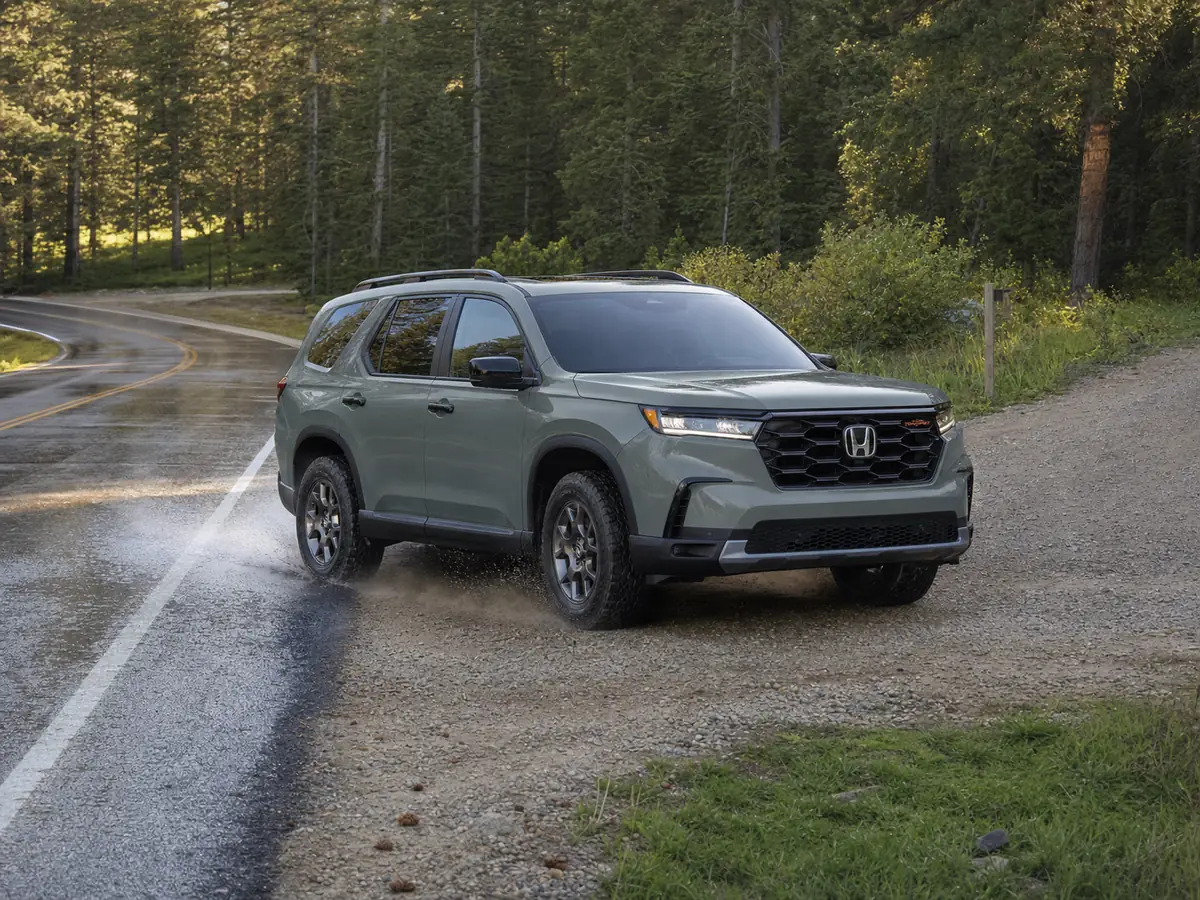
Inspect a used TrailSport underneath for bent shields, damaged exhaust parts, packed mud, cut sidewalls, and mismatched tires. Off-road branding does not prove abuse, but it requires a more careful underside check.
Buy TrailSport when an EX-L AWD has a specific tire, clearance, spare, or protection shortfall on trips the family already takes.
Safety evidence is strong for front and side impacts
The 2026 Pilot earns an IIHS Top Safety Pick. IIHS rates the small-overlap and updated side tests Good, the updated moderate-overlap test Acceptable, and standard pedestrian crash prevention Good.
The 2025 and newer Pilot includes second-row seat-belt changes intended to improve protection in the updated moderate-overlap test. That matters for a family vehicle because the procedure measures a rear passenger as well as the driver.
All tested headlamps receive a Good rating on the 2026 model. LATCH ease is rated Good+, which supports the Pilot's family purpose, but families should still install their exact seats before purchase.
Cushion shape and front-seat position affect real fit.
Use adaptive cruise, lane keeping, traffic-sign recognition, blind-spot monitoring, and parking sensors during the test drive. The systems should engage, cancel, and report blocked sensors predictably.
The Pilot is 78.5 inches wide, and that width should be tested where the family actually drives. Measure the garage opening, leave room for mirrors, and confirm doors can open beside shelves or another car.
Visit the school pickup lane and a crowded grocery lot. The surround-view camera can help place the tires, but its image can distort distance near the corners.
Use cones in an empty lot to learn the view before relying on it near a bicycle or child.
On a road trip, cabin quiet and seat comfort matter after two hours rather than ten minutes. Adjust lumbar support, test armrest height, and ask third-row passengers about cushion height and foot space.
Run the rear climate at a normal setting and check whether air reaches every row without the front fan becoming loud., so camera views do not remove the need to learn its corners.
Adjust mirrors and practice a narrow parking entrance. Rear cross-traffic alerts can miss fast or obstructed traffic.
A planned Pilot recall page can track active VIN campaigns. Run the VIN through NHTSA before buying and keep the completed repair invoice.
The Pilot's safety case is strongest when current crash results, correct restraints, good visibility habits, and working driver aids support each other.
A mixed road test exposes size, shifting, and wheel tradeoffs
The Pilot drives smaller than its cargo numbers suggest, but the width and long body appear in garages, school lanes, and old parking structures. The 37.7-to-37.8-foot turning diameter is reasonable for the class, not compact.
Sport, Touring, and luxury trims use 20-inch wheels. EX-L and TrailSport use 18-inch wheels with more tire sidewall.
The smaller wheel can improve impact comfort and reduce replacement cost even when the larger wheel looks more expensive.
Use one repeatable route:
- Start cold and listen for abnormal mechanical noise
- Make several low-speed shifts in traffic
- Merge with the normal passenger load
- Brake from highway speed without pulling or vibration
- Cross a sharp bump to compare wheel packages
- Park beside a wall to test cameras and body awareness
- Repeat low-speed shifts after the transmission is hot
The V6 should build speed cleanly, and the 10-speed should not bang, flare, or hunt repeatedly.
Idle-stop should restart without a severe shake. Driver-selectable modes can change response, so compare Normal rather than masking a concern with Sport.
Ride quality is calm, and the cabin gives passengers a stable platform on long trips. TrailSport may feel busier because its tires and tuning prioritize rough surfaces.
The Honda vehicle range includes the smaller Passport for buyers who need two rows and a shorter body. Compare it when the Pilot's third row stays folded through the whole test.
The correct Pilot should feel easy with the family aboard, because empty test-drive performance does not prove loaded comfort or transmission behavior.
Used-Pilot checks start cold and end with a scan
The fourth-generation Pilot began for 2023. It brought the current V6, 10-speed, body, cabin, and safety structure.
Long-term evidence is still developing, so a badge-level reliability claim is less useful than condition and service history.
Start the vehicle cold. Listen for prolonged rattle, watch the idle, and confirm every warning light completes its normal check.
Drive slowly while cold, then repeat the same shift sequence after 30 minutes.
- 2009 to 2015Second generation with older V6 and five- or six-speed automatics
- 2016 to 2022Third generation adds modern driver aids and nine-speed variants
- 2023 to 2024Fourth generation begins with V6 and 10-speed
- 2025 to 2026Rear-seat safety updates and current trim structure
Scan all modules, not only the engine computer. Test the digital cluster, 12.3-inch screen where fitted, cameras, parking sensors, climate zones, power hatch, seats, moonroof, audio, keys, and every driver-assistance function.
Check oil, coolant, brake fluid, underside leaks, accident repairs, brakes, and tire dates.
AWD vehicles need four correctly sized tires with similar tread.
TrailSport needs a complete underbody inspection.
Service records should explain oil changes, transmission service, brake fluid, coolant, differential fluid on AWD models, battery replacement, tire rotation, and recall repairs.
The 10-speed deserves special attention because fluid condition and software history can affect shift quality.
Ask the technician to compare commanded and actual gear behavior during a scan-supported drive. A harsh shift under one repeatable condition needs diagnosis rather than a promise that all Pilots do it.
Inspect engine mounts by watching movement during a controlled brake-torque test performed by a technician.
Check cylinder-deactivation and idle-stop behavior for stored faults. On AWD vehicles, confirm the rear differential has the correct fluid and no binding appears during tight low-speed turns.
Towing examples need closer brake, cooling, hitch, wiring, and transmission review because their service load may be higher even when mileage is modest., transmission service, brake work, battery replacement, tire rotation, and recall repairs.
A history report can miss maintenance and damage.
Use the planned Pilot reliability analysis and Pilot problems research for model-year detail. Hire a Honda-experienced technician to inspect the vehicle before purchase.
A strong used Pilot shifts the same cold and hot, carries four matched tires, operates every electronic system, and has records that explain its care.
Fuel, tires, and trim discipline control ownership cost
Fuel is the Pilot's largest recurring cost. Use the 20-to-22 mpg combined rating that matches the exact drivetrain, then adjust downward for towing, cold short trips, idling, and a full passenger load.
Trim discipline matters across the mainstream price tier. A $42,395 Sport and $55,195 Black Edition share the same engine and core cabin dimensions.
The expensive version adds comfort, wheels, and appearance, not lower fuel use or more cargo.
| Cost | Lower-cost pattern | Higher-cost trigger |
|---|---|---|
| Purchase | EX-L at a fair out-the-door price | Elite, Black Edition, accessories |
| Fuel | FWD and calm highway use | AWD, TrailSport, city duty, towing |
| Tires | 18-inch EX-L size | 20-inch luxury wheels or rugged tires |
| Insurance | Exact VIN quoted before purchase | High trim value and camera equipment |
| Maintenance | Complete records and normal use | Deferred fluids, towing, trail wear |
| Depreciation | Mid trim kept for years | Loaded trim traded early |
Price a full tire set, alignment, and brake job. A heavy three-row SUV consumes these items faster when driven hard, loaded often, or used for towing.
TrailSport tires and 20-inch road tires solve different jobs and can both cost more than a simple touring size.
Get insurance quotes for the exact VIN. Add glass coverage and camera calibration terms.
A windshield replacement can cost more when driver-assistance equipment must be recalibrated.
The planned Pilot cost-to-own analysis can extend the estimate. For now, compare total amount financed, interest, annual fuel, insurance, tires, maintenance, and likely resale for the exact trims.
Strong Honda resale helps, but it cannot recover an unnecessary $8,000 equipment jump. EX-L is the cost center because it keeps the Pilot's seating flexibility while avoiding the highest wheel, luxury, and depreciation exposure.
Where the Pilot works and where it asks for fuel
The Pilot delivers usable third-row space, 87 cubic feet of maximum cargo, and a 5,000-pound tow rating that most three-row competitors match only at higher price points.
That capacity comes with a fuel penalty the buyer cannot avoid: the 3.5-liter V6 returns roughly 20 combined mpg in real driving, and Honda offers no hybrid Pilot for the current generation.
No single trim eliminates the tradeoff. Weigh each strength against its recurring operating cost before committing to a configuration and price bracket.
Pros
- Adult-usable third row
- Large cargo capacity
- Strong V6 towing
- Useful removable middle seat
Cons
- No hybrid
- High fuel use
- Upper trims get expensive
- Large exterior footprint
Who should buy a Pilot
Buy a Pilot when the third row carries people regularly, the cargo area handles bulky family equipment, or AWD towing reaches beyond a smaller crossover. EX-L suits the broadest household.
Choose TrailSport only when rough roads are already part of the routine. Choose Touring when its camera, audio, and liftgate package will be used often.
Elite and Black Edition are comfort decisions rather than better family tools.
Compare the Highlander Hybrid for fuel savings, the Toyota 4Runner for low-range trail work, and the Sienna for sliding-door family access. Each serves a different daily problem.
Finish with the full seating rehearsal, a loaded road test, VIN insurance quote, tire prices, annual fuel calculation, and trailer payload math where applicable.
The Pilot is the right choice when its third-row access and cargo flexibility are used often enough to repay the fuel and size penalty.