
Is the Honda Pilot reliable? Start with the transmission and VIN
Yes, a well-maintained Pilot can provide dependable three-row service, and its naturally aspirated V6 avoids the turbo hardware used by several current rivals. The broad Honda reputation still cannot answer which transmission is installed or whether one VIN needs safety work.
The third generation ran from 2016 through 2022 and used more than one automatic transmission. The fourth generation arrived for 2023 with a 285-horsepower V6 and a standard ten-speed automatic.
A completed recall resolves the named defect rather than renewing the whole vehicle. Engine condition, shifting, AWD operation, brakes, cooling, tires, collision repair, and interior electronics still need independent evidence.
The Pilot remains a rational family-SUV choice when its exact hardware and records are known before the road test begins.
Which Pilot transmission are you actually testing?
Earlier third-generation Pilots used a Honda six-speed automatic on some trims and a ZF-supplied nine-speed on others. Honda expanded nine-speed use later in the generation, then moved the redesigned 2023 Pilot to a Honda ten-speed automatic across the lineup.
Normal behavior differs. The nine-speed can make deliberate ratio changes at low speed, while the ten-speed has more closely spaced gears and may shift frequently as load changes.
| Transmission | Where it appears | What to establish | Evidence that needs diagnosis |
|---|---|---|---|
| Six-speed | Some earlier third-generation trims | Timely engagement and stable shifts hot | Flare, harsh repeatable shifts, shudder, or pressure codes |
| Nine-speed | Upper and later third-generation applications | Software status and consistent cold-to-warm operation | Long delay, slam, neutral sensation, warning, or limp behavior |
| Ten-speed | 2023 and newer Pilot | Smooth ratio changes and correct service history | Repeatable hesitation, flare, vibration, leak, or stored fault |
Arrange a cold start and select Reverse and Drive while holding the brake. Record any long engagement delay, heavy impact, warning, or need to repeat the selection.
Use light throttle through local speeds, then join faster traffic and include a safe moderate grade. Repeat low-speed starts and parking maneuvers after the fluid is fully warm because heat can expose behavior a short loop misses.
Scan the transmission controller for current, pending, and history codes. Recently reset readiness monitors or a disconnected battery can hide context and justify a later inspection.
Ask for invoices that name the fluid, software update, pressure switch, valve body, torque converter, cooler, or replacement transmission. A receipt that says transmission service without the procedure or product cannot establish correct work.
One unusual shift is a reason to reproduce the condition, not a complete diagnosis. Identify the gearbox first, then require consistent behavior across temperature, speed, and load.
A 2016 misfire can have a documented injector path
Honda extended fuel-injector coverage on certain 2016 Pilots to ten years or 150,000 miles from the original purchase date. Honda said internal wear or clogging could result from injector manufacture or debris from the high-pressure pump.
The related bulletin addresses check-engine codes that can include P0420 or P0430 together with P0300 through P0306, P219A, or P219B. The repair path can include injector replacement and a software update for qualifying vehicles.
2016 injector evidence
- Dashboard
- Check-engine light or emissions-system message
- Scan
- Catalyst, misfire, or air-fuel imbalance codes in the named pattern
- Record
- Injector part, software action, mileage, and warranty claim
- Boundary
- Compression, ignition, catalyst, and fuel-pressure faults still require diagnosis
A misfire has several possible causes. Spark plugs, coils, valve condition, compression, fuel pressure, catalyst efficiency, wiring, and internal engine wear cannot be cleared by citing the injector bulletin.
Coverage depends on VIN eligibility and the original in-service date. Many 2016 vehicles are near or beyond the time limit, so confirm status before assuming a free repair.
A repaired car can be a good candidate when the invoice matches the codes and the engine now starts, idles, and accelerates cleanly. Use the bulletin to ask a precise question, then let present engine data answer it.
The connecting-rod bearing recall changes the engine check
NHTSA campaign 23V-751 covers certain 2016 and 2018 through 2019 Pilots, along with several other Honda and Acura models. Improper crankshaft connecting-rod journal dimensions could accelerate bearing wear and lead to engine damage or seizure.
A damaged engine may run poorly or stall while driving, increasing crash, fire, and injury risk. Honda's remedy involves inspection and repair or engine replacement as needed for eligible vehicles.
The campaign does not include every Pilot V6. Check the VIN through Honda and NHTSA, then retain the dealer record that identifies the inspection result and work performed.
NHTSA later opened a recall query after receiving reports of bearing seizure in some vehicles outside the original recall scope. That investigation is reason to take symptoms and VIN history seriously, while it does not expand the recall by itself.
Listen from a cold start and again fully warm, inspect oil level and filter history, and scan for related codes. An engine replacement should be supported by the assembly identification, date, mileage, installer, and warranty.
A closed campaign plus quiet, stable operation is useful evidence. A verbal claim that the engine was checked cannot replace the VIN record and repair order.
Popping speakers can point to a rear-camera safety recall
Popping or crackling speakers, intermittent audio, network-loss messages, a blank display, and an unreliable rear camera can share a MOST-network connection on affected Pilots. This is why an apparent entertainment complaint can matter to safety.
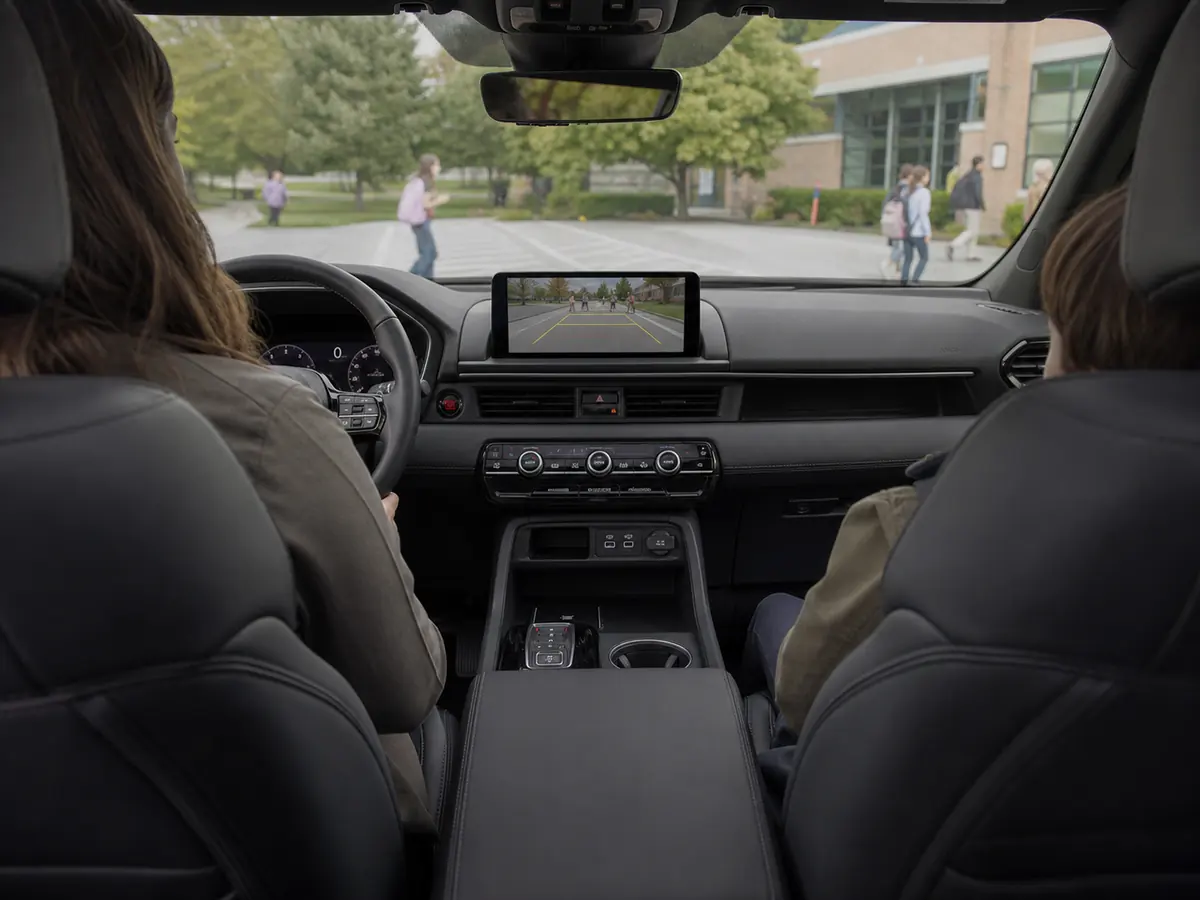
NHTSA campaign 23V-431 includes certain 2019 through 2022 Pilots. Honda said an improperly manufactured coaxial cable connector could interrupt the network and prevent the rearview image from appearing.
The remedy installs service cables and related connector hardware according to the campaign procedure. Confirm completion by VIN and invoice rather than checking only whether the screen works during one startup.
Test the camera through several Reverse selections and let the infotainment system operate during the drive. Listen for crackling, watch for reboots or lost audio, and note any network warning.
An aftermarket amplifier, damaged wiring, weak 12-volt battery, failed display, or previous interior repair can create different symptoms. The campaign offers a defined path only when the VIN and condition fit.
A repaired MOST network should work consistently, not merely pass a seller's demonstration. Intermittent cabin electronics deserve the same documentation standard as a mechanical repair when the rear camera is involved.
The fourth-generation Pilot resets the evidence clock
The redesigned 2023 and newer Pilot uses a 3.5-liter V6 rated at 285 horsepower with a ten-speed automatic. Current models can seat seven or eight and offer all-wheel drive with a 5,000-pound towing rating.
Newer production reduces age, corrosion exposure, tired rubber, and accumulated repair history. It also leaves fewer vehicles with 150,000-mile or ten-year evidence.
The newer generation is not simply the old Pilot with previous problems removed. Its engine design, transmission, electronics, body, and software create a new evidence set that will mature over time.
Paying more can buy remaining factory coverage and a cleaner starting point, provided collision history and maintenance are equally strong. Choose the newer Pilot for lower age exposure and its current features, not for a lifespan nobody can yet prove.
Towing and full-cabin use leave measurable clues
A full cabin changes how the Pilot responds. Passengers, luggage, accessories, and a trailer increase the work done by the cooling system, transmission, brakes, tires, wheel bearings, and rear suspension.
Acceleration will take longer and the transmission may choose lower gears on a grade. That is normal load behavior when temperature, shifts, steering, braking, and ride height remain controlled.

Front-drive Pilots are generally rated to tow up to 3,500 pounds, while properly equipped AWD models can reach 5,000 pounds. The owner's manual and exact equipment determine the limit for one vehicle.
Inspect hitch mounting, wiring, rear springs and dampers, tire load ratings, brake condition, and transmission-fluid history. Scraped hitch hardware, sagging ride height, overheated brakes, or a burnt-fluid odor can contradict a light-use story.
Drive with all occupied seats only when safe and practical, or reproduce load through a professional inspection rather than overloading the vehicle. Steering wander, vibration, repeated shift hunting, rising temperature, or weak braking deserves diagnosis.
Third-row and cargo wear can corroborate family use, while it cannot prove abuse by itself. Compare seat tracks, door seals, rear climate operation, cargo floor, wheel condition, and service mileage as one pattern.
A Pilot that carried people or trailers can still be an excellent buy when its maintenance and condition account for the work.
How many miles can a Honda Pilot last?
A Pilot can remain useful beyond 150,000 miles, but a long-life claim is worthless without the maintenance codes and invoices behind it. Transmission type, towing history, timing-belt service on applicable V6 models, rear differential care on AWD versions, and recall completion all change the answer.
Honda's Maintenance Minder separates these jobs instead of treating maintenance as oil changes alone. Sub-item 3 covers transmission and transfer fluid, sub-item 4 includes spark plugs plus timing-belt replacement and water-pump inspection, and sub-item 6 covers rear differential fluid on equipped vehicles.
The record should show the work that was due, the mileage, and the parts or fluids used. A dashboard reset without an invoice proves only that someone cleared the reminder.
Past 100,000 miles, inspect engine mounts, cooling components, wheel bearings, struts, control-arm bushings, air conditioning, sliding seat hardware, and body repairs alongside the powertrain. Several ordinary aging jobs can erase the value of a lower purchase price.
There is no responsible maximum-mileage promise for every Pilot. Buy when the next major service cycle is documented or priced into the deal, and walk away when the seller cannot explain what the Maintenance Minder history represents.
Should you buy this Honda Pilot?
A strong Pilot starts cold without persistent misfire or knock, engages its known transmission promptly, drives smoothly once warm, and has no unresolved engine, rear-camera, or network campaign. Its tires, brakes, cooling, suspension, and cabin wear should fit the recorded use.
An independent inspection should scan every relevant module rather than reading only generic engine codes. Honda-capable diagnostic equipment can reveal transmission, AWD, body-network, restraint, and driver-assistance history.
Mileage cannot reconcile contradictory evidence. Buy the Pilot whose transmission, engine, electronics, and load history agree on both paper and road.