The GM foundation is a buying fact, not an automatic weakness
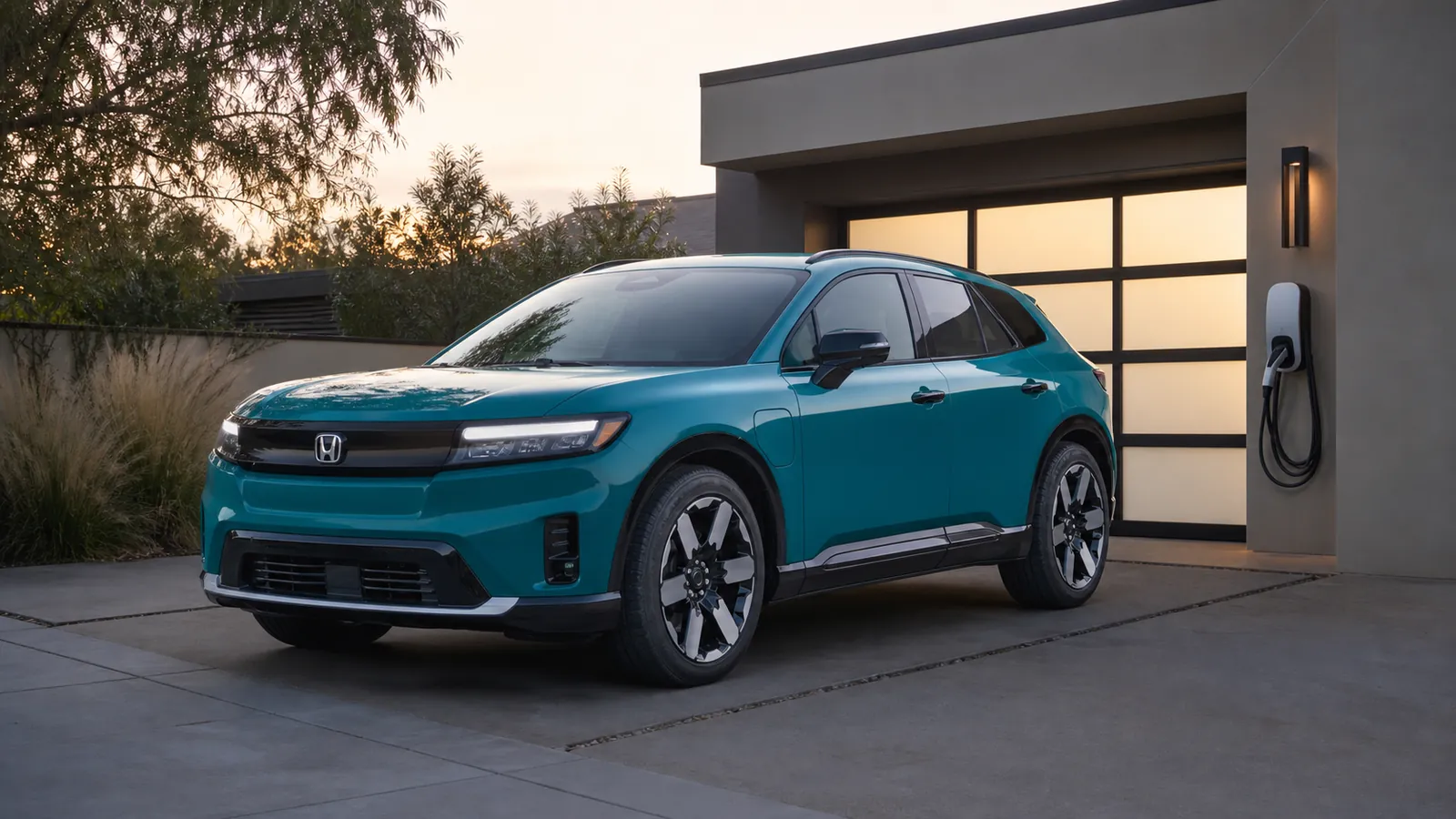
The 2026 Honda Prologue was developed with General Motors and uses a GM-developed EV platform with Ultium battery technology.
Honda shaped the exterior, interior direction, tuning, sales experience, and model lineup around that shared foundation. The collaboration explains why the controls, connected services, charging hardware, and service questions differ from a gas Honda.
Co-development can reduce the time needed to bring an EV to market and gives Prologue access to an established battery and motor system.
It also creates shared hardware with GM vehicles, including the related Chevrolet Blazer EV. Shared parts do not make the vehicles identical, and a Honda badge does not turn the underlying systems into traditional Honda components.
Ask the selling dealer who diagnoses the battery, drive unit, charging system, infotainment, connected services, and collision sensors.
Get the warranty booklet and roadside terms for the exact VIN. Do not rely on a salesperson's claim that any GM or Honda store will handle every issue.
Operate the car without a prepared phone. Set up a temporary profile where permitted, pair a device, test maps, voice, climate, camera views, key functions, and charging controls.
Confirm what requires a subscription after included services end.
Compare Prologue with the Chevrolet Blazer EV and Honda electric models. The shared platform is acceptable when the price, range, service path, and software behavior work for the buyer.
EX front-wheel drive delivers the longest range and lowest price
Honda lists EX at $39,900, Touring at $44,200, and Elite at $50,400 before destination and other charges.
EX and Touring can use a 220-hp single-motor front-drive setup or a 300-hp dual-motor AWD setup.
Elite is AWD only.
| Version | EPA range | Output | Main reason |
|---|---|---|---|
| EX FWD | 308 miles | 220 hp | Lowest price and longest range |
| EX AWD | 294 miles | 300 hp | More traction and power |
| Touring FWD | 308 miles | 220 hp | Comfort with maximum range |
| Touring AWD | 294 miles | 300 hp | Comfort plus dual motors |
| Elite AWD | 283 miles | 300 hp | Full equipment and 21-inch wheels |
The Elite gives up 25 miles of label range to EX or Touring FWD.
Its 21-inch wheels, wider tires, equipment, and AWD contribute to the trade.
EX and Touring use 19-inch wheels. The 300-hp AWD system adds 80 hp and 112 lb-ft over FWD, but no trim raises the 1,500-pound maximum tow rating.
Choose AWD for repeated traction needs, not for an occasional forecast.
Correct seasonal tires and road treatment still matter. A front-drive Prologue may be the stronger value for a driver who prioritizes range, replacement-tire cost, and normal paved travel.
Drive EX and Elite over the same rough surface. Price complete 19-inch and 21-inch tire sets, one damaged wheel, alignment, insurance, and energy use.
The more expensive trim should solve a weekly need rather than provide features the owner discovers only during delivery.
A front-wheel-drive EV and AWD vehicle solve different routes. EX FWD is the default value choice, while AWD and Elite must earn their range, tire, and price penalties.
A 308-mile label still needs a winter and highway reserve
EPA range is a standardized comparison, not a promise for every trip. Speed, temperature, cabin heat, elevation, wind, rain, snow, tire pressure, passengers, cargo, battery condition and charging stops all change the miles available.
Build the plan around the longest repeated day, not the average commute. Start with the model's EPA figure, apply a conservative reserve for weather and detours, then identify reliable charging before the battery reaches the level that causes stress.
Do not use the last displayed mile as a normal arrival target.
Test the route at highway speed with normal climate settings and the passengers or cargo used most often.
Record starting and ending state of charge, distance, temperature, wind, elevation, and charging energy over several trips.
One favorable spring drive does not define winter use.
The 85-kWh battery has an eight-year or 100,000-mile limited warranty according to Honda.
Read the booklet for coverage, exclusions, capacity terms, transfer rules, and required records. Coverage protects capacity against defect, not the miles a cold morning takes away.
Compare the route with a Ford Mustang Mach-E, Kia EV6, and Volkswagen ID.4. Prologue range works when the worst repeated day fits with a weather reserve and a second charging option.
Build the range check from the longest repeated day, not the average commute. Add highway speed, cold weather, cabin heat, passengers, cargo, hills, wind, and an aging reserve.
Then require enough energy to reach a second charger if the first one is unavailable. A route that works only when the battery arrives near zero gives the driver no practical response to a closure or detour.
Home charging is the convenience test that matters most
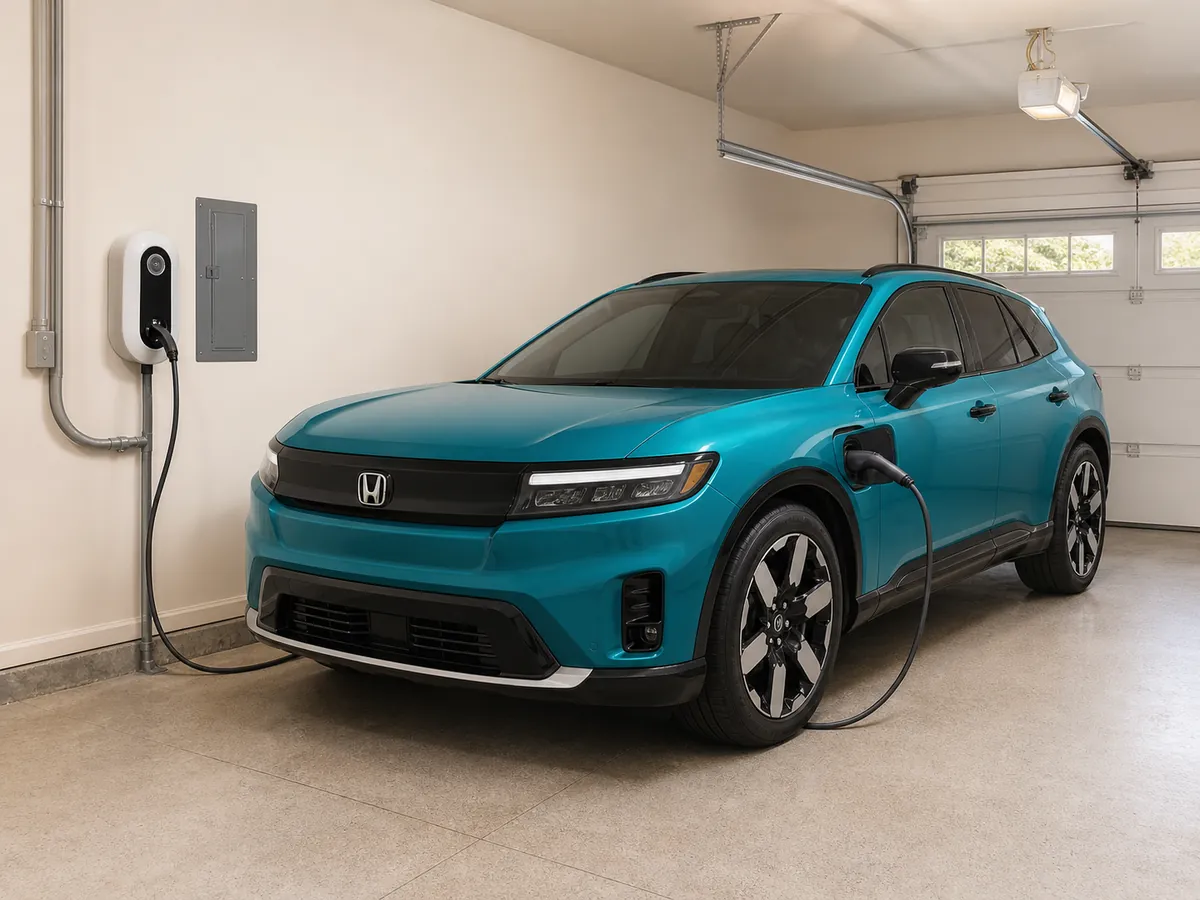
Honda says a 240-volt Level 2 source can add up to 34.1 miles of range per charging hour under its stated conditions. The useful home result depends on circuit capacity, charger output, wiring length, temperature, household load, utility rules, parking location, and charging losses.
What a licensed electrician should inspect and quote
- Service panel condition and the capacity actually available
- Grounding, cable route, and the outdoor rating where the equipment will sit
- Permits, local code requirements, and any utility rules that apply
- Connector reach to the charge port, and future loads the panel must still carry
- A written quote separating electrical work, equipment, permits, trenching, repairs and incentives
The cord should reach the charge port without an extension, tight bend, trip hazard, or repeated contact with the body.
Protect equipment from vehicle impact and weather. Follow Honda, charger-maker, electrician, utility, and local-code requirements.
Apartment and workplace drivers need written access rules. Confirm pricing, idle fees, availability, repair responsibility, assigned-space rights, and what happens when the charger is blocked.
A public station near home is not equal to a dependable overnight connection.
Compare charging needs with a Nissan Leaf or planned Toyota C-HR EV, but use each vehicle's connector and charge curve. Buy Prologue after the parking space, electrical capacity, cable reach, and nightly energy need have a complete plan.
Ask the electrician for the continuous load, breaker size, conductor path, panel capacity, expected charging power, permit requirement, and total installed price.
Compare that power with the vehicle's usable overnight window. A larger charger does not help when the circuit or onboard equipment sets a lower limit.
Keep the quote and permit with the vehicle records for future service and resale.
DC charging is adequate for planned stops rather than class-leading speed
Honda lists about 35 minutes to charge from 20 to 80 percent on a suitable DC fast charger.
It also quotes roughly 62 to 65 miles added in 10 minutes depending on trim and drivetrain.
Those figures assume favorable charger, battery, and temperature conditions.
Prologue uses a CCS charging inlet and can access compatible Tesla Superchargers with Honda's NACS-to-CCS adapter where the network and vehicle support it. Carrying an adapter expands options, but it does not make every Supercharger compatible or remove station congestion, outages, pricing, or cable-position limits.
| Question | Evidence before departure |
|---|---|
| Compatibility | Vehicle, adapter, station, and network support |
| Arrival level | Planned battery reserve at the charger |
| Backup | Second compatible station within reserve |
| Speed | Expected battery and charger conditions |
| Access | Hours, trailer limits, parking, payment |
| Cost | Session price, idle fees, membership terms |
Plan the stop in the vehicle and a second app. Check recent station status, number of working stalls, payment method, nearby services, and a backup.
Do not arrive at a single remote charger with no reserve.
Cold or very hot battery conditions can slow the session.
During a test charge, confirm that the connector latches, the session starts, power rises normally, climate settings work, and the port releases. Inspect the port and adapter for heat damage, dirt, moisture, bent parts, or makeshift repairs.
A Toyota bZ4X or Ford F-150 Lightning may create a different road-trip pattern. Prologue can road-trip when a 35-minute charging window, adapter handling, and backup-station plan fit the route.
Time the complete stop during the test, including finding the site, waiting, starting payment, connecting, charging, and leaving.
The 20 to 80 percent figure measures only part of that experience.
Repeat the route plan with one busy station removed. If the remaining stop creates a long detour or no safe reserve, the vehicle does not yet fit that trip.
The long wheelbase creates adult space and a large turning circle
The same wheelbase that makes the cabin roomy is what makes the vehicle awkward in a small space. Both consequences come from one number.
What the dimensions buy and cost
- Overall length
- 192.0 in
- Wheelbase
- 121.8 in, which is where the two-row cabin space comes from
- Turning diameter
- 39.6 ft, which is what that wheelbase costs
- Width
- 78.3 in, which decides older garages and urban bays
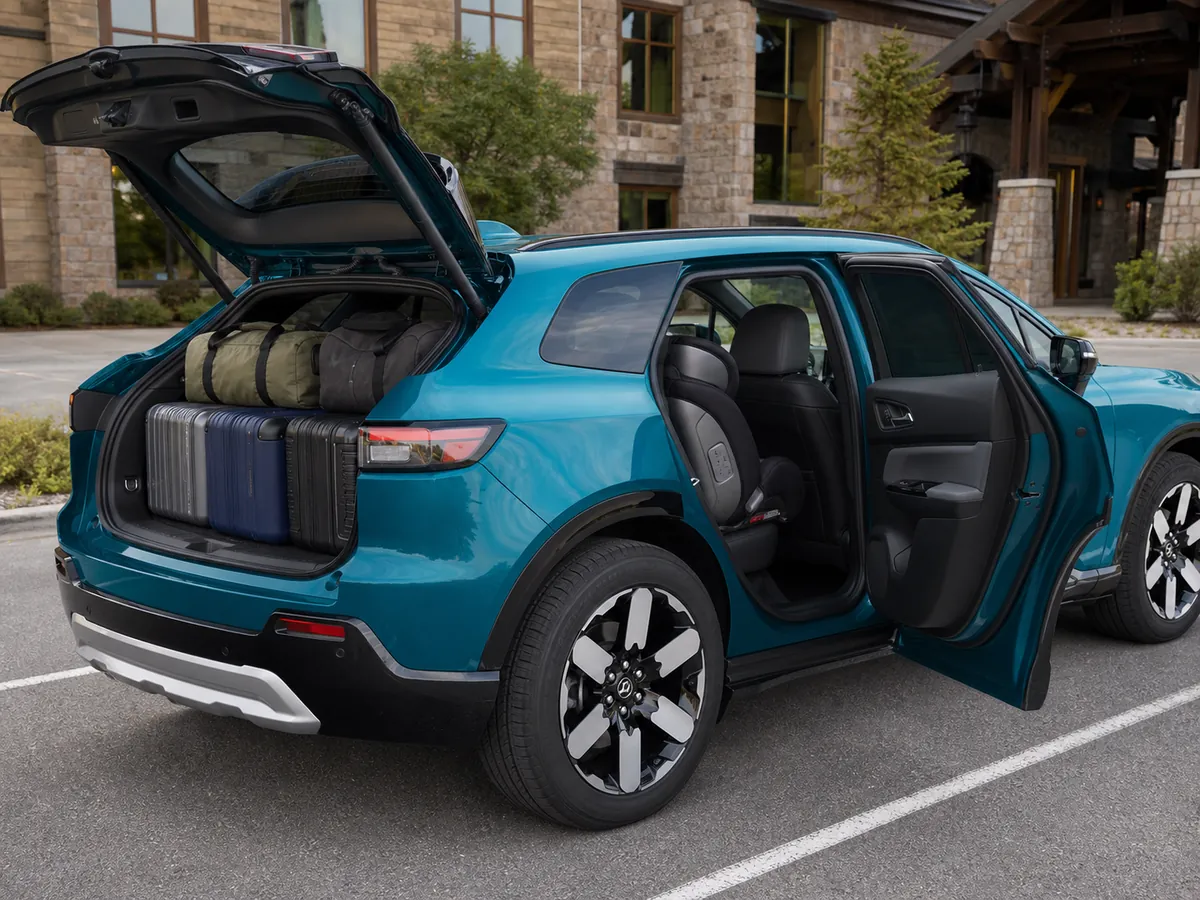
Set both front seats for the regular drivers. Check rear knees, feet, headroom, shoulder space, center-seat comfort, belt access, vents, ports, and floor height.
Install child restraints using Honda and seat-maker instructions without moving the driver forward.
Load a stroller, mobility aid, pet crate, sports equipment, work cases, groceries, or luggage with every required seat upright.
Check liftgate height, floor level, underfloor storage, rear visibility, and cable storage. Secure the charging cable so it does not become a hard loose object.
Measure the home parking space. Open every door and the liftgate, then check mirror clearance, charger-cable route, wall equipment, overhead door, and walking space.
Reverse into a tight stall and test cameras, rear cross-traffic functions, and turning clearance.
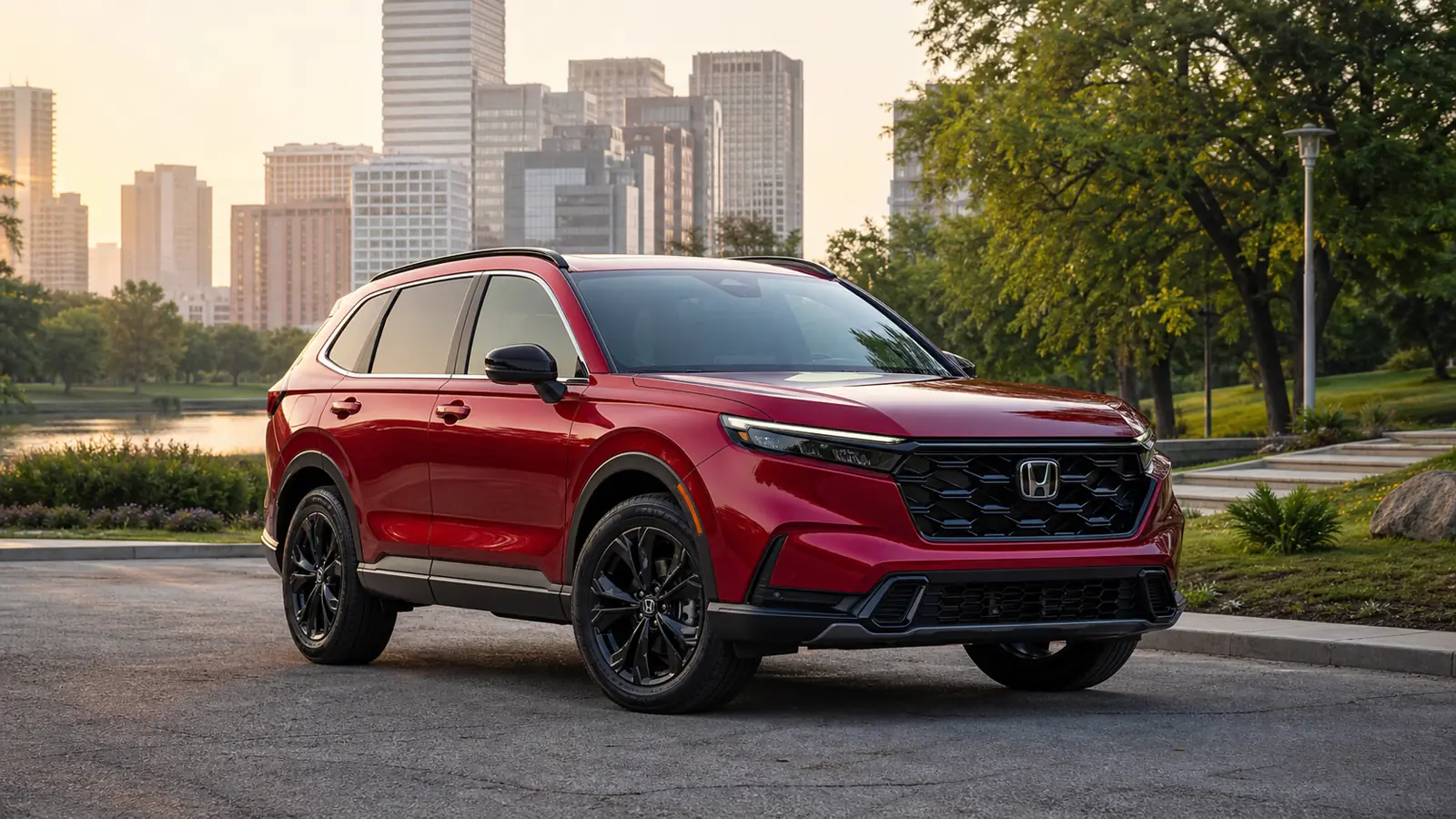
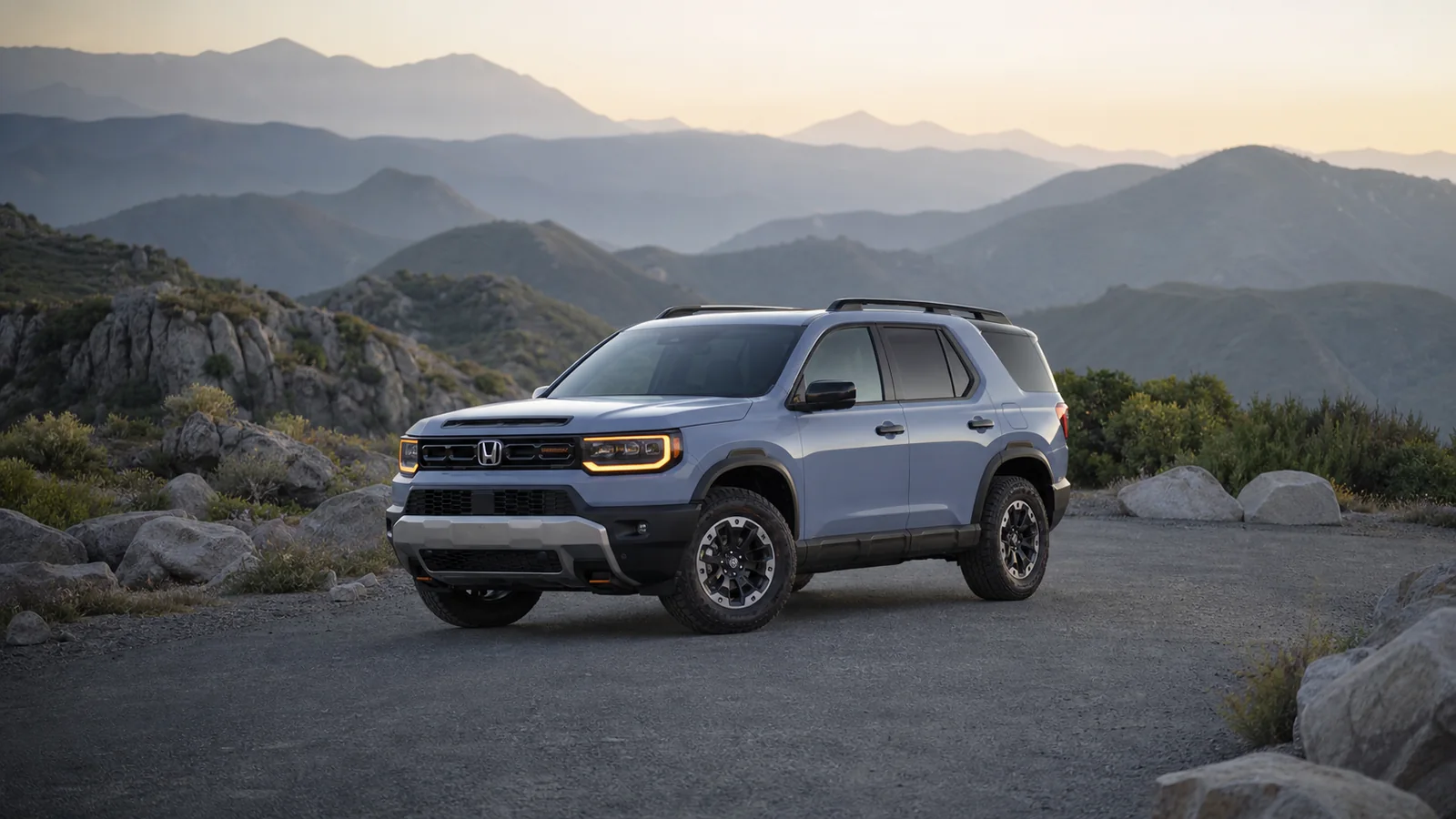
A Honda CR-V is shorter and gas-powered, while a Honda Passport offers a different two-row road-trip package. Prologue's cabin is useful when its passengers, cargo, charging cable, and 192-inch body all fit the same daily space.
Check payload on the certification label before treating the roomy cabin as unlimited. Five adults, luggage, a hitch accessory, and a tongue load all use the same allowance.
Honda lists a 1,500-pound maximum tow rating, but the loaded vehicle must remain inside every weight limit.
Use an actual scale when towing or carrying a near-limit family load.
IIHS results are mixed enough to read category by category
IIHS gives the 2026 Prologue Good ratings in the updated moderate-overlap front and updated side tests. The combined small-overlap rating is Acceptable because the passenger-side result is Acceptable even though the driver-side result is Good.
Headlights and pedestrian front-crash prevention are Acceptable.
Standard vehicle-to-vehicle front-crash prevention, seat-belt reminders, and LATCH ease receive Good ratings.
These details are more useful than describing the vehicle as simply safe or unsafe. The tests apply to the model years stated by IIHS and cannot predict every crash.
Inspect belts, airbags, child anchors, tires, brakes, glass, lamps, cameras, radar areas, underbody battery protection, and previous structural repair. Require calibration records after windshield, bumper, steering, suspension, or collision work.
Test forward warning, lane assistance, blind-zone functions, camera views, rear automatic braking, and parking alerts within safe conditions.
Read their limits. The systems can lose performance in glare, bad weather, blocked sensors, or unusual road geometry.
A planned Prologue versus Model Y comparison can compare size and charging, but each IIHS category should remain attached to the tested model. Prologue has strong results in several areas and Acceptable limits in others, so the honest conclusion is specific rather than absolute.
For a used vehicle, match glass, restraint, airbag, and sensor part numbers to the repair record where possible.
Battery protection under the floor deserves a lift inspection after a curb strike or collision. A body panel can look straight while a shield, cooling line, mounting point, or calibration remains damaged.
Pause the deal when the seller will not allow this inspection.
Early used cars need recall, charging, and software evidence
Prologue began with the 2024 model year, so long-term evidence remains limited. NHTSA campaign 24V-540 covers certain 2024 vehicles whose right-front lower control link may contain a manufacturing defect and fracture.
Honda instructs dealers to inspect and replace the part when necessary.
Start a used vehicle cold and scan every module before codes are cleared. Review battery, drive-unit, charging, thermal, 12-volt, restraint, camera, and driver-assistance history.
Test AC charging and a short DC session where practical. Inspect the port, adapter, cable, underbody shield, suspension, tires, brakes, glass, and collision repair.
Check every key, app function, user profile, map, camera, screen, climate feature, seat, window, lock, charge schedule, and connected service.
Confirm software updates and subscription terms. A reset screen or recent 12-volt replacement can be an inspection prompt without proving a widespread defect.
Ask a qualified shop to review battery diagnostic data and warranty status for the VIN. Dashboard range changes with recent driving and temperature, so one displayed number cannot measure battery health.
The planned Prologue reliability record can track year-specific evidence. A used Prologue needs VIN documentation, two charging tests, a full diagnostic scan, and a service path the buyer understands.
Confirm that both charging paths work before accepting a promise that a future update will solve the problem. Record the battery level and temperature, AC power, DC power, error messages, charge-port locking, and session receipt.
Verify that the seller removes the vehicle from personal accounts and that Honda can transfer access.
Missing account control can block app features even when the hardware is healthy.
Charging, tires, insurance, and depreciation decide the real cost
Electricity can cost less per mile than gasoline, but Prologue ownership includes the vehicle price, finance interest, home electrical work, public charging, insurance, registration, 19-inch or 21-inch tires, service, repairs, and depreciation. Incentives vary by buyer, date, location, income, lease structure, and vehicle eligibility.
| Cost | Number to collect |
|---|---|
| Purchase | Out-the-door price after every incentive |
| Finance | APR, term, down payment, total interest |
| Home charging | Equipment, electrical work, permits |
| Energy | Home rate, public rate, charging losses |
| Insurance | Exact VIN and driver quote |
| Tires | Full set, alignment, damaged wheel |
| Service | Honda schedule and local labor |
| Resale | Conservative estimate, not a promise |
Compare incentives only after reading current official rules. A discount that arrives through a lease may carry acquisition, disposition, mileage, condition, or buyout terms.
Do not subtract a tax benefit from the price until eligibility and timing are clear.
Use utility bills to calculate home cost. Add charging losses and time-of-use rates.
Public fast charging may cost far more than overnight energy. Include apartment fees or workplace pricing when home charging is unavailable.
Elite raises tire and purchase costs while reducing label range.
AWD may raise insurance and energy use. A lower EX FWD price can create more savings than chasing a small electricity advantage after buying equipment the owner does not need.
Compare total cost with a gas SUV and hybrid SUV over the same miles. Prologue is economical when the transaction, home charging, insurance, and depreciation work before fuel savings are counted.
Separate fixed costs from per-mile costs. The payment, insurance, registration, charger installation, and much of depreciation continue even when the vehicle travels less.
Electricity, public sessions, tire wear, and scheduled service move more directly with use. Compare those two groups with the same groups for a gas or hybrid SUV over the expected ownership period.
Ask the insurer how battery or charging-equipment damage is handled, because an EV claim can involve a component worth a large share of the vehicle. Ask separately about the wall unit, because a homeowner policy does not always extend to it.
Price 19-inch and 21-inch replacements before choosing a trim, including alignment and one damaged wheel. Keep incentive money out of the calculation until an official source or qualified tax professional confirms that the buyer, vehicle, transaction, and date qualify.
A lower energy bill cannot repair an expensive transaction, while a sound price and dependable home charging can make the Prologue easier to own even before uncertain resale is considered.
EX FWD is the strongest Prologue value after a charging test
Prologue provides adult-friendly space, 308 miles of maximum EPA range, access to more charging through an adapter, and a lower 2026 starting price. Its shared GM foundation, 35-minute 20-to-80-percent charge claim, mixed IIHS categories, and short history require clear expectations.
Pros
- Up to 308 miles of EPA range
- Roomy two-row cabin
- 220-hp FWD and 300-hp AWD choices
- Eight-year or 100,000-mile battery warranty
Cons
- No native NACS inlet
- DC charging trails faster rivals
- Elite wheels reduce range and raise tire cost
- Limited long-term reliability evidence
The best buyer has a reliable parking-space charging plan, can complete the longest repeated day with reserve, and accepts the GM-connected controls and service arrangement. Elite needs a strong equipment reason because it costs more and travels less on the label.
The rest of Honda's range answers a different question from this one, and the comparison is worth making before signing.
If two rows and five seats is the requirement, that filter narrows the field faster than any trim decision.
EX FWD is the rational choice when a real home charge, highway range, cargo, software, and service test all pass.