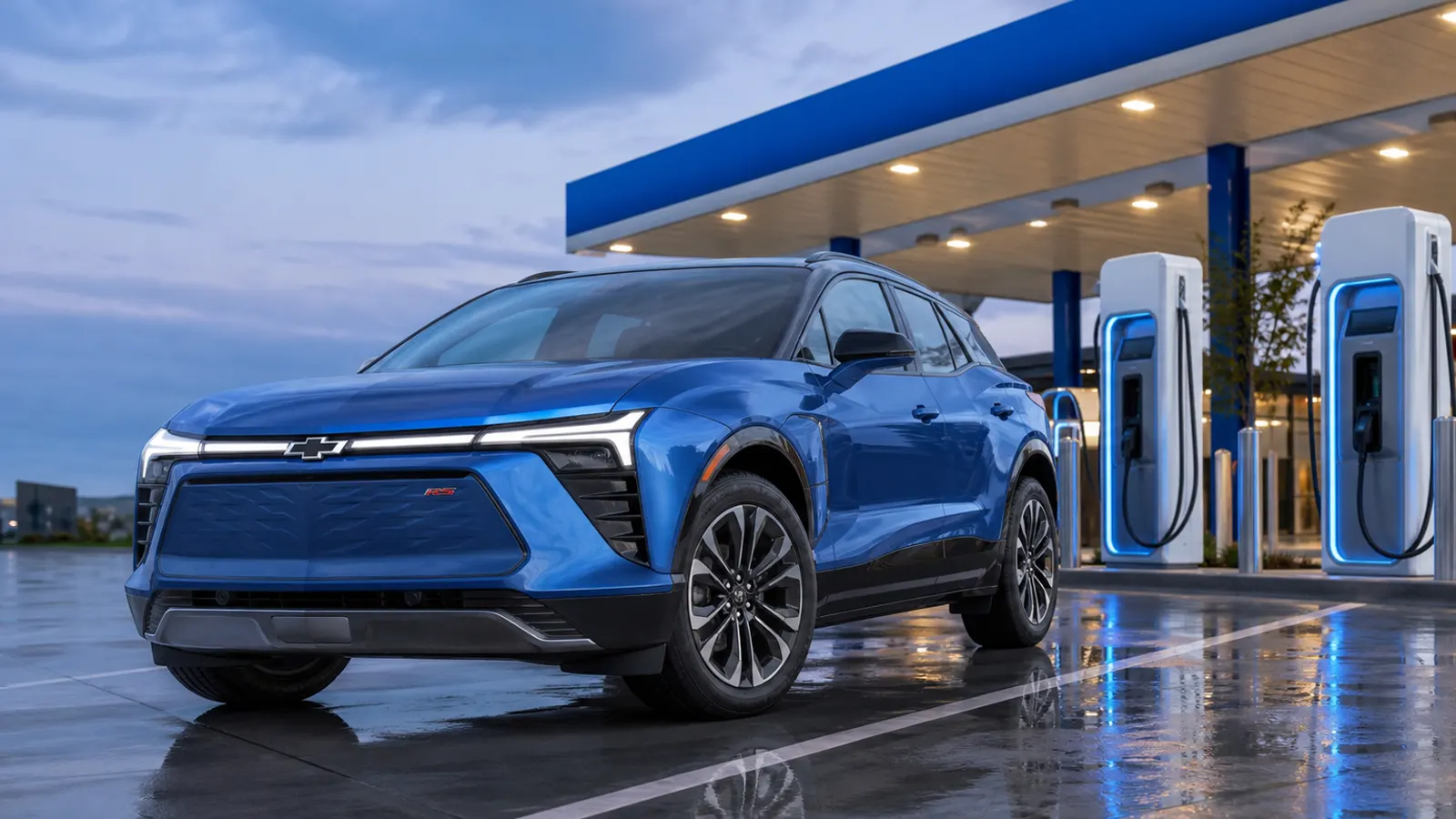
The Blazer EV Choice Starts With Charging and the Weekly Route
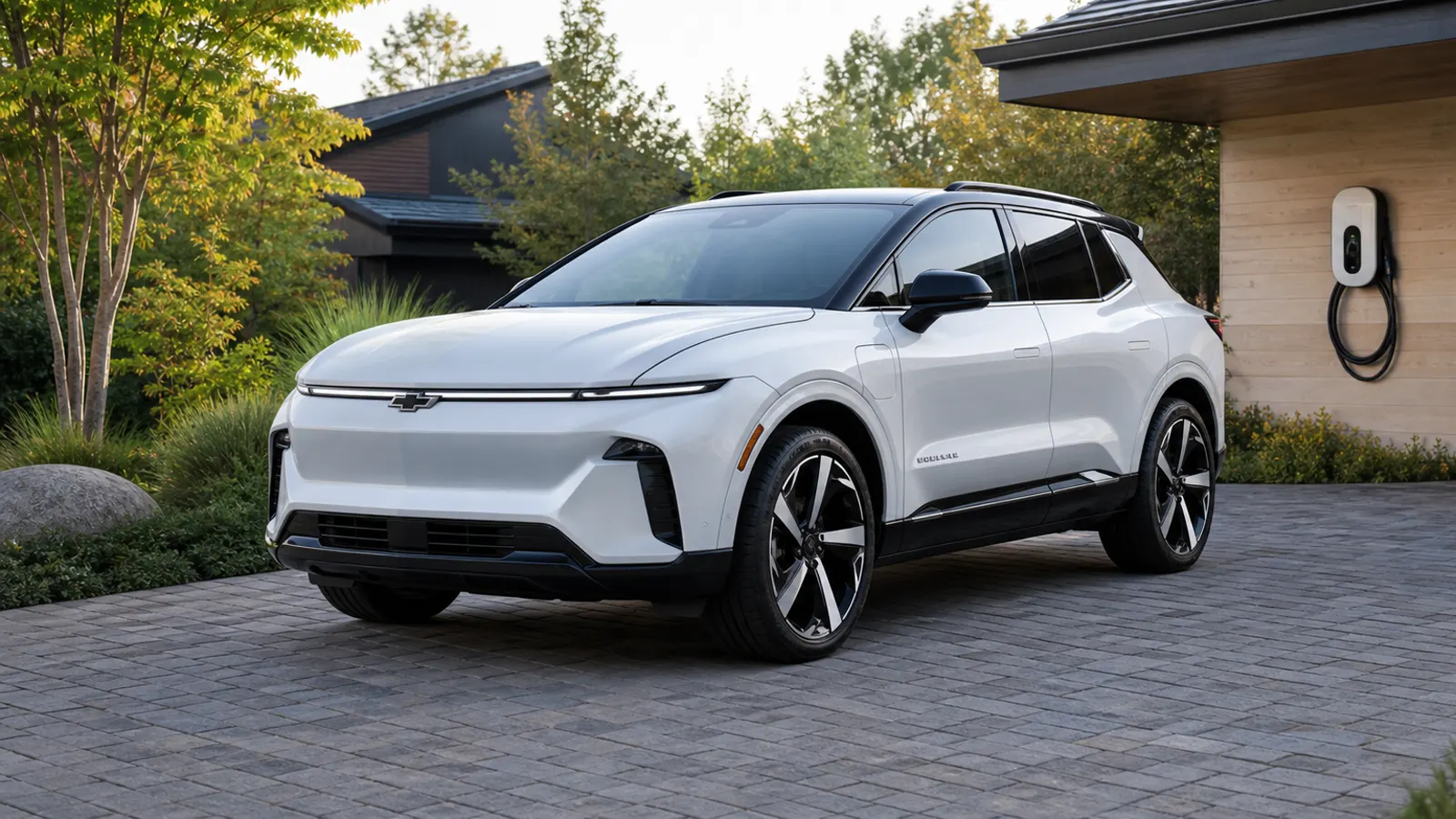
The 2026 Chevrolet Blazer EV is a five-seat electric SUV with front-wheel drive, all-wheel drive, and a high-performance SS version.
Chevrolet lists up to 312 miles of EPA-estimated range for LT and RS front-drive models.
That number is useful only after the owner has a dependable place to charge.
Write down the longest normal day, overnight parking time, local electricity rate, winter temperature, and available public chargers.
A 312-mile label does not mean 312 miles in every season. Speed, cold, cabin heat, wind, elevation, tires, cargo, and battery state change energy use.
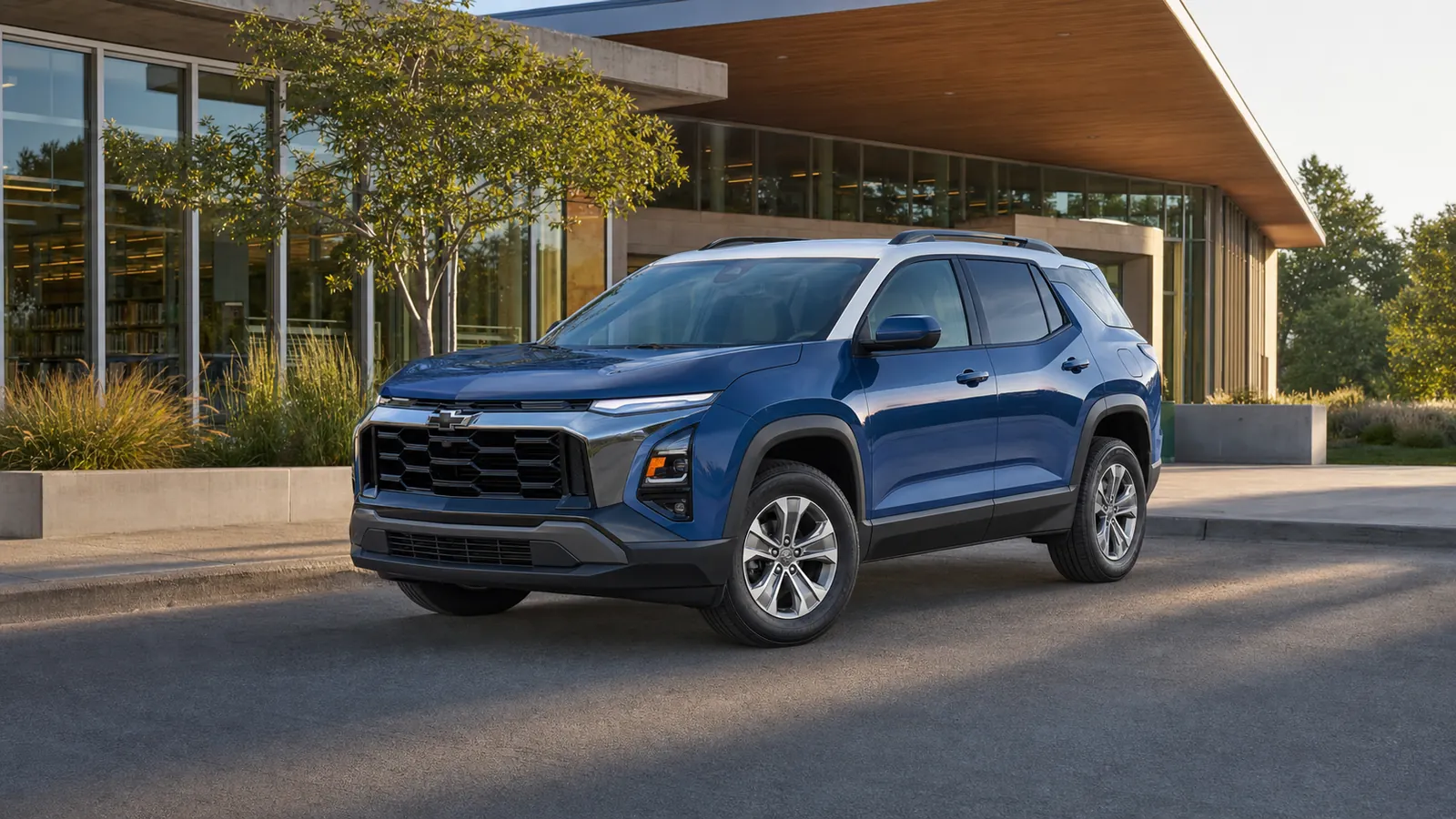
The Chevrolet Equinox EV offers a lower entry price and a more value-led shape. The Honda Prologue shares important GM-developed EV hardware but has different tuning, equipment, service, and warranty relationships.
Drive and price all three as complete vehicles.
Blazer EV is not the gas Chevrolet Blazer with an electric engine. It has a different platform, cabin, drivetrain, weight, charging system, and safety evidence.
Choose it only after the household proves where, when, and how the vehicle will charge every week.
FWD Maximizes Range, AWD Adds Traction, and SS Changes the Mission
LT and RS front-wheel-drive versions carry the 312-mile headline estimate.
AWD gives up some efficiency for driven wheels at both axles. The SS raises output to 615 hp and 650 lb-ft, with a Chevrolet-estimated 3.4-second run to 60 mph using Wide Open Watts.
| Version | Best reason to choose it | Main tradeoff |
|---|---|---|
| LT or RS FWD | Longest range and lower operating demand | Less wet or snow launch traction |
| LT or RS AWD | Repeated snow, steep grades, or loose access | Higher price and energy use |
| SS AWD | Strong acceleration and performance hardware | Highest price, tire use, and insurance risk |
Do not buy AWD because it sounds safer. It helps the vehicle accelerate when grip is limited, while winter tires, speed, and following distance control much of the stopping and cornering result.
Check whether the regular route actually includes untreated hills or loose surfaces.
The SS can deliver remarkable acceleration, but rapid launches consume energy and tire tread. Its larger wheels and performance focus may also increase replacement cost and reduce ride compliance.
Get an insurance quote using the exact VIN before accepting a payment.
Drive each candidate at the same battery percentage on the same route. Test highway merging, low-speed brake blending, steering, ride, rear visibility, and one-pedal settings.
The AWD vehicle guide can help separate traction from stopping.
FWD is the rational baseline because it preserves the Blazer EV's strongest range claim without changing its passenger space.
A 39-Minute Fast-Charge Claim Needs the Right Charger and Battery Conditions
Chevrolet estimates about 39 minutes to charge from 10 to 80 percent at a suitable DC fast charger.
That is a controlled window, not a promise for every stop. Charger output, battery temperature, starting percentage, station sharing, software, and the charging curve all change the result.
Charging facts
- EPA-estimated maximum range
- 312 miles
- Published 10% to 80% time
- About 39 minutes
- Battery limited warranty
- 8 years or 100,000 miles
- Public connector planning
- Confirm adapter, network, and vehicle support
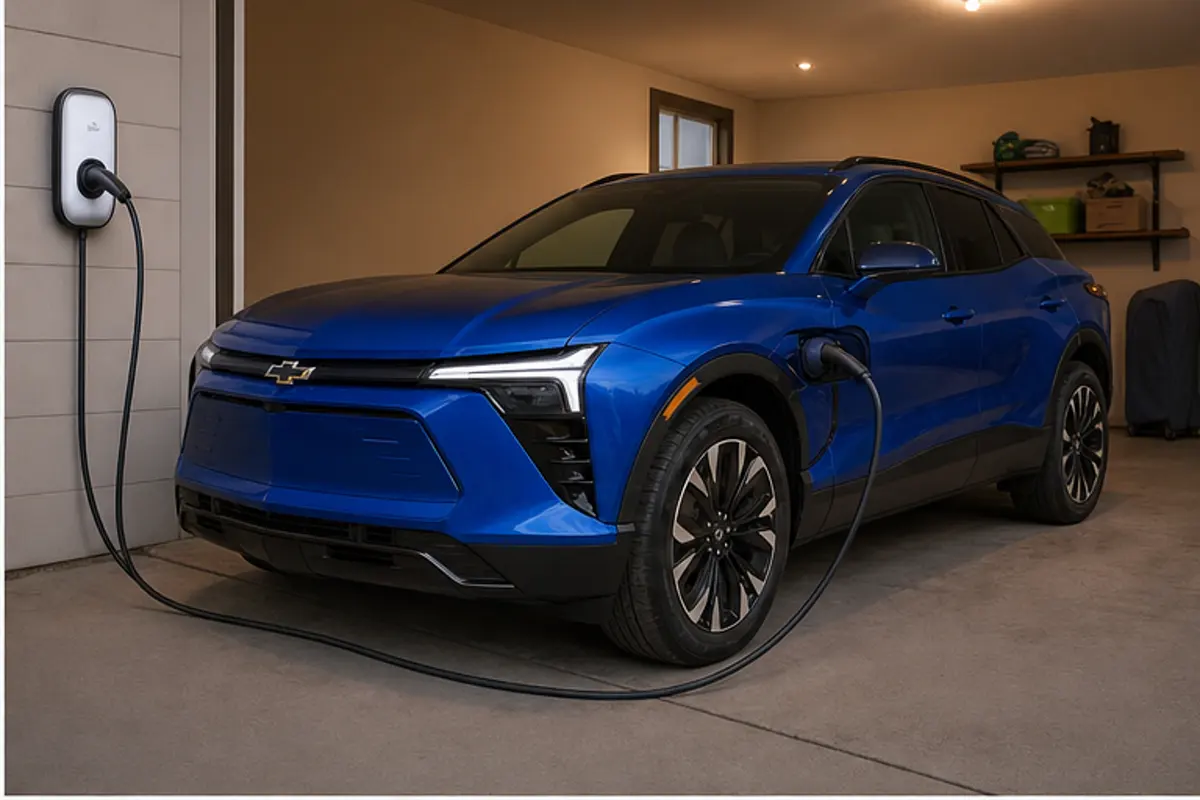
For home charging, ask a licensed electrician to inspect panel capacity, wiring route, breaker space, permit needs, load management, and the parking location.
Compare the full installed cost, not only the wall unit. A standard outlet may cover a short commute, while a 240-volt circuit gives more overnight recovery.
At a public station, test payment, cable reach, connector fit, charge initiation, peak power, taper, and receipt.
GM-approved access to additional compatible stations may require the correct adapter and account setup.
Do not assume every connector or third-party adapter is authorized.
Plan road trips around the energy needed to reach the next reliable charger, not around using the final displayed mile. The EV charging guide explains why shorter charging stops can be faster overall than waiting near 100 percent.
Keep screenshots or receipts when charging behavior is abnormal. Record temperature, station ID, starting state, ending state, time, and any message.
The Blazer EV works best when home charging handles ordinary miles and public fast charging serves occasional longer trips.
The Cabin Is Wide and Comfortable, but Cargo Volume Is Not Class-Leading
Chevrolet lists five seats and 59.1 cubic feet of maximum cargo room. The broad cabin suits two adults in front and gives rear passengers useful space, but the sloping body and floor height can matter more than the maximum number.
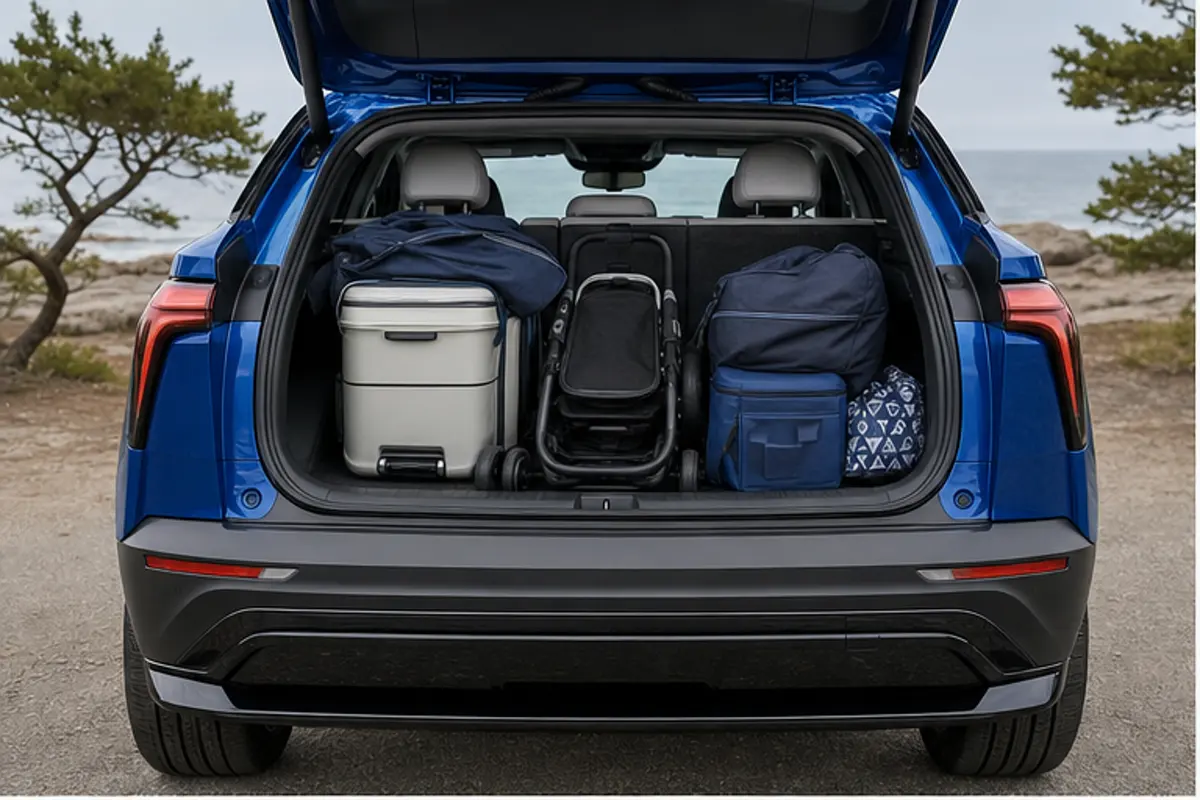
Install child seats and test front-seat travel, buckle access, tethers, door opening, roof clearance, and the center position.
Load a stroller, mobility device, pet crate, or work cases without folding seats.
Check lift-over height and whether the cargo cover must be removed.
The Hyundai Ioniq 5 uses a more upright cabin and can feel airier.
The Kia EV6 emphasizes fast charging and a lower shape. Blazer EV answers with styling, range choices, and a familiar Chevrolet sales network.
Test the large display, climate controls, route planning, phone pairing, voice functions, camera views, driver profiles, and charge settings without help.
Ask which connected functions require subscriptions. A feature list cannot show whether the interface remains clear in rain, darkness, or gloves.
Use the cargo area during a test drive so rattles and visibility changes appear. The cabin is a reason to buy only when real passengers and luggage fit without consuming the range reserve needed for the trip.
IIHS Results Are Strong Overall, With a Small-Overlap Limitation
IIHS gives the 2026 Blazer EV Good ratings in the updated moderate-overlap front and updated side tests. Headlights, vehicle-to-vehicle front crash prevention, seat-belt reminders, and LATCH ease of use are also Good.
Pedestrian front crash prevention is Acceptable.
The combined small-overlap result is Acceptable. Driver-side performance was Good, while passenger-side performance was Acceptable.
IIHS noted restraint movement in the passenger-side test. Read that detail instead of reducing the vehicle to one award or one letter.
Chevrolet's assistance systems still depend on visible markings, clear sensors, correct tires, and an attentive driver.
Test alerts and control locations safely. Read the owner's manual before changing one-pedal driving or automated features in traffic.
A heavy EV can accelerate quickly and carries more kinetic energy at speed.
Leave space, monitor tire condition, and practice smooth regenerative and friction braking. The Blazer EV recall guide should be used with the government VIN tool.
Run the 17-character VIN through NHTSA recalls at purchase and during ownership.
Campaigns apply to defined build populations.
The published IIHS picture is strong, but the Acceptable small-overlap result and individual VIN still belong in the decision.
Short Production History Makes Software, Charging, and Records the Reliability Test
Blazer EV has a short long-term record. That prevents an honest source from declaring how the battery, charge hardware, drive units, cooling loops, displays, and modules will perform over ten years.
The Blazer EV reliability report must keep that uncertainty visible.
| Area | Check | Why |
|---|---|---|
| Software | Verify updates, warning history, screen, cameras, profiles, and mobile app | Intermittent faults need evidence |
| DC charging | Complete a session and record power, time, and messages | Confirms charge communication and cooling |
| AC charging | Test the included equipment and charge port | Finds home-use faults |
| 12-volt system | Load-test and review replacement history | Low voltage can trigger many messages |
| Battery and underbody | Inspect shields, leaks, damage, and collision repairs | Pack-area damage requires specialist review |
| Tires and alignment | Measure tread and edge wear | EV weight and torque can consume tires |
NHTSA results for 2025 list defined campaigns, including electronic parking-brake behavior in campaign 25V433.
Later campaign data can change. Verify whether the exact VIN is included, whether parts or software were applied, and whether the repair order is complete.
A used seller should provide charge history where available, warranty records, service invoices, collision documentation, both keys, charging equipment, and account-release proof.
Complete a full-module scan. A clean dashboard does not prove there are no history codes.
The eight-year or 100,000-mile battery limited warranty is valuable, but buyers must read capacity, defect, transfer, exclusion, and remedy terms in the exact booklet. The Blazer EV problems guide can organize symptoms without turning reports into failure rates.
Choose the example with clean charging tests, complete updates, sound underbody protection, and documented warranty history rather than relying on a broad reliability score.
Cold Weather and Highway Speed Need a Range Reserve
EPA range supports comparison under standardized conditions.
It is not a trip guarantee. Cold battery temperature, cabin heating, wet roads, headwinds, high speed, elevation, roof cargo, heavy loads, and aggressive acceleration can reduce displayed and actual range.
Build a conservative winter plan from the longest routine trip. Start with the available charge, subtract a weather and detour reserve, and make sure the car returns with enough energy to reach another charger if the home unit fails.
Drivers without dependable home or workplace charging need a larger buffer.
Cabin preconditioning while plugged in can preserve battery energy for travel. Heated seats may use less energy than warming the entire cabin, though comfort and defogging remain safety priorities.
Tire pressure falls in cold weather and must follow the door placard.
The Ford Mustang Mach-E and Tesla Model Y offer different charging networks, cargo shapes, software, and pricing. Run the same route and insurance assumptions for each.
A vehicle can have enough total range and still be inconvenient if the only reliable public charger requires a long detour. Select the drivetrain from the worst regular route, then keep a reserve that covers weather, detours, and an unavailable charger.
Plan one cold-weather failure case. Assume the home charger did not run overnight, the cabin needs defrosting, and the preferred public station is unavailable.
The remaining energy must reach work, a backup charger, and a safe parking place without relying on the final displayed miles.
Keep the portable cable accessible rather than buried below luggage. Confirm roadside assistance can transport the vehicle to a charger or qualified dealer because a conventional fuel delivery cannot restore an empty battery.
Home Equipment, Tires, Insurance, and Depreciation Decide the Cost
Electricity is only one part of ownership cost. Compare transaction price, incentives, tax rules, finance, depreciation, registration, insurance, home electrical work, public charging, tires, maintenance, and a repair reserve.
Incentive eligibility can change by buyer, vehicle, date, and place, so verify current government and dealer documents before signing.
For a simple energy estimate, multiply annual miles by expected kWh per mile, then add charging losses and multiply by the utility rate.
Compare that result with a gas vehicle using the same miles and current fuel price.
Public fast charging can cost much more than home energy.
Performance tires can erase part of the maintenance advantage. Get installed prices for the exact size and inspect wear across each tread.
Alignment, road damage, high torque, and repeated launches change life. Insurance for SS may be materially higher than for LT.
Depreciation matters when technology, incentives, and new prices move quickly. Compare a three-year ownership case with a long-term case rather than assuming a lease or purchase always wins.
The Blazer EV cost guide should use consistent assumptions.
Routine service may omit engine oil, but tires, cabin filters, brake fluid, coolant inspections, wipers, brakes, and software work remain. Blazer EV saves money when the purchase price is controlled and most energy comes from dependable low-cost charging.
Used Blazer EV Buyers Need a Charge Test and Underbody Inspection
A used EV inspection is different from a gas-car walkaround.
Begin with title, collision, warranty, recall, and service records. Confirm that the seller has removed personal accounts and that both keys, mobile access, adapters, and charging equipment transfer correctly.
Inspect the battery shield and surrounding structure on a lift. Road debris, curb strikes, improper lifting, flood exposure, and collision repairs can matter even when exterior paint looks clean.
A qualified technician should evaluate any pack-area damage or isolation warning.
Complete both AC and DC charging when practical. Record starting state, power, temperature, time, ending state, and messages.
Test charge scheduling and stop limits. Confirm the port locks and releases normally.
The used EV guide can provide a wider checklist.
Drive from cold to fully warm, scan every module, test all cameras and safety systems, and inspect tires for uneven wear. Ask a dealer to confirm open campaigns and remaining coverage in writing.
Compare the used price with a new vehicle after current incentives and finance rates. A small sticker discount can disappear when the used loan costs more or the new car carries stronger coverage.
A complete charge test, clean scan, sound underbody, and documented warranty are more valuable than an optimistic range display.
LT or RS FWD Is the Practical Choice for Most Blazer EV Buyers
The broad recommendation is an LT or RS with front-wheel drive, selected by equipment and price. It delivers the longest published range and avoids paying for traction or acceleration that may not change the weekly trip.
Pros
- Up to 312 miles of EPA-estimated range
- Strong updated IIHS crash results overall
- Quiet, wide five-seat cabin
- Multiple drivetrain and performance choices
Cons
- Cargo volume is modest for its outside size
- Long-term reliability evidence is limited
- Public charging results vary by station and conditions
- SS increases tire, insurance, and energy costs
Choose AWD when repeated snow, grades, or loose roads justify it. Choose SS only after a same-route drive, tire quote, insurance quote, and range assessment show that its performance is worth the cost.
A lower-cost family buyer should compare Equinox EV. A long-trip buyer should compare real charger coverage and charge curves with Ioniq 5, EV6, Model Y, and Volkswagen ID.4.
Buy Blazer EV when its cabin, range, and charging plan work together, then choose the least complex drivetrain that completes the trip.
A Delivery-Day Route Test Should Reproduce the First Month of Ownership
A final demonstration should cover more than acceleration. Begin at the normal parking place, connect the household phone, select a driver profile, set the charge limit, and map the longest routine destination.
Make sure route planning identifies usable stations and shows the energy estimate clearly.
Drive with normal passengers and climate settings. Include a highway merge, rough pavement, a tight parking maneuver, and a downhill section where brake blending can be felt.
Change one-pedal settings only on a safe road and learn how the vehicle behaves when regenerative braking is reduced by battery condition or temperature.
Use the EV tire guide to record tire size, load rating, pressure, replacement price, and repair policy. Compare the SS insurance quote with a Chevrolet Corvette only to understand how insurers price performance, not because the vehicles serve the same use.
At home, complete a full overnight charge and confirm the scheduled departure percentage. At a public station, test the account, adapter if approved, cable reach, start sequence, taper, and receipt.
The Nissan Leaf shows why connector and charging-generation differences must be checked by exact model year.
For delivery, save the window sticker, buyer order, incentive documents, warranty booklets, campaign result, software version, charge-equipment list, keys, and insurance binder. The Blazer EV maintenance schedule should be placed with those records so tire rotations, brake-fluid checks, coolant inspections, and cabin filters are not forgotten.
A three-row household should stop and compare Chevrolet Traverse before accepting less cargo and seating. The delivery is complete only when charging, software, passenger fit, tires, records, and the longest routine route have all worked without sales assistance.
During any seller return window, repeat an overnight AC charge, a public DC session, the longest local highway drive, and the family cargo test.
Confirm keys, cable, approved adapter documents, account ownership, app access, and every promised feature. Save charging receipts and record temperature, starting percentage, energy, time, ending percentage, and messages.
Report repeatable charging, brake-blending, screen, or warning faults in writing while warranty responsibility is clear.
This baseline makes later changes easier to prove.
Confirm which nearby Chevrolet dealer can diagnose high-voltage, charging, thermal-management, and software concerns. Ask about appointment lead time, towing procedure, loaner policy, and whether a disabled vehicle must arrive with a minimum battery state.
Warranty coverage does not repay every missed trip or rental. The practical ownership plan should include one service location, one towing number, one backup charger, and a way to cover transportation during a multi-day repair.