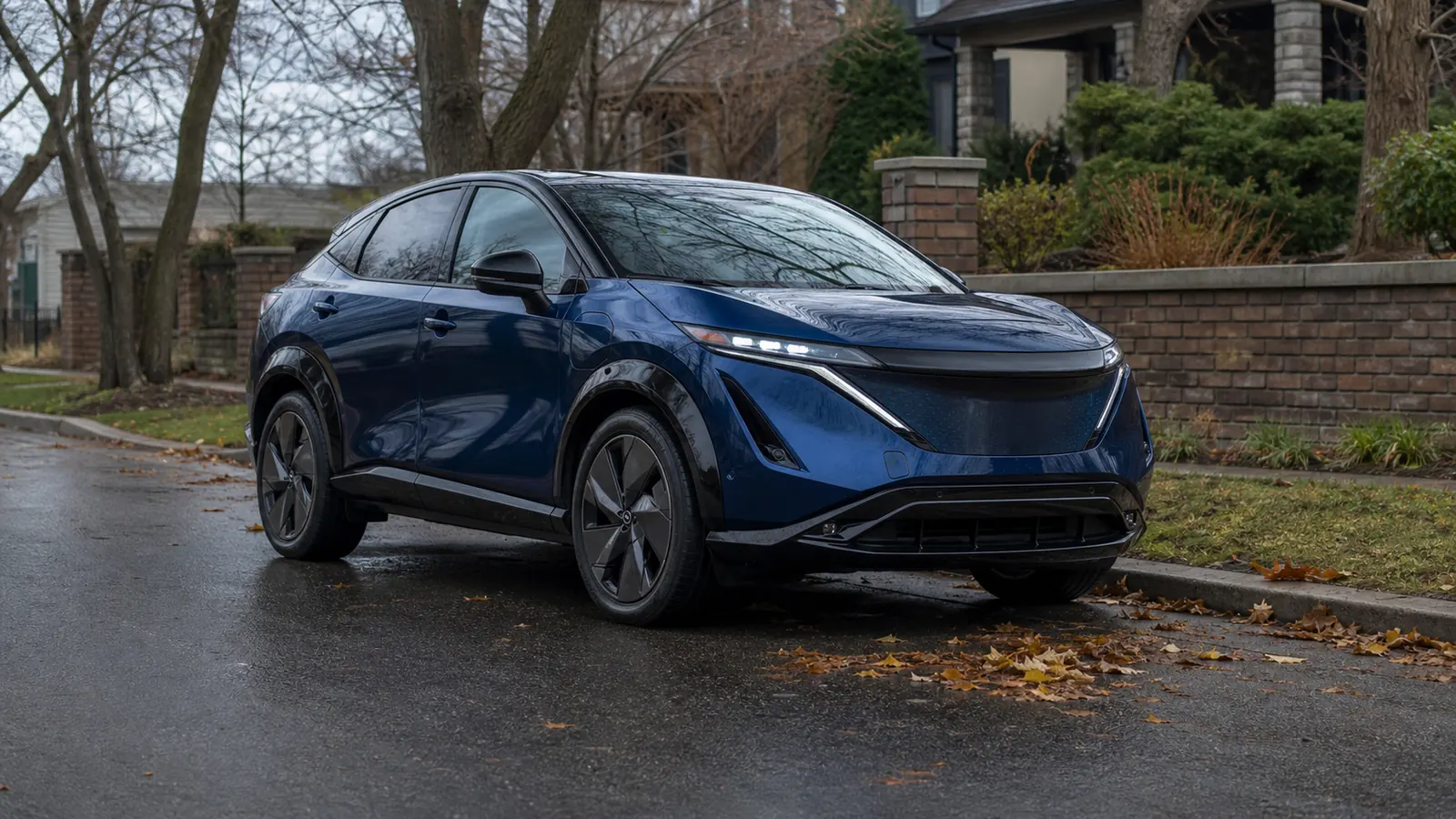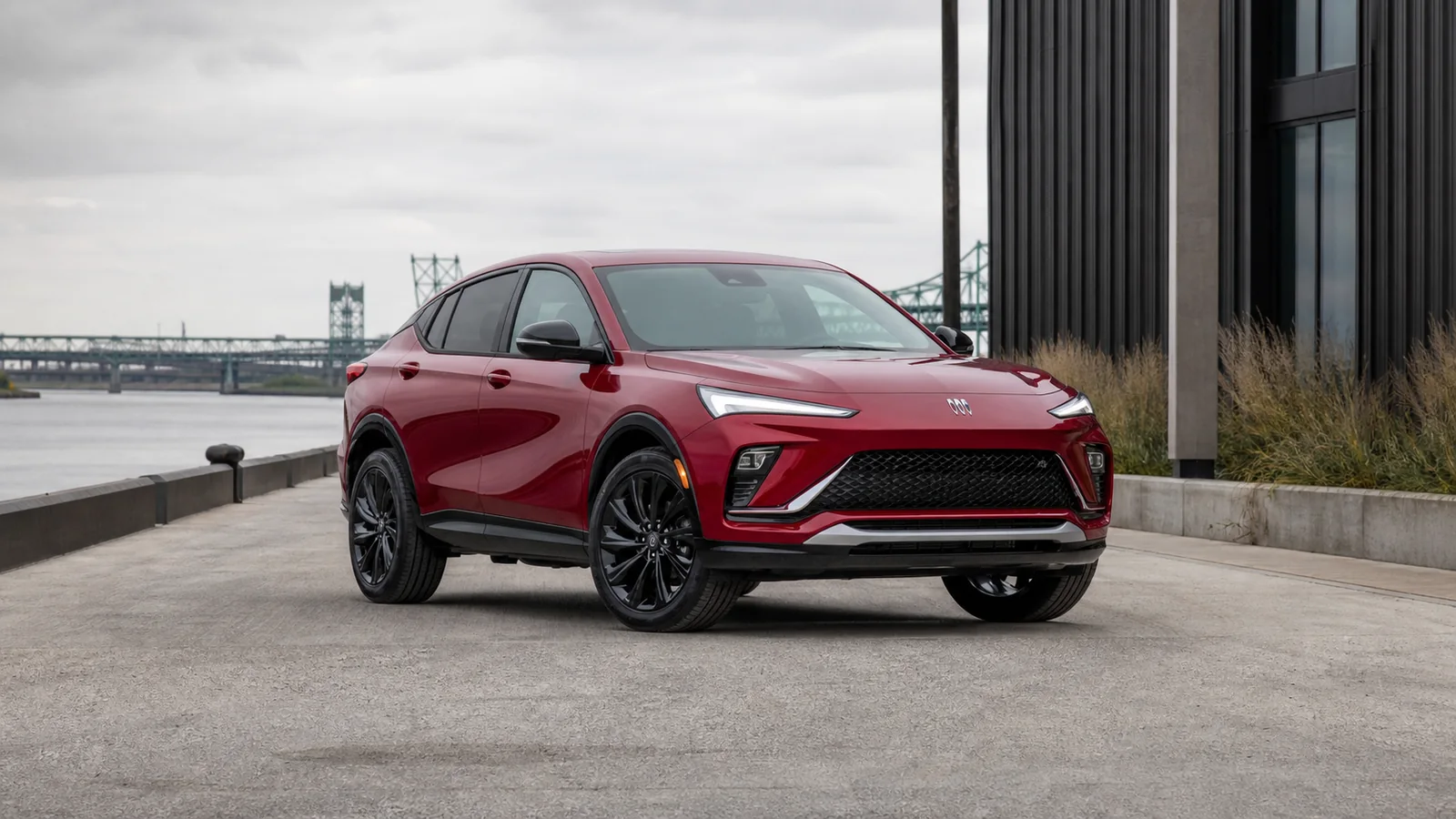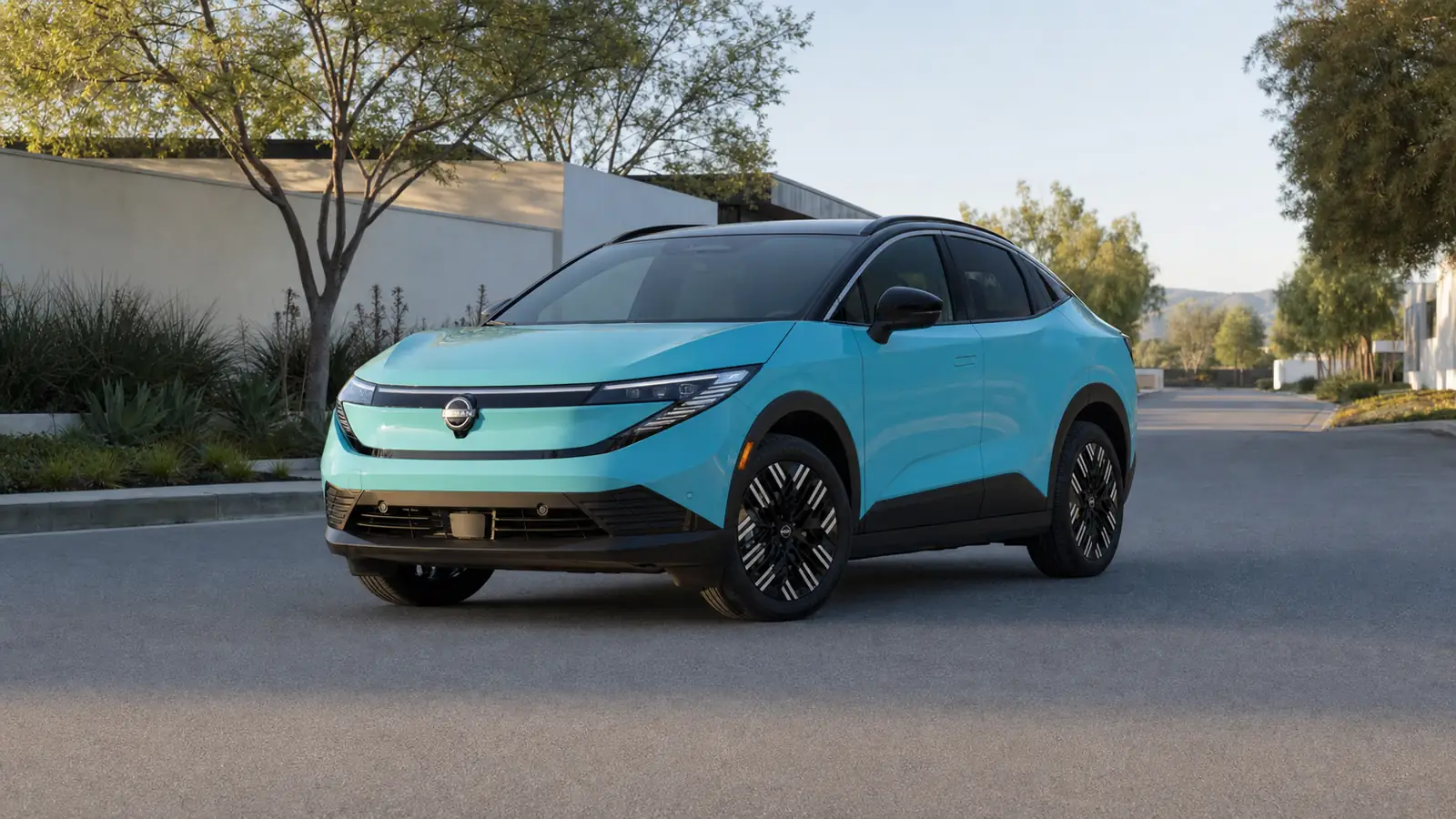
The 2026 Leaf is a new car, not an update of the old hatchback
The 2026 Nissan Leaf starts a third generation and changes the old formula in nearly every way that matters.
Nissan moved it to a crossover body, installed a liquid-cooled 75 kWh usable battery, added an integrated NACS fast-charge port, and raised maximum EPA-estimated range to 303 miles.
Advice about the 2011 to 2025 Leaf's passive battery cooling and CHAdeMO port does not describe this car.
- 2011First U.S. Leaf arrives with an air-cooled battery
- 2018Second generation adds more power and range
- 2026Third generation becomes a liquid-cooled crossover with NACS
That separation matters for shopping and research. A low-priced older Leaf can still fit short local driving, but its battery condition, charging connector, range, and warranty require a different inspection.
The new model competes more directly with current crossovers such as the Chevrolet Equinox EV and Hyundai Kona Electric.
The new design also has a short reliability history. Liquid cooling should control battery temperature more actively, but it does not prove how the pack, software, charge hardware, seals, and cabin electronics will age.
Early buyers should keep repair records and respond to updates rather than assuming the old Leaf's strengths or weaknesses carried over.
Use the Nissan brand guide to place the Leaf beside the rest of the lineup. Treat 2026 as a clean break, then judge this Leaf on its own price, charging, range, safety, and family fit.
S+ gives the longest range and lowest price
Nissan prices the 2026 Leaf S+ at $29,990 before its $1,495 destination charge.
SV+ starts at $34,230 and Platinum+ at $38,990. All three use the same 214 hp front motor, 261 lb-ft of torque, and 75 kWh usable battery, but wheels and equipment change efficiency.
| Trim | Starting MSRP | EPA-estimated range | Best fit |
|---|---|---|---|
| S+ | $29,990 | 303 miles | Maximum value and range |
| SV+ | $34,230 | 288 miles | More comfort and driver aids |
| Platinum+ | $38,990 | 259 miles | Premium equipment over range |
The S+ is unusual because the least expensive trim also travels farthest on the EPA cycle.
That makes it the rational starting point for commuters and families. Higher trims need to earn their price with equipment the household will use every week.
A panoramic roof, larger wheels, or richer cabin can be pleasant, but the Platinum+ gives up 44 miles of published range compared with S+.
Get an insurance quote for each VIN and compare total transaction prices after any incentive. Do not compare a heavily discounted lease payment with a financed purchase without adding the due-at-signing amount, mileage limits, fees, and likely end-of-term charges.
The lease versus buy guide provides the right worksheet.
- Start with the S+ quote
- Add only equipment used every week
- Price tires for the exact wheel size
- Compare total paid, not monthly payment
S+ is the default choice because it combines the lowest list price with the longest published range.
The 35-minute fast-charge window is workable, not class-leading
Nissan estimates about 35 minutes to move from 10 to 80 percent on suitable DC equipment under suitable conditions.
That is a major practical improvement over older Leafs, and the built-in NACS port opens access to compatible NACS fast chargers without making an adapter the daily plan.
It still trails the roughly 18-minute ideal window advertised for the Kia EV6.
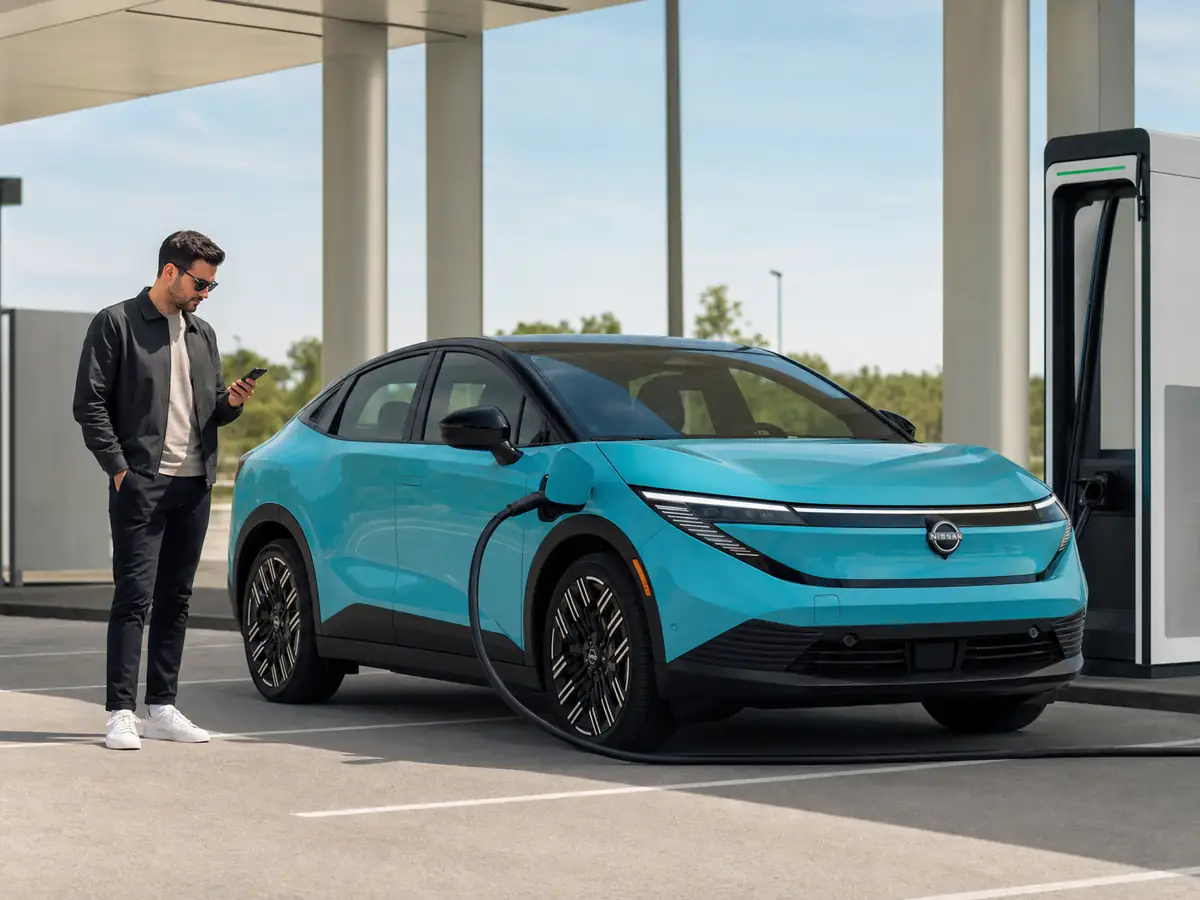
A percentage claim does not predict every stop. Battery temperature, starting charge, charger output, station sharing, weather, and the charging curve change the result.
Plan the trip around energy needed to reach the next dependable site. Waiting for the final 20 percent can take longer than leaving earlier for another stop.
Run a route in two seasons before buying. Note charger provider, stall count, recent uptime, price, nearby food and restroom access, and a backup within the remaining range.
Drivers who cross long rural gaps every month should compare that route with an Ioniq 5 or a gas car, not with an ideal laboratory claim.
- Arrive low enough for useful charging speed
- Keep a reserve for one alternate site
- Check cable reach before unloading passengers
- Budget time for queues and cold weather
The Leaf's fast charging fits occasional trips, while frequent long-distance drivers should price the extra time against a faster-charging EV.
Home charging decides whether the Leaf feels inexpensive
Nissan lists about 6.5 hours for a full charge on suitable 240-volt equipment. Most owners will not arrive at zero, so the better question is how long the equipment takes to replace the miles used on a normal day.
A reliable overnight refill can make public charging rare and turn the Leaf into a simple commuter.
Home charging checklist
- Parking
- Dedicated space within cable reach
- Electrical service
- Panel capacity confirmed by an electrician
- Equipment
- Correct circuit, connector, and weather rating
- Schedule
- Off-peak rate window fits daily mileage
- Backup
- Nearby dependable charger for outages
Get a written electrical quote before signing for the car. Include panel work, breaker, wire route, permits, wall repair, outdoor protection, and charger hardware.
Apartment residents should obtain written permission, access rules, energy price, idle fees, and a plan for another resident blocking the space.
The Leaf also has a J1772 inlet for AC charging. That makes existing home and workplace Level 2 equipment straightforward, while the NACS inlet handles compatible DC fast charging.
Verify the connector for the job rather than assuming one port handles every cable.
The owner's manual is the final authority for safe connection and release steps.
Compare the installation with the EV charging basics guide and the electric vehicle hub. Renters without dependable overnight access should price a month of public charging and parking time before buying.
The Leaf's low purchase price pays off most clearly when a predictable home charge covers the normal week.
Crossover styling does not guarantee that family cargo fits
The third-generation Leaf seats five and uses a taller crossover shape, but a family should test the interior with its own equipment. Exterior categories do not reveal rear-facing child-seat clearance, buckle access, hatch height, stroller shape, or whether a tall driver leaves useful knee room behind.
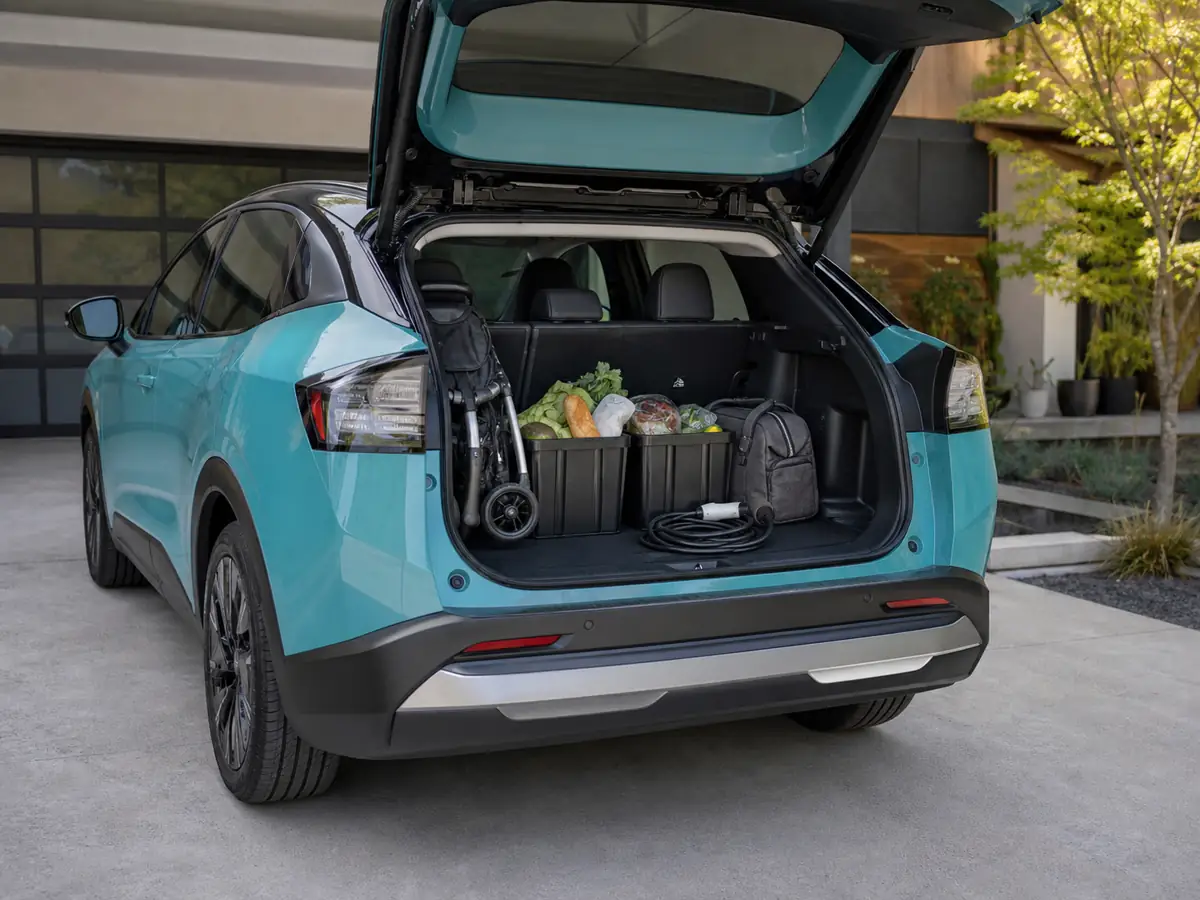
Set both front seats for the regular drivers. Install every child restraint and ask passengers to enter from both sides.
Check the rear door opening, roof clearance, center buckle, head restraints, air vents, USB access, and visibility.
A seat that technically fits can still force the front passenger too close to the dashboard.
Load the largest stroller, mobility device, sports bag, pet crate, or grocery bins used each week.
Keep charging cables accessible without unloading the whole trunk. Check whether the hatch clears the garage and whether the sloping roof restricts tall boxes.
The five-seat vehicle hub offers roomier and smaller alternatives.
- Install the actual child seats
- Keep every regular passenger position usable
- Load cargo below the rear sightline
- Store charge cables where they remain reachable
- Repeat the test with the cargo cover installed
A Volkswagen ID.4 has a more upright family cabin, while the Kia EV6 sits lower. Buy the Leaf only after its useful space, not its crossover label, handles the household's busiest day.
Liquid cooling changes the battery question but does not end it
Older Leafs became known for an air-cooled pack whose temperature depended heavily on weather and repeated fast charging.
The 2026 car uses active liquid cooling, which allows the battery system to manage heat more directly. That is a meaningful engineering change, but there is not yet a long fleet history showing degradation across climates.
A new buyer should read the battery warranty terms, record the original in-service date, and retain charging and service documents.
A future used buyer should request a battery health report that the seller can explain. Dashboard range changes with recent driving and climate use, so it is not a direct capacity measurement.
Inspect the underside after any impact and use EV-qualified repair help near the battery enclosure. Ask about coolant service and warnings, then test cabin heat and air conditioning because thermal systems may share important hardware.
The used EV guide explains why title and repair evidence matter as much as a short drive.
For long ownership, moderate daily charge limits can reduce time spent at a very high state of charge when the full range is unnecessary.
Follow Nissan's manual rather than a generic online rule.
The 2026 cooling system removes the old Leaf's central design limitation, but only time and vehicle-specific records can establish durability.
Current IIHS results are strong with one important distinction
IIHS rates the redesigned 2026 Leaf Good in the small-overlap front and updated side tests. It earns Acceptable in the updated moderate-overlap front test, where rear-seat protection is weighted more heavily than in the original procedure.
Headlights are Good, vehicle-to-vehicle front crash prevention is Acceptable, pedestrian prevention is Good, and LATCH ease of use is Good.
| Area | Result | What to verify |
|---|---|---|
| Small-overlap front | Good | Structural repair quality on a used car |
| Updated moderate front | Acceptable | Rear passenger restraint fit |
| Updated side | Good | Side structure and airbag history |
| Headlights | Good | Aim, damage, and night visibility |
| Pedestrian prevention | Good | Sensors clean and warnings active |
| LATCH ease | Good | Actual child restraint installation |
A set of good ratings does not make the driver-assistance systems autonomous. Test warnings and controls on suitable roads, keep the windshield and sensors clean, and remain responsible for steering and braking.
Weather, road geometry, dirt, and target shape can reduce detection.
On a used car, inspect belts, airbag covers, seats, glass, body seams, and repair records.
Windshield replacement may require camera calibration. A clean dashboard after faults were erased proves little, so scan the car before and after a road test.
The safety research method explains why each named test matters more than repeating a broad award. The Leaf performs well in several current tests, but the Acceptable updated moderate result belongs in a complete family-safety comparison.
A first-year Leaf needs a complete delivery and road test
A new design can develop software campaigns, supplier changes, or assembly corrections after launch.
That does not make every early vehicle defective. It means the buyer should inspect the exact car, save its build information, and verify open campaigns by VIN before delivery.
The NHTSA recall lookup should be checked again during ownership.
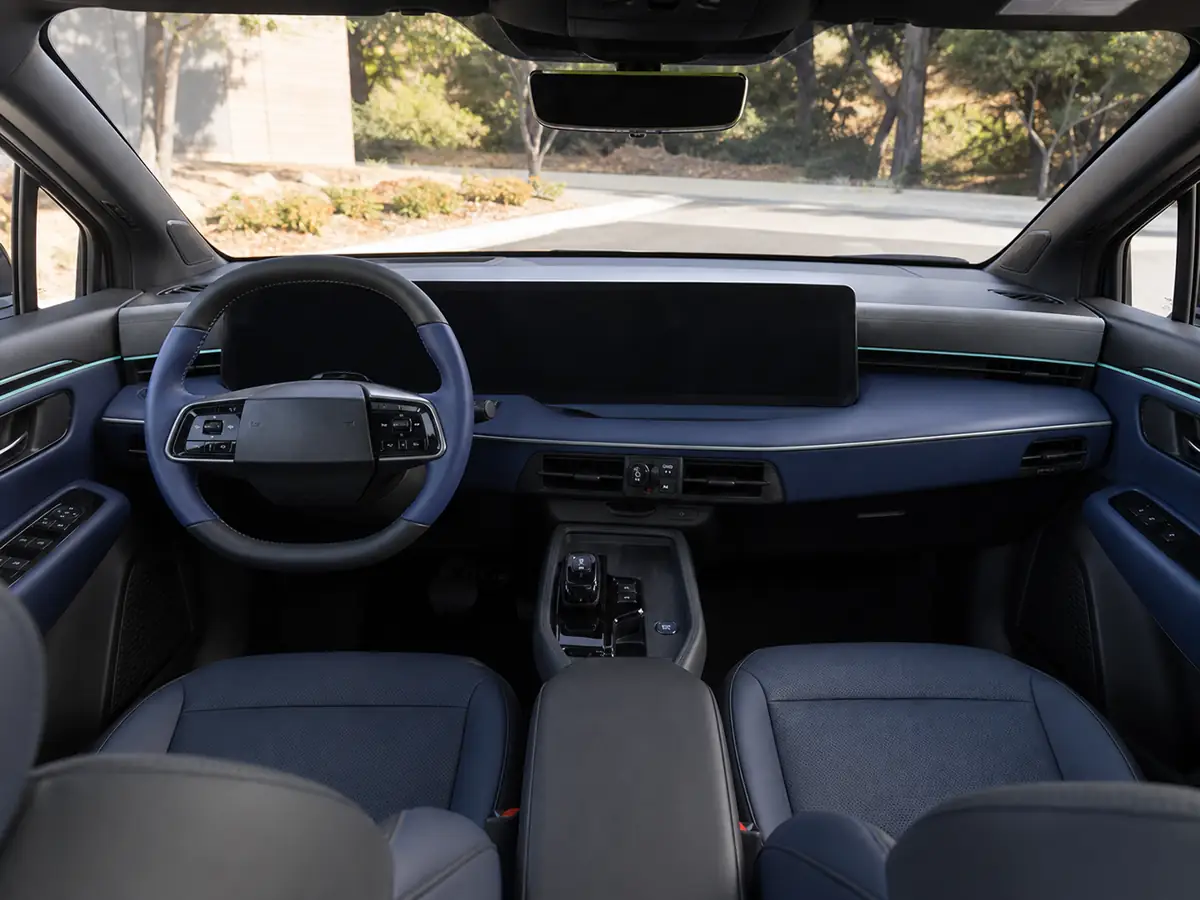
Begin with a cold vehicle. Confirm normal warning-lamp operation, key functions, charge doors, NACS latch, J1772 inlet, screens, cameras, phone connection, heat, air conditioning, seat controls, windows, locks, wipers, lights, and every driver aid.
Listen for suspension or wind noise and check straight tracking on a smooth road.
Test safe friction-brake stops because regenerative driving can reduce normal brake use.
Look through the wheels for corrosion or uneven contact. Record tire pressures from the door label, not the tire sidewall, and inspect the exact load and speed ratings.
For a demo or used 2026 car, add a diagnostic scan, 12-volt battery test, DC fast-charge session, alignment check, paint measurement, and independent collision inspection. A careful delivery inspection creates the baseline needed to separate a later defect from pre-existing damage.
Five-year cost depends more on charging and depreciation than service
An EV needs no engine oil, but low routine service does not make ownership cost automatic. Build a five-year estimate with transaction price, tax, finance interest, insurance, registration, home charging work, electricity, paid fast charging, tires, alignment, cabin filters, brake service, repairs, and resale.
| Cost | Evidence to collect | Common omission |
|---|---|---|
| Home charging | Written installed quote | Panel and permit work |
| Insurance | Quote for exact VIN | Using another trim's premium |
| Electricity | Home and route prices | Treating all charging as cheap |
| Tires | Exact size and load rating | Alignment and road damage |
| Finance | Total of payments | Looking only at monthly amount |
| Resale | Conservative estimate | Assuming incentives preserve value |
The S+ protects the purchase side and uses smaller, more efficient equipment than Platinum+.
A driver covering many home-charged miles can benefit most. Someone who relies on expensive public charging may save less than expected and spend more time waiting.
Compare annual energy using local rates and the same mileage for every vehicle.
Insurance and depreciation can exceed the difference in electricity. Get quotes before paying a deposit, then compare with an efficient hybrid such as the Toyota Prius and the lower-cost Chevrolet Bolt EV.
Keep a repair reserve even during warranty because tires, damage, exclusions, and downtime are still the owner's responsibility.
The budget-price hub helps identify alternatives without assuming the lowest sticker wins. The Leaf cost case is strongest with S+, dependable home charging, modest insurance, and enough annual mileage to use cheap electricity.
Buy the new Leaf for value, not for the old name
Start with the S+ and a written home-charging quote. It provides the 303-mile EPA estimate, the same 214 hp and 75 kWh usable battery as the other trims, and the lowest list price.
Move to SV+ when its comfort and driver-assistance equipment is used often enough to justify $4,240 plus the range reduction.
Platinum+ needs an even stronger equipment case.
Drive the normal commute and a rough road with every regular passenger. Complete AC and DC charge tests, rehearse the longest common trip, and use the actual family cargo.
Verify insurance, electrical work, tire prices, warranty terms, and VIN campaigns before discussing payment.
Compare the Leaf with the electric SUV field, the quicker-charging Hyundai Ioniq 5, and a hybrid if charging access is uncertain. Those vehicles solve different problems, so use the same passenger, route, and five-year-cost test.
The third-generation Leaf finally addresses the battery-cooling and connector objections attached to its predecessors.
It does not become the universal EV answer.
Buy S+ when its home-charged 303-mile package covers the week, and choose another car when road-trip speed or interior fit is the repeated priority.