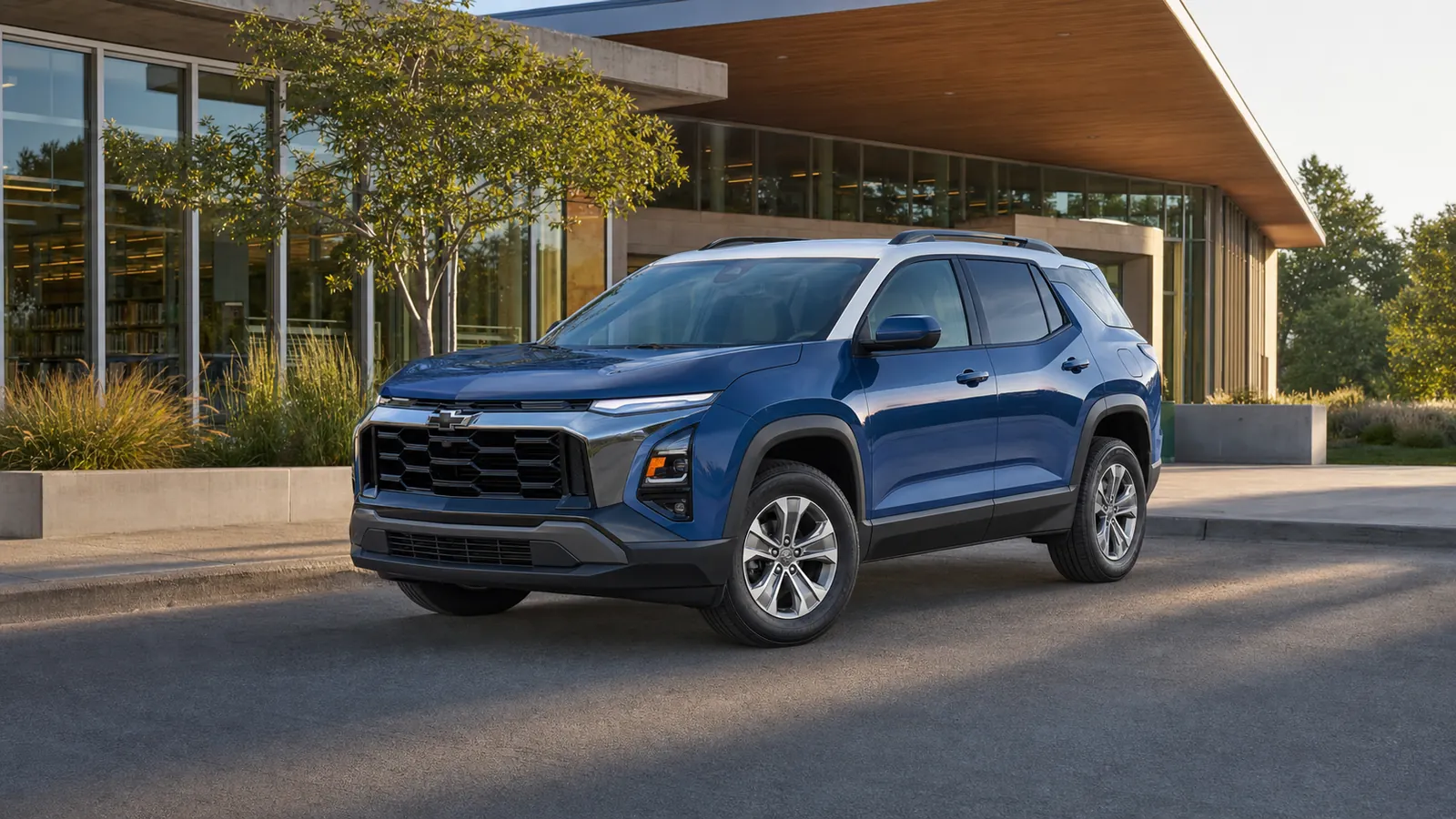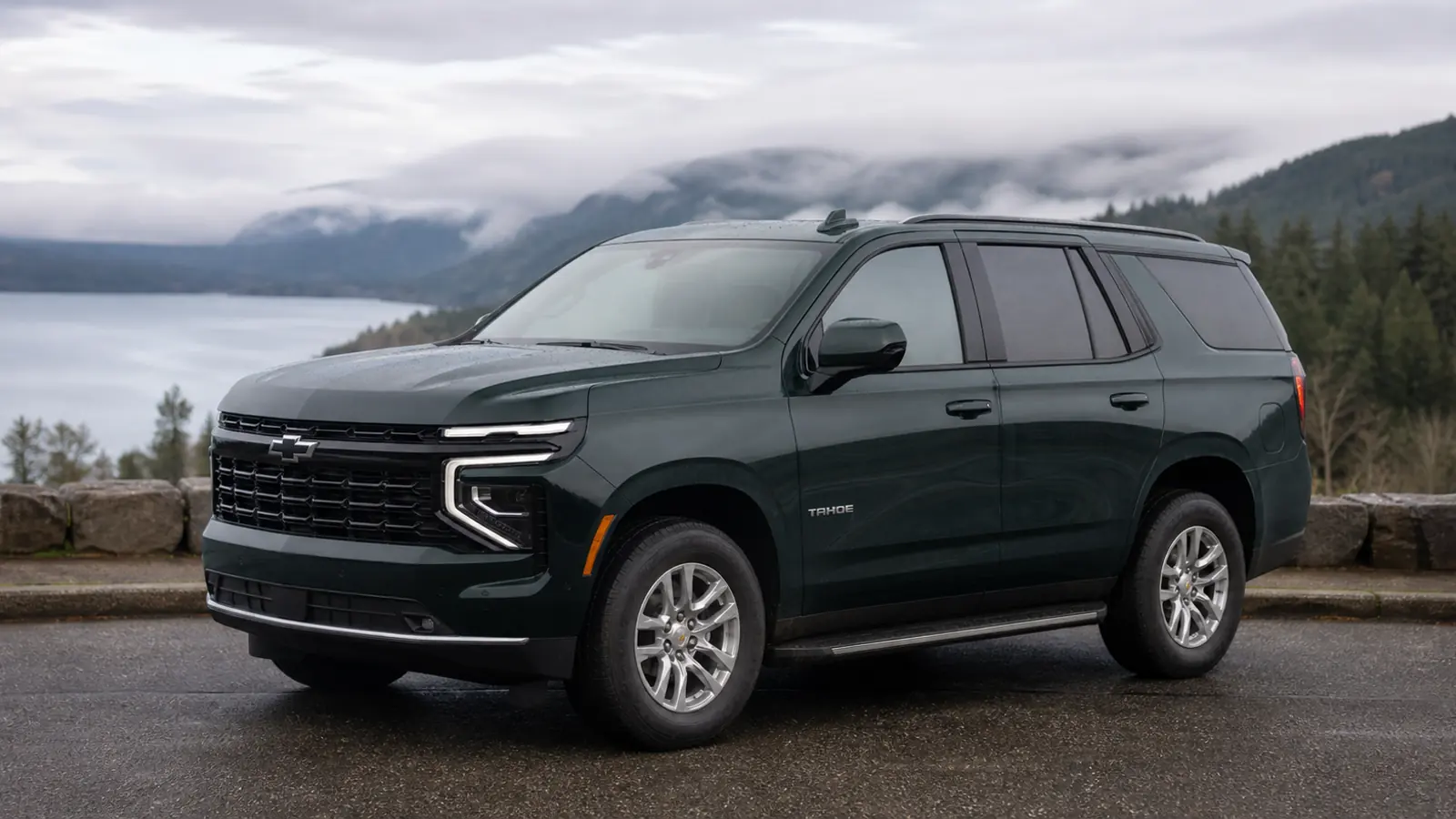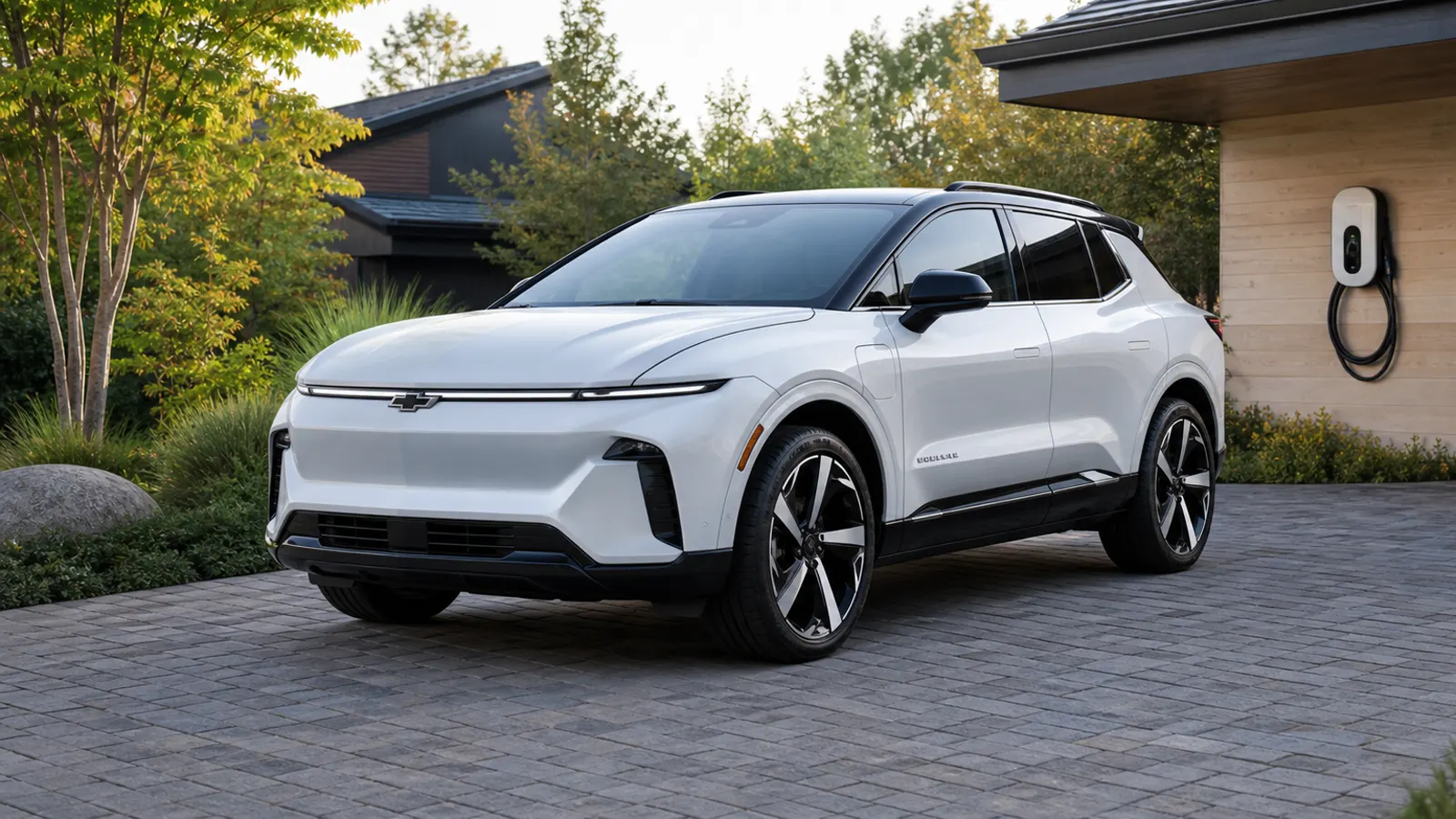
What is the Chevrolet Equinox EV, and is the FWD LT the one to buy?
The 2026 Chevrolet Equinox EV starts at $34,995 and offers an EPA-estimated 319 miles with front-wheel drive or 307 miles with all-wheel drive. It seats five and provides up to 57.2 cubic feet of cargo room.
The price and range combination is the central appeal. The tradeoff is a 150-kW peak DC rate and an estimated 42 minutes from 10 to 80 percent under suitable conditions.
That can work well for occasional travel but needs a route test for drivers who frequently cross several charging stops.
The Chevrolet Blazer EV offers more style and performance choices at a higher price. The Honda Prologue uses related GM-developed EV hardware with a different sales and service experience.
The Tesla Model Y has different charging, software, cargo, and pricing.
Equinox EV is the value pick when home charging covers normal miles and its 150-kW road-trip performance fits the longest repeated drive.
Chevrolet Equinox EV specs: 319-mile FWD or 300-hp AWD
The front-drive version is rated at 220 hp and carries the 319-mile estimate.
AWD raises output to 300 hp and lowers the estimate to 307 miles. The range difference is modest on paper, but price, tires, insurance, and real energy use also change.
| Version | Published output and range | Best fit |
|---|---|---|
| FWD | 220 hp, 319 miles | Value, commuting, mild paved routes |
| AWD | 300 hp, 307 miles | Repeated snow, grades, and loose access |
Drive both on the same route at similar state of charge and temperature. Test merging, wet or rough pavement, brake blending, turning radius, steering, and ride.
AWD brings quicker response, though FWD is already adequate for daily traffic.
AWD improves acceleration traction. It does not shorten winter braking distance by itself.
Correct winter tires, speed, and following distance remain decisive. That distinction matters most on winter roads, where acceleration, turning, and braking demand separate judgments.
Get tire and insurance quotes for both versions. Higher output can increase premiums and tire demand.
FWD is the broad recommendation because it keeps the lowest price, longest range, and full family cabin.
Can a 150-kW Equinox EV handle your longest regular trip?
Chevrolet lists an 85-kWh battery and 150-kW peak DC charge capability. It estimates about 42 minutes from 10 to 80 percent and up to 84 miles added in ten minutes for FWD under suitable conditions.
AWD is listed at up to 81 miles in ten minutes.
Charging facts
- Battery
- 85 kWh
- Peak DC rate
- 150 kW
- 10% to 80% estimate
- About 42 minutes
- FWD miles in 10 minutes
- Up to 84 under stated conditions
Peak rate is not the average rate. Battery temperature, starting percentage, station output, power sharing, software, and taper change the stop.
Test a compatible public charger and keep the receipt.
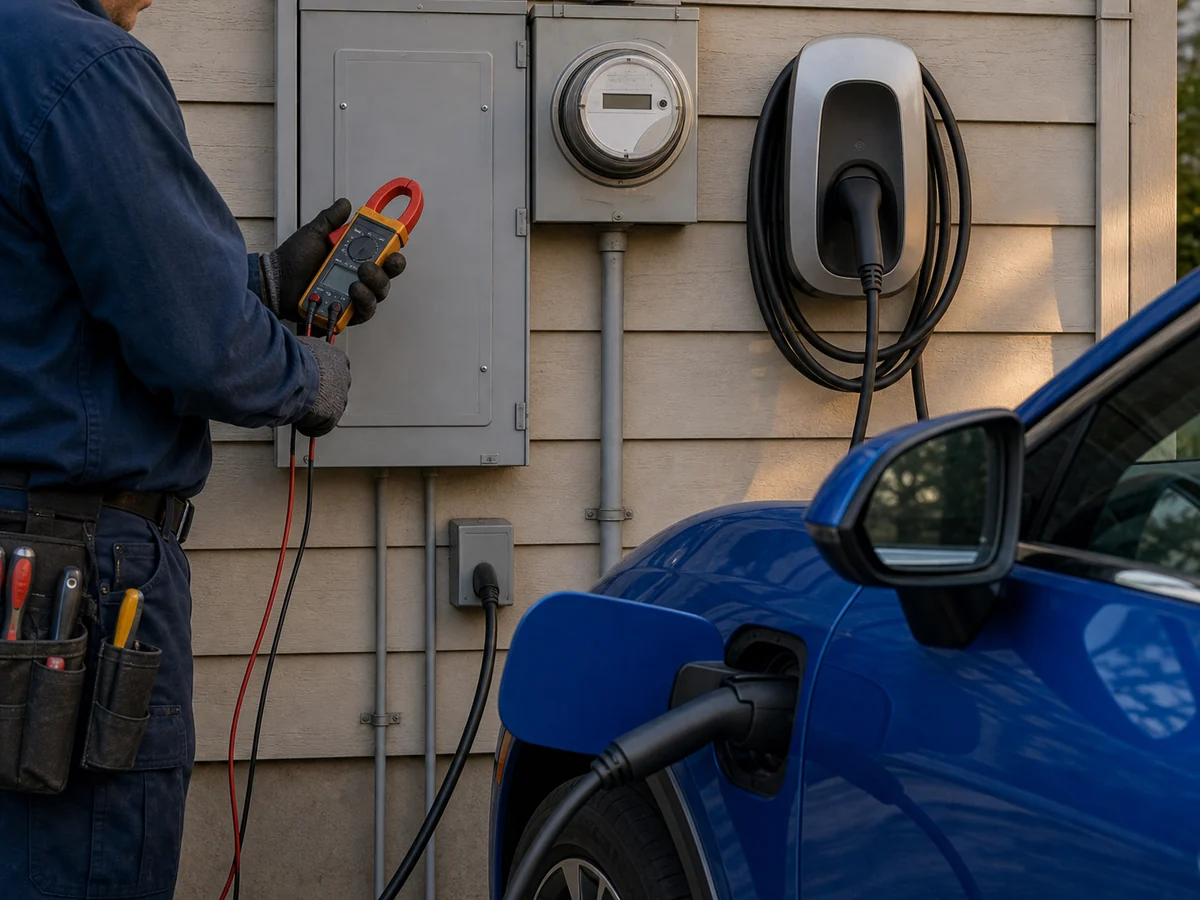
For home installation, use a licensed electrician to inspect panel capacity, breaker space, wiring route, permits, load management, and outdoor protection.
Compare the complete installed price. AC charging is the overnight routine, while DC charging determines the length and reliability of a travel stop.
Map two backup stations on the longest regular trip. Confirm connector and adapter support through Chevrolet documentation rather than a third-party claim.
Test the phone app, payment method, cable reach, nighttime lighting, and the process for ending a failed session. A charger shown as available can still be occupied, damaged, blocked, or unable to authenticate, so the backup stop must be reachable with the reserve still intact.
Record any support call and the time needed to recover from a failed session.
Equinox EV charging works when overnight AC handles the week and the household accepts longer DC stops on occasional travel.
Will 57.2 cubic feet hold a family's real weekly load?
Equinox EV seats five and provides up to 57.2 cubic feet with the rear seat folded. Its long wheelbase creates useful passenger space, while the sloping rear body and load height can affect bulky cargo.
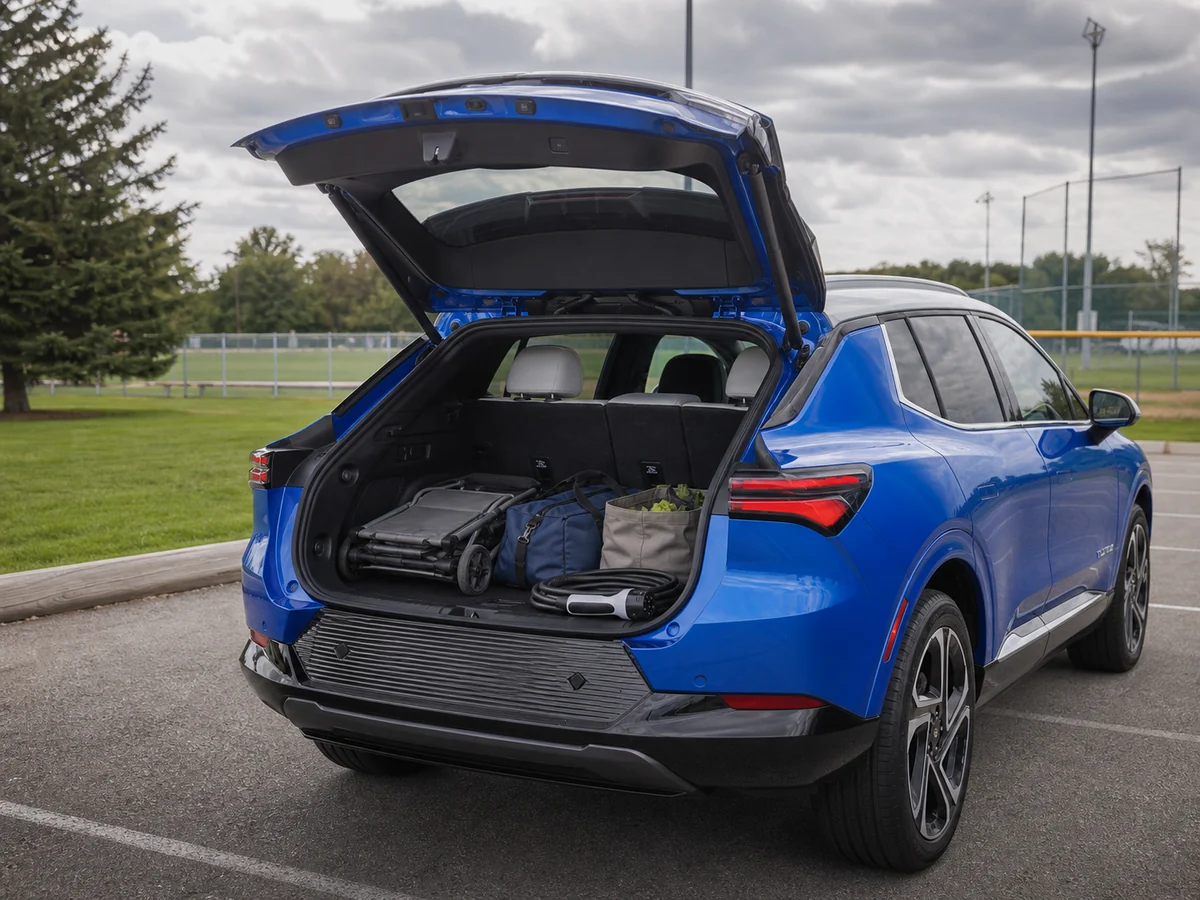
Install child seats. Check front-seat travel, buckle access, tethers, center-seat width, door opening, and roof clearance.
Sit behind the normal driver position.
Load stroller, luggage, mobility equipment, pet carrier, or work cases. Measure floor width, hatch opening, lift-over height, and garage clearance.
Test the charging cable storage with the cargo aboard.
The Volkswagen ID.4 offers a more upright shape, while the Hyundai Ioniq 5 has a distinctive open cabin and quicker compatible charging. Compare the same family load.
The Equinox EV cabin succeeds when five-seat comfort and charging equipment fit without consuming the cargo space needed every week.
| Item | Measurement | Pass condition |
|---|---|---|
| Rear-facing child seat | Front-seat position after installation | Regular driver keeps a safe seating position |
| Weekly cargo | Floor width and height with row two upright | Bags fit without blocking rear visibility |
| Charging cable | Storage access under a full load | Cable can be reached without unloading |
| Mobility or pet equipment | Hatch opening and lift-over height | Equipment loads without unsafe lifting |
Repeat the test with the cargo cover, floor insert, and any dealer accessory installed. A quoted cubic-foot figure does not reveal narrow hatch areas or the space occupied by a cable bag.
The buyer should be able to remove the heaviest regular item without leaning across the bumper or placing weight on painted trim.
No Apple CarPlay changes the Equinox EV cabin test
Equinox EV uses a 17.7-inch central display with Google built-in.
Chevrolet does not provide Apple CarPlay or Android Auto projection. Buyers who depend on those interfaces must test the native system before signing.
Create or use a temporary profile where permitted. Test maps, route charging, voice, media, calls, messages, climate, camera access, charge limits, and driver settings.
Ask what works without a subscription or cellular connection.
Screen size does not guarantee easy use. Change temperature, fan, audio, camera, and one-pedal settings while parked, then confirm essential controls are clear during a safe drive.
Electric SUVs differ sharply in phone integration, route planning, preconditioning, and charging displays. A buyer who dislikes the native interface should choose another vehicle because the screen is part of every drive and charge.
Equinox EV safety ratings must come from the EV, not the gas model
The gas Equinox and Equinox EV use different platforms and structures. Crash ratings from the gas model cannot be transferred to the EV.
At the time of this review, the available model-specific IIHS picture is not as complete as for Blazer EV.
That is an evidence limit, not proof of poor performance. Compare only tests that name the Equinox EV and state applicable years.
Check NHTSA information for the exact model and VIN.
Chevrolet lists standard driver-assistance features, but the owner's manual defines their limits. Dirt, weather, glare, road markings, trailers, and system faults can reduce availability.
NHTSA model results for 2025 and 2026 list defined campaigns affecting some vehicles, including tires, pedestrian-alert sound, and owner-manual information.
Earlier 2025 populations also include body-control and brake-related campaigns.
Run NHTSA's VIN lookup, then confirm the remedy on an invoice.
Campaign summaries provide context, but only a VIN result and completed remedy invoice can clear a specific vehicle. Treat incomplete crash evidence honestly and make the VIN, tires, restraints, and assistance limits part of delivery.
Inspect the pedestrian-alert sound during a safe low-speed demonstration because one defined campaign concerns that function on certain vehicles.
Check tire brand, size, load rating, manufacturing date, and campaign status against the exact VIN. A completed remedy should appear in service documentation, while an open campaign needs a dealer appointment and an expected completion date.
Keep those records with the window sticker because later owners and repair shops need to distinguish original equipment from replacement parts.
Is the Chevrolet Equinox EV reliable enough to buy used?
Equinox EV has limited long-term history. No responsible review can promise how the battery, charge electronics, cooling system, drive units, displays, or modules will age over a decade.
Any reliability judgment must preserve that uncertainty.
| Area | Check | Reason |
|---|---|---|
| Software | Updates, warnings, cameras, screen, profiles, and app | Finds repeatable electronic issues |
| DC charging | Record power, time, temperature, and messages | Confirms communication and cooling |
| AC charging | Test port, cable, scheduling, and limits | Confirms normal home use |
| 12-volt battery | Load-test and review replacements | Low voltage can cause many faults |
| Underbody | Inspect battery shield, leaks, impact, and repairs | Damage needs specialist review |
| Tires | Tread depth, matching, and alignment | Weight and torque affect wear |
Check service, warranty, collision, recall, charging, and account records.
Scan every module. A cleared dashboard is not enough.
Ask for the scan report before and after the road test, then compare stored, pending, and history codes. Verify the 12-volt battery condition because low accessory voltage can create warnings or failed wake-ups that disappear after a jump or reset without proving the underlying cause is solved.
Recurring symptoms matter as diagnostic evidence, but complaint lists do not establish failure rates. Record any charging stop, warning, reset, brake behavior, or climate fault so a technician can reproduce it.
Read the battery warranty booklet for defects, capacity language, exclusions, transfer, and remedy terms. Choose the vehicle with complete updates, successful AC and DC tests, a sound underbody, and documented warranty history.
Cold weather and highway speed require a real range reserve
EPA range is a standardized comparison, not a guarantee. Cold battery temperature, cabin heat, wet roads, wind, elevation, speed, cargo, tires, and acceleration change energy use.
Map the longest normal day and the worst normal weather. Subtract a reserve for a missed charger, detour, or power outage.
Drivers without dependable home or workplace charging need more margin.
Precondition while plugged in. Maintain door-placard tire pressure and clear snow without blocking sensors.
Cabin comfort and defogging remain safety needs even when they consume energy.
Compare route results with the Ford Mustang Mach-E and Kia EV6. A faster charger may matter more than a longer label on repeated road trips.
Choose Equinox EV only when the real route leaves enough reserve for weather, detours, and one unavailable charger.
Home charging decides whether the Equinox EV saves money
Total cost includes transaction price, incentives, finance, depreciation, registration, insurance, home equipment, electricity, public charging, tires, service, and repairs. Verify incentive eligibility from current government and seller documents.
Estimate annual energy from miles and expected kWh per mile, add charging losses, and multiply by the local rate.
Compare with a gas vehicle using the same miles and fuel price.
Public fast charging can narrow the saving.
Get VIN-based insurance and exact tire quotes. Include alignment, brakes, cabin filters, coolant inspections, wipers, registration differences, and a repair reserve.
Use the same mileage, energy prices, insurance limits, tire specification, and holding period for every vehicle in the cost comparison.
Depreciation can outweigh electricity savings over a short ownership period. Compare purchase and lease terms, mileage limits, fees, and likely holding time.
The FWD LT creates the strongest value when incentives are verified and low-cost home energy supplies most miles.
Equinox EV cost inputs
- Home electricity
- Utility rate plus charging losses
- Public charging
- Price from the networks used on regular trips
- Tires
- Installed price for the exact load-rated size
- Insurance
- Exact VIN, drivers, deductibles, and rental coverage
- Depreciation
- Compare new net price with current used listings
Calculate one case with mostly home charging and another with frequent paid DC charging.
Include charger installation across the expected years in the home. A costly electrical upgrade can still make sense for two EVs, while it may overwhelm the savings from one short ownership period.
Ask the insurer about battery-area collision procedures, towing, rental duration, glass calibration, and diminished-value rules where applicable. These costs can matter more than scheduled service during the first years.
Who should buy the Equinox EV, and who should choose something else?
Start with the front-wheel-drive LT. It carries the lowest price, longest 319-mile estimate, and full passenger space.
Add AWD only when the regular road needs more launch traction or the extra power has real value.
Pros
- 319-mile FWD estimate
- Low starting price for a long-range EV
- Useful five-seat cabin
- Heat pump and Google built-in
Cons
- 150-kW peak charging trails faster rivals
- No Apple CarPlay or Android Auto projection
- Long-term reliability evidence is limited
- Model-specific crash evidence is incomplete
A performance buyer may prefer Blazer EV SS. A frequent road-tripper should compare EV6 and Ioniq 5 charging.
A household without reliable charging should compare a Chevrolet Equinox gas model or hybrid rival.
Buy Equinox EV when its low price, long FWD range, family space, and overnight charging solve the household's real schedule.
Run a seven-day charging test before you sign
The Equinox EV should reproduce a normal week before it replaces a gas crossover. List every commute, school run, appointment, evening errand, and weekend drive, then add the miles and the hours the vehicle will actually sit near a charger.
Include one cold day, one unexpected detour, and one unavailable public station so the 319-mile FWD estimate is tested against a difficult week rather than an ideal one.
Complete an AC session where the vehicle will normally park. Record the starting percentage, energy delivered, charging time, ending percentage, utility rate, and whether scheduled charging starts without intervention.
A renter also needs written charging permission and a workable cable route that does not cross a walkway or depend on an outlet the property owner can remove.
Use the longest repeated route for a DC session. Arrive with a suitably low battery, note outside temperature and battery preparation, then record power, energy, time, price, and every message from plug-in to departure.
The advertised 150-kW peak matters less than the total stop, and one successful session does not remove the need for two backup stations on a route the household cannot postpone.
Every regular driver should use Google built-in for navigation, calls, messages, audio, climate, cameras, charge limits, and driver profiles.
Test what remains available without a paid connected service or strong cellular signal. A driver who depends on Apple CarPlay or Android Auto should treat their absence as a permanent daily constraint, not assume a later update will change the vehicle.
Load the vehicle as it will travel. Install child seats, place adults in both rows, add the stroller or work cases, store the portable cable, and confirm that the heaviest regular item clears the hatch without blocking rear visibility.
A household that needs a third row should test a Chevrolet Traverse on the same day because no charging advantage can create another seat.
The warranty booklet deserves the same attention as the range label. Read the exact battery defect and capacity language, exclusions, transfer rules, roadside help, towing process, and remedy terms, then identify which nearby Chevrolet dealer has high-voltage technicians.
An eight-year or 100,000-mile headline does not explain how a concern is measured or how long the owner may wait for diagnosis.
For a used Equinox EV, verify both keys, cable, approved adapter status, account release, campaign remedies, software version, AC and DC charging, and a full-module scan.
Inspect the battery-area underbody and require collision or flood documentation when repairs appear. Save the window sticker, buyer order, warranty books, charger invoice, permit, utility enrollment, and photographs of the wheels, glass, charge port, cargo trim, and underbody.
During the first month, keep a baseline for several AC sessions and one DC stop. Record temperature, starting and ending percentage, energy, time, price, screen resets, warning messages, tire pressure, and alignment behavior.
A dated video and written repair order give a technician usable evidence when an intermittent fault clears before the appointment.
Compare FWD and AWD with one household-cost sheet. Include transaction price, incentives, finance, insurance, exact tire size, home electrical work, expected electricity use, public charging, service access, and the longest winter trip.
AWD is worth its higher price only when the extra traction or power solves a repeated need that winter tires and the FWD version cannot address more economically.
Set the walk-away conditions before negotiating. No approved home-charging plan, repeatable charging failures, unresolved isolation warnings, an incomplete account transfer, unclear battery-area damage, or a monthly cost above the household limit should end the purchase.
Buy the Equinox EV only when the week-long schedule, charging receipts, software trial, family load, service access, and full cost all work without a promised future fix.