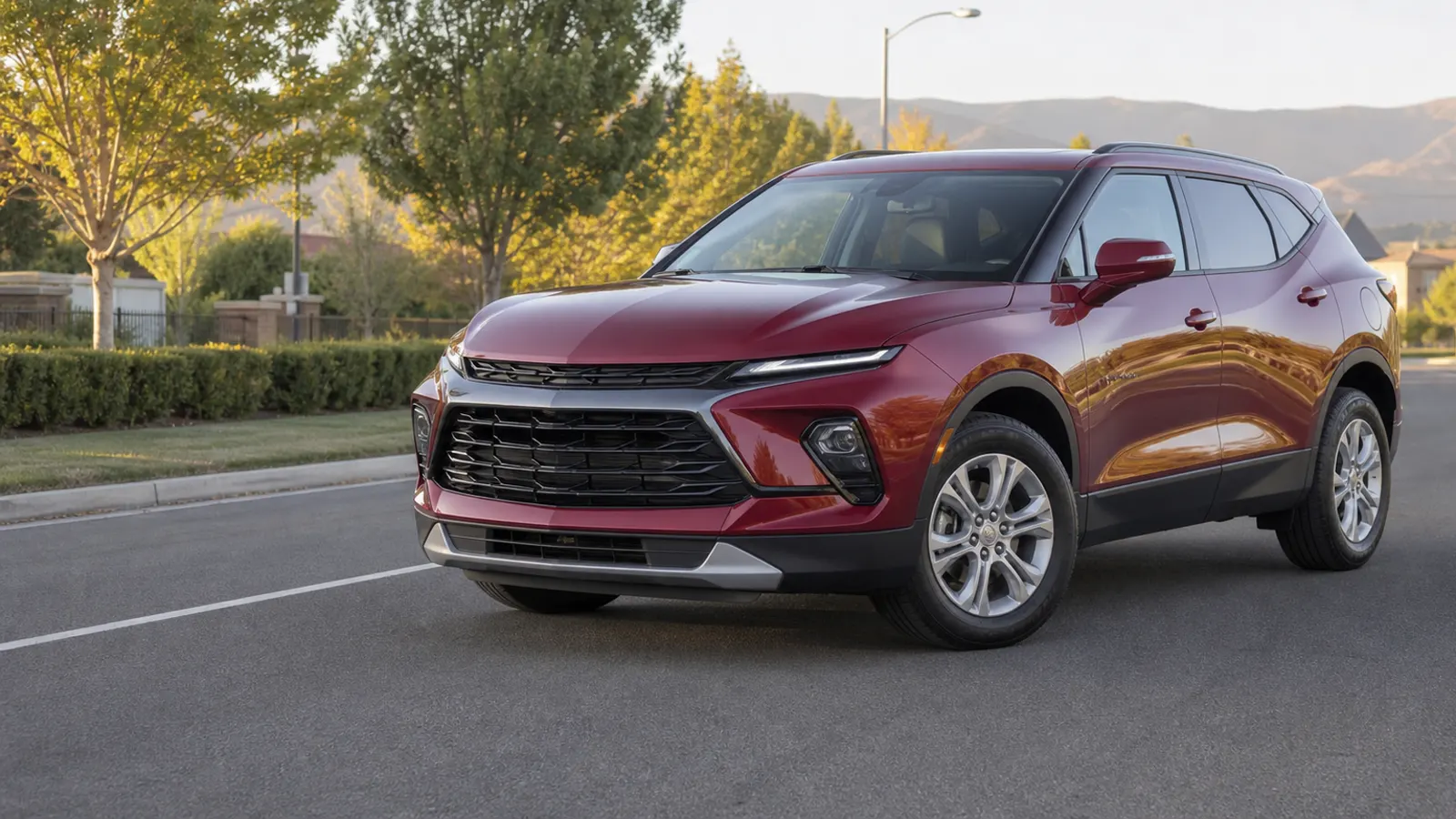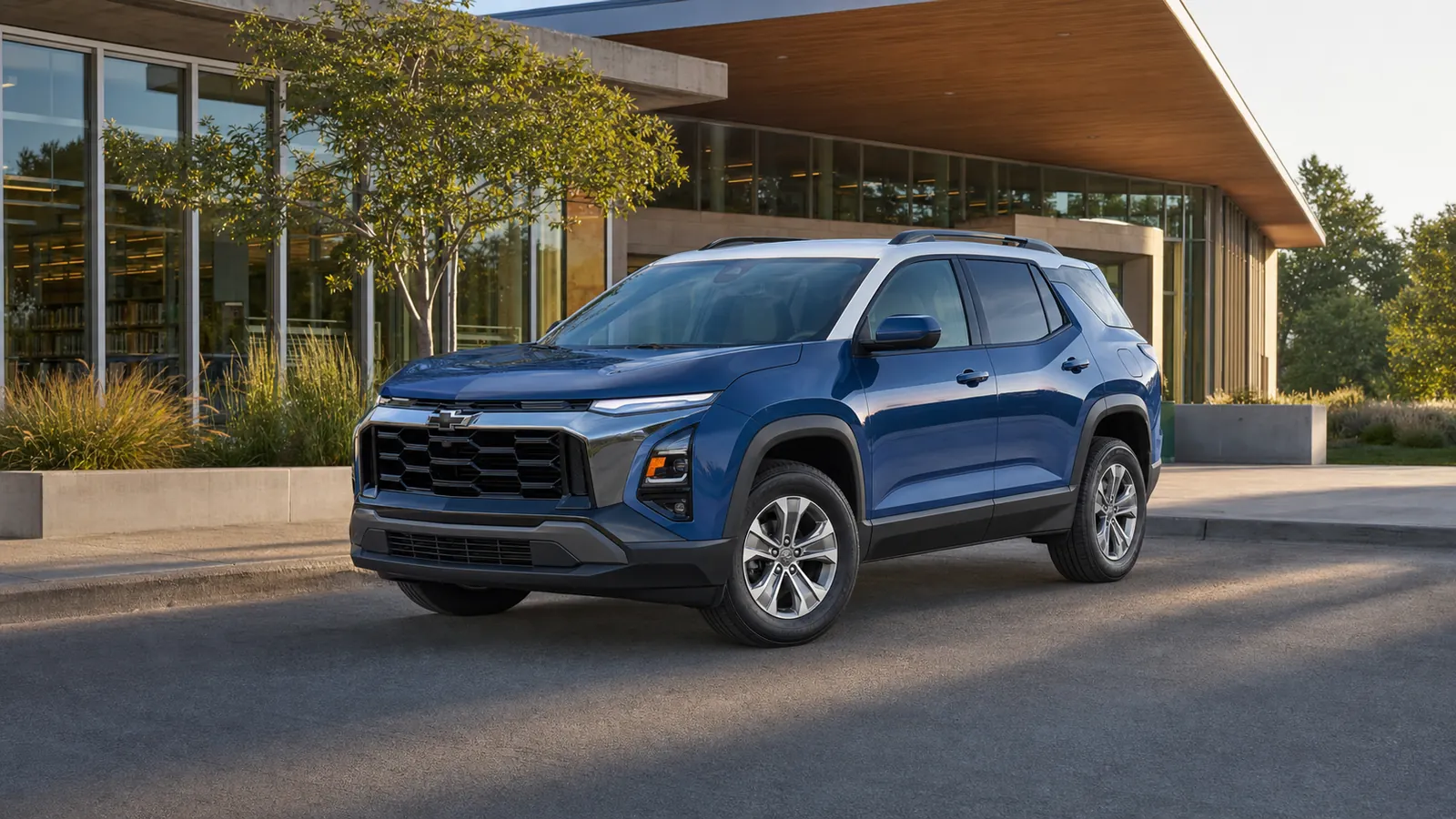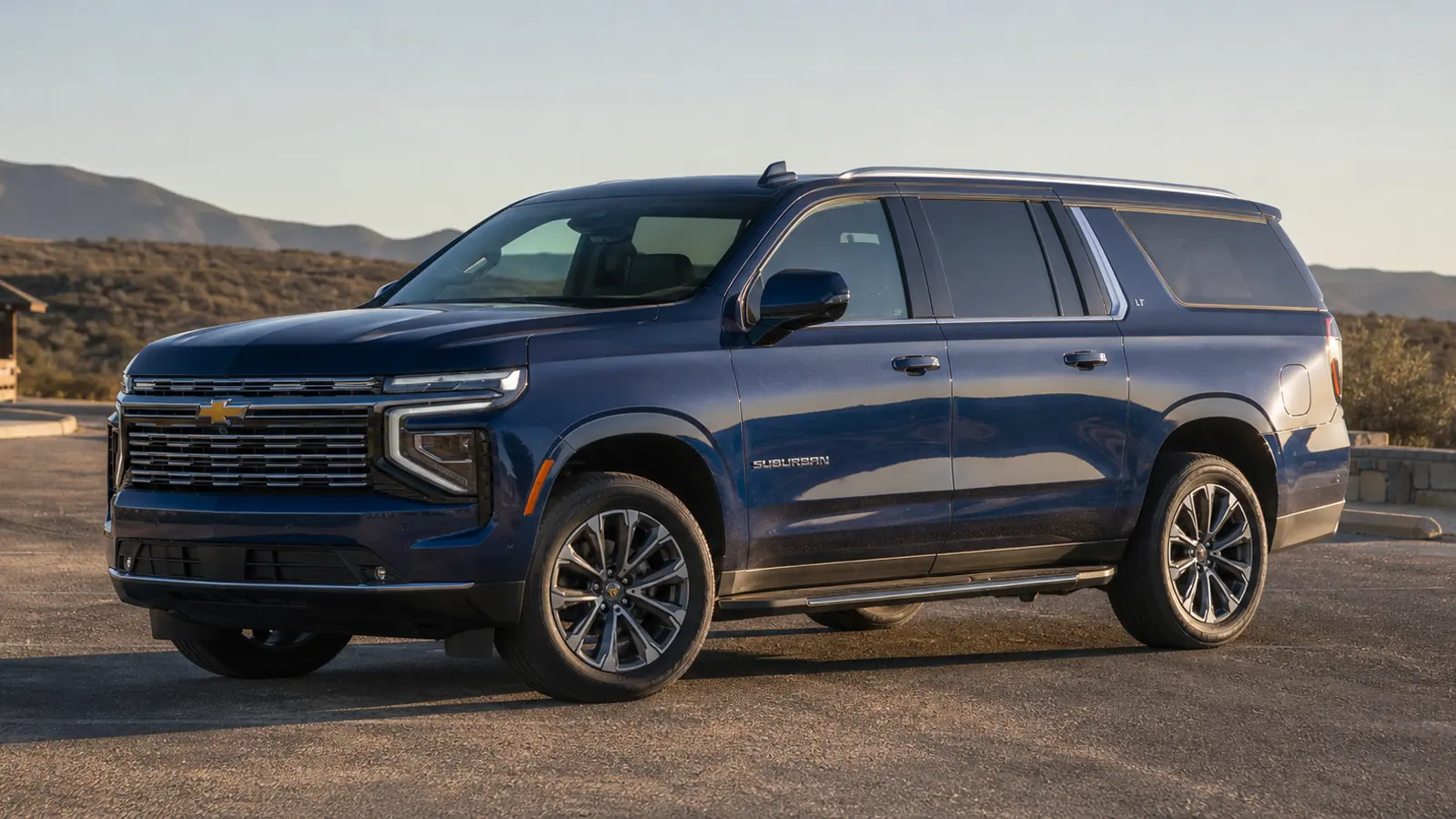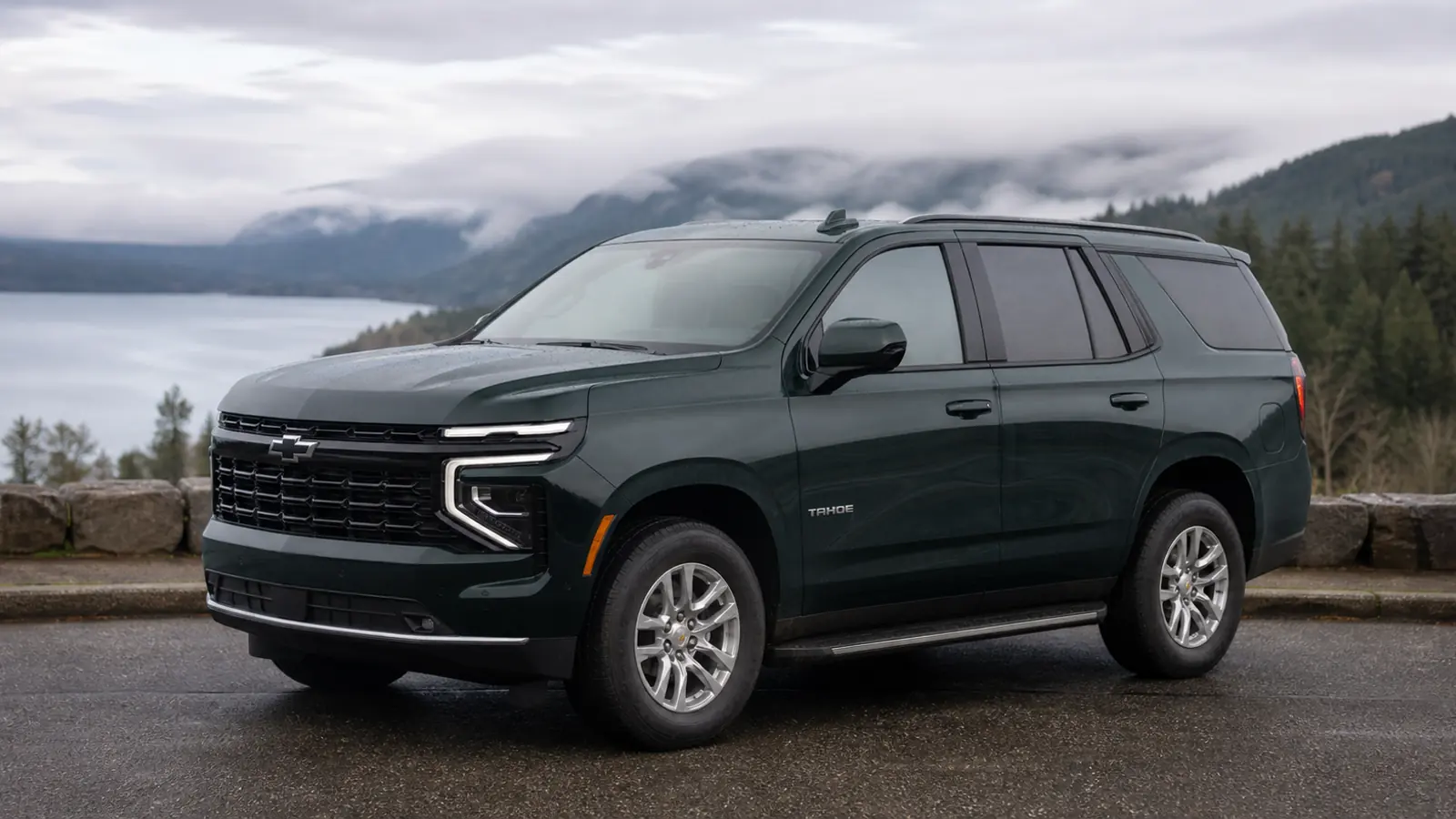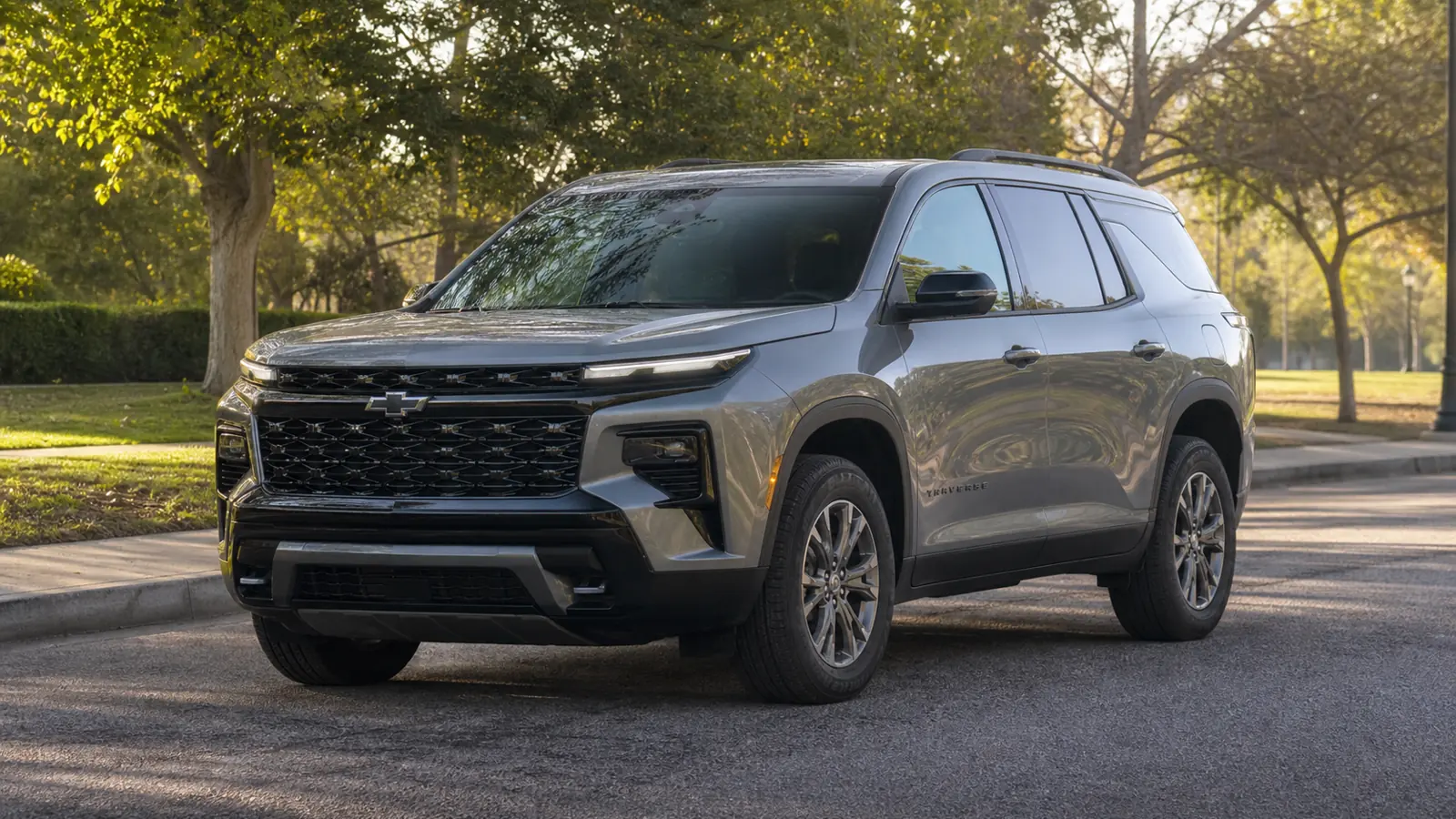
The New Traverse Works Best as a Space-First Family Crossover
The Chevrolet Traverse is a three-row crossover for families that need more usable cabin and cargo space than a compact SUV but do not need the mass, towing hardware, or fuel use of a Tahoe. The current generation pairs an adult-usable third row with up to 98 cubic feet of cargo volume and seating for seven or eight, depending on the second row.
That packaging is the reason to buy it. The 2026 Traverse starts at $40,800 before destination and options on Chevrolet's U.S. site.
Its only engine is a 328-hp turbocharged four-cylinder, and front-wheel drive is available on LT.
All-wheel drive is offered across the range and standard where the trim requires it. The vehicle is large, but it remains a unibody crossover rather than a full-size body-on-frame SUV.
The Traverse earns its size through third-row and cargo use, not through off-road image or a high tow number.
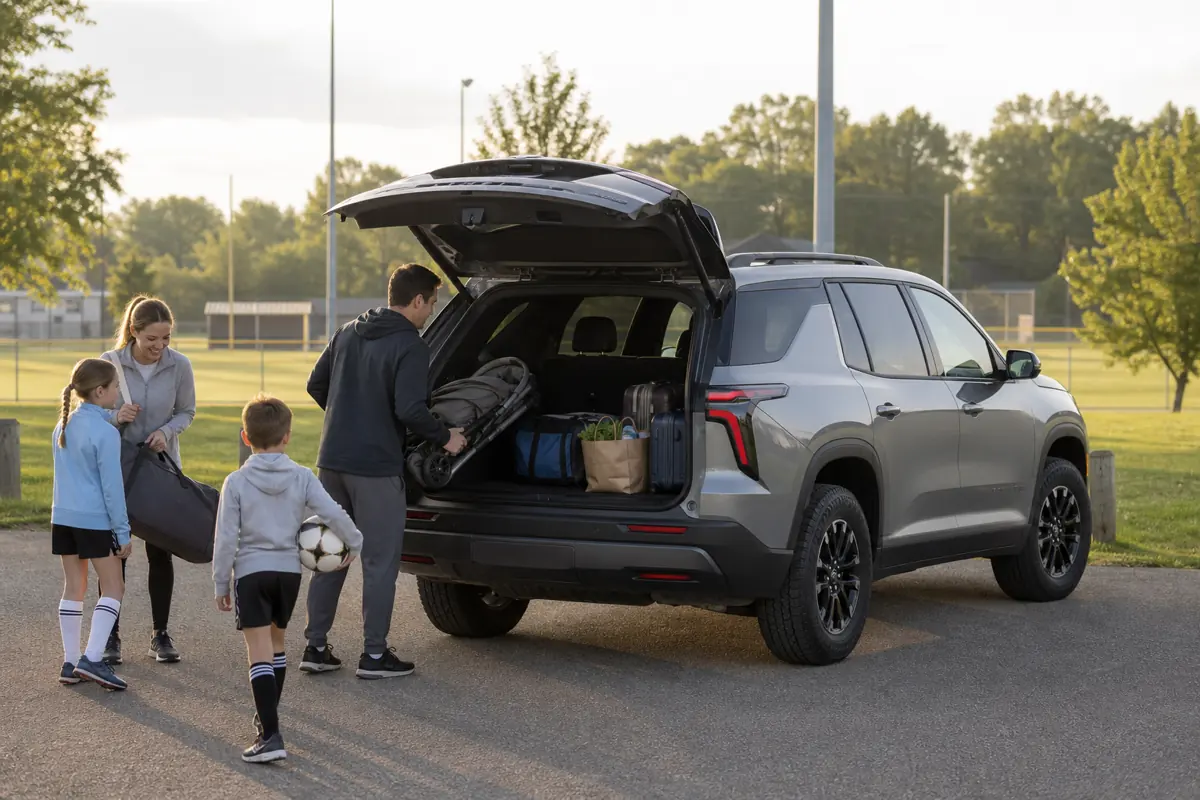
Bring the stroller, child seats, sports bags, mobility gear, or travel cases to the test drive. A volume figure cannot show whether the family's real shapes stack below the rear glass without blocking visibility.
The Honda Pilot is a direct family alternative.
A Traverse and Pilot comparison isolates third-row and towing differences.
The Toyota Grand Highlander provides another three-row check.
The Traverse alternatives list covers other ways to carry the same family load.
One Turbo Engine Simplifies the Choice but Not the Drive-System Decision
Every 2026 Traverse uses a 2.5-liter turbocharged four-cylinder rated at 328 hp and 326 lb-ft, paired with an eight-speed automatic.
It has enough torque for merging and family loads, but its sound and power delivery differ from the smooth naturally aspirated V6 used by the previous generation.
Test it cold, in city traffic, and during a highway pass.
Front-wheel drive costs less, weighs less, and is adequate for dry or regularly cleared roads. All-wheel drive helps the vehicle accelerate on snow, wet grass, gravel, and steep slippery drives.
It cannot shorten braking distance on ice. Four matching winter tires can change steering and stopping more than the drive badge.
Current Traverse facts
- Engine
- 2.5L turbo four-cylinder
- Output
- 328 hp and 326 lb-ft
- Transmission
- 8-speed automatic
- Drive
- Front-wheel drive or all-wheel drive, by trim
- Maximum towing
- 5,000 lb with the specified trailering package
- Maximum cargo
- 98 cu ft
Chevrolet lists 19 mpg city and 24 mpg highway for the 2026 two-wheel-drive Traverse on its current vehicle page.
EPA records for individual model years and drive configurations remain the authority for a window-sticker comparison.
Wheels, temperature, speed, short trips, traffic, and load will move real fuel use.
The turbo engine does not require a buyer to choose a performance trim. RS changes appearance, wheels, and equipment, but it does not turn the Traverse into a sports SUV.
Z71 adds traction-oriented hardware for rough roads. LT retains the same core engine and is the rational starting point for paved family use.
A gas-powered SUV comparison can frame fuel and service expectations.
The all-wheel-drive SUV listings add traction context. Owners should follow the exact Chevrolet manual for oil grade, oil-life monitor, coolant, transmission, and severe-use conditions rather than applying a generic turbo schedule.
Second-Row Seat Choice Controls How the Third Row Gets Used
Traverse can carry up to eight people with a second-row bench. Captain's chairs reduce capacity to seven but create a center path to row three.
The better layout depends on child restraints, adult access, and how often all places are occupied. A family using three child seats may need the bench, while older children may value the walk-through.
Install every restraint before signing. Check lower-anchor access, top-tether routing, buckle position, front-seat travel, and whether an adult can reach the third row without removing a seat.
The presence of eight belts does not mean eight people and their luggage fit comfortably at once.
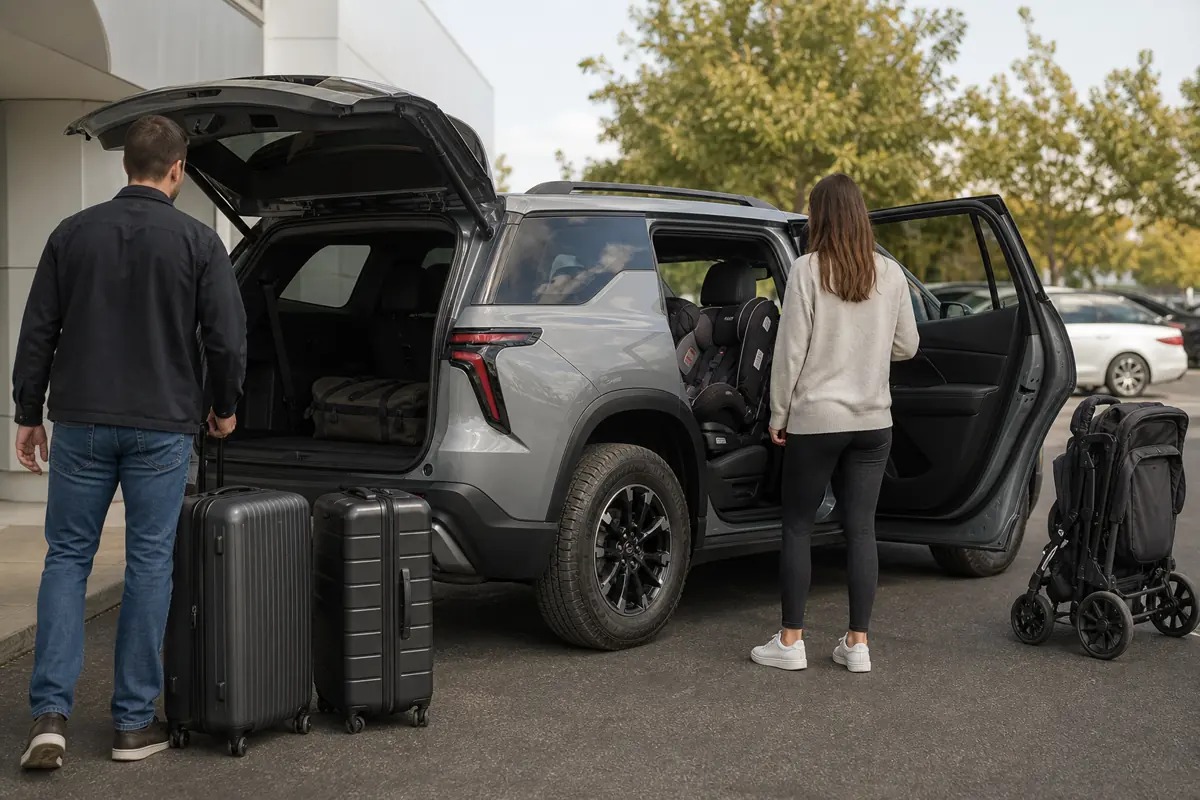
Chevrolet lists up to 98 cubic feet with rear seats folded. The useful family test is space behind row three, the height of the load floor, hatch opening shape, and storage for small items that should not become projectiles.
Test whether a stroller enters without removing wheels and whether groceries remain contained when the hatch opens on a slope.
Fold and raise each seat using one hand. Check whether head restraints must be removed, whether the floor is flat enough for long items, and whether seatbelts become trapped.
If a dog rides behind row two, verify climate airflow and a safe restraint point.
Heavy items belong low and secured, not stacked above the seatbacks.
The seven-seat SUV listings include models with different access paths. The Chrysler Pacifica remains a stronger packaging tool for sliding doors and frequent third-row entry.
Traverse appeals when crossover ground clearance and styling matter more than a minivan's door opening.
Five-Thousand-Pound Towing Requires the V92 Package and a Payload Check
Chevrolet's 2026 trailering guide rates Traverse at 1,500 pounds without the available V92 trailering package and up to 5,000 pounds with it, for both front-wheel-drive and all-wheel-drive configurations shown.
That difference makes the option code important. A receiver fitted later does not automatically add the factory cooling, wiring, software, or certification behind the higher rating.
Trailer weight must be loaded weight, not the empty number on a sales sheet.
Camping gear, batteries, propane, water, food, and accessories can add hundreds of pounds.
Tongue weight counts against vehicle payload along with people and cargo. Chevrolet's guide notes a 500-pound tongue-weight limit for the Traverse table.
| Item | Number to verify | Evidence |
|---|---|---|
| Vehicle rating | 1,500 or 5,000 lb | Window sticker, option code, guide, and manual |
| Payload | Vehicle-specific capacity | Driver-door label |
| Trailer weight | Fully loaded weight | Trailer label and certified scale |
| Tongue weight | Actual loaded hitch load | Scale or verified measurement |
| Passengers and cargo | Normal travel load | Weigh or total each item |
| Brake requirement | Trailer and state requirement | Manual and applicable law |
A 4,500-pound loaded trailer with 450 pounds on the hitch can leave much less payload for seven occupants and bags.
Calculate the vehicle first. Use the correct ball mount, safety chains, electrical connector, tire pressure, and trailer brakes.
Load the trailer for stable tongue weight and stay within axle, GVWR, GCWR, tire, hitch, and trailer limits.
The Traverse is a capable choice for a small boat, utility trailer, or light camper when configured correctly. It is not the right shortcut for a large travel trailer that consumes most of its rating before the family boards.
The Traverse towing reference can organize the numbers.
The Chevrolet Tahoe is the next step when family payload and trailer weight exceed the Traverse.
If the regular trip uses nearly all 5,000 pounds and most seats, compare a vehicle with more payload and tow reserve. The engine may pull the trailer while the cabin load exceeds another limit.
LT Is the Value Trim, Z71 Is the Functional Upgrade
The 2026 trim range begins with LT, followed by Z71, High Country, and RS. LT carries the large cabin, core safety equipment, and turbo engine at the lowest price.
It can be configured with front-wheel drive or all-wheel drive and is the best place to start for pavement, school trips, and highway travel.
Z71 adds equipment aimed at rougher surfaces. Its value depends on actual access roads, snow depth, tire needs, and underbody exposure.
It should be driven on pavement because more aggressive tires and suspension choices can change noise and ride.
Z71 does not make the Traverse a substitute for a low-range off-road truck.
High Country emphasizes cabin materials and technology. RS adds darker styling and large wheels.
Big wheels can sharpen appearance, yet shorter tire sidewalls cost more, transmit more impact, and provide less pothole protection.
Ask for replacement-tire quotes before choosing them. A family vehicle may ride better and cost less on the smallest factory wheel that meets the trim's brake requirements.
Super Cruise availability, camera views, audio, sunroof, and seat features can change with packages. Verify the window sticker rather than assuming every example of a trim has the same content.
Connect all family phones, test rear charging ports, and use the driver-assistance settings on a road where the demonstration is safe.
The Chevrolet brand overview places Traverse among smaller crossovers and full-size SUVs. The Traverse cost-to-own breakdown shows how quickly premium trims change the budget.
Within this model, LT is the broad value. Z71 earns its price through hardware, while High Country and RS need a feature-by-feature reason.
The Cabin Solves Space Better Than It Hides the Vehicle's Size
Traverse is easier to drive than a body-on-frame full-size SUV, but it is still a long three-row vehicle.
The steering is light, the turbo engine has useful midrange pull, and the independent suspension keeps the cabin composed over normal roads.
The driver still needs extra room for U-turns, parking, and opening the long rear doors beside another car.
A large central screen and digital controls organize many functions. Test climate changes, camera access, audio volume, heated seats, drive modes, and the home screen without a sales associate guiding each tap.
A control that takes too much attention in the showroom will not improve during a busy school run.
Physical steering-wheel controls and voice commands should be tested too.
These are practical editorial assessments, not official ratings. They identify where the Traverse spends its length.
A smaller SUV is easier in the city, while a Tahoe provides more towing and truck durability.
Traverse sits between them by delivering a large passenger cell without the heaviest mechanical package.
Drive at highway speed with the cabin quiet. Listen for tire noise, wind around mirrors, and boom from the cargo area.
Try a rough street with the chosen wheel size. Check front-seat comfort for at least 30 minutes and sit in all rear positions.
A short showroom loop cannot reveal pressure points or motion in row three.
The Ford Explorer offers a different rear-drive-based layout and engine choices.
The Toyota Highlander Hybrid trades some space for stronger fuel economy. The Traverse is strongest when space outranks sporty feel and the family does not need a full-size tow vehicle.
IIHS Results Are Strong, With Seat-Belt Reminders as the Weak Point
The Insurance Institute for Highway Safety named the 2025-2026 Chevrolet Traverse a Top Safety Pick. Its published evaluation shows Good ratings in the small-overlap front and updated side tests, with an Acceptable result in the updated moderate-overlap test.
Headlights and vehicle-to-vehicle front crash prevention were rated Good, while pedestrian front crash prevention was Acceptable.
IIHS rated seat-belt reminders Marginal and LATCH ease of use Good for the tested configuration.
A family should read those individual results rather than reducing them to one word. The award is useful evidence, but it does not cover every crash, trim, child-seat installation, tire, or driver behavior.
Chevrolet says the 2026 Traverse carries more than 20 standard safety and driver-assistance features, including automatic emergency braking, pedestrian and bicycle braking, blind-zone steering assistance, rear cross-traffic braking, and Safety Alert Seat.
Equipment descriptions and operating limits belong in the owner's manual. Weather, dirt, trailer use, road markings, and sensor obstruction can reduce availability.
NHTSA recall search should use the 17-character VIN. A model-level search that returns no campaign is not a promise that a particular vehicle is clear, because production dates and later campaigns change.
Save the result at delivery and check again during ownership. The Traverse recall page can explain campaigns without replacing the government lookup.
A rear camera should be tested in daylight, rain, and darkness if possible.
Check automatic braking alerts and lane support without provoking an unsafe event. Know how to clean sensors and disable a feature temporarily when towing or carrying equipment requires it.
Current-Generation Reliability Needs Time, So Condition and Warranty Matter More
The Traverse reliability report must separate current evidence from older generations. The redesigned Traverse arrived for the 2024 model year, and its 2.5-liter turbo powertrain does not yet have the long multi-generation record of older family SUVs.
That limits any confident long-term reliability verdict. A buyer should treat broad online ratings carefully, confirm the model year being discussed, and separate owner complaints from measured failure rates.
New buyers should document software updates, oil services, recalls, and warranty concerns from the first visit. Repeated warning lights, cooling loss, rough shifting, camera faults, or electrical resets deserve a written repair order even if the symptom disappears.
Warranty coverage is easier to use when dates, mileage, videos, and dealer findings are recorded.
| Area | Check | Why it matters |
|---|---|---|
| Cold engine | Start after an overnight rest and watch warning lights | Reveals startup noise, misfire, smoke, or stored faults |
| Eight-speed automatic | Drive in traffic, merge, coast, and reverse | Confirms repeatable shift quality and engagement |
| Cooling system | Inspect level, residue, odor, and temperature | Turbo engines depend on stable cooling and clean oil |
| Cabin electronics | Pair phones, cycle cameras, seats, climate, and driver aids | Finds intermittent modules before delivery |
| Tires and alignment | Measure tread and inspect edges | Large SUV tires are costly and alignment affects safety |
| History and VIN | Review service, damage, recalls, and warranty work | Separates a cared-for example from an uncertain one |
Used shoppers comparing the 2018-2023 generation should not transfer current specifications or IIHS results to it.
Those vehicles used a different V6 powertrain and body. The Traverse years-to-avoid analysis handles that model-year question.
A used Traverse inspection guide still has to judge the individual vehicle.
The Traverse maintenance schedule should match the engine, drivetrain, and annual miles.
A pre-purchase inspection remains useful even on a late vehicle. Scan all modules, inspect below the body for impact or leaks, measure tires, test the battery, and verify paint and structural repairs.
Limited history is a reason to preserve warranty and records, not a reason to declare the model unreliable.
Fuel, Tires, and Depreciation Carry More Weight Than Routine Oil Service
Five-year ownership cost includes purchase price, finance charges, depreciation, fuel, insurance, registration, maintenance, tires, repairs, and deductibles.
Traverse LT can be a strong value because its cabin is large for the price. An RS or High Country can move the transaction toward full-size-SUV money without adding engine output or seating capacity.
At 15,000 miles per year, a vehicle averaging 22 mpg uses about 682 gallons.
At $3.50 per gallon, that is roughly $2,387 annually. The Chevrolet Equinox shows what downsizing can save when five seats are enough.
A smaller crossover averaging 28 mpg uses about 536 gallons and $1,875 at the same assumptions, a difference near $512 per year.
Replace the assumptions with local fuel price and realistic miles.
Tire price changes with wheel size and load rating. Large RS wheels can make Traverse replacement tires materially more expensive than LT tires.
All-wheel-drive owners should maintain closely matched tread depths and follow rotation guidance.
Brakes, alignment, batteries, glass sensors, and cameras also need room in the reserve.
Insurance quotes should use the VIN. Driver-assistance parts, large wheels, trim value, household drivers, and local claim experience can change the premium.
A service contract should be compared by covered components, exclusions, deductible, cancellation terms, and repair network, not by monthly payment alone.
For this decision, compare LT FWD, LT AWD, and the nearest rival with the same miles and loan term.
Pay extra for AWD, Z71 hardware, or luxury equipment only when it solves a repeated family need.
Traverse LT Is the Practical Pick When the Third Row Stays Busy
The Traverse recommendation is straightforward. Start with LT, choose front-wheel drive for mild paved use or all-wheel drive for recurring snow and loose surfaces, and add the factory trailering package only when a verified trailer fits the payload calculation.
Keep the smaller factory wheels unless a higher trim's features are worth their tire and ride tradeoffs.
Pros
- Adult-usable third row and up to eight seats
- Up to 98 cu ft of cargo volume
- Strong current IIHS results and broad standard driver aids
- 5,000-lb towing available with the specified package
Cons
- Large footprint for a unibody crossover
- New turbo powertrain has limited long-term history
- Premium trims can become expensive without more power
- Real fuel use rises quickly with city driving and load
Choose Z71 for rough access that appears every month, not for occasional gravel.
Choose High Country when comfort equipment will be used on long trips. Choose RS when its appearance is worth the wheel and purchase costs after an insurance and tire quote.
Families that rarely use row three should downsize. Families towing near the limit with every seat occupied should move to a vehicle with more reserve.
Longer-term evidence will refine the reliability picture, while the exact drive system should follow the household route.
Buy the Traverse when its third row and cargo floor solve a weekly problem that a smaller SUV cannot. In that use, LT provides the space, performance, and safety equipment that matter without turning the purchase into a luxury decision.