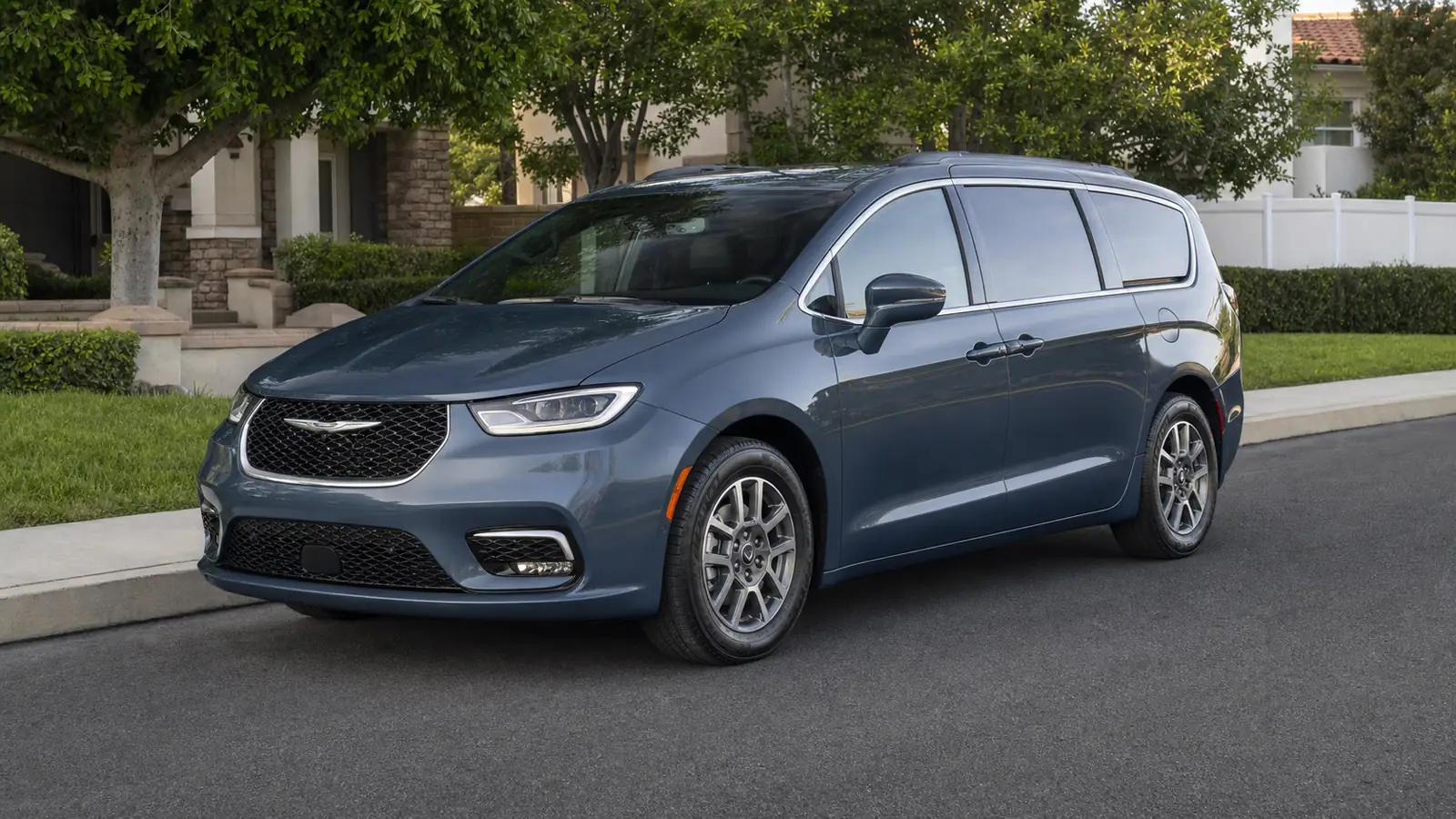
Stow 'n Go is the gas Pacifica's clearest advantage
The gas 2026 Chrysler Pacifica can turn from passenger van to flat-floor cargo carrier without leaving the second-row chairs at home, when the exact configuration includes second-row Stow 'n Go.
The third row folds into the floor across the gas lineup. This flexibility matters to families that alternate between people, mobility equipment, sports gear, and bulky purchases.
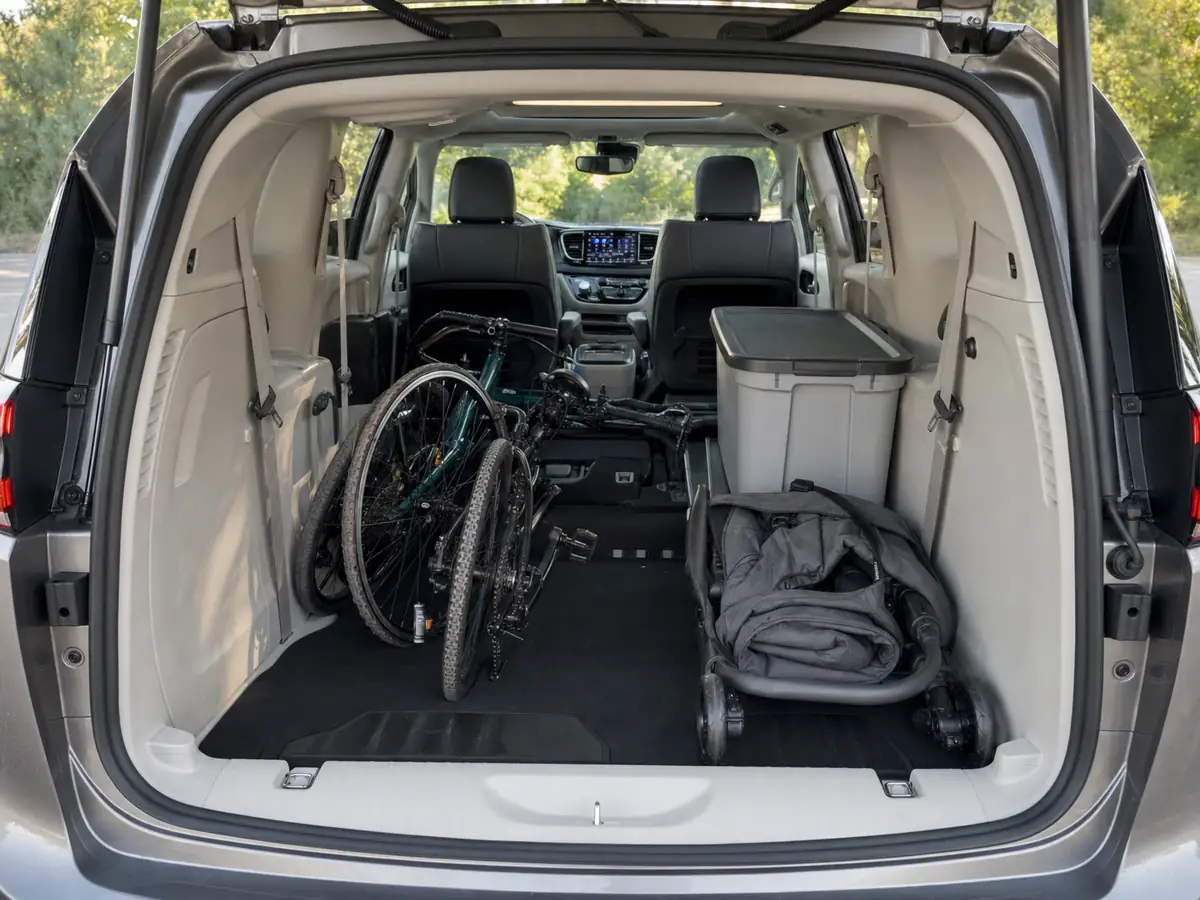
Verify the actual vehicle because seating equipment varies by trim and configuration. Open every floor bin, fold each chair, and return it to the locked position.
Check carpet, latches, hinges, trim, and covers for damage. A feature that binds or needs two people may not help the weekly routine.
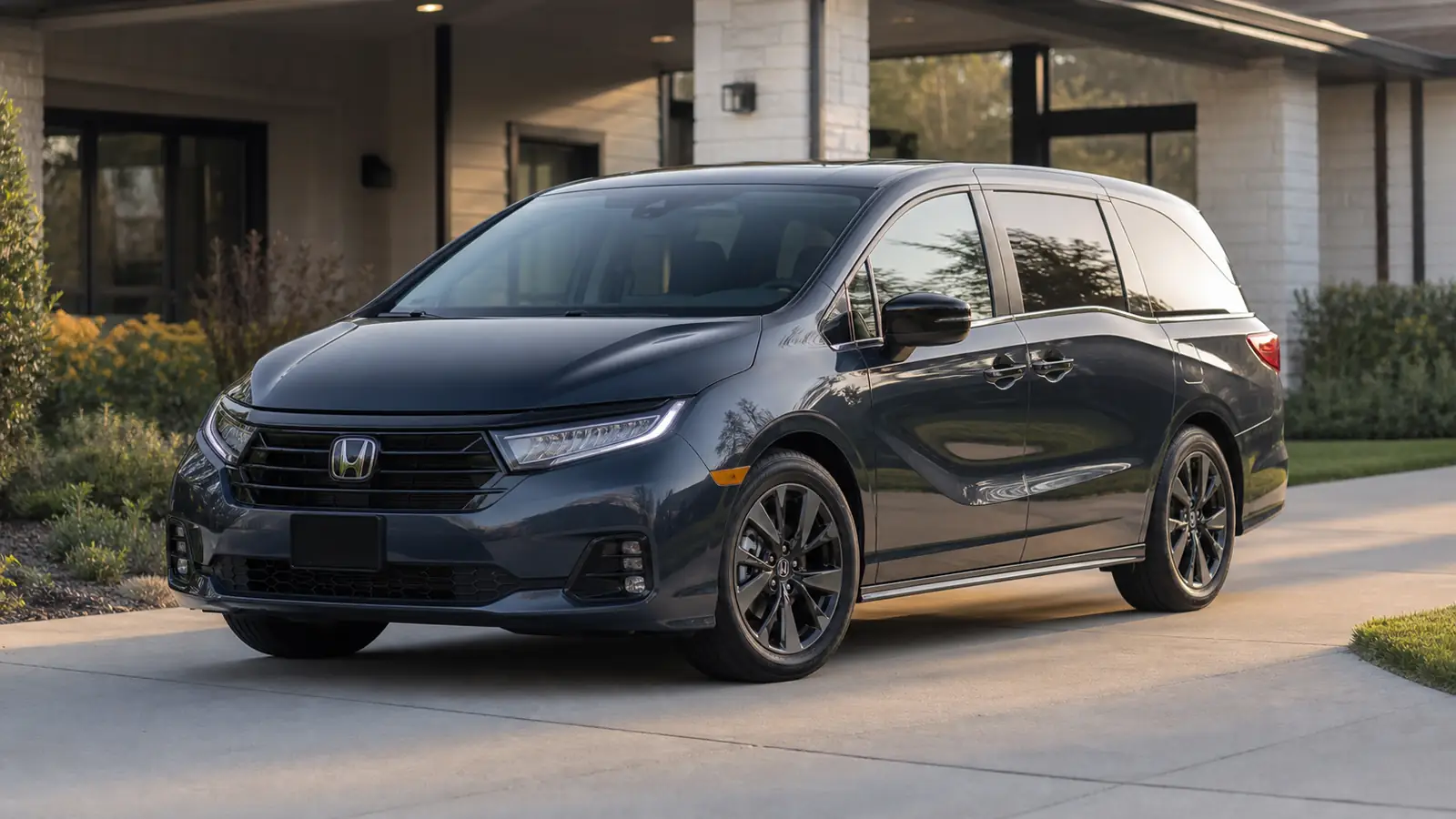
The Honda Odyssey uses removable second-row chairs with lateral Magic Slide movement. Those seats can be more comfortable or easier for child-seat access, but they must be stored outside the van for maximum cargo.
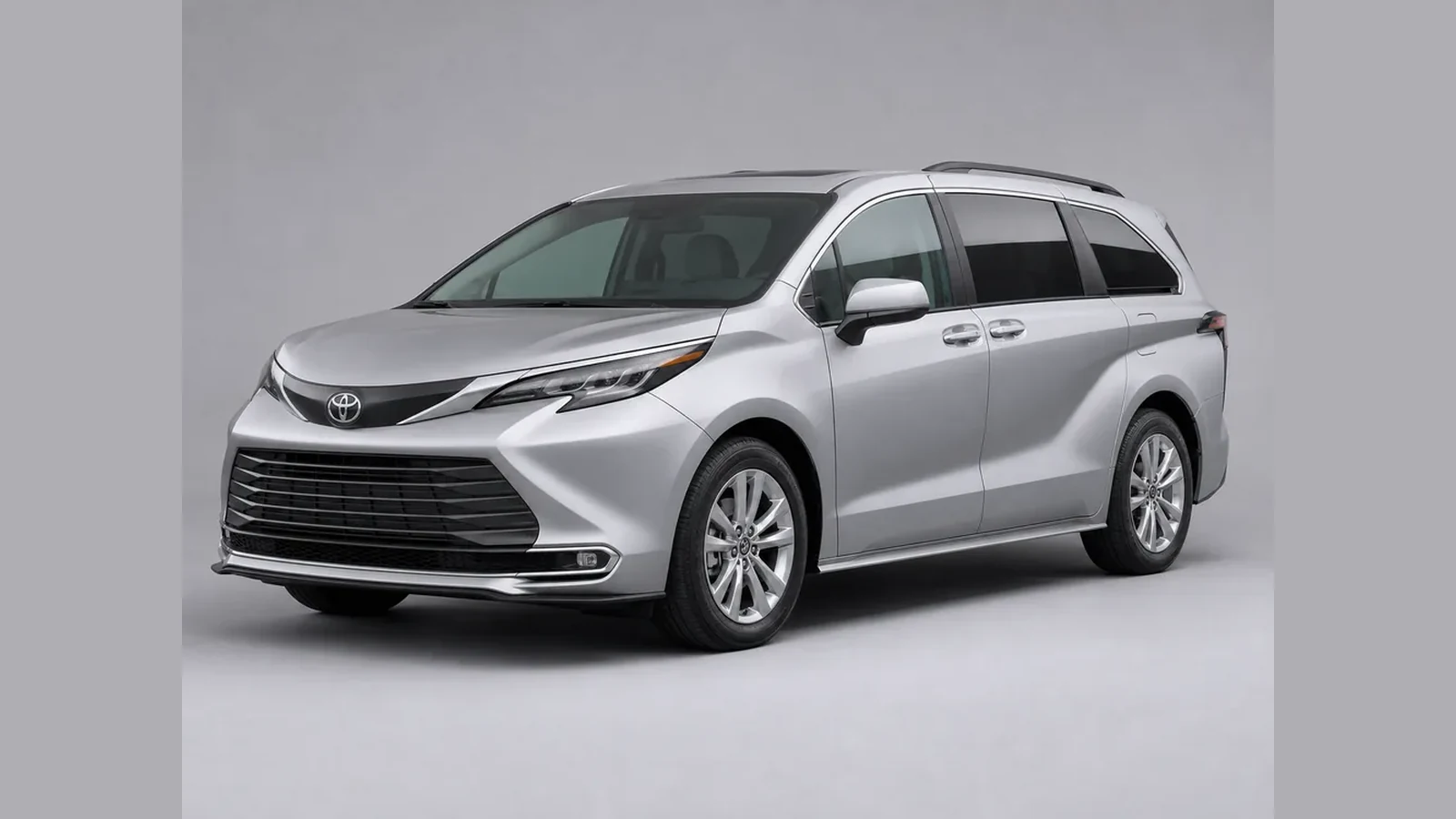
The Toyota Sienna prioritizes hybrid efficiency and does not offer the same fold-away second row.
- Fold and raise every seat yourself
- Install child restraints before moving chairs
- Load the largest weekly object
- Keep heavy cargo secured and low
- Confirm storage bins stay dry
Pacifica is worth special consideration when frequent passenger-to-cargo changes make floor-folding seats useful several times a month.
This gas profile is separate from the plug-in hybrid
The gasoline Pacifica uses a 3.6L Pentastar V6, 9-speed automatic, and front-wheel drive or available all-wheel drive.
The Pacifica plug-in hybrid has a battery, charge port, different drivetrain, no second-row Stow 'n Go, and separate recall history.
A fire-related plug-in campaign should not be presented as a defect in every gas Pacifica.
Gas Pacifica identity
- Engine
- 3.6L naturally aspirated V6
- Output
- 287 hp and 262 lb-ft
- Transmission
- 9-speed automatic
- Drivetrain
- FWD or available AWD
- Fuel
- Regular gasoline
- Seats
- Up to eight by configuration
That distinction also changes buying math. The gas van can suit drivers without dependable charging and buyers who want AWD or floor-folding second-row seats.
The plug-in version can reduce gasoline use on regular short trips, but it needs charging and a separate battery, warranty, and VIN review.
Use the planned Pacifica Hybrid profile for that powertrain. This article keeps the reliability, safety, fuel, and cost discussion on the V6 model.
A seller should identify the exact vehicle from its VIN and window sticker rather than using the word hybrid loosely.
The gas vehicle hub offers other conventional choices. Choose the gas Pacifica for its own AWD, seating, and fueling advantages, and evaluate the plug-in hybrid as a different vehicle.
Select is the value trim, while upper trims add cost quickly
The 2026 gas lineup starts with Select at $44,445, Limited at $49,605, and Pinnacle at $56,095 before destination and options. The same 287 hp V6 and 9-speed automatic do the basic work, so the price ladder mainly changes cabin equipment, appearance, seat treatment, and convenience features.
Start with Select and add the drivetrain and seating hardware that solve a real need. Limited or Pinnacle can feel richer on long trips, but their higher purchase price, wheel cost, insurance, and depreciation need to be compared with features used weekly.
A vacuum, premium audio system, or elaborate trim does not improve payload or mechanical durability.
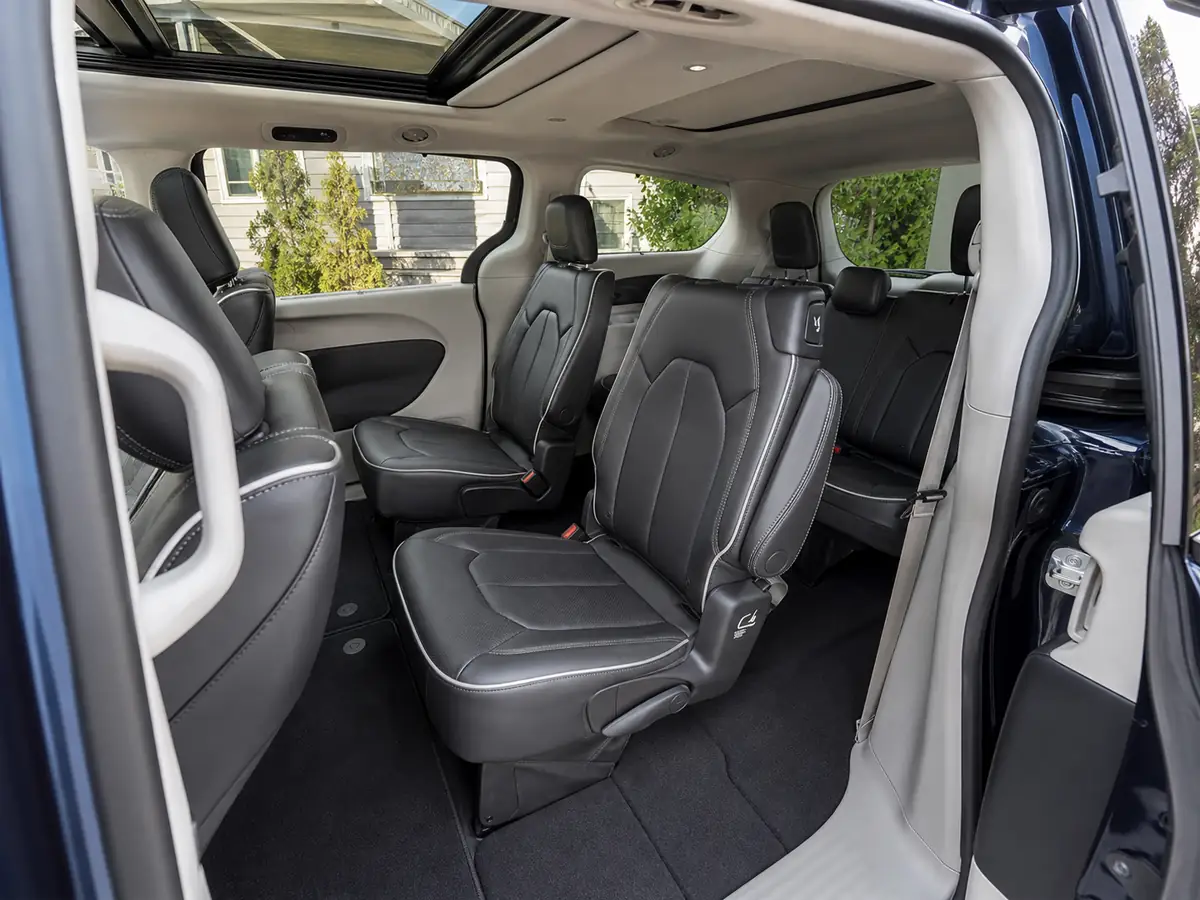
Confirm whether the exact van has second-row Stow 'n Go, eight-passenger seating, spare tire solution, tow equipment, and the cameras the family expects. Dealer inventory descriptions can group packages incorrectly, so use the window sticker and physical test.
The mainstream price hub helps compare complete family vehicles rather than badges. A used higher trim may undercut a new Select, but the new versus used guide adds inspection and warranty cost.
Select is the best starting point because the gas Pacifica's central value comes from layout and drivetrain, not luxury trim.
AWD helps on difficult routes but lowers fuel economy
Pacifica is the only current gas minivan in this comparison with available AWD and Stow 'n Go packaging. Chrysler lists up to 19 city and 28 highway mpg for front-wheel drive, while its AWD estimates are lower.
The extra driven wheels can help the van move on snow or loose grades, but they do not improve every stop or corner.
| Need | FWD | AWD |
|---|---|---|
| Normal paved family use | Lower price and fuel use | Added hardware unnecessary |
| Steep snowy driveway | Depends on tires and clearing | Better launch traction |
| Winter braking | Winter tires matter most | Winter tires still matter most |
| Service cost | Fewer driveline parts | More fluids and components |
| Fuel economy | Up to 19 city, 28 highway | Lower published estimates |
Buy AWD for a repeated route, not one holiday forecast. Price the same-size winter tires for both versions and inspect the exact pressure and load requirements.
A front-drive van on good winter tires can stop and turn better than an AWD van on worn all-season tires.
Test low-speed turns for binding, warning messages, vibration, or tire mismatch on a used AWD van. Matching circumference matters to the system, so check brand, model, size, tread depth, and pressure at all four corners.
The AWD vehicle hub includes taller alternatives. AWD is worth its purchase and fuel penalty only when the household repeatedly faces traction conditions that front-wheel drive and proper tires cannot handle comfortably.
Cargo and towing numbers need a loaded-family check
Chrysler lists 32.3 cubic feet behind the third row and up to 140.5 with rear seating folded.
The cargo floor can accept long objects, with up to 99.5 inches of available length in suitable configurations.
These numbers become useful only after passengers, restraints, spare-tire equipment, and the family's largest bags are aboard.
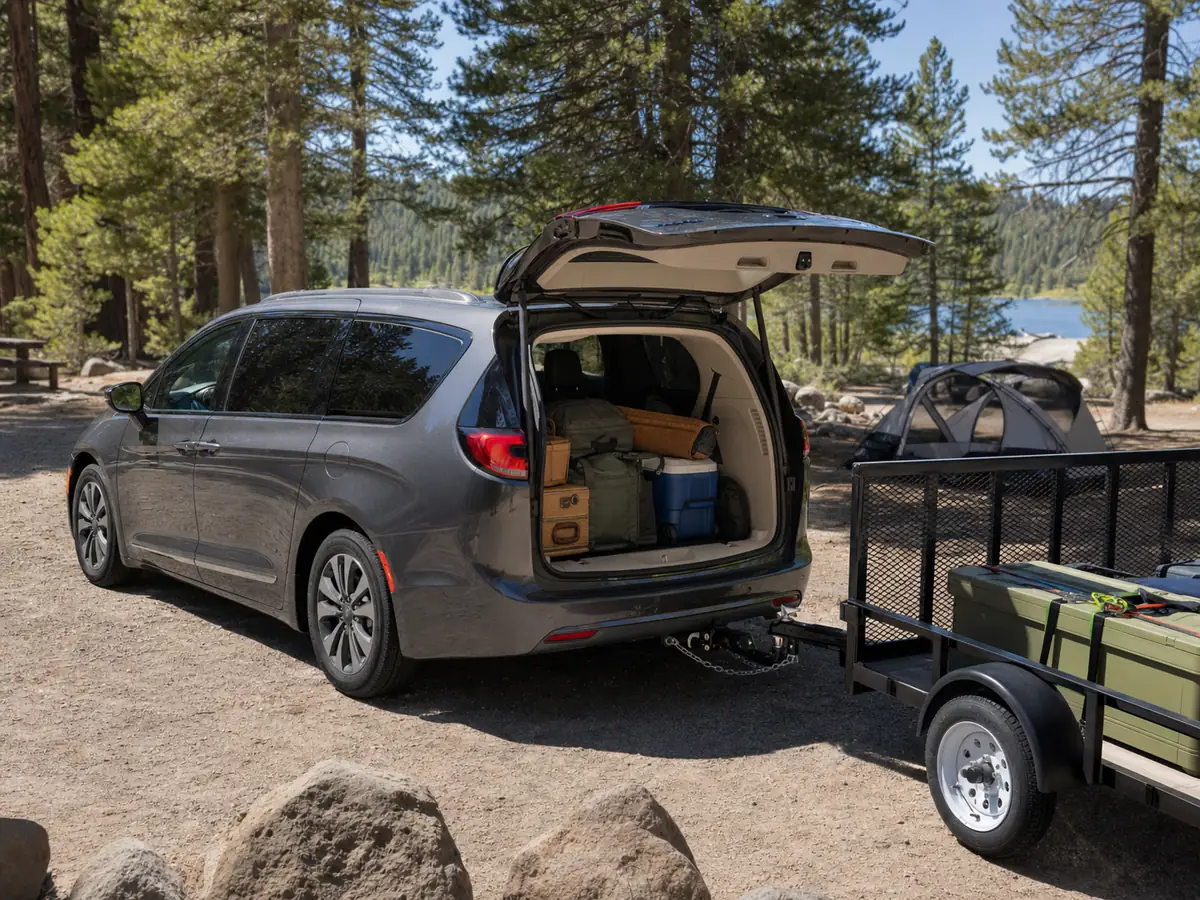
Pacifica can tow up to 3,600 pounds when properly equipped. That ceiling does not mean every van can tow the same trailer.
Confirm the factory package, hitch, wiring, cooling, brake requirements, tongue-weight limit, tire ratings, payload label, and owner's manual.
Passengers and luggage reduce remaining payload before the trailer is attached.
Load the travel configuration with every seat raised. Keep rear visibility, secure heavy items, and make sure the liftgate closes without pressing luggage against glass.
Then fold seats and load the largest flat-floor item to confirm the conversion earns its value.
- Read the exact door-label payload
- Count passengers and tongue weight
- Verify factory tow equipment
- Use a brake controller where required
- Weigh the loaded setup before a long trip
For larger trailers, a three-row SUV may offer a higher tow rating but worse access. Pacifica's cargo and towing flexibility is real when the exact load stays within every rating, not just the headline maximum.
Reliability calls for evidence, not a blanket verdict
Pacifica reliability evidence is mixed across model years and systems. A buyer should not assume every van will fail, and should not dismiss repeated reports about electrical behavior, sliding doors, screens, 9-speed shifting, cooling, or seat hardware.
The exact year, maintenance, build, use, and repair history decide the risk.
Start a used inspection with a cold V6. Check oil and coolant condition, leaks, temperature stability, and every shift from park through highway speed.
Scan all modules before and after the drive. Recently cleared faults, incomplete monitors, or unexplained battery replacement need follow-up.
Operate every sliding door and liftgate from each switch and key. Fold every Stow 'n Go seat, test front and rear climate, pair phones, use cameras, and leave the van parked before restarting.
Inspect both 12-volt battery systems where fitted for the exact stop-start setup and require correct parts.
The planned Pacifica reliability guide can separate model years and complaint patterns. A Pacifica is a reasonable purchase only when its records, scan, road test, and family hardware all support the price.
Current IIHS results are mixed across important tests
IIHS gives the 2026 Pacifica a Good small-overlap front result, Marginal in the updated moderate-overlap front test, and Acceptable in the updated side test.
Headlights and pedestrian crash prevention are Acceptable. Seat-belt reminders are Marginal, and LATCH ease of use is Acceptable.
| Area | Result | Buyer action |
|---|---|---|
| Small-overlap front | Good | Verify repair quality on a used van |
| Updated moderate front | Marginal | Compare rear-passenger measures |
| Updated side | Acceptable | Review side protection and body history |
| Headlights | Acceptable | Drive at night |
| Pedestrian prevention | Acceptable | Stay responsible for braking |
| LATCH ease | Acceptable | Install every child restraint |
These ratings should be named rather than replaced with a broad claim. Compare current procedures with Odyssey and Sienna, then consider access, restraint fit, and actual family use.
Driver assistance can reduce some crashes but is never permission to look away.
On a used van, inspect belts, seats, airbags, glass, body seams, door alignment, and collision invoices.
A windshield or front-end repair may need camera and radar calibration. Scan for restraint faults and verify warning lights perform their normal startup check.
Use the methodology and sources page to understand the evidence hierarchy. Pacifica's clever interior does not erase its Marginal and Acceptable current results, so families should compare the named tests directly.
VIN checks and a long function test protect a used buyer
Recall coverage is determined by VIN, build date, equipment, and campaign. Use both NHTSA and Chrysler lookup tools and obtain repair orders for completed work.
Do not attach plug-in-hybrid campaigns to a gas van, and do not assume a similar gas Pacifica is included without the official VIN result.
Drive for long enough to reach full temperature and use the systems in sequence. Run front and rear air conditioning, defrost, heated equipment, every USB port, screen, camera, parking sensor, window, lock, door, liftgate, seat, and key.
Stop, let the van sit, and restart it.
Inspect door tracks, floor wells, roof and hatch seals, spare-tire solution, brake wear, inner tire edges, wheel damage, underside, hitch, and signs of water entry. Heavy family wear is normal, but missing trim can reveal rushed repairs.
The used car inspection process helps organize documents. A used Pacifica should survive a cold start, long drive, hot restart, full cabin test, and VIN review before the buyer negotiates price.
Five-year cost can erase a tempting discount
Build a five-year estimate with transaction price, tax, finance interest, insurance, fuel, registration, tires, brakes, scheduled service, batteries, door and seat repairs, AWD service, electronics, and resale. Pacifica's purchase discount can be useful, but a large trim premium or deferred maintenance can consume it quickly.
| Cost | Evidence | Risk to avoid |
|---|---|---|
| Fuel | Annual miles and drivetrain estimate | Using FWD MPG for AWD |
| Insurance | Exact VIN quote | Assuming minivan rates are equal |
| Tires | Size, rating, and matching set | Replacing only one AWD tire |
| Repairs | Inspection and reserve | Spending every dollar on down payment |
| Finance | Total paid | Focusing on monthly amount |
| Resale | Conservative estimate | Assuming features prevent depreciation |
Select FWD is the cost baseline. AWD should solve a real route, and Limited or Pinnacle should provide features used often.
Compare annual fuel with Sienna and estimate whether hybrid savings recover its transaction premium.
Compare Odyssey when service history and resale matter more than floor-folding seats.
Get written quotes for insurance and a complete tire set. For a used van, price all due maintenance and any weak door, climate, brake, or battery item before purchase.
Warranty limits do not cover normal wear or every diagnosis.
The family minivan field makes the tradeoffs visible. Pacifica value survives only when the buyer controls trim, verifies condition, and keeps enough cash to maintain its many convenience systems.
A larger SUV is the fallback when the trailer sets the limit
Pacifica's 3,600-pound maximum works for some compact campers, boats, and utility trailers. A family whose loaded trailer exceeds that limit should not remove luggage or ignore tongue weight simply to keep sliding doors.
The vehicle must have enough payload for every passenger, bag, accessory, hitch part, and pound carried at the coupler.
A Toyota Grand Highlander can reach 5,000 pounds in suitable gas and Hybrid MAX configurations. That extra rating comes with swinging rear doors, a higher step-in, a larger parking footprint, and different cargo access.
A full-size truck-based SUV may tow more again, but fuel, tires, insurance, and daily maneuvering rise with capability.
Weigh the trailer as it actually travels, including water, propane, batteries, food, and gear.
Compare that ticket with the Pacifica labels and manual.
Choose the minivan for family access when the complete load fits, and choose stronger hardware before an overloaded trailer turns convenience into risk.
Choose Pacifica when its two unique features solve real needs
Start with a gas Select and test second-row Stow 'n Go availability, then decide whether AWD is required. This order protects the two reasons to buy Pacifica without paying for Pinnacle equipment before the basic family setup is proven.
Compare the same child restraints, passengers, luggage, winter route, and five-year estimate with the Honda Odyssey and Toyota Sienna.
Odyssey offers excellent access and seat movement. Sienna offers strong fuel economy and available AWD.
Pacifica earns its place with the combination of AWD and floor-folding seats.
For a used van, require a cold start, clean 9-speed operation, module scan, matching tires, complete service, working doors, every seat mechanism, all climate zones, and independent body inspection. Keep plug-in-hybrid recall research separate.
Pacifica is neither an automatic reliability disaster nor a purchase to make without evidence. Buy the gas Pacifica when Stow 'n Go or AWD changes the weekly routine, and walk away when incomplete records make the clever interior the only proof of value.