Choose the Work Body Before You Choose the Transit Trim
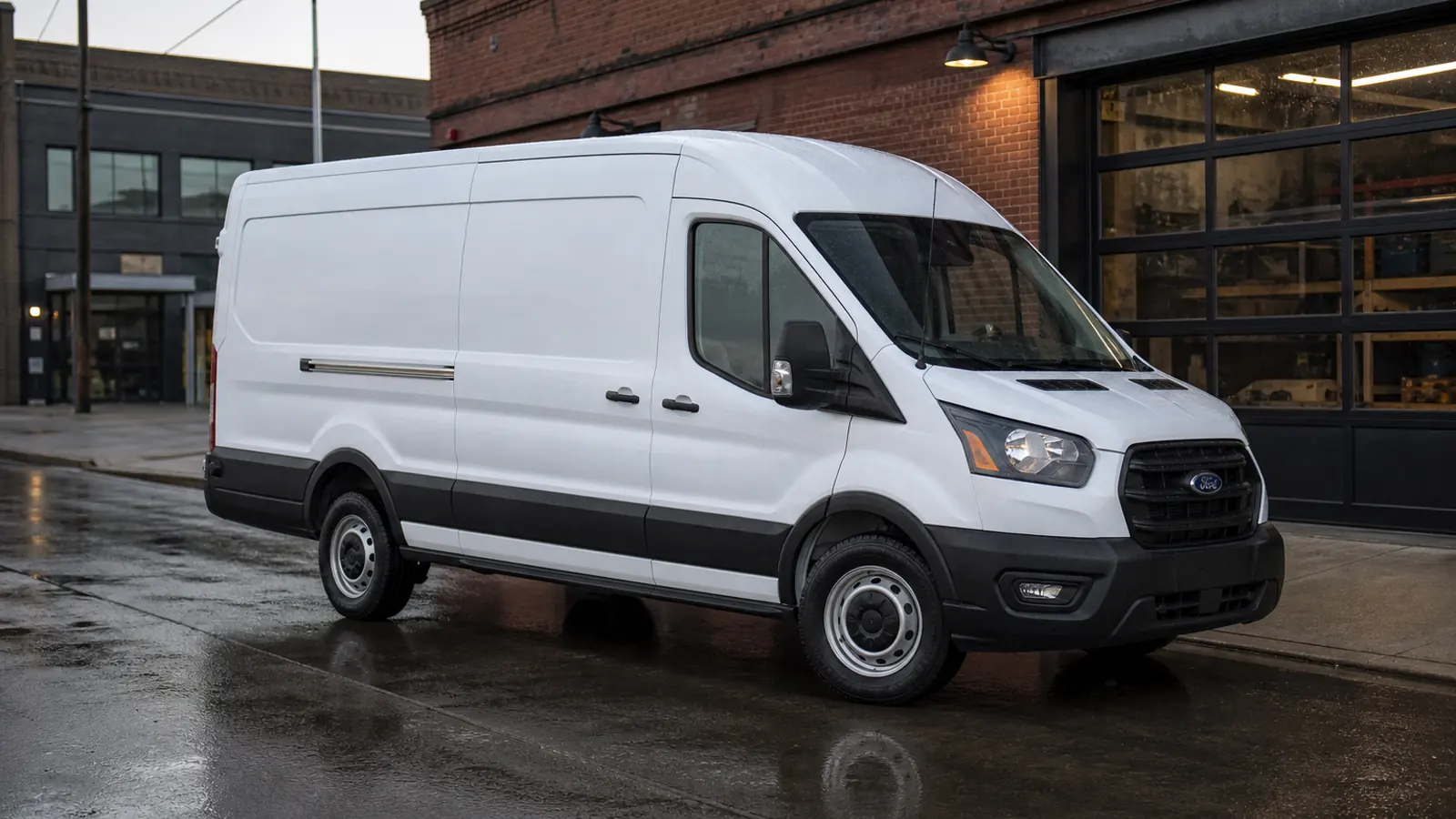
The Ford Transit is several vehicles under one name. Cargo Van carries two people and an empty load space for shelving or equipment.
Passenger Van offers seating for up to 15. Chassis Cab and Cutaway versions are incomplete vehicles intended for a box, shuttle, ambulance, service body, or other upfit.
E-Transit is a separate electric decision with different range and payload questions.
The correct starting point is the work done on the busiest day.
A plumber may need standing room and protected shelving. A parcel route may value low step-in height and easy side-door access over maximum volume.
A family shuttle needs crash-tested factory seating, windows, climate distribution, and safe emergency access. A camper conversion adds weight quickly and needs a documented electrical, ventilation, seat, and restraint plan.
The best Transit is the smallest factory configuration that can accept the finished upfit and remain within every weight rating.
An empty van's payload number is not the finished vehicle's capacity. Shelves, insulation, flooring, batteries, tanks, mobility equipment, seats, and tools all consume it before cargo is loaded.
Transit alternatives may suit light urban work.
The Ford F-250 Super Duty is better for bed loads and heavier conventional trailers.
The Toyota Sienna fits family transport with less height.
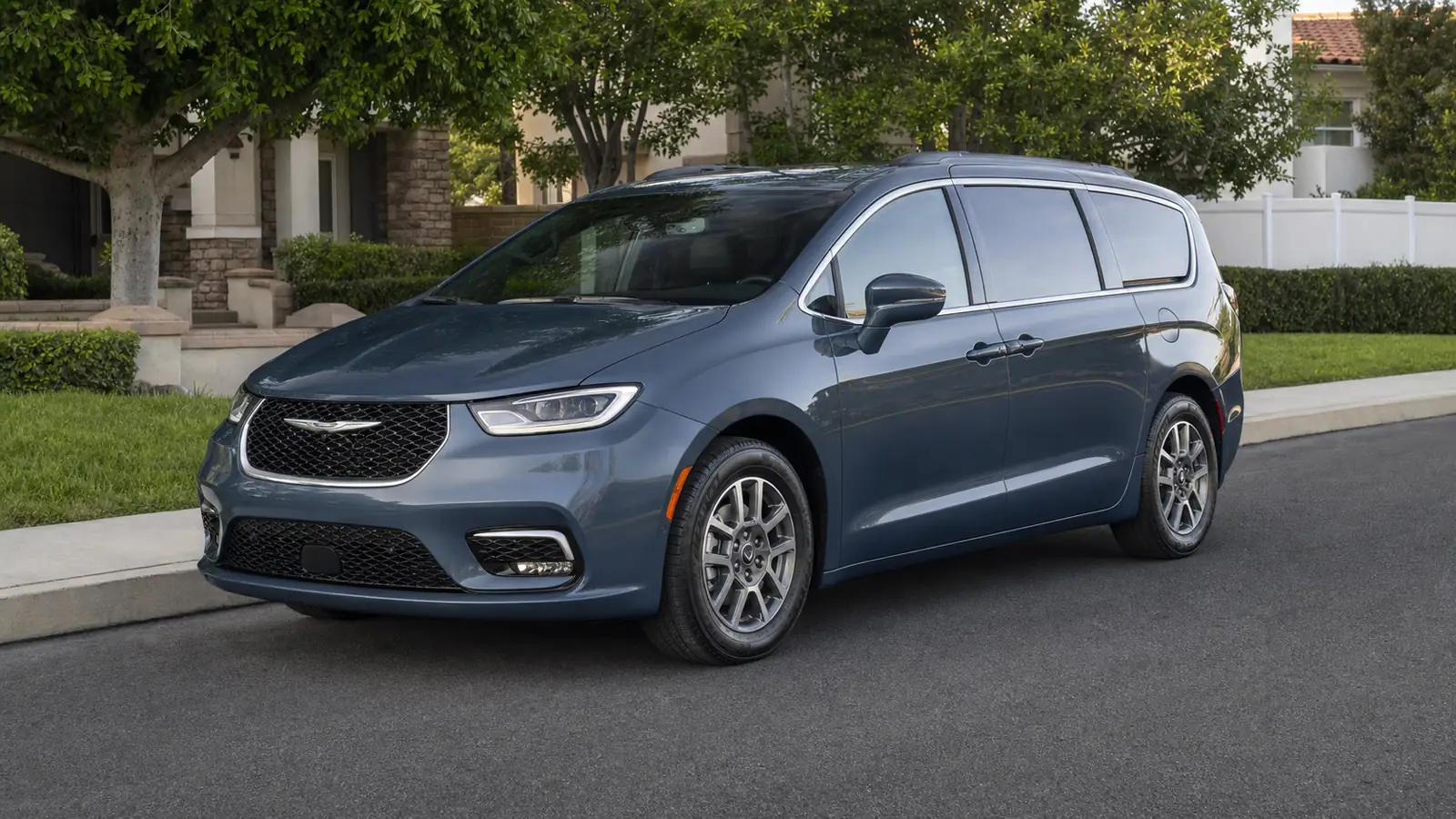
The Chrysler Pacifica adds another factory-seated choice when a commercial upfit is unnecessary. This review concentrates on the full-size gas Transit and the configuration choices that determine whether it works.
Roof Height and Body Length Decide Whether the Van Fits the Route
Ford offers low, medium, and high roofs with regular, long, and extended body choices, subject to model.
The 130-inch wheelbase regular body is easiest in dense streets. The 148-inch long body adds usable floor and wall length.
The extended body puts more volume behind the rear axle, which helps bulky freight but changes departure clearance and rear swing.
Cargo volume behind the first row ranges from 246.7 cubic feet in a regular low-roof cargo van to 487.3 cubic feet in the extended high-roof configuration.
Ford also lists maximum cargo volume figures from 280.9 to 536.4 cubic feet under its measurement method.
Those totals do not show how shelves, wheel wells, wall liners, or a bulkhead divide the space.
| Configuration | Main advantage | Main constraint |
|---|---|---|
| 130-inch regular, low roof | Parking, garages, lower crosswind area | Least standing height and cargo volume |
| 130-inch regular, medium roof | More interior height without long body | Limited long-item floor length |
| 148-inch long, high roof | Strong balance of standing room and volume | About 108-inch exterior height before accessories |
| 148-inch extended, high roof | Up to 487.3 cu ft behind row one | Long rear overhang and difficult urban parking |
| Passenger Van long body | Factory seats for up to 15 | Seating and rear climate consume cargo space |
Measure every fixed restriction on the route. Parking-garage bars, drive-through canopies, loading docks, tree limbs, shop doors, car-wash equipment, and residential gates can all be lower or narrower than expected.
Roof racks, vents, air conditioners, antennas, and solar panels raise the finished height.
Put that final measurement on the dashboard.
Rear doors open wide, but wall clearance still matters when loading from a curb or dock.
A high roof provides a 72.2-inch rear opening in Ford's published dimensions. The side door needs enough exterior space to slide and enough interior space for shelving not to block its path.
A cardboard floor plan and taped wall outlines can prevent an expensive upfit mistake.
The Ford Expedition is easier to park but cannot replace this working volume. The Transit makes sense only when the business uses the cube, height, or passenger capacity often enough to justify its footprint.
The Standard V6 Handles Payload, While EcoBoost Helps at Speed and Grade
The 2025 gas Transit uses a standard 3.5-liter port and direct-injected V6 with 275 hp and 260 lb-ft.
The available twin-turbo 3.5-liter EcoBoost makes 310 hp and 400 lb-ft.
Both use a ten-speed automatic. Rear-wheel drive is standard, and all-wheel drive is available on many configurations without raising the cargo floor.
The naturally aspirated engine is adequate for local service routes, moderate payload, and fleets that value mechanical simplicity.
It needs more engine speed under load, but that is normal operation. EcoBoost adds 140 lb-ft of torque and reaches its peak much lower in the rev range.
It is useful for heavy vans merging onto fast roads, working at altitude, or pulling an approved trailer.
Powertrain facts
- Standard V6
- 275 hp and 260 lb-ft
- EcoBoost V6
- 310 hp and 400 lb-ft
- Transmission
- 10-speed automatic
- Standard drive
- Rear-wheel drive
- Available traction
- Intelligent all-wheel drive
- Fuel tank
- 25 gallons standard, 31 gallons available
All-wheel drive helps a van start and steer on snow, wet grass, and loose jobsite surfaces. It does not increase tire grip during braking, and it adds purchase cost, weight, and driveline service points.
A rear-wheel-drive Transit on proper winter tires can be the stronger value for cleared roads. Match tires by size, load rating, speed rating, and tread depth across the axle and follow Ford's rotation guidance.
The Transit oil reference must match the engine and duty cycle. Most Transit cargo configurations above light-duty thresholds do not present a standard consumer EPA fuel-economy label.
Passenger or specific classifications may differ, but buyers should not apply an unrelated online MPG number. Track gallons and miles from the exact demonstration van or use conservative fleet records with the same roof, length, engine, axle, and route.
Drivers considering the electric version should compare the electric van decision using daily route length, depot charging, payload, winter conditions, and downtime.
The all-wheel-drive listings add traction context, though passenger vehicles cannot match Transit cargo geometry.
Gas Transit remains easier for unpredictable distance and rapid refueling. E-Transit can reduce energy and maintenance cost on a repeatable return-to-base route.
Payload Must Be Calculated After the Upfit Is Installed
Transit cargo-van payload varies widely. Ford's 2025 chart lists examples from about 3,100 pounds in some T-150 high-roof AWD combinations to more than 5,000 pounds in selected T-350 heavy-duty configurations.
A maximum from another wheelbase or roof is irrelevant. The certification and payload labels on the exact van establish the starting point.
An upfit is permanent payload. A steel partition, shelves, drawer units, inverter, auxiliary battery, ladder rack, hitch, floor, insulation, water tank, wheelchair lift, or refrigeration unit subtracts from what can still be carried.
Load placement also matters. Weight behind the rear axle can overload rear tires or the axle before total vehicle weight reaches GVWR.
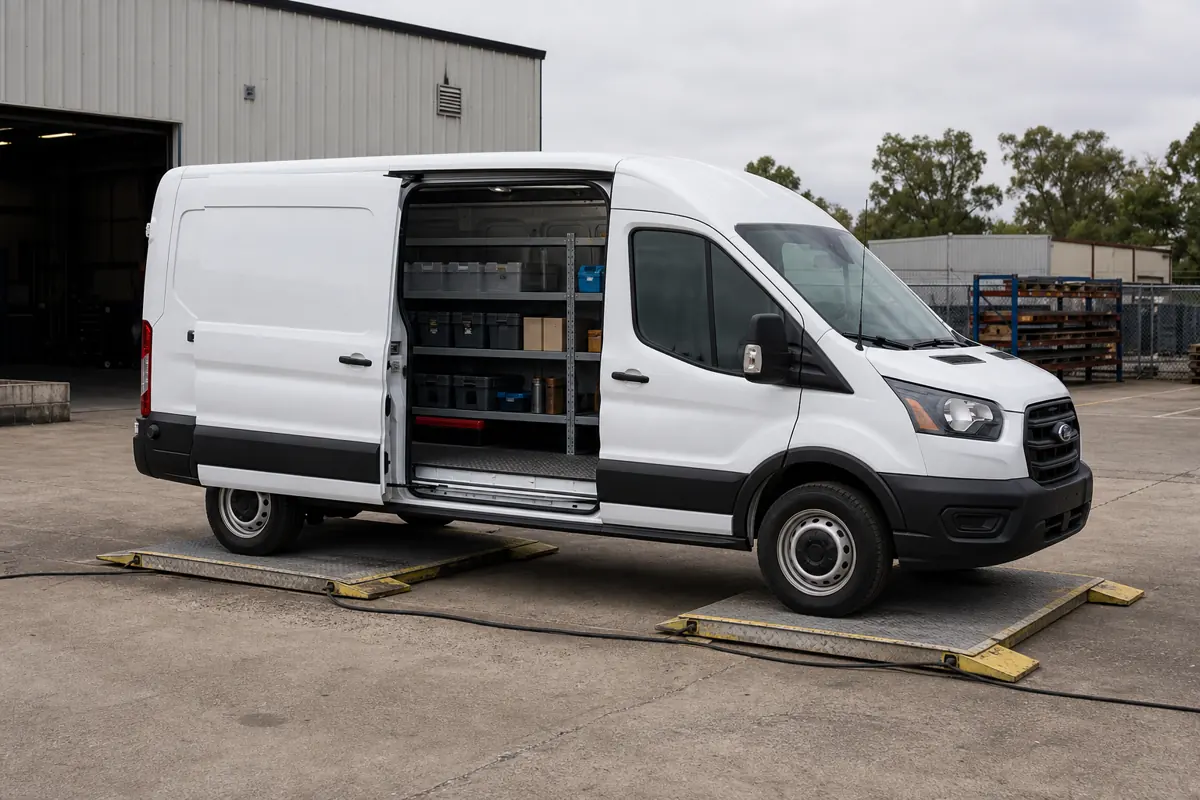
Ford lists properly equipped conventional towing up to 6,900 pounds for a particular EcoBoost cargo-van configuration.
Other Transit combinations are lower, and bumper-only towing has its own limit.
Trailer tongue weight, passengers, cargo, and the upfit all consume payload. The hitch, wiring, brake controller, cooling package, GCWR, and trailer brakes must match the intended load.
Weigh the finished van empty of movable cargo but full of fuel and normal tools.
Record front axle, rear axle, and total. Subtract those readings from the vehicle's certified limits to create a load plan.
Mark the heaviest legal shelf positions and secure dense items low and near the van's center. Unrestrained tools become dangerous in a crash even when the van is under its weight limit.
The Transit towing reference can help organize configuration data.
A Transit maintenance schedule should reflect commercial idle time, dust, towing, and stop-start work. A van is ready for service only after the completed upfit is weighed and the remaining axle capacity is known.
A Good Cargo Layout Saves More Time Than a Stronger Engine
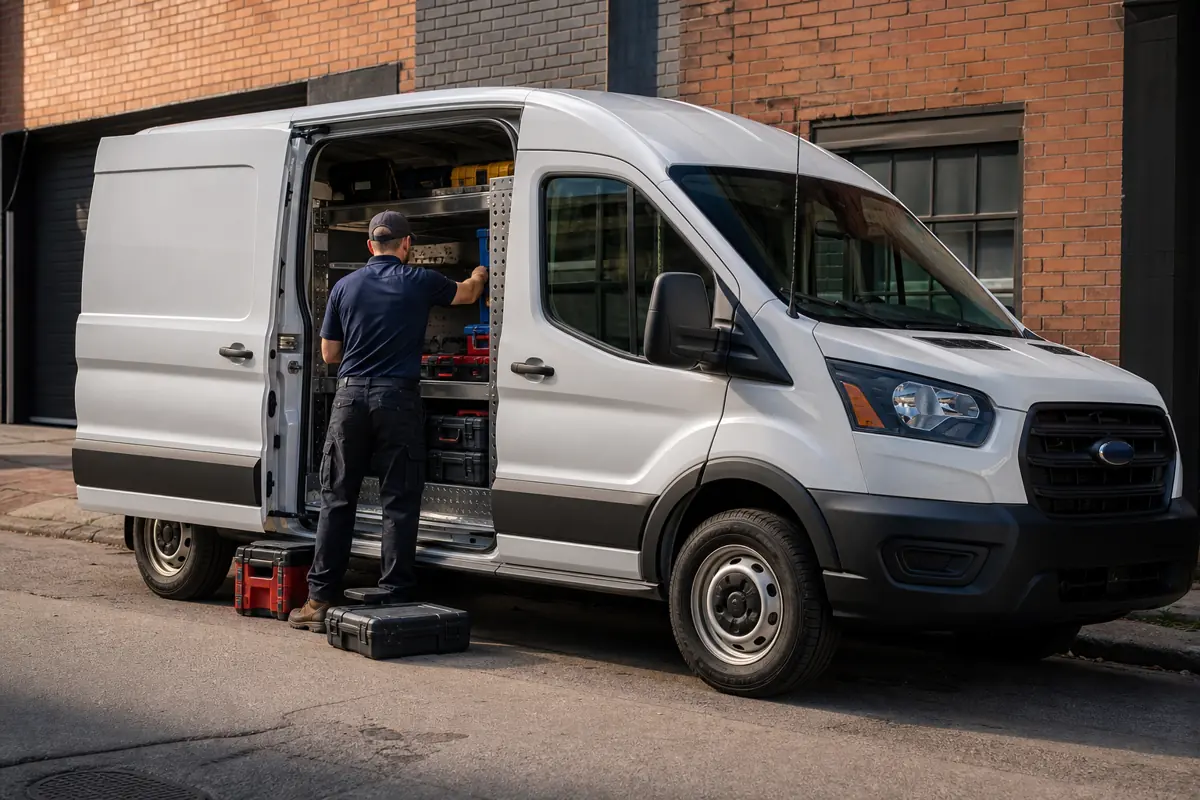
Daily productivity comes from the path between the driver's seat, side door, rear doors, shelves, and work surface.
Frequently used items should be reachable without climbing over loose cargo. Heavy parts belong low and forward of the rear axle when the upfit allows it.
Long material needs a restrained channel rather than an open aisle where it can move during braking.
A solid bulkhead can reduce noise and keep cargo out of the cab, but it must preserve seat travel, airbag clearances, and access required by the upfit.
Interior lighting should illuminate labels and drawers without casting the worker's shadow across the task. Add grab handles and step surfaces where entry is repeated dozens of times per shift.
| Area | Question to answer |
|---|---|
| Side-door route | Can the worker reach the top five tools from the curb without entering fully? |
| Rear-door route | Can a pallet, stretcher, mobility device, or long item clear the opening? |
| Load restraint | Does every heavy object have a rated anchor and short tie-down path? |
| Driver protection | Does the partition and storage prevent forward movement in a hard stop? |
| Service access | Can technicians reach fuses, batteries, spare tire, and required inspection points? |
Ford publishes a rear cargo-door opening width around 61.7 inches for cargo versions and multiple opening heights by roof.
Measure the actual item, including handles, casters, packaging, and lift equipment. Published cubic feet cannot prove that a particular machine turns through the side opening or sits between wheel housings.
Passenger conversions need a different standard. Use factory seating or engineering approved for the completed vehicle.
Keep emergency exits, aisle width, belt geometry, and child-restraint instructions clear. A camper builder must also plan ventilation, carbon-monoxide detection, fuel-burning appliances, battery protection, and legal seat use.
Decorative cabinetry cannot replace safe structure.
A Transit floor-mat fitment guide addresses cab protection, while cargo flooring needs an upfitter specification for load, slip resistance, fastening, and cleaning. The most valuable layout is the one that reduces handling time without hiding inspection points or consuming unnecessary payload.
The Recall Record Makes a VIN Check Part of the Pre-Trip Routine
The Transit reliability record must be read by model year and work history. NHTSA listed multiple campaigns affecting certain 2025 Transit vans when checked in July 2026.
One involved a rearview-camera image that could delay, freeze, or fail to display. Another covered connecting-rod or bearing manufacturing defects in certain engines and called for inspection with possible long-block replacement.
A separate campaign covered a brake-booster connection on certain vans and instructed affected owners not to drive until repaired.
An adaptive-equipment recall also covered certain vehicles modified by a specific mobility converter with particular wheelchair restraints. That is a useful reminder that completed vans can have recalls from Ford, the final-stage manufacturer, and the equipment supplier.
Search every manufacturer label attached to the completed vehicle, not only the Ford VIN.
Transit safety equipment varies by body, GVWR, and options. Standard features listed by Ford include four-wheel anti-lock disc brakes, stability control, side-wind stabilization, airbags for front occupants, and a rearview camera on completed cargo vans.
Optional driver aids can include blind-spot monitoring, lane support, reverse brake assist, and a 360-degree camera.
Confirm the window sticker and test the installed equipment.
A high-roof van has a large side area, so wind can move it even with electronic assistance.
Reduce speed, leave more following distance, and secure the load. Driver aids cannot overcome an overloaded rear axle, aged tires, or loose cargo.
The Transit recall lookup should be paired with NHTSA and Ford records for the exact VIN and completed upfit.
Used Transit Condition Is Written in the Floor, Doors, and Scan Data
Commercial mileage can be hard or easy. A highway shuttle may accumulate miles with few cold starts, while a delivery van may have thousands of door cycles, curb strikes, idle hours, and short trips.
Ask for maintenance invoices, engine hours where available, route type, payload, accident repairs, and upfit documentation.
Odometer alone is not enough.
Inspect the cargo floor for ripples, punctures, pulled anchor points, and corrosion under mats. Check roof seams, marker lights, door tracks, hinges, latches, and weather seals for water entry.
Uneven rear-door gaps can reveal collision damage or repeated overload. Look below shelves and partitions for drilled wiring, exposed fasteners, and structural cuts.
| Area | Test | Warning sign |
|---|---|---|
| Engine | Cold start, scan all modules, inspect service history | Misfire, coolant loss, active recall, or pending engine code |
| Transmission | Low-speed shifts, highway kickdown, reverse engagement | Flare, harsh repeatable shift, or delayed drive |
| Cargo body | Check roof, floor, doors, seals, and anchor points | Water entry, distorted floor, pulled fasteners |
| Steering and brakes | Road test at normal load and inspect tires | Pull, vibration, uneven wear, soft pedal |
| AWD and driveline | Follow manual on a suitable surface | Binding, warning message, vibration |
| Upfit | Verify labels, wiring protection, weight, and fastening | Unknown builder, unsafe wiring, missing weight record |
An independent inspection should place the van on a lift. Inspect brake lines, wheel bearings, driveshafts, differential, exhaust, cooling system, and frame attachment points.
A module scan may reveal camera, restraint, door, charging, or driver-assistance faults that a basic engine-code reader misses.
Test both keys and every door from inside and outside.
If the van is already converted, weigh it. A beautiful camper or service body may have very little payload left.
Verify tire load capacity and axle readings with water, batteries, occupants, tools, and hitch load considered. The used Transit buying guide can separate model-year questions, while this inspection protects against a poor individual van.
The Transit years-to-avoid review still needs the same service and VIN evidence.
Reject an undocumented upfit when you cannot verify its weight, wiring, fastening, restraints, or legal use. Repairing a bad conversion can cost more than starting with the right empty shell.
Downtime Belongs in the Five-Year Cost Calculation
A work van earns money only when it runs. The five-year budget needs purchase price, finance cost, depreciation, fuel, insurance, registration, tires, brakes, scheduled service, repairs, upfit cost, and days out of service.
A cheap used van that misses a week during the busiest month can cost more than a newer van with a higher payment.
Start with annual route miles, idle hours, loaded percentage, fuel price, and the exact roof and engine. Heavy high-roof vans usually use more fuel than low-roof empty vans, and Transit cargo configurations may not have a directly comparable EPA label.
Use conservative fleet records or a measured demonstration period. The Transit real-world MPG method separates loaded city work from empty highway travel.
Service intervals change with use. Repeated short trips, extensive idling, towing, dusty roads, and high loads can call for more frequent attention under Ford's manual.
The Transit battery specification must cover the engine and installed electrical equipment.
The correct commercial-load tires need even wear and enough capacity for the finished axle weights.
Door rollers, hinges, locks, steps, and climate systems are working components, not cosmetic details.
Budget for them.
Insurance must match business use, carried tools, passengers, mobility work, or camper conversion.
Confirm whether the policy covers the upfit replacement value and lost equipment.
Keep records of every modification and photograph the completed interior. A generic personal-auto quote can leave a large coverage gap.
The Transit cost-to-own analysis can model separate routes. For purchase, compare cost per productive day and per delivered job.
A configuration that saves ten minutes on every stop can justify more upfront cost than an engine option that rarely changes the schedule.
The 148-Inch Medium Roof Is the Broad Cargo-Van Starting Point
For many trades, the 148-inch wheelbase, medium-roof Cargo Van with the standard V6 and rear-wheel drive is the first build worth measuring.
It provides 357.1 cubic feet behind the first row in Ford's published table, offers more interior height than a low roof, and avoids the maximum height and rear overhang of the extended high roof.
The standard engine controls price and complexity.
EcoBoost makes sense for frequent heavy loads, grades, or towing. AWD earns its weight in snow, mud, and loose access roads.
A high roof earns its height when workers must stand or bulky equipment must stack vertically. The extended body earns its length when the route can accommodate it and every extra foot serves paid cargo.
Pros
- Exceptional choice of roof, length, seating, drive, and completed-body forms
- Up to 487.3 cu ft behind row one in extended high-roof Cargo Van
- Available AWD does not raise the load floor
- Standard and turbo V6 engines share a ten-speed automatic
Cons
- Large bodies are difficult in garages and dense streets
- Finished upfits can consume payload quickly
- Commercial use raises downtime and maintenance stakes
- Some configurations lack a simple consumer MPG comparison
The Ford brand overview places Transit beside the maker's pickups and SUVs.
The oil and service plan must match the engine and duty cycle without replacing the current van measurement.
Transit is a strong choice when its body is designed around the route before the order is placed. Pick the roof and length from measurements, preserve payload after the upfit, document every restraint and electrical change, then budget downtime as seriously as fuel.