Sliding doors and a low floor solve the daily family job
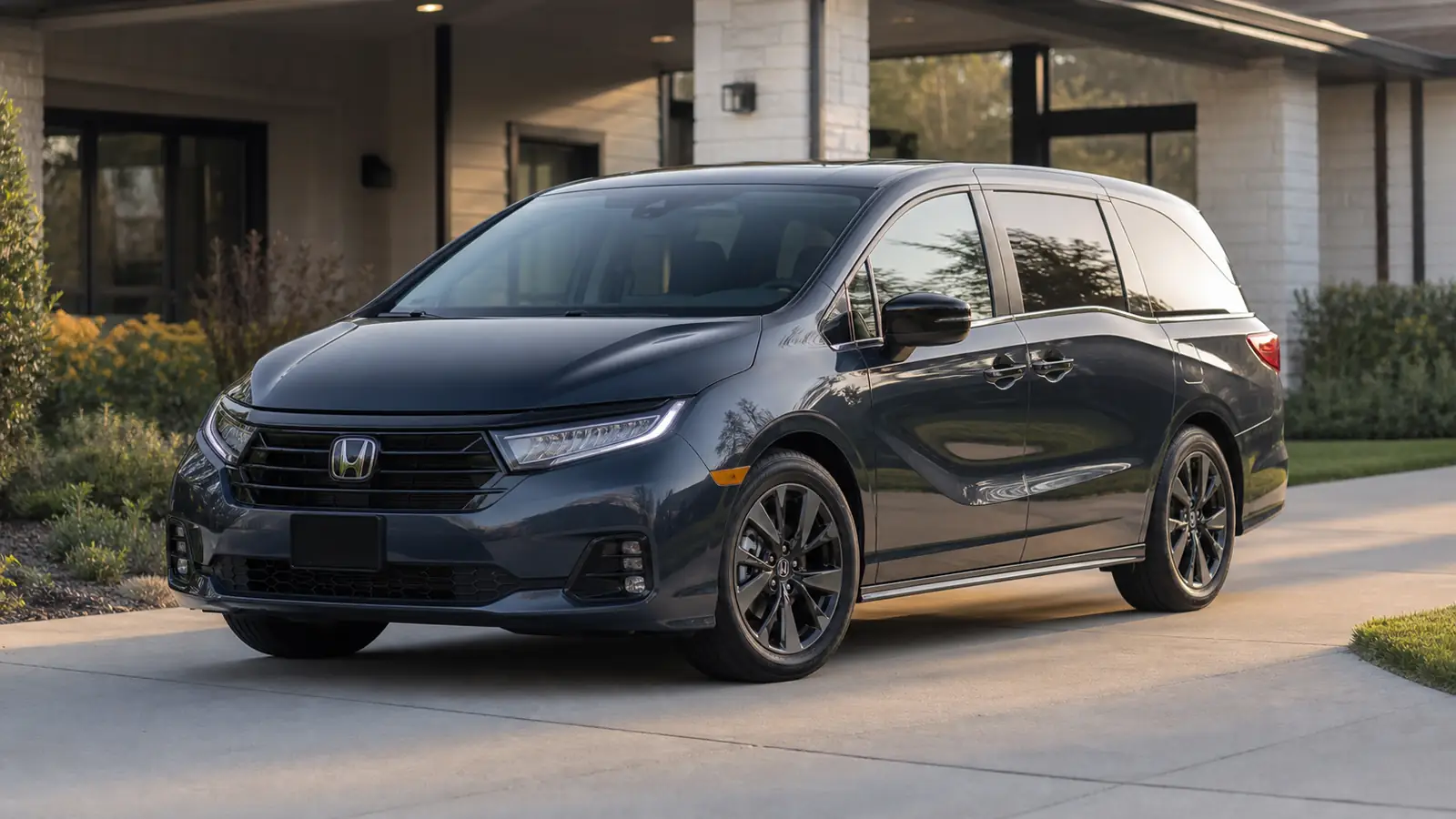
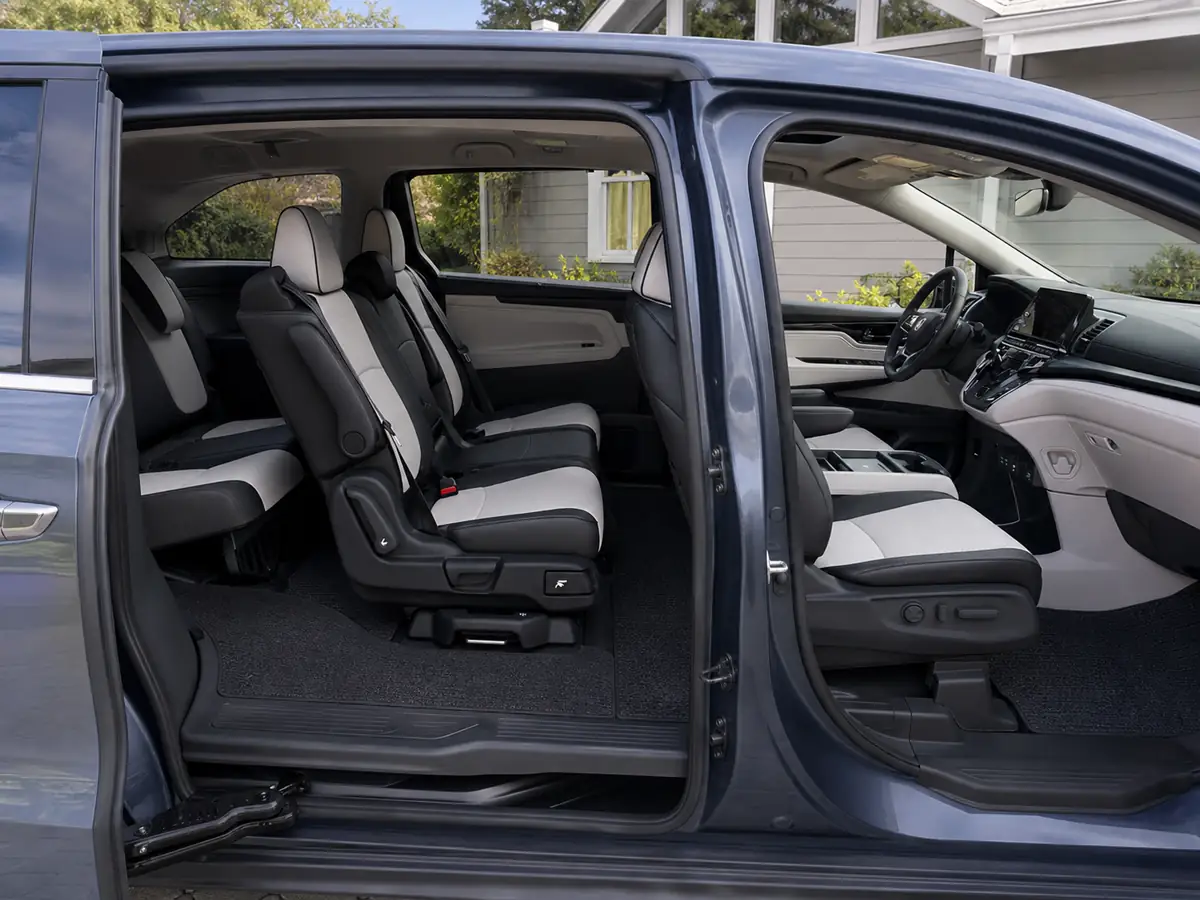
The 2026 Honda Odyssey earns its place through access. Power sliding doors open wide without swinging into the next car, the step-in height is lower than most three-row SUVs, and the third row folds into the floor.
These details reduce the effort of loading children, older relatives, groceries, and travel bags several times a day.
A showroom walkaround should copy the hardest school or travel routine. Park beside another vehicle, install every restraint, buckle a child in the center position, move an adult to the third row, and load a stroller with all seats raised.
Check whether a child can reach a door switch and whether the driver can disable it.
The minivan hub shows why this packaging differs from an SUV. A Honda Pilot adds available AWD and more ground clearance, but its rear doors and higher floor make the same family task harder.
The Odyssey wins when passengers are the first priority.
Its front-wheel-drive layout also gives more predictable space and cost than a truck-based vehicle. Choose the Odyssey when easier entry saves effort every day, not because a minivan simply holds a large number of people on paper.
Magic Slide improves access but the seats do not disappear
Honda's Magic Slide second-row seats can move laterally after the removable center seat is taken out. This creates a center aisle, moves a child closer to the front passenger, or gives one side easier third-row access.
The system is genuinely useful, but the outboard seats must be physically removed to create maximum cargo room.
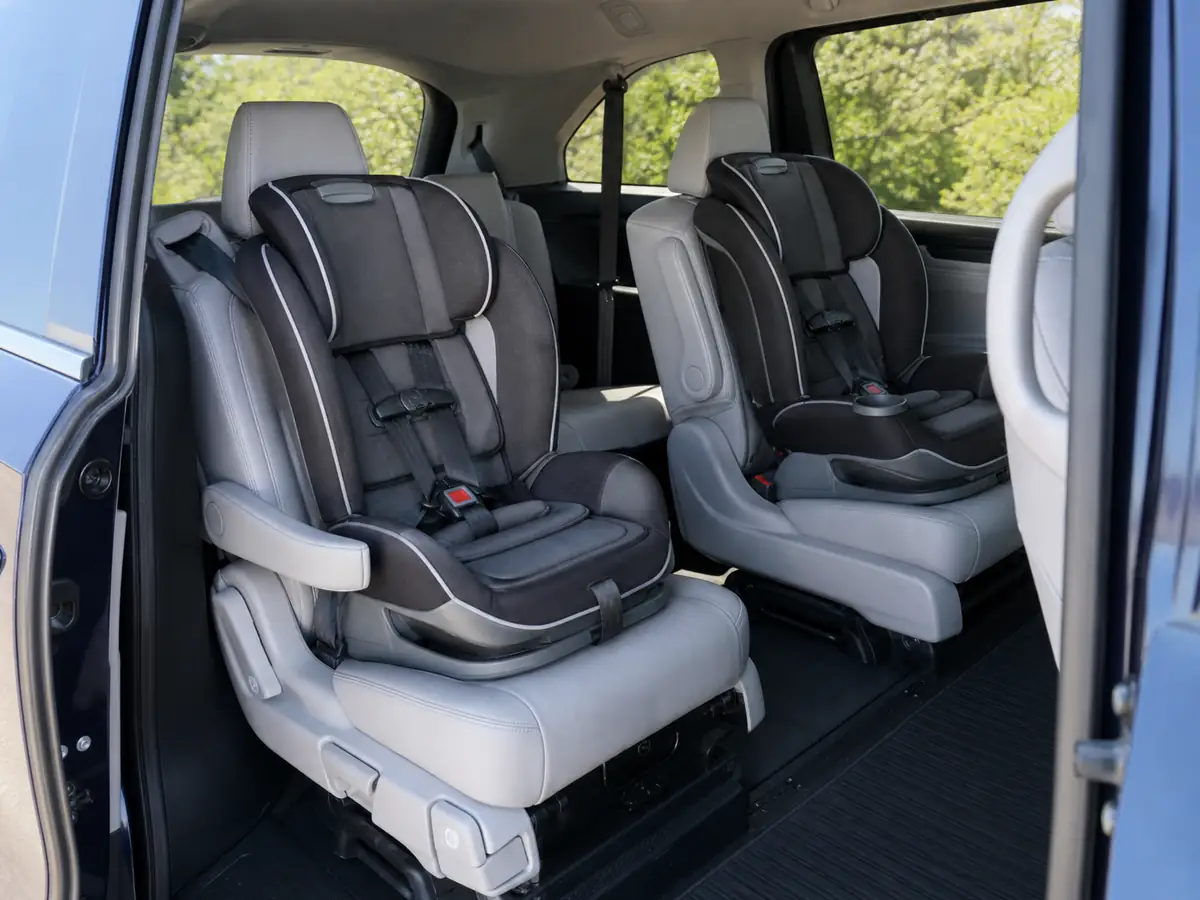
Those seats are heavy and need dry storage outside the van. Ask who will lift them, where they will go, and how often the conversion is realistic.
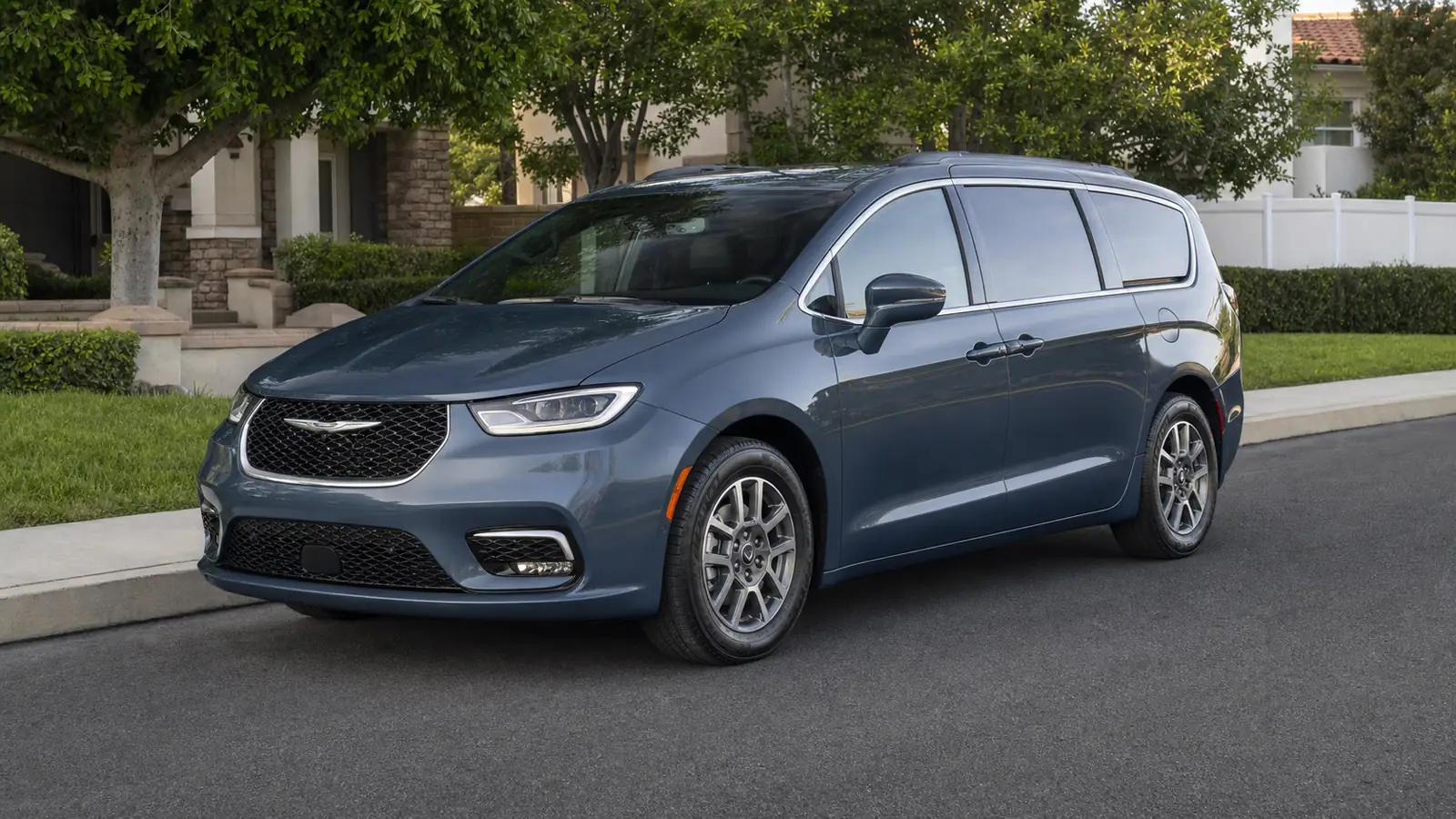
The Chrysler Pacifica can fold its available second-row Stow 'n Go seats into the floor, while Odyssey trades that trick for wider, removable chairs and lateral movement.
Install restraints before choosing a layout. A seat fixed with LATCH may prevent lateral movement, and a top tether must follow the manual.
Check buckle access, rear-facing clearance, head-restraint rules, and whether the third-row passenger can exit quickly.
- Move each seat through its full travel
- Confirm the restraint can stay installed safely
- Rehearse third-row entry from both sides
- Lift one seat before assuming removal is easy
- Measure the storage space at home
Magic Slide helps passenger access, while buyers who convert between passengers and flat cargo every week may prefer Pacifica's floor-folding setup.
The V6 is strong and simple to choose, but it uses fuel
Every 2026 Odyssey uses a 3.5L naturally aspirated V6 with 280 hp and 262 lb-ft, a 10-speed automatic, and front-wheel drive.
Honda lists 19 city, 28 highway, and 22 combined mpg on regular fuel. The 19.5-gallon tank supports long highway legs, but urban family use can produce a meaningful fuel bill.
The engine delivers smooth passing power without a turbo or hybrid transition. Load the regular passengers and drive an on-ramp, a hill, stop-and-go traffic, and a parking maneuver.
Listen for a clean cold start and feel for consistent shifts without flares, bangs, or delayed engagement.
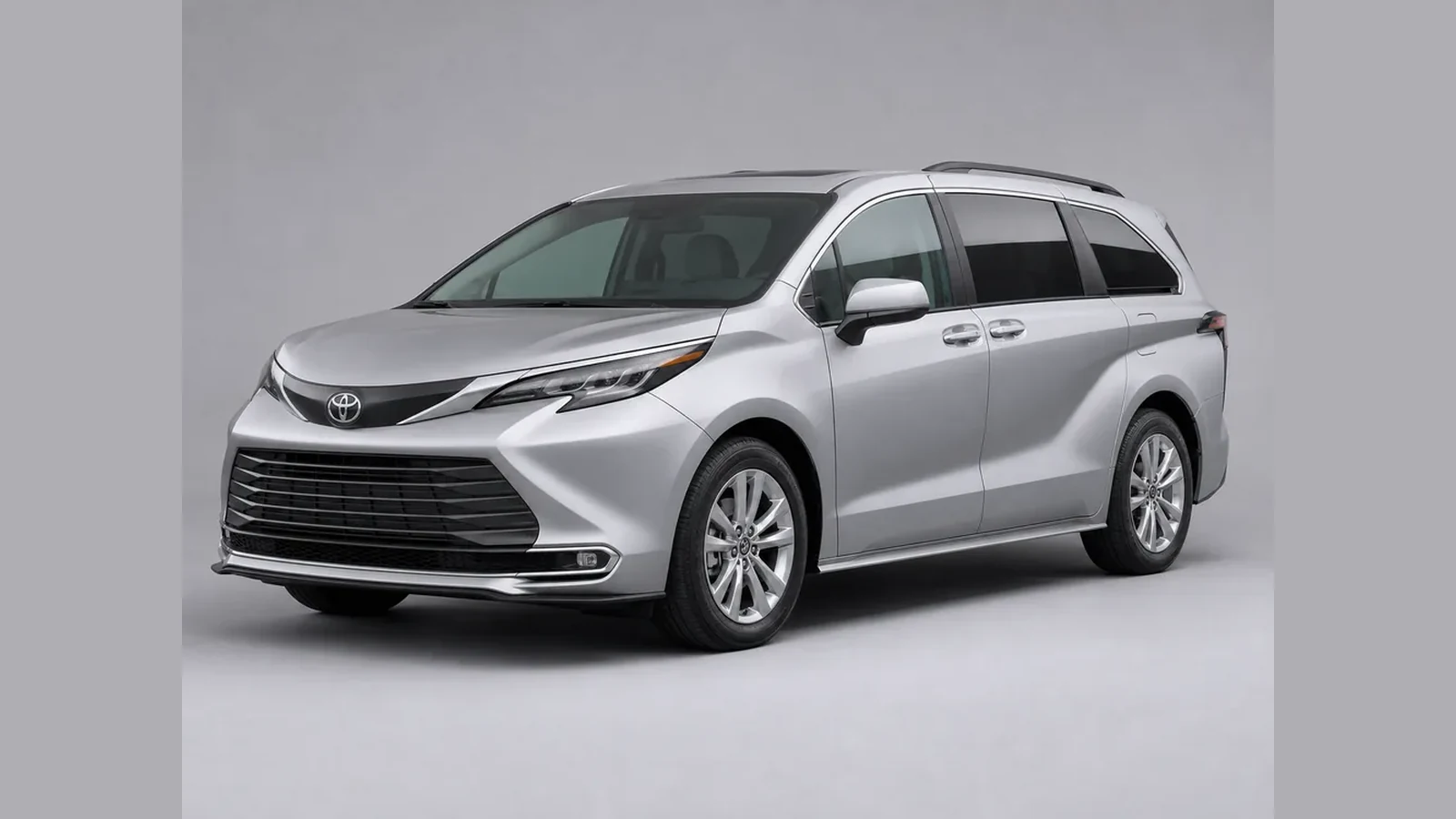
Honda does not offer AWD or a hybrid Odyssey. A Toyota Sienna makes a stronger fuel-economy case and offers AWD, but it has different acceleration and second-row cargo compromises.
Compare annual fuel using local price and real mileage rather than one test-drive impression.
Towing up to 3,500 pounds requires proper equipment and leaves payload for tongue weight, passengers, and cargo.
Read the exact owner's manual limits.
The Odyssey V6 suits families that value familiar highway power and accept higher fuel use than a hybrid minivan.
EX-L carries the useful equipment without the largest premium
The 2026 lineup starts with EX-L at $42,795, then Sport-L at $43,895, Touring at $47,495, and Elite at $51,695 before destination and options. All trims share the same engine, transmission, front-wheel drive, seating concept, and fuel estimate, so the higher price buys equipment rather than additional core capability.
| Trim | Starting MSRP | Reason to choose |
|---|---|---|
| EX-L | $42,795 | Core leather, doors, seating, and value |
| Sport-L | $43,895 | Appearance preference |
| Touring | $47,495 | Cabin technology and rear entertainment |
| Elite | $51,695 | Premium audio and comfort equipment |
Start by listing features used every week. Touring can make sense for frequent family travel when its cabin camera, entertainment, or navigation features reduce conflict.
Elite needs a strong comfort reason because its premium does not improve cargo, towing, fuel economy, or traction.
Price the exact tire size and insurance before stepping up. Large wheels raise replacement cost and can affect ride quality.
Test the audio and entertainment system with the family's phones, headphones, and streaming routine rather than trusting a feature list.
The Honda brand guide gives broader resale and service context. Use the new versus used guide when a lightly used Touring competes with a new EX-L.
EX-L is the rational baseline because it preserves the Odyssey's access and seating strengths without paying for cabin technology the family may not use.
Cargo figures change with seats, so rehearse both family modes
Honda publishes several cargo measurements because seat position and measurement method change the result.
Depending on configuration, there are about 32.8 to 38.6 cubic feet behind the third row, 86.6 to 91.0 behind the second, and up to 140.7 to 155.8 with the second row removed.
The smallest number is often the most important because vacations use every seat.
Family load test
- School day
- Bags, stroller, sports gear, all children
- Airport
- Every passenger plus upright luggage
- Road trip
- Cooler, bedding, chargers, rear visibility
- Hardware store
- Seats removed and floor protected
- Garage
- Liftgate clearance measured
Load the largest stroller and each regular suitcase while the third row remains raised. Check the deep well for small items that can roll and confirm the liftgate closes without pressing cargo against glass.
Keep heavy objects low and secured according to the manual.
When maximum room is needed, fold the third row and remove the second row.
Do the conversion yourself. Protect the seat connectors and storage area, then plan how passengers will be carried while the chairs are at home.
A published maximum has little value when the family cannot store or lift the seats.
For regular adult third-row use, compare the Toyota Grand Highlander and Toyota Sienna with the same luggage. The right Odyssey configuration is the one that carries people and bags together, not the one with the largest empty-cabin number.
Current IIHS results require a test-by-test reading
The 2026 Odyssey earns Good results in the small-overlap front and updated side tests. Its updated moderate-overlap front result is Poor, with the rear passenger dummy showing Poor head and neck protection and Marginal chest protection.
Headlights and pedestrian crash prevention are Acceptable, seat-belt reminders are Good, and LATCH ease is Good Plus.
| Area | Result | Family action |
|---|---|---|
| Small-overlap front | Good | Inspect structural repairs on a used van |
| Updated moderate front | Poor | Include rear-passenger protection in comparison |
| Updated side | Good | Verify side airbags and body history |
| Headlights | Acceptable | Drive the exact trim at night |
| Pedestrian prevention | Acceptable | Stay responsible for braking |
| LATCH ease | Good Plus | Install actual child restraints |
This mixed record should not be compressed into a claim that the van is simply safe or unsafe.
Seat position, restraint fit, crash direction, speed, and vehicle condition still matter.
Compare the named procedures with the current Toyota Sienna and Pacifica results.
On a used van, inspect seat belts, airbag covers, seat tracks, head restraints, glass, body seams, and repair invoices.
A replacement windshield may require camera calibration. Test every warning and camera on suitable roads without treating assistance as automation.
The research standards explain how official testing is used. Families should weigh Odyssey's excellent access against its Poor updated moderate-overlap result instead of relying on an old award or a single star summary.
A used Odyssey inspection starts with doors, seats, and service history
The current generation began for 2018, so used prices cover many ages and equipment levels.
Condition depends on family use, maintenance, climate, collision history, and model year. Run the VIN through NHTSA and Honda, then compare the records with the odometer and wear.
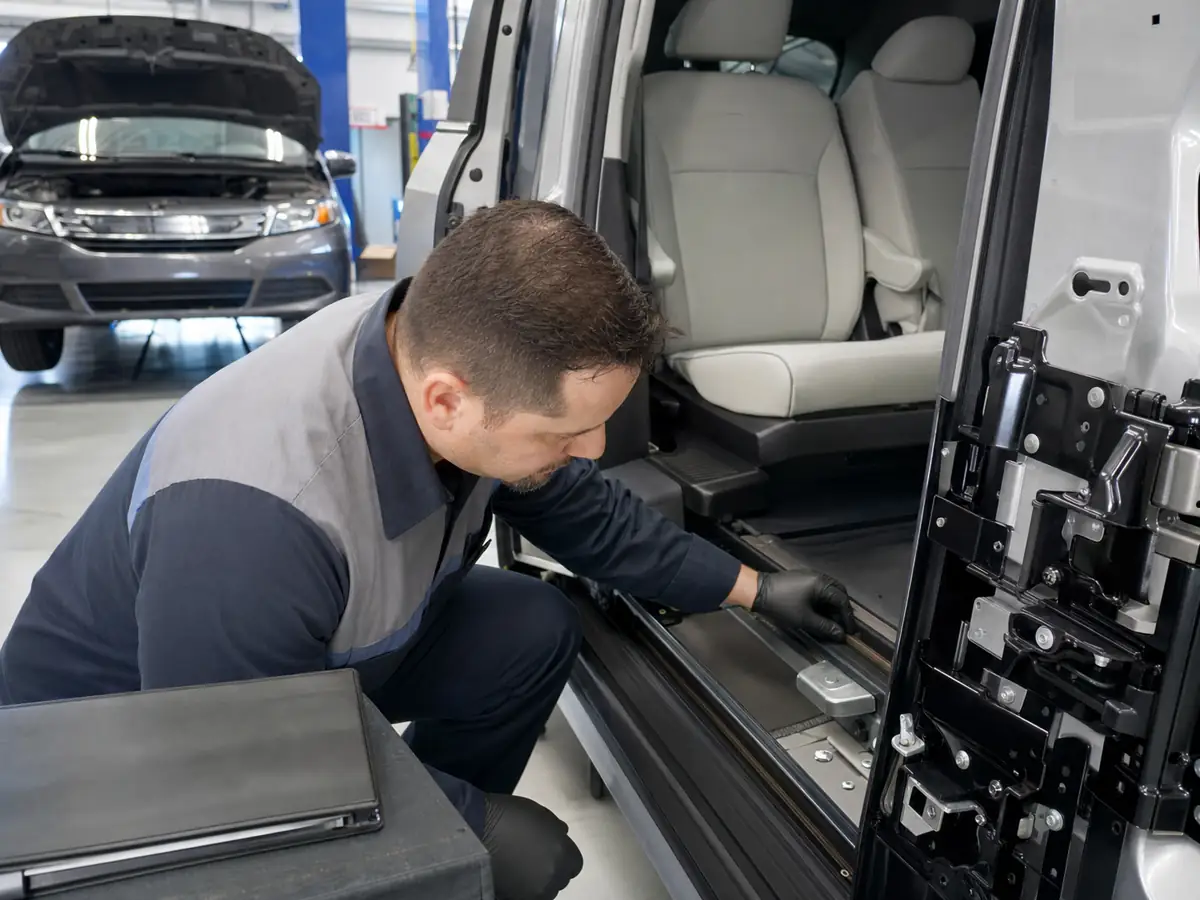
Start cold. Listen for abnormal engine noise, check oil and coolant, and feel every 10-speed shift.
Verify the maintenance schedule, including timing-belt related service by time and mileage for the exact year.
A seller's claim that the engine is reliable does not replace receipts.
Operate each sliding door and the liftgate from every switch and key. Watch for hesitation, reversal, grinding, water entry, damaged tracks, or warning messages.
Move every seat, latch the third row, test climate control in all zones, pair a phone, and run cameras and entertainment.
- Scan before and after the road test
- Check tires for inner-edge wear
- Inspect brakes after long family use
- Test heat and air conditioning in every row
- Verify every key, headphone, and remote
The planned Odyssey reliability guide can go deeper by year. A clean used Odyssey needs complete mechanical records and fully working family hardware, because either side can create a large bill.
Front-wheel drive is usually enough, but it is a hard boundary
Every Odyssey sends power to the front wheels. That layout works for most paved family travel and avoids the purchase, fuel, tire, and service cost of AWD.
Good winter tires improve acceleration, braking, and cornering in cold conditions, while AWD mainly helps the vehicle move.
Families on steep unplowed roads, deep snow, or loose campsites should test the actual route. A Toyota Sienna offers AWD with hybrid economy, and the gas Chrysler Pacifica offers AWD with a stronger cargo-folding trick.
A three-row AWD vehicle may provide more clearance but less convenient access.
Check curb, driveway, garage, and trailhead clearance with the van loaded. The low floor that helps children enter can scrape where a taller SUV does not.
Do not buy a taller vehicle for one annual trip when another route or rental solves it more cheaply.
For towing, remember that tongue weight and passengers consume payload even when the engine can pull the trailer. Odyssey is the better family tool on normal roads, while repeated deep snow, rough access, or AWD need should move the comparison to Sienna, Pacifica, or an SUV.
The five-year budget needs fuel and scheduled V6 service
Build the Odyssey budget around transaction price, tax, finance interest, insurance, fuel, registration, tires, brakes, scheduled service, timing-belt related work, door and liftgate repairs, and resale. A full family can cover many miles, so the 22-mpg combined estimate matters more than a small trim discount.
| Cost | Evidence | Common miss |
|---|---|---|
| Fuel | Annual miles and local price | Using highway MPG for city routines |
| Insurance | Exact VIN quote | Assuming every minivan is cheap |
| Tires | Exact size and rating | Ignoring alignment |
| Scheduled service | Manual and dealer quotes | Missing age-based work |
| Doors and seats | Full function test | Treating cabin hardware as cosmetic |
| Finance | Total paid | Comparing payment alone |
Compare a five-year fuel estimate with Sienna using the same mileage. The hybrid may recover a higher price for high-mile urban driving, while Odyssey may cost less to buy or feel stronger on the highway.
Include insurance and financing because they can erase fuel savings.
EX-L usually protects the budget. Touring and Elite increase purchase, tire, and depreciation exposure without changing the basic powertrain.
Keep a repair reserve after the down payment, especially for a used van outside comprehensive warranty.
The mainstream price hub contains family alternatives. Odyssey ownership makes the most sense when the household uses its access often, chooses a moderate trim, and budgets honestly for fuel and scheduled V6 maintenance.
Odyssey remains the access-first minivan choice
Start with EX-L and perform the family rehearsal before discussing price. Install every child restraint, move Magic Slide seats, load luggage with all rows raised, remove one second-row seat, drive at night, and park in the tightest normal space.
That test reveals more than an equipment comparison.
Compare Odyssey with Sienna hybrid efficiency, Pacifica AWD and Stow 'n Go, and a Grand Highlander using the same passengers and bags. A minivan usually wins access, while the alternatives may win fuel use, traction, or styling.
For a used example, require VIN checks, service records, a cold start, clean shifts, working doors, every seat mechanism, rear climate output, and an independent inspection. Price timing-belt work when records do not show it.
The Odyssey is still one of the strongest family vehicles because it removes small access problems from every day. Buy it when sliding doors and Magic Slide improve the real routine, and choose a rival when AWD, hybrid economy, or floor-folding second-row seats matter more.