LT is where value lives
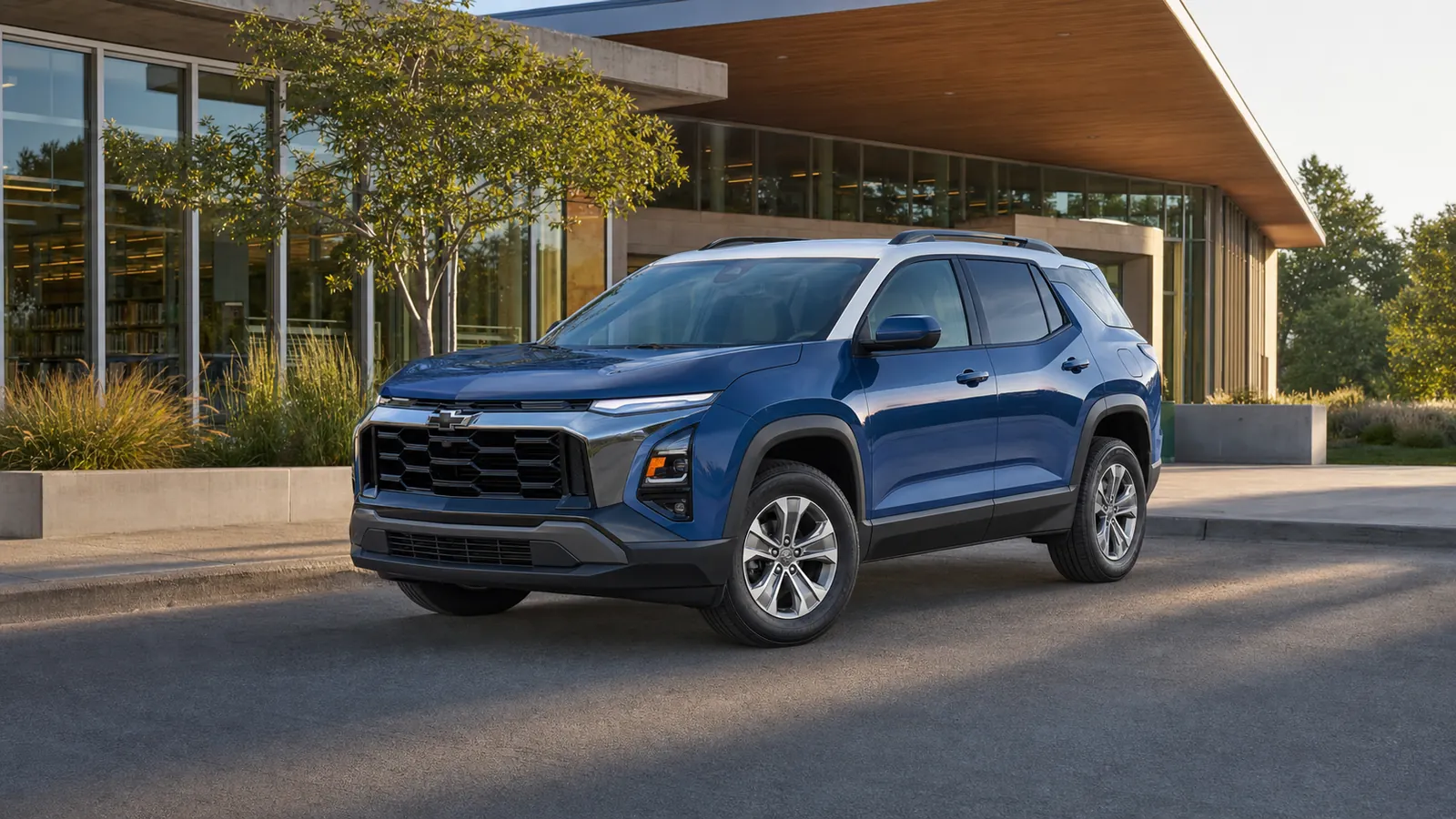
The 2026 Chevrolet Equinox LT is the version that explains the model. It gives buyers the redesigned cabin, standard safety equipment, useful screen, and practical five-seat body without charging extra for a stronger engine that does not exist.
ACTIV and RS change appearance, tires, and comfort features, but every trim keeps the same 175 hp 1.5L turbo.
The trim process should begin with written needs. Heated seats can solve a cold-climate problem.
A surround-view camera can help in a tight garage. Larger wheels, contrast roofs, and dark trim may be enjoyable, but they do not shorten a highway merge or increase towing capacity.
Separate the weekly fixes from the showroom appeal.
ACTIV uses a more outdoors-focused look and tire choice. Those tires may give useful grip on gravel access roads, yet they can add road noise and replacement cost.
RS gives the Equinox a sportier presentation, but the powertrain stays identical. A buyer expecting an RS performance upgrade should drive it back-to-back with LT before paying.
Compare total prices within the mainstream SUV range. Match drivetrain, driver aids, seat equipment, and dealer accessories.
Write MSRP, discount, fees, finance rate, and trade value on separate lines. A low monthly payment can hide a longer loan or an expensive protection product.
The wider Chevrolet model lineup also matters. A smaller vehicle may be cheaper when rear-seat and cargo needs are modest, while a larger Chevrolet may be required for three rows or heavier towing.
Price the packages separately. A convenience package can be reasonable when it combines a power liftgate, heated seats, and camera hardware the household already chose.
It is weak value when one desired feature forces several unused additions. Ask for a factory window sticker, then mark every item as required, useful, cosmetic, or unwanted.
The dealer quote should not turn unwanted equipment into a reason to increase the loan.
The Equinox earns its value through a complete LT at a strong out-the-door price, not through an upper trim pretending to add performance.
One engine defines every trim
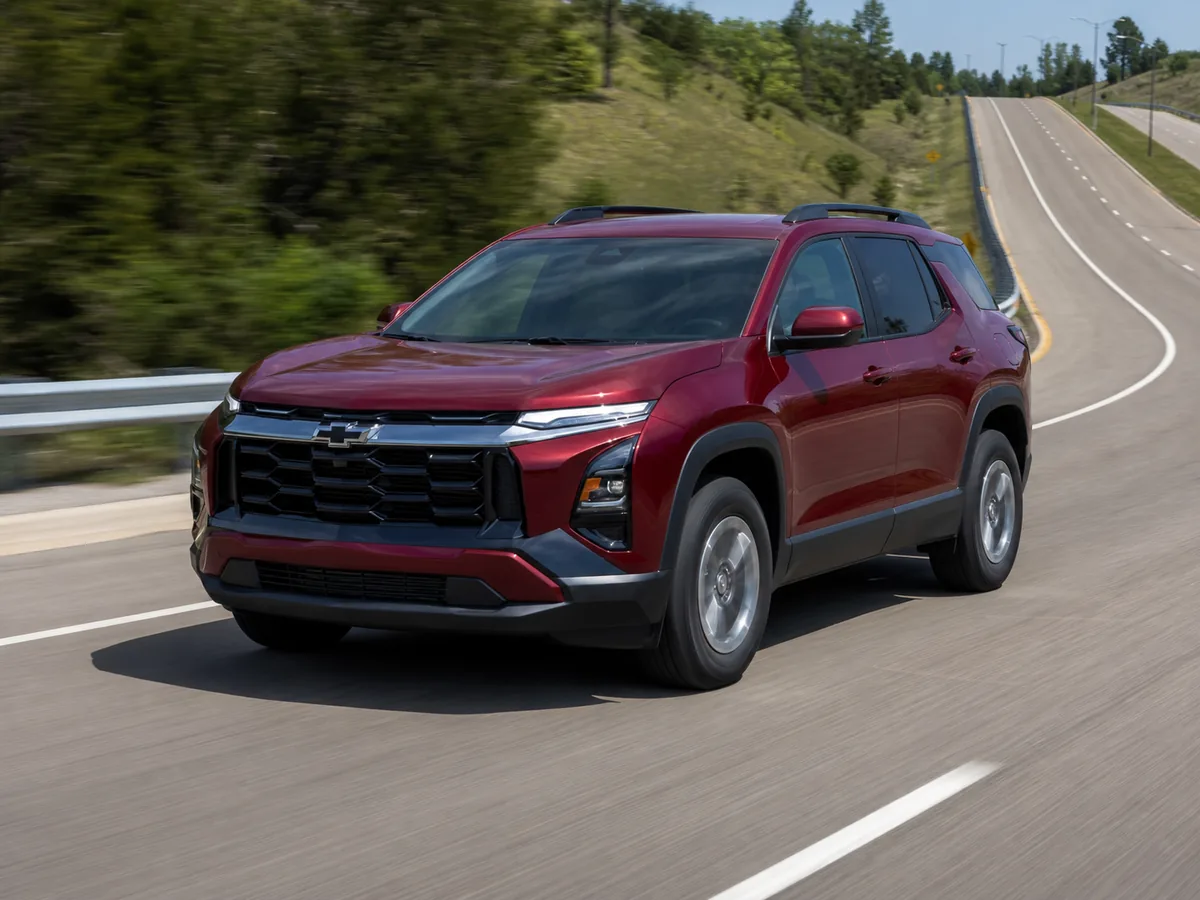
Every gas Equinox uses a 175 hp 1.5L turbo four-cylinder. That keeps the order form simple, but it also sets a hard boundary.
An ACTIV or RS can look more specialized without accelerating better than LT. The buyer must decide whether adequate response is enough for the normal load and road.
Start the test with a cold engine and the people who regularly travel. Turn on climate control, join traffic from the shortest common ramp, and accelerate from 40 to 70 mph where legal.
Repeat on a grade. The engine may raise its voice and the transmission may hold a lower ratio, but the response should remain smooth and predictable.
Do not use an empty, low-speed dealer loop to approve a family vehicle. A solo drive can hide the effect of four passengers, luggage, elevation, and summer air conditioning.
The important question is not whether the Equinox wins a race. It is whether the driver can merge, pass, and maintain speed without planning around a response they dislike.
Compare the same route in the Ford Escape, Honda CR-V, and Mazda CX-5.
Some rivals offer a stronger turbo or hybrid. Others may feel quieter or more responsive even when paper output looks similar.
Seat comfort and controls can still favor the Equinox, but the price should reflect its narrower powertrain menu.
A buyer who tows, climbs long grades, or carries adults frequently should be strict. No trim purchase can fix an engine mismatch later.
Repeat the merge after ten minutes of steady driving. Watch whether the transmission changes ratio cleanly when the driver eases off and asks for power again.
Listen for persistent pinging, rattling, or a whistle that changes with throttle. A turbo engine can make normal airflow sounds, but a warning light, reduced-power message, strong fuel odor, or repeatable hesitation belongs on a repair order before purchase.
If the loaded LT feels slow on the buyer's hardest weekly road, an RS badge will not change the answer.
FWD and AWD shift differently
The Equinox uses two transmission arrangements. Front-wheel-drive models pair the 1.5L turbo with a continuously variable transmission.
All-wheel-drive models use an eight-speed automatic. Choosing AWD therefore changes more than the number of driven wheels.
It changes shift feel, purchase price, weight, and fuel use.
A CVT can hold engine speed while road speed rises, which may sound different from stepped shifts.
The eight-speed moves through fixed ratios and may downshift more noticeably.
Neither sound alone proves a problem. The test is whether takeoff, low-speed creeping, passing, and deceleration remain predictable without shudder, flare, delayed engagement, or warning messages.
| Question | FWD with CVT | AWD with eight-speed |
|---|---|---|
| Best setting | Mild weather and paved roads | Repeated snow, mud, or steep access |
| Fuel pressure | Lower | Higher |
| Driving feel | Ratio changes without fixed steps | Conventional gear shifts |
| Tire demand | Correct pair and alignment | Four closely matched tires |
| Buyer proof | Wet-hill launch | Same road plus AWD engagement |
AWD helps distribute engine power when a front tire would spin.
It cannot create tire grip or shorten braking distance. Four worn all-season tires on AWD can stop worse than four suitable tires on FWD.
A buyer in a snow climate should compare the cost of winter tires and wheels with the AWD premium instead of treating drivetrain as the entire safety plan.
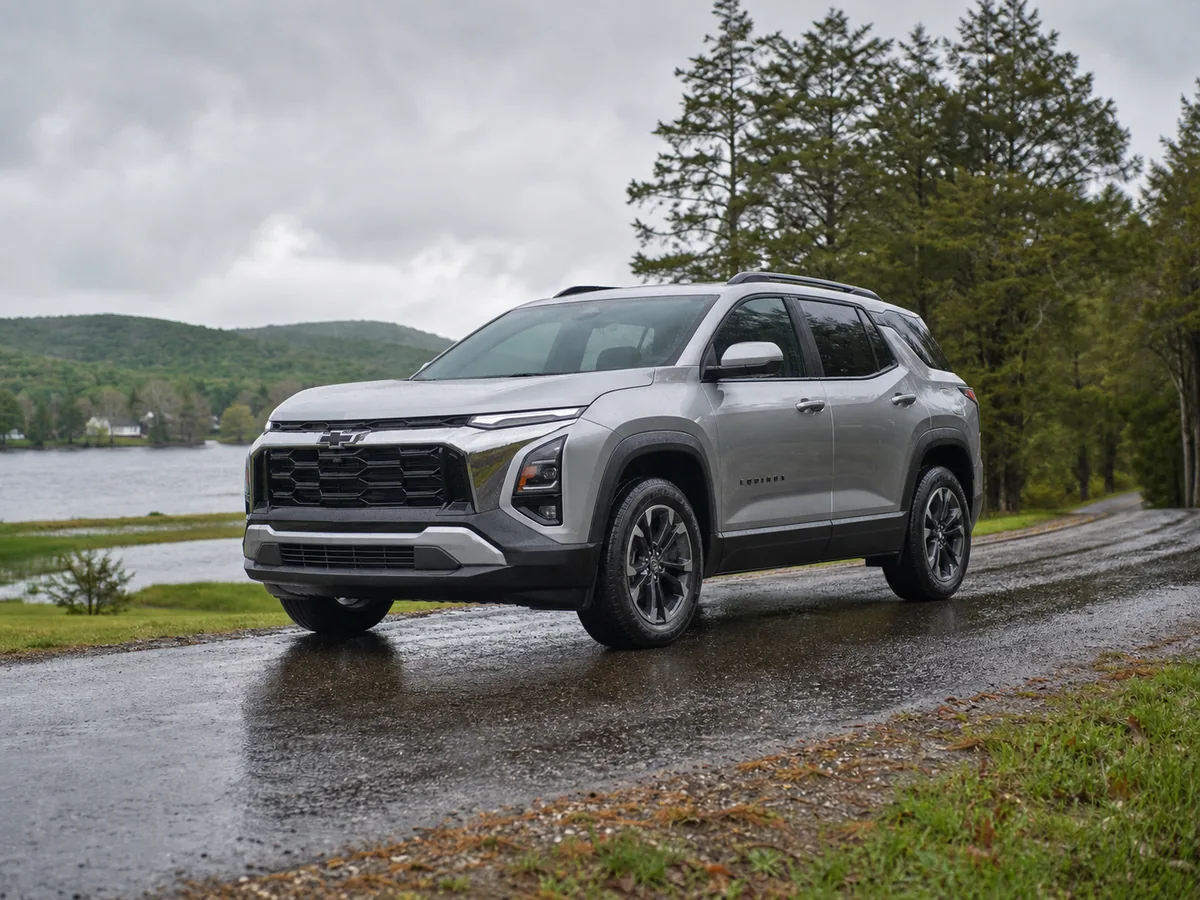
Review front-wheel-drive cars and AWD choices by use rather than badge.
FWD may be the cleaner value for flat urban travel. AWD may earn its price for an unplowed hill, a rural driveway, or frequent gravel.
Tire condition can change the test more than drivetrain. Record the brand, model, size, speed rating, tread depth, and production date on all four corners.
A quiet touring tire can make one Equinox feel calmer than an identical vehicle on worn or aggressive tires.
If comparing FWD and AWD inventory, ask the dealer to set pressures correctly and choose similar tire condition before judging noise or steering.
Buy AWD for a road condition that appears often enough to justify its price and fuel cost, not because it sounds complete.
Space matters more than speed
The Equinox makes its strongest argument inside. Its 183.2-inch body gives it a useful two-row footprint without becoming difficult to park.
Rear doors open wide enough for ordinary family use, the seat is easier to reach than in a low car, and the cargo opening can handle the equipment many households carry every week.
Set the front seats first. An adult should sit behind the usual driver without knees pressed into the seatback or hair against the roof.
Install the real rear-facing seat, forward-facing seat, or booster according to its instructions.
Check lower anchors, top tethers, and buckle access. A wide child seat can make the center position impractical even when the brochure says five passengers.
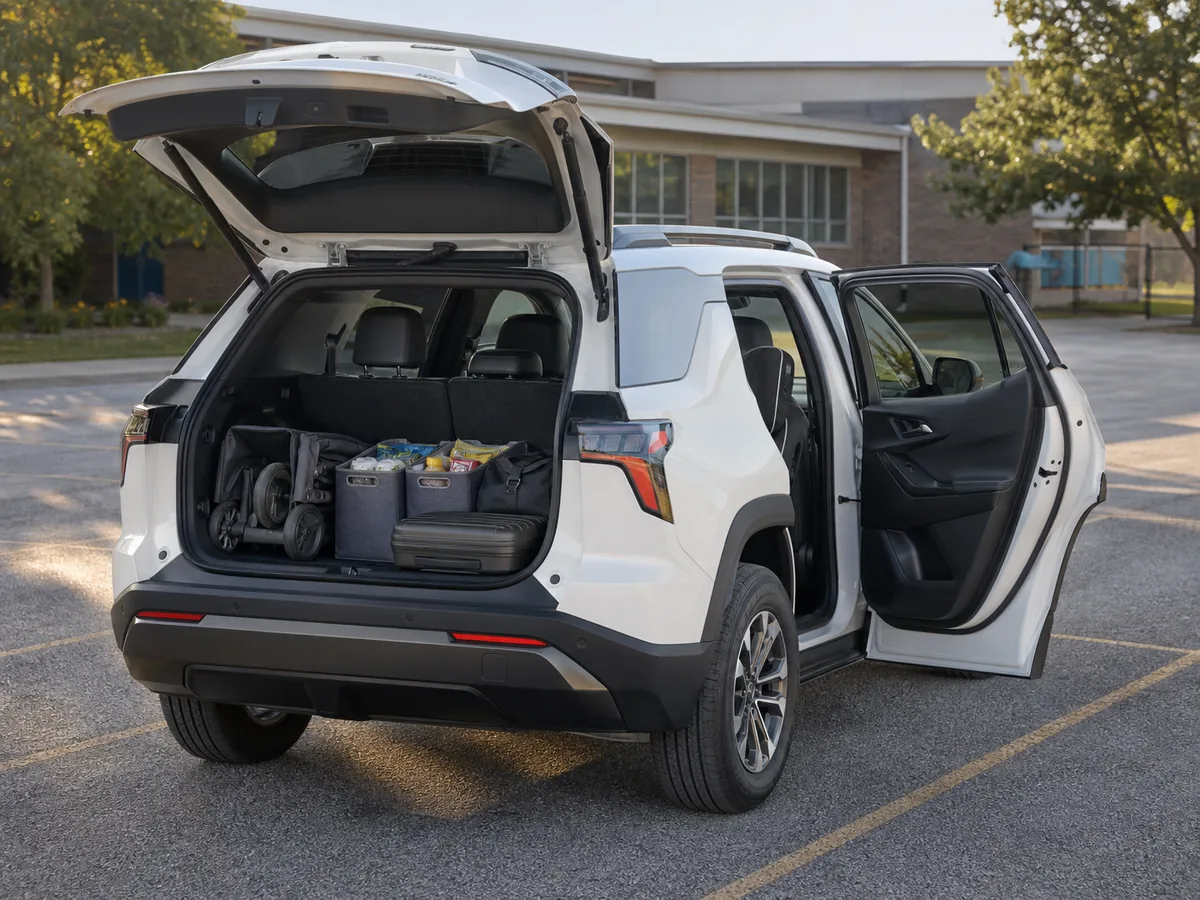
Cargo testing begins with the rear seat upright. Load a stroller, grocery bins, sports bag, work case, pet crate, or airport suitcase in the combinations that actually travel.
Close the hatch without pushing against the glass. Check floor height, wheel-well intrusion, privacy-cover clearance, and storage below the floor.
Then fold only one side to see whether a rear passenger can stay seated beside longer gear.
- Adjust the driver's seat before measuring row two
- Install the actual child restraints
- Test three-across buckle access if needed
- Load the stroller with every passenger seat available
- Check rear visibility over the normal load
- Open the hatch under the home garage door
The Honda HR-V may suit buyers who want a smaller footprint.
The Subaru Forester offers a different visibility and roofline experience. Compare all of them with the same bags instead of accepting cargo numbers measured under different rules.
Controls also affect daily space. A large screen is useful only when climate, camera, and phone functions remain easy to reach.
Older passengers should test entry height and door-sill clearance. A seat can look spacious after entry but still require an uncomfortable step or deep bend.
Check grab handles, head restraint position, climate vent reach, and whether the front passenger can sit comfortably ahead of a rear-facing child seat.
Daily accessibility can be the Equinox's strongest advantage, so it deserves more than a tape measure.
The Equinox can justify modest performance when its cabin removes a repeated loading, seating, or visibility frustration.
What can 1,500 pounds tow?
Chevrolet lists up to 1,500 pounds of towing capacity when the Equinox is properly equipped.
That is a light-duty ceiling. It may cover a small utility trailer, lightweight personal-watercraft trailer, or carefully loaded small recreational trailer.
It is not a reason to choose the Equinox for a growing camper.
Payload can become the tighter limit. Read the label on the exact vehicle and subtract every passenger, child seat, pet, cargo item, hitch, and estimated tongue weight.
A family may use much of the available payload before connecting a trailer. Confirm the receiver rating, wiring, cooling needs, brake rules, and owner's-manual limits for the exact drivetrain.
Tongue weight must keep the trailer stable without overloading the rear axle. Too little can encourage sway, while too much can overload the vehicle and lighten steering response.
The correct setup depends on measured weights and the trailer maker's instructions. A dealer-added receiver does not automatically create the full factory capability.
Test low-speed turning, reversing, braking, mirror coverage, highway stability, and a grade with qualified equipment.
Leave margin for weather and emergency maneuvers. If the trailer approaches the limit before passengers and gear are counted, move to a larger tow vehicle.
A household that tows often should review pickup truck options or a larger SUV instead of building every trip around a small maximum.
A sample calculation makes the limit concrete. If one door label allows 1,250 pounds, two adults use 350, two children use 160, cabin cargo uses 140, and hitch hardware uses 60, then 540 pounds remain before tongue weight.
A 150-pound tongue load leaves 390 pounds of margin. Replace every sample with measured values, then leave capacity for items added on the return trip.
The Equinox is a light-trailer vehicle, and the final answer comes from payload and scale weights rather than the 1,500-pound headline.
Current safety is a strength
The redesigned Equinox has meaningful current crash-test evidence, and safety equipment is a real reason to consider it.
The useful approach is to name each result, check the exact model year, and connect it to a physical action.
A single award or star total cannot explain every occupant position, headlight, or prevention system.
IIHS evaluates small-overlap front, updated moderate-overlap front, and updated side protection, along with headlights and crash prevention.
The updated tests add pressure in areas where older ratings could hide rear-passenger or higher-energy weaknesses.
Read the detailed injury measures and applicability notes for the 2026 vehicle.
The last two rows are shopping tasks, not published IIHS scores.
Install every child restraint in the intended position. Find lower anchors and top tethers, tighten at the belt path, and make sure a neighboring buckle remains usable.
An adult should enter and exit without stepping on a restraint or twisting a belt.
Driver assistance needs its own test. Automatic emergency braking, blind-zone alerts, lane support, and camera views can help, but rain, snow, dirty sensors, faded lines, or unusual traffic can reduce performance.
Learn the alert timing and settings while parked. Confirm the driver can cancel or adjust a system without searching through menus while moving.
Headlights should be checked on a dark road where safe. Look for dark gaps on curves, glare reflected by signs, and automatic high-beam behavior.
Cameras must remain useful in rain and road salt.
KnowMotors explains how it uses government and independent evidence on the research methods page. For this purchase, open the current IIHS vehicle page and the NHTSA VIN lookup while the certification label is visible.
Save the results with the sales paperwork. If a dealer says a recall or campaign was completed, ask for the repair order showing the date and mileage rather than relying on a verbal answer.
The Equinox's current safety evidence is valuable, then the buyer must complete it with correct restraints, suitable tires, clear sensors, and understood controls.
A new generation changes inspection
The current Equinox generation began for 2025. That means buyers have modern design and warranty coverage, but less long-term field history than an older platform.
The honest used-car approach is to emphasize condition, exact-year evidence, service records, software history, and remaining warranty rather than predict a failure rate.
Start cold. Check oil and coolant only by the owner's-manual procedure, then watch the first start.
The engine should settle without persistent smoke, fuel odor, knocking, warning lights, or cooling messages. Drive before the seller warms the vehicle because heat can hide a weak battery, rough idle, delayed engagement, or minor leak.
| Area | Test | Reject or diagnose |
|---|---|---|
| Engine | Cold start, grade, steady cruise | Smoke, overheating, repeated hesitation |
| FWD CVT | Creep, light and firm acceleration | Shudder, flare, delayed engagement |
| AWD eight-speed | Reverse, low-speed shifts, passing | Bang shifts or stored codes |
| Electronics | Screens, cameras, driver aids | Reboots, blank views, warning history |
| Body | Paint, seals, underbody, alignment | Water entry or unexplained repair |
Test both keys, remote functions, phone connection, audio, climate, power seats, liftgate, windows, roof equipment, outlets, and every camera.
Scan all modules even when no light is on. A recently cleared fault can disappear from the dashboard while remaining in history or readiness data.
Inspect four matched tires for tread depth, date, damage, and uneven wear. ACTIV and RS wheel packages can make a neglected set expensive to correct.
Look underneath for leaks, curb damage, loose shields, and fresh coating that hides a repair.
Review body gaps and glass dates for signs of collision work.
Use the new versus used guide to value remaining coverage against the discount. Order an independent inspection and verify recalls by VIN.
Confirm warranty status in writing. Registration date, mileage, prior commercial use, branded title, modifications, and missed maintenance can affect coverage.
Ask the manufacturer or dealer to show the in-service date and remaining terms by VIN. Warranty is valuable only when the problem is covered and the owner can document required care.
It should not be used to dismiss a fault found during the test drive.
A nearly new Equinox should offer clear records, clean operation, working software, and enough discount to justify taking over someone else's history.
RS and ACTIV change the bill
Equinox ownership cost begins with the transaction, then spreads into fuel, tires, insurance, glass, electronics, maintenance, and depreciation. LT controls those pressures because it provides the core vehicle without the cost of the most specialized wheel, tire, and appearance packages.
| Cost | Controlled pattern | Higher-cost trigger |
|---|---|---|
| Purchase | LT at a clean out-the-door price | Loaded RS or ACTIV |
| Fuel | FWD and moderate speed | AWD, heavy load, short cold trips |
| Tires | Smaller common wheel size | Large RS wheels or ACTIV tires |
| Insurance | Exact LT VIN quote | Higher trim value and glass coverage |
| Repairs | Warranty plus simple equipment | Added cameras, roof, and large glass |
| Depreciation | Mid trim kept for years | Appearance premium traded early |
Get insurance quotes for exact VINs. Location, driver history, trim value, wheel size, and coverage change the premium.
Ask how windshield camera calibration and glass claims are handled. Price a full set of correct tires with mounting, balancing, disposal, and alignment before choosing the package.
Fuel estimates should use annual miles and a conservative result from the test drive. The Equinox has no hybrid answer, so high-mile city drivers should compare hybrid alternatives and the Toyota RAV4 Hybrid.
The gas Equinox can still win if its purchase price is low enough, but the discount must be measured against recurring gallons.
Compare out-the-door totals instead of MSRP. Dealer accessories, protection products, taxes, finance interest, and trade manipulation can erase a discount.
The lease versus buy guide helps when a low payment depends on a long term, mileage cap, or early return.
Keep a repair reserve even during warranty. Tires, brakes, glass deductibles, collision damage, and routine service remain the owner's responsibility.
Ask the service department for current prices on an oil service, cabin filter, brake job, windshield replacement with calibration, and one replacement wheel.
These are quotes, not predictions, but they expose the scale of routine and accidental costs.
Compare warranty deductibles and roadside terms in writing. A protection product should be evaluated from covered items, exclusions, cancellation rules, and price, not from fear introduced during financing.
An LT kept for years protects the value case better than an upper trim whose added cost will not return at resale.
Buy it with a price edge
The Equinox suits a shopper who wants a roomy two-row cabin, understandable controls, useful safety equipment, and a conventional gas vehicle. It works best when LT equipment covers the household's needs and the dealer offers a clear price advantage over stronger or more efficient rivals.
The Equinox belongs on a family SUV shortlist when five seats are enough. It should be compared with the broader SUV field on the same route, with the same passengers, bags, insurance limits, and loan term.
Do not let one dealer's discount prevent a fair product comparison.
Run the decision in order. Test the loaded LT, choose FWD or AWD from actual roads, install child seats, load cargo, read current safety results, price tires and insurance, then negotiate the out-the-door total.
If an upper trim remains attractive, repeat the exact loop and ask what measurable problem the added money solves.
A buyer who wants quick acceleration, a hybrid, heavier towing, or a long-established generation should keep shopping. A buyer who values cabin ease and receives a strong LT deal may have found the sensible answer.
Set a walk-away number before entering the finance office. It should include the vehicle, destination charge, tax, registration, unavoidable fees, and only the products the buyer deliberately chose.
Keep the trade value and loan rate separate until the new-car price is clear. This prevents a higher trade allowance or longer loan from making an ordinary Equinox price look exceptional.
The Equinox is not too basic when its space and safety solve daily needs and its price leaves room for fuel, tires, and long-term ownership.