The Blazer Makes Sense as a Five-Seat SUV, Not a Smaller Three-Row Substitute
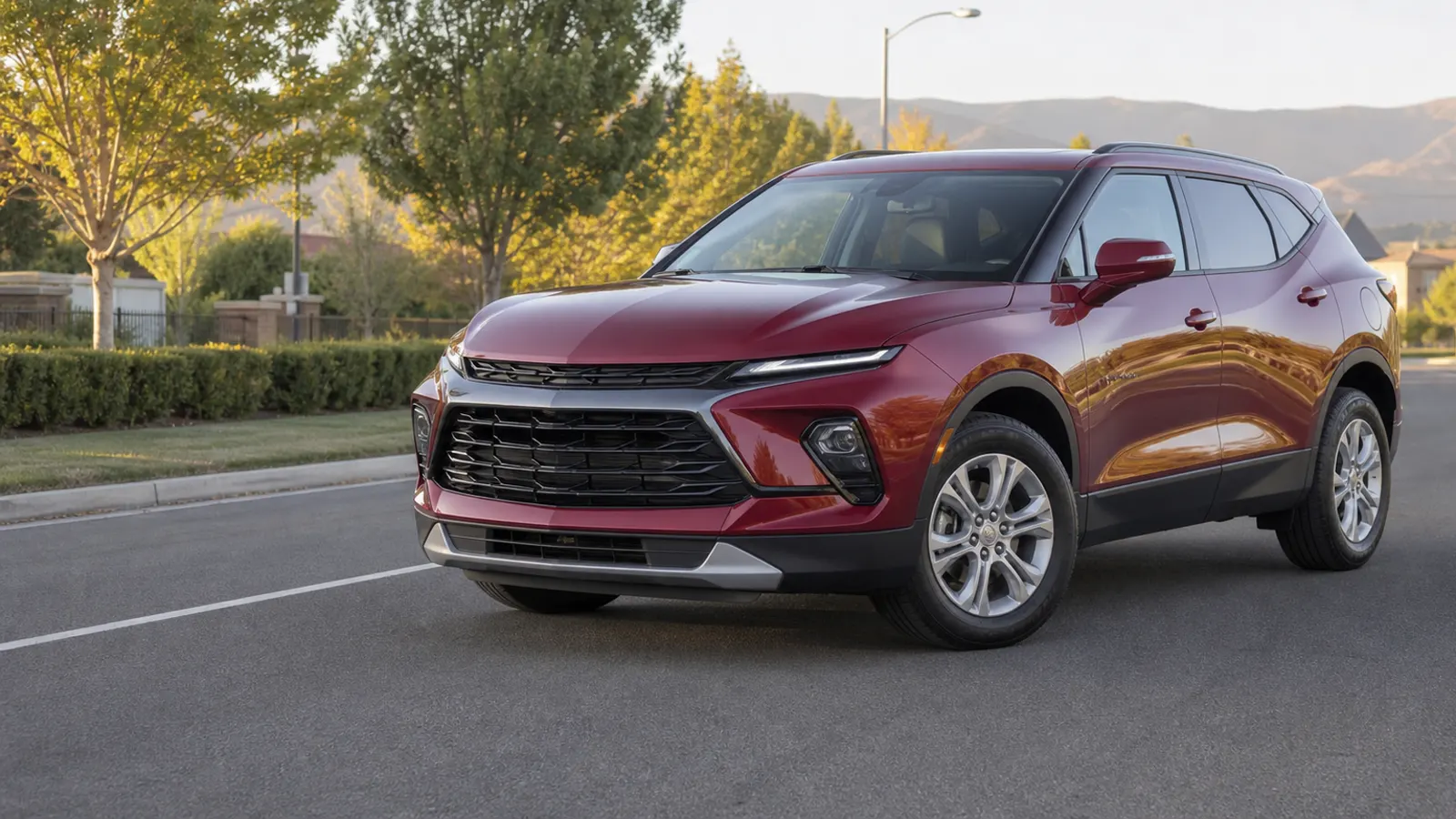
The 2026 Chevrolet Blazer is a two-row midsize SUV for buyers who want more shoulder room and available power than a subcompact crossover.
It seats five, provides up to 64.2 cubic feet of cargo room, and offers a sliding rear seat.
It does not have a third row.
That mission separates it from the larger Chevrolet Traverse, which supplies three usable rows, and the smaller Chevrolet Equinox, which is easier to park. Blazer is the middle choice when five adults and a wide front cabin matter more than maximum family capacity.
Bring the tallest regular rear passenger and the largest weekly cargo. Slide the rear seat to a comfortable leg position, then load the stroller, dog crate, sports bags, or work cases behind it.
Maximum volume with the seat folded does not show whether the vehicle works with passengers aboard.
The current design has been on sale since the 2019 model year. That gives used shoppers more service history than a new redesign, but it also means the cabin and packaging should be judged against newer rivals.
Buy the Blazer for its five-seat space and power choices, not because the midsize badge promises three-row utility.
The Turbo Four Is the Value Engine, While the V6 Buys Real Reserve
Chevrolet offers a 2.0-liter turbo four-cylinder rated at 228 hp and a 3.6-liter V6 rated at 308 hp.
Both use a nine-speed automatic. The turbo engine has enough torque for normal traffic and costs less to feed, while the V6 feels less strained with passengers, highway grades, or a trailer.
| Engine | Best use | Main tradeoff |
|---|---|---|
| 2.0L turbo, 228 hp | Commuting, light family use, lower fuel demand | Less passing and towing reserve |
| 3.6L V6, 308 hp | Frequent highway loads, hills, properly equipped towing | Higher fuel use and purchase cost |
Do not choose from horsepower alone. Drive each engine from a slow roll, merge onto a highway, climb a grade, and pass at legal speed.
Watch whether the transmission needs several downshifts and whether the engine sound becomes tiring.
Repeat the test with the climate system running and the people normally carried.
Front-wheel drive is the efficient baseline. Available all-wheel drive can help the vehicle accelerate on snow or loose surfaces, but it does not shorten braking distance on winter tires.
The AWD car guide explains why tires and ground clearance still set the limit.
The published 29-mpg highway estimate belongs to a front-drive configuration, not every Blazer.
A V6 AWD example driven in town can use materially more fuel. Compare the window-sticker values for the exact engine and drive system, then use the real-world MPG guide to build a route-specific estimate.
For most owners, the turbo engine leaves more money for tires, insurance, and maintenance without changing cabin usefulness.
Cargo Flexibility Depends on Where the Sliding Rear Seat Is Set
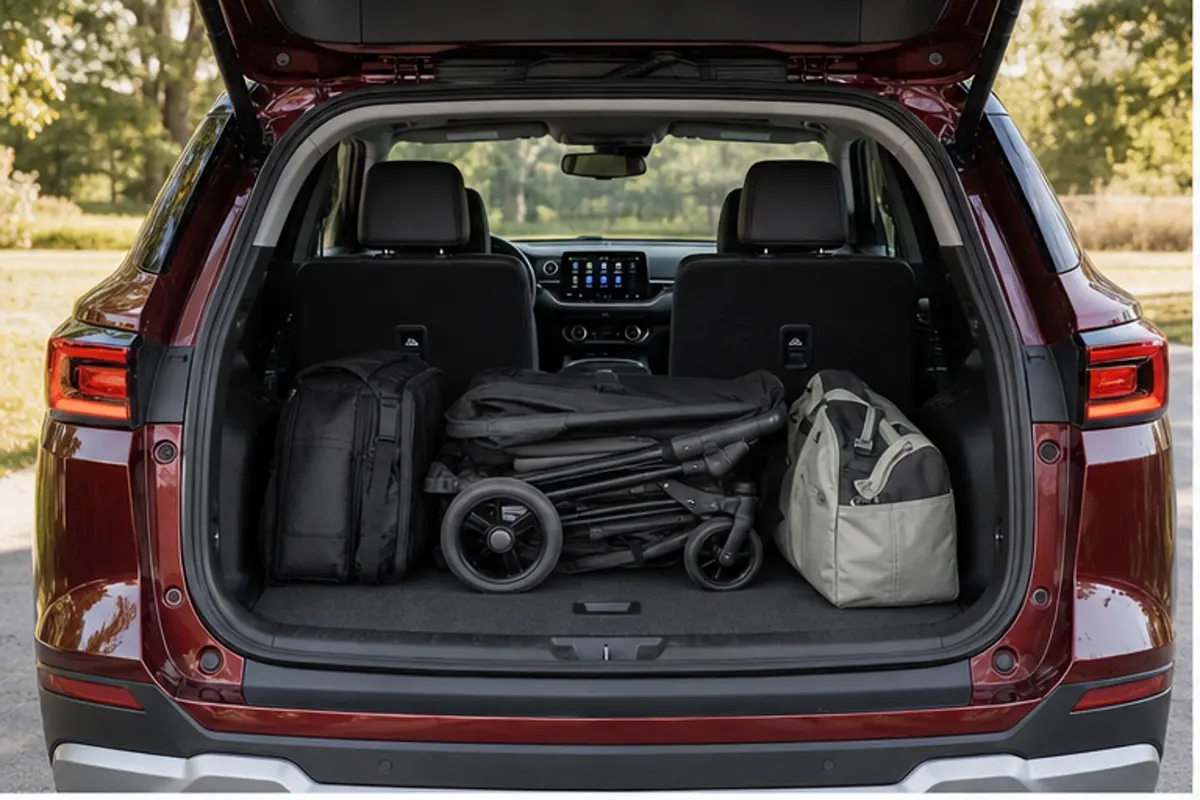
Chevrolet quotes 64.2 cubic feet with the rear seat folded. That is useful for furniture boxes or occasional large loads, yet the more revealing test happens with the seat upright.
Moving the bench rearward helps adult legroom and reduces space behind it. Moving it forward helps cargo and can crowd knees or child seats.
Install rear-facing and forward-facing child seats before buying. Check front-seat travel, buckle access, tether locations, door opening, and whether an adult can sit between two restraints.
A roofline that looks sporty from outside can also change rear visibility and head clearance for tall passengers.
The Honda Passport offers a more utility-focused two-row package, while the Ford Edge is a used-market alternative because its U.S. production has ended. Compare usable floor width, lift-over height, spare-tire storage, and seat-fold shape instead of relying only on total volume.
Open the liftgate in the normal garage. Confirm that it clears the door, ceiling, and bike rack.
Load the heaviest regular object and check whether the bumper height is manageable. Fold each rear seat section and make sure long items can ride beside one passenger.
Small-item storage matters on a road trip. Place phones, bottles, sunglasses, charging cables, and a handbag without blocking cupholders or controls.
The Blazer earns its size only when the passenger position and the remaining cargo floor work at the same time.
A 4,500-Pound Tow Rating Requires the V6 and the Correct Equipment
Chevrolet lists up to 4,500 pounds of towing for a properly equipped Blazer with the V6.
That maximum is not a blanket rating for every trim. The engine, drive system, factory trailering equipment, hitch, cooling, axle limits, and vehicle payload all matter.
A 4,000-pound loaded trailer may place roughly 400 to 600 pounds on the hitch, depending on design and loading.
That weight counts against payload before passengers and cargo are added. Use the actual trailer's loaded weight and measured tongue weight, not its empty brochure figure.
The Blazer towing guide can organize the calculation. Trailer brakes, a compatible controller when required, tire pressure, mirrors, safety chains, and stable loading still need verification.
A short sales demonstration cannot show crosswind behavior, heat on a grade, or braking distance.
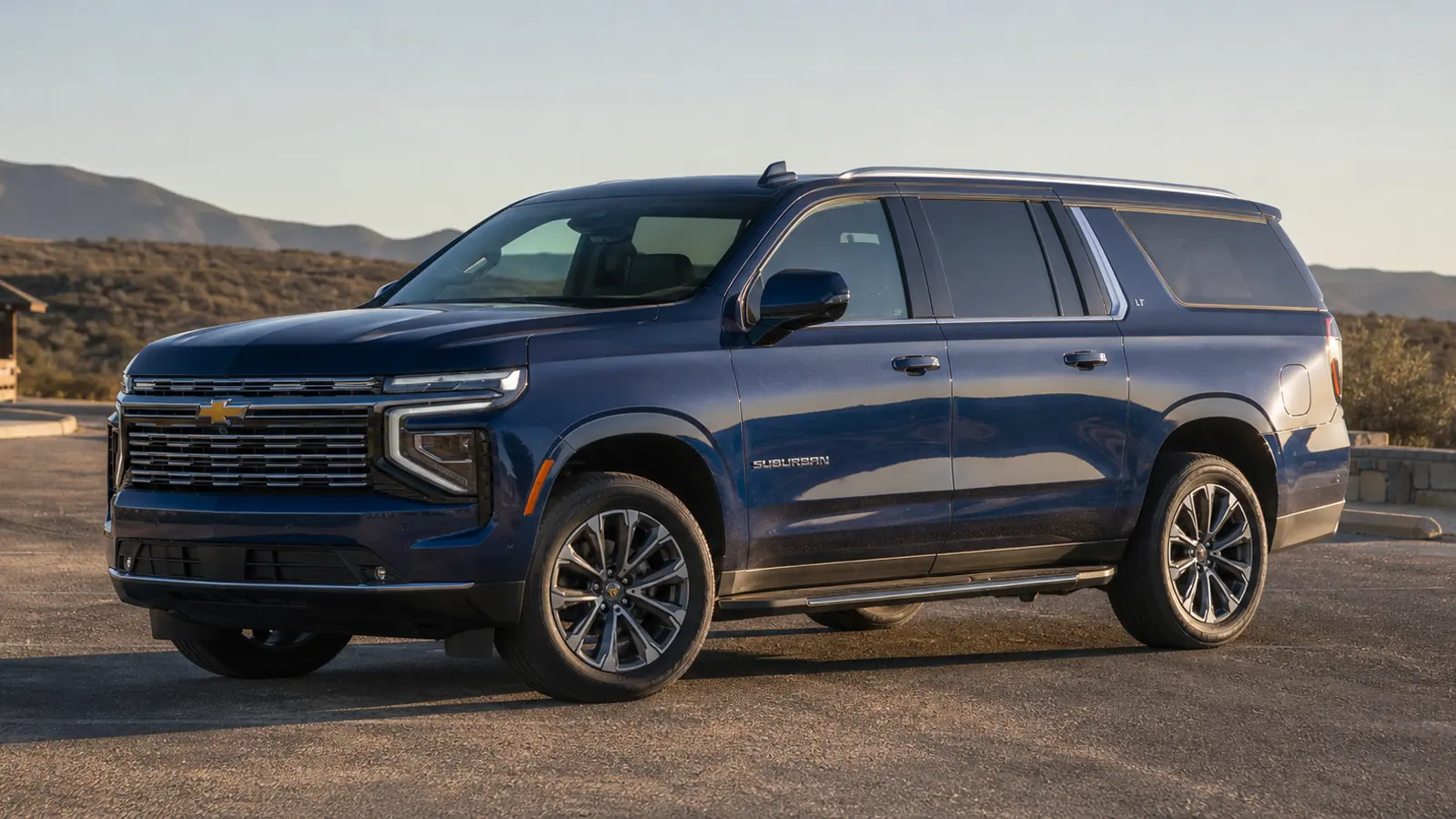
If the regular trip approaches the published maximum with a full cabin, compare a Chevrolet Tahoe or another vehicle with more tow and payload reserve. A larger rating alone is not enough, but reserve reduces the chance that one limit is consumed by normal family weight.
The turbo Blazer remains useful for carrying people and cargo even when it is not the tow choice. Buy the V6 for towing only after the exact trailer, payload label, and factory equipment prove the combination works.
Trim Choice Should Follow Equipment, Tire Cost, and Ride Quality
The trim walk should begin with LT, then move upward only for equipment used often. A richer trim can add the V6, larger screens, cameras, audio, appearance details, driver assistance, and bigger wheels.
Those features change price, tire replacement cost, and sometimes ride comfort more than they change basic usefulness.
Check the window sticker because packages can make two examples of the same trim different. Test every camera view, seat function, phone connection, driver-assistance control, liftgate setting, and remote feature.
Ask which connected services require a subscription after any trial period.
A tire quote is part of the trim comparison. Larger wheel diameters usually bring shorter sidewalls, more impact risk, and higher replacement prices.
Measure tread on a used car and make sure all four tires match in size, type, and similar wear, especially with AWD.
The Chevrolet brand guide shows where Blazer sits between Equinox and Traverse. Buyers comparing appearance-led trims should also drive the Ford Bronco Sport if a smaller body and rough-road hardware are more useful than V6 power.
Sit in the exact seats for at least 30 minutes. Firm bolsters that feel supportive in a photo can press broad shoulders or hips.
The best Blazer trim is the least expensive one that contains the engine, cameras, and comfort features the household will use every week.
The Blazer Drives Like a Road SUV and Needs a Full Parking Test
Blazer's appeal is strongest on pavement. The steering is light enough for daily use, the seating position gives a clear forward view, and the V6 provides confident acceleration.
Its width, sloping rear glass, and styling can make tight garages and rear-quarter checks harder than the name suggests.
These are editorial assessments, not official ratings.
They help identify what to test. Drive the chosen wheel size on broken pavement, an expansion-joint highway, and a tight street.
Listen for tire slap, wind noise, body trim rattles, and suspension knocks.
Park nose-in and back-in without a salesperson directing the route. Check the camera image in bright sun and shadow, and look over both shoulders before trusting a screen.
Make sure the liftgate can open in the garage and that the doors clear the neighboring vehicle.
The Nissan Murano is another comfort-oriented two-row choice. The Jeep Grand Cherokee offers different rear-drive and four-wheel-drive capability, often at a higher equipment cost.
Compare them on the same road and with the same passenger load.
An RS badge or aggressive styling does not turn Blazer into a low-range trail vehicle. Buyers who regularly face rocks, deep ruts, or heavy recovery loads need hardware designed for that work.
Treat Blazer as a comfortable road vehicle with available power, then confirm its visibility and ride on the exact trim.
Check alignment on a level road with the steering wheel centered, then inspect both shoulders of every tire.
A vehicle that pulls, vibrates, or wears one edge may need more than a pressure adjustment. Ask whether the wheel has been repaired and whether the selected tire size is stocked locally.
Repeat the ride test at the pressure shown on the door placard because an overinflated demonstration vehicle can feel harsher and an underinflated one can hide impact damage.
Record an installed four-tire price before accepting large wheels.
IIHS Shows a Good Small-Overlap Result but an Incomplete Current Picture
IIHS lists a Good small-overlap front rating for the 2026 Blazer. It also reports Advanced performance for the standard and optional daytime pedestrian front-crash-prevention systems.
The published current page does not present the same full updated moderate-overlap and updated-side suite available for several newer vehicles.
That gap must not be translated into a failing grade or a broad safety endorsement.
It means the available evidence is incomplete under the latest set of tests. Read the individual IIHS results and dates, then compare them with the exact rival under consideration.
Chevrolet lists its core assistance package as standard, but feature availability and operating limits still belong in the owner's manual and window sticker.
Test alerts and controls safely. Learn how rain, snow, dirt, glare, lane markings, and trailers can affect sensors.
NHTSA's 2025 model-level results include campaign 24V737 for door-latch concerns in a defined population.
A model name does not prove a particular vehicle is affected. Run the 17-character VIN through NHTSA's recall lookup, save the result, and confirm the remedy on a repair invoice.
The Blazer recall guide can explain a campaign but cannot clear a VIN.
Check the certification label, tire placard, glass, headlights, camera, belts, and child-seat anchors during inspection. Use the published test details and the individual VIN, not the vehicle's size or styling, to make the safety decision.
Reliability Depends on Service History and a Repeatable Cold-to-Hot Drive
The current Blazer generation has several model years of real service, yet no single score can describe every engine, drivetrain, year, and maintenance history.
The Blazer reliability report should separate verified campaigns and repair evidence from anonymous complaints. Complaint databases can reveal symptoms worth checking, but they do not establish how often a fault occurs.
| Area | Check | Reason |
|---|---|---|
| Cold engine | Start after an overnight rest and watch smoke, noise, and warning lamps | Warm engines can hide startup faults |
| Nine-speed automatic | Crawl, merge, coast, and reverse after warm-up | Finds delayed engagement or repeatable harsh shifts |
| Cooling system | Inspect level, odor, residue, fans, and temperature | Both engines depend on stable cooling |
| Electronics | Test cameras, screen, phone, HVAC, seats, and driver aids | Intermittent faults can be costly to trace |
| AWD and tires | Check matched tires, tread depth, leaks, and tight-turn behavior | Mismatch can stress the system |
| History and VIN | Review service, collision, warranty, and recall records | Documentation narrows uncertainty |
Scan every control module, not only the engine computer. A cleared warning light can leave pending or history codes.
Compare mileage in service records, inspection reports, and the vehicle. Look below for fluid seepage, impact damage, missing shields, and fresh undercoating that hides repairs.
The Blazer problems guide covers symptoms such as shift hesitation, infotainment resets, warning messages, and cooling concerns without claiming every vehicle will develop them. Ask for written diagnosis when a symptom repeats.
Follow the Blazer maintenance schedule for the exact engine and driving conditions. Oil level and interval matter on a turbo engine, while towing, short trips, dust, and heat can justify more frequent checks.
A clean inspection does not predict every failure. It does remove obvious risks and protects the warranty record.
Choose the Blazer with consistent service, a clean scan, matched tires, and repeatable behavior, even when another example has a lower asking price.
Fuel, Tires, Insurance, and Depreciation Shape the Five-Year Cost
Ownership cost begins with the transaction, not the advertised monthly payment. Compare selling price, tax, fees, finance rate, term, trade value, insurance, and the cost of required packages.
A long loan can hide a high trim price and leave the owner owing more than the vehicle is worth.
Fuel use changes materially with engine, drive system, traffic, speed, weather, and load.
At 12,000 miles, a 24-mpg Blazer uses 500 gallons.
A 20-mpg version uses 600. At $3.50 per gallon, that difference is $350 each year.
Replace those assumptions with local fuel prices and a realistic route.
Price tires for the actual wheel diameter before buying. Include mounting, balancing, alignment, and the possibility of replacing a damaged tire early.
AWD owners should keep tread depth closely matched. Brake wear, batteries, glass calibration, routine fluids, and a repair reserve also belong in the budget.
Use a VIN-based insurance quote because engine, trim, safety equipment, drivers, location, and claim costs alter the premium. The Blazer cost-to-own guide can compare consistent assumptions with a Toyota Highlander or another alternative.
The turbo LT often wins because it avoids the V6, large-wheel, and premium-trim costs while preserving cabin space. Pay more for power, AWD, or equipment only when the household can name the repeated trip where it changes the result.
A Turbo LT Is the Broad Recommendation, With the V6 Reserved for Work
Start with a Blazer LT using the turbo engine and front-wheel drive. It provides the same basic five-seat layout and avoids paying for performance that many commuters will not use.
Add all-wheel drive for recurring snow, steep loose access roads, or another measured traction need.
Pros
- Wide, comfortable two-row cabin
- Sliding rear seat helps balance people and cargo
- Available 308-hp V6
- Up to 4,500 pounds of properly equipped towing
Cons
- No third row
- Cargo capacity trails larger family SUVs
- V6, AWD, and large wheels raise running cost
- Current IIHS evidence does not cover the full latest test suite
Choose the V6 when the same test route shows a clear advantage with passengers or when the verified trailer and payload calculation requires it.
Confirm factory trailering equipment. Do not assume an aftermarket hitch creates the maximum rating.
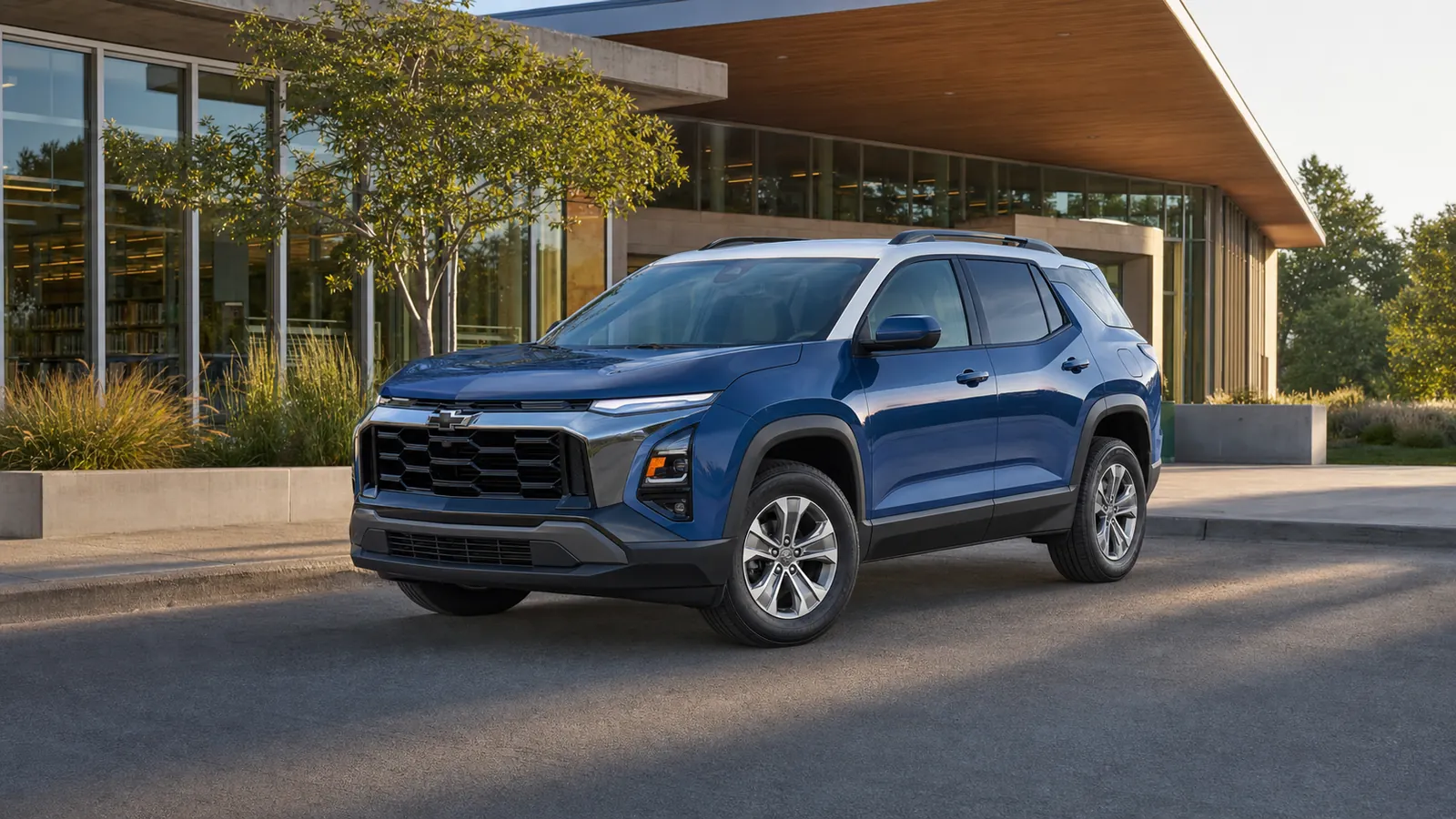
A household that needs three rows should choose Traverse. One that wants lower price and easier parking should compare Equinox or Chevrolet Trailblazer.
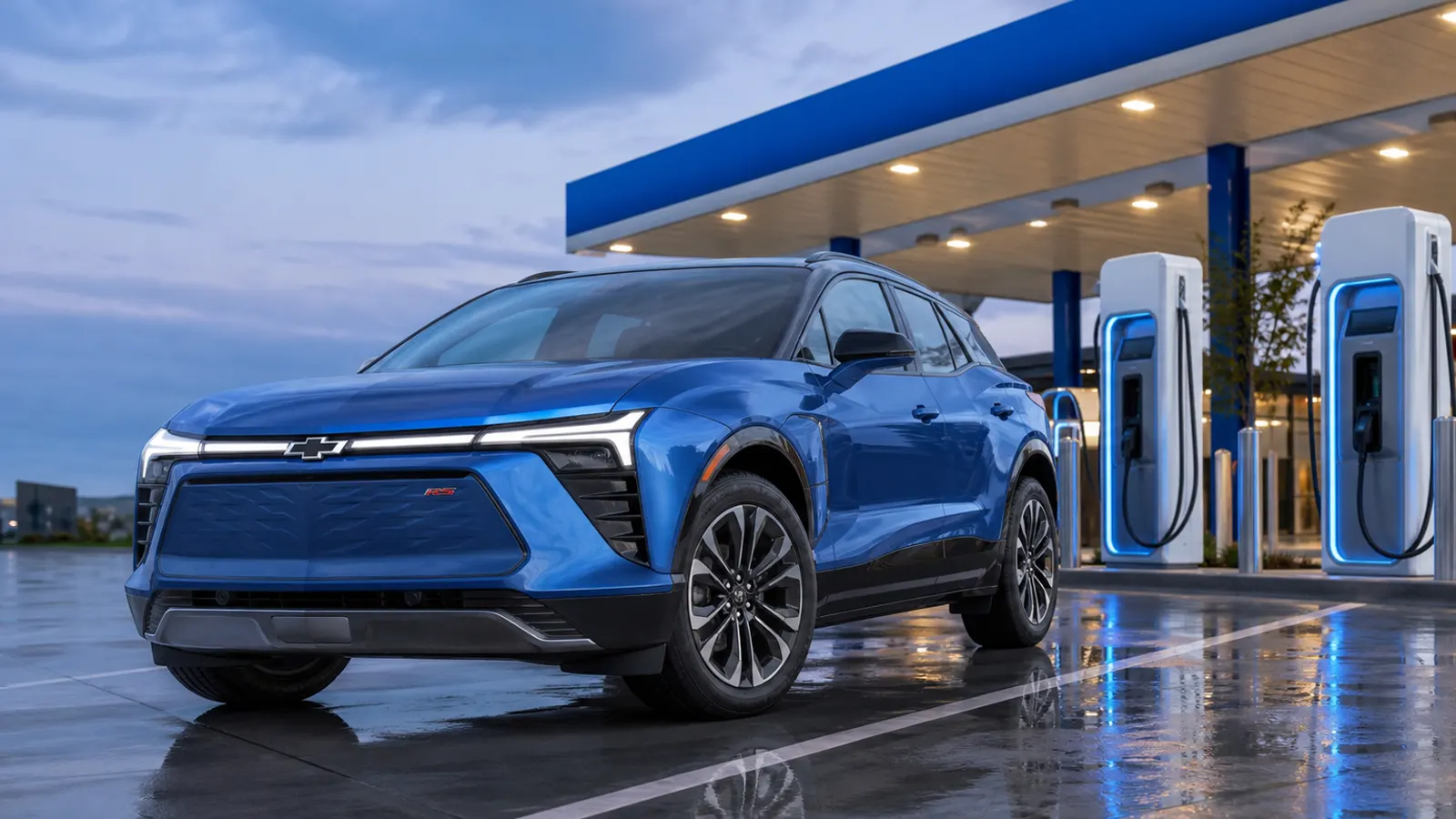
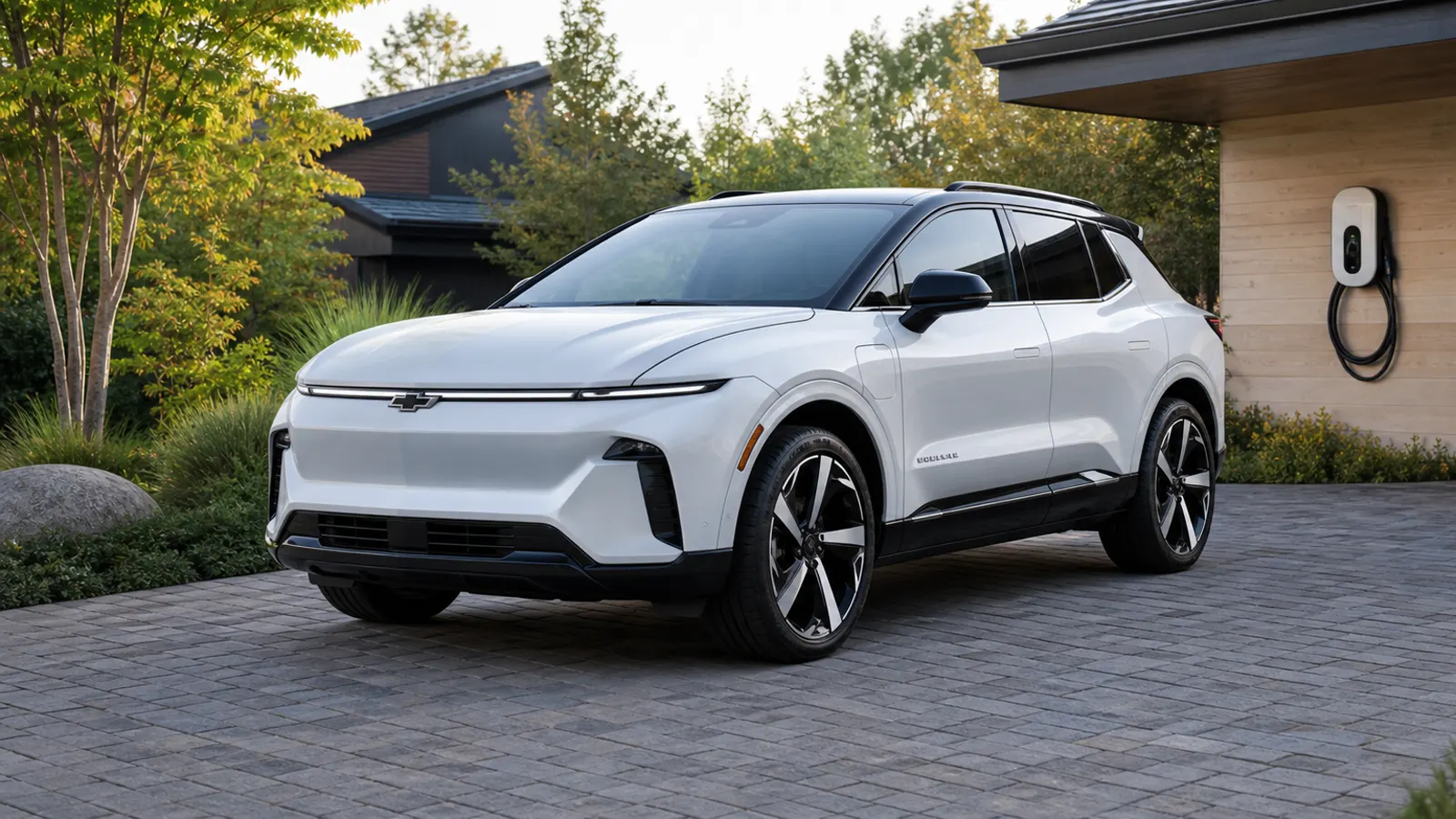
A buyer who can charge at home may prefer the Chevrolet Blazer EV, but its charging and depreciation questions are different.
Buy the Blazer when five-seat comfort, available V6 power, and road manners solve the weekly job better than extra rows or a smaller footprint.
Before accepting delivery, repeat the parking, cargo, and highway tests without a salesperson guiding the controls. Confirm both keys, window sticker, tire size, spare or inflator equipment, manuals, floor mats, and every promised accessory.
Photograph the odometer, wheels, glass, paint, cargo trim, and engine bay. Save the signed order, finance terms, warranty booklets, recall result, and repair promises.
During the first month, record cold starts, shift behavior, fuel use, alignment, camera operation, and warning messages.
A dated video and written repair order help a technician reproduce an intermittent fault.
Recheck the VIN later because campaigns can be added after purchase. These records protect warranty use and reveal whether the turbo or V6 cost estimate matches daily driving.
Ask the service department which engine and transmission concerns require diagnostic time, whether loaner transportation is available, and how warranty appointments are scheduled.
A distant dealer or long parts delay can turn a covered repair into missed work and rental expense.
Record the nearest qualified shop, roadside number, deductible, and alternate transportation cost before choosing a seller. This service-access check can favor a simpler LT even when a richer Blazer has a similar advertised payment.