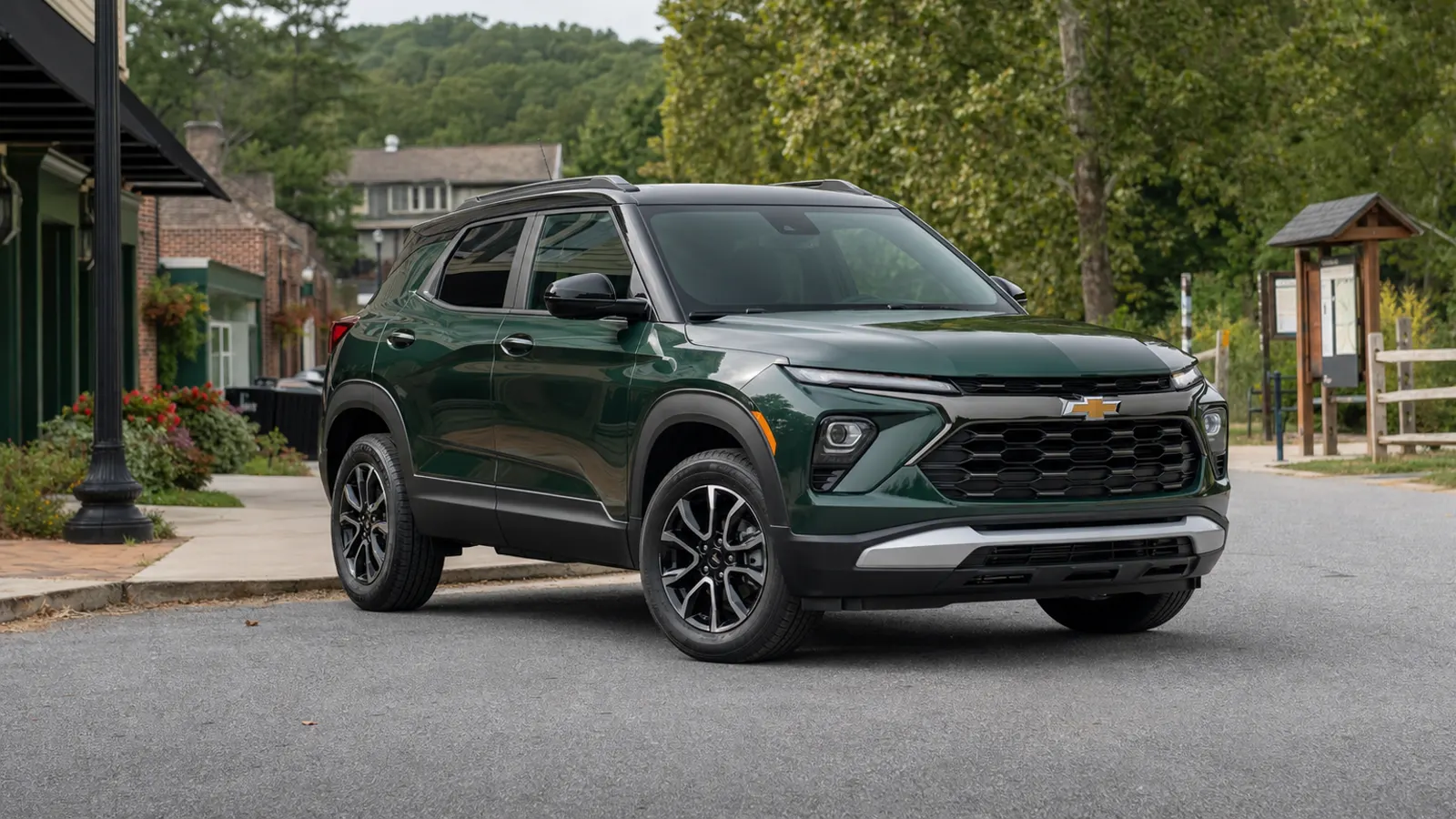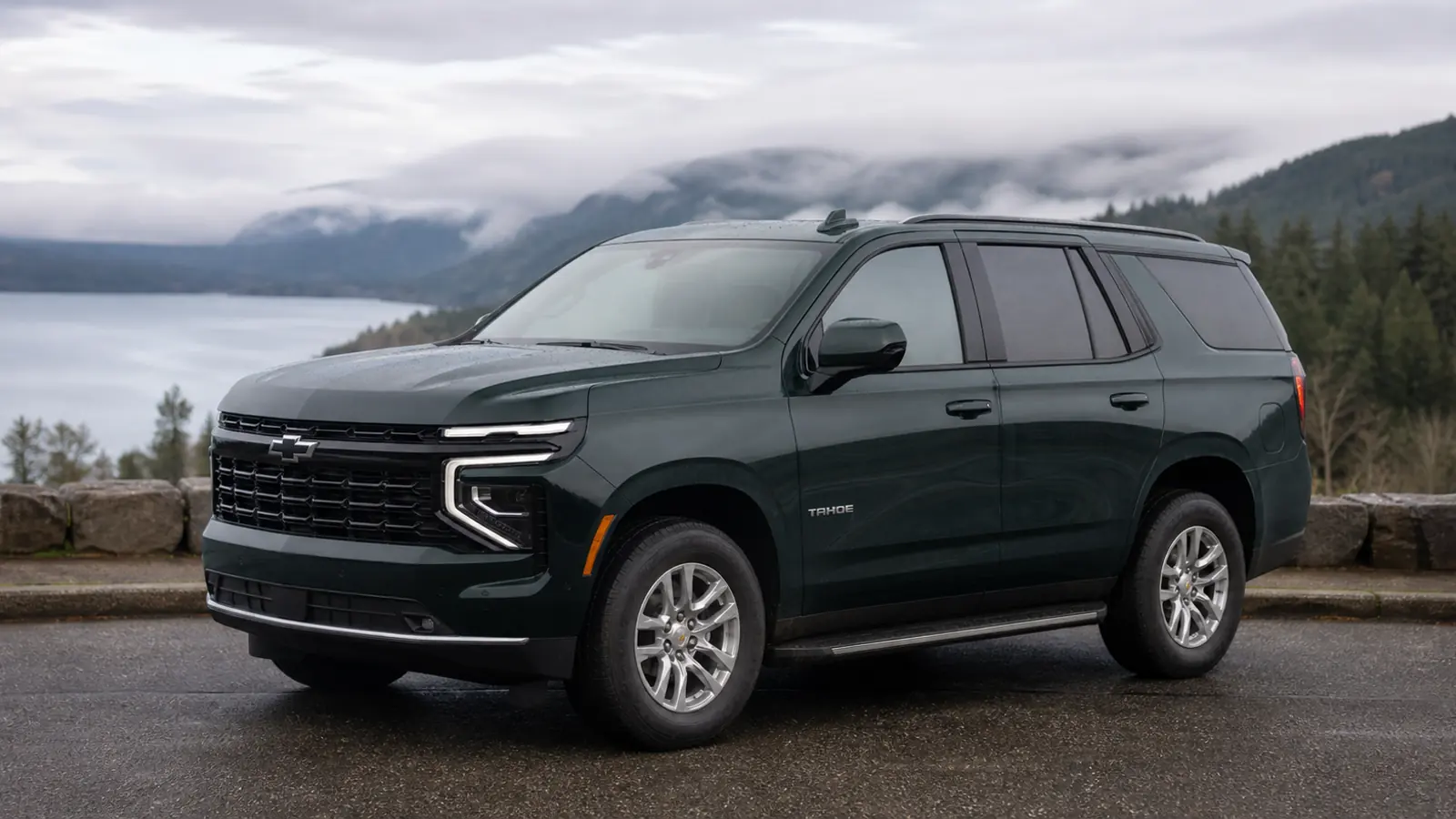
Tahoe Is the Better Chevrolet Full-Size SUV Unless Cargo Proves Otherwise
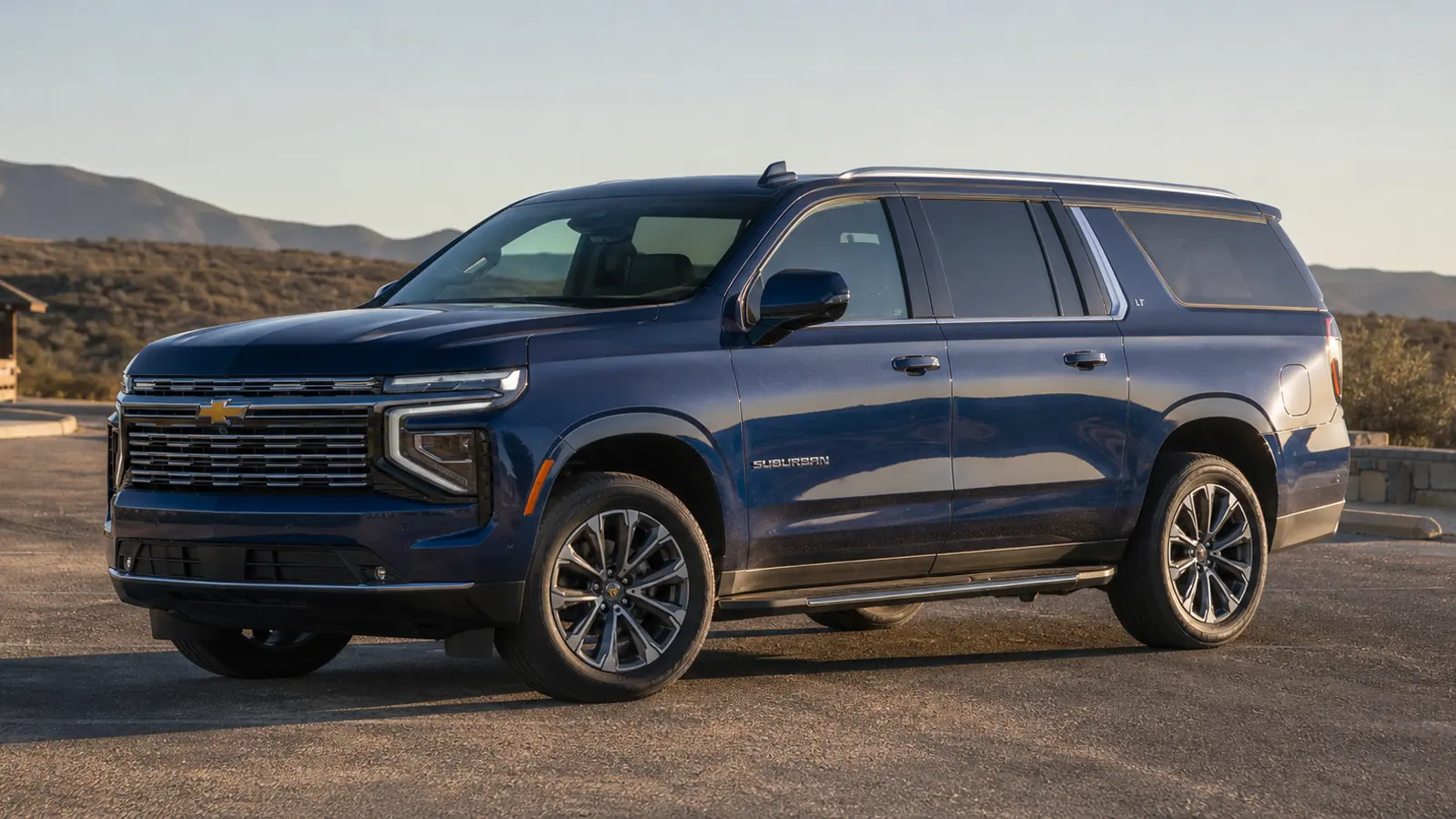
The Chevrolet Tahoe is the shorter of Chevrolet's two full-size SUVs.
It carries up to nine people, offers 25.5 cubic feet behind row three and 122.7 cubic feet with the rear seats folded, and can tow up to 8,400 pounds in a properly configured version.
It uses the same broad engine and trim family as the longer Suburban.
The Tahoe is about 15 inches shorter overall than Suburban and has a shorter wheelbase.
That difference is noticeable in a garage, parallel space, fuel island, and tight turn. Passenger room remains generous because most of Suburban's added length goes behind the third row.
Families that normally fold row three may never need the longer body.
Chevrolet lists a 2026 starting price of $60,700 before destination and options. The real transaction can rise quickly with four-wheel drive, a larger engine, 24-inch wheels, air suspension, luxury trim, and driver-assistance packages.
Begin with body length and payload before walking up the trim ladder.
Tahoe is the default because it preserves full-size passenger room and capability with less body to park and carry every day.
Take the family luggage to the dealer and fill the area behind row three. If the hatch closes safely with visibility and tie-down access, Suburban length may solve no real problem.
The Chevrolet Suburban is the exact cargo comparison. The Tahoe alternatives list covers other full-size choices.
A turbo-V6 answer to the same question is what the Expedition offers instead. The Chevrolet Traverse provides crossover efficiency for lighter towing.
The 5.3-Liter V8 Fits Most Buyers, While Diesel Rewards Highway Miles
Tahoe offers three engines with a ten-speed automatic. The standard 5.3-liter V8 makes 355 hp and 383 lb-ft.
The 6.2-liter V8 makes 420 hp and 460 lb-ft. The 3.0-liter Duramax turbo-diesel inline-six makes 305 hp and 495 lb-ft in the current specification.
Rear-wheel drive and four-wheel drive availability depends on trim.
The 5.3 is the broad choice. It uses regular gasoline, provides enough power for family and moderate towing use, and avoids the premium-fuel recommendation of the 6.2.
The 6.2 feels stronger during a pass or ramp merge, but the added output does not produce the highest tow number in every configuration.
It should be bought for performance or required trim content after fuel and recall history are considered.
| Engine | Output | Best use | Fuel consideration |
|---|---|---|---|
| 5.3L V8 | 355 hp, 383 lb-ft | General family use and towing | Regular 87 octane |
| 6.2L V8 | 420 hp, 460 lb-ft | Stronger response and premium trims | Premium 91 octane recommended |
| 3.0L diesel I6 | 305 hp, 495 lb-ft | High annual highway miles and steady towing | Diesel, DEF, fuel-filter service |
EPA lists the 2025 rear-wheel-drive 5.3 Tahoe at 15 mpg city, 20 highway, and 17 combined.
The rear-wheel-drive diesel reaches 22 city, 26 highway, and 24 combined.
Four-wheel drive and other configurations differ. Compare exact window stickers because axle, tires, and drive system matter.
Diesel saves fuel on the right route and delivers its torque at low speed. It also brings diesel exhaust fluid, fuel filters, different oil requirements, and expensive emissions hardware outside warranty.
Repeated short trips and long idle periods are weak use cases.
The higher upfront price needs enough annual mileage to recover.
Both petrol V8s and the diesel sit in the same gas and diesel class of full-size SUV, and the engine decision moves the tow rating more than the badge does. The Tahoe real-world MPG report should compare the exact drivetrain and route.
The Tahoe oil specification must match the selected engine and service duty. Choose the engine from annual route and trailer load, then choose trim around that engine.
An 8,400-Pound Tow Rating Can Disappear Into Passenger Weight
Chevrolet's 2026 guide lists up to 8,400 pounds for a 5.3-liter rear-wheel-drive Tahoe with the Max Trailering Package.
Four-wheel drive lowers that combination to 8,200. The 6.2 and diesel tables reach different maximums.
The figure for a specific SUV depends on engine, drive, equipment, hitch, and the vehicle labels.
Payload is often the tighter family limit. A loaded 7,000-pound travel trailer may place 700 to 1,050 pounds on the hitch.
Add six people aboard, a cooler, luggage, roof cargo, and the hitch itself, and the door-label payload can be consumed even though trailer weight remains below 8,400 pounds.
| Load | Number needed | Common mistake |
|---|---|---|
| Vehicle payload | Exact door-label capacity | Using a brochure maximum |
| Trailer | Loaded scale weight | Using dry weight |
| Tongue | Measured loaded hitch weight | Assuming a flat 10 percent |
| Passengers | Real occupant total | Leaving children out of the estimate |
| Cargo and accessories | All items in and on the SUV | Ignoring roof boxes and hitch hardware |
| Axle and combined limits | Exact configuration ratings | Checking only trailer weight |
Chevrolet notes that a weight-distributing hitch and sway control are required above specified tongue weight in the Tahoe and Suburban guide.
Trailer brakes, wiring, tire pressure, load distribution, and a compatible brake controller remain essential.
Follow the owner manual and applicable state law.
Air suspension can level the SUV, but it does not increase GVWR, axle ratings, tire capacity, or payload.
Large Tahoe replacement tires do not improve tow capacity and may reduce sidewall protection. Select the factory trailering hardware and verify the window sticker before paying for appearance packages.
The Tahoe towing-capacity reference can organize configuration tables.
Use the yellow payload label and actual tongue weight before the headline tow rating.
A Chevrolet Silverado 1500 may be the better tool when bed cargo or hitch load leaves a Tahoe with no margin.
The Third Row Is Spacious, but Luggage Space Needs a Trial Load
Tahoe's independent rear suspension allows a lower floor and more usable third-row space than older truck-based generations.
Adults can sit in row three for more than a short ride, and the second row can use a bench or captain's chairs depending on configuration.
Maximum seating reaches nine with a front bench on limited versions, while seven or eight is more common.
The important number is the one behind row three, and it is where the Tahoe and the Suburban separate.
Cargo volume, and where the Suburban pulls away
- Behind row three, Tahoe
- 25.5 cu ft
- Behind row three, Suburban
- 41.5 cu ft
- Row three folded, Tahoe
- 72.5 cu ft
- Rows two and three folded, Tahoe
- 122.7 cu ft
Those figures explain why passenger room can feel similar between the two while luggage capacity differs sharply.
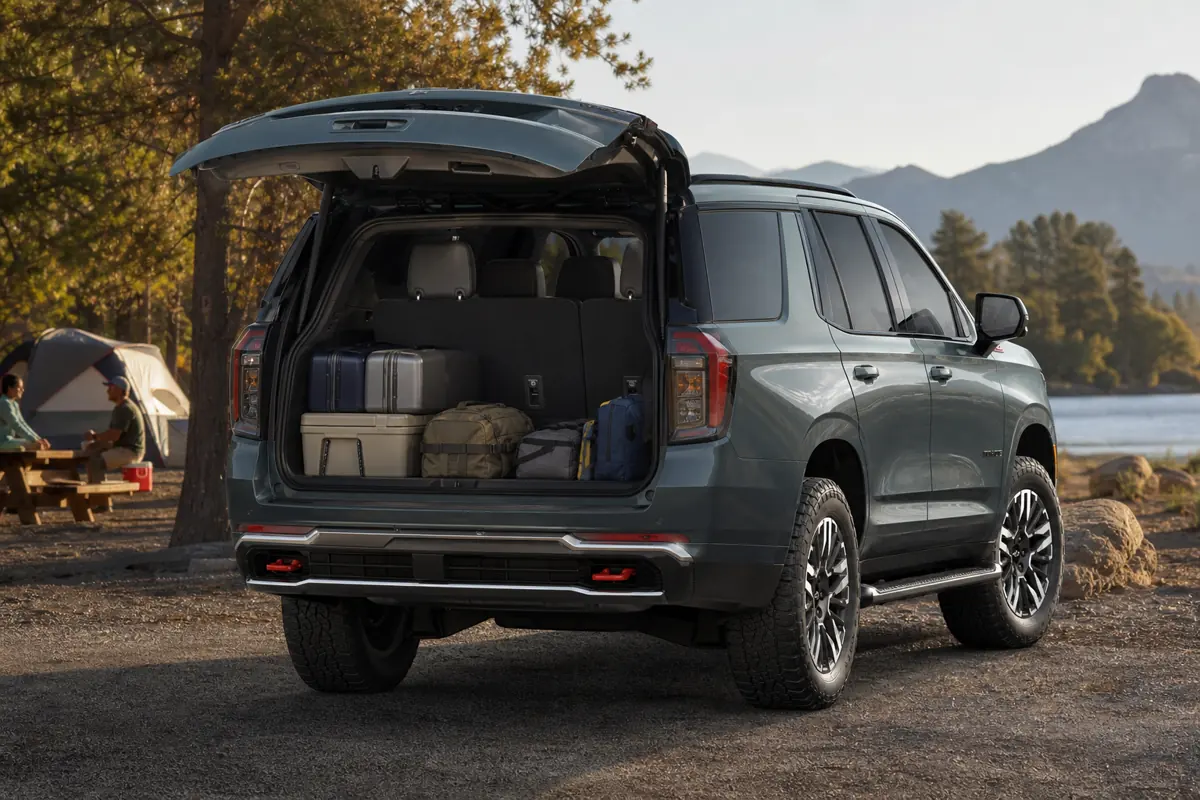
Install child restraints before purchase. Check lower anchors, top tethers, buckle access, captain's-chair aisle width, and front-seat travel.
Verify that an adult can reach the third row without removing a seat that remains installed daily. A wide cabin can still create a poor restraint arrangement if buckles or tether points do not match the plan.
The power-folding features available on higher trims save effort but should be tested repeatedly. Check whether the load floor is level enough for long items and whether the liftgate can open inside the garage.
Roof racks add capacity, yet roof weight raises the center of gravity and every item needs secure attachment within the roof limit.
A household that needs seven seats but not the tow rating can get the seats from a crossover that uses considerably less fuel. A family carrying four people and folding row three for most trips may be better served by the Honda Pilot.
Tahoe earns its footprint when full-size passenger width, tow reserve, or truck-based durability is used.
LT Delivers the Core Value, and Z71 Needs Real Terrain
Tahoe trims include LS, LT, RST, Z71, Premier, and High Country. LS provides the lowest starting price and can seat up to nine in the right configuration.
LT adds comfort and technology that many families use daily.
RST focuses on street appearance. Z71 adds off-road-oriented equipment.
Premier and High Country move toward luxury pricing and hardware.
LT is the practical recommendation because it keeps the 5.3-liter engine and useful cabin upgrades without requiring the most expensive wheels or powertrain.
Add four-wheel drive for regular snow, boat ramps, or loose access roads. Rear-wheel drive costs less and returns the best EPA numbers when the route stays paved and mild.
Z71 should be tested on the highway. Off-road tires and suspension choices can increase noise or change steering response.
Four-wheel drive improves traction, but it does not shorten ice braking.
Proper winter tires remain important. A locking differential and underbody protection serve specific low-speed situations, not ordinary parking-lot snow.
Available air suspension can improve leveling and alter ride height, but it adds components that will eventually need service.
Magnetic damping can control the body well, yet wheel size and tire sidewall still affect sharp impacts.
Drive the exact combination instead of assuming the highest trim rides best.
Climb far enough and a Tahoe overlaps Chevrolet's premium models on price, which is worth checking before adding options. Keep the money in capacity, a useful camera package, and the right seats before adding leather grades or 24-inch wheels.
Independent Rear Suspension Improves the Ride, Not the Parking Space
Tahoe rides with more control than older solid-rear-axle versions, particularly over uneven highway pavement.
The long wheelbase settles body motion, and the cabin is quiet enough for extended travel.
The 5.3 V8 and ten-speed automatic usually keep engine speed low. A loaded test drive remains important because passengers and tongue weight change response.
At about 211 inches long and more than 81 inches wide without mirrors, Tahoe needs deliberate placement. Cameras and parking sensors help, but they cannot reveal every low post, roof beam, or trailer corner.
Measure the home garage and leave liftgate clearance. Drive through the school lane, work garage, and grocery lot used every week.
These are editorial assessments, not official ratings. They show why Tahoe is easier than Suburban but still a full-size SUV.
Large brakes must slow substantial mass, so leave more following distance. Four-wheel drive adds launch traction, not immunity from weight transfer or tire limits.
The available 17.7-inch central display and 11-inch driver display put many functions in view.
Test camera access, climate controls, trailer settings, phone pairing, and driver-assistance menus. A family driver should be able to complete common tasks without staring away from traffic.
Smaller rear-wheel-drive vehicles reach the same layout at a fraction of the running cost, which matters if the size is not being used.
Tahoe is a specialized family tool. When parking stress and fuel stops dominate the week, the capacity is probably too large.
When it carries adults, luggage, and a substantial trailer, those compromises have a clear return.
IIHS Shows Good Side Protection and a Poor Updated Moderate-Overlap Result
IIHS ratings for the 2025 Tahoe apply to the current 2023-2026 test group in the listed evaluations.
The updated side test earned Good. Driver-side small overlap was Good, while passenger-side small overlap was Acceptable.
The updated moderate-overlap front evaluation was Poor because the rear-passenger dummy recorded weak protection, even though the driver measures and structure performed better.
LATCH ease of use received a Good+ designation with extra positions in the tested configuration.
Seat-belt reminders were Acceptable. Standard safety features listed by IIHS include blind-spot detection, lane-departure prevention, and rear automatic braking.
Individual headlight and crash-prevention results vary by equipment and test year, so read the exact page.
Size can reduce occupant risk in some collisions with smaller vehicles, but mass also increases stopping distance and risk to people outside the SUV.
Automatic emergency braking and camera views support attention. They cannot compensate for speed, blocked sightlines, worn tires, or an unsecured cabin load.
Families should put an adult in the third row during the test drive and confirm belt fit.
Child-seat instructions come from both Chevrolet and the restraint manufacturer. Do not borrow lower anchors or route a tether differently because access is inconvenient.
Mechanical evidence belongs to the specific vehicle rather than to the model, which is what the inspection above is for. For safety, the individual IIHS subtests and the current NHTSA VIN result carry more value than a generic star graphic or a seller's claim.
Current Recall Checks Include Engines, Brake Warnings, and Some 24-Inch Wheels
NHTSA records show several campaigns relevant to recent Tahoe model years. Certain 2021-2024 vehicles with the 6.2-liter V8 were recalled because connecting-rod or crankshaft defects could lead to engine damage or failure.
The remedy calls for inspection and, when needed, engine repair or replacement.
Vehicles that pass receive specified oil-related changes under the campaign.
Certain 2023-2024 Tahoes were recalled because electronic brake-control software might not show the required warning when brake fluid is low.
Certain 2025-2026 Tahoes with 24-inch wheels were recalled for potentially incorrect front wheel-hub bolts.
A separate diesel fuel-tank campaign applied only to defined vehicles with replacement history.
Coverage must be confirmed by VIN.
| Campaign area | Vehicle question | Evidence before purchase |
|---|---|---|
| 6.2L engine | Is this VIN included and was inspection completed? | Dealer repair order and NHTSA status |
| Brake warning software | Was the control-module update applied? | Update record and warning-lamp test |
| 24-inch wheel hubs | Are the original bolts in the affected population? | VIN result and dealer repair invoice |
| Diesel fuel tank | Was a replacement tank installed and checked? | Parts history and campaign record |
| All campaigns | Did a later recall appear? | Fresh NHTSA and GM lookup |
Do not describe these campaigns as failure rates. A recall population identifies vehicles needing a remedy, not the percentage that experienced the defect.
An owner complaint also cannot establish probability. Use both as prompts for inspection and documentation.
A used 6.2 Tahoe needs a cold start, scan, oil-level check, service history, and proof of recall completion if included.
Any knock, oil-pressure warning, metal finding, or unresolved engine campaign should pause the deal. A vehicle that received a documented remedy should be judged on the repair, warranty, and current condition.
The Tahoe recall tracker can explain updates, but NHTSA and GM sites remain the live sources. The used Tahoe guide applies that record to generation and year selection.
A correct Tahoe battery fitment also prevents low-voltage warnings from confusing the inspection.
No open safety campaign belongs in an assumption column.
Resolve it before towing or family travel.
A Used Tahoe Needs a Lift Inspection and a Full Module Scan
Tahoes often tow, idle, travel on rough roads, and carry heavy family loads.
A clean interior does not prove a light life. Ask for oil, transmission, transfer-case, axle, brake, cooling, and tire records.
Review trailer wiring, hitch wear, underbody impacts, and modifications. Police, rental, livery, and fleet history should be identified because use patterns differ.
The drive, in this order
- Start it coldKeep it running through full warm-up, listening for persistent valvetrain or bottom-end noise while watching oil pressure and temperature.
- Look for smoke and smellBefore moving, check for exhaust smoke or fluid odour, which are easiest to catch at idle.
- Work through the gearsDrive slowly through each one before asking for speed.
- Load itAccelerate onto a highway, coast, then reapply power, because a fault often appears on the transition rather than under steady throttle.
- Test four-wheel driveOnly as instructed and only on a suitable surface.
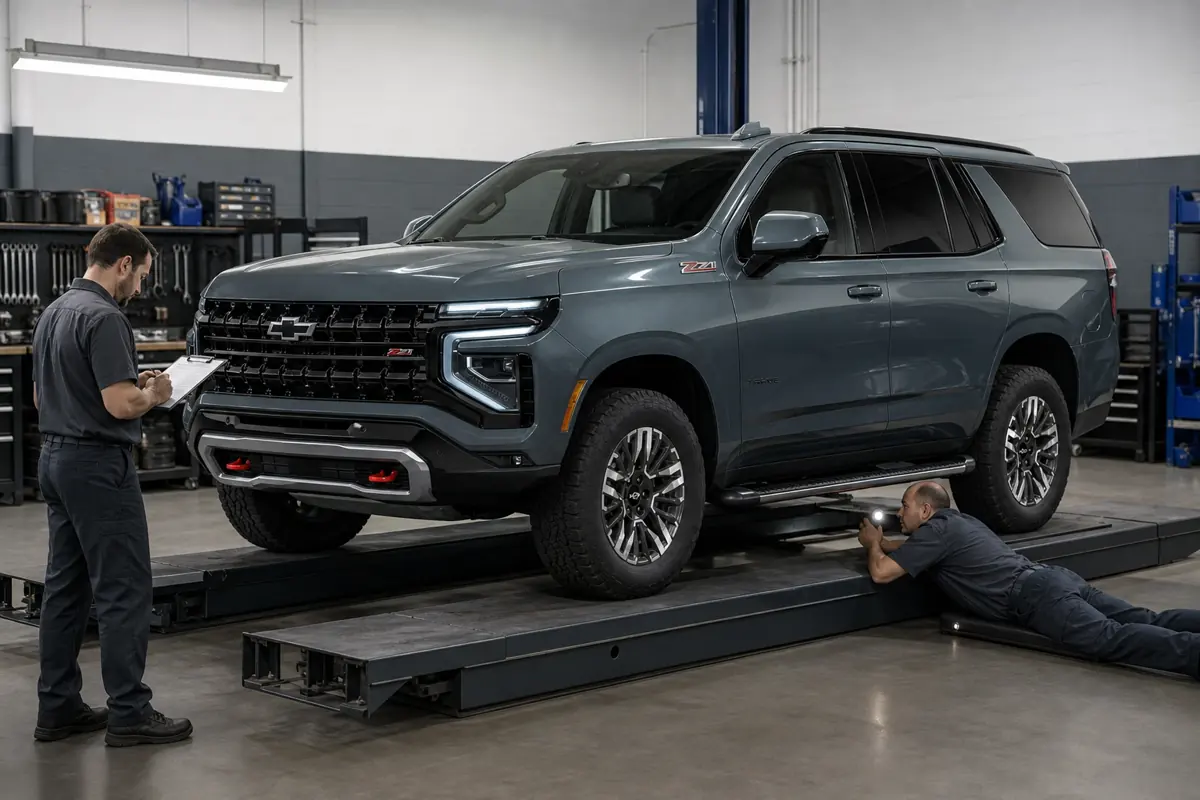
Scan all modules, not only engine codes. Air suspension, magnetic dampers, cameras, trailer controls, seats, restraint systems, and infotainment can store faults.
Check battery health because low voltage can create confusing messages. Verify every key, screen, camera, USB port, power seat, rear climate control, and liftgate function.
Inspect tire date codes, load ratings, tread depth, and edge wear. Four matching 22- or 24-inch tires can be a major expense.
Uneven wear may indicate alignment, suspension, or impact problems. Look for wheel damage and confirm that aftermarket tires meet the vehicle's loading needs.
Model-year research can sort generations and years. For an individual example, service evidence, recall completion, unmodified safety systems, and a clean inspection matter more than a model-wide reliability score.
Walk away from active warnings, unexplained engine noise, structural repair, or a seller who will not permit a scan and lift inspection.
A 5.3-Liter LT Keeps the Five-Year Budget Closest to the Tahoe's Purpose
Fuel, depreciation, insurance, tires, brakes, registration, service, repairs, and finance cost make Tahoe ownership expensive beyond the payment. The 5.3-liter LT avoids the premium-fuel appetite and purchase price of the 6.2, while retaining the cabin and most capability.
Rear-wheel drive costs less where four-wheel-drive traction is unnecessary.
At 15,000 miles per year and 17 mpg combined, a Tahoe uses about 882 gallons.
At $3.50 per gallon, that is roughly $3,087 annually. A crossover averaging 23 mpg uses about 652 gallons and $2,283, around $804 less per year under the same assumptions.
Diesel changes the fuel quantity and price, but its option and service costs must also be counted.
Pros
- Adult-friendly third row and broad seating configurations
- Three useful engines and up to 8,400 lb of towing
- Shorter and easier to park than Suburban
- 122.7 cu ft of maximum cargo volume
Cons
- High fuel, tire, insurance, and depreciation costs
- Only 25.5 cu ft behind row three
- Poor IIHS updated moderate-overlap result
- Recent recalls demand engine and VIN checks
Get VIN-specific insurance and tire quotes before selecting a luxury trim. Keep a reserve for a tire set, deductible, scheduled fluids, and an unexpected electronic or mechanical repair.
Follow the Tahoe maintenance schedule for the exact engine and use. The Tahoe cost-to-own analysis then adds fuel, insurance, tires, depreciation, and repair reserve.
Tahoe is the right Chevrolet full-size SUV when its 25.5-cubic-foot all-seat cargo area is enough.
If that load test fails weekly, choose Suburban. If towing and passenger width are unused, choose a crossover and keep the fuel and parking savings.