Is the Envista's shape worth more than its hardware?
The 2026 Buick Envista is a good value when you want an expensive-looking shape, adult-friendly rear legroom, and quiet everyday manners at a starting price near $26,500 including destination. It is a weaker buy when you expect all-wheel drive, quick passing power, a tall cargo hold, or luxury materials behind the design.
Every Envista uses the same 137-hp engine and front-wheel-drive layout. That keeps the buying decision simple, but it also means a higher trim cannot fix the vehicle's main performance and traction limits.
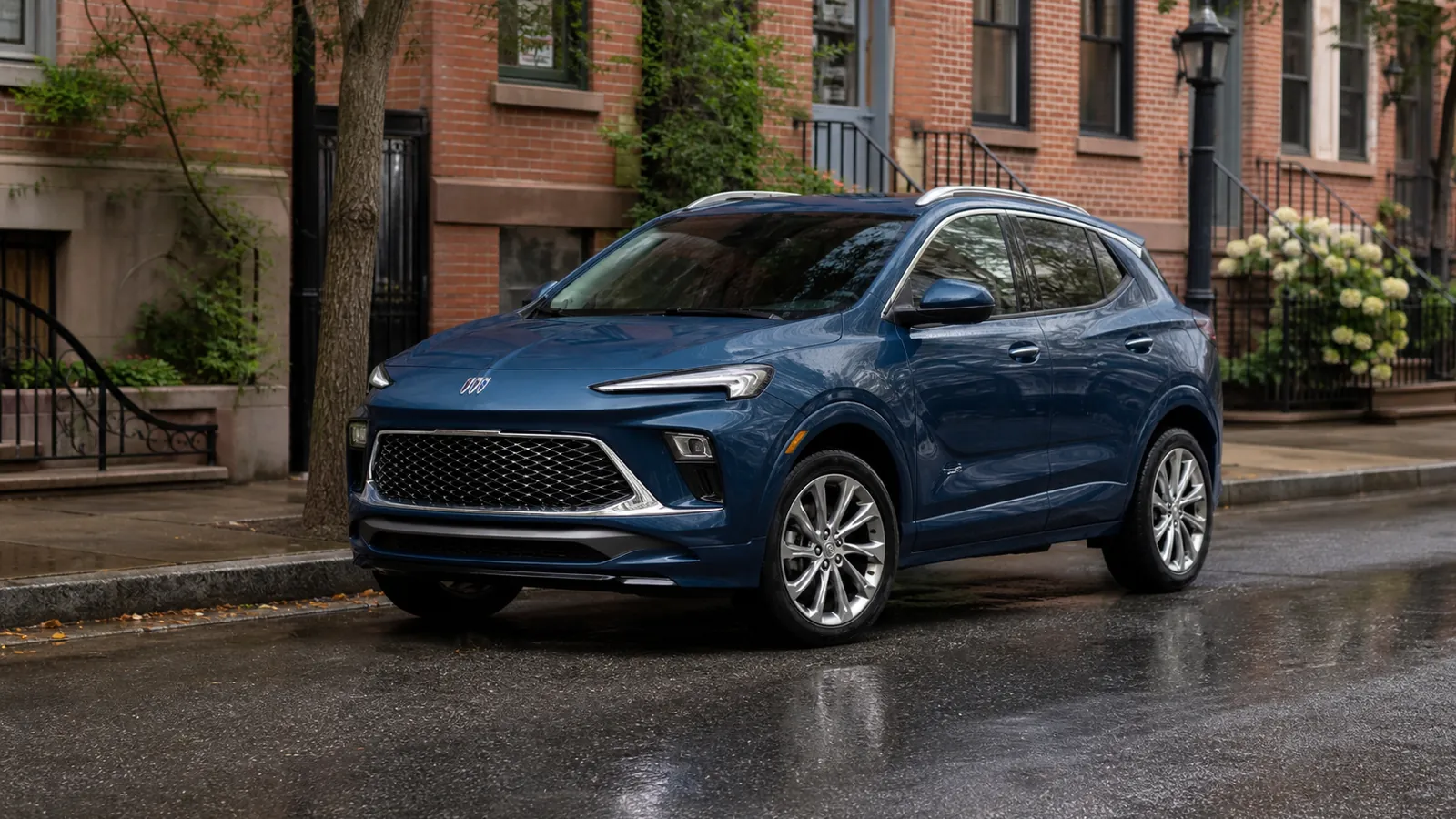
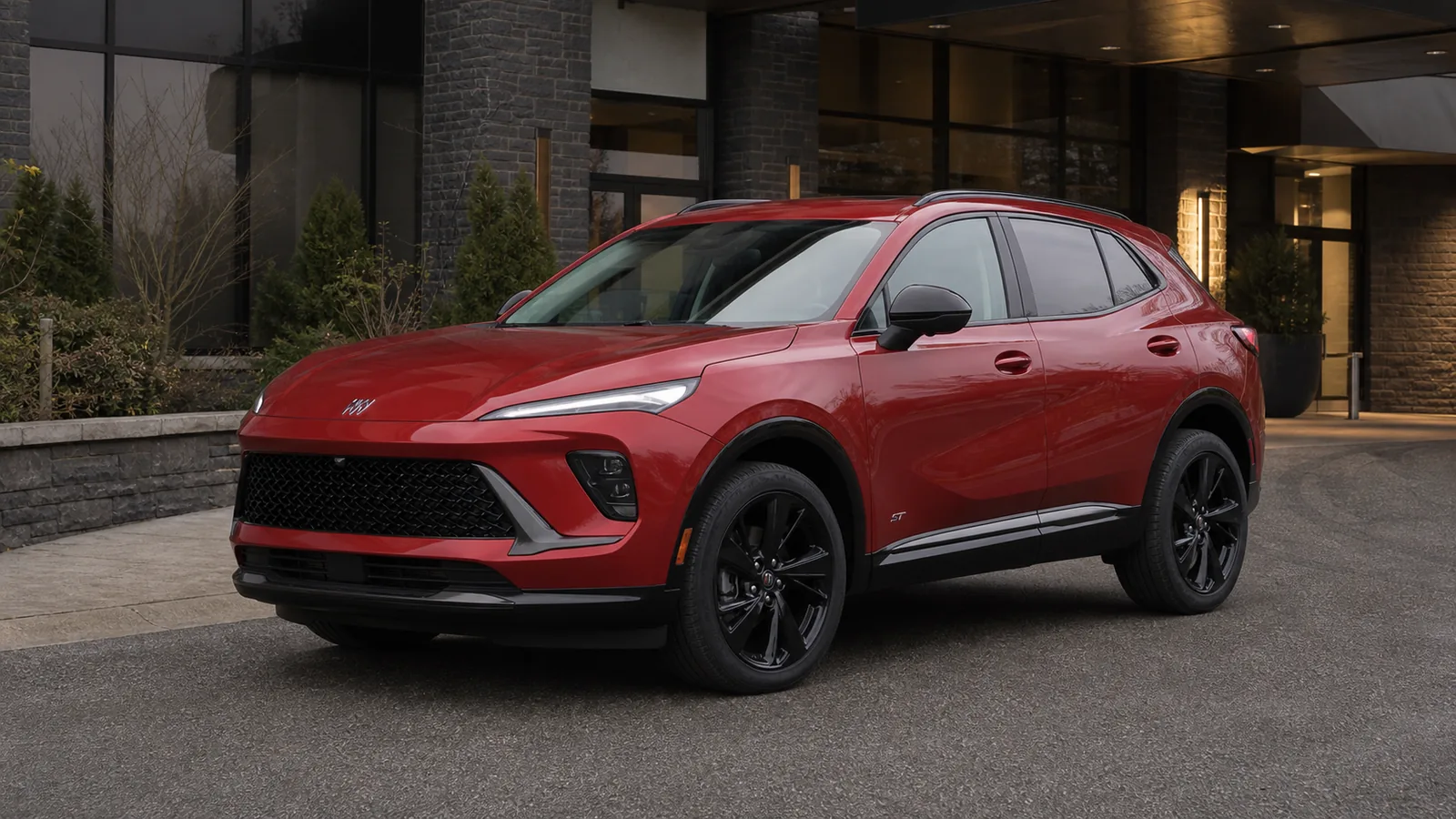
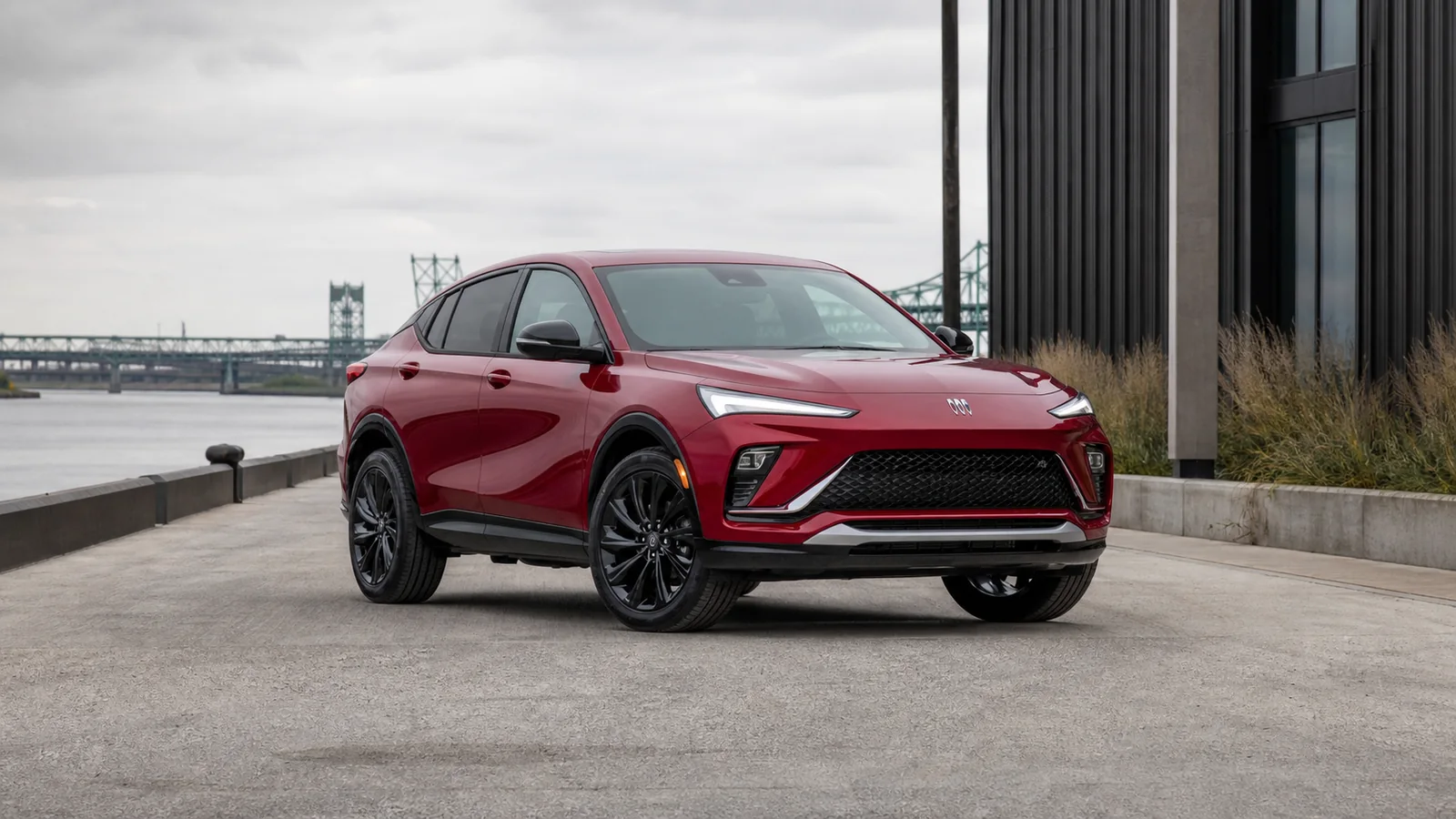
The low roof and rising beltline make the Envista look longer and more planted than a typical small SUV. Its 182.6-inch length is close to many compact SUVs, while its 61.3-inch height sits much lower and changes both the style and the way the cabin feels.
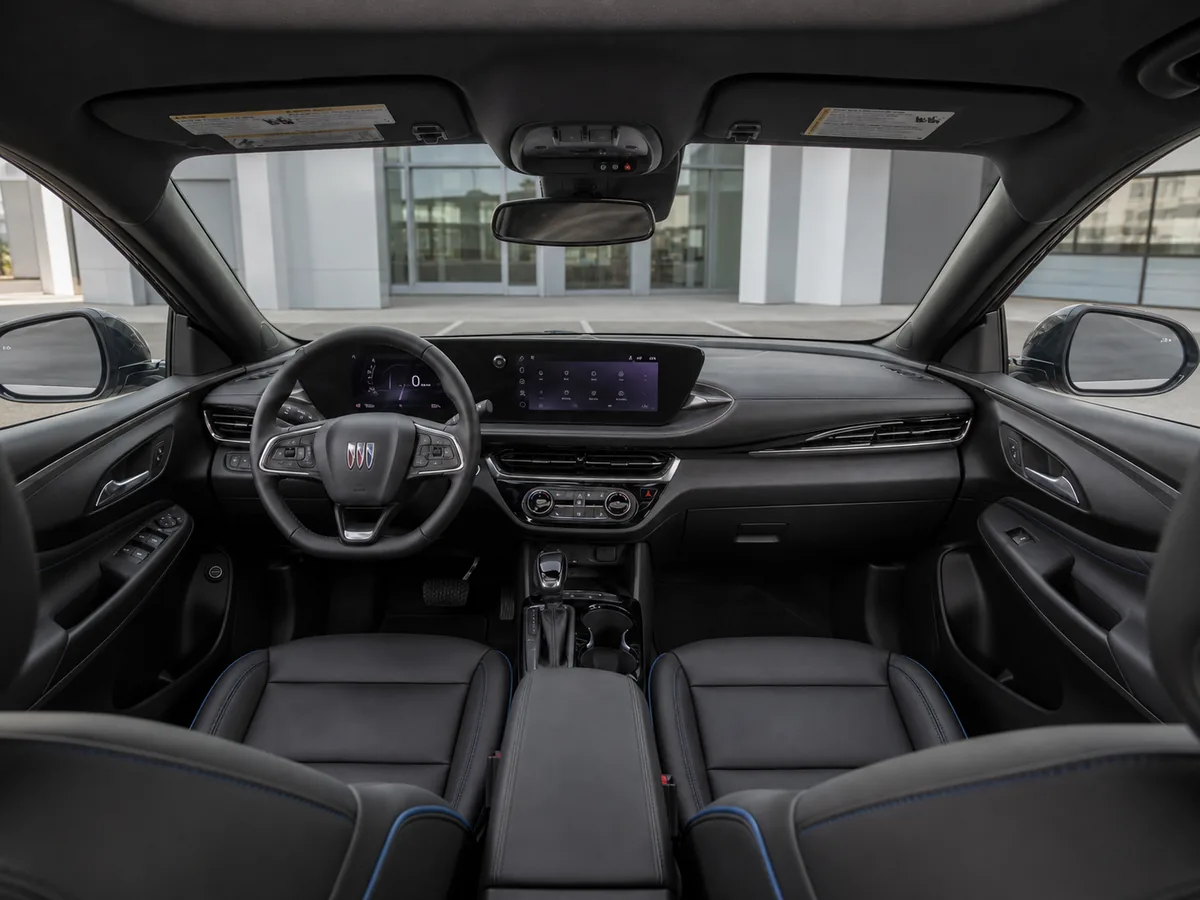
Buick supports the visual argument with an 11-inch infotainment display, an 8-inch driver display, automatic climate control, and a broad set of standard driver aids. The cabin feels orderly from the front seats, though hard surfaces and ordinary switchgear reveal where the price was controlled.
The shape earns its place only if it improves a trip you make often. Check the rear view, hatch opening, garage clearance, rear headroom, and the view from a child seat before treating the roofline as a free design upgrade.
The Envista gives you style and space for the money, but the value survives only when its single powertrain and low cargo roof fit your real use.
What happens when 137 hp is your only choice?
The Envista's 1.2-liter turbocharged three-cylinder produces 137 hp and 162 lb-ft through a six-speed automatic. Low-speed torque makes ordinary city starts feel adequate, but the engine has less reserve when speed, grade, passengers, or cargo increase.
Car and Driver measured 9.3 seconds from zero to 60 mph and 10.1 seconds from a rolling 5 to 60 mph. The rolling result matters more during a merge because the car cannot use a hard launch to hide the delay.
Test the only Envista powertrain
- Start coldListen for an even idle and confirm every warning light completes its normal check.
- Roll into trafficAccelerate from 5 to 45 mph with normal throttle and watch for hesitation or an abrupt downshift.
- Climb a gradeRepeat the test with passengers or cargo when possible, then judge noise and speed gain.
- Merge at speedLeave a safe gap and test 40 to 70 mph response on a familiar ramp.
- Brake and settleCross patched pavement and make one firm legal stop to judge body control and pedal feel.
The six-speed automatic uses distinct gear changes rather than the continuously variable transmission common in this class. It can feel more natural under light throttle, though a downshift still brings more engine noise when you ask for passing power.
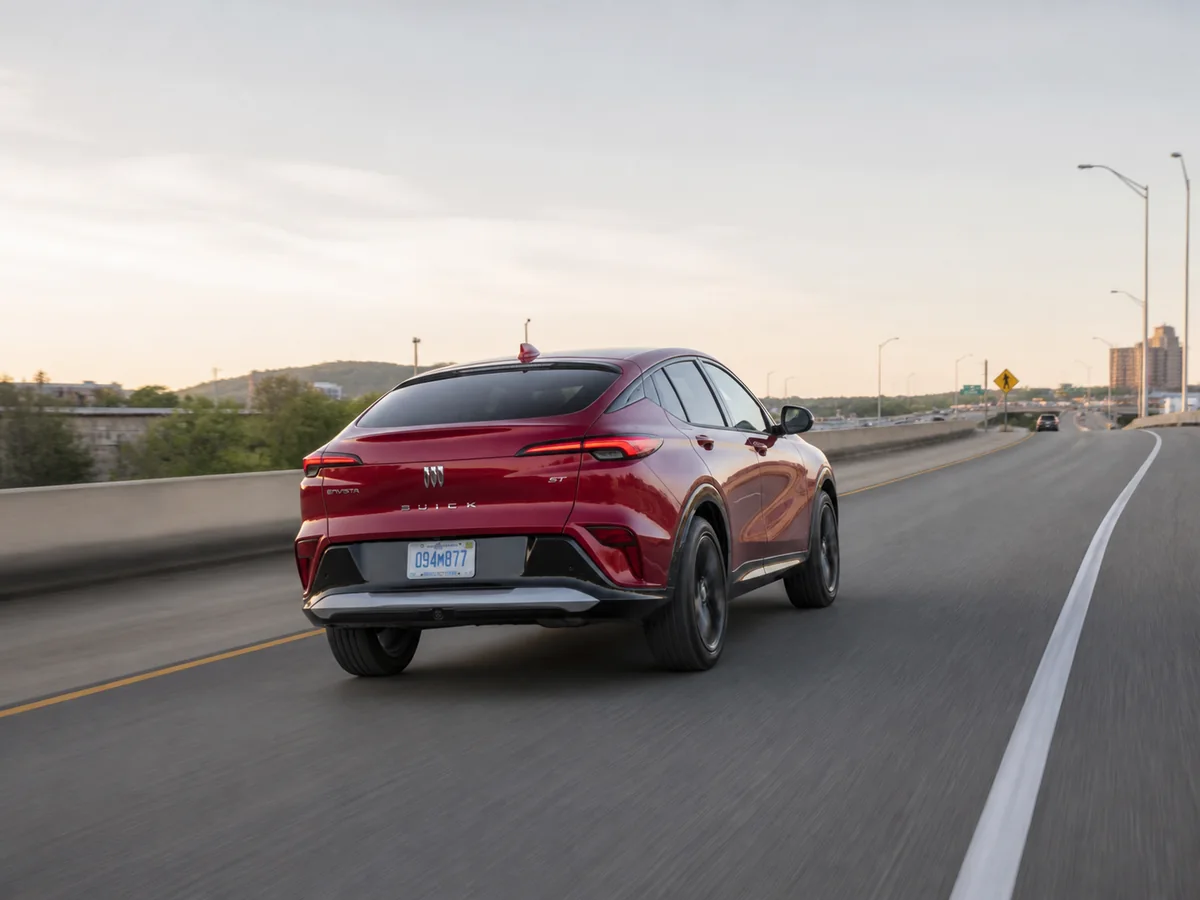
Every Envista is front-wheel drive. Good seasonal tires can make it capable on maintained winter roads, but no trim sends power to the rear wheels when you repeatedly climb a snowy grade or pull away on loose surfaces.
The Buick Encore GX is the more useful same-brand cross-shop when those limits fail the test. It offers available all-wheel drive, an available 155-hp engine, and 23.5 cubic feet behind the rear seat, though it gives up the Envista's lower fastback stance.
The EPA estimate is 28 mpg city, 32 highway, and 30 combined. Car and Driver also recorded 32 mpg at 75 mph, which supports the highway figure but does not promise the same result in traffic, cold weather, short trips, or with a heavy load.
Ride and noise control are the mechanical counterweight. The Envista cruises with less harshness and less cabin noise than its price suggests, so buyers who drive calmly may value its composure more than the missing acceleration.
Choose the Envista only after its rolling response passes your hardest regular merge. No trim adds power or all-wheel drive later, so a failed test is a reason to choose another vehicle rather than spend more on this one.
Where the fastback body gives space back, and where it takes it away
The Envista separates passenger length from cargo height. A 106.3-inch wheelbase helps create 38.7 inches of rear legroom, so an adult can have useful knee space even though the roof slopes sharply toward the hatch.
Rear headroom and the rising window line still need a physical check. A tall passenger may have enough room for knees but feel close to the headliner, while a child can sit low beside a small side window.
Buick lists 20.7 cubic feet behind the rear seat and 42 cubic feet with it folded. The 40/60 split and a claimed 7.5-foot diagonal load path help with long narrow objects, but neither number proves that a stroller, dog crate, cooler, or tall box clears the hatch.
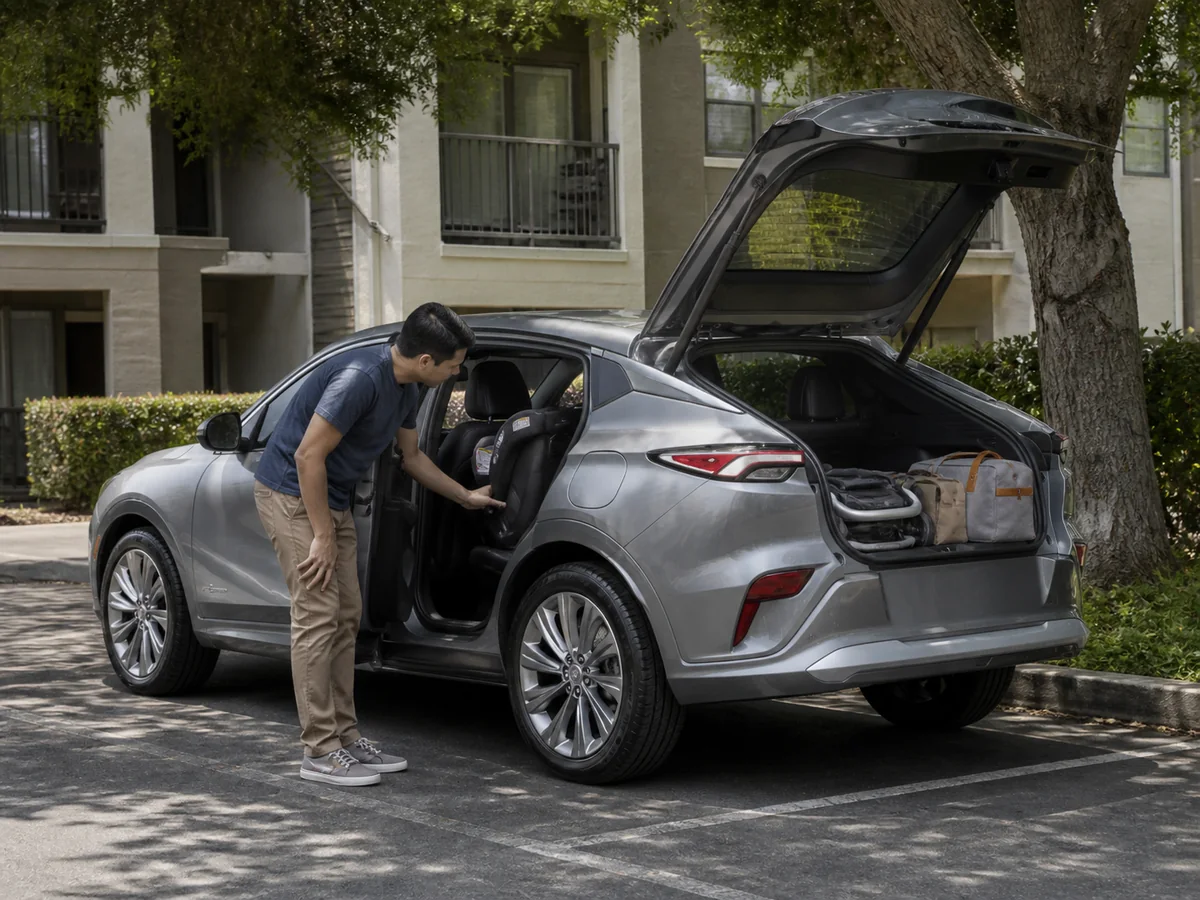
Car and Driver fit six carry-on cases behind the raised rear seat and 19 with it folded. That result gives the published volume a useful shape test, though rigid household items can fail where uniform cases fit.
Bring the difficult load
- Install the actual child seat and check front-seat travel, buckle access, and roof clearance.
- Seat the tallest regular rear passenger behind the usual driver position.
- Load the stroller, crate, mobility aid, or work case with the rear seat raised.
- Close the hatch without pressing luggage against the rear glass.
- Look rearward from the driver seat and through the camera in daylight and darkness.
- Open the hatch beneath the home garage door and in the normal parking space.
The load floor is useful for groceries and luggage, while the descending roof reduces vertical flexibility near the rear glass. Folding the seat expands the footprint, but the floor transition and front-seat position still decide whether a long item rests securely.
The sloped rear window also changes visibility. Cameras help during a parking maneuver, yet they do not replace a clear direct view when rain, dirt, glare, or darkness reduces image quality.
The Envista is roomier for rear knees than its roof suggests and less flexible for tall cargo than its length suggests. Bring the people and objects that make or break the purchase because one volume figure cannot answer both questions.
Preferred, Sport Touring, or Avenir: pay for the suspension, not the badge
All three Envista trims keep the same engine, transmission, front-wheel drive, passenger space, and cargo shape. The correct trim is the lowest one that includes equipment you will use every week without pushing the price into stronger compact-SUV territory.
Envista trim decisions
Preferred
Protects the low-price argument and keeps the full mechanical package. Add options only when they solve a repeated need.
Sport Touring
Adds the black mesh grille, dark exterior details, and 18-inch black wheels. Its available Watts Link rear suspension is the hardware upgrade worth testing.
Avenir
Adds 19-inch wheels, richer seating and convenience equipment, plus the Watts Link as standard. It still has 137 hp and front-wheel drive only.
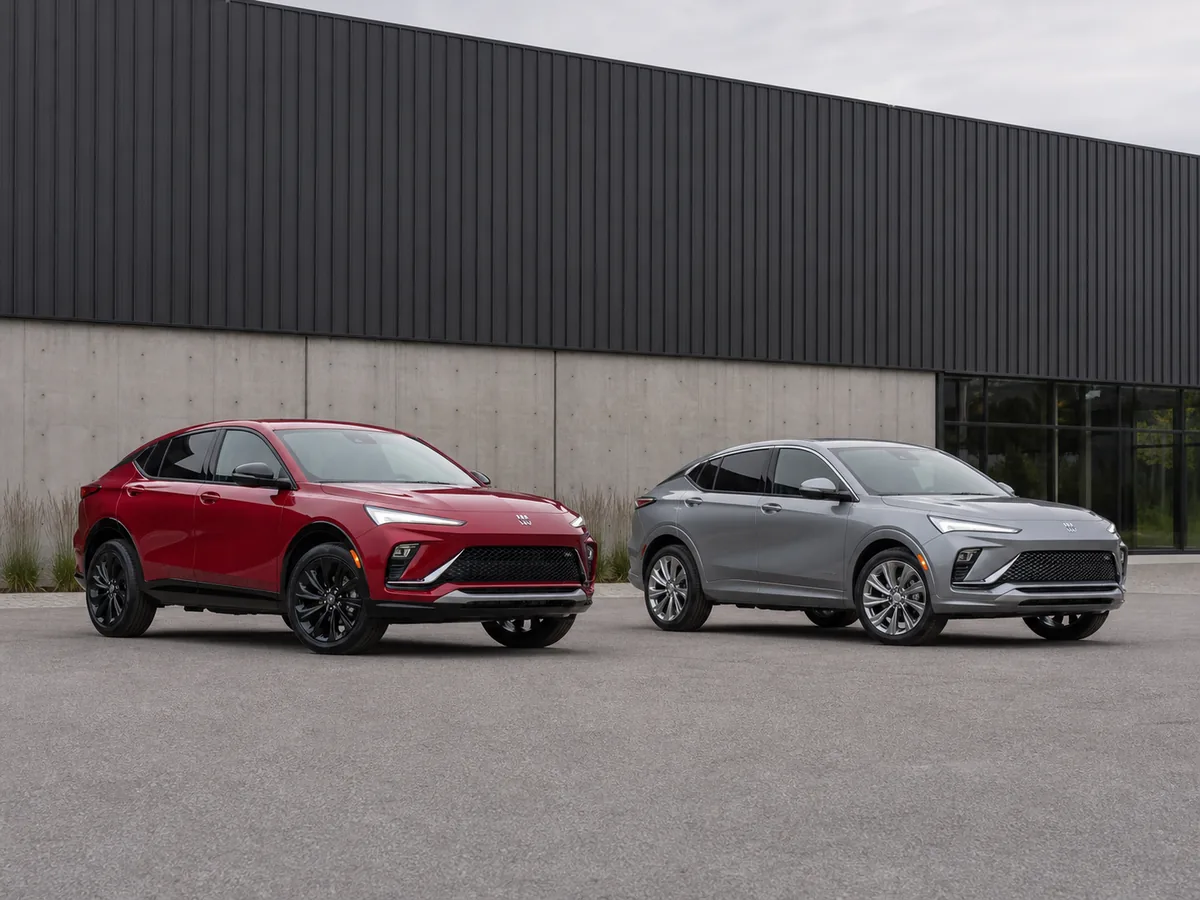
Preferred is the rational default because it preserves the styling and cabin layout that make the Envista distinctive. A buyer who needs heated seats, adaptive cruise control, surround-view cameras, or other convenience features should compare complete window stickers because packages can change the equipment line.
Sport Touring is the appearance-led middle choice. Its available Watts Link rear suspension can better control lateral body movement over uneven pavement, which is a real mechanical distinction when the option is installed.
Avenir includes that suspension and focuses on comfort, upholstery, and visual finish. Its 19-inch wheels can sharpen the stance, though their shorter tire sidewalls may transmit a firmer impact and cost more to replace.
Test an Avenir and a non-Watts Link Preferred over the same broken road at the same speed. The difference has to matter during your normal drive because the top trim does not improve acceleration, traction, rear-seat crash performance, or cargo volume.
Compare out-the-door prices instead of payments. A discounted Avenir can make sense for a long commute, while a stretched loan on a full-price top trim can erase the reason for choosing an affordable Buick.
Preferred is the best starting point, and Sport Touring earns more money only when its appearance or installed suspension matters to you. Choose Avenir after the ride and comfort features prove their value, not because the badge suggests a stronger vehicle.
The 2026 safety update fixes the side test, but rear-seat protection still trails
The 2026 Envista earned a Good IIHS side-impact rating after changes to the side structure, curtain airbags, and seat-mounted side airbags. That improvement applies to 2026 models, so build year matters when you compare a new vehicle with earlier inventory.
The stronger side result does not erase the Poor rating in the updated moderate-overlap front test. IIHS recorded a Poor head and neck injury measure and a Marginal chest measure for the rear passenger, which makes that test especially relevant to households that regularly use the back seat.
| Evaluation | Rating | Model-year scope | What it changes |
|---|---|---|---|
| Small overlap front | Good | 2024-26 | Strong occupant-space result in the tested front-corner crashes |
| Updated moderate overlap | Poor | 2024-26 | Rear-passenger head, neck, and chest protection remain concerns |
| Updated side | Good | 2026 | Structural and airbag changes improved the current model |
| Headlights | Marginal | 2024-26 | Illumination has limits even with automatic high beams |
| Vehicle-to-vehicle prevention | Poor | 2024-26 | The braking system should remain a backup rather than a promise |
| Pedestrian prevention | Acceptable | 2024-26 | Performance varies with speed, light, and target path |
| LATCH ease | Acceptable | 2024-26 | Child-seat installation still needs a hands-on check |
Crashworthiness and crash avoidance answer different questions. The body can protect well in one impact direction while an automatic braking system performs poorly against a moving vehicle target in a separate test.
Buick includes forward collision alert, automatic emergency braking, front pedestrian braking, lane keep assist, a following-distance indicator, and automatic high beams. Those features can help an attentive driver, but sensor dirt, weather, glare, speed, road shape, and target position can reduce what they see or how quickly they react.
Parents should install the actual child restraint in the intended seating position. Check lower-anchor access, top-tether routing, buckle reach, front-seat clearance, and whether the child has enough window view to travel comfortably.
Leave a full following distance and keep responsibility for every stop. A long feature list cannot compensate for following too closely, worn tires, an obstructed camera, or the weak result in a test that matches your passenger use.
The 2026 side update is meaningful, but a family should still weigh the Poor rear-passenger moderate-overlap result before buying. The Envista is not uniformly weak or uniformly strong, and one summary score would hide the evidence that matters.
How much reliability evidence does a three-year-old model really have?
The Envista reached the United States for the 2024 model year, so there is not yet a mature high-mileage record across many winters and ownership cycles. A confident prediction should not replace evidence from the exact VIN, its software, service history, condition, and remaining warranty.
NHTSA campaign 23V-744 covered 6,289 early 2024 Envistas. Incorrect virtual cockpit software could make the instrument panel display black out at startup or while driving, and the remedy was a dealer software update.
The campaign population does not mean every covered vehicle suffered the failure. It defines vehicles that may contain the defect and need the remedy, which is why a current VIN lookup and completed repair order matter more than a seller's memory.
Reliability proof before purchase
- Run the VIN through the current NHTSA and GM recall lookup.
- Match every completed campaign to a dated dealer repair order.
- Start the engine cold and repeat the test after a full warm drive.
- Watch both displays during startup, phone connection, camera use, and a road test.
- Scan for stored and pending codes after the drive.
- Check oil-change dates, correct oil specification, battery condition, and tire wear.
- Inspect for collision repair, water entry, leaks, damaged wiring, and missing fasteners.
- Confirm the original in-service date and remaining warranty in writing.
The engine should start cleanly, idle evenly, and accelerate without a warning message or misfire. The six-speed automatic should engage promptly, shift consistently when cold and warm, and respond the same way during repeated rolling acceleration.
Electronics deserve a complete test because the Envista combines a wide display panel with cameras and several driver aids. Use the instrument screen, infotainment, phone connection, audio, climate controls, locks, windows, USB ports, camera views, parking alerts, and every steering-wheel control.
Buick's new-vehicle coverage is three years or 36,000 miles for the basic warranty and five years or 60,000 miles for the powertrain, subject to the current booklet and in-service date. Coverage does not repair neglected maintenance, collision damage, worn tires, or every software complaint after the applicable limit.
The honest reliability verdict is still conditional because the model is young. Buy when VIN status, repair records, cold and warm behavior, scan results, and warranty all agree, then pause when any one of those proof points is missing.
What makes the Envista cheap or expensive over five years?
Kelley Blue Book currently estimates a $46,831 five-year cost to own for a 2026 Envista. The national benchmark combines $35,048 in out-of-pocket expenses with $11,783 in depreciation, so it is a consistent comparison input rather than a quote for your household.
Insurance is the largest listed expense at $20,145 over five years, while maintenance is $4,505 and repairs are $1,947. Your age, location, coverage, driving record, mileage, trim, transaction price, finance terms, and insurer can move those totals sharply.
The result explains why a low starting price needs protection. Paying thousands more for Avenir exposes more money to depreciation without changing the engine, drivetrain, space, or core crash structure.
Fuel is easier to estimate after a route check. Start with the EPA 30-mpg combined figure, then use your annual miles, local gasoline price, winter conditions, and traffic to estimate the bill.
Compare that estimate with your actual observed economy instead of treating the best dashboard number as a guarantee.
Warranty coverage can limit some early repair risk, but it does not pay for insurance, finance charges, depreciation, tires, wheel damage, alignments, neglected service, or owner-caused problems. Confirm every time and mileage limit before counting coverage on a used Envista.
Get an insurance quote for the exact VIN and price a replacement set of the installed tires. Compare rivals with the same down payment, loan term, mileage, fuel price, ownership period, and resale assumption so a promotional payment cannot distort the result.
The Envista works best for a commuter, couple, or small household that wants distinctive design without luxury-brand pricing. A conventional compact SUV is the better tool when the weekly job includes tall cargo, three rear passengers, severe-weather traction, or frequent high-speed passing.
The Envista stays inexpensive when you buy the lowest trim that solves the real job and verify insurance before signing. It becomes expensive when styling leads you into a top trim that still cannot meet the power, traction, cargo, or safety requirement you started with.