The 2026 XT5 is current, but its age is part of the deal
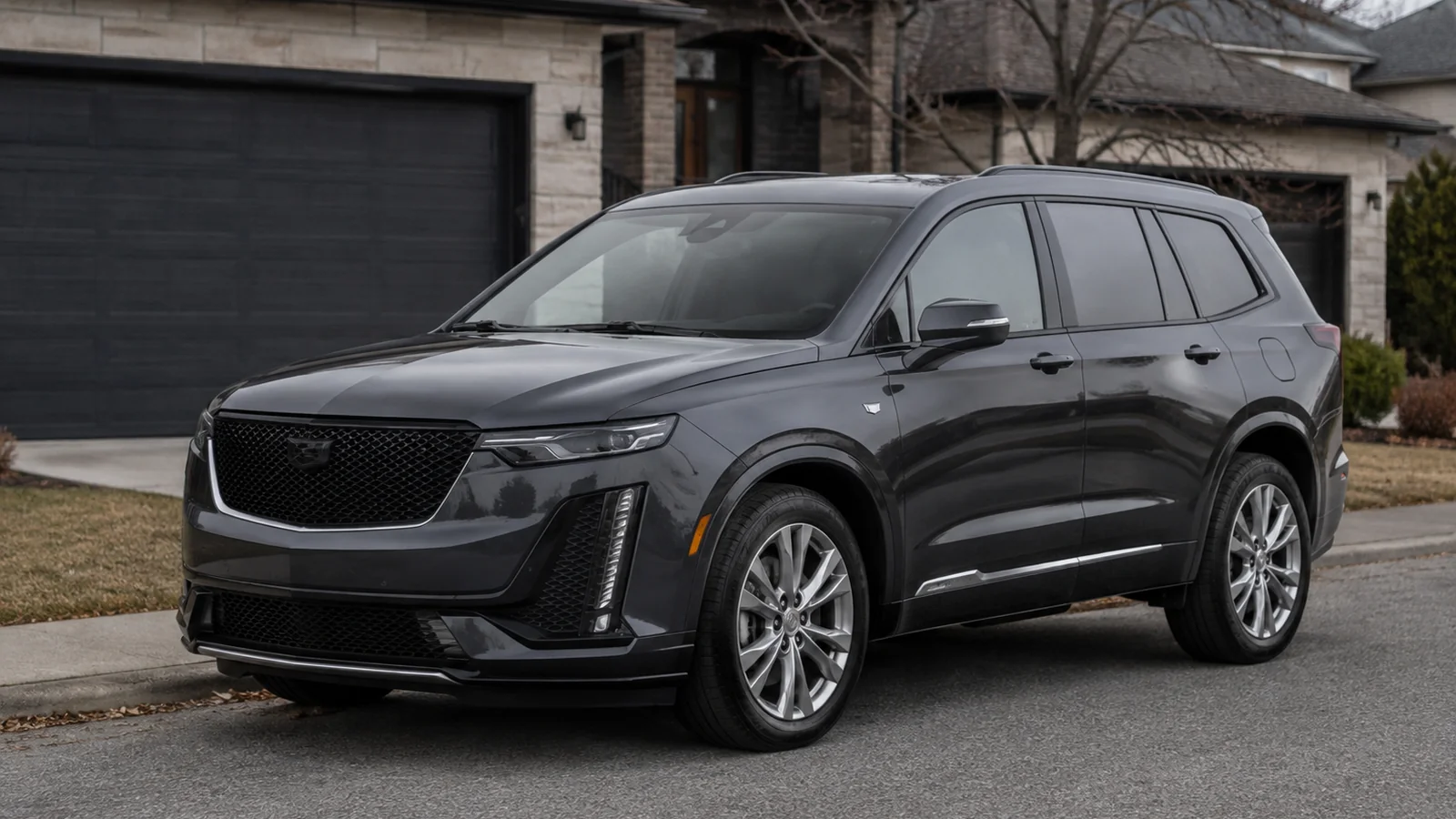
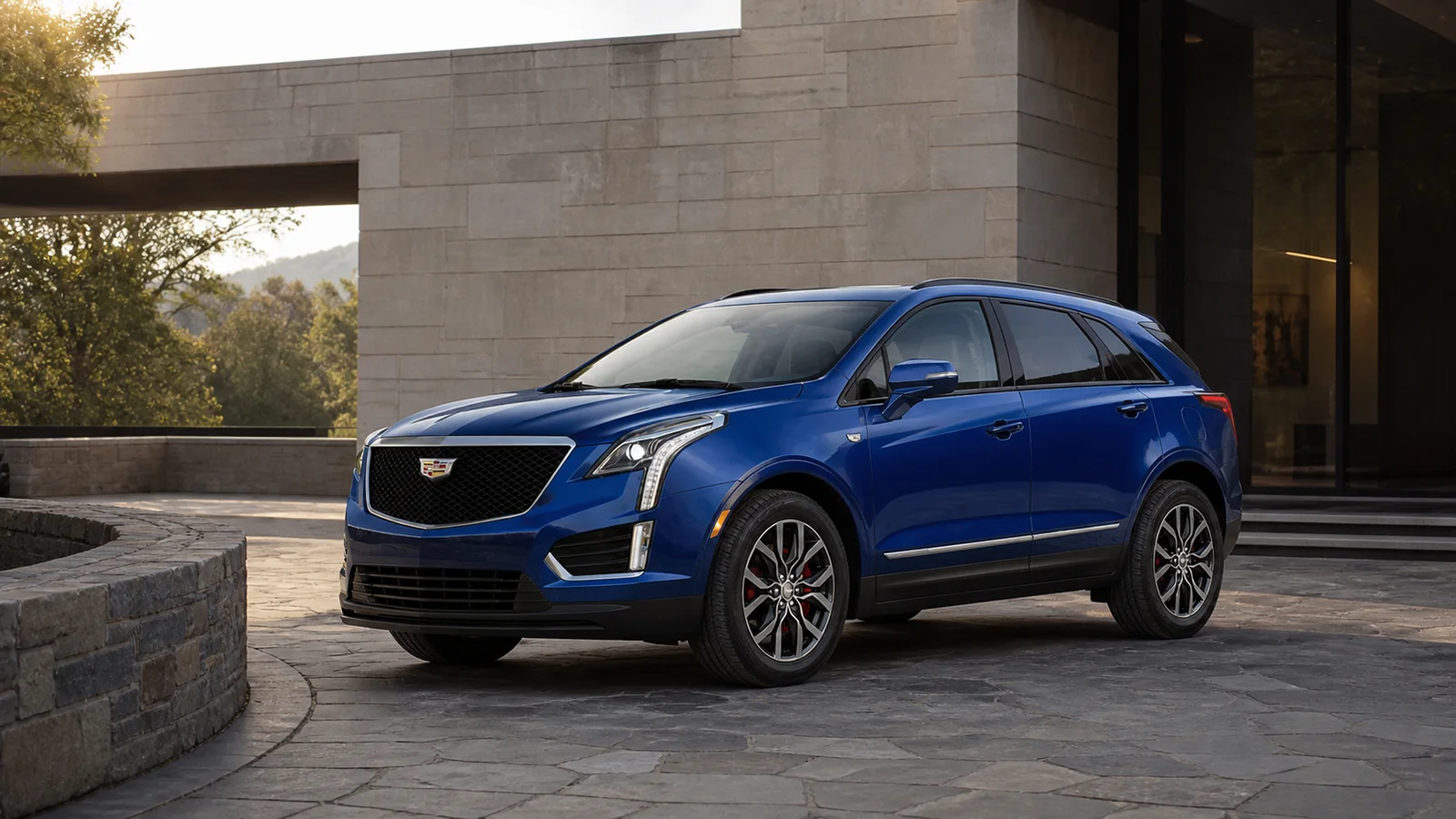
The 2026 Cadillac XT5 remains a current U.S. model and a five-seat midsize luxury crossover. It is also a late-cycle version of the first generation introduced for 2017, so a current model year does not mean a recent redesign.
Cadillac still lists Luxury, Premium Luxury, and Sport trims for 2026. The lineup gives buyers a real new-vehicle choice with factory warranty coverage and current ordering information.
- 2017The first-generation XT5 entered the U.S. market
- 2020A refresh brought the turbo four, revised controls, and updated trim structure
- 2026Cadillac continues the same generation in Luxury, Premium Luxury, and Sport trims
The age shows most clearly in the 8-inch infotainment screen and the basic cabin presentation. Space, familiar controls, and two engine choices still work in its favor, but upper-trim prices make those older details harder to overlook.
Do not assume that a long-running design is unreliable, and do not assume that a 2026 badge makes it modern. Treat the XT5 as a current new SUV whose established design must earn its price through comfort, space, and the exact equipment you use.
The price ladder turns one XT5 into three value cases
Cadillac advertises the 2026 XT5 Luxury at $44,800, Premium Luxury at $53,500, and Sport at $62,800 before destination. Adding the official $1,795 destination charge produces delivered base prices of $46,595, $55,295, and $64,595 before tax, registration, dealer fees, and options.
| Trim | Advertised base | Destination | Delivered base | Engine and drive access | Decision-changing equipment |
|---|---|---|---|---|---|
| Luxury | $44,800 | $1,795 | $46,595 | Turbo four, FWD standard, AWD available | 18-inch wheels and Bose 8-speaker audio |
| Premium Luxury | $53,500 | $1,795 | $55,295 | Turbo four standard, V6 available, FWD or AWD | Leather-focused cabin upgrades and broader available comfort equipment |
| Sport | $62,800 | $1,795 | $64,595 | V6 and twin-clutch Sport Control AWD standard | Chassis Damping Control, Yaw Control, Brembo front brakes, and 20-inch wheels |
Luxury protects the XT5's value argument because it keeps the useful body, turbo output, and front-wheel-drive efficiency at the lowest delivered base. Its equipment must still satisfy you because adding options can narrow the gap to Premium Luxury.
Premium Luxury asks $8,700 more than Luxury after destination. Its case depends on whether its richer cabin, available V6, and available equipment improve daily use enough to justify that jump.
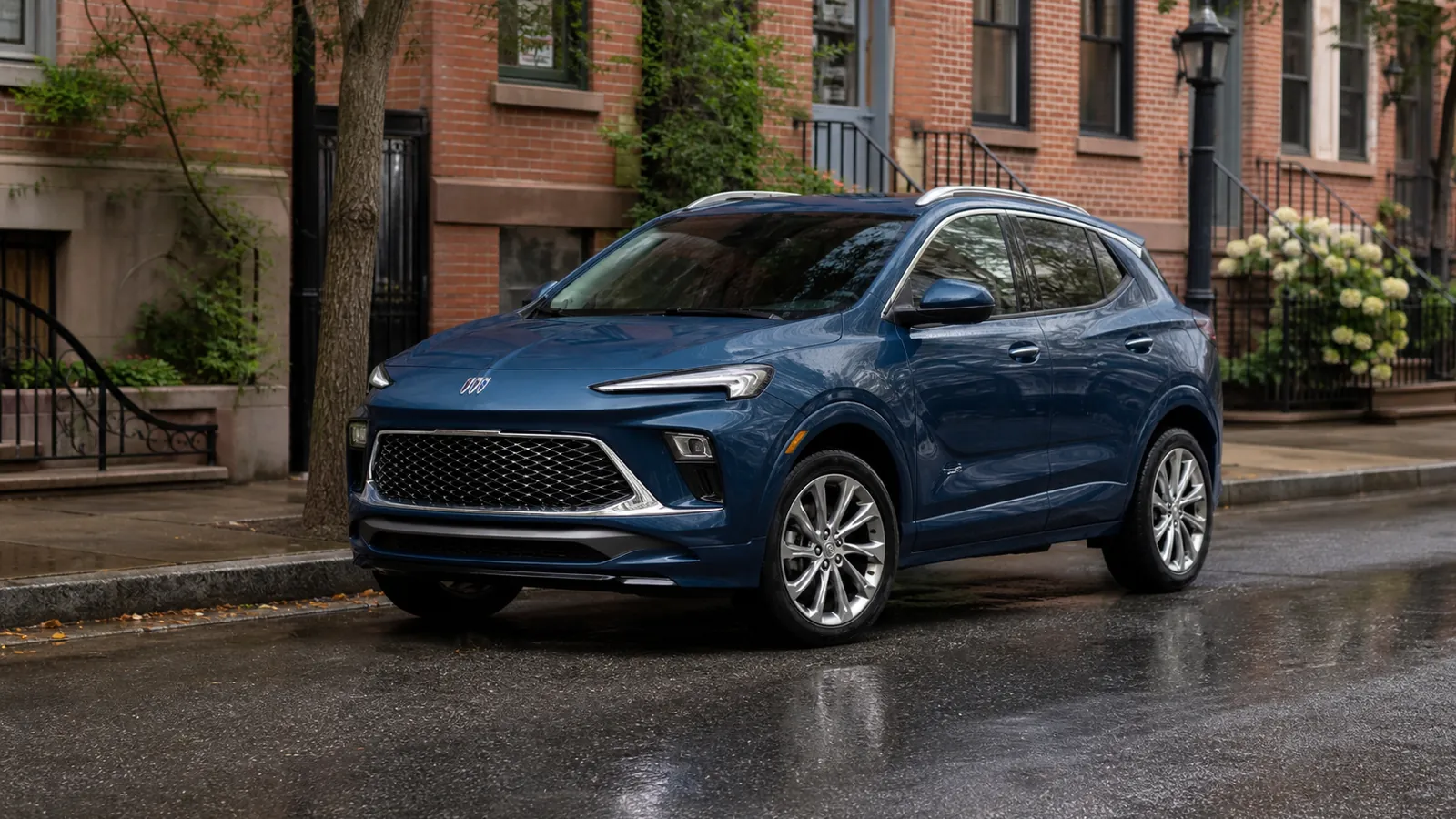
The smaller Buick Envision reaches $52,695 in Avenir form, which is below the XT5 Premium Luxury delivered base but above XT5 Luxury. That comparison makes the XT5's larger cargo bay, older interface, and available V6 part of the same value decision.
Sport starts another $9,300 above Premium Luxury. The V6, specialized AWD system, damping control, brakes, and wheels create the clearest mechanical difference, but a $64,595 delivered base demands more than badge appeal from a design this old.
Set the trim ceiling before discussing payments or dealer-installed equipment.
Two engines create four fuel-economy outcomes
The standard 2.0-liter turbo four-cylinder produces 235 hp and 258 lb-ft of torque. The available 3.6-liter V6 raises output to 310 hp and 271 lb-ft, and both engines use a nine-speed automatic and premium gasoline.
The V6 is available on Premium Luxury and standard on Sport. Front-wheel drive and all-wheel drive are offered with the turbo configuration, while the official ratings also identify V6 FWD and V6 AWD combinations.
| Engine | Drive layout | Output | EPA city/highway | Availability |
|---|---|---|---|---|
| 2.0L turbo four | FWD | 235 hp, 258 lb-ft | 22/29 mpg | Standard on Luxury and Premium Luxury |
| 2.0L turbo four | AWD | 235 hp, 258 lb-ft | 21/27 mpg | Available on Luxury and Premium Luxury |
| 3.6L V6 | FWD | 310 hp, 271 lb-ft | 19/26 mpg | Available on Premium Luxury |
| 3.6L V6 | AWD | 310 hp, 271 lb-ft | 18/26 mpg | Available on Premium Luxury and standard on Sport |
The V6 gives up three city mpg against the turbo FWD rating, and AWD removes another city mpg within either engine branch. Highway differences are smaller, but premium fuel means your annual mileage and local fuel price still matter.
Choose the turbo when routine commuting and lower fuel use matter more than stronger response. Choose the V6 only after a loaded merge or passing test shows a benefit you will use, then decide whether AWD solves a repeated traction need.
Price and fuel the exact engine and drivetrain together. A generic XT5 MPG figure hides the four configurations that create the real operating-cost difference.
Road-test evidence needs its original date attached
Current reviews still describe the XT5 as comfort-led, with an easygoing ride and adequate control for ordinary commuting. Sport adds Chassis Damping Control and Yaw Control, but those features do not turn the vehicle into a newer platform or erase the effect of its wheel and tire choice.
Car and Driver measured a 2020 XT5 Sport V6 AWD at 6.1 seconds from zero to 60 mph. The 2026 V6 retains the same 310-hp output, yet that older result belongs to the tested model year, configuration, tires, conditions, and test method.
Use the number as evidence that the V6 can provide useful acceleration, not as a claimed 2026 result. The turbo four, FWD versions, and differently equipped vehicles need their own road-test judgment.
Drive the exact XT5 over patched pavement, a highway merge, a sweeping ramp, and a tight parking maneuver. Listen for tire impact without the audio playing, check rolling response with the normal passenger load, and judge whether the steering gives enough confidence on your familiar roads.
The XT5's strongest dynamic case is reduced effort, not sharp feedback. Buy its ride only after the exact wheels, tires, engine, and suspension pass your own route.
A historical acceleration time cannot answer whether a specific 2026 build feels comfortable every day.
The 8-inch screen is the cabin's clearest age marker
The standard 8-inch infotainment screen is small beside the wide displays now common in luxury vehicles. It still supports wireless Apple CarPlay and wireless Android Auto, and Luxury includes a Bose 8-speaker audio system.
Screen size alone does not determine usability. The real questions are whether the display responds quickly, stays visible in glare, reconnects to your phone, and lets you reach routine functions without leaning or searching through menus.
XT5 cabin usability test
- Pair your phone, restart the vehicle, and confirm wireless projection reconnects
- Enter a destination and change audio while seated in the normal driving position
- Check display glare in daylight and brightness after dark
- Test the reversing camera and every fitted exterior camera
- Reach the climate and infotainment controls without shifting your shoulder forward
- Set the mirrors and look through the small rear window and rear three-quarter area
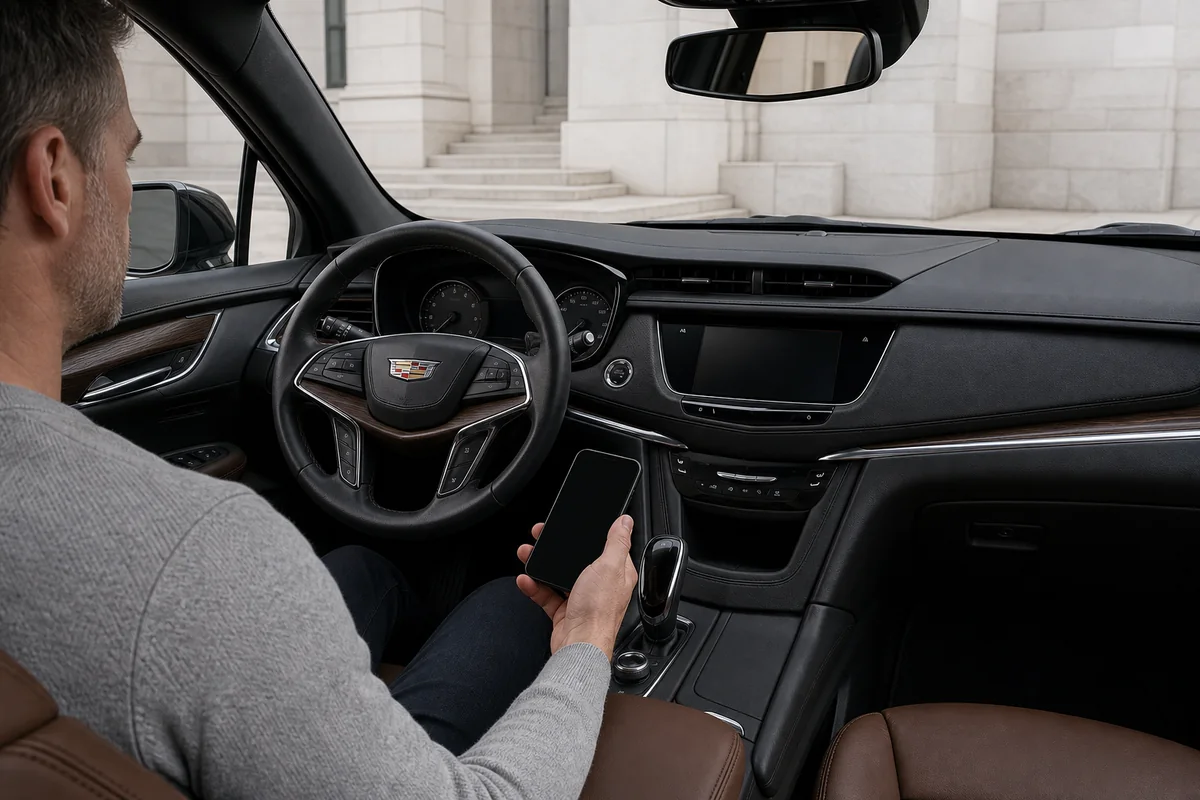
Visibility deserves the same attention as the interface. Independent reviews identify the small rear window and rear three-quarter view as limits, so set the seat and mirrors before judging camera assistance.
Premium Luxury and Sport prices raise the standard for the whole cabin. Materials, seat comfort, control placement, audio, and fitted options must carry value that the 8-inch display does not.
The screen is acceptable when your weekly tasks work cleanly, but it remains a visible price-versus-age compromise. Do not pay upper-trim money until the interface and outward view work for you in one complete test.
The second row makes a stronger case than the dashboard
The XT5 seats five and gives the second row 39 inches of legroom. A 112-inch wheelbase, sliding rear bench, and reclining seatbacks give a household more ways to divide room between passengers and cargo.
Those measurements support the XT5's adult-passenger case, but they do not prove comfort for every body shape. Set the front seat for the regular driver, then have the rear passenger check knee clearance, thigh support, headroom, foot space, door opening, and the recline range.

Child-seat users should install their actual rear-facing or forward-facing seat instead of estimating from legroom. Check lower-anchor access, buckle reach, front-seat clearance, door opening, and whether another adult can sit beside the installed seat.
Sliding the bench rearward can improve passenger room while reducing cargo reach and usable floor length. Moving it forward can help luggage, but the remaining knee space must still work for the person who rides there.
A five-seat layout also needs a real three-across test when that arrangement matters. The XT5's second row earns its place through adjustability and usable adult space, provided your normal seat positions fit at the same time.
Reproduce the household arrangement before accepting the published dimension.
Thirty cubic feet is the XT5's clearest practical advantage
Cadillac lists 30 cubic feet of cargo space behind the upright rear seats and 63 cubic feet with them folded. The seats-up figure matters most because it preserves room for passengers while carrying the weekly load.
XT5 cargo states
- Rear seats upright
- 30 cu ft, the useful state for trips carrying people and luggage together
- Rear seats folded
- 63 cu ft, the maximum state for occasional long or bulky loads
- Rear-seat split
- 60/40, allowing one side to fold while part of the bench remains available
- Overall length
- 189.6 in, a midsize exterior that still needs a parking-space check
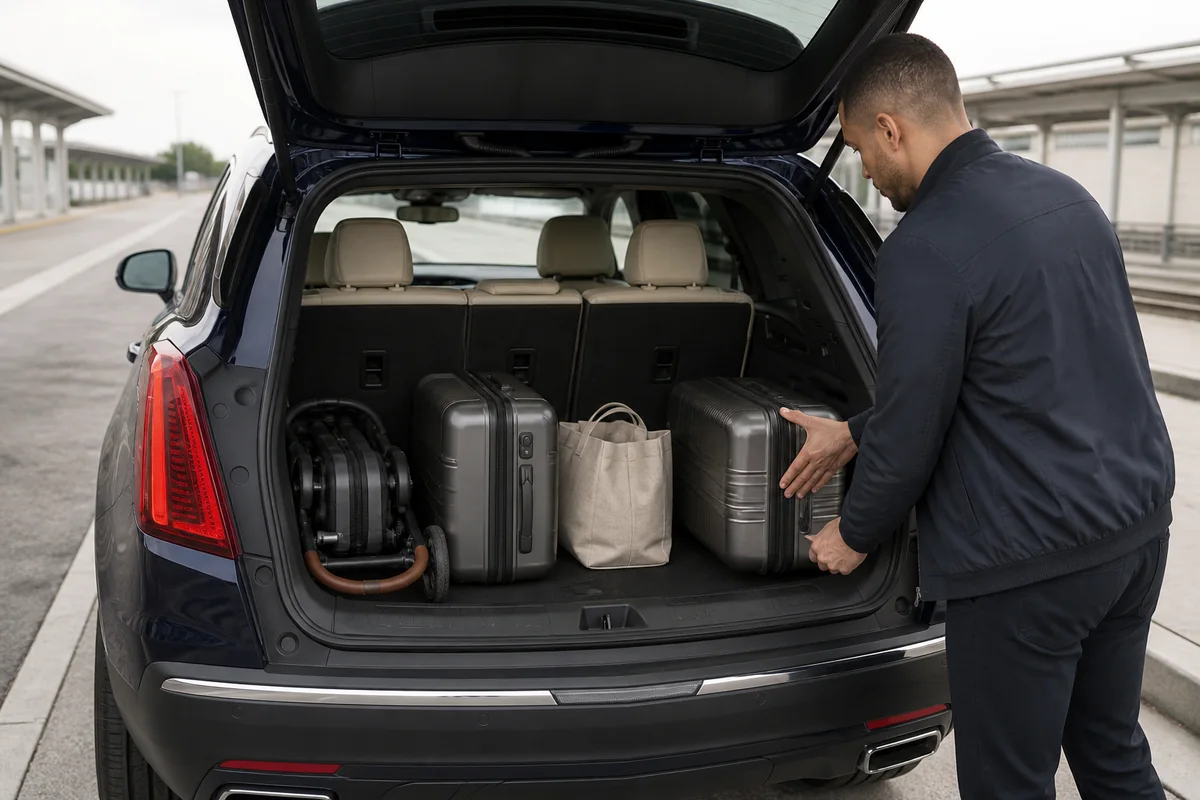
Cubic feet cannot show the hatch opening, floor width between the wheel wells, loading height, rear-glass slope, or how far you must reach for a heavy item. Those details decide whether a stroller, mobility device, dog crate, cooler, or rigid suitcase is easy to load.
Bring the largest object used every month and load it with the rear seats upright. Close the hatch without pressing against the glass, preserve a clear rear view, and confirm that the sliding bench remains in a usable passenger position.
Fold the 60/40 seat only if that matches the trip you are planning. The 63-cubic-foot maximum cannot solve a trip that requires the full rear bench.
The seats-up cargo bay is the XT5's most durable argument against its old interface. It earns the purchase when the normal people-and-luggage combination fits without rearranging the cabin.
The NHTSA record needs resolution. IIHS leaves gaps
The exact 2026 NHTSA record does not currently support a numerical safety claim. NHTSA's model lookup lists XT5 FWD VehicleId 21872 and AWD VehicleId 21873, yet the public detail responses for both identifiers returned an unrelated 1977 Chevrolet Blazer when checked on August 11, 2026.
| Authority and record | What can be used | Limit |
|---|---|---|
| NHTSA 2026 XT5 FWD | The model lookup identifies the exact configuration | Its linked detail response conflicts with the vehicle identity |
| NHTSA 2026 XT5 AWD | The model lookup identifies the exact configuration | Its linked detail response conflicts with the vehicle identity |
| IIHS driver-side small overlap | Good result with applicability stated for 2017-26 XT5 models | One test does not establish complete current crash performance |
| IIHS headlights | Marginal result with applicability stated for 2017-26 XT5 models | Headlight evidence does not substitute for crash testing |
| IIHS remaining coverage | Passenger-side small overlap is incomplete, with no updated moderate-overlap or updated side result shown | Missing evidence cannot be converted into a favorable or unfavorable result |
The identity conflict means this article asserts no NHTSA stars, rollover result, or rating label for the 2026 XT5. A secondary site repeating a number cannot repair the broken match between the exact vehicle lookup and the public detail response.
IIHS provides narrower usable evidence. Its XT5 page marks the driver-side small-overlap result Good and headlights Marginal for 2017 through 2026 applicability, while the passenger-side small-overlap record is incomplete and the newer moderate-overlap and side tests are absent.
Use only the results whose model-year applicability is explicit, and treat the rest as unresolved. Recheck both authorities before delivery because public records can change after this review.
Warranty defines the floor, not long-term reliability
The evidence reviewed here does not support a broad XT5 failure rate or a prediction that every 2026 vehicle will age the same way. A warranty, complaint, recall, owner report, and repair invoice each answer a narrower question.
Cadillac lists a four-year or 50,000-mile new-vehicle limited warranty and six-year or 70,000-mile powertrain coverage, whichever limit comes first. Roadside assistance and courtesy transportation are also listed benefits, subject to the current terms, exclusions, and original in-service date.
Confirm the warranty in writing for the exact vehicle. Record the in-service date, check current VIN status, review service and repair documents, and test the engine, transmission, displays, cameras, climate controls, driver aids, locks, windows, and warning indicators before delivery.
Premium gasoline and the four EPA configurations are the recurring-cost inputs this profile can support directly. Insurance, financing, maintenance, repairs, depreciation, mileage, transaction price, and local labor rates need buyer-specific evidence before anyone can state a credible ownership total.
Treat warranty coverage as a financial floor, then judge reliability through the exact vehicle's records and behavior. Do not turn one evidence class into a common-problem list or a five-year cost forecast.
Buy the space at the right price, or leave the age behind
The 2026 XT5 suits a buyer who wants a comfortable five-seat crossover, adult-friendly rear room, and 30 cubic feet of cargo space with the rear seats upright. Luxury makes the strongest value case when its turbo engine, FWD layout, and fitted equipment cover the daily job.
Premium Luxury can work when its cabin upgrades or available V6 deliver a benefit you use every week. Sport has the hardest case because its $64,595 delivered base places a high price on stronger hardware while the 8-inch interface and first-generation foundation remain.
A buyer who needs complete modern crash-test coverage should also wait or choose a vehicle with a clearer exact-year record. The current NHTSA identity conflict and incomplete IIHS coverage leave real unanswered questions, even though neither gap proves poor crash performance.
Compare out-the-door price, not a monthly payment, and repeat the same screen, visibility, rear-seat, cargo, rough-road, and acceleration tests on the exact build. Buy the XT5 when space and a disciplined price outweigh its age.
Leave it when upper-trim cost asks the older cabin and evidence gaps to disappear.