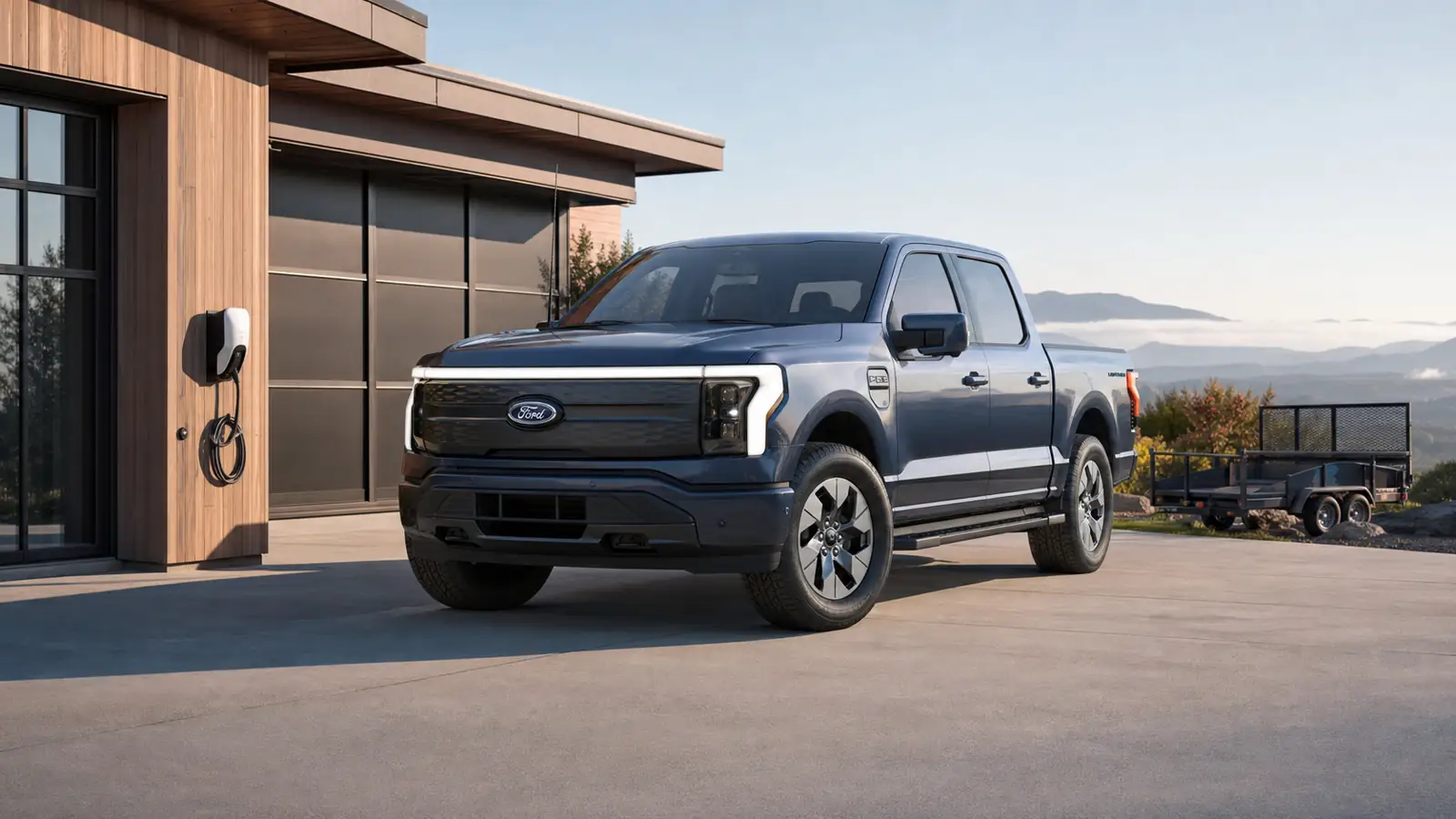
The battery choice decides whether Lightning replaces a gas truck
The 2025 Ford F-150 Lightning is easiest to justify when the truck returns to a charger most nights.
Ford lists a 98 kWh usable standard-range battery, a 123 kWh battery for Flash, and a 131 kWh extended-range battery on selected Lariat and Platinum configurations.
EPA-estimated range spans 240 to 320 miles, but the longest published figure is a starting condition, not a promise for every day.
| Configuration | Usable battery | EPA estimate | Best fit |
|---|---|---|---|
| Pro | 98 kWh | 240 miles | Local fleets and short routes |
| XLT | 98 kWh | 240 miles | Daily truck use near home |
| Flash | 123 kWh | 300 miles | Broad private-buyer value |
| Lariat extended range | 131 kWh | 320 miles | Longer regional driving |
| Platinum | 131 kWh | 300 miles | Luxury equipment over range value |
Start with the longest winter workday, not the average commute. Subtract the miles driven before sunrise, highway travel, jobsite idling for heat, errands, and a reserve for a closed or occupied charger.
A buyer who regularly finishes that day below the planned reserve needs more battery, a midday charge, or a different powertrain.
The Ford F-150 gas truck remains simpler for unpredictable remote travel. The electric vehicle hub helps frame charging needs across other EVs.
Flash is the practical starting point because its 123 kWh battery adds useful range without forcing the highest trim.
Home charging must refill the longest normal day
A household outlet can add some energy overnight, but a full-size electric truck usually needs a dedicated 240-volt circuit for dependable daily use.
Ask a licensed electrician to inspect panel capacity, service size, cable route, parking distance, permits, and any load-management equipment before signing for the truck.
The installation quote belongs in the purchase total.
Lightning charging worksheet
- Daily distance
- Longest normal day, not the average
- Parking time
- Hours connected each night
- Circuit
- Breaker, wire, and charger rating
- Winter reserve
- Heat, wind, and cold-battery allowance
- Public backup
- Working charger on the actual route
The required charging rate is simple to estimate. Divide the energy used on the longest normal day by the hours the truck will remain plugged in.
Then allow losses and cold-weather variation. A driver who uses 70 kWh and parks for ten hours needs a system that can return more than seven kW to the battery over that window.
Apartment and curbside buyers should verify assigned access in writing. A nearby public charger is not equivalent to a private overnight connection because price, uptime, queues, and parking rules can change.
The Ford brand range also includes gas and electric options when the property cannot support charging.
- Obtain the electrical quote before negotiating the vehicle
- Confirm the charger and truck settings communicate correctly
- Schedule charging around the utility rate when available
- Keep a public backup for outages or unusual mileage
The Lightning works best when home charging removes a fuel stop rather than creating a weekly charging appointment.
Towing range matters before the 10,000-pound maximum
Ford lists up to 10,000 pounds for properly equipped Flash and extended-range Lariat trucks with the Max Trailer Tow Package.
That number describes chassis capability under specified conditions. It does not describe the distance between chargers, and it does not override the payload label on the driver door.
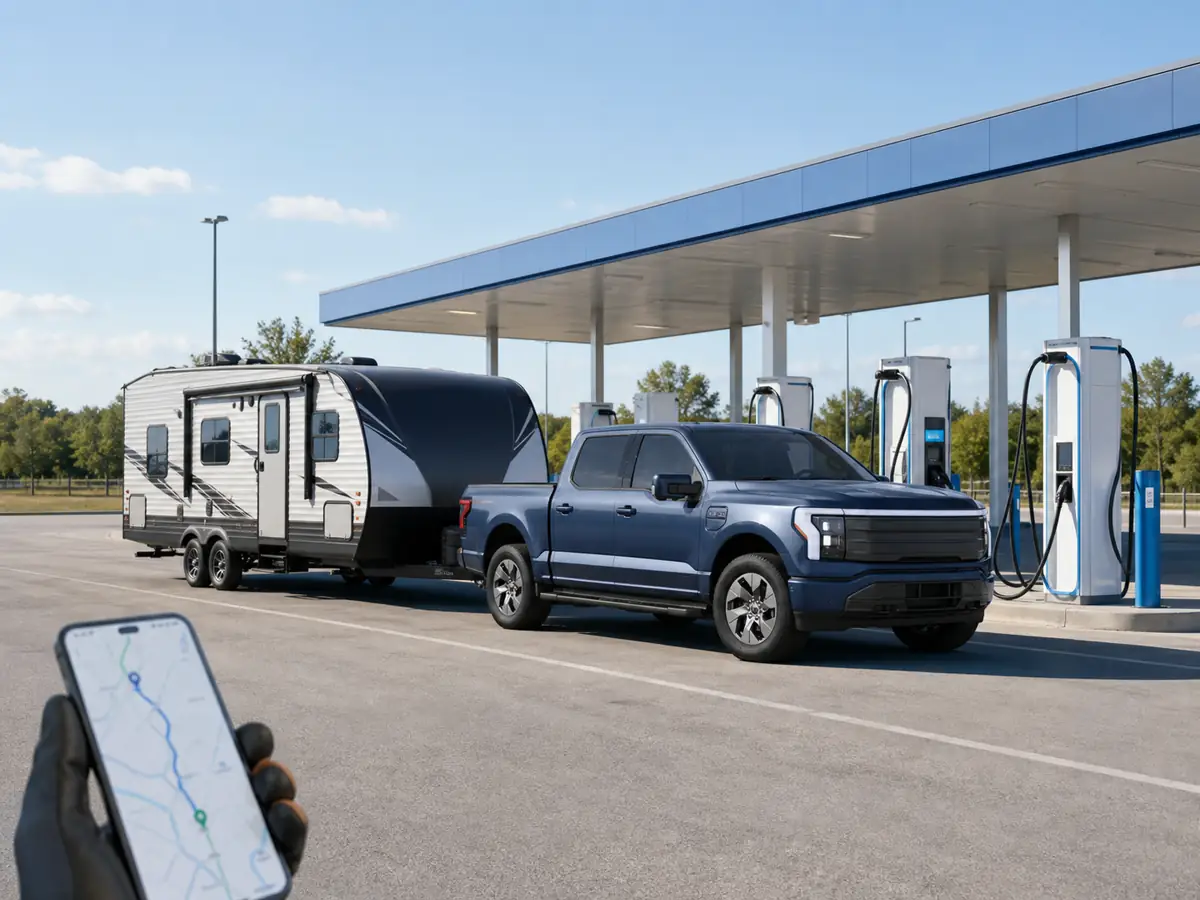
A tall travel trailer pushes much more air than a low utility trailer at the same weight.
Headwind, rain, cold, elevation, highway speed, tires, and cabin heat add further demand. Plan with a conservative consumption figure from a similar loaded trip, then check whether chargers can accept a truck and trailer without unhitching.
Payload creates a second limit. Tongue weight, passengers, tools, a bed cover, hitch hardware, and cargo all use the allowance printed on the specific truck.
A 7,000-pound trailer at 12 percent tongue weight places about 840 pounds on the truck before people or bed cargo are counted.
- Photograph the door label and receiver ratings
- Weigh the loaded trailer and measure tongue weight
- Confirm Max Trailer Tow equipment by VIN
- Map pull-through or trailer-friendly charging stops
- Test one representative loaded route before a long trip
Compare the Lightning with the Chevrolet Silverado 1500 or GMC Sierra 1500 when the trip crosses sparse charging areas. A trailer that fits the tow rating can still make the charging schedule unacceptable.
The bed, front trunk, and onboard power change daily truck use
Lightning keeps a 5.5-foot bed with 52.8 cubic feet of volume and adds a 14.1-cubic-foot sealed front trunk.
Ford rates the front compartment for up to 400 pounds. That dry, lockable space can keep tools, groceries, charging cables, or work equipment out of the cab and away from bed weather.
Available Pro Power Onboard can run tools, campsite equipment, or selected household loads when the truck and installation are configured correctly.
Treat it as an electrical system, not an unlimited generator. Add the wattage of connected equipment, keep cables suitable for the load and environment, and follow Ford's transfer-switch requirements for home backup.
The truck-specific payload label still governs every compartment combined. Heavy tools in the front trunk, people in the cab, tongue weight at the hitch, and materials in the bed all count.
Secure cargo because strong acceleration can move a loose load quickly.
A buyer who needs a truck only a few times each year should compare a five-seat vehicle plus delivery or rental costs. Drivers who use the bed and sealed front storage every week gain something a normal electric crossover cannot provide.
The front trunk is one of Lightning's best advantages because it turns unused engine space into secure daily storage.
Cold weather changes range, charging, and tire priorities
Cold air is denser, batteries deliver energy less efficiently when cold, and cabin heat consumes power.
Winter tires also add rolling resistance. The range display can adapt to recent use, but a forecast cannot remove the need for reserve on a windy or unusually cold day.
Precondition the cabin and battery while the truck remains plugged in when the controls and schedule allow it. That draws grid energy before departure and can improve comfort without spending the first miles heating a cold cabin.
Keep the state of charge high enough for an unexpected detour, but follow Ford's current charging guidance for the specific battery and use pattern.
- Set departure time while connected at home
- Use heated seats and steering wheel before maximum cabin heat
- Check tire pressure after temperature drops
- Clear snow and ice without damaging cameras or charge equipment
- Carry a charging backup for remote winter routes
The all-wheel-drive hub explains why driven wheels do not replace winter tire grip. Lightning has standard dual-motor AWD, yet braking and cornering still depend on the tire compound and tread.
The tire-pressure procedure helps keep the heavy truck within its label specification.
A heated garage is helpful, but reliable overnight charging and correct tires matter more than the garage temperature.
IIHS results require a test-by-test reading
IIHS rates the 2025 F-150 Lightning Poor in its updated moderate-overlap front test. The same vehicle earns Good ratings for pedestrian crash prevention and seat-belt reminders, Acceptable headlights, and a Marginal LATCH ease-of-use rating.
Those results answer different questions and should not be compressed into one unsupported safety label.
The updated moderate-overlap result deserves attention from families because IIHS places a second dummy in the rear seat.
Review the detailed measurements and restraints, then check the exact truck's belts, head restraints, child-seat access, and warning systems.
A rating cannot tell you whether a used truck received correct structural repair after a collision.
| Area | Rating | Buyer action |
|---|---|---|
| Updated moderate overlap | Poor | Read rear-passenger details |
| Pedestrian prevention | Good | Still test warnings and visibility |
| Headlights | Acceptable | Drive the exact trim at night |
| Seat-belt reminders | Good | Confirm normal warning operation |
| LATCH ease of use | Marginal | Install the actual child seat |
Run the VIN through NHTSA and Ford because recall populations depend on build date and equipment.
Confirm every remedy with a repair order rather than a cleared dashboard message. The research source standards explain why crash tests, recall documents, and physical inspection complement one another.
Use the specific IIHS results to guide inspection and seating decisions instead of calling the whole truck safe or unsafe.
A used Lightning inspection must include two charge sessions
A normal road test does not show whether the truck accepts power correctly. Start with service records, the original window sticker, battery warranty status, recall completion, and the charging equipment included with the sale.
Then perform one AC session and one DC fast-charge session when practical.
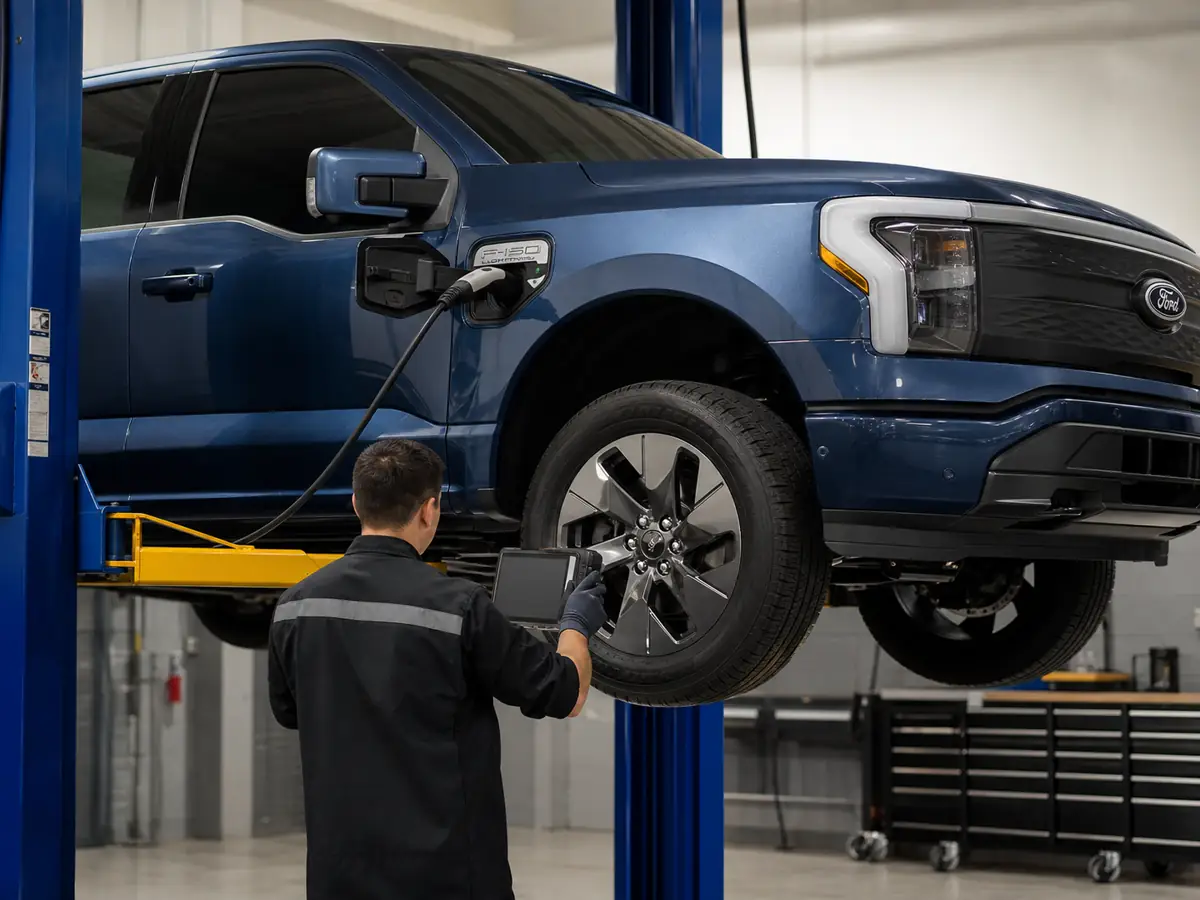
Watch the connector latch, charging start, power ramp, messages, cooling sounds, and session completion.
Scan all modules after the drive. A recently cleared fault, weak 12-volt battery, or intermittent charge-port problem can create failures that a short dealer loop misses.
Inspect the battery shield, suspension, wheels, tires, brakes, hitch, bed, outlets, cameras, lights, seals, and collision repairs.
Heavy curb rash and uneven tread may indicate alignment problems. Hitch wear, trailer-brake settings, and bed damage can reveal work history that does not match the listing.
- Test every key and mobile-access function
- Confirm AC and DC charging on compatible equipment
- Scan modules before and after the road test
- Check heat, air conditioning, cameras, and outlets
- Match tire type, load rating, and tread across the axle
Use the new versus used process for title and seller evidence. Compare a used Lightning with a Rivian R1T only after both pass charging and condition checks.
A clean charge history and physical inspection are worth more than an optimistic range display.
Lightning ownership cost starts with the property
Electricity cost per mile is only one line. Add the truck price, sales tax, total loan interest, insurance, registration, home charger, electrical work, public charging, tires, alignment, scheduled service, and depreciation.
Include a repair reserve after the warranty because the truck combines full-size pickup hardware with a large high-voltage system.
| Cost | Evidence to collect | Common miss |
|---|---|---|
| Home charging | Written electrical quote | Panel or trench work |
| Electricity | Utility and road-trip rates | Charging losses |
| Insurance | VIN-specific quote | Glass and body repair |
| Tires | Exact size and load rating | Alignment and rotation |
| Work use | Charging time and route | Trailer detours |
| Finance | Rate, term, total paid | Payment-only comparison |
A home energy rate may make routine commuting inexpensive. Public fast charging can cost much more, especially when a trailer forces detours or extra time.
Value that time honestly if the truck earns income or carries a family on vacation.
Large wheels can raise replacement cost and reduce range. Price a complete set before choosing Platinum or an appearance package.
Insurance should be quoted by VIN because trim value, repair networks, driver history, and location can move the premium more than expected.
The premium-price hub contains vehicles with very different depreciation and tire costs. The lease versus buy guide helps separate a short ownership plan from a long battery-warranty plan.
The strongest savings case combines home charging, high annual mileage, modest wheels, and a purchase price that does not consume the energy savings.
Lightning and gas F-150 solve different long days
Lightning is quieter in traffic, accelerates without gear changes, powers tools without idling an engine, and can begin each morning with energy from home.
A gas F-150 refuels quickly almost anywhere and loses less time on unpredictable towing routes.
Neither advantage is theoretical when it occurs every week.
Write down the five longest truck days from the previous year. Include mileage, temperature, trailer, payload, parking time, charging access, and whether a delay would matter.
Run those days through both ownership plans. A Lightning that handles 360 easy days but disrupts five essential towing days may still work with a rental.
A driver who tows weekly across sparse charging areas has a different answer.
The pickup truck index gives size and powertrain alternatives. A Ford Mustang Mach-E may cost less to operate when the bed and towing capacity are rarely used.
Lightning replaces a gas F-150 when the owner's real long days fit the battery and charging network, not when the average commute fits.
Flash is the trim most private buyers should price first
Pro targets fleet simplicity, while XLT keeps the standard-range battery in a familiar private-buyer package.
Flash moves to the 123 kWh battery and a 300-mile EPA estimate. Extended-range Lariat reaches the longest 320-mile figure with more comfort equipment.
Platinum uses the largest battery but its wheels and luxury specification bring the published estimate back to 300 miles.
Price the truck in one complete configuration. Add destination, tow package, home charging, electrical work, bed equipment, tax, interest, insurance, and tires.
Then compare the out-the-door total with the value of the equipment used every week.
A discount on the wrong battery or tow package is not a better deal.
Test the rear seat, bed height, garage length, turning circle, camera views, one-pedal behavior, brake transition, highway noise, and charging menus.
Bring the child seat, tool cases, or trailer connector that will be used. The Lightning remains a large truck even though its powertrain feels smooth and easy.
- Choose Pro for a controlled fleet route
- Choose XLT for local use with a clear price advantage
- Start with Flash for private-buyer range value
- Choose extended-range Lariat for range plus comfort
- Choose Platinum only when its equipment justifies the cost
Compare the rumored or unusual alternatives only after the basic use works. A Tesla Cybertruck takes a different approach to packaging and service, while Lightning stays close to the familiar F-150 format.
For most private buyers, Flash provides the cleanest balance of battery, equipment, and price.