A normal Ranger works harder than a Ranger Raptor
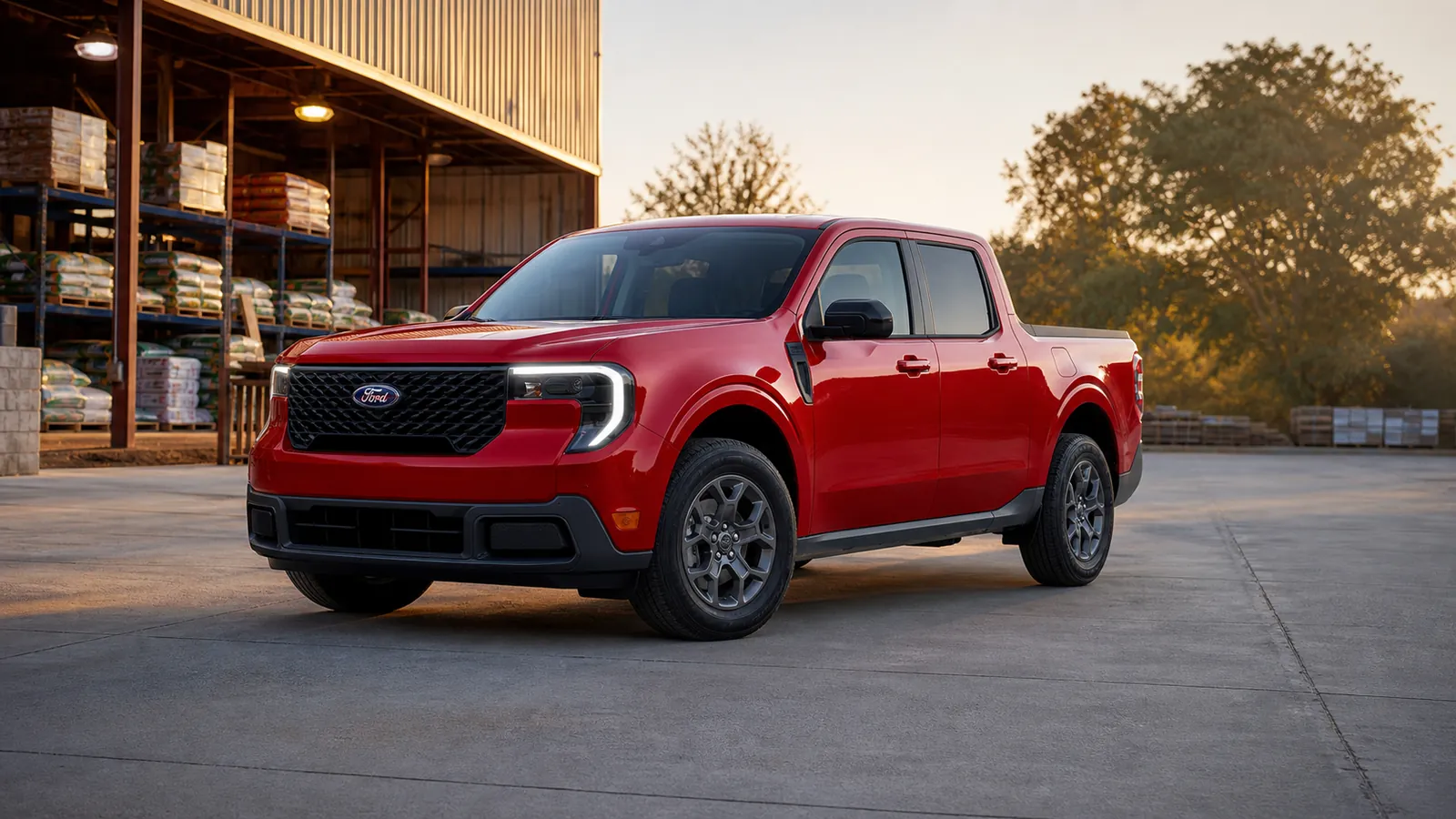
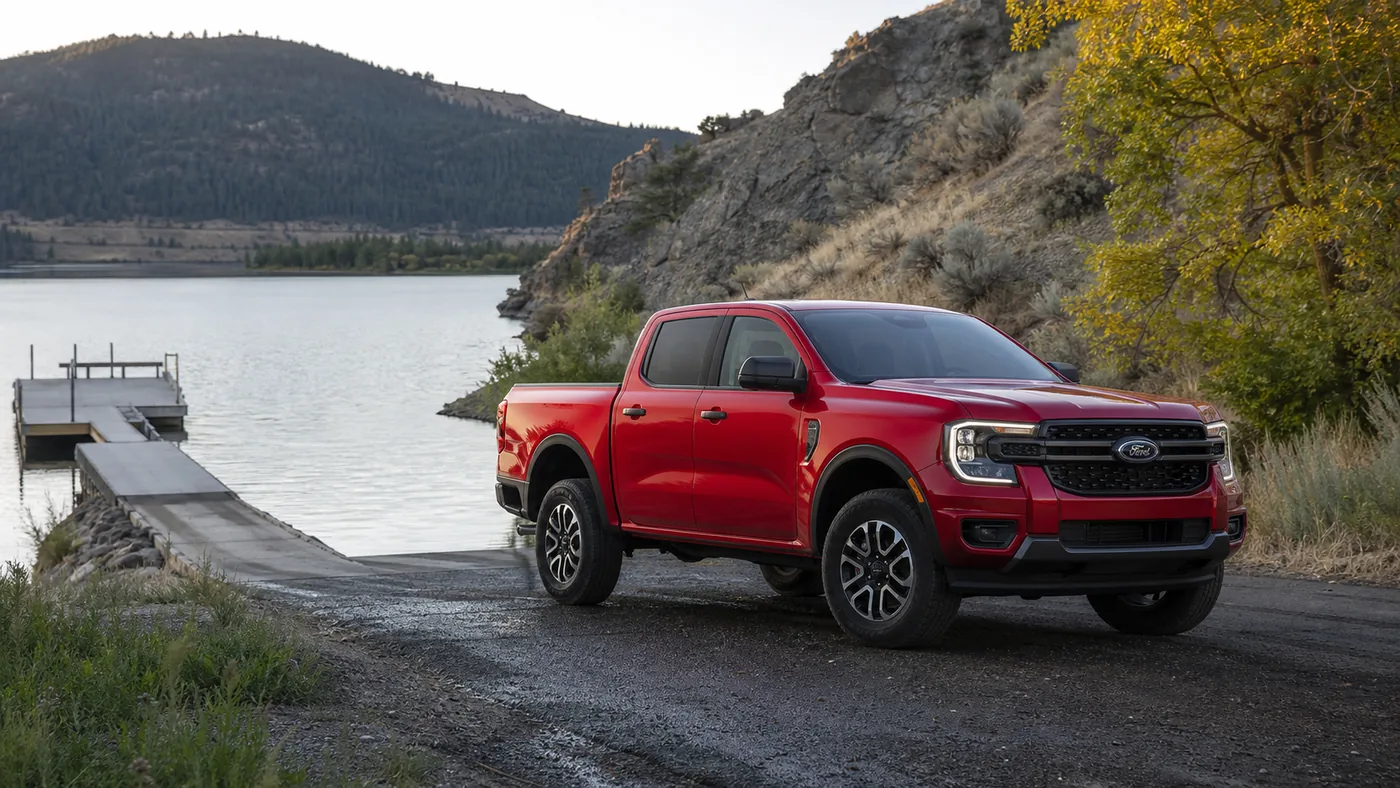
The 2026 Ford Ranger uses one SuperCrew cab and one 5-foot bed, so the main split is ordinary truck versus Raptor.
XL, XLT, and Lariat can tow up to 7,500 pounds with the required package. Raptor is limited to 5,510 pounds and carries less payload because its suspension, tires, track width, and protection target rough terrain.
| Need | Ranger XL, XLT, Lariat | Ranger Raptor |
|---|---|---|
| Maximum towing | 7,500 lb | 5,510 lb |
| Maximum payload | up to 1,767 lb | 1,373 lb |
| Main strength | Work and recreation | Fast rough-terrain control |
Start with the heaviest repeated job. A trailer, four passengers, and bed cargo favor the normal Ranger because more of the truck's rating remains available.
Repeated travel over rutted ground at speed favors Raptor because its wider chassis and specialized dampers control impacts that a work-oriented Ranger is not designed to absorb.
Price the choice as a complete truck. Raptor brings higher fuel, tire, insurance, and replacement-part costs before any accessories are added.
The normal Ranger can direct that money toward tow equipment, a bed cover, or tires suited to the actual surface.
The pickup category makes the trade visible. A top trim is not automatically the strongest tool.
Choose Raptor only when its off-road suspension matters more than towing, payload, price, and fuel.
The 2.3L and 2.7L engines fit most Ranger buyers
The 2.3L EcoBoost is standard and pairs with a 10-speed automatic. Ford lists 310 lb-ft and up to 21 city, 25 highway, and 23 combined mpg in 4x2 form.
It also supports the highest published payload.
The 2.7L V6 is available on XLT and Lariat with 4WD. It adds stronger passing and 400 lb-ft, but maximum payload falls to 1,513 pounds.
Raptor's 3.0L makes 405 hp and 430 lb-ft, with EPA estimates of 16 city and 18 highway.
Drive the 2.3L first with the cabin occupied and request a highway downshift. Move to the 2.7L only when the smaller engine's loaded response falls short on a route the truck will repeat.
The V6 also requires 4WD, so its purchase brings extra weight and fuel use along with more torque.
- Choose the 2.3L for price control and maximum payload
- Choose the 2.7L for frequent loaded passing or grades
- Choose the 3.0L only with a genuine Raptor use case
- Compare the payload label after changing engine or drivetrain
The gas vehicle hub provides efficiency context. Compare the Toyota Tacoma hybrid when low-speed torque matters.
The 2.3L protects value and payload, while the 2.7L earns its place through loaded response.
Payload and trailer equipment set the Ranger limit
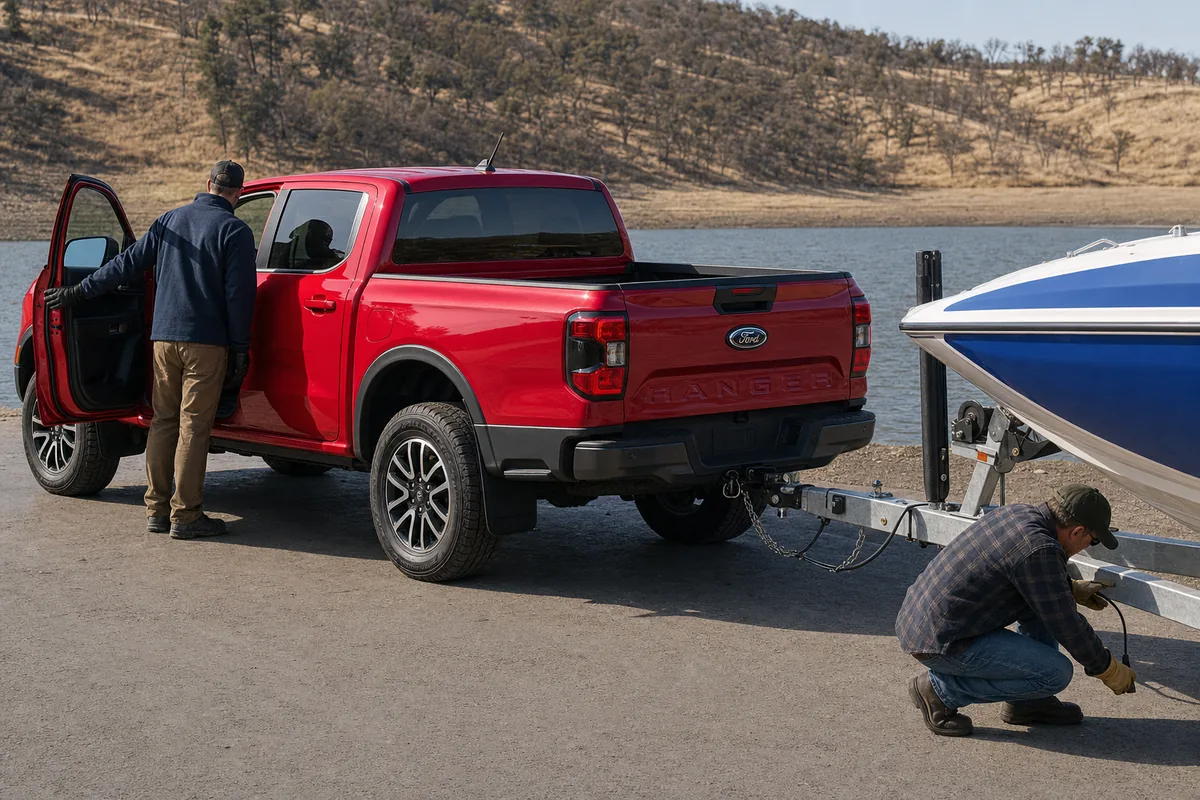
Ford gives the normal Ranger a 7,500-pound tow ceiling with the Trailer Tow Package.
The same truck's payload changes with engine and drivetrain. A 2.3L 4x2 can reach 1,767 pounds, 2.3L 4x4 reaches 1,763, and the 2.7L 4x4 is listed at 1,513.
- Read the loading label
- Add passengers and bed cargo
- Measure loaded tongue weight
- Confirm controller, receiver, and wiring
A bed cover, steps, rack, toolbox, recovery gear, and hitch hardware remain part of the load after installation. Ask for component weights, keep the invoices with the build sheet, and subtract permanent accessories before adding people or trailer tongue weight.
Use the label on the delivered VIN because a package name cannot raise its allowance.
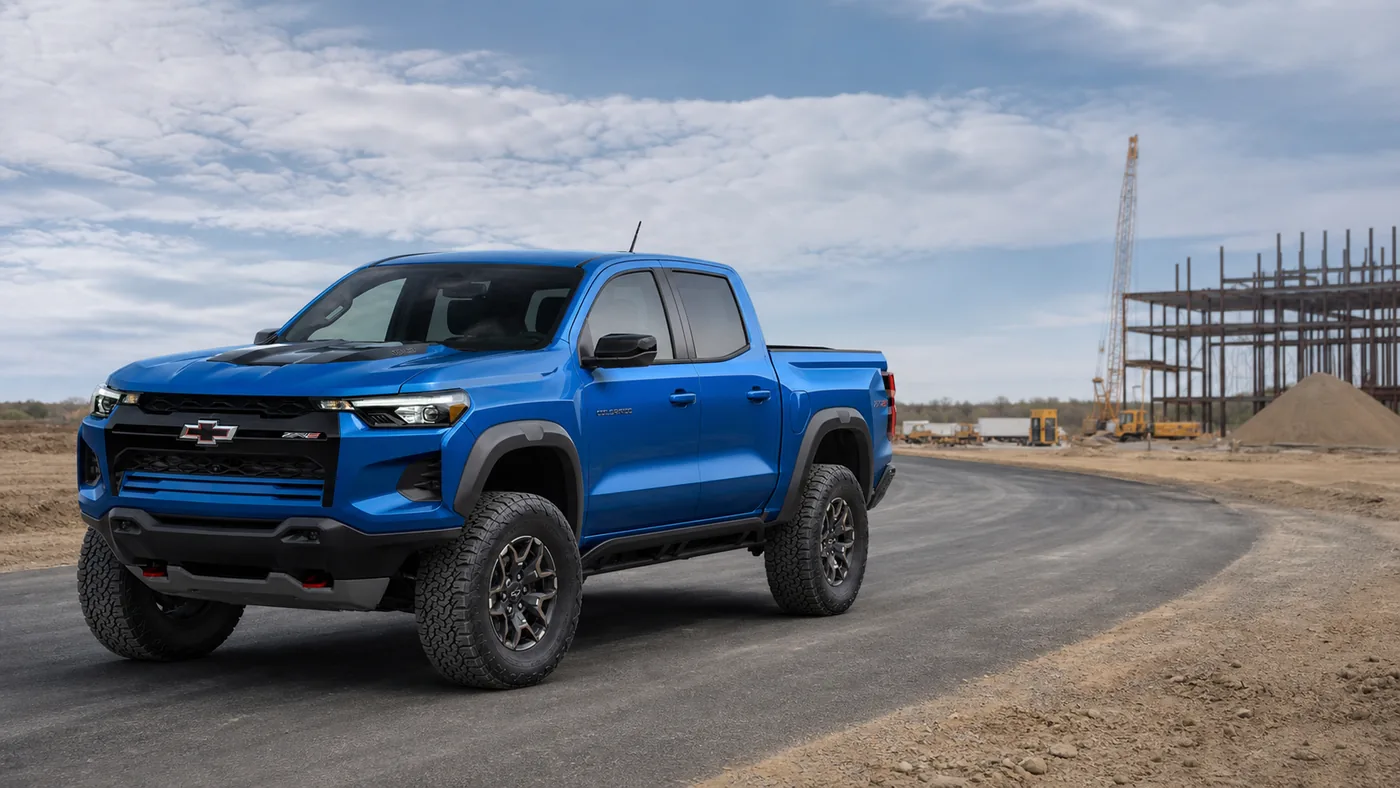
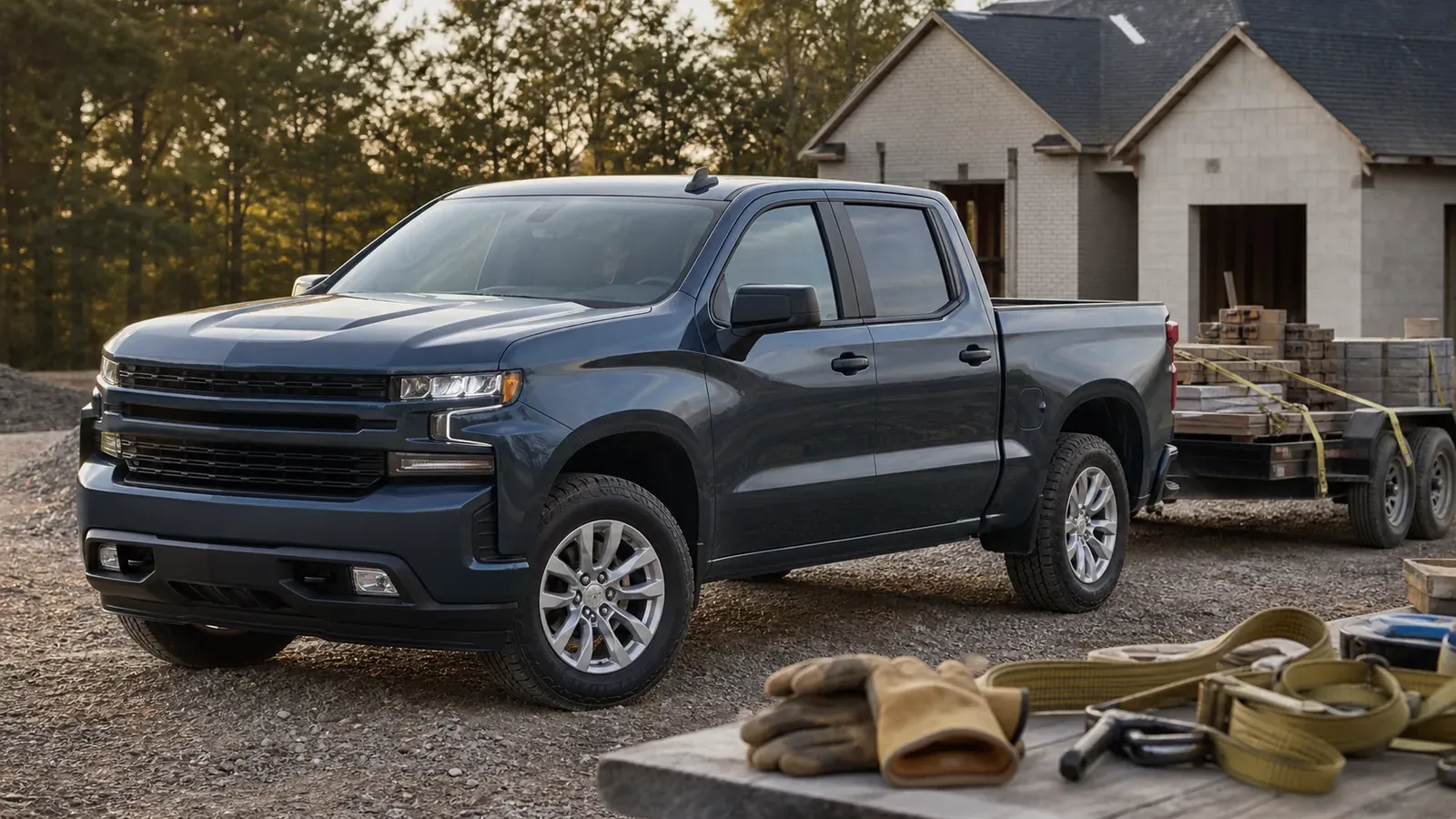
The tire pressure procedure supports stable towing. The Chevrolet Colorado advertises a 7,700-pound ceiling, but compare actual labels.
Check the wider Ford model range before paying full-size money for midsize capacity.
A 200-pound headline difference matters less than remaining payload on the configured truck.
One cab and bed simplify the fit test
Every 2026 Ranger carries five people in a SuperCrew and uses a 59.6-inch bed with 43.5 cubic feet of volume. That makes shopping simpler, but it removes the long-bed and two-seat choices available on Tacoma.
Put adults in the rear seat, load the actual cooler or toolbox, and close the garage. Lariat comfort and camera equipment may improve daily use, while XLT often holds the best balance of equipment and price.
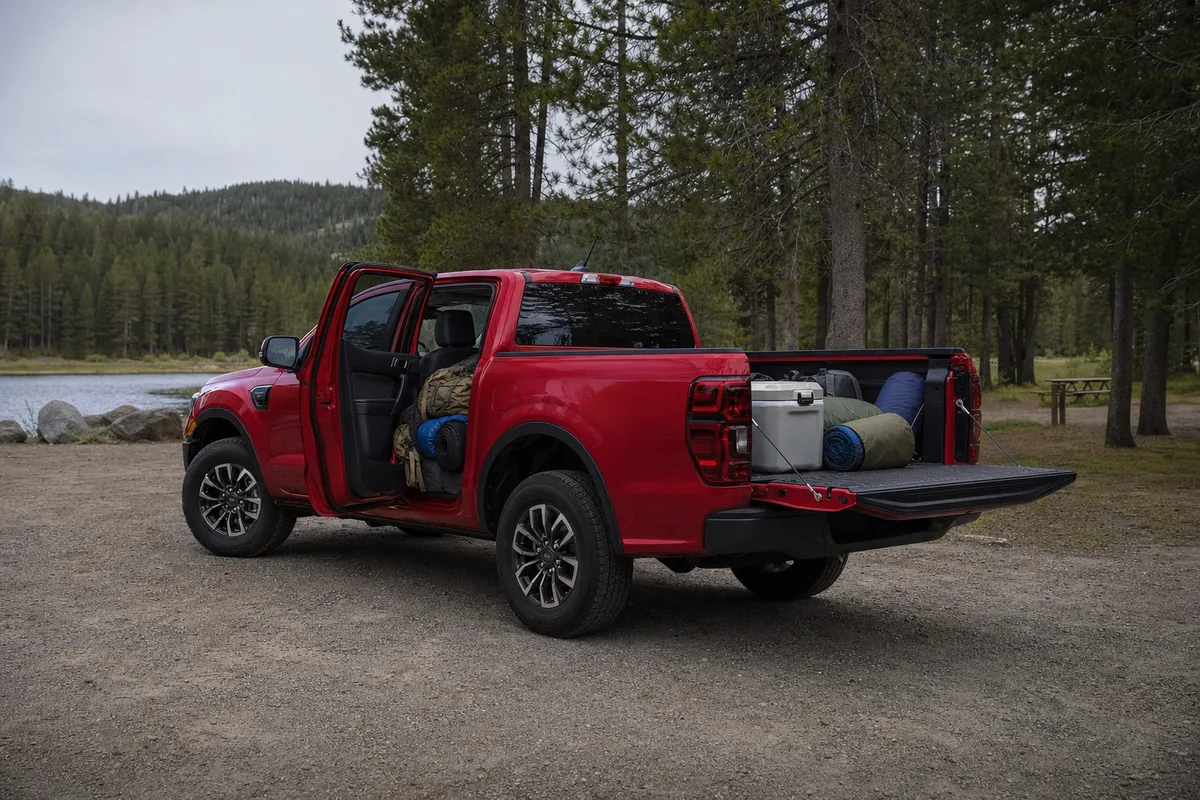
Run one fit test with everything that must travel together. A child seat can reduce front-seat travel, covered luggage can occupy rear-seat space, and long cargo may require a rack or trailer.
The truck fails the test when solving one load forces another item into an unsafe or unprotected position.
- Set the driver's seat before checking rear legroom
- Open the rear door in the usual parking space
- Load the longest and widest regular cargo
- Measure garage depth with the receiver installed
The five-seat hub includes easier family vehicles. A Ford Explorer offers covered cargo and three rows when the bed is optional.
Ranger fits when its single body layout fits without compromise.
Raptor hardware needs off-road inspection and real use
Raptor uses a 3.0L V6, FOX 2.5-inch Live Valve dampers, a Watts-link rear suspension, wider track, and standard 4WD.
Those parts control fast impacts and rough surfaces better than the leaf-spring normal Ranger.
They also cost more to replace.
A short road loop cannot prove the value of this hardware. Drive broken pavement at a legal speed, check steering return and brake feel, then inspect beneath the truck.
A used Raptor should sit level, track straight, and wear matching tires evenly.
Fresh paint on protection parts deserves an explanation rather than automatic rejection.
- Inspect shock bodies for leaks or impact marks
- Check lower arms, skid plates, and frame contact points
- Look for bent wheels and damaged tire sidewalls
- Verify alignment, ride height, and matching tires
- Ask for records covering tunes, lifts, and off-road repairs
Price a damper, one factory-size tire, and an alignment before valuing a used example.
The Jeep Wrangler is a lower-speed trail alternative.
A clean Raptor should show maintained hardware, not hidden evidence of repeated impacts.
Current safety results reward careful build-date checks
IIHS gives 2024 through 2026 Ranger Good driver and passenger small-overlap results and an Acceptable updated side result. The updated moderate-overlap result is Marginal for 2025 models built after April 2025 through 2026, after Ford changed rear seat belt buckles.
That build-date note matters on a used 2025. Read the certification label rather than assuming every model-year truck shares the same update.
Ask the seller or dealer to identify the build month and the equipment fitted to that VIN.
- Check the certification label and VIN
- Confirm automatic emergency braking warnings complete their startup check
- Test cameras and blind-spot alerts in normal conditions
- Ask whether windshield or camera work required calibration
- Inspect rear belts and buckles before carrying passengers
Driver aids support an attentive driver. They cannot correct excessive speed, overloaded tires, poor following distance, or an unsecured load.
The NHTSA recall lookup should be checked by VIN because campaign status and crash-test results answer different questions.
Safety equipment and crash results belong beside payload, tires, and rear-seat use in the buying decision.
Inspect a used Ranger from cold start to underbody
Drive a used Ranger cold and warm. Feel the 10-speed at parking speed, steady cruise, and kickdown.
Test 4WD on a suitable surface, the locking differential, trailer electronics, cameras, screens, steering, brakes, and every warning system.
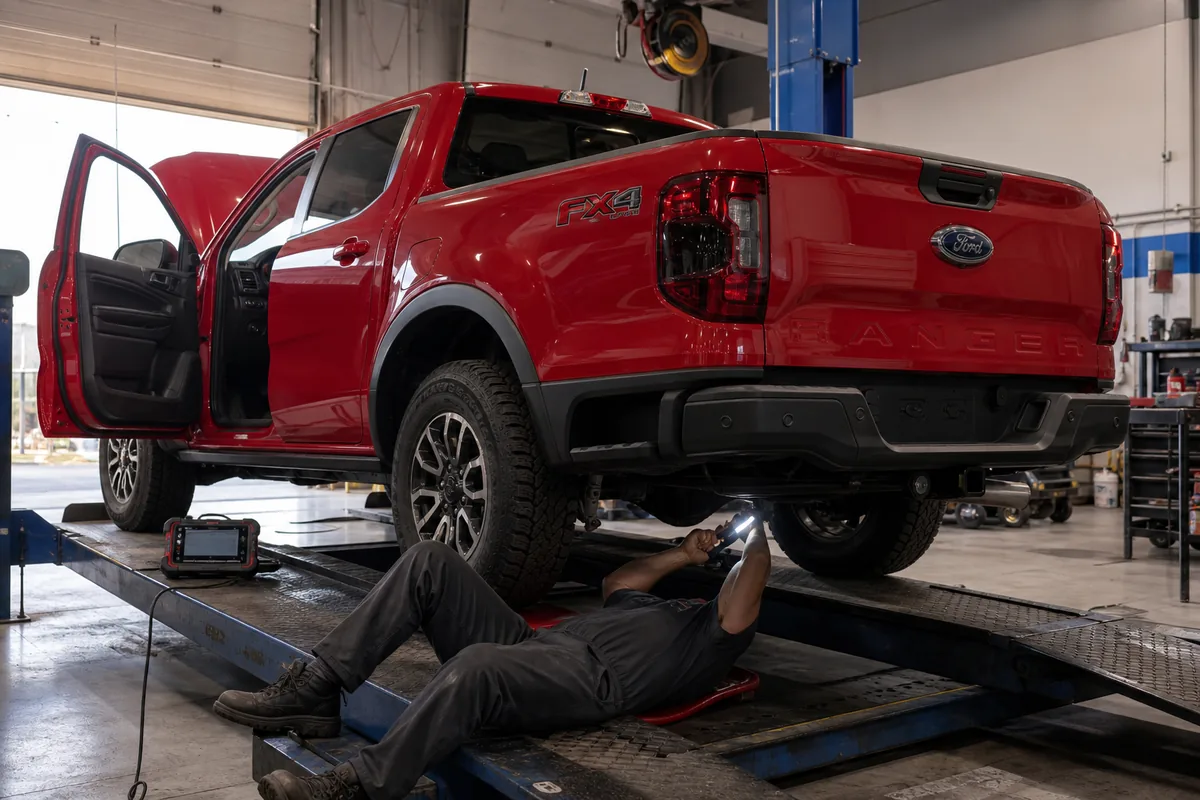
The service record and physical wear should describe the same life. Frequent towing can show at the hitch, brakes, rear tires, and transmission behavior.
Trail use can leave marks on skid plates and suspension without making the truck unusable, but unexplained damage or a freshly cleared warning needs independent diagnosis.
- Start with a cold engine and scan all modules
- Repeat low-speed shifts after the drivetrain is warm
- Check matching tires, alignment, cooling, and fluid leaks
- Inspect hitch wear, bed damage, skid plates, and frame points
- Verify every modification with parts and installation records
The new versus used guide covers records, while the Ford F-150 reliability page shows why truck use matters beyond mileage. A stock truck with a coherent service file is safer than a low-mile modified bargain.
XL, XLT, and Lariat should be priced by useful equipment
XL is the work-first Ranger. It keeps the purchase price and wheel replacement cost down, yet it can use the same 2.3L engine and 7,500-pound towing ceiling as the more expensive normal trims when properly equipped.
XLT adds the convenience equipment many private buyers use every day. Lariat makes the strongest case when seat comfort, cameras, lighting, and cabin features improve a long commute or frequent towing setup.
Write down the equipment that changes a weekly task before opening the configurator. Tow-package hardware, four-wheel drive, a locking differential, bed protection, steps, and useful camera views deserve priority.
Appearance packages, large wheels, and features you will not use should wait. This protects payload and keeps money available for a brake controller, hitch, bed cover, or suitable tires.
| Trim | Best fit | Check before upgrading |
|---|---|---|
| XL | Fleet, work, low entry cost | Tow package and cab equipment |
| XLT | Mixed daily and weekend use | 4WD, locker, camera needs |
| Lariat | Long drives and feature priority | Tire cost and payload label |
| Raptor | Repeated high-speed rough terrain | Lower tow and payload ratings |
Compare actual dealer trucks because packages can blur the trim lines.
Quote insurance and a complete tire set by VIN.
XLT is the best default, while XL and Lariat should win through a clear price or daily-use advantage.
Daily driving exposes the Ranger compromises that specs miss
The Ranger's single SuperCrew body removes one ordering decision, but it still needs a complete home test. Measure the garage with the receiver installed, check mirror clearance at the door, and reproduce the tightest turn in the driveway or workplace.
Back into a normal parking space without depending entirely on the camera. A truck that needs repeated corrections becomes tiring even when its dimensions look manageable on paper.
Set the driver's seat first, then put an adult or rear-facing child seat behind it. Open the rear door in a narrow space and load the bed with the same bins, bicycles, tools, or camping equipment used on a real trip.
The 5-foot bed may need a rack or trailer for long cargo, and those additions belong in the purchase budget.
Drive the route used every week. Check low-speed transmission response, visibility around the front corners, tire noise, ride with an empty bed, and passing response with passengers.
Raptor's wider stance and aggressive tires change that experience more than a short showroom loop reveals.
A midsize SUV comparison is worthwhile when covered cargo matters more often than dirty bed space. The Ranger earns a driveway spot only when its cab, bed, and turning space work on an ordinary day.
Build the Ranger ownership budget around tires and use
Start the cost estimate with the negotiated out-the-door price, finance interest, insurance, registration, annual fuel, scheduled maintenance, and one full set of tires.
Add the equipment needed to make the truck useful on day one. A hitch, brake controller, bed liner, cover, tie-downs, recovery gear, and winter tires can erase a small dealer discount.
Use the EPA estimate for the exact drivetrain only as a common comparison point. Four-wheel drive, the 2.7L, Raptor tires, higher speed, cold weather, short trips, and towing can all increase fuel use.
Enter your annual miles and local price into the same worksheet for every candidate instead of relying on a single monthly payment.
Raptor deserves its own wear budget. Price one FOX damper, an alignment, and the original tire size before purchase.
A used example with impact damage or mismatched tires can consume the apparent savings quickly. Normal Rangers also need a maintenance margin when they tow or travel off pavement because fluids, brakes, and tires work harder.
Ranger five-year worksheet
- Purchase
- Price, tax, rate, and total interest
- Use
- Annual miles, fuel, and towing frequency
- Wear
- Exact tires, brakes, and alignment
- Equipment
- Hitch, cover, liner, and recovery gear
- Risk
- Repair reserve after warranty
Keep enough cash after the down payment to maintain the configuration you choose.
Choose 4x2 or 4x4 from the surface and load
A rear-wheel-drive Ranger can cost less, carry a strong payload, and use less fuel than a comparable four-wheel-drive truck.
It fits dry-road commuting, maintained job sites, and towing when traction is predictable. Four-wheel drive earns its cost on snow, loose boat ramps, muddy access roads, sand, or repeated trail travel.
It does not improve braking grip and should not be used to justify unsuitable tires or extra speed.
List the days that actually require more traction. If those conditions occur only once or twice a year, suitable tires and a different travel plan may cost less than carrying 4WD hardware every day.
If access to work or home depends on an unpaved grade, the system can be essential. Test engagement on a legal surface and follow the owner's manual because tight turns on dry pavement can bind a part-time system.
The 2.7L engine is tied to 4WD, so buyers seeking that V6 also accept the weight, fuel, and price of the drivetrain.
Check the payload label after combining both choices. The lighter 2.3L truck can retain more carrying capacity even though the larger engine feels stronger.
Pay for four-wheel drive when a known surface requires it, not because every truck on the lot has it.
The Ranger most buyers should choose
XLT with the 2.3L is the clean starting point. Add 4WD for repeated traction needs, the 2.7L for stronger loaded response, and Lariat for comfort used every day.
Raptor needs terrain that exercises its suspension.
Compare XLT 2.3L with a Tacoma SR5 and Colorado LT using the same drivetrain, tow equipment, driver aids, and out-the-door price.
Tacoma offers more cab, bed, manual, and hybrid choices. Colorado supplies stronger standard torque and a 7,700-pound maximum in qualifying form.
Ranger answers with a simple SuperCrew range, a useful 7,500-pound ceiling, and an available V6 without requiring Raptor.
Drive all three over the same pavement, load the same people and gear, and photograph each payload label. A brochure advantage can disappear when one dealer truck carries heavier options.
Price tires, insurance, fuel, and financing through the lease versus buy guide. Compare the Ford F-150 when rear space or payload grows.
The better buy is usually the normal Ranger configured around work, not the Raptor configured around image.