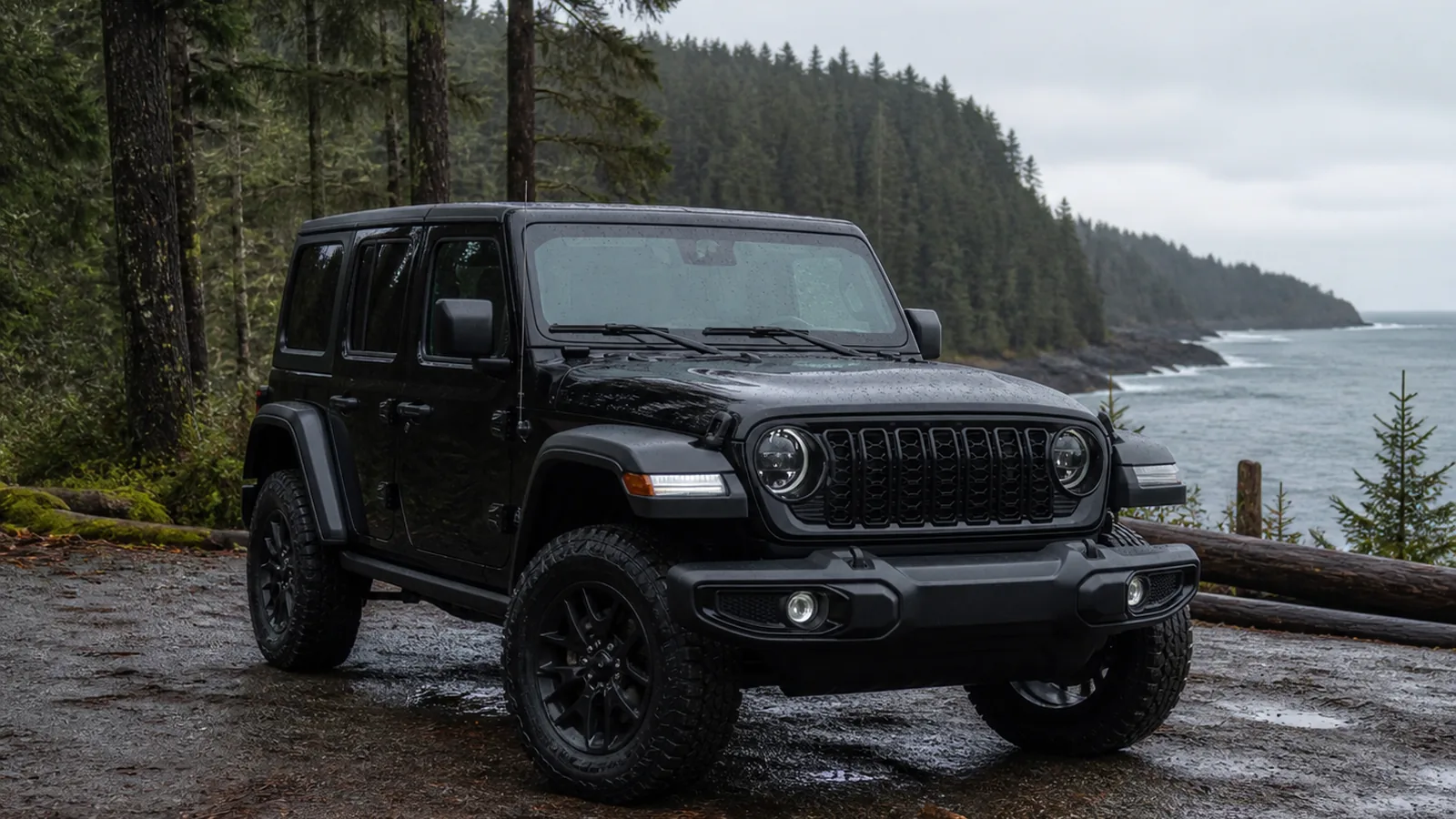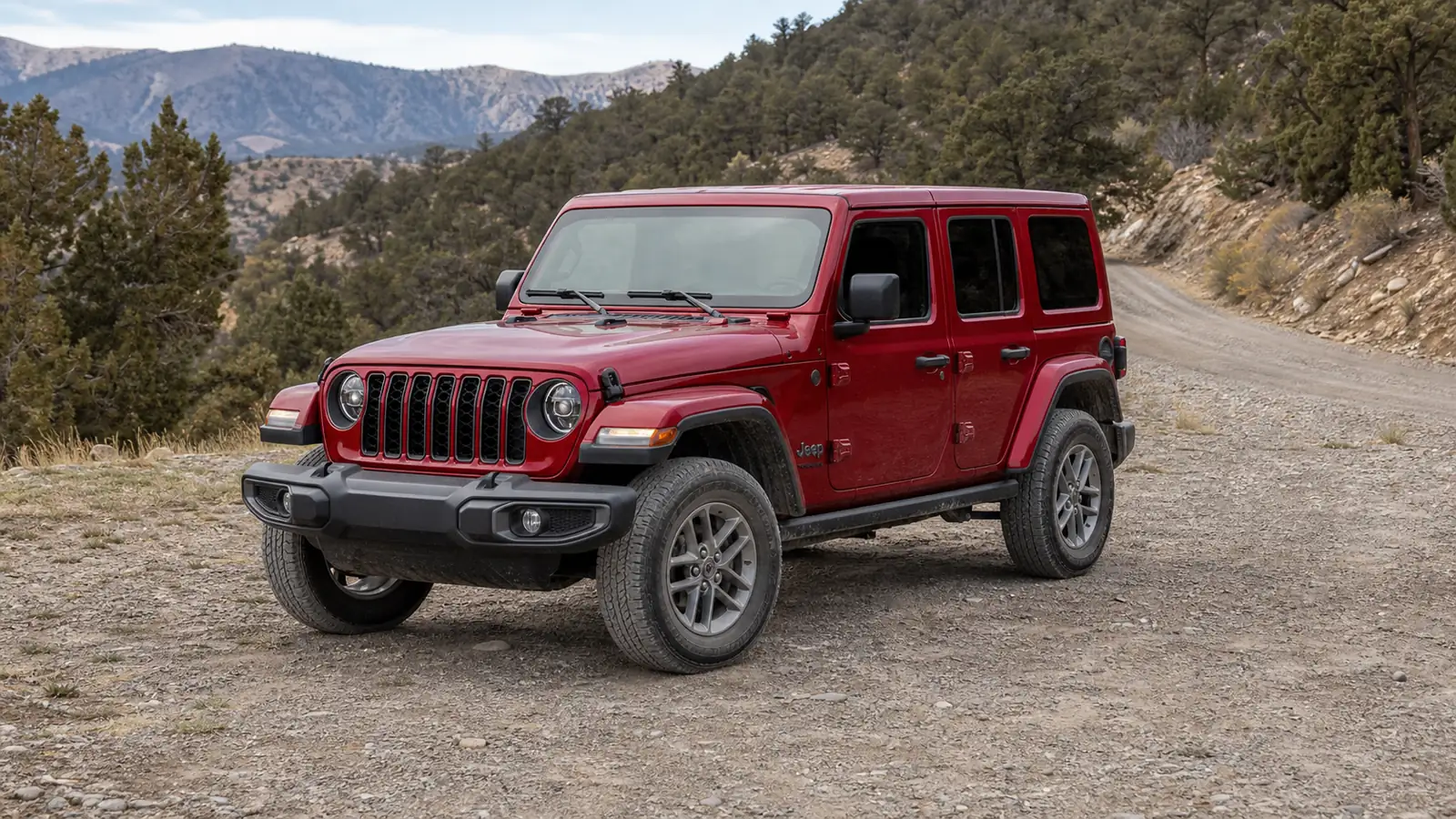
Sport S and Willys are the Wrangler baselines
The 2026 Jeep Wrangler starts at $36,035 for a two-door Sport and climbs to $79,995 for the V8-powered Moab 392 before destination. Two body lengths, several engines, four-wheel-drive systems, roofs, axles, and tire packages create vehicles with very different road manners and costs.
Start with Sport S for mixed daily and weekend use. It keeps the Wrangler's removable top, solid axles, low range, and broad option access without requiring the bare cabin of Sport.
Willys adds meaningful traction equipment for buyers who use loose or steep terrain.
Sahara focuses on road comfort and appearance. Rubicon and Rubicon X add trail hardware.
Moab 392 buys V8 sound and speed at a very high price and fuel cost.
- Choose two-door Sport S for compact trail size and open-air character
- Choose four-door Sport S for passengers, cargo, and stability
- Choose Willys for a useful step in traction hardware
- Choose Rubicon for demanding low-speed terrain
- Choose Sahara for road use, not maximum trail value
The Wrangler is unlike the ordinary SUV body category and the road-focused Jeep Grand Cherokee because capability and open-air design create daily compromises.
If the roof and low range stay unused, a quieter crossover is the better tool.
Buy the least modified Wrangler that clears the trail and still feels acceptable on the highway home.
Two doors and four doors change the whole vehicle
The two-door Wrangler is 166.8 inches long in standard form, seats four, and uses a 17.5-gallon fuel tank. The four-door is 188.4 inches long, seats five, and holds 21.5 gallons.
The short body turns and breaks over obstacles more easily. It also has tight rear access, limited cargo room, a busier highway stance, and a 2,000-pound maximum tow rating.
| Question | Two-door | Four-door |
|---|---|---|
| Seats | Four | Five |
| Standard length | 166.8 in | 188.4 in |
| Fuel capacity | 17.5 gal | 21.5 gal |
| Maximum towing | 2,000 lb | Up to 5,000 lb |
| Best use | Tight trails, one or two people | Family, cargo, highway, trailer |
The four-door is the rational daily choice, but it must still fit the trail and garage.
Compare breakover points on the routes you use, not on promotional obstacles. The longer wheelbase can touch the center of a sharp crest sooner, while its stability and cargo space help on faster roads and multi-day trips.
A two-door places the rear axle closer to the driver and changes how quickly the body rotates on loose surfaces.
New drivers should practice slowly in an open training area.
Door count also changes emergency planning. A rear passenger in the two-door depends on front-seat movement for access.
Test whether adults can exit quickly with the front seats in their normal positions and whether cargo blocks the path.
In the four-door, check that heavy rear doors remain controlled on a side slope and that child locks work.
Its longer wheelbase improves rear-seat access, cargo, towing, and straight-line stability.
It gives up some breakover clearance and tight-trail agility.
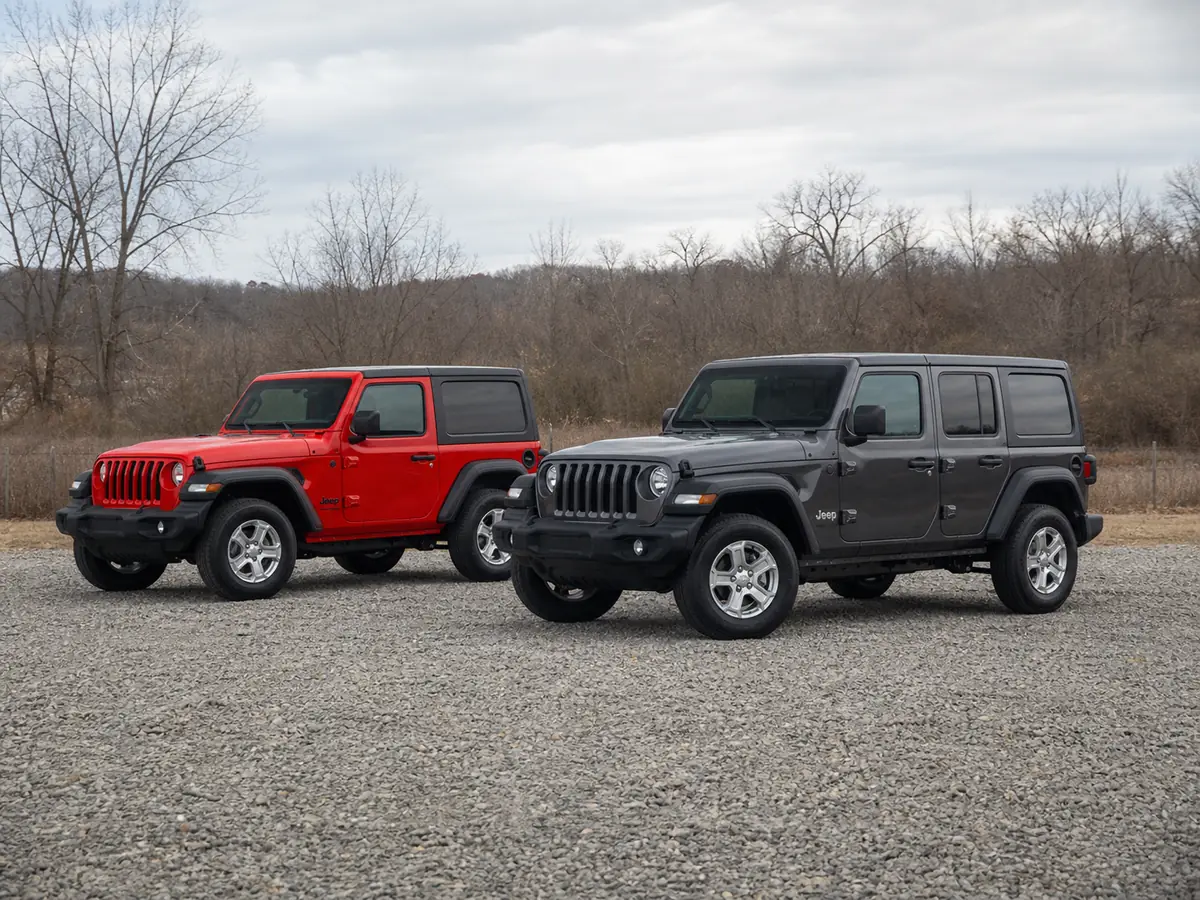
Bring the people and equipment. Climb into the two-door rear seat, load a cooler and luggage, fold the seat, and test the front-seat movement.
In the four-door, install child seats and measure the remaining cargo floor.
- Check garage length with the spare tire and hitch
- Measure rear access with a child seat installed
- Load the recovery gear that remains in the vehicle
- Compare crosswind behavior on the same highway
- Calculate payload before trailer tongue weight
The planned Wrangler towing guide should separate axle, equipment, payload, and hitch requirements. Choose two doors for the trail and character, or four doors for a vehicle that must serve the household every day.
Turbo and V6 choices depend on torque and transmission preference
The 2.0L turbo four-cylinder makes 270 hp and 295 lb-ft.
The 3.6L V6 makes 285 hp and 260 lb-ft. Both can use regular fuel, though Jeep says premium allows the turbo to deliver optimal performance.
The turbo pairs with an eight-speed automatic and delivers stronger low-rpm torque. The V6 offers familiar linear response and is the choice for buyers who want the six-speed manual.
Drive both on a hill, in traffic, and at 65 to 75 mph.
Turbo response should be smooth without surge or coolant smell.
The automatic should engage cleanly. The V6 manual needs a clutch take-up and gearshift test when cold and hot.
Fuel economy depends on doors, axle ratio, tires, roof, and engine. A Rubicon on 35-inch tires will not match a road-oriented Sport even with the same engine.
Read the exact EPA label.
The manual adds involvement and reduces powertrain choices. It also adds clutch wear, which matters off road and in traffic.
A used clutch should take up predictably without slip, chatter, or a high engagement point.
The 392 serves an emotional purpose with V8 power. Its $79,995 starting price, fuel use, tires, brakes, and insurance make it a separate purchase from a normal Wrangler.
The gas vehicle hub and premium price group include much more efficient daily choices. Choose the turbo for automatic torque, the V6 for manual control or familiar response, and the V8 only when cost is secondary to the experience.
Transfer cases, axles, and tires define trail capability
Every Wrangler includes four-wheel drive and low range, but the systems differ. Command-Trac is a part-time setup with a 2.72:1 low ratio.
Rock-Trac can use a 4:1 low ratio on Rubicon configurations, and full-time systems add an automatic mode for mixed surfaces.
Part-time 4WD should not be used on dry high-traction pavement.
Full-time 4HI Auto can manage changing road grip. Read the transfer-case label and manual because two vehicles with similar dashboards may require different driver action.
Wrangler capability ladder
- Command-Trac
- Part-time 4WD with 2.72:1 low range
- Selec-Trac
- Full-time option for mixed surfaces
- Rock-Trac
- Lower gearing for demanding trails
- Rear locker
- Useful when one rear tire loses traction
- Front and rear lockers
- Rubicon control on severe terrain
- Sway-bar disconnect
- More axle articulation where fitted
Axle ratio must match tire diameter and use. Larger tires can make the final gearing taller, which reduces low-speed control and forces more transmission shifting.
Verify the axle tag, build sheet, speedometer calibration, and any re-gear invoice. A seller may describe 35-inch tires as an upgrade while leaving gearing, spare carrier, brakes, and steering unchanged.
Drive in high range and low range, listen during tight turns on a loose surface, and check for driveline vibration under power and coast.
Tires create the contact patch. Aggressive tread helps loose terrain but can increase noise, stopping distance, vibration, and replacement cost on pavement.
A 35-inch package also changes height and width.
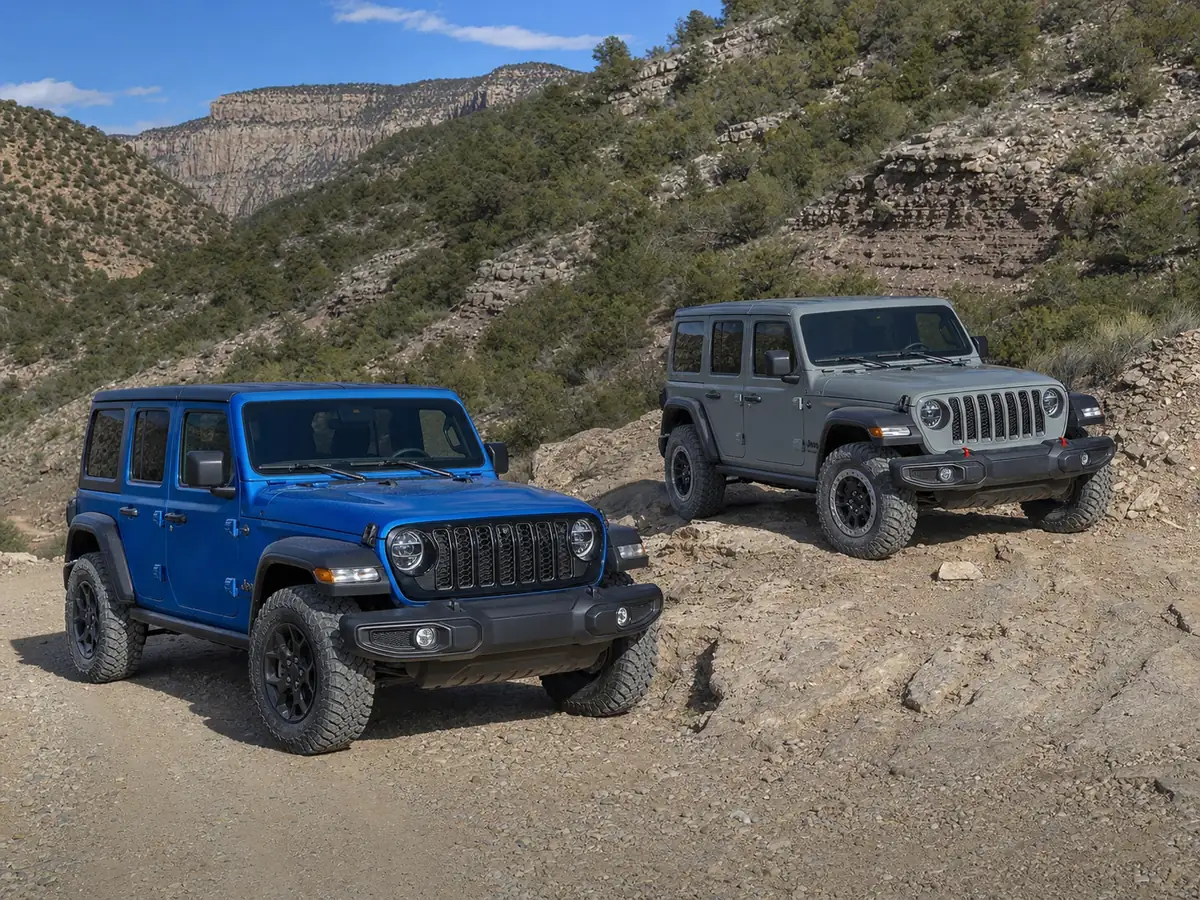
Use low range, lockers, and sway-bar disconnect only within the manual conditions. Before a trail, mark recovery points, learn the transfer-case pattern, and verify that every indicator corresponds with mechanical engagement.
Practice on level loose ground. The lowest gearing allows slow control without riding the brakes, but it can also create abrupt response if the driver uses too much throttle.
Lockers reduce turning ability and can push the vehicle straight, so release them when traction no longer requires them.
Reconnect the sway bar before normal road speed. A dashboard light that flashes indefinitely can indicate the system has not completed the command.
Stop and correct the condition rather than assuming the hardware is ready. After the trip, shift back through every mode and confirm no binding remains.
only within the manual's conditions. These systems do not prevent rollover, protect the underside from every obstacle, or create grip on ice.
- Shift the transfer case through every position on an appropriate surface
- Confirm locker lights engage and release
- Inspect skid plates and differential covers
- Check tire sidewalls and wheel beads
- Carry rated recovery points and recovery gear
The AWD and 4WD hub includes easier all-weather vehicles. Choose a Wrangler when axle travel, low gearing, body clearance, or open-air hardware earns the trade.
Trail capability comes from the exact axles, gearing, tires, and driver practice, not the trim decal.
Open-air design requires a weather and storage plan
Removable doors and roof panels create the experience no normal crossover offers. They also create storage, lifting, security, water, wind, and legal questions before the first sunny drive.
Water management continues after the storm. Remove wet floor mats, inspect drain plugs, and dry carpet and padding before odor or corrosion develops.
Confirm that drains are open and correctly installed, but do not treat them as permission to leave the cabin exposed.
Salt water, fine mud, and road chemicals can damage connectors and seat hardware.
Security requires the same planning. A soft window can be cut, and an open cabin exposes registration papers, tools, garage remotes, and recovery gear.
Use lockable storage fixed to the vehicle, carry valuables with you, and avoid displaying expensive accessories.
Roof-panel storage bags should protect seals and painted edges. Mark the removal sequence privately rather than placing readable labels on exterior parts.
Before driving, check latches, wiring connectors, mirrors, doors, and freedom panels with a physical pull. One loose latch can create noise, water entry, or a dangerous part loss at speed.
A soft top is easier to open but louder and less secure. A hardtop improves weather sealing and highway comfort, yet panels need safe storage.
The Sky One-Touch roof adds convenience and mechanism complexity.
Inspect weather seals for cuts, compression, dirt, and incorrect seating. Look at carpets, seat mounts, under-dash areas, and cargo wells for water marks or corrosion.
A seller calling every leak normal should not end the inspection.
Wind noise is normal, but a sharp whistle from one corner can indicate alignment or seal trouble.
Drive in crosswind and rain if possible. Run water over the roof and doors, then check the cabin.
Top and door choices affect theft exposure. Soft windows and an open cabin require a plan for tools, documents, recovery gear, and electronics.
Lockable storage may be more valuable than cosmetic accessories.
The Wrangler alternatives plan and Subaru Outback can help buyers who want rugged style without removable-body compromises. Open-air hardware is worth owning only when you have the time, storage, and weather plan to use it.
Highway behavior is the price of solid axles and upright shape
The Wrangler's solid axles, recirculating-ball steering, upright windshield, exposed hinges, and removable roof help trail durability and open-air design. They also create steering correction, wind noise, tire noise, and a choppier response than a road SUV.
A normal Wrangler should track predictably, but it will not feel like a Honda CR-V. Oversized tires, lifts, worn joints, poor alignment, or incorrect pressure can turn normal looseness into unstable behavior.
Use a complete route:
- Drive 45 to 75 mph on a flat road
- Cross bridge joints with both hands ready
- Brake firmly without steering shake
- Hold a sweeping curve and note corrections
- Repeat after the tires warm
- Listen with the roof closed and climate fan low
A rapid steering-wheel oscillation after a bump is not normal character. Diagnosis begins with tire pressure, tire condition, wheel balance, alignment measurements, track-bar bolt torque and hole condition, ball joints, tie-rod ends, drag link, control arms, hubs, and damper mounting.
The order matters because replacing the steering damper first can hide motion without removing looseness.
Ask the shop to show the measured play and alignment printout. A lifted Wrangler needs caster, toe, driveshaft angle, bump-stop, and track-bar geometry evaluated as one package.
Mixed parts from several kits may not create a coherent system. Road-test repairs on the same bump and speed that triggered the symptom, then recheck fasteners after the specified settling distance.
Never accept repeated oscillation because the vehicle has a solid front axle. It needs diagnosis of tires, balance, alignment, track bar, steering joints, ball joints, dampers, and suspension geometry.
A new steering damper can mask rather than correct the cause.
Larger tires raise unsprung weight and can reduce braking and acceleration.
Check speedometer correction and axle gearing after modifications. Poor gearing can make an automatic hunt or a manual feel weak.
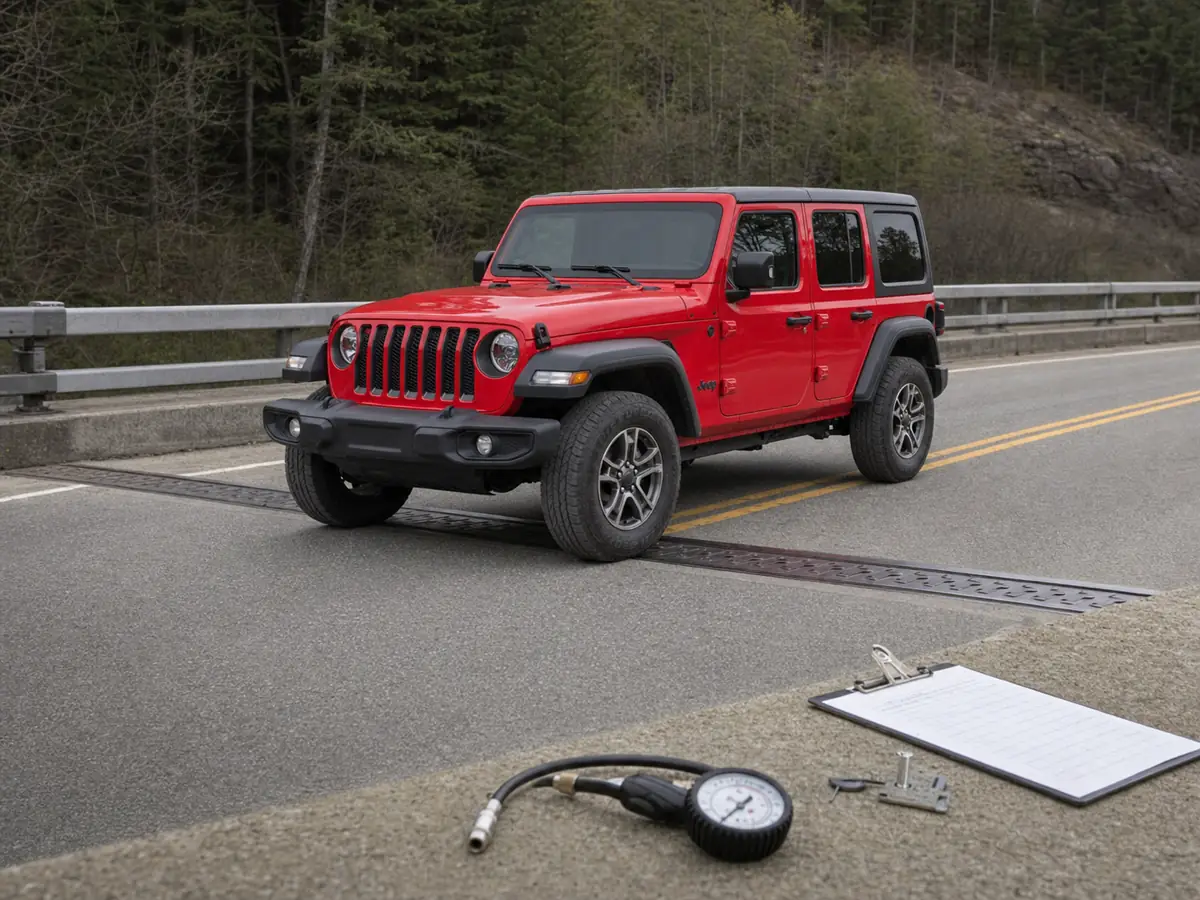
Accept normal wind and steering effort only after the exact Wrangler tracks safely without vibration, pull, or repeated oscillation.
Used Wranglers must be inspected as modified vehicles
The JL generation began for 2018. Many examples remain stock, but the aftermarket is so large that tires, suspension, bumpers, lights, tops, winches, and axle parts often differ from the build sheet.
Start with the VIN and original equipment. Compare axle ratios, tire size, transfer case, roof, doors, and safety equipment with what is installed.
Ask for invoices and alignment records.
- 2007 to 2018JK generation expands four-door Wrangler use
- 2018 to presentJL generation adds current body, electronics, and powertrains
- 2024Major cabin and safety update adds larger screen and side-curtain airbags
- 2026Current gas range includes turbo, V6, and Moab 392
Inspect the frame, axle housings, control-arm mounts, track bars, steering linkage, ball joints, driveshafts, skid plates, differential covers, exhaust, and body seams.
Use a lift and compare left with right. Fresh black paint can hide scrapes or corrosion, while clean bolt heads on old parts can reveal recent changes.
Check wheel offset and tire clearance at full steering lock and suspension compression.
Look for rubbing on control arms, liners, brake hoses, and wiring. Open the drain plugs and carpet edges to look for water and mud.
Remove only panels that the seller authorizes and reinstall them correctly. Check freedom-panel bags, door hardware, roof tools, wheel-lock key, jack, and spare-tire tools.
Missing small parts make open-air use and roadside repair harder than expected.
Test both 12-volt battery systems where fitted, start-stop operation, cooling, oil leaks, turbo plumbing, manual clutch or automatic shifts, every 4WD mode, lockers, sway-bar disconnect, cameras, screen, and driver aids.
Measure all tires and inspect sidewalls. Mismatched tread, cupping, feathering, or balance weights can reveal alignment and suspension problems.
Check the spare, which may be old or a different diameter.
Use planned Wrangler reliability research and Wrangler problems analysis for model-year detail. Hire a 4x4 specialist for any lift or axle modification.
A strong used Wrangler has documented parts, correct geometry, clean steering, dry seals, working 4WD, matched tires, and an underside that explains its trail history.
Safety evidence favors a wide margin on road
The 2026 Wrangler's IIHS record reflects an unusual body and purpose. Current midsize-SUV summaries show mixed results across crashworthiness, headlights, and prevention categories rather than a clean road-crossover sweep.
Doors and roof are removable components, and the high center of gravity changes emergency behavior. Side-curtain airbags added in the current interior update improve protection, but physical configuration and correct use remain important.
Keep factory doors, mirrors, seat belts, and restraints installed as required for road use.
Follow local law for mirrors and doors. Never treat a trail configuration as automatically suitable for highway passengers.
Automatic emergency braking, adaptive cruise, blind-spot monitoring, and parking systems vary by trim or option. Verify the exact build sheet and test each function.
Child-seat installation is easier in the four-door. Check rear-facing clearance, tether routing, buckle access, and whether the removable roof or accessories interfere.
Run the VIN through NHTSA and the planned Wrangler recall page.
Confirm repairs by invoice. Windshield replacement and front modifications may affect camera or sensor calibration.
Use more following distance, slower corner entry, correct tire pressure, and conservative loading because trail capability does not shorten a highway emergency.
Resale helps, but fuel, tires, glass, and modifications add up
Wrangler resale can be strong, yet a high retained percentage does not make ownership cheap. Fuel, large tires, windshields, insurance, roof hardware, steering wear, and off-road damage can consume the advantage.
Flat towing is another Wrangler-specific value, but it demands the exact transfer-case procedure, a rated baseplate and tow bar, supplemental braking, lighting, breakaway equipment, and a motorhome that can carry the Wrangler curb weight.
Record the odometer and inspect tires, steering, battery, and driveline after long trips. Never assume every transfer case or aftermarket bumper is approved for the same setup.
The owner manual controls the procedure. A mistake can damage the driveline or leave the combination unable to stop safely.
Modifications are the largest variable. A lift, wheels, tires, bumper, winch, lights, and roof rack can cost thousands and return little at sale.
They may also change payload, handling, calibration, warranty, and insurance.
| Cost | Lower-cost pattern | Higher-cost trigger |
|---|---|---|
| Purchase | Sport S or Willys | Rubicon X, 392, accessories |
| Fuel | Stock road tires and moderate speed | Lift, 35-inch tires, V8, roof load |
| Tires | Common factory size | Five specialty all-terrain tires |
| Glass and roof | Hardtop kept correctly aligned | Frequent removal, damaged seals, windshields |
| Steering | Stock geometry and rotations | Lift, heavy tires, worn joints |
| Insurance | Stock VIN and disclosed use | High trim value and modifications |
Price five tires, not four. Add alignment, balancing, rotation, and any axle re-gearing needed for a larger diameter.
Include the spare carrier's weight limit.
Get insurance quotes for the exact VIN and disclose modifications. Some accessories are not covered without an endorsement, while a 392 can carry a very different premium from Sport S.
The planned Wrangler cost-to-own analysis can extend the estimate. For purchase, add amount financed, annual fuel, insurance, five tires, maintenance, top care, and a repair reserve.
A stock Sport S or carefully chosen Willys usually protects the budget better than a high trim loaded with capability the owner rarely uses.
Where the Wrangler is unmatched and where it wears you down
No production SUV matches the Wrangler for removable doors and roof panels, low-range crawling with solid axles, and the largest aftermarket catalog in the segment.
Those capabilities impose daily penalties that do not scale with use: wind noise above 60 mph, a short wheelbase that amplifies lane-change corrections on the highway, fuel economy in the high teens regardless of driving style, and higher rollover exposure from the tall center of gravity.
A buyer who rarely leaves pavement pays the same comfort and fuel tax as one who wheels every weekend.
Pros
- Exceptional trail hardware
- Removable roof and doors
- Manual V6 available
- Strong resale
Cons
- Noisy highway ride
- Loose steering feel
- High fuel and tire cost
- Safety compromises versus road SUVs
Who should buy each Wrangler
Buy a four-door Sport S when one vehicle must handle work, passengers, cargo, weather, and weekend trails. Buy a two-door when compact trail dimensions and open-air character outweigh rear access and highway calm.
Choose Willys for a useful traction step. Choose Rubicon when lockers, lower gearing, and articulation are required by difficult trails.
Choose Sahara when most miles are paved and appearance matters.
Compare the 4Runner or Ford F-150 when enclosed cargo, towing, and road calm matter, and the Ford Mustang Mach-E only if the attraction is SUV shape rather than trail use. Very different alternatives clarify the real need.
Finish with a highway bump test, roof leak check, 4WD operation, underbody inspection, five-tire quote, insurance quote, fuel budget, and modification review.
The Wrangler is right when open-air use and low-range trail hardware are central to ownership, not when its shape is the only reason for the purchase.